量化宽松(QE)

Search documents
'Fast Money' traders talk aftermath of FOMC meeting
Youtube· 2025-12-10 23:33
Uh, we got to go straight to Michael on this. Thank you for being part of our extended desk on this very important day, final Fed day of the year. What did you make of the Fed's moves.>> Yeah, I disagree with Steve. I think it was doubbish. Despite the quote fog of having no data, the Fed cut.What does that tell you. They want to cut some more. I think probably not in January, maybe not in March, but the door is open.So Powell could have said, "We're done." Which is what the Reserve Bank of Australia did a ...


【UNFX财经事件】黄金高位拉锯 美联储政策分歧与政治干扰增加波动风险
Sou Hu Cai Jing· 2025-12-10 04:41
CME FedWatch数据显示,市场对连续第三次降息的概率接近90%。利率操作已高度确定,但美联储内 部对未来政策路径的意见分歧明显。部分委员认为劳动力市场降温,需要进一步降息托底;另一部分委 员则担心宽松过度可能加剧通胀黏性。近期美国数据呈现降温迹象:招聘放缓、裁员增加、核心PCE仍 高于2%,使政策讨论更为复杂。前美联储货币事务主管比尔·英格利希指出,本次最可能结果是"鹰派 降息",即利率下调的同时释放暂停信号,明确未来降息门槛提高。这一组合直接造成短线黄金承压。 美国政治方面的干扰也加大政策路径不确定性。特朗普强调"是否立即降息"将成为评估下一任美联储主 席的重要标准,并持续批评鲍威尔谨慎作风。市场上,鸽派候选人哈塞特被视为热门人选,押注其上任 概率升温。华尔街担忧,如果未来主席缺乏独立性,长期美债收益率可能进一步波动,甚至引发QE讨 论,这也在牵动黄金与美债的联动方向。 本次会议不仅包含利率决议,还涉及点阵图、经济预测及资产负债表方向的讨论。多位经济学家预计, 会后声明可能强调"调整幅度取决于数据表现",从而抬高市场对未来宽松节奏的预期。隔夜资金市场压 力依然存在,美联储可能讨论明年债券购买的重启, ...
【或许就在下周,“RMP”这个词会刷屏全市场,并被认为是“新一代QE”】美联储停止缩表,“量化紧缩”时代终结,市场瞩目的RMP(储备管理购买)或将开启新一轮扩表,或每月净增200亿美元流动性。美联储能否平抑回购市场动荡、改写货币政策走向,成为华尔街最关注的看点。
Sou Hu Cai Jing· 2025-12-04 09:54
Core Viewpoint - The Federal Reserve's potential implementation of RMP (Reserve Management Purchases) may signal the end of the "quantitative tightening" era and could lead to a new round of balance sheet expansion, with a possible monthly liquidity increase of $20 billion [1] Group 1 - The Federal Reserve is expected to halt its balance sheet reduction, marking a significant shift in monetary policy [1] - RMP is anticipated to be widely discussed in the market, potentially being labeled as the "next generation QE" [1] - The ability of the Federal Reserve to stabilize the repo market and alter the direction of monetary policy is a key focus for Wall Street [1]
或许就在下周,“RMP”这个词会刷屏全市场,并被认为是“新一代QE”
Hua Er Jie Jian Wen· 2025-12-04 08:53
Core Viewpoint - The era of "Quantitative Tightening" (QT) by the Federal Reserve has ended, and a new phase aimed at expanding the balance sheet may soon begin, with the market anticipating a new term—"Reserve Management Purchases" (RMP) [1][2] Group 1: Transition from QT to RMP - The Federal Reserve has officially stopped reducing its balance sheet, shifting focus to RMP to ensure sufficient liquidity in the financial system [1][2] - Analysts predict that the Fed may announce the initiation of RMP as early as the upcoming meeting, with expectations of purchasing $35 billion in short-term Treasury bills starting in January [1][8] - The transition from QT, which reduced the balance sheet by approximately $2.4 trillion since its peak of nearly $9 trillion in 2022, indicates ongoing signs of funding stress in the market [3] Group 2: Market Reactions and Predictions - The announcement timing, scale, and specific operations of RMP will be critical for investors to assess future market liquidity and interest rate trends [2] - Wall Street analysts have provided varying predictions regarding the timing and scale of RMP, with some suggesting a potential one-time purchase of $100 billion to $150 billion in short-term Treasury bills in the first quarter [8] - Different banks have differing views on the scale of monthly purchases, with estimates ranging from $80 billion to over $400 billion, impacting market spreads accordingly [8]
美联储政策大转向,美国经济亮红灯!人民币资产悄悄逆袭
Sou Hu Cai Jing· 2025-11-28 11:22
Core Viewpoint - The Federal Reserve's decision to stop balance sheet reduction starting December 1, 2025, is seen as a reaction to economic pressures rather than a proactive easing measure, leading to significant market fluctuations and a strengthening of the RMB assets [1][6][9]. Market Reaction - The immediate market response included a weakening of the US dollar, with fluctuations in the 99-100 range, and a surge of northbound capital into A-shares, making high-dividend assets in Hong Kong highly sought after [4][3]. - The RMB is benefiting from improved interest rate differentials and an upcoming peak season for exporters, indicating a potential for medium to long-term appreciation [4][12]. RMB Asset Strength - The rise of RMB assets is attributed to a "certainty premium," as global economic conditions remain weak and geopolitical risks are high, while China's stable growth outlook and asset valuation provide a safe haven for global capital [12][13]. - Foreign capital's increased allocation to RMB assets is not merely for short-term gains but reflects a long-term positive outlook, supported by stable cash flows in high-dividend A-share sectors [15]. Investment Strategy - The focus for investors should be on a balanced approach, emphasizing high-dividend assets while avoiding risky investments that rely heavily on external financing [18]. - Key risks to monitor include the high valuation of US tech stocks and the potential volatility in emerging markets due to cross-border capital flows [20][22].
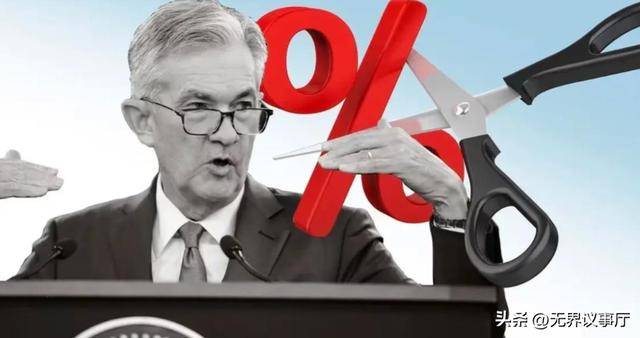
美联储急刹车!38万亿债务压顶,外资悄悄抄底,A股成最大赢家?
Sou Hu Cai Jing· 2025-11-28 07:29
Group 1 - The Federal Reserve's decision to halt the balance sheet reduction is not a voluntary action but a response to market pressures and rising debt levels [1] - As of mid-November, U.S. bank reserves have dropped to $2.8 trillion, the lowest since September 2020, nearing the critical threshold of $2.5 trillion that previously triggered a liquidity crisis [2][4] - The usage of the Standing Repo Facility (SRF) surged to a historical peak of $50.35 billion in November, indicating severe liquidity constraints among banks [4][6] Group 2 - The U.S. national debt surpassed $38.2 trillion as of November 18, with an annual increase of $2.2 trillion, and interest payments exceeding $1.1 trillion for the first time, accounting for nearly 20% of federal revenue [6][8] - The unemployment rate rose to 4.4% in September, with the unemployment rate for recent college graduates reaching 8.5%, indicating a challenging job market [8][10] - In October, corporate layoffs reached 153,000, a 175% increase year-over-year, marking the highest level in 20 years [10] Group 3 - The announcement of halting the balance sheet reduction led to a temporary boost in global markets, with significant foreign investment in A-shares, particularly in high-dividend sectors like banking and utilities [12][14] - The Chinese yuan is expected to appreciate due to improving interest rate differentials and seasonal factors in export settlements [14] - However, long-term risks remain, including potential capital flight from emerging markets and inflationary pressures that could hinder future monetary policy adjustments [16][17] Group 4 - The current technical expansion of the balance sheet is not equivalent to quantitative easing (QE) and is primarily aimed at addressing liquidity gaps rather than stimulating the economy [19][21] - The Federal Reserve has indicated that structural expansion of the balance sheet will only be considered if reserves fall to $2.7 trillion, suggesting there is still some buffer [21] Group 5 - Investment strategies should focus on high-dividend assets, particularly in sectors like banking and utilities, while avoiding high-valuation tech stocks that may be at risk of a market correction [23][25] - There is a growing trend among younger investors towards stable financial products such as money market funds and bond funds, which offer more secure returns [25] - Caution is advised against low-rated corporate bonds due to increased default risks stemming from delayed effects of Federal Reserve policies [26]
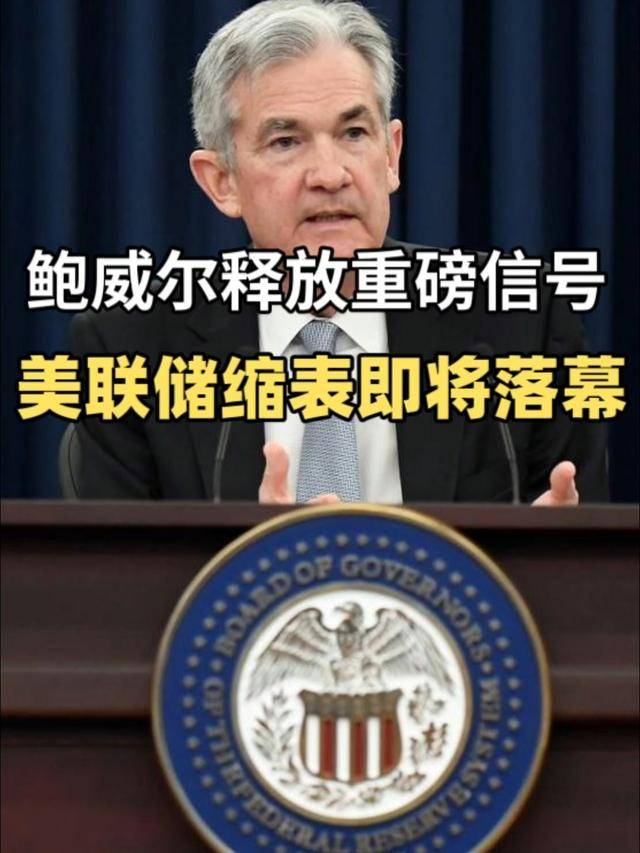
百炼成钢 乘势而上 - 2026年宏观经济与资产配置展望
2025-11-26 14:15
Summary of Key Points from Conference Call Industry and Company Overview - The conference call discusses the macroeconomic outlook for China and the United States in 2026, focusing on investment opportunities and risks in various sectors, particularly in technology, consumption, and real estate. Core Insights and Arguments 1. **China's Economic Outlook**: In 2026, China's economy is expected to face downward pressure, but macro policies are anticipated to provide support, particularly in technology innovation and modern industrial system construction, which are seen as having investment potential [1][2][3] 2. **U.S. Economic Conditions**: The U.S. is projected to enter a scenario of fiscal and monetary expansion in 2026, with a focus on re-inflation pressures and the Federal Reserve's monetary policy, which is expected to remain accommodative [4][7] 3. **Investment Trends**: Investment patterns are shifting, with the central government expected to lead major projects and planning, potentially boosting infrastructure investment while stabilizing manufacturing and real estate investments [3][20][14] 4. **Consumer Spending**: Consumption has become the dominant force in China's economic growth, with the government increasing support for consumer policies, which are expected to continue into 2026 [12][21][13] 5. **Real Estate Market**: The real estate market is entering a critical observation period in 2026, with potential for continued support policies if pressures remain high [23][11] 6. **Debt Management**: China is utilizing a 12 trillion yuan debt relief tool and a 1 trillion yuan capital injection policy to address local government debt and risks in small financial institutions [11][10] 7. **Global Economic Interactions**: The U.S. economy's recovery is expected to positively impact global trade and economic conditions, given its interconnectedness with global markets [7][4] Other Important but Possibly Overlooked Content 1. **Technological Advancements**: China has made significant progress in key technology areas, which may alleviate some external pressures from U.S. tariffs and technology restrictions [10][16] 2. **Long-term U.S.-China Relations**: The competitive dynamics between the U.S. and China are expected to persist, with potential policy shifts under future U.S. administrations posing risks [9][8] 3. **Inflation and Monetary Policy**: The U.S. is not expected to face significant inflation pressures in 2026, with the Federal Reserve likely to implement further rate cuts [4][28] 4. **Asset Allocation Recommendations**: Investors are advised to consider diversified investments in emerging industries supported by Chinese policies and cyclical sectors in the U.S. market due to expected fiscal and monetary expansions [8][5][6] This summary encapsulates the key points discussed in the conference call, providing insights into the macroeconomic landscape and investment strategies for 2026.
Morgan Stanley's Wilson Bullish on Stocks for 2026
Youtube· 2025-11-24 14:43
Core Viewpoint - Morgan Stanley has raised its S&P 500 price target to 7800 for 2026, citing strong earnings growth and a belief that a new bull market is underway, particularly in lagging sectors [1] Group 1: Economic Outlook - The evolving narrative suggests that the market is transitioning from growth-negative to growth-positive policies, with optimism about the economy's resilience despite concerns about the Federal Reserve's pace of action [2][3] - There is a belief that a rolling recession has already occurred, with the economy rebalancing towards the private sector, which is expected to improve as government policies change [4][5] - The Fed is anticipated to cut rates, which is seen as essential for allowing a rotation into interest rate-sensitive sectors of the market [6][7] Group 2: Market Dynamics - A correction of 10-15% was predicted due to tightening liquidity, but evidence suggests that this correction is well advanced [9] - The performance of momentum stocks, including cryptocurrencies, indicates market concerns about liquidity, which will influence the Fed's timing for rate cuts [10][12] - The market is expected to dictate the Fed's actions, with potential financial stress prompting a more dovish policy path [12][31] Group 3: Investment and Spending - There is an expectation of increased capital expenditures (CapEx) driven by government incentives, which will require support from the Fed's balance sheet [17][18] - The investment in technology, particularly AI, is viewed as crucial for driving productivity and supporting stock performance in the future [21] - The market is experiencing a bifurcation in performance among major players, which is seen as a healthy sign of competition and investment discipline [28][29] Group 4: Federal Reserve's Role - The Fed's independence is questioned, with the view that it is influenced by market conditions and government funding requirements [32][33] - The Fed is expected to respond to market demands for liquidity and rate cuts, reflecting the financialization of the economy [31][32]


【央行圆桌汇】美联储降息路径存争议(2025年11月17日)
Xin Hua Cai Jing· 2025-11-17 04:22
Group 1: Central Bank Policies - The People's Bank of China aims to maintain the RMB exchange rate at a stable level while implementing moderately loose monetary policy and enhancing the monetary policy framework [1] - Multiple Federal Reserve officials express varying stances on monetary policy, with some advocating for faster rate cuts to address economic downturn risks [2] - The European Central Bank acknowledges that rising interest rates may exacerbate perceived inequality, particularly affecting low-income households [3] Group 2: Market Reactions and Predictions - A Reuters survey indicates that 84 out of 105 economists expect the Federal Reserve to cut rates by 25 basis points in December, with some predicting further cuts in early 2026 [5] - Goldman Sachs anticipates that the Federal Reserve may soon announce "reserve management purchases," which could be interpreted as a new round of quantitative easing [5] - Guggenheim's Chief Investment Officer suggests that the Federal Reserve is likely to cut rates again in December due to economic slowdown indicators [5] Group 3: International Developments - European financial stability officials are exploring the integration of non-U.S. central bank dollar reserves to establish an independent liquidity support mechanism [3] - The new Japanese government pressures the Bank of Japan to delay interest rate hikes until January to align with a large-scale economic stimulus plan [3] - The Bank of England reduces the maximum authorized scale of its Asset Purchase Facility from £619.7 billion to £555 billion [4]
美银Hartnett:2026年“最佳交易”是“做空云大厂债券”,明年5月前市场不太可能“停止做多股市”
美股IPO· 2025-11-17 03:38
Group 1 - The core viewpoint of the article is that the AI-driven capital expenditure will exceed corporate cash flow capabilities, leading to significant debt accumulation, while the global financial conditions have peaked, increasing credit risks [1][3][4] - Michael Hartnett predicts that the best trade entering 2026 will be shorting the bonds of hyperscaler companies heavily investing in AI, as the debt pressure from AI will become their Achilles' heel [3][4] - Hartnett emphasizes that the easing financial conditions that supported the AI boom are reaching a turning point, with a significant reduction in expected interest rate cuts from 167 in the past year to 81 in the next [3][4][6] Group 2 - The tightening liquidity is causing increasing concerns about credit market strains and financing for capital expenditure, with technology companies' capital spending for AI exceeding cash flow support [6][10] - Hartnett highlights the disparity in borrowing costs, noting that while Wall Street benefits from loose financial conditions, Main Street faces unaffordable borrowing costs, with government borrowing at 4% and credit card rates as high as 20% [10][11] - The article discusses a "Goldilocks" scenario where lower rates and higher profits continue to drive the market until May 2024, supported by various options that keep asset allocators bullish on stocks [13][14] Group 3 - Hartnett identifies macro trading opportunities, suggesting that tax cuts, interest rate reductions, and U.S. industrial policies will boost the Purchasing Managers' Index (PMI) towards the expansion zone [15][17] - The article points out that U.S. small-cap stocks are undervalued compared to the S&P 500, presenting a potential for catch-up gains [19] - Hartnett warns that the rebound in early cyclical sectors like real estate and retail may be weak, indicating potential negative impacts from AI on employment and job security [20][21]