AI商业化

Search documents
AI应用到了商业奇点吗?
Xin Lang Cai Jing· 2026-01-15 02:04
Core Insights - The AI industry is entering a critical commercialization phase starting in 2026, where application scaling and value realization will occur simultaneously, marking a shift from liquidity narratives to profitability narratives in the A-share market [1] - The global AI market is projected to reach $757.58 billion in 2025, with an 18.7% year-on-year growth, and is expected to further increase to $900 billion in 2026, with a compound annual growth rate (CAGR) of 11% anticipated to exceed $2 trillion by 2033 [1] Group 1: Market Trends - The AI industry has experienced two steep transitions in collective recognition from 2023 to 2025, moving from a "concept introduction phase" focused on parameter scale and computing power gaps to a "infrastructure frenzy phase" emphasizing hardware such as optical modules and servers [1] - The focus is shifting from a "arms race" in foundational models to the commercialization of AI applications, indicating that the industry may have reached a "singularity" point [1] Group 2: Application and Revenue Growth - Major AI companies like OpenAI have achieved annual recurring revenue (ARR) in the billion-dollar range, with various vertical applications also reaching significant revenue milestones [5] - As of August 2025, the top 100 global AI companies have a combined monthly active user (MAU) of 4.78 billion, with Chinese companies contributing 46%, indicating a strong domestic user base for AI commercialization [5] Group 3: Policy and Investment Landscape - A joint policy issued by eight departments in January 2024 mandates the integration of AI in manufacturing, transitioning from voluntary innovation to mandatory assessments, providing a clear path for AI commercialization in the industrial sector [7] - The investment landscape is favorable, with a significant portion of venture capital directed towards application layers, and a predicted acceleration in AI monetization processes expected to boost profit growth for Chinese listed companies from 4% in 2025 to 14% in 2026 [7][10]

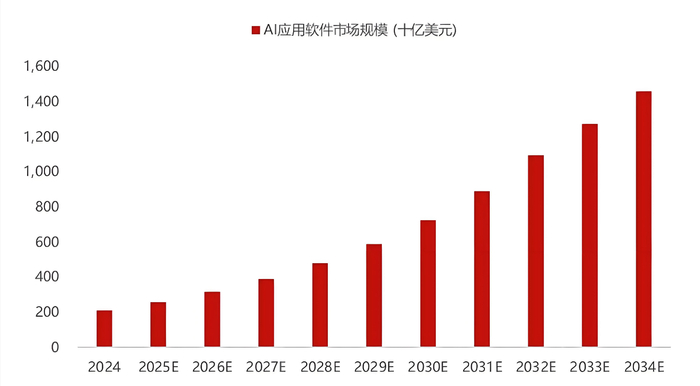
计算机ETF(512720)近5日获资金净流入超2亿元,行业拐点与AI商业化进程引关注
Mei Ri Jing Ji Xin Wen· 2026-01-14 06:33
Group 1 - The computer ETF (512720) has seen a net inflow of over 200 million yuan in the past five days, driven by attention on industry turning points and the commercialization of AI [1] - According to Shenwan Hongyuan Securities, 2024 will be a phase of rapid iteration for foundational large models, with software companies attempting to integrate AI without disclosing related revenues [1] - By 2025, some companies are expected to start disclosing AI orders, marking the initial phase of new technology applications in the industry [1] Group 2 - The software sector is characterized by customized solutions, where software suppliers accumulate industry know-how through deep customization, creating complementary barriers with large models [1] - Current fast-commercializing AI application areas include AI Agents, multimodal generation, AI programming, and AI marketing, with specific technologies maturing for commercial use [1] - In the healthcare sector, AI tools like ChatGPT Health are integrating electronic medical record data to provide personalized services, with accelerated penetration in the consumer market [1] Group 3 - The software sector is expected to benefit from both cost reduction and improved fundamentals in 2025, with AI application commercialization becoming a core driver of revenue growth in 2026 [1]
AI专题:AI模型迭代聚焦工程能力,AI应用落地锚定高ROI场景
Southwest Securities· 2026-01-13 06:54
Investment Rating - The report indicates a shift in AI investment from FOMO CapEx to ROI CapEx, suggesting a more cautious and strategic approach to capital expenditures in the AI sector [4]. Core Insights - Overseas AI investments are facing cash flow pressures, prompting tech giants to seek various data center construction methods and financing solutions to alleviate these pressures. The IPO process for AI unicorns is expected to accelerate [4]. - The focus on maximizing token output efficiency per watt in data centers is becoming critical due to power capacity limitations. Companies are optimizing hardware and software to enhance computational efficiency [4]. - The engineering capabilities of large AI models are improving, with a stronger emphasis on commercializing AI products through various business models such as subscriptions, APIs, and advertising [4]. - The growth of AI cloud services is anticipated to accelerate as capacity is released, with significant orders expected in 2025 [4]. Capital Expenditure Rhythm - Capital expenditure expectations are being raised, with cash flow pressures increasing in the future [5]. - The AI infrastructure paradigm is shifting, with capital expenditures continuing to expand as companies transition from CPU to GPU-based workloads [10][12]. Data Center Construction - Data centers are facing power capacity limitations, leading to a focus on maximizing output efficiency per watt [6]. - The construction of data centers is increasingly flexible to accommodate various generations of GPUs and other components [4]. Model Capability Evolution - The evolution of AI models is expected to continue, with advancements in long text processing, multi-modal capabilities, and logical reasoning [7]. - The commercial viability of AI products is expected to increase as engineering capabilities improve [4]. AI Cloud Business Growth - The AI cloud service sector is entering an expansion phase, with significant orders expected and a rapid increase in contract values [8]. - The release of computational capacity is projected to drive accelerated growth in AI cloud services [4]. Capital Expenditure Cash Flow Statement - The capital expenditure of major tech companies is growing rapidly, leading to increased pressure on free cash flow [20][21]. - The ratio of capital expenditure to operating cash flow is at historically high levels, indicating sustained investment despite cash flow pressures [21]. Capital Expenditure Balance Sheet - The fixed asset scale of major tech companies is steadily increasing, with operating lease liabilities showing slight growth [26]. - The ratio of operating lease assets to fixed assets indicates a preference for self-built data centers over leasing [26]. Capital Expenditure Income Statement - Depreciation and amortization expenses are increasing, putting pressure on profit margins [30]. - The proportion of depreciation to revenue is at its highest level since early 2020, indicating rising costs associated with infrastructure investments [31]. Capital Expenditure Financing Needs - Tech companies are increasingly turning to debt financing to manage cash flow pressures resulting from high capital expenditures [36]. - Major tech firms have issued significant amounts of debt to support AI infrastructure investments, indicating a shift from cash investments to debt financing [36][38].
香港互联网ETF(513720)大涨4%,三重因素驱动港股反攻
Mei Ri Jing Ji Xin Wen· 2026-01-12 05:55
Core Viewpoint - The Hong Kong Internet ETF (513720) surged by 4% on January 12, driven by three key factors that are expected to lead to a rebound in Hong Kong stocks in 2026 [1] Group 1: Factors Driving Market Rebound - A weaker US dollar is attracting international capital to increase allocations in Hong Kong [1] - The appreciation of the Renminbi is encouraging the repatriation of Chinese capital that has been held overseas [1] - A recovery in inflation and potential debt restructuring policies are expected to improve the fundamental outlook [1] Group 2: Sector Analysis - The Hang Seng Technology Index is anticipated to experience high odds of recovery due to stagnation in 2025, potentially benefiting from a "Davis Triple Play" in 2026, which includes valuation recovery, profit improvement, and liquidity support [1] - The Hong Kong technology sector, particularly those with high AI application ratios, is expected to benefit from the accelerated commercialization of AI in the medium to long term, with market elasticity likely to surpass that of computing infrastructure [1] - Current valuations of Hong Kong technology stocks are lower than those of A-shares, suggesting an upward potential under the mean reversion logic [1] Group 3: ETF and Index Overview - The Hong Kong Internet ETF (513720) tracks the Hong Kong Stock Connect Internet Index (931637), which selects 30 publicly listed companies involved in internet-related businesses from the Stock Connect range [1] - The index focuses on key sectors such as media and retail, with a balanced allocation across large, medium, and small-cap stocks [1] - It reflects the overall performance of the consumer internet sector, including core application scenarios such as social media, e-commerce, and gaming [1]
大模型IPO走向分野
3 6 Ke· 2026-01-12 03:22
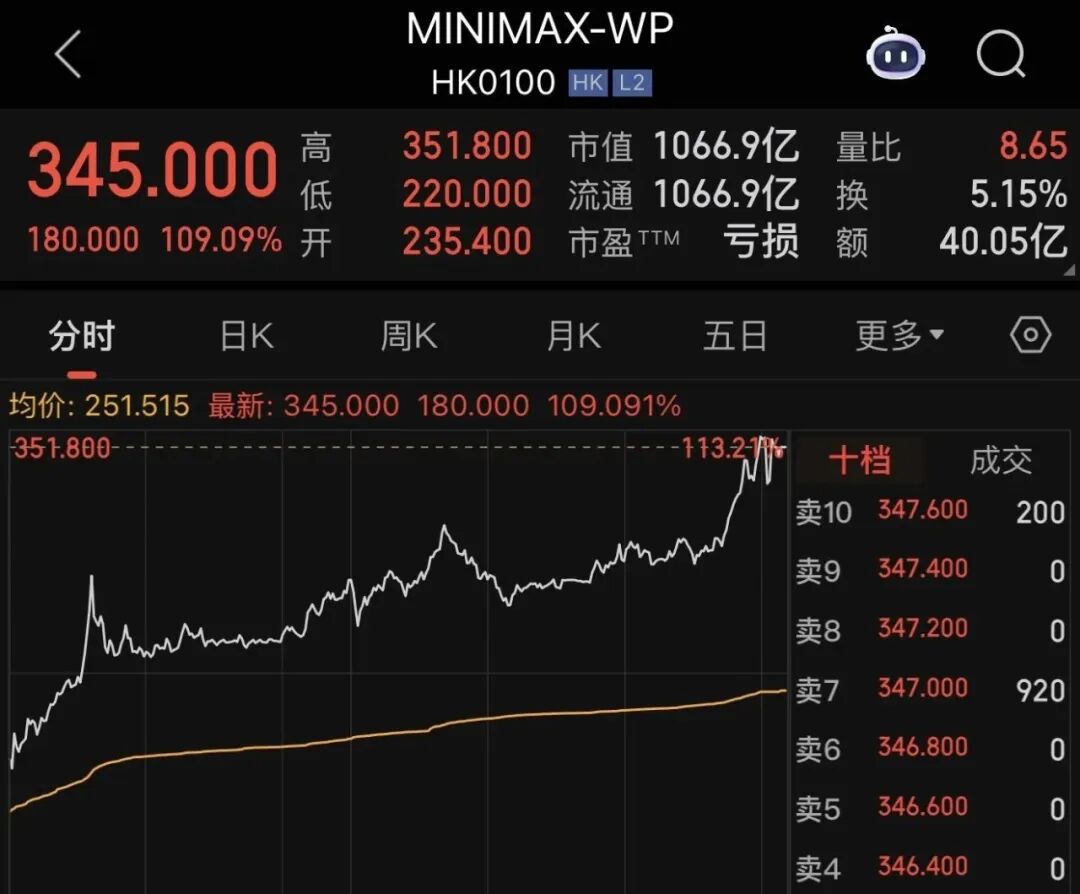
Core Insights - The article discusses the contrasting market responses to the IPOs of two AI companies, Zhiyun and MiniMax, highlighting their different commercialization strategies and market perceptions [1][3]. Group 1: Market Performance - Zhiyun, referred to as the "first global large model stock," saw its share price rise by 13.2% to 131.5 HKD on its first trading day after an initial dip [1]. - MiniMax experienced a strong performance, closing at 345 HKD, which represents a 109.1% increase from its issue price [1]. Group 2: Commercialization Strategies - Zhiyun focuses on delivering AI capabilities as "deployable engineering" within B2B services, while MiniMax emphasizes creating "consumable products" for the C-end market [3][4]. - The financial models of both companies show significant differences, with Zhiyun adopting a long-term technology approach and MiniMax taking a more aggressive, efficiency-driven strategy [3]. Group 3: Revenue Structure - For Zhiyun, localized deployment revenue is projected to account for over 80% of total revenue in 2024 and the first half of 2025, indicating a strong B-end orientation [4]. - MiniMax's revenue structure reflects a product and platform model, with over 71% of its revenue coming from AI-native applications like Hai Luo AI and Xing Ye [8][10]. Group 4: Market Sentiment and Future Outlook - The market's perception of Zhiyun is mixed, with some investors viewing it through a familiar lens of high margins and project-based revenue, while others see it as a platform-based business model in disguise [7]. - MiniMax's approach aligns more closely with consumer internet companies, focusing on user growth and cost efficiency, which has garnered positive market sentiment [10][11]. Group 5: Cost Structure and Cloud Dependency - MiniMax's reliance on cloud services is significant, with projected expenditures on Alibaba Cloud reaching up to 135 million USD annually by 2028 [12]. - Both companies' commercialization paths highlight a shared dependency on cloud infrastructure, with MiniMax exposing its costs directly while Zhiyun integrates them into its overall solutions [12][13].
烧钱135亿后AI扛不住了!头部公司集体转向广告,免费时代要结束
Sou Hu Cai Jing· 2026-01-11 14:49
Core Insights - The AI industry is witnessing a shift as leading companies, previously committed to maintaining a pure user experience, are now engaging with advertisers, indicating a potential change in their monetization strategies [1][4]. Group 1: Financial Challenges - The development and operation of AI large models are capital-intensive, with top models costing hundreds of millions to billions of dollars to train. For instance, OpenAI has reported a cumulative net loss of $13.5 billion despite projected revenues in the billions by mid-2025 [3][4]. - The current "burn money, no profit" model is unsustainable, prompting companies to seek profitable business models to demonstrate viability to investors [4]. Group 2: Advertising Integration - AI companies are likely to adopt more subtle advertising methods rather than intrusive pop-ups, potentially integrating ads into the user interface in a way that does not disrupt the core interaction [6]. - There is a possibility of "incentivized" interactions where users can choose to watch brand videos in exchange for additional features or longer interaction times, a model already seen in gaming and app environments [6]. Group 3: Emerging Advertising Formats - A controversial and less detectable form of advertising, termed "generative engine optimization," may lead AI to subtly favor certain brands in its recommendations, blurring the lines between objective advice and commercial promotion [8]. - This deep integration of advertising into AI interactions could have a significant impact, raising questions about the purity of information provided to users [8]. Group 4: Diversified Revenue Streams - Beyond advertising, AI companies are exploring multiple monetization avenues, including more refined subscription models where users pay for specialized AI assistants tailored to specific needs [10][11]. - Enterprise services represent a lucrative market, with companies willing to pay substantial fees for AI capabilities that can directly reduce costs or generate revenue [11]. Group 5: Future Business Models - Major cloud service providers are integrating large model capabilities into their offerings, creating a vast B2B market. This could evolve into a model where AI acts as a "dispatch center" for digital transactions, extracting commissions from completed transactions [13]. - The era of purely free services is coming to an end, as users may face a more complex AI that incorporates commercial objectives into its recommendations, necessitating a higher level of digital literacy among users [15].

山姆·奥特曼食言背后,AI公司集体转向广告,理想主义碎了?
Sou Hu Cai Jing· 2026-01-11 12:10
Core Viewpoint - The AI industry is undergoing a significant shift from a no-advertising stance to incorporating advertisements as a means of revenue generation, driven by the need for profitability and sustainability in the face of high operational costs [4][7][27] Group 1: Industry Changes - AI companies are increasingly adopting advertising strategies, moving away from their previous commitments to avoid ads [4][6] - OpenAI, despite having over 100 million subscribers, faces financial challenges due to high operational costs, leading to a shift in revenue strategies [9][10] - The introduction of ads is seen as a necessary step for survival, with successful models in the internet advertising space serving as a reference [10][27] Group 2: Advertising Strategies - AI companies are employing subtle advertising methods, such as sidebar recommendations and incentivized ad viewing, to monetize their platforms without disrupting user experience [12][14] - Controversial practices like "dialogue embedding," where AI subtly promotes partnered brands, have raised concerns among users about the objectivity of AI recommendations [16][30] Group 3: Monetization Beyond Advertising - Membership subscriptions have evolved, with tiered pricing models and additional fees for specific functionalities, indicating a trend towards more complex revenue structures [19][21] - The enterprise (ToB) segment is becoming increasingly important, with companies like Microsoft integrating AI into cloud services for large clients, resulting in substantial revenue increases [21][23] - Specialized AI solutions for niche markets, such as healthcare and legal services, are proving to be lucrative due to their high compliance and customer retention rates [23] Group 4: Regulatory Environment - The tightening of regulations, such as the EU's AI Act and scrutiny from the U.S. FTC, is impacting how AI companies approach advertising and monetization [25][27] - The era of free AI services is coming to an end, as companies shift focus from idealistic goals to practical revenue generation [27][28]

AI企业密集登陆资本市场 商业化进程按下“加速键”
Xin Hua She· 2026-01-09 00:26
Group 1 - The article highlights the active performance of AI companies in the capital market, indicating a shift from technological exploration to large-scale commercialization [1][2] - On January 8, AI model company Zhiyu Huazhang listed on the Hong Kong Stock Exchange, with a first-day increase of 13.17%, reaching a market value of nearly 58 billion HKD [1] - MiniMax, another AI company, reported a subscription amount exceeding 283.1 billion HKD, with an oversubscription rate of over 1837 times [1] Group 2 - AI chip companies also showed strong market performance, with TianShu ZhiXin achieving a subscription rate of 414.24 times on the same day as Zhiyu Huazhang's listing [2] - The capital market's recognition of AI has shifted from early concept validation to a more rational acceptance of commercial viability [2] - The exploration and implementation of business models are becoming crucial for the development of large model enterprises, with Zhiyu Huazhang focusing on a MaaS (Model as a Service) business model [2] Group 3 - The rapid iteration of AI technology is at a critical turning point, transitioning from innovation to practical productivity, with the core AI industry in China expected to exceed 900 billion CNY in 2024, growing at 24% [3] - The capital market's support is anticipated to provide essential funding for AI industry development, ensuring leading companies maintain significant computational investments [3] - The effective transformation of this capital into scalable AI products that meet user needs will be a central focus for the market [3]
自研AI玩具卖断货 变色龙“业务部浮出水面 京东AI商业化”奇兵突袭“?
Mei Ri Jing Ji Xin Wen· 2026-01-08 14:35
Core Insights - JD's self-developed AI plush toys sold out upon launch, with multiple restocks planned, indicating strong market demand for AI products [1][3] - The newly established "Chameleon Business Unit" will focus on commercializing key AI products, including JoyAI App, JoyInside, and digital humans [2] - The AI toy market is experiencing significant growth, with third-party brands also seeing high sales, averaging around 300 yuan per unit [1] Group 1: AI Product Development - JD has upgraded its AI model brand to JoyAI, with the JoyAI App designed to leverage multi-modal large model technology and a complete supply chain ecosystem [4] - JoyInside, JD's intelligent brand, has partnered with over 40 leading robot and AI toy brands to integrate systems into their products [4] - JD's self-branded products, including AI plush toys, clocks, and lamps, are part of its strategy to capture a wide audience, with a second batch of AI toys set to launch in mid-January [4] Group 2: Market Trends and Projections - The global AI edge market is expected to grow significantly from 321.9 billion yuan to 1.22 trillion yuan between 2025 and 2029, with a compound annual growth rate of 40% [5] - The competition in AI hardware is intensifying, with products like the "Doubao phone" generating considerable interest in the market [5] - JD's investment in intelligent robotics, with over 10 billion yuan allocated to support 100 brands achieving over 1 billion yuan in sales, highlights the company's commitment to this sector [6] Group 3: Strategic Focus and Future Outlook - The focus of AI competition is shifting from technology development to practical applications, emphasizing value creation and sustainable returns [6] - The next phase of competition among major internet companies will center on securing market share for new super app entry points and AI product purchasing channels [6] - The emergence of various AI edge products and large model technology indicates a significant shift in the industry landscape, with the first successful AI product being crucial for market positioning [6]

MiniMax即将上市!C端高增长背后亦要面对烧钱和版权风险
Sou Hu Cai Jing· 2026-01-08 03:39
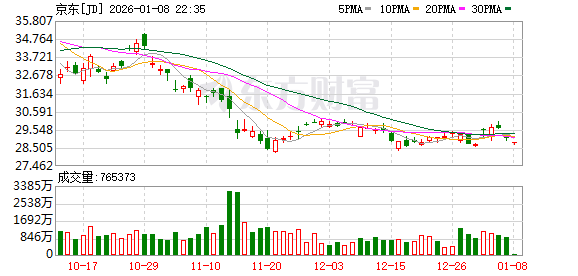
Core Insights - MiniMax, a unicorn in the AI sector, is set to debut on the Hong Kong Stock Exchange on January 9, 2026, with a valuation between 461-503 billion HKD and a subscription amount of 253.3 billion HKD, indicating strong market interest [2][3] - The company is transitioning from a phase of competition based on model parameters to one focused on commercial validation and capital realization, marking a significant shift in the Chinese large model industry [2] - MiniMax's revenue is projected to grow dramatically, from 346 thousand USD in 2023 to 3,052.3 thousand USD in 2024, representing a 782.1% increase, with over 2.12 million users globally [2] Company Overview - MiniMax plans to issue 25.39 million shares at a price range of 151-165 HKD, with 68% of shares already subscribed by top institutions like Alibaba and Tencent, reflecting confidence in its consumer-oriented business model [3] - The company's main product, Talkie, which focuses on AI emotional companionship, generates 70% of its revenue but relies heavily on marketing expenditures, which are projected to reach 86.7 million USD in 2024 [3] - The gross margin for AI-native products was -8.1% in 2024, only turning positive to 4.7% in the first three quarters of 2025, raising concerns about profitability sustainability [3] Industry Context - The global AI application market is shifting from conceptual technology to practical implementation, with a projected market growth of over 150% for AI-generated products in 2025 [4] - MiniMax faces significant legal challenges, including lawsuits from major companies like iQIYI and Disney over copyright infringement, with potential claims reaching 75 million USD [4] - The company has opportunities in underpenetrated markets like Latin America and Southeast Asia, where major competitors have not yet established a strong presence [5] Strategic Considerations - MiniMax's partnerships with major stakeholders like Alibaba and Tencent provide support for expanding its B2B business and creating a comprehensive business ecosystem [6] - The company has accumulated a net loss of 1.25 billion USD from 2022 to the first three quarters of 2025, with a high R&D expense ratio of 337.4% in 2025, which may impact investor confidence [6] - To ensure long-term viability, MiniMax must demonstrate the sustainability of its growth model, optimize technology to reduce costs, and address copyright compliance issues effectively [6]