M1

Search documents
前8个月人民币贷款增加13.46万亿元—— 金融支持实体经济稳固有力
Jing Ji Ri Bao· 2025-09-12 22:03
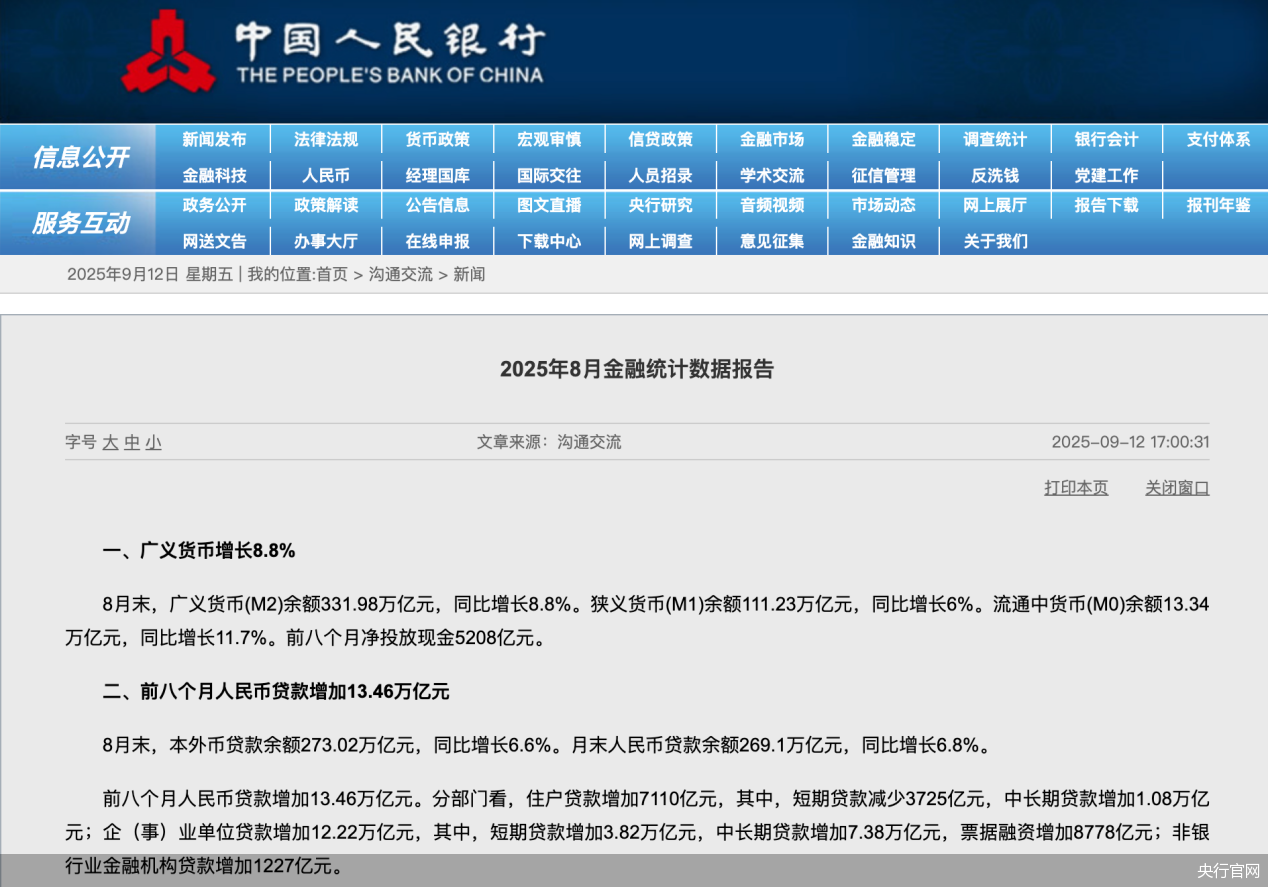
Monetary Policy and Financial Statistics - As of the end of August, the broad money supply (M2) reached 331.98 trillion yuan, with a year-on-year growth of 8.8% [1] - The total social financing stock was 433.66 trillion yuan, also reflecting a year-on-year increase of 8.8% [1] - The balance of RMB loans stood at 269.1 trillion yuan, showing a year-on-year growth of 6.8% [1] - The government bond net financing scale for the first eight months of the year was 1.027 trillion yuan, an increase of 463 billion yuan compared to the previous year [1] Credit and Loan Growth - RMB loans increased by 1.346 trillion yuan in the first eight months, indicating strong support for the real economy [2] - The issuance of special refinancing bonds has accelerated, providing significant funding support for resolving hidden debts [2] - The growth rate of loans, after adjusting for the impact of replacing local government hidden debts, was estimated to be around 7.8% in August [2] Economic Activity and Sector Performance - The proportion of direct financing through corporate bonds, government bonds, and non-financial corporate domestic stock financing has steadily increased from 26.7% at the end of 2018 to 31.6% by the end of August 2025 [3] - Manufacturing loans have seen a significant increase, with new manufacturing loans accounting for 53% of new corporate loans in the first eight months, a rise of 33 percentage points from the previous year [3] - High demand for financing has been noted in sectors such as textiles, specialized equipment, and computer communications, driven by seasonal demand and market expansion efforts [4] Consumer Loans and Housing Market - Personal loan growth has been boosted by traditional summer consumption peaks and policies promoting consumption [4] - Recent real estate regulatory policies in major cities have aimed to better meet diverse housing needs, contributing to increased loan demand [4] Interest Rates and Economic Outlook - Since 2020, the People's Bank of China has cut policy rates nine times, leading to a decrease in loan rates for both enterprises and personal housing loans [5] - The macroeconomic policy is expected to maintain continuity and stability, with a supportive monetary policy aiding the real economy [5] - Long-term economic structural transformation and industrial upgrading are anticipated to lead to a more balanced supply-demand relationship in the economy [5]
8月M1、M2“剪刀差”再创年内新低
Shang Hai Zheng Quan Bao· 2025-09-12 18:42
Group 1 - Personal loan growth has been boosted due to traditional summer consumption peaks and policies promoting consumption, leading to increased loan demand [1] - New housing policies in cities like Beijing, Shanghai, and Shenzhen have improved housing demand, resulting in a noticeable increase in personal housing loan consultations and signings [1] - The issuance of special refinancing bonds for replacing local hidden debts reached 1.9 trillion yuan by the end of August, contributing to a higher loan growth rate of approximately 7.8% after adjusting for related impacts [1] Group 2 - The social financing scale reached 433.66 trillion yuan by the end of August, with a year-on-year growth of 8.8%, supported by proactive fiscal policies and moderate monetary policies [2] - Government bond balances increased by 21.1% year-on-year, indicating strong support for social financing growth [2] - M1 and M2 growth rates are narrowing, with M2 at 331.98 trillion yuan and a year-on-year growth of 8.8%, while M1 grew by 6% to 111.23 trillion yuan [2][3] Group 3 - The balance of inclusive small and micro loans reached 35.20 trillion yuan, growing by 11.8%, while medium to long-term loans for manufacturing increased by 8.6% to 14.87 trillion yuan [4] - The weighted average interest rate for new corporate loans was approximately 3.1%, down 40 basis points year-on-year, indicating a favorable lending environment [4] - Analysts expect the macroeconomic environment to remain stable, with a predicted growth target of around 5% for the year, reflecting positive market confidence [4] Group 4 - Structural monetary policy tools are expected to continue playing a role in enhancing financial support for key sectors, while maintaining reasonable total financial growth [5] - The need for optimizing the structure of financial support is emphasized, especially in light of high household leverage and pressure on bank asset quality [5]
【广发宏观钟林楠】8月金融数据的亮点与短板
郭磊宏观茶座· 2025-09-12 15:04
Core Viewpoint - The article highlights the mixed performance of social financing and credit growth in August, indicating a need for policy adjustments to stimulate economic activity and improve credit demand, particularly in the household sector [1][6][15]. Summary by Sections Social Financing - In August, social financing increased by 2.57 trillion yuan, a year-on-year decrease of 463 billion yuan, aligning closely with market expectations of 2.53 trillion yuan [1][6]. - The stock growth rate of social financing was 8.8%, down by 0.2 percentage points from the previous month [1][6]. Credit Performance - The increase in real credit was 623.3 billion yuan, showing significant improvement from July but still below historical averages for the same period [7][9]. - The year-on-year decrease in real credit was 417.8 billion yuan, indicating ongoing challenges in credit demand [7][9]. Corporate Credit - Corporate short-term loans increased by 70 billion yuan, the highest for the same period since 2017, driven by factors such as inventory replenishment and banks' preference for short-term loans under stable interest margins [9][10]. - Corporate medium and long-term loans rose by 470 billion yuan, with a slight year-on-year decrease of 20 billion yuan, suggesting a recovery in financing demand for major projects [9][10]. Government and Corporate Bonds - Government bond financing increased by 1.37 trillion yuan, a year-on-year decrease of 251.9 billion yuan, primarily due to a high base from the previous year [3][10]. - Corporate bond financing rose by 134.3 billion yuan, with a year-on-year decrease of 36 billion yuan, reflecting increased costs and difficulties in issuing bonds [3][10]. Foreign Currency Loans - Foreign currency loans decreased by 9 billion yuan, but showed a year-on-year increase of 52.2 billion yuan, continuing a trend of improvement since April [3][12]. - The increase in non-discounted bank acceptance bills was 197.4 billion yuan, with a year-on-year increase of 132.3 billion yuan, indicating a shift in financing patterns [3][12]. Monetary Aggregates - M1 growth rate was 6%, up by 0.4 percentage points from the previous month, driven by a low base effect and increased corporate foreign exchange settlements [4][12]. - M2 growth rate remained stable at 8.8%, supported by increased fiscal spending, while household deposits showed a significant decrease [4][12]. Overall Economic Outlook - The financial data for August indicates signs of fiscal strength and a recovery in corporate financing demand, but low leverage willingness in the household sector remains a concern [15][6]. - Upcoming policies, such as consumer loan interest subsidies and adjustments in real estate regulations, may influence household leverage willingness, with September and October data being critical for observation [15][6].


M2突破331万亿!居民存款“搬家”股市,8月金融市场有这些新变化
Bei Jing Shang Bao· 2025-09-12 14:24
Group 1 - The core viewpoint of the article highlights the recovery in credit growth supported by various factors such as industry recovery, resilient exports, summer consumption peak, and real estate support policies [1][4][7] - As of August 2025, the broad money (M2) balance reached 331.98 trillion yuan, with a year-on-year growth of 8.8%, which is 2.5 percentage points higher than the same period last year [1][11] - The total social financing stock was 433.66 trillion yuan, also growing by 8.8% year-on-year, indicating a stable financing environment [1][8] Group 2 - In August, the RMB loan balance increased to 269.1 trillion yuan, reflecting a year-on-year growth of 6.8%, with a notable increase in corporate loans and personal loans [4][5] - The manufacturing sector has shown a significant recovery, with new manufacturing loans accounting for 53% of new corporate loans, a substantial increase of 33 percentage points compared to the previous year [5] - Personal loans have also seen growth due to traditional summer consumption patterns and policies promoting consumption, leading to increased loan demand [5][6] Group 3 - The social financing growth rate has shown a marginal decline, with a total increase of 26.56 trillion yuan in the first eight months of 2025, which is 4.66 trillion yuan more than the same period last year [8][9] - In August alone, new social financing amounted to 2.57 trillion yuan, a decrease of 4.63 trillion yuan year-on-year, primarily due to a reduction in loans to the real economy [9][10] - The issuance of special refinancing bonds has provided significant support for addressing hidden debts, with 1.9 trillion yuan issued by the end of August [9][10] Group 4 - The monetary supply data indicates that M1 and M0 also experienced growth, with M1 reaching a year-on-year growth of 6% and M0 growing by 11.7% [11][12] - Experts suggest that the narrowing gap between M1 and M2 indicates a shift towards more liquid deposits, which can enhance consumption and investment activities [12] - The People's Bank of China is expected to continue implementing supportive monetary policies, including potential interest rate cuts and reserve requirement ratio reductions in the fourth quarter [12][13]
存款搬家继续!8月非银存款再增万亿,哪些产品受欢迎?
Sou Hu Cai Jing· 2025-09-12 11:49
Group 1 - The People's Bank of China reported that as of the end of August, the broad money supply (M2) reached 331.98 trillion yuan, with a year-on-year growth of 8.8% [2][6] - The narrow money supply (M1) stood at 111.23 trillion yuan, showing a year-on-year increase of 6%, with a month-on-month acceleration of 0.4 percentage points, marking four consecutive months of growth [2][6] - The phenomenon of "deposit migration" has become a hot topic, with individual deposits increasing by 110 billion yuan in August, although this is still 600 billion yuan less than the same month last year [2][7] Group 2 - In August, new RMB loans amounted to 590 billion yuan, recovering from negative growth in the previous month, but still 310 billion yuan less year-on-year [6] - The analysis indicates that the narrowing "scissors gap" between M1 and M2 growth rates suggests ample market liquidity and increased activity in corporate current funds, but weak credit generation efficiency [6][8] - The increase in deposits at non-bank financial institutions by 1.18 trillion yuan in August, which is 550 billion yuan more than the previous year, highlights the ongoing trend of "deposit migration" [7][8] Group 3 - Factors contributing to the current wave of deposit migration include reduced deposit interest rates, regulatory restrictions on manual interest supplementation, and rising stock market performance [8] - Popular investment products during this period include fixed-income products and equity funds, as they continue to attract significant capital despite the decline in net growth rates of money market and bond funds [9][10]
央行最新发布!8月两大重要金融指标均增8.8%,释放什么信号?
券商中国· 2025-09-12 10:07
Core Viewpoint - The article highlights the current state of China's monetary and fiscal policies, emphasizing the high growth rates of credit and social financing, while suggesting a need for structural optimization in monetary policy to better support the real economy [2][3][8]. Group 1: Credit and Financing Data - As of the end of August, RMB loans increased by 13.46 trillion yuan, with a loan growth rate of 6.8% [3]. - The social financing scale increased by 26.56 trillion yuan in the first eight months, with both social financing stock growth and M2 growth maintaining a high rate of 8.8% [2][3]. - The issuance of special refinancing bonds has reached nearly 1.9 trillion yuan this year, which supports the resolution of hidden debts and has a short-term downward effect on credit growth [3]. Group 2: Economic Support and Consumption - The manufacturing sector has seen a significant increase in loan demand, with new manufacturing loans accounting for 53% of new corporate loans, a 33 percentage point increase compared to the previous year [3]. - Personal consumption loans also saw an uptick in August due to seasonal demand and policies promoting consumption [3]. Group 3: Monetary Policy and Structural Optimization - The average interest rate for new corporate loans in August was approximately 3.1%, down 40 basis points year-on-year, indicating a supportive monetary environment [4]. - Experts suggest that while maintaining reasonable growth in financial totals, the focus should shift towards optimizing the structure of monetary policy to enhance support for key sectors [8][9]. - The narrowing gap between M1 and M2 growth rates reflects improved liquidity and efficiency in the financial system, which is crucial for boosting investment and consumption [5][6][7].
最新金融数据出炉!解读来了 多行业景气度修复支撑信贷增长
Shang Hai Zheng Quan Bao· 2025-09-12 10:00
Core Insights - The central bank's data indicates that as of the end of August, the total social financing scale, broad money (M2), and RMB loans grew by 8.8%, 8.8%, and 6.8% year-on-year, respectively, reflecting a high overall growth rate in financial volume [1][9][10] - The narrowing "scissor difference" between narrow money (M1) and M2 suggests a shift towards more demand deposits, which supports consumption and investment activities [1][8] Financial Data Summary - As of the end of August, M2 balance grew by 8.8%, while M1 balance increased by 6% [2] - In the first eight months, RMB loans increased by 1.346 trillion yuan [2] - The cumulative increase in social financing scale for the first eight months was 2.656 trillion yuan, which is 466 billion yuan more than the same period last year [2] Credit Growth and Economic Support - As of the end of August, RMB loan balance reached 269.1 trillion yuan, with a year-on-year growth of 6.8%, supported by the recovery in industry, resilient exports, and seasonal consumption [4][5] - The weighted average interest rate for new corporate loans in August was approximately 3.1%, down about 40 basis points year-on-year, while the rate for personal housing loans was also around 3.1%, down about 25 basis points [2][9] Structural Optimization in Finance - The special refinancing bonds issued for replacing local hidden debts amounted to 1.9 trillion yuan by the end of August, indicating a higher loan growth rate when adjusted for these factors [5] - The balance of inclusive small and micro loans reached 35.20 trillion yuan, growing by 11.8%, while medium to long-term loans for manufacturing increased by 8.6% [9] Future Monetary Policy Outlook - Analysts expect that macro policies will maintain continuity and stability, with moderately loose monetary policy continuing to support the real economy, particularly in optimizing financial structure [10] - Structural monetary policy tools are anticipated to play a significant role in guiding financial institutions to support key sectors effectively [10]

X @外汇交易员
外汇交易员· 2025-09-12 09:23
Monetary Supply - M2 money supply increased by 88% year-on-year, exceeding expectations of 86% [1] - M1 money supply increased by 60% year-on-year, aligning with expectations [1] - M0 money supply increased by 117% year-on-year [1] Social Financing and Loans - New social financing scale reached 2656 trillion (257 trillion in August), an increase of 466 billion year-on-year [1] - RMB loans increased by 1293 trillion (620 billion in August), a decrease of 4851 billion year-on-year [1]
8月M1、M2“剪刀差”创四年多来最低值
Zheng Quan Shi Bao Wang· 2025-09-12 09:12
9月12日,人民银行公布的数据显示,截至8月末,狭义货币(M1)增速6%,较上月进一步上升0.4个百 分点;广义货币(M2)增速8.8%,与上月持平。反映资金活化程度的M1与M2增速差较上月进一步收 窄至2.8%,是2021年6月以来最低值。市场人士分析认为,今年以来M1、M2"剪刀差"明显收敛,更多 资金转化为活期存款,有助于投入消费、投资等经济活动。 责任编辑:曹睿潼 ...
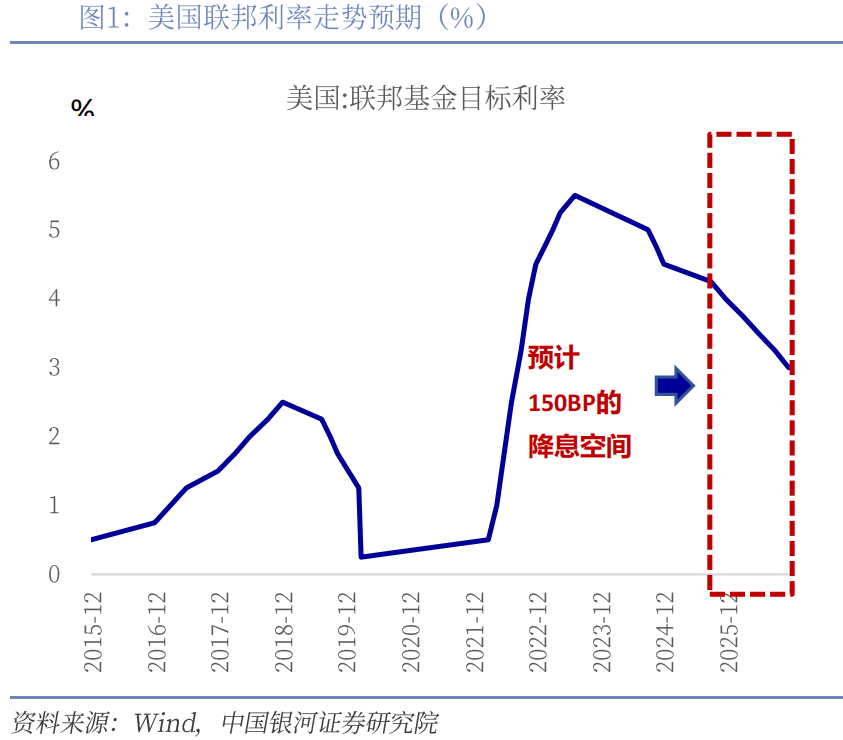
【中国银河宏观】金融和经济继续分化,亮点来自PPI——2025年8月经济数据预测
Sou Hu Cai Jing· 2025-09-03 10:23
Group 1 - The market is currently influenced by three main lines: overseas monetary easing, domestic financial improvement, and the expectation of PPI recovery [1][3][4] - The RMB is expected to appreciate slowly, potentially reaching 7.05 against the USD by the end of the year, influenced by global monetary conditions and domestic capital market performance [4][5] - M1 and M2 are on the rise, indicating a better financial environment, although new loans remain relatively low [5][19] Group 2 - PPI is anticipated to rise, which would indicate an increase in corporate profits; however, the recovery of PPI may depend on government policies and investment [2][17] - The overall economic performance remains weak, with investment and consumption continuing to decline, while exports show resilience, particularly in the electronic chip sector [3][16] - Industrial production is expected to increase, with an estimated year-on-year growth of 5.8% in August, supported by strong export demand [18] Group 3 - The financial sector continues to show signs of improvement, with social financing and M1 growth expected to persist, driven by government bond financing and corporate direct financing [19][20] - The economic outlook for the second half of the year suggests a nominal growth rate slightly lower than the first half, with real GDP growth projected between 4.5% and 4.8% [17][18] - The consumer price index (CPI) is expected to show slight increases, but overall inflation remains weak, with PPI showing signs of recovery due to policy measures [17][19]