智能化

Search documents
“豫”汝于成 未来已至 ——看中原大地产业跃动新气象
Zhong Guo Zheng Quan Bao· 2025-12-12 22:25
Core Viewpoint - The article highlights the transformative changes in Henan's economy driven by strategic emerging industries and the digital transformation of traditional sectors, positioning Henan as a new competitive force in the global industrial landscape [1][4]. Group 1: Emerging Industries - Henan has established a leading position in the synthetic diamond industry, producing 95% of the world's single crystal synthetic diamonds and 56% of cultivated diamonds, with a total industry scale exceeding 15 billion yuan [2]. - The province has developed a complete industrial chain for superhard materials, centered around Zhengzhou, which has become a national advanced manufacturing cluster [2]. - In the titanium dioxide sector, Longbai Group has successfully implemented the "boiling chlorination method," enabling China to compete with international producers [3]. - The new energy vehicle sector in Henan is thriving, with companies like Yutong Bus and BYD establishing significant operations, leading to an expected annual production of over 700,000 vehicles by 2024 [4]. Group 2: Digital Transformation of Traditional Industries - Traditional industries in Henan are undergoing significant digital transformation, exemplified by Muyuan Foods' use of smart technology in pig farming, which has reduced costs to approximately 11.3 yuan per kilogram by 2025 [5]. - Zhongchuang Zhiling has transformed its identity from a coal machinery manufacturer to a leader in intelligent industrial solutions, significantly increasing profits in its automotive parts division [6][7]. - The coverage of intelligent applications among industrial enterprises in Henan reached 82.4% by 2024, showcasing the widespread adoption of digital technologies [7]. Group 3: Capital Market and Financial Support - The capital market plays a crucial role in supporting the growth of Henan's enterprises, with 77 private listed companies achieving a total market value of 1.42 trillion yuan by October 2025 [8][9]. - Mergers and acquisitions have been pivotal for industry consolidation, with significant transactions exceeding 30 billion yuan since the introduction of the "merger six articles" policy [9]. - Innovative financial services, such as the "Financial Salon," have facilitated over 425.6 billion yuan in loans to 368 enterprises, primarily benefiting private companies [10]. Group 4: Future Industry Development - Henan is strategically planning for future industries, aiming to establish around 50 provincial-level R&D innovation platforms and cultivate leading enterprises by 2027 [11][12]. - The establishment of the Zhengzhou Unified Computing Power Scheduling Platform is set to enhance the infrastructure for AI and quantum technology industries [12]. - The collaborative ecosystem being developed in Henan is expected to support both current and future industries, positioning the province for high-quality development and competitive advantage [12].
以“智能”之跃 中创智领开启工业破界新生
Zhong Guo Zheng Quan Bao· 2025-12-12 20:21
Core Viewpoint - The company, Zhongchuang Zhiling, has undergone a significant transformation, reflected in its name change from "Zhengmeiji" to "Zhongchuang Zhiling," marking a strategic elevation after ten years of business restructuring and strategic mergers [1][2][3] Financial Performance - In the first three quarters of this year, Zhongchuang Zhiling achieved operating revenue of 30.745 billion yuan, a year-on-year increase of 10.44%, and a net profit attributable to shareholders of 3.645 billion yuan, up 19.17% year-on-year [1] - The traditional coal machinery business showed steady growth, while the automotive parts segment saw a significant net profit increase of 133.76%, becoming a strong new growth engine [1][4] Strategic Transformation - The name change signifies a break from the traditional perception of the company as merely a coal machinery manufacturer, as it has diversified into coal machinery, automotive parts, and industrial intelligence [2][3] - The company is transitioning from "technology following" to "technology leading," emphasizing independent innovation and intelligent solutions [3] Business Segments - The coal machinery segment reported a revenue increase of 1.549 billion yuan, a growth rate of 10.66%, and a net profit increase of 150 million yuan, a growth rate of 4.77% [4] - The automotive parts segment's net profit surged by 133.76%, with subsidiary SEG turning a profit of 218 million yuan, and Aixin Technology's revenue from shock absorption and commercial vehicle business growing by 19.9% [4] Future Vision - The company aims to become a "global leader in sustainable intelligent industrial solutions," moving towards providing comprehensive intelligent industrial solutions rather than just products and components [5] - The company is leveraging its expertise in coal mine intelligence to develop solutions applicable to other industries, such as shipbuilding and metallurgy, with positive order feedback [5][6] Technological Development - The company is integrating advanced technologies like Huawei's AI models and 5G communications to optimize system operations while developing specialized AI models for specific industrial scenarios [6] - A dedicated R&D team of over 1,000 is focused on applying AI in industrial contexts, aiming to extend intelligent practices from mining to broader industrial applications [6]

以“智能”之跃中创智领开启工业破界新生
Zhong Guo Zheng Quan Bao· 2025-12-12 20:17
Core Viewpoint - The company, now named Zhongchuang Zhiling, has undergone a significant transformation, achieving a revenue of 30.745 billion yuan in the first three quarters of the year, a year-on-year increase of 10.44%, and a net profit of 3.645 billion yuan, up 19.17% year-on-year, driven by robust growth in both traditional coal machinery and automotive parts sectors [1][2]. Business Transformation - The name change from Zhengmei Ji to Zhongchuang Zhiling reflects a strategic elevation, moving from a focus on coal machinery to a broader business model that includes coal machinery, automotive parts, and industrial intelligence [1][2]. - The company has transitioned from being a "technology follower" to a "technology leader," emphasizing independent innovation and smart technology as core components of its strategy [2][3]. Performance in Traditional Sector - In the traditional coal machinery sector, the company has evolved beyond simple equipment manufacturing, providing intelligent solutions to over 1,000 working faces across the country, thus enhancing operational efficiency and safety [2][3]. - The coal machinery segment reported a revenue increase of 1.549 billion yuan, a growth rate of 10.66%, and a net profit increase of 150 million yuan, a growth rate of 4.77% in the first three quarters [3]. Automotive Parts Sector Growth - The automotive parts segment has shown remarkable growth, with a net profit increase of 133.76% year-on-year, driven by subsidiaries SEG and Yaxinke, which have successfully turned around losses and increased revenues in their respective markets [3][4]. - SEG achieved a net profit of 218 million yuan in the first three quarters, while Yaxinke's revenue from its shock absorber and commercial vehicle business grew by 19.9%, with an additional 324 million yuan from new energy motor business [3][4]. Strategic Acquisitions and Collaborations - The company has strengthened its strategic collaboration by increasing its stake in core subsidiaries like Hengda Zhikong and Yaxinke, ensuring resource focus and driving performance growth [4][5]. - The strategic acquisitions made over the past decade have positioned the company to capitalize on the automotive parts market and the transition to new energy [2][4]. Future Vision - The company's vision is to become a global leader in sustainable intelligent industrial solutions, moving from being a provider of products and components to a paradigm outputter of intelligent industrial solutions [4][5]. - The integration of advanced technologies such as 5G, IoT, and AI into its operations is seen as a key driver for this transformation, with a dedicated R&D team focused on applying AI in industrial scenarios [5].
“豫”汝于成 未来已至
Zhong Guo Zheng Quan Bao· 2025-12-12 20:17
Core Insights - The article highlights the transformative changes in Henan's economy driven by "new quality productivity," showcasing the province's strategic emerging industries and the digital transformation of traditional sectors [1][4]. Group 1: Emerging Industries - Henan has established a global leading position in the synthetic diamond industry, with a single crystal production accounting for 95% of the global output and cultivated diamond production at 56% [2]. - The province has built the world's most complete superhard materials industry chain, with a scale exceeding 15 billion yuan, centered around Zhengzhou as a national advanced manufacturing cluster [2]. - In the titanium dioxide sector, Longbai Group has successfully developed a domestic production process for high-end "boiling chloride method," breaking the foreign monopoly [2][3]. - The new energy vehicle sector in Henan is rapidly growing, with major players like Yutong Bus and BYD establishing significant operations, leading to an expected annual production of over 700,000 vehicles by 2024 [3]. Group 2: Digital Transformation of Traditional Industries - Traditional industries in Henan are undergoing significant digital transformation, exemplified by the smart farming practices at Muyuan Foods, which have drastically reduced production costs [4][5]. - The company has achieved a cost reduction to approximately 11.3 yuan per kilogram by leveraging smart technologies in pig farming [4]. - Zhongchuang Zhiling has transformed its identity from a coal mining equipment manufacturer to a leader in intelligent industrial solutions, significantly increasing production efficiency [6][7]. Group 3: Capital Market and Financial Innovation - The capital market plays a crucial role in supporting the growth of Henan's quality enterprises, with 77 private listed companies having a total market value of 1.42 trillion yuan [8]. - The province has seen significant mergers and acquisitions, such as Longbai Group's acquisition of Yunnan Metallurgical New Establishment, positioning it as the world's largest sponge titanium producer [8]. - Innovative financial services, such as the "Financial Salon," have facilitated targeted financing for 368 enterprises, with a total loan issuance of 42.56 billion yuan [9]. Group 4: Strategic Planning for Future Industries - Henan is proactively laying out plans for future industries, aiming to establish around 50 provincial-level R&D innovation platforms and cultivate leading enterprises by 2027 [10][11]. - Recent investments in artificial intelligence and quantum technology are setting the stage for the province's future industrial landscape, with significant projects already underway [11][12]. - The establishment of a unified computing power scheduling platform is expected to enhance the infrastructure for AI and other emerging technologies [11].
商务年会透变局:商用车行业迈入 “价值竞争” 新周期
Zhong Guo Qi Che Bao Wang· 2025-12-12 14:57
Core Insights - The commercial vehicle industry in China is transitioning from a focus on scale competition to value competition, emphasizing new energy, intelligence, service models, and market layout as key dimensions for future growth [1][5] Group 1: New Energy Development - The penetration rate of new energy vehicles is shifting from policy-driven to market-driven, with significant growth expected in sales and market share [2] - Shaanxi Heavy Truck aims for over 25,000 new energy heavy trucks sold in 2025, a 260% increase year-on-year, with a market share target of 35%-40% by 2026 [2] - Weichai has raised its 2026 sales target for new energy vehicles from 20,000 to 61,000 units, while JAC's new energy light trucks are now among the top three in the industry [2] Group 2: Intelligent Solutions - The focus of intelligence in commercial vehicles is shifting from mere technological showcases to practical value realization through operational scenarios [3] - JAC's "Smart Anticipation" AI system utilizes vehicle networking data for fault warnings and maintenance planning, creating a service loop [3] - Foton is integrating smart technologies to address operational pain points in key scenarios, enhancing transport efficiency and safety [3] Group 3: Service Model Transformation - Leading companies are transitioning from being "single product suppliers" to comprehensive solution providers, extending their service chains to meet evolving customer demands [4] - The shift in market dynamics from "incremental competition" to "stock game" reflects a need for integrated solutions rather than just vehicle sales [4] - Collaborative ecosystems are becoming essential for companies to navigate industry cycles, with various firms forming alliances and integrating services [4] Group 4: Market Strategy - The domestic market is optimizing its structure, with companies focusing on niche segments rather than broad offerings, such as Shaanxi Heavy Truck's focus on high-power tractors and new energy dump trucks [5] - The overseas market is emerging as a critical growth area, with Weichai setting a target of 130,000 units for 2026, indicating a shift from product export to ecosystem expansion [5] - The overall transformation in the commercial vehicle industry is marked by a move from scale-driven to value-driven strategies, emphasizing user needs and ecosystem collaboration [5]
黑龙江社保服务迈入“智能办”时代:AI“数字员工”实现“秒批秒办”
Zhong Guo Xin Wen Wang· 2025-12-12 13:54
Core Insights - Heilongjiang Province is advancing its social security services into the "smart handling" era through the implementation of AI "digital employees," achieving "instant approval and processing" for 15 high-frequency services, with a total of 4.27 million transactions processed since launch and an accuracy rate of 100% [1][2] Group 1: Digital Transformation in Social Security Services - The province is leveraging digitalization and intelligence to enhance the quality of social security services, with multiple reforms leading the nation [1] - Heilongjiang has established a unique service model for retirement processing, allowing citizens to complete 13 related tasks across six departments with just one ID, achieving an overall optimization rate exceeding 90% [1] - The province is also developing service matrices for "work injury insurance" and "unemployment insurance benefits," transitioning from multiple locations and processes to a single-window, one-time completion system [1] Group 2: Online Service Expansion - Heilongjiang is expanding online service channels to overcome time and space limitations, with nearly 90% of social security business now processed online [2] - The province has implemented 158 services for full online processing and 21 services for cross-province handling, providing over 138 million online service instances during the "14th Five-Year Plan" period [2] - The introduction of AI "digital employees" has significantly improved processing efficiency and consistency, with 4.27 million transactions accurately handled since implementation [2] Group 3: Innovative Certification Processes - A new "smart certification" model has been introduced for pension eligibility verification, allowing retirees to complete the process via a mobile app using facial recognition or phone calls [2] - The collaboration with Alipay to develop an NFC keychain simplifies the certification process to a single touch, enabling a seamless experience particularly beneficial for elderly users [2]
电网工程施工技术发展现状、挑战及展望
国家电网· 2025-12-12 13:47
Investment Rating - The report does not explicitly state an investment rating for the industry Core Insights - The report emphasizes the importance of mechanization, intelligence, and unmanned construction in the development of power grid engineering, which aligns with the new development philosophy and high-quality development requirements [4][24] - The construction technology and equipment levels have significantly improved due to the implementation of innovative equipment and standards [6][15] - The report outlines the challenges faced in power grid engineering construction, including labor shortages and complex environmental conditions [32][37] Summary by Relevant Sections Current Status of Power Grid Engineering Construction Technology - The report highlights the establishment of a comprehensive mechanization construction equipment system, which includes 154 types and 512 models of equipment across three main specialties: overhead transmission lines, substations, and cables [8][12] - The mechanization application rates for overhead lines, substations, and cable engineering are projected to reach 87.45%, 93.97%, and 94% respectively by October 2025 [24][28] Challenges in Power Grid Engineering Construction Technology - The construction industry faces challenges such as a declining labor force, increased elderly population, and difficulties in material transportation in complex terrains [32][37] - Environmental factors, including high-altitude and sensitive ecological areas, complicate construction processes and increase safety risks [41][48] Development Trends in Power Grid Engineering Construction Technology - The report outlines several innovative technologies being developed, including low-altitude material transportation, unmanned tower assembly, and intelligent construction management platforms [61][67][84] - New materials and construction methods are being researched to enhance efficiency and reduce environmental impact, such as lightweight composite materials and superconducting cables [103][123]
民航局出台《民航空管基本服务收费清算管理办法》
Zhong Guo Min Hang Wang· 2025-12-12 12:38
与《暂行办法》相比,《办法》主要有以下三个变化:一是优化流程。《办法》适应数字化、智能化等 新技术应用的新形势、新要求,优化了清算数据采集、电子账单发布、基础数据维护等业务流程。二是 分类收缴。《办法》创新缴费模式,实施分类管理,对经营定期航班的航空运营人,沿用"先服务、后 收费"模式;对仅从事不定期及其他飞行的航空运营人,采取预缴费或开具银行保函的方式进行缴费。 三是完善分配。《办法》按照收入与投入相匹配同时兼顾清算效率和清算成本经济的原则,调整了空管 系统内部清算收入分配规则。 据了解,为确保《办法》稳妥有效落地,下一步,民航局将采取"政策宣贯、系统改造、业务培训"三位 一体的管理措施,组织民航局清算中心开展政策宣贯与专题培训,加强业务指导,为民航高质量发展提 供坚实的财务保障。(编辑:李季威,校对:张彤,审核:程凌) 为民航高质量发展提供坚实财务保障 民航局出台《民航空管基本服务收费清算管理办法》 《中国民航报》、中国民航网 记者方笑 报道:为加强空管基本服务收费清算管理,优化民航资金清算 模式,提高清算质效,确保资金安全,日前,民航局正式印发《民航空管基本服务收费清算管理办法》 (以下简称《办法》), ...
市场洞察:深海“5G”,水声通信如何重塑蓝色经济?
Tou Bao Yan Jiu Yuan· 2025-12-12 12:23
Investment Rating - The report does not explicitly state an investment rating for the underwater communication industry Core Insights - Underwater communication is primarily achieved through acoustic waves, which are currently the only viable means for medium to long-distance wireless communication in marine environments due to the high attenuation of electromagnetic and optical waves in seawater [4][5] - The underwater communication technology is experiencing significant advancements towards networking, intelligence, and comprehensive development, with a focus on low-energy routing protocols and the integration of artificial intelligence [13][14] Summary by Sections Underwater Communication Overview - Underwater wireless communication involves transmitting data through wireless carriers in aquatic environments, categorized into underwater electromagnetic, optical, and acoustic communication [2] - Acoustic communication is highlighted as the most effective method for underwater data transmission, capable of long-range communication with minimal attenuation [4] Challenges in Underwater Acoustic Communication - Major challenges include absorption attenuation, long delays, strong multipath effects, and interference from ocean noise [8][10] - The available bandwidth for long-distance underwater acoustic communication systems is often less than 1 kHz, limiting communication rates [9] Applications of Underwater Acoustic Communication - In the civilian sector, applications include marine surveys, underwater engineering, and seabed resource development, significantly enhancing data acquisition and safety monitoring [11] - In military applications, it facilitates two-way communication between surface ships and submarines, as well as anti-submarine warfare networks [12] Market Competition Landscape - The Chinese underwater acoustic communication industry is characterized by a diverse competitive landscape dominated by state-owned research institutions and military enterprises, with a rapid rise of private companies [16] - Key players include Harbin Engineering University, Chinese Academy of Sciences, and various enterprises like China Marine Defense and Wisdom Ocean Technology, which are driving innovation and market growth [17]


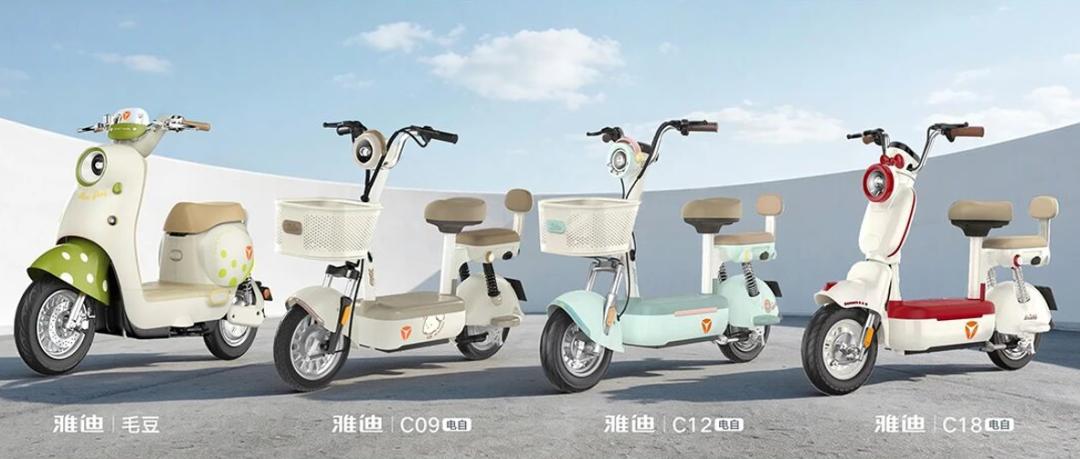
雅迪站在了新国标岔路口?
3 6 Ke· 2025-12-12 11:19
Core Viewpoint - The "Mao Dou" incident highlights the challenges faced by the electric two-wheeler industry during its transformation, indicating a shift from a subsidy-driven growth model to a compliance-focused era with new national standards [1][3][12]. Industry Overview - The electric two-wheeler industry is at a historical turning point, with the end of subsidy programs and the implementation of stringent new national standards marking the end of an era reliant on subsidies and scale expansion [3][12]. - By April 2025, the domestic electric two-wheeler ownership is projected to exceed 420 million units, indicating a saturated market where competition is intensifying [4][12]. Company Performance - Yadea, as the industry leader, reported a 33.1% year-on-year revenue growth to 19.186 billion yuan and a 59.5% increase in net profit to 1.649 billion yuan in the first half of 2025, selling 8.7935 million units [11]. - Despite strong sales, the company faces challenges adapting to new standards and consumer expectations, as evidenced by the backlash against the "Mao Dou" model [12][14]. Competitive Landscape - The competitive environment has evolved into a three-way contest among Yadea, Aima, and Tailg, with new entrants like Ninebot and Niu rapidly gaining ground [7][8]. - Aima has carved out a niche by targeting young female consumers with lightweight designs and appealing aesthetics, while new players are leveraging smart technology to penetrate the high-end market [7][8]. Consumer Trends - Consumer preferences are shifting from merely owning a vehicle to seeking an enjoyable travel experience, emphasizing smart interaction, personalized design, and emotional value [5][12]. - The "Mao Dou" incident reflects a disconnect between Yadea's product offerings and the fundamental needs of Chinese family users for practical features [12][19]. Strategic Imperatives - Yadea must undergo a transformation from a scale-driven approach to a value-driven strategy, focusing on user insights and enhancing the overall customer experience [19][22]. - The company is implementing standardized trial experiences in stores to shift its focus from product-centric to user-centric strategies, aiming to leverage its extensive retail network for better customer insights [21][22]. Future Outlook - The new national standards present an opportunity for the industry to innovate and redefine its competitive landscape, moving beyond price wars to focus on technology and user value [13][23]. - Yadea is positioned to leverage its experience in global markets to adapt and promote its new standards and technological solutions internationally, potentially leading the global green mobility revolution [23][24].