AI算力

Search documents
AI算力需求大增,多家上市公司业绩爆发!300476,净利润预增超260%!
Zheng Quan Shi Bao Wang· 2026-01-25 04:18
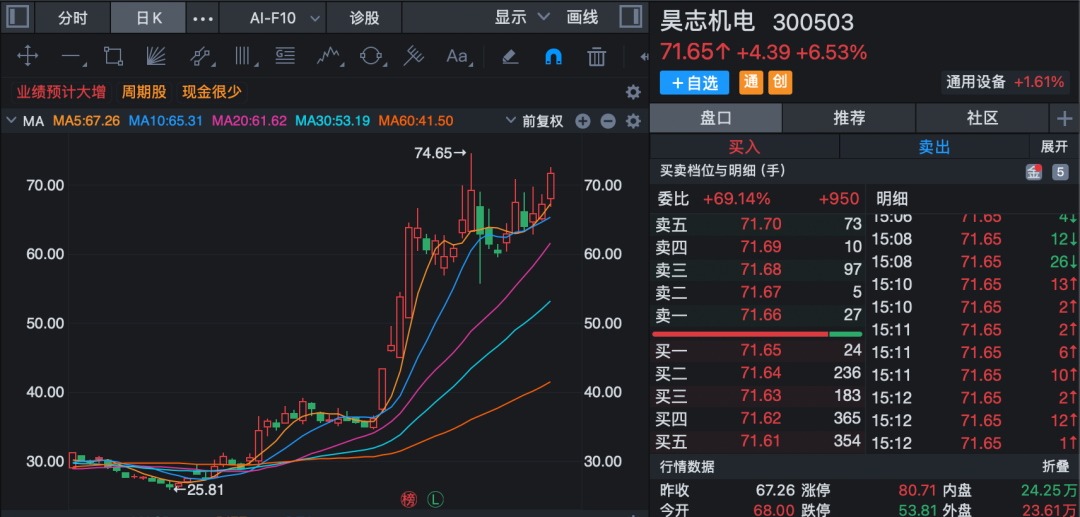
Core Insights - The PCB industry is experiencing significant growth driven by the demand for AI computing infrastructure and the upgrade of consumer electronics [1][4][9] Company Performance - Haoshi Electromechanical expects a net profit increase of 54.4% to 99.03% for 2025, with projected profits between 128 million to 165 million yuan [2] - The company attributes its growth to the rising demand in the PCB market driven by AI computing infrastructure and consumer electronics upgrades, alongside accelerated domestic substitution and technological innovation [2][4] - Shenghong Technology anticipates a net profit increase of 260.35% to 295% for 2025, with expected profits between 4.16 billion to 4.56 billion yuan [5] - The company emphasizes its commitment to embracing AI and capitalizing on the historical opportunities presented by the AI computing technology revolution [6][7] Market Trends - The PCB industry is witnessing structural growth due to the rapid increase in demand for AI computing infrastructure and continuous upgrades in consumer electronics [4][9] - The global PCB market is projected to grow by approximately 5.8% in 2024 and 6.8% in 2025, with a compound annual growth rate of about 5.2% expected until 2029 [9] - The demand for high-density interconnect (HDI) and high-layer count boards is surging, leading global PCB companies to increase capital investments and expand high-end production capacity [9] Other Companies' Performance - Other PCB companies, such as Jin'an Guoji, Xinqi Microelectronics, and Guanghe Technology, are also expected to report significant profit increases in 2025 [8] - Jin'an Guoji anticipates a net profit of 280 million to 360 million yuan, representing a year-on-year growth of 655.53% to 871.40% [8]

英伟达H200相关PCB组件被传已暂停生产
Zhong Guo Jing Ying Bao· 2026-01-25 03:41
Group 1 - Nvidia's founder and CEO Jensen Huang visited China in January 2026, engaging with employees and attending New Year events in Shanghai, Beijing, and Shenzhen [1] - The H200 chip, launched in November 2023, features a groundbreaking 141GB HBM3e memory system, significantly enhancing the capability to process large models [2] - The U.S. government approved Nvidia's export of the H200 chip to China under certain conditions, including a 25% sales revenue fee, despite opposition from hawkish lawmakers [2] Group 2 - The production of key components for the H200 chip, such as printed circuit boards (PCBs), has been halted due to uncertainties surrounding U.S. export controls [2] - PCBs are essential for GPU/AI chips, providing physical support, signal transmission, and power distribution [3] - Different GPU models may require specific PCB designs based on their pin configurations and intended applications, leading to multiple differentiated PCB versions for the same GPU [3] Group 3 - Domestic GPU companies, including Moer Technology, Muxi Co., Biran Technology, and Tianshu Zhixin, rely on PCBs as a crucial raw material [4] - Shenghong Technology is identified as a core PCB supplier for domestic GPU manufacturers, holding over 50% of the global graphics card PCB market share [5] - Huadian Co. is another significant supplier, focusing on high-layer boards for UBB motherboards and data center computing boards [5]

国际规则“弹性化”与“卖出美元” 共铸黄金闪耀时刻
Jin Tou Wang· 2026-01-25 00:12
Group 1 - The core viewpoint of the articles highlights the ongoing geopolitical tensions and their impact on gold prices, with a notable increase in market sentiment towards gold as a hedge against policy risks [2][3] - Goldman Sachs has raised its gold price target for December 2026 from $4,900 to $5,400 per ounce, indicating a more than 10% increase, driven by limited selling willingness and expectations of rising gold ETF holdings due to potential Fed rate cuts [2] - The current market anticipates at least two rate cuts by the Federal Reserve this year, which is expected to support gold prices, despite short-term pressures from rising U.S. Treasury yields [3] Group 2 - Recent trends show a significant reduction in U.S. debt holdings by major funds, such as Sweden's Alecta and Denmark's academic pension fund, indicating a shift away from dollar assets towards alternatives like gold [2] - The industrial metals market has seen a rise, reflecting increased capital expenditure in sectors like AI and energy storage, which may further drive demand for precious metals [3] - Technical analysis suggests that gold prices are currently in a strong bullish zone, with key support around $1,882 per ounce and potential targets reaching $5,365 per ounce if prices stabilize above the 5-day moving average [4]
华安中证有色金属矿业主题 ETF:价值重估新周期,布局稀缺资源
Changjiang Securities· 2026-01-24 14:08
- The report focuses on the "CSI Nonferrous Metal Mining Theme Index," which selects 40 listed companies with nonferrous metal mineral reserves as index samples, reflecting the overall performance of nonferrous metal mining-themed listed companies. The index emphasizes upstream mining companies due to their higher profit elasticity and direct benefits from metal price increases. The index is designed to capture the value of upstream resource enterprises and is suitable for investors optimistic about resource cycle trends[27][28][32] - The index adopts a balanced strategy for selecting constituent stocks. It first excludes the bottom 10% of low-liquidity stocks based on daily trading volume, then selects the top three securities from each CSI fourth-level industry based on market capitalization rankings over the past year. If fewer than three securities are available, all are included. Remaining samples are added based on market capitalization rankings until the total reaches 40 stocks. This ensures representation across various resource categories, including gold, aluminum, rare earths, cobalt, lithium, and other strategic metals. The index is adjusted semi-annually in June and December[28][32] - The index's constituent stocks are distributed across four major sectors: industrial metals, energy metals, precious metals, and strategic small metals. This structure aligns with high-demand downstream industries such as new energy, AI computing power, power infrastructure, and semiconductors, enabling precise capture of core investment opportunities across the entire industry chain[7][32][40] - The index's market capitalization distribution is concentrated in large-cap stocks, with 55.61% of the weight allocated to stocks with a market capitalization above 1 trillion RMB. Mid-cap stocks (200-1000 billion RMB) account for 43.09% of the weight, providing effective support. This structure avoids risks associated with small-cap stocks while leveraging the resource barriers of large-cap leaders and capturing growth opportunities in niche sectors[41][46] - The index demonstrates strong performance across various timeframes. Over the past year, its return reached 120.35%, significantly outperforming major broad-based indices like the CSI 300 (24.58%) and the Shanghai Composite Index (27.13%). It also surpassed industry indices such as the SW Nonferrous Metals Index (107.58%). In the medium term, its six-month return was 95.59%, and its three-month return was 28.48%. Short-term performance was equally impressive, with a one-month return of 24.06%[59][62][64]






帮主郑重:美股震荡+金银暴走,A股中长线该锚定啥?
Sou Hu Cai Jing· 2026-01-24 00:22
Group 1 - The core point of the article highlights the impact of geopolitical events and trade news on market volatility, particularly in the U.S. stock market, which has seen significant fluctuations recently [3] - The strong performance of safe-haven assets like gold and silver is attributed to geopolitical tensions and expectations of interest rate cuts by the Federal Reserve, along with supply shortages in silver [3][4] - The A-share market has shown a response to the rising precious metals sector, with stocks like Hunan Silver and Zhaojin Gold experiencing upward movement, indicating a flow of capital into these assets [4] Group 2 - The article emphasizes the differentiation within the technology sector, noting that while companies like Nvidia and AMD have seen gains, Intel has faced a significant drop due to poor earnings outlook, suggesting that opportunities in tech stocks depend on individual company performance rather than overall sector trends [4] - The A-share market is becoming increasingly independent from U.S. market fluctuations, with clear directions emerging from recent volatility: demand for precious metals and high-growth technology sectors [5] - Long-term investment strategies should focus on fundamental company performance and industry trends, rather than being swayed by short-term market news, highlighting the importance of maintaining discipline in investment decisions [5]

马斯克官宣,3年建200GW光伏!
DT新材料· 2026-01-23 16:04
Core Viewpoint - Elon Musk announced that SpaceX and Tesla plan to achieve a combined solar manufacturing capacity of 200GW annually in the U.S. within three years, with a significant portion aimed at space applications [1]. Group 1: Solar Manufacturing Capacity - SpaceX will contribute 40GW of capacity primarily for powering approximately 1 million solar AI satellites deployed annually [1]. - The combined capacity of 200GW is close to China's new solar installation capacity in 2023, indicating a substantial market impact [1]. Group 2: Space Solar Technology - The current leading technology, triple-junction gallium arsenide cells, exceeds 30% efficiency but is costly; SpaceX has chosen p-type HJT cell technology for large-scale production [2]. - The industry is developing a three-tier technology strategy: short-term reliance on high-efficiency gallium arsenide cells, mid-term adoption of HJT cells for low Earth orbit applications, and long-term potential of perovskite tandem cells for cost-effective solutions [2]. Group 3: Market Potential - The global low Earth orbit satellite registration exceeds 100,000, with over 70,000 satellites expected to be launched in the next five years, each relying on solar power [2]. - If the deployment reaches 100GW annually, the global solar market could exceed $500 billion, more than five times the projected market size in 2025 [2]. Group 4: Industry Implications - The announcement by Musk aligns with the growing demand for space solar and AI computing, presenting a significant opportunity for leading domestic companies like Trina, Jinko, and Risen to integrate terrestrial solar supply chains with space economic needs [2]. - The entire supply chain, from silicon wafers to key materials, will face new opportunities for upgrades and validation to meet aerospace standards [2][3].

川润股份(002272.SZ):预计2025年亏损1900万元–2700万元
Ge Long Hui A P P· 2026-01-23 15:33
Core Viewpoint - The company, Chuanrun Co., Ltd. (002272.SZ), is expected to incur a loss of 19 million to 27 million yuan in 2025, with a non-recurring loss projected between 37 million to 45 million yuan [1] Group 1: Business Performance and Strategic Initiatives - The company's main business and strategic new business are driving performance improvement [1] - The renewable energy business is experiencing rapid growth due to the global and domestic energy structure transformation, leveraging its leading technology and service capabilities in hydraulic, lubrication, and temperature control fields, as well as its advantageous position in the wind power market [1] - The strategic liquid cooling business has made breakthroughs, with significant revenue growth during the reporting period, driven by the ongoing global AI computing power and related energy infrastructure development [1] - The overall gross profit margin of the main business has steadily increased due to continuous improvements in technology, processes, and material innovation, optimizing product performance and reliability [1] Group 2: Asset Quality Improvement - The company has optimized asset quality by enhancing the refined management of accounts receivable and inventory, resulting in a significant year-on-year decrease in asset impairment losses, further aiding profit recovery [1]

工银全指电力ETF:捕捉能源变革的时代脉搏
Xin Lang Cai Jing· 2026-01-23 13:38
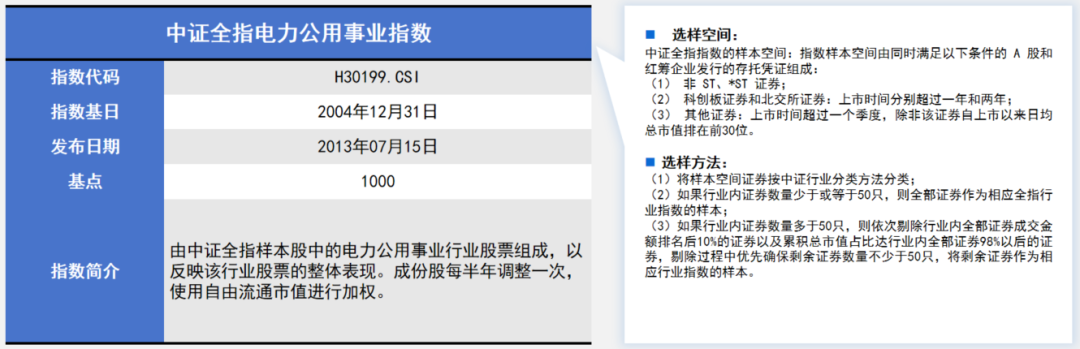
Group 1 - The core viewpoint of the articles indicates that China's electricity consumption is expected to reach a historic high of 10.4 trillion kilowatt-hours by 2025, driven by a 5% year-on-year growth, with AI's explosive growth significantly increasing electricity demand [1][21] - The electricity industry is poised for unprecedented development opportunities due to the dual drivers of global energy transition and domestic "dual carbon" goals [2][21] - The CSI All Share Power Utility Index reflects the overall performance of stocks in the power utility sector, with constituent stocks adjusted semi-annually and weighted by free float market capitalization [3][21] Group 2 - As of November 30, 2025, the CSI All Share Power Utility Index has a total market capitalization distribution where stocks with a market cap over 100 billion account for 44.88%, while those between 50-100 billion account for 14.78% [4][21] - The top ten weighted stocks in the index include leading companies such as Yangtze Power, China Nuclear Power, and Three Gorges Energy, collectively accounting for 54.21% of the index weight [4][6][21] - The index has shown superior performance compared to other power indices in recent years, with a Sharpe ratio of 0.20 since 2011, outperforming mainstream broad-based indices [7][24] Group 3 - The CSI All Share Power Utility Index is currently valued at a relatively low level, with a price-to-earnings ratio (PE_TTM) of approximately 17.02 and a price-to-book ratio (PB_LF) of about 1.66, indicating good investment value [13][29] - The index's historical performance has been stable, with annualized returns of 3.04% and a maximum drawdown of -16.92% [8][24] - The index's performance statistics show a recent closing price of 2,822.26 with a decline of 1.28% as of December 31, 2025 [10][26]
芯原股份2025年亏损持续收窄? AI算力订单占比超七成
Zheng Quan Shi Bao Wang· 2026-01-23 13:33
Core Viewpoint - The company, Xinyuan Co., Ltd. (688521), is expected to see significant revenue growth and a notable reduction in losses for the year 2025, driven primarily by AI computing orders which account for over 73% of its total orders [1] Group 1: Financial Performance - The company anticipates a revenue of 3.153 billion yuan for 2025, representing a year-on-year increase of 35.81% [1] - Although the company is still in a loss position, the net loss attributable to shareholders is projected to be 449 million yuan, a reduction of 25.29% compared to the previous year [1] - The net loss after excluding non-recurring gains and losses is expected to decrease by 2.49% year-on-year [1] Group 2: Business Segments - All business segments are expected to show growth, with the volume business projected to grow by 73.98% year-on-year [1] - The chip design business is forecasted to increase by 20.94% year-on-year, while revenue from licensing and intellectual property usage fees is also expected to rise [1] - The data processing sector is anticipated to be a core growth driver, with expected revenue growth exceeding 95%, accounting for approximately 34% of total revenue [1] Group 3: Order Growth - The company is experiencing explosive growth in new orders, with total new orders for 2025 reaching 5.96 billion yuan, a year-on-year increase of 103.41% [2] - AI computing-related orders make up over 73% of the new orders, while orders from the data processing sector account for over 50% [2] - By the end of 2025, the company expects to have an order backlog of 5.075 billion yuan, a 54.45% increase from the previous quarter, maintaining a high level for nine consecutive quarters [2] Group 4: Research and Development Investment - The company plans to invest a total of 1.639 billion yuan in expenses for 2025, with 80% allocated to research and development [2] - The overall R&D investment is expected to reach 1.351 billion yuan, constituting approximately 43% of total revenue [2] - Due to the surge in orders, the proportion of R&D investment is projected to decrease by nearly 11 percentage points year-on-year [2]

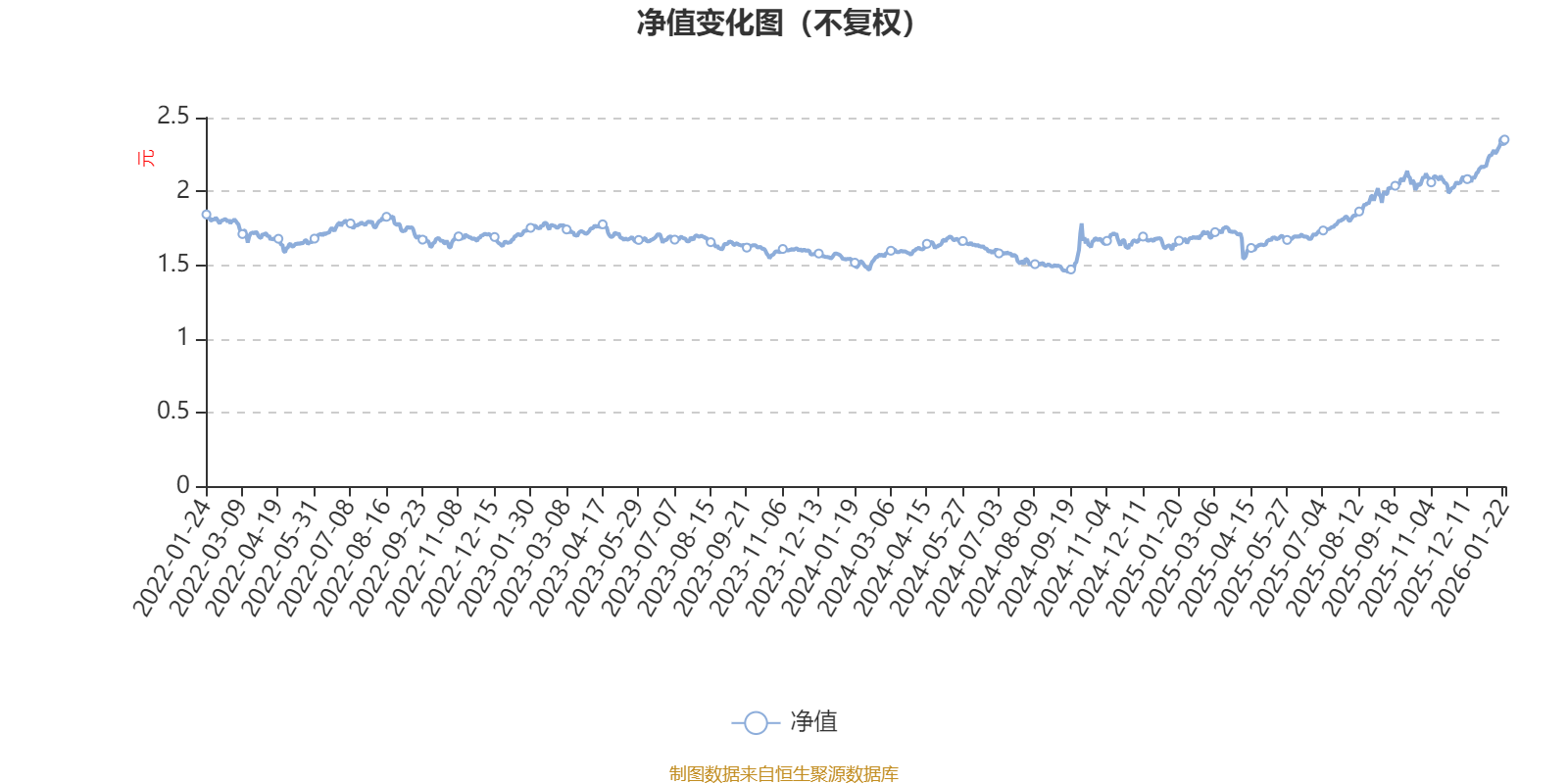
南方改革机遇灵活配置混合:2025年第四季度利润958.37万元 净值增长率2.65%
Sou Hu Cai Jing· 2026-01-23 13:25
Core Viewpoint - The AI Fund Southern Reform Opportunity Flexible Allocation Mixed Fund (001181) reported a profit of 9.5837 million yuan for Q4 2025, with a weighted average profit per fund share of 0.0579 yuan. The fund's net value growth rate was 2.65%, and its total size reached 363 million yuan by the end of Q4 2025 [3][15]. Fund Performance - As of January 22, the fund's unit net value was 2.351 yuan. The fund manager, Lu Yushan, oversees six funds, all of which have shown positive returns over the past year. The highest one-year growth rate among these funds was 47.08% for the Southern Junxuan Flexible Allocation Mixed Fund, while the lowest was 36.07% for the Southern Junyu Mixed A Fund [3]. - The fund's one-month, six-month, and one-year growth rates were 15.02%, 30.39%, and 40.95%, respectively, ranking 288/1286, 434/1286, and 498/1286 among comparable funds [4]. Risk and Return Metrics - The fund's Sharpe ratio over the past three years was 0.8252, ranking 255/1275 among comparable funds [9]. - The maximum drawdown over the past three years was 18.69%, with the highest single-quarter drawdown recorded at 16.86% in Q1 2020 [11]. Investment Strategy - The fund's average stock position over the past three years was 78.66%, compared to the industry average of 72.57%. The fund reached a peak stock position of 89.72% at the end of Q1 2023, while the lowest was 41.63% at the end of Q1 2022 [14]. - The fund's top ten holdings as of December 31 included Ningde Times, Jereh Group, Shengyi Technology, Pan-Asia Micro-Transparent, Yara International, XCMG, Luoyang Molybdenum, Jiuli Special Materials, China Glass, and Dongfang Electric Cable [18]. Market Outlook - The fund manager anticipates a stable macroeconomic environment in Q1 2026, with a positive and loose fiscal and monetary policy. The market's risk appetite is expected to remain high, with a potential orderly spring rally. Key focus areas include trends in the AI industry, improvements in supply-demand dynamics in materials and midstream manufacturing, as well as sectors like commercial aerospace, AI applications, AI computing power, and semiconductor equipment [3].