智能化

Search documents
推动“双新”融合 筑牢现代化产业体系根基
Zhong Guo Zheng Quan Bao· 2025-12-09 20:31
Core Insights - The integration of AI and technology in manufacturing processes is significantly reducing production costs and enhancing product performance, establishing a modern industrial system foundation [1] Group 1: Smart and Green Initiatives - Nanjing Steel's smart operations center utilizes digital twin technology to enhance production efficiency and reduce costs, showcasing the industry's shift towards intelligent manufacturing [2] - Langbo Technology is improving profitability through increased automation in production lines, enhancing both production efficiency and product quality traceability [2] - Haiyang Technology has implemented smart manufacturing in the curtain fabric industry, reducing resource consumption and emissions through innovative production lines [3] - GCL-Poly's lithium battery division emphasizes green manufacturing, achieving approximately 50% reductions in investment costs and energy consumption through a waste-free production process [3] Group 2: Technological Innovation - The modern industrial system's advancement towards intelligence and sustainability relies on the fusion of technological and industrial innovation, with companies acting as key links in this process [4] - Aviation engine manufacturing involves complex systems requiring advanced materials and manufacturing techniques, with companies like Hangya Technology focusing on precision processing and innovation [4] - The development of R5-grade mooring chains by Yaxing Anchor Chain was driven by understanding downstream demands and collaborating with research institutions [5] Group 3: Balancing Innovation and Market Needs - Companies must adapt to customer application scenarios and maintain competitive costs while ensuring product efficiency and ease of use [6] - The relationship between technology and product development must be balanced, with a focus on commercial viability and problem-solving capabilities [6]
推动“双新”融合筑牢现代化产业体系根基
Zhong Guo Zheng Quan Bao· 2025-12-09 20:22
Core Insights - The article emphasizes the integration of technological innovation and industrial transformation, highlighting how companies are leveraging AI and automation to enhance production efficiency and reduce costs [1][2][3] Group 1: Smart Manufacturing - Companies like Nanjing Steel are utilizing digital twin technology to create interactive 3D models of production lines, leading to increased efficiency and reduced costs [1] - Langbo Technology is enhancing its profitability by investing in automation equipment, which improves production processes and product quality traceability [1] Group 2: Green Transformation - Haiyang Technology has implemented intelligent production lines to address high energy consumption and labor intensity issues, achieving a fully automated manufacturing process that reduces resource consumption and emissions [2] - GCL-Poly Energy's subsidiary, GCL Lithium, focuses on green manufacturing, achieving approximately 50% reductions in investment costs, energy consumption, and overall process costs through innovative production methods [2] Group 3: Technological Innovation - Aviation engine manufacturing is highlighted as a complex system requiring advanced materials and manufacturing techniques, with companies like Hangya Technology developing barriers in precision processing and special treatments [3] - The development of R5-grade mooring chains by Yaxing Anchor Chain demonstrates the importance of understanding downstream demands and collaborating with research institutions to meet industry needs [3] Group 4: Balancing Technology and Market Needs - Companies must adapt to customer application scenarios and maintain competitive costs while ensuring product efficiency and ease of use [4] - Successful technology firms need to excel not only in technical capabilities but also in commercializing their innovations into valuable products for customers [4]
中投公司:十年对外投资超业绩目标61个基点
Zhong Guo Xin Wen Wang· 2025-12-09 17:39
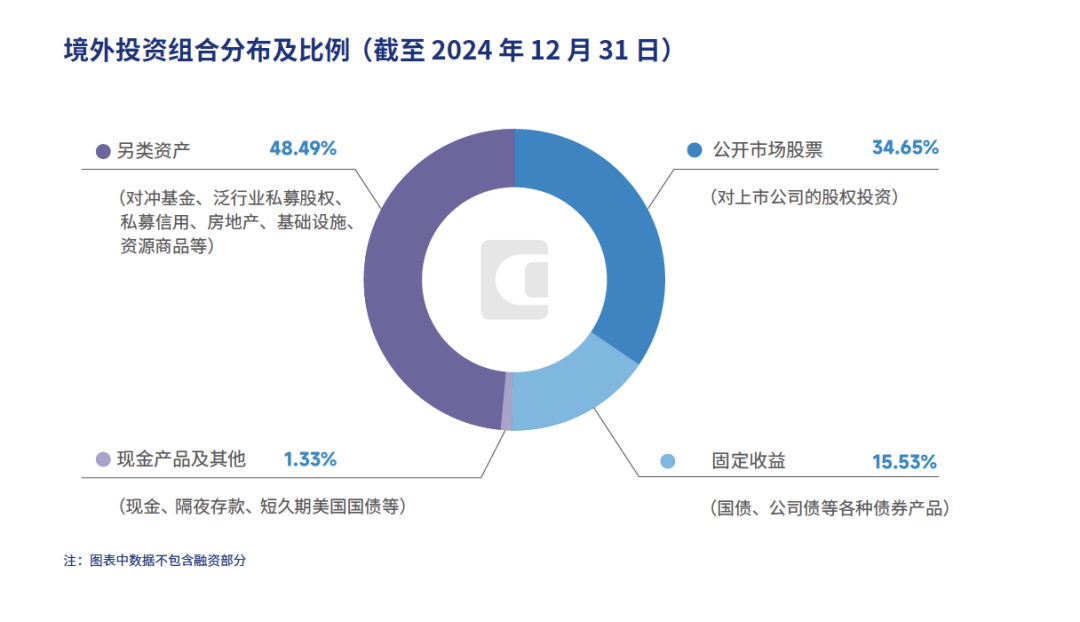
Core Insights - China Investment Corporation (CIC) reported total assets of $1.57 trillion and net assets of $1.37 trillion as of December 31, 2024, with a ten-year annualized net return on foreign investments of 6.92%, exceeding performance targets by 61 basis points [1][1][1] Group 1: Investment Portfolio - As of the end of 2024, alternative assets accounted for the largest share of CIC's overseas investment portfolio at 48.49%, which includes hedge funds, multi-sector private equity, private credit, real estate, infrastructure, and resource commodities [1][1] - The public market equity sectors within the overseas investment portfolio include information technology, financials, consumer discretionary, and healthcare [1][1] Group 2: Strategic Focus - In 2024, CIC aims to enhance its ability to coordinate development and security, continuously optimizing asset allocation and investment layout while fulfilling its responsibilities in managing state-owned financial capital [1][1] - CIC emphasizes the importance of maintaining a long-term investor position and adhering to principles of internationalization, marketization, professionalism, and responsibility in a complex and changing external investment environment [1][1][1] - The acceleration of digitalization, greening, and intelligence is seen as a new driving force for global growth, presenting new investment opportunities [1][1]
汽车行业周报:多家车企发布购置税补贴方案,曹操出行发布Robotaxi十年百城千亿目标-20251209
Yong Xing Zheng Quan· 2025-12-09 14:53
Investment Rating - The report maintains an "Overweight" rating for the automotive industry [6] Core Insights - The automotive industry is expected to see stable growth in consumer demand due to supportive policies and increasing sales of new energy vehicles [16][4] - The report highlights the importance of focusing on leading companies in smart technology and the resonance of technology and model cycles in the vehicle sector, as well as the electric and intelligent incremental segments in the parts sector [4][16] Summary by Sections Market Review - The automotive sector rose by 1.38% from December 1 to December 5, 2025, outperforming the overall A-share market, ranking 10th among all primary industries [18][21] - The largest gain was in automotive parts, which increased by 1.83%, while passenger vehicles saw the smallest increase of 0.21% [21] Industry Data Tracking 1. **Total Industry Volume**: In October 2025, approximately 3.322 million vehicles were sold, with a month-on-month increase of 3% and a year-on-year increase of 8.8%. New energy vehicles accounted for about 51.6% of the market share [2][36] 2. **Company Sales**: BYD, Geely, and FAW-Volkswagen were the top three in retail sales for October 2025, with sales of approximately 296,000, 266,000, and 136,000 vehicles, respectively [2] 3. **Weekly Data**: For November 1-30, 2025, retail sales of passenger vehicles were about 2.263 million, down 7% year-on-year but up 1% month-on-month [38] 4. **Raw Material Prices**: As of December 5, 2025, the price of battery-grade lithium carbonate was approximately 93,250 CNY/ton, a decrease of 1% from the previous week [45] Industry News and Company Announcements - Several automakers announced purchase tax subsidy plans, including a maximum subsidy of 15,000 CNY from GAC and a cash discount of up to 17,000 CNY from Leap Motor [3][49] - Cao Cao Mobility announced a strategic goal for its Robotaxi service, aiming for a 100 billion CNY investment over ten years across 100 cities [3][49] Investment Recommendations - The report suggests focusing on companies that lead in smart technology and those that align with the technological and model cycles, such as SAIC Motor, Xpeng Motors, Xiaomi, and Leap Motor [4][16] - In the parts sector, it recommends looking at companies involved in electric and intelligent incremental segments, including Huaguang Co., Chuanhuan Technology, Yinlun Co., and Horizon Robotics [4][16]
2025年中国亲子游乐行业市场研究报告
硕远咨询· 2025-12-09 14:05
Investment Rating - The report does not explicitly state an investment rating for the industry Core Insights - The parent-child entertainment industry in China is defined as a collection of services and products aimed at meeting the diverse needs of children and their parents for leisure, education, and interaction, emphasizing emotional communication and promoting children's physical and mental health development [4][5] - The industry has seen significant growth in recent years, driven by factors such as the two-child policy, rising consumer spending, and increasing demand for high-quality parent-child experiences [11][12] - The market is expected to continue expanding rapidly, with a projected compound annual growth rate (CAGR) exceeding 20% and a market size surpassing 100 billion yuan by 2024 [13] Summary by Sections 1. Industry Overview - The parent-child entertainment industry encompasses various formats, including indoor amusement parks, outdoor theme parks, parent-child education centers, and interactive experience venues [6][7] - The industry is closely related to tourism, education, and cultural entertainment, leveraging resources from these sectors to enhance user experience and drive collaborative development [8] 2. Market Demand Analysis - Modern families exhibit high-frequency, diverse, and experience-focused consumption habits in parent-child entertainment, with safety and hygiene being top priorities [18][19] - Consumers are increasingly willing to pay for high-quality, innovative parent-child entertainment products, particularly in first- and second-tier cities [27][28] - There are significant differences in demand between urban and rural families, with urban families favoring high-quality, diverse offerings while rural families focus on basic entertainment needs [32] 3. Competitive Landscape Analysis - Leading domestic companies in the parent-child entertainment sector are rapidly developing, focusing on product diversity and customer service to enhance brand loyalty [44][46] - International brands are entering the Chinese market, adapting their offerings to local preferences and cultural nuances [47] 4. Product and Service Analysis - Indoor amusement facilities prioritize safety and fun, featuring soft play equipment and interactive areas designed to foster parent-child interaction [49] - Outdoor amusement parks and theme parks aim to create immersive experiences by integrating natural landscapes and cultural elements [50] - Educational parent-child activities are innovating by combining early education concepts with experiential learning to enhance children's overall development [52] 5. Policy Environment - The government has implemented supportive policies to promote the healthy growth of the parent-child entertainment industry, including financial subsidies and tax incentives [56][57] - Local governments are also introducing specific measures to support the development of parent-child entertainment projects [59] 6. Future Development Trends - The market is expected to continue expanding, driven by rising consumer income and changing family structures, leading to increased demand for personalized and educational entertainment products [61][62] - The trend towards consumer upgrade and diversification is evident, with families seeking high-quality, educational experiences in their entertainment choices [63]
机遇中国 美丽河北——“港口之城”
Xin Hua Wang· 2025-12-09 13:16
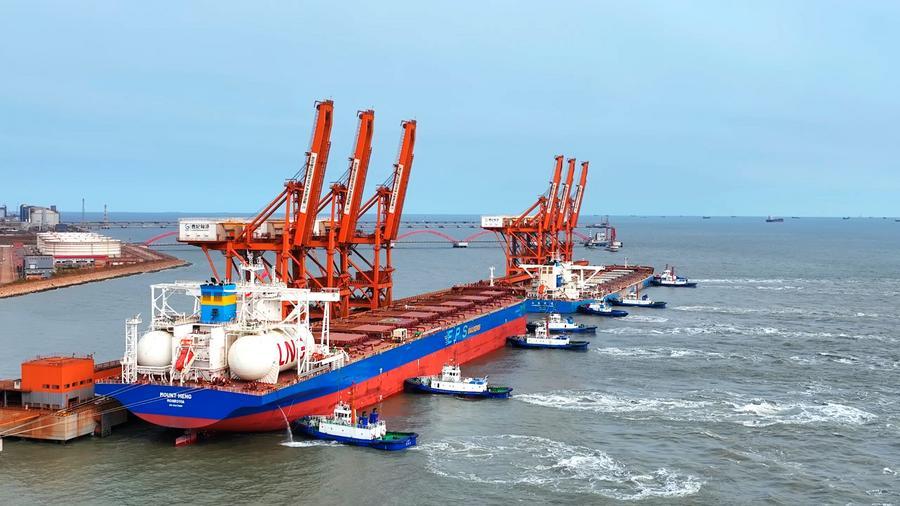
唐山,是中国北方面向世界的窗口。 这片港湾,承载着矿石、钢铁,也承载着中国制造驶向世界的信念。 在曹妃甸港区,从卸船机到封闭管廊,再到全自动皮带机等核心设备,几乎所有环节均已实现智能化调度与可视化管理。 每小时可输送 9000 吨物料的皮带机、净重 26 吨的抓斗卸船机,以稳定而强大的作业能力,让港区"肌肉感"十足。自动采集系 统取代人工点检,使生产管理更加精准高效,也让绿色作业成为可能。 距离港口不远的河钢浦项工厂,矿石在这里完成加工,无人天车在自动模式下稳定运行,轨迹精准如同一套立体交通系 统。港口与钢厂的联动,使唐山形成了覆盖原料运输、智能加工、高端制造的完整链路。 从矿石到钢铁,从码头到世界, 唐山,用海的宽度丈量发展的深度。 这座港口,不只是贸易的起点, 更是中国北方向未来张开的臂膀。 监制:马宝军 王璐 统筹:丁冬霞 王小明 杨帆 主持人:耶果 制片:杨佩铖 摄像:费江 刘衡 编辑:赵岫涓 新媒体编辑:但汉琼 中国新华新闻电视网(CNC)出品 【纠错】 【责任编辑:刘阳】 ...

凌云股份:力传感器正在朝着低成本、高精度、智能化的方向发展
Zheng Quan Ri Bao Wang· 2025-12-09 13:12
Group 1 - The core viewpoint of the article highlights that Lingyun Co., Ltd. (600480) is focusing on the development of force sensors towards low cost, high precision, and intelligence [1] - The industry is experiencing a common trend of cost reduction due to technological advancements and the expansion of industrial scale [1] - The company is committed to continuous cost optimization through modular design and automated production methods [1]

2025年前三季度北京实现旅游总收入超5400亿元
Xin Jing Bao· 2025-12-09 12:31
Group 1 - The 2025 Beijing Cultural and Tourism Key Project Investment and Financing Matchmaking Conference introduced 52 key investment projects covering 16 districts, focusing on village development, scenic area renovation, and technology integration [1] - In the first three quarters of 2025, Beijing received over 290 million tourists, generating total tourism revenue exceeding 540 billion yuan [1] - The "Beijing Youth Rural CEO Training Program" was launched to select 100 young leaders annually, providing comprehensive support from theory to practice in collaboration with enterprises and investment institutions [1] Group 2 - Four key cultural and tourism projects completed intention signing at the event, including the Wangping Town Cultural Tourism Industry Development Project, which aims to leverage historical and ecological resources [2] - The "Beijing Zhonglv Yungu Senbo Paradise Project" in Miyun District has an initial investment of approximately 850 million yuan, integrating various experiential scenarios to create a year-round vacation destination [2] - As of November 2025, the Beijing Cultural and Tourism Resource Trading Platform has published 3,966 projects with a total value of 321.7 billion yuan, while the suburban tourism financing guarantee service platform supported 3,406 projects with bank loans totaling 4.96 billion yuan [2]
中国主权财富基金:十年投资收益率6.92%,超出业绩目标
Sou Hu Cai Jing· 2025-12-09 11:05
Group 1 - The core viewpoint of the article highlights the increasing profitability of China's sovereign wealth fund, with a ten-year annualized net return of 6.92% as of the end of 2024, up from 6.57% in 2023, indicating a 35 basis points increase [2][4] - As of December 31, 2024, the total assets of the China Investment Corporation (CIC) reached $1.57 trillion, with net assets amounting to $1.37 trillion [3] - The investment portfolio of CIC primarily consists of alternative assets (48.49%), public market equities (34.65%), fixed income (15.53%), and cash products and others (1.33%), with alternative assets and public market equities accounting for over 80% of the total [4][7] Group 2 - The report indicates that the allocation of alternative assets and equities has increased compared to 2023, while the proportions of fixed income and cash assets have decreased, with public market equities rising from 33.13% to 34.65%, an increase of 1.52 percentage points [7] - The top three sectors in public market equities are information technology, financials, and consumer discretionary, with information technology stocks making up over a quarter of the portfolio [9] - The report also notes the challenges posed by high interest rates, inflation, and geopolitical changes, while emphasizing the opportunities arising from a new wave of technological and industrial transformation [10] Group 3 - The domestic business of CIC is primarily managed through Central Huijin Investment Ltd., which oversees state-owned financial capital amounting to 6.87 trillion RMB, reflecting a growth of 6.44% since the beginning of the year [10] - Central Huijin directly holds stakes in 19 financial institutions, including major state-owned banks and securities companies [10] - Recent institutional reforms have led to the transfer of equity relationships of seven asset management companies to Central Huijin, aligning with national restructuring efforts [10]

中投发布2024年业绩:净资产达1.37万亿美元
Zheng Quan Shi Bao· 2025-12-09 10:50
Group 1 - The core assets of the company reached $1.57 trillion, with net assets of $1.37 trillion, and an annualized net return on foreign investments of 6.92%, exceeding performance targets by 61 basis points [1] - The company maintains a strategic focus on long-term investments, optimizing investment models, and enhancing risk management systems amid a challenging global economic environment characterized by high interest rates and inflation [1] - The company has consistently outperformed long-term absolute return targets in recent years [1] Group 2 - As of the end of 2024, the company's overseas investment portfolio had 34.65% allocated to public market stocks, with the information technology sector leading at 25.85% [2] - The company is adapting its investment strategies in response to new technological revolutions and industry changes, enhancing both public and private market investments [7] - In the public market, the company is focusing on refined management and flexibility to adapt to market conditions, while in the private market, it is innovating investment models and strengthening partnerships [7] Group 3 - Central Huijin, a wholly-owned subsidiary of the company, is increasing its investment in exchange-traded funds (ETFs) to support market stability [8] - Central Huijin has played a crucial role in maintaining capital market stability since 2008, acting as a stabilizing force in the market [8] - The company is committed to enhancing the governance and competitiveness of its controlled and affiliated institutions, while also focusing on risk monitoring and management [9]