美联储独立性

Search documents
硬气!美联储柯林斯明确说,就算美国部门关门停摆了,美联储也一点不受影响,该干啥还干啥
Sou Hu Cai Jing· 2025-10-01 20:52
你有没有发现,最近美国停摆了,但美联储一点不受影响,照常运作?这么一想,你难道不觉得有点奇怪吗?一个金融机构,能独立到出问题 了,它照样自己按部就班的走,不受任何影响。就像柯林斯,这个美联储高管最近说的那样,"美国部门停摆是政治问题,跟我们没关系"。这话 简直可以写进教科书了,太硬气了。 如果美联储做的每一个决定都能影响整个经济,那么它这么独立、没有人能管,究竟对不对呢?我并不是说美联储要听从政治,但它是不是也该 承担些责任呢?现在的美联储就像一头巨大的独立机器,做着决定,推着经济走,却不为任何人所控制,或者说,没有人敢控制它。美联储每次 调息,都是高风险的操作,连美元汇率都能因其微调而发生大波动,可偏偏它自己无动于衷。 美联储的独立性从来都不是新闻。2018年底,美国停摆了足足一个多月,结果呢?美联储照常开会、调利率,发布经济数据,完全不受影响,完 全没有停滞过。为什么?因为美联储根本不依赖拨款,它有自己的资金来源,可以照常运作。停摆时无法运转,国会不能立法,部分职能停摆, 甚至一些福利支付也停滞了,但金融体系、货币政策,这些事,美联储都能继续。 有些人会说,这才是美联储的独立性,关键时候没人能干扰它的决策 ...

皇御环球10月点差福利升级!$28高额返赠,助您抢占黄金牛市先机
Sou Hu Wang· 2025-10-01 07:36
Group 1 - The Federal Reserve has lowered the federal funds rate target range by 25 basis points from 4.25%-4.50% to 4.00%-4.25%, marking the first rate cut since 2025 and the fourth cut since the easing cycle began in September 2024, totaling a cumulative reduction of 125 basis points [1][3] - The current monetary policy adjustment occurs during a critical period of global economic restructuring and transformation of the international financial system, with ongoing power struggles between President Trump and the Federal Reserve raising questions about the Fed's independence [3] - The downward trend in U.S. interest rates is expected to continue, putting pressure on the dollar and creating favorable conditions for a potential surge in gold prices, making it an opportune time for investment [5] Group 2 - October is expected to see a surge in economic data releases, including U.S. non-farm payrolls and CPI inflation data, which may increase gold volatility and present trading opportunities [5] - The company, Huangyu Global, is offering a promotional rebate of $28 per contract for investments of $3,000 or more, with reduced spread thresholds to attract investors [1][5]

美联储官员密集“放鹰”:通胀仍是难题,进一步降息空间或“相对有限”
Jin Shi Shu Ju· 2025-10-01 00:33
洛根表示,她支持联邦公开市场委员会(FOMC)本月早些时候降低利率25个基点的决定。她说,此举 将为劳动力市场的下行风险提供保障。 但她也警告说,通胀已超过美联储2%的目标长达四年多,这可能使长期的物价预期面临"脱锚"风险, 而且企业和消费者的需求仍然具有韧性。她说,"对FOMC来说,信守其实现2%通胀的承诺至关重要, 实现这一目标将需要仔细校准政策立场。" "放下铅笔" 洛根周二在该行一场活动的准备讲稿中说,"持续的通胀、有韧性的需求和劳动力市场温和的闲置状 况,向我表明政策可能只是温和的限制性的,可能几乎没有多少空间来进行额外的降息了。" 美联储上月的降息是自去年12月以来的首次降息,因为决策者们今年在评估关税和其他政策将如何影响 经济。 这位达拉斯联储主席表示,她不确信通胀正朝着完全回到2%目标的方向发展,并且有证据表明关税并 非推动物价加速的唯一因素。她说,非住房服务业的通胀可能会使整体指标比2%的目标高出30或40个 基点。 达拉斯联储主席洛根表示,在通胀仍高于目标且劳动力市场相对平衡的情况下,决策者在考虑进一步降 息时应保持谨慎。 服务业通胀的回升已引起其他美联储官员的警觉。尽管美联储19位决策者 ...
山外有山,黄金先抑后扬
Dong Zheng Qi Huo· 2025-09-30 09:11
1. Report Industry Investment Rating - Gold: Oscillation [1] - Silver: Oscillation [1] 2. Core Viewpoints of the Report - The core driving factors for the rise in gold prices, such as the US government debt issue and the long - term logic of de - dollarization trading, remain intact, determining the bull market pattern of gold. The issue of the Fed's independence still has room to ferment in the long run, which will push up the gold price when it resonates with other assets. In the fourth quarter, gold is expected to enter an oscillation phase [4]. - The silver price increase is basically in place. In the fourth quarter, the London silver is expected to trade in the range of $40 - 50 per ounce, and the main contract of Shanghai silver in the range of 9000 - 12000 yuan per kilogram [4]. 3. Summary According to Relevant Catalogs 3.1 Third - quarter Gold Market Review - After the gold price rose to a maximum of $3500 per ounce due to tariffs in the first half of the year, it entered a range - bound oscillation. From late April to late August, London gold oscillated horizontally in the range of $3100 - 3500 per ounce. A new upward trend started at the end of August. The weak non - farm employment reports from August to September strengthened the market's expectation of Fed rate cuts, driving capital into gold. In September, the Fed cut interest rates by 25bp, entering the second half of the rate - cut cycle. Trump's intervention in the Fed also contributed to the rise in gold prices. In the third quarter, the gold price rose by 16%, with a 11% increase in September alone [13][16]. 3.2 Standing at the Historical High and Looking Ahead 3.2.1 The US Economy Is in a State of Decline but Not in Recession, and Stagflation Needs Further Verification - The US economic growth has gradually slowed down in the first three quarters. Although consumption has some resilience, the economic endogenous expansion momentum is weakening. After the equal - tariff policy was implemented in August, its impact on the real economy remains to be seen. The labor market has weakened significantly in the third quarter, and inflation has stopped falling and rebounded. The potential risk of stagflation has not been ruled out and requires hard data verification [22]. 3.2.2 The Sharp Drop in Employment Data Strengthens the Expectation of Rate Cuts - In the third quarter, the US labor market reached a turning point. The non - farm employment data was significantly revised downwards, and the average non - farm employment increase in the past four months was only 26,000. The employment market has no supply - demand gap, and the unemployment rate may rise further. Most service industries and the manufacturing industry are reducing employment. The market's trust in the data quality of the US Department of Labor is also declining [34]. 3.2.3 Inflation Rebounds and Faces Upward Risks - Since the second half of 2024, US inflation has stopped falling and rebounded. In the third quarter of 2025, inflation rebounded again. Although the impact of tariffs has not fully manifested, core inflation still has upward space. In August, the core PCE increased to 2.9% year - on - year [45]. 3.3 The Fed's Independence Is Disturbed, and There Are Concerns about Fiscal Deficit Monetization 3.3.1 The Fed Resumes Rate Cuts, and Its Independence Is Worrisome - In the third quarter, after the significant decline in non - farm employment data, the Fed turned dovish and cut interest rates in September. The market expects the Fed to cut rates twice more in the fourth quarter. The internal division between hawks and doves in the Fed has intensified. Trump's interference in the Fed's personnel has undermined the Fed's independence, which may drive up the gold price in the long run [52][55]. 3.3.2 The US Fiscal Deficit Continues to Expand, and the Logic of Gold as a Credit Hedge Remains - In the 2025 fiscal year, the US fiscal deficit has continued to grow, reaching $1.8 trillion as of August, and the deficit - to - GDP ratio has expanded to - 6.6%. The Trump administration aims to maintain economic growth, which requires continued fiscal expansion and rate cuts. The US government debt problem is difficult to solve quickly, and the combination of high inflation and low interest rates will lead to a decline in the US dollar's credit, making the logic of going long on gold firm [60][65]. 3.3.3 Overseas Markets Increased Their Allocation of Gold in the Third Quarter - In the process of the continuous rise in the gold price, there has been a rotation in the allocation of gold between overseas and Chinese markets. In the third quarter, due to the weakening of the US employment market, the strengthening of rate - cut expectations, and the outbreak of the Fed's independence issue, overseas markets increased their long - position sentiment towards gold. The North American gold ETF holdings increased significantly, while the domestic market showed less enthusiasm for gold [69][70]. 3.4 Investment Recommendations - For the fourth quarter, the London gold is expected to trade in the range of $3400 - 4000 per ounce, and the main contract of Shanghai gold in the range of 800 - 900 yuan per gram. The domestic gold is expected to remain at a discount to overseas gold. The London silver is expected to trade in the range of $40 - 50 per ounce, and the main contract of Shanghai silver in the range of 9000 - 12000 yuan per kilogram [77].
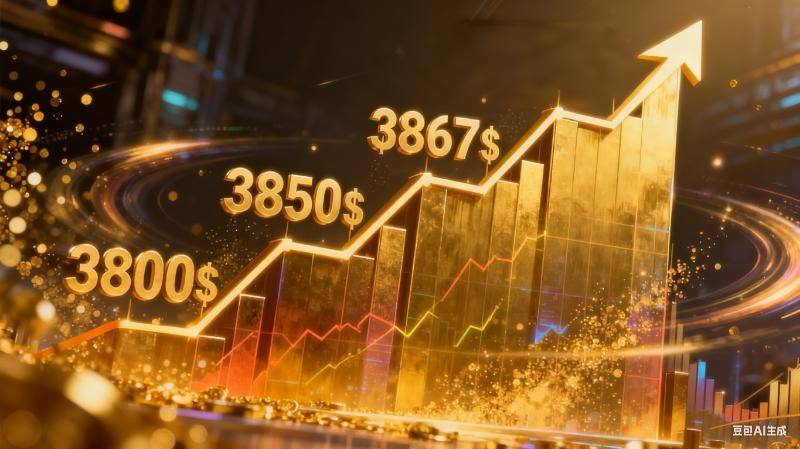
果然财评|3867美元!“美式混沌”下,这波黄金牛市还没到头
Sou Hu Cai Jing· 2025-09-30 08:23
Core Viewpoint - The recent surge in gold prices, reaching a historical high of $3867.093 per ounce, reflects global capital's response to the political and economic instability in the United States, driven by a budget standoff between the two major political parties [2][3]. Group 1: Political and Economic Factors - The immediate catalyst for the gold price increase is the intense standoff between the U.S. political parties regarding the expiration of the Affordable Care Act and the new budget proposal, leading to concerns over a potential government shutdown [2]. - Trump's abrupt cancellation of budget negotiation meetings has heightened market fears regarding the stability of political negotiations, contributing to a deeper anxiety about U.S. policy continuity [3]. - The expectation of interest rate cuts by the Federal Reserve, driven by increasing risks in the job market, has weakened the dollar and reduced the opportunity cost of holding gold [3]. Group 2: Central Bank Actions - Global central banks have been consistently increasing their gold reserves, with China's reserves reaching 74.02 million ounces by the end of August, providing a solid support for gold prices [4]. - The trend of central banks diversifying away from the dollar, with the share of dollar assets in global central bank reserves dropping from 72% in 2000 to 58% by 2025, has made gold a core choice for foreign exchange reserve diversification [4]. Group 3: Investment Demand and Market Trends - The demand for gold as an investment is becoming increasingly diversified, with significant inflows into gold ETFs from North America and Europe, as institutions view gold as an effective tool for portfolio diversification and risk hedging [5]. - Despite potential risks from the U.S. promoting stablecoin development, the overarching trends of political division and expectations of loose monetary policy in the U.S. suggest that gold's status as a "ultimate safe-haven asset" will continue to be highlighted [5]. - The current surge in gold prices is fundamentally a response from global capital to the "American chaos," indicating that the bull market for gold is far from over [5].
海外宏观研究:降息大幕开启,美债能看多做多么?
Guotai Junan Securities· 2025-09-30 07:05
Monetary Policy Insights - The Federal Reserve's September FOMC meeting resulted in a 25 basis point (bp) rate cut, with only the new member Milan voting against it, advocating for a 50 bp cut[6] - The dot plot indicates an increase in expected rate cuts from 4 to 5 times between 2025 and 2027, with 2025 seeing an adjustment from 2 to 3 cuts[8][11] - Economic forecasts show an increase in GDP growth and inflation predictions, while unemployment rates are expected to remain low[7] Market Reactions - Following the FOMC meeting, the 10-year U.S. Treasury yield dropped from 4.05% to below 4%, but rebounded to around 4.08% after Powell's press conference[11] - Short-term rates have fully priced in the rate cuts, while long-term rates remain constrained by high inflation and term premiums[11] Future Considerations - The independence of the Federal Reserve may be tested in 2026, particularly with political pressures from the Trump administration and upcoming midterm elections[5][11] - The market's current pricing of rate cuts may be overly optimistic, with potential volatility if inflation rises or employment data improves unexpectedly[16] Investment Strategy - Buying long-term bonds on dips may be a favorable strategy, as the market appears to have adequately priced in long-term risks[17]
3800关口!海外ETF与期货资金流入促使国际金价走升
Xin Lang Ji Jin· 2025-09-30 03:22
Group 1 - The core viewpoint of the articles indicates that the gold market has continued to rise despite strong economic data and a rebound in the US dollar, primarily supported by inflows from overseas ETFs and futures [1][2] - The international gold price approached $3800 per ounce during the week, with other precious metals like silver, platinum, and palladium also experiencing significant increases, boosting overall market sentiment [1] - Recent US economic data showed positive performance, with personal consumption expenditures (PCE) rising by 0.6% in August, slightly above expectations, and the second-quarter GDP being revised up to a growth of 3.8%, also better than market forecasts [2] Group 2 - The domestic gold price is currently facing some unfavorable factors, with the domestic and foreign price difference reaching -11 yuan per gram, influenced by expectations of RMB appreciation [2] - The long-term price difference center is expected to normalize around 2 yuan per gram, indicating potential recovery in the domestic and foreign price difference in the future [2] - The Federal Reserve Chairman Jerome Powell reiterated the importance of the Fed's independence and expressed a cautious outlook on future interest rate cuts, balancing high inflation risks with a weak job market [2] Group 3 - The Bosera Gold ETF (159937) and its connecting funds (002610, 002611) track the performance of gold prices in RMB by investing in gold spot contracts on the Shanghai Gold Exchange, providing investors with a new way to invest in gold [3]
特朗普9000亿美元投资需重新谈,特朗普出新招,美联储又被干扰
Sou Hu Cai Jing· 2025-09-29 20:03
"预付款? 这分明是经济保护费! "特朗普一句轻飘飘的"那是预付款",让日韩两国的外交官和财经官 员们彻夜难眠。 9000亿美元,相当于掏空韩国家底的四分之三,日本外汇储备的一大半,现在被要求 像网购商品一样"先付款后发货"。 2025年9月26日,特朗普在白宫接受媒体采访时,亲手划下了这条硬杠:日本5500亿,韩国3500亿,一 个字不能少,一个子不能欠。 而就在他说这话时,韩国总统李在明正在计算一个残酷的数字:韩国的 外汇储备总共才4163亿美元,3500亿美元相当于其84%的家底。 他警告,如果真这样支付,韩国可能 重演1997年的金融危机噩梦。 韩国的"细水长流"计划撞上特朗普的"先交钱"铁板 这场风波并非突如其来。 早在今年7月,美韩之间曾有过一个口头协议。 韩国原计划设立一个3500亿美 元的对美投资基金,但他们设想的是"缓缓图之"。 按照韩方的构想,这笔钱不是一次性现金支付,而 是分批走账,拉上现代、三星这样的大企业,再加上国有基金,搞一个混合模式。 其中1500亿投向造 船业,1500亿由私营企业出资,还留出一部分作为谈判的"回旋余地"。 但特朗普根本不接受这种"分期付款"或"模糊承诺"。 他 ...
美联储独立性的最大威胁不是特朗普,而是分裂的国会
Jin Shi Shu Ju· 2025-09-29 15:09
Core Viewpoint - The recent appointment of Stephen Miran to the Federal Reserve has created a divergence from the mainstream stance, with Miran advocating for a significant reduction in real interest rates despite inflationary pressures [2][3] Group 1: Federal Reserve's Policy and Independence - Miran voted against a 25 basis point rate cut on September 17, suggesting a 50 basis point cut instead, and called for a further reduction of 1.25 percentage points by 2025, targeting a federal funds rate range of 2.75% to 3% [2] - The Federal Reserve's independence is increasingly questioned, particularly in light of political influences and the role of Congress in confirming appointments [3][4] - The current political climate raises concerns about the balance of power between the Federal Reserve and the executive branch, with potential implications for monetary policy [3][8] Group 2: Congressional Oversight and Accountability - Congressional oversight of the Federal Reserve has been criticized as weak, with multiple inquiries from Senate Democrats going unanswered [4][6] - The relationship between the Federal Reserve and Congress is described as interdependent, highlighting the need for congressional support to maintain the Fed's credibility [4][5] - There is a growing concern that the executive branch is stepping into a supervisory role, which could undermine the Federal Reserve's independence [4][8] Group 3: Inflation and Economic Context - Inflation reached a peak of 9.1% in 2022, driven by supply chain issues and significant fiscal stimulus, which were beyond the Fed's control [5] - The Federal Reserve's delayed response to rising inflation signals has been a point of contention, with some economists attributing part of the blame to the Fed's new policy framework adopted in 2020 [5][6] - The political polarization in Congress has weakened oversight of the Federal Reserve, complicating the institution's ability to navigate economic challenges [8]
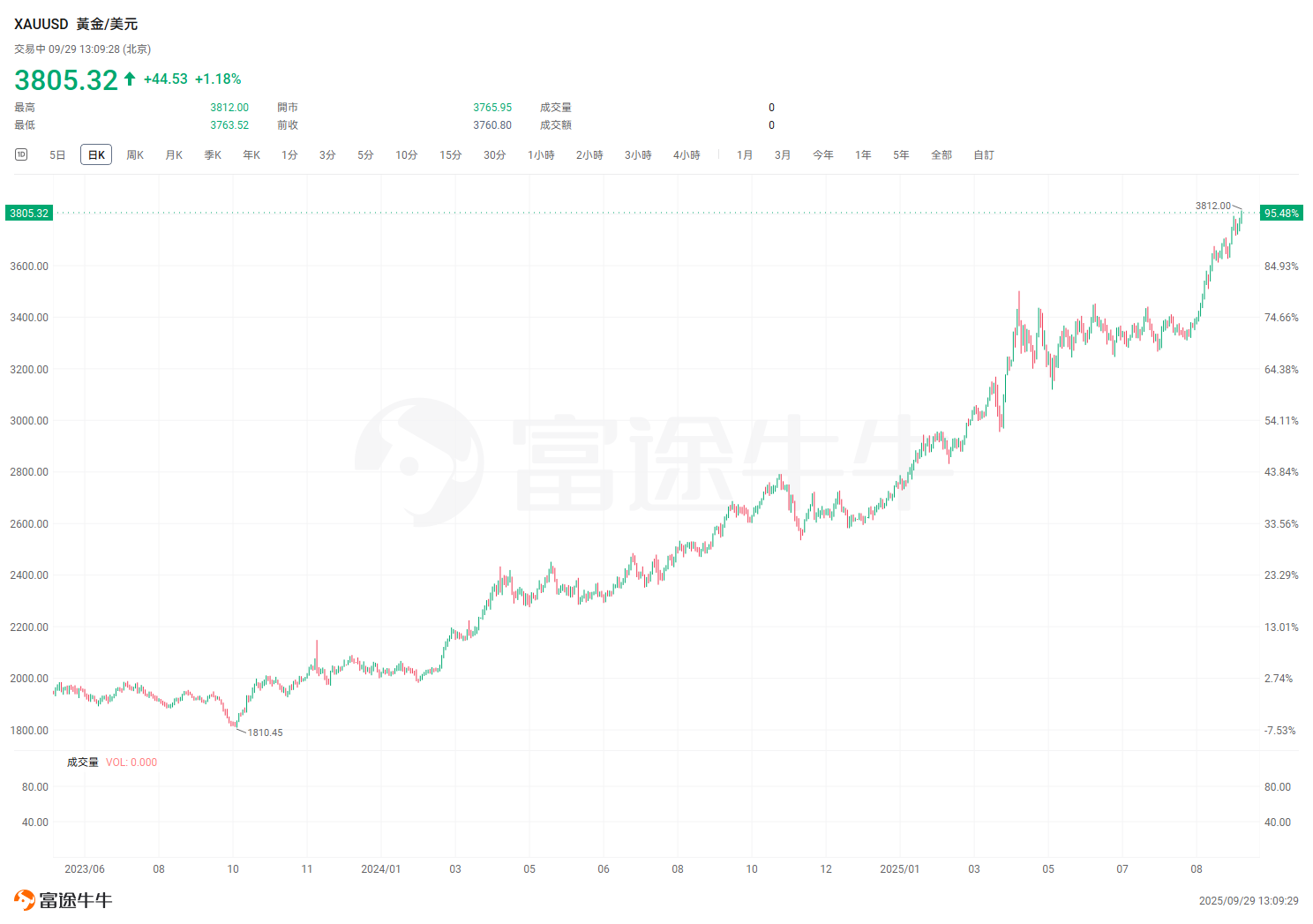
续创历史新高!现货黄金首次突破3810美元,政府停摆与美联储迷雾成最佳推手
Zhi Tong Cai Jing· 2025-09-29 05:22
Group 1 - Precious metal prices surged, with gold reaching a historic high of $3,812 per ounce, marking a nearly 45% increase year-to-date [1][4] - The rise in precious metals is supported by ongoing market supply tightness and increasing inflows into ETFs focused on these metals [4] - Gold stocks in the Hong Kong market saw significant gains, with increases of over 7% for some companies [4][5] Group 2 - Concerns about a potential U.S. government shutdown are causing traders to closely monitor the situation, as it may delay the release of key employment data [6] - A weak employment report could provide more justification for the Federal Reserve to adopt a more accommodative monetary policy in its upcoming meeting [9] - The outlook for the Federal Reserve's interest rate decisions remains uncertain, with differing views among officials and some economic data performing better than expected [9] Group 3 - Other precious metals are also experiencing unprecedented supply tightness, with significant increases in leasing rates for silver, platinum, and palladium [10] - Market concerns have been heightened by the potential inclusion of platinum group metals in the "232 clause" mineral investigation by the Trump administration, which could lead to increased import tariffs [13]