避险资产

Search documents
金价飙升日本散户蜂拥抢购金条,小克重产品库存告急被迫停售
Feng Huang Wang· 2025-10-15 22:19
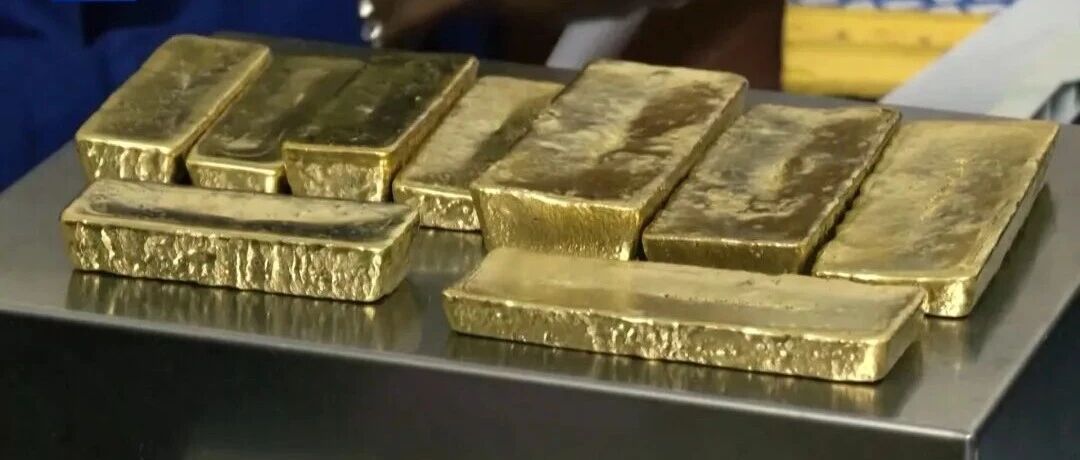
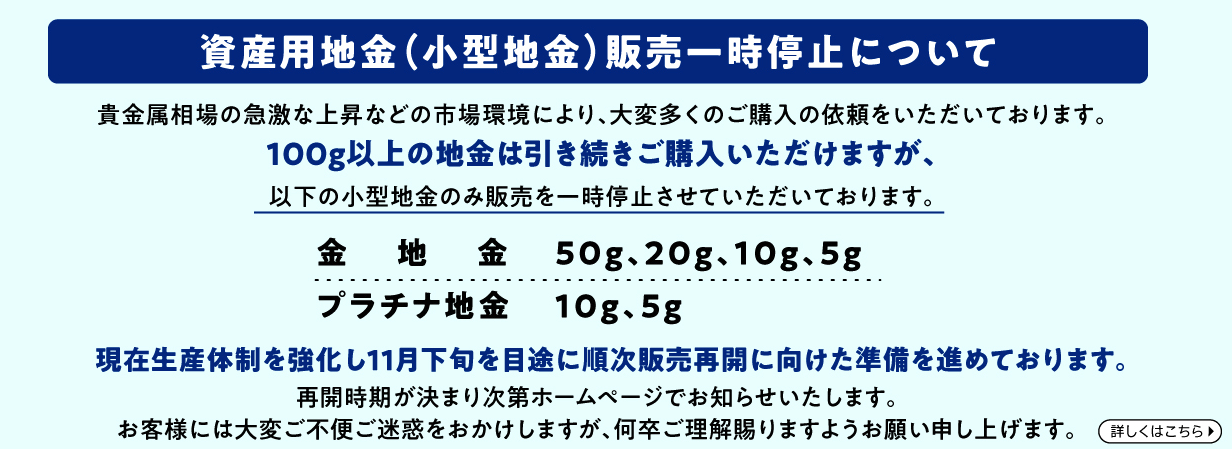
Group 1 - Japanese retail investors have rapidly purchased gold bars, depleting the inventory of precious metal retailers amid global uncertainties [1] - As of this week, the retail gold price in Japan has surpassed 22,400 yen per gram (approximately 1,057 RMB), nearly doubling in the past two years [1] - The price of gold in yen has increased nearly fourfold since the end of 2020 due to rising domestic inflation and yen depreciation [1] Group 2 - Retailers report a significant shift in investor behavior, with more individuals buying gold in anticipation of continued price increases rather than selling during price surges [1] - The inventory of gold bars weighing less than 50 grams is rapidly declining, with the price of 100-gram bars reaching 2.2 million yen, making smaller products more attractive to retail investors [1] - Tanaka Kikinzoku has stopped selling gold bars weighing 50 grams or less, and several competitors have also reported that smaller products are sold out [1] Group 3 - Tanaka Kikinzoku's sales planning manager stated that while raw material procurement is not an issue, production capacity for gold bars is struggling to keep up with demand [3] - The company is working to enhance production capacity, expecting to gradually resume sales by late November [3] - The surge in customer numbers began around late September when gold prices reached 20,000 yen per gram, driven by concerns over U.S. government policies [3] Group 4 - Analysts believe that the yen will continue to depreciate due to the expectation of more expansionary fiscal policies from both the ruling and opposition parties [3] - Daisaku Ueno, chief forex strategist at Mitsubishi UFJ Morgan Stanley Securities, noted that gold is viewed as an effective diversification option to protect asset value against yen depreciation risks [4]

Gold Price Forecast: Is the Mania Over or Is $5,000 a Realistic Target?
Yahoo Finance· 2025-10-15 18:07
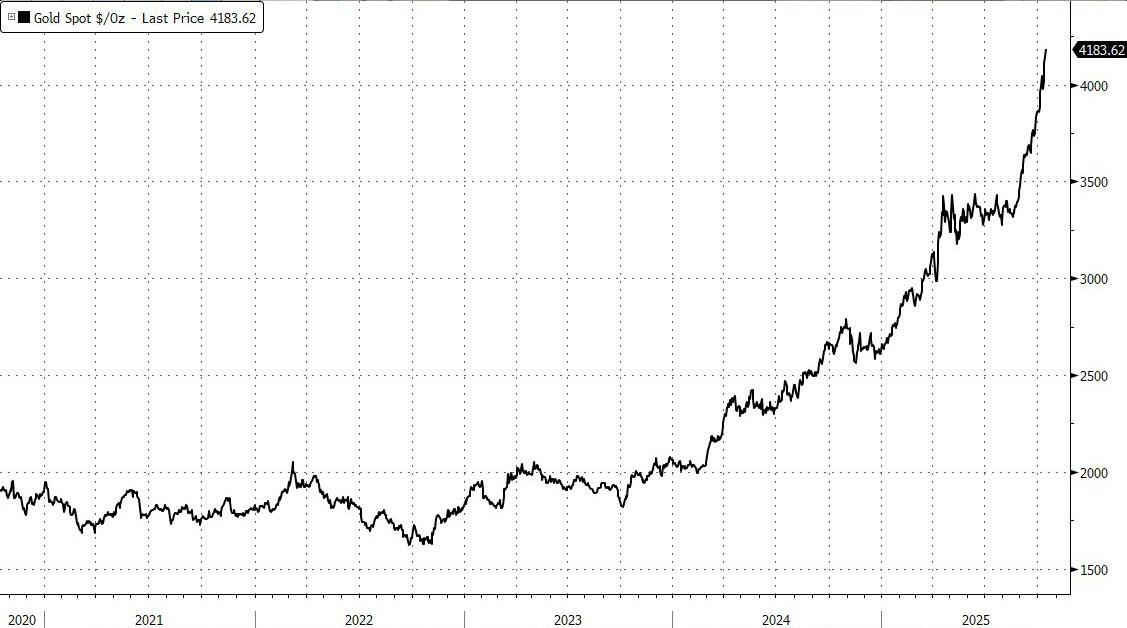
Core Insights - The current Dow Jones to Gold multiple is around 11x, indicating that gold is expensive compared to stocks [1] - The average global all-in sustaining costs (AISC) for gold miners is $1,600 per ounce, with current gold prices over 2.6x this metric, suggesting higher production from lower-tier mines [2] - The gold-to-oil ratio has risen above historical averages, indicating a potential need for gold prices to fall or oil prices to rise [3] - Analysts are gradually raising gold price forecasts, with Bank of America predicting prices to reach $5,000 per ounce by 2026 [5] - The macro environment is favorable for gold, with increased investment from both retail and institutional investors, including central banks [7][8] - The fragile geopolitical situation and high U.S. debt levels are contributing to gold's appeal as a safe-haven asset [9][10] - Recent Fed rate cuts are seen as positive for gold prices, as lower interest rates benefit non-interest-bearing assets [11] Investment Dynamics - The current gold price rally has surprised analysts, who were initially conservative with their targets [6] - There are several bullish drivers for gold prices, including fears of a stock market bubble and increased hedging by investors [7] - Central banks are increasing their gold reserves amid a de-dollarization trend, further supporting gold prices [8] - The ongoing U.S. government shutdown and fears of recession are increasing safe-haven demand for gold [10] - Despite the bullish outlook, there are concerns about the sustainability of the recent rally, with some analysts advising caution [13]
甘肃一地发现大型金矿,规模相当于两个大型金矿
Mei Ri Jing Ji Xin Wen· 2025-10-15 14:52
Group 1 - Gansu Province has discovered a large gold mine in the Qianhongquan-Heishan Beitan area, with an additional gold resource of over 40 tons, equivalent to the resource amount of two large gold mines [1] - The Qianhongquan gold mine was discovered through large-scale geochemical exploration methods based on basic geological survey work, providing significant guidance for gold mine exploration in similar regions [1] - On October 15, 2025, the most actively traded gold futures price on the New York Commodity Exchange exceeded $4200 per ounce, setting a historical high [1] Group 2 - International gold prices have increased by over 50% this year, driven by multiple factors including U.S. government shutdown, political instability in France, economic concerns in Japan and the U.S., and ongoing geopolitical conflicts [3] - On October 15, domestic gold jewelry prices rose, with major brands like Lao Miao, Chow Tai Fook, and Liufuk Jewelry all pricing their 24K gold jewelry at 1235 yuan per gram [3][6] - On the same day, gold-related stocks saw significant gains, with companies like Zhaojin Mining and Zijin Mining hitting their daily limit up, indicating strong market interest in gold investments [7][8]




见证历史,又新高!
Zhong Guo Ji Jin Bao· 2025-10-15 13:53
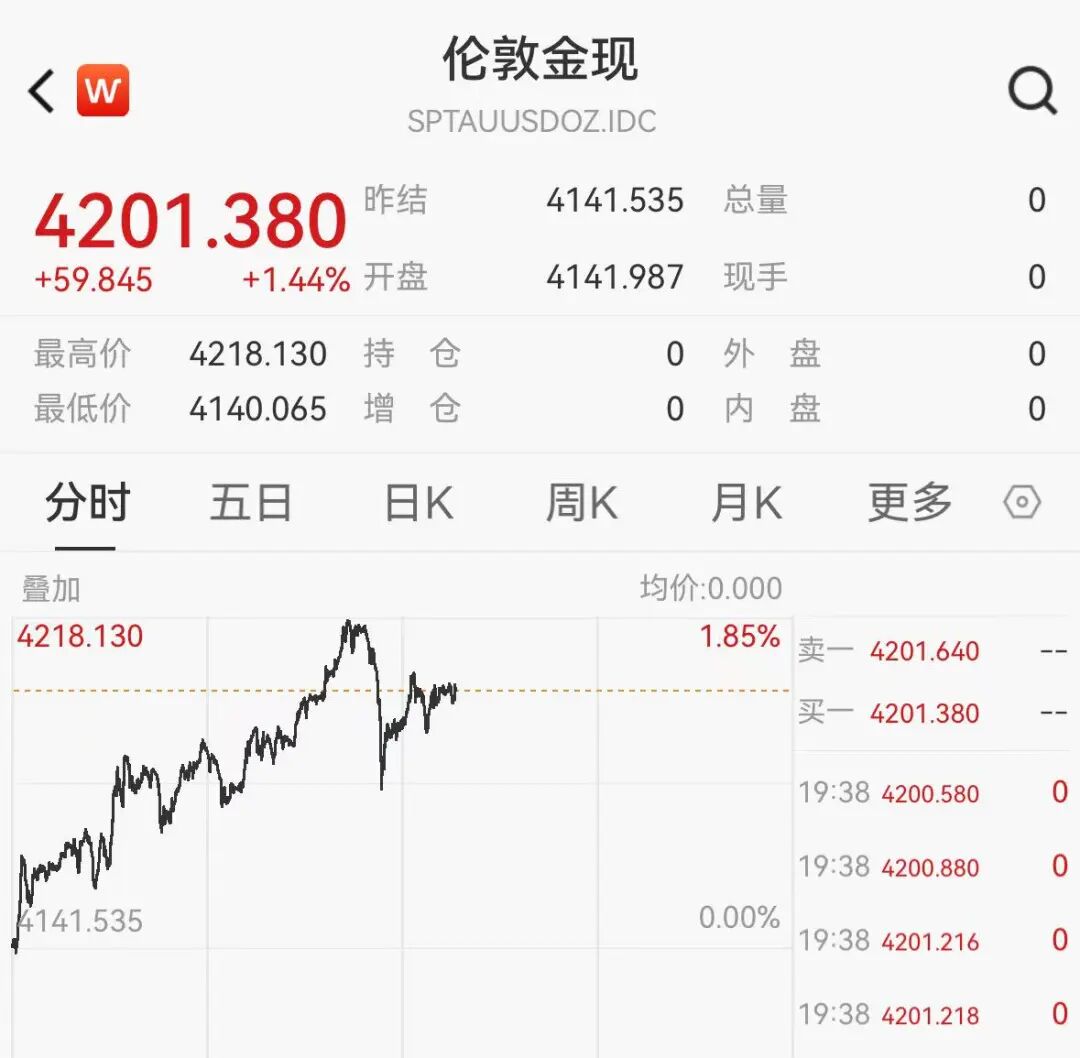
Group 1 - Spot gold prices reached a historic high, surpassing $4200 per ounce, with a peak of $4218.13 on October 15, marking a daily increase of 1.85% [1] - COMEX gold also saw significant gains, reaching a high of $4235.8 per ounce, with an increase of over 1.7% [2] - Major gold jewelry brands in China, such as Chow Tai Fook and Lao Feng Xiang, raised their gold prices to around 1230-1235 RMB per gram, reflecting a notable increase from the previous day [2] Group 2 - Analysts from ING noted that gold and silver have been the best-performing commodities this year, with prices rising over 55% and 80% year-to-date, driven by factors such as the Federal Reserve's easing policies and geopolitical tensions [2] - Federal Reserve Chairman Jerome Powell's dovish remarks further accelerated gold prices, with expectations of potential interest rate cuts in October and December, leading to a decline in U.S. Treasury yields and a weaker dollar, both favorable for gold [2][3] - The ongoing U.S. government shutdown, which has extended into its third week, has delayed the release of important macroeconomic data, keeping market focus on Federal Open Market Committee members' speeches [3] Group 3 - Yunnan Copper announced an expected production of 16 tons of gold and 680 tons of silver by 2025, although the impact of rising precious metal prices on overall performance is limited due to low self-sufficiency in copper concentrate [4] - Nepean Mining indicated that a new mine is expected to produce approximately 1.1 tons of gold annually, alongside copper and silver production [4] - Western Gold announced plans for a share reduction by a major shareholder, with a total of up to 1.822 million shares to be sold, representing a reduction of no more than 2% of total shares [4] Group 4 - China National Gold reported the completion of a share reduction plan by CITIC Securities, involving the sale of 13.9194 million shares, accounting for 0.83% of the total share capital, with a total amount of 117.7 million RMB [5]
摩根大通CEO戴蒙承认:持有黄金“有些合理”,金价可能轻松涨至5000或10000美元
Hua Er Jie Jian Wen· 2025-10-15 13:36
Core Viewpoint - Jamie Dimon, CEO of JPMorgan, stated that holding gold is "somewhat rational" and predicted that gold prices could easily rise to $5,000 or even $10,000 in the current environment, marking one of the few times in his career he has viewed gold allocation as "half-rational" [1] Group 1: Gold Price Trends - Gold prices reached a historic high of $4,200 per ounce, with a year-to-date increase of nearly 60%, surpassing stock market performance [2][4] - The demand for gold as a safe-haven asset reflects concerns over inflation and geopolitical instability, with central bank gold purchases being a major driver of the price increase [4] Group 2: Investor Sentiment and Allocation - Despite the significant rise in gold prices, Wall Street's allocation to gold remains low at only 2.4%, according to a recent Bank of America fund manager survey [5] - In comparison, cryptocurrency allocation is even lower at 0.4%, indicating that gold is still relatively under-allocated [8] Group 3: Changing Perspectives Among Wall Street Leaders - The statements from Dimon and Ken Griffin indicate a shift in perspective among Wall Street leaders who previously held reservations about precious metals, now reassessing gold's investment value [11] - Dimon’s mention of a 4% holding cost primarily applies to wealthy individuals needing to store large amounts of gold, while the holding cost for smaller investors is nearly zero [11] - Griffin's view of investors turning to gold as a sign of declining confidence in the dollar reflects rising concerns about the stability of fiat currencies [11]
见证历史,又新高!
中国基金报· 2025-10-15 13:36
Core Viewpoint - The article highlights the recent surge in gold prices, with spot gold breaking through $4200 per ounce for the first time, reaching a new historical high of $4218.13 per ounce on October 15, 2023, driven by various macroeconomic factors and geopolitical tensions [2][4]. Gold Market Performance - Spot gold prices increased significantly, with a daily high of $4218.13 per ounce, marking a rise of 1.85% [2]. - COMEX gold also saw a rise, reaching a peak of $4235.8 per ounce, with an increase of over 1.7% [4]. - Major gold jewelry brands in China, such as Chow Tai Fook and Lao Feng Xiang, reported a surge in gold prices to around 1235 RMB per gram, reflecting a notable increase from the previous day [6][7]. Supporting Factors for Gold Prices - Analysts from ING noted that gold and silver have been the best-performing commodities this year, with prices rising over 55% and 80% year-to-date, respectively. This is attributed to the Federal Reserve's easing policies, ongoing central bank gold purchases, and escalating geopolitical tensions, which have increased demand for safe-haven assets [6]. - Federal Reserve Chairman Jerome Powell's dovish remarks further accelerated gold prices, as investors interpreted his comments as a signal for potential interest rate cuts in October and December, leading to lower U.S. Treasury yields and a weaker dollar, both favorable for non-yielding gold [6][8]. Economic Outlook and Company Updates - The International Monetary Fund (IMF) slightly revised its global economic growth forecast for 2025 from 3.0% to 3.2%, while warning that escalating trade tensions could significantly impact output [9]. - Yunnan Copper announced plans to produce 16 tons of gold and 680 tons of silver by 2025, indicating that rising precious metal prices could positively affect its performance, although its overall impact may be limited due to low self-sufficiency in copper [10]. - Nepean Mining indicated that its foreign mining project is expected to yield approximately 1.1 tons of gold annually once operational [10]. - Western Gold announced a plan for a significant share reduction by a board member, while China Gold reported the completion of a share reduction plan by its shareholder CITIC Securities [10].
黄金基金ETF(518800)午后涨超2%,市场关注避险需求与配置价值
Mei Ri Jing Ji Xin Wen· 2025-10-15 13:18
Group 1 - Gold plays a significant role in asset allocation as a diversification and risk-hedging tool, with optimal allocation averaging 18% from 1972 to 2014, particularly yielding an annual return of 16.2% when inflation exceeds 5% [1] - In the current environment of high global debt, low real interest rates, and geopolitical uncertainty, gold's strategic value as a non-correlated asset is highlighted, shifting asset allocation paradigms from "fixed income+" to "gold+" [1] - The core logic for gold's price increase is linked to the re-evaluation of dollar credit, particularly post-Ukraine crisis, where insufficient safe-haven assets and doubts about the Federal Reserve's credibility are significant factors [1] Group 2 - The Gold ETF (518800) holds physical gold contracts traded on the Shanghai Gold Exchange, directly corresponding to the physical gold stored in the exchange's vaults, making investment in the ETF equivalent to direct investment in physical gold [1] - The price movements of the Gold ETF closely follow the AU9999 spot contracts, which represent domestic gold prices, with a requirement that at least 90% of the fund's assets must be held in physical gold [1]
基金公司限购黄金相关产品,工行、建行、招行等集体提示风险
2 1 Shi Ji Jing Ji Bao Dao· 2025-10-15 12:28
Core Viewpoint - Gold prices have reached new highs, peaking at $4,210 per ounce, indicating strong investor interest and potential overvaluation in the market [1][3]. Group 1: Gold Price Trends - As of October 15, gold prices have surged, with a peak of $4,218.13 per ounce and a daily increase of 1.44% [2]. - The average net asset value growth rate for gold-themed ETFs this year is 66%, with some ETFs seeing increases over 100% [7][8]. Group 2: Investor Sentiment - According to a recent Bank of America survey, 43% of investors view "going long on gold" as the most crowded trade, surpassing the 39% for "going long on the seven major U.S. stocks" [3][8]. - Despite the high interest in gold, the average allocation to gold among global investors is only 2.4%, indicating a discrepancy between sentiment and actual investment [8]. Group 3: Fund Management Actions - Due to the influx of capital into gold ETFs, several fund companies, including Huatai-PineBridge and Guotai Asset Management, have implemented large purchase limits on their gold-related funds [5][6]. - Huatai-PineBridge announced a limit of 20,000 RMB for single or cumulative purchases starting October 16, 2025, down from a previous limit of 50,000 RMB [5]. Group 4: Market Adjustments - Major banks have raised minimum investment amounts for gold accumulation products, with adjustments made by institutions like Industrial and Commercial Bank of China and Bank of China [10][11]. - The Shanghai Gold Exchange has also adjusted trading limits and margin requirements for gold and silver contracts, reflecting increased market volatility [12].






基金公司限购黄金相关产品,工行、建行、招行等集体提示风险
21世纪经济报道· 2025-10-15 12:08
Group 1 - The core viewpoint of the article highlights the significant rise in gold prices, reaching a peak of $4,210 per ounce, and the growing interest in gold as a safe-haven asset among global investors [1][2] - According to the latest Bank of America global fund manager survey, 43% of respondents consider "going long on gold" as the most crowded trade, surpassing the 39% for "going long on the seven major U.S. stocks" [2][6] - The total scale of gold ETFs has exceeded 200 billion yuan this year, with rapid inflows leading some fund companies to impose large purchase limits on related funds [2][4] Group 2 - Fund companies like Huatai-PineBridge and Guotai Asset Management have announced restrictions on large purchases of their gold and silver funds to protect the interests of fund shareholders [4][6] - As of October 14, five gold-themed ETFs have surpassed 10 billion yuan in scale, with the Huaan Gold ETF leading with an inflow of 25.516 billion yuan this year, marking a nearly 160% increase from the end of last year [6] - The average net asset value growth rate for gold-themed ETFs this year is positive, with some funds exceeding 100% growth [6] Group 3 - Recent fluctuations in gold prices have prompted several banks, including ICBC and CCB, to issue market risk alerts regarding precious metals, advising clients to enhance risk awareness and manage positions carefully [8][9] - Adjustments have been made to the minimum purchase amounts for gold accumulation products by various banks, reflecting the increased volatility in the gold market [8][9] - Changes in trading margin ratios and price fluctuation limits for gold contracts have been implemented by banks like Agricultural Bank of China and Bank of China to adapt to market conditions [9]

金价,再创历史新高!
新华网财经· 2025-10-15 12:06
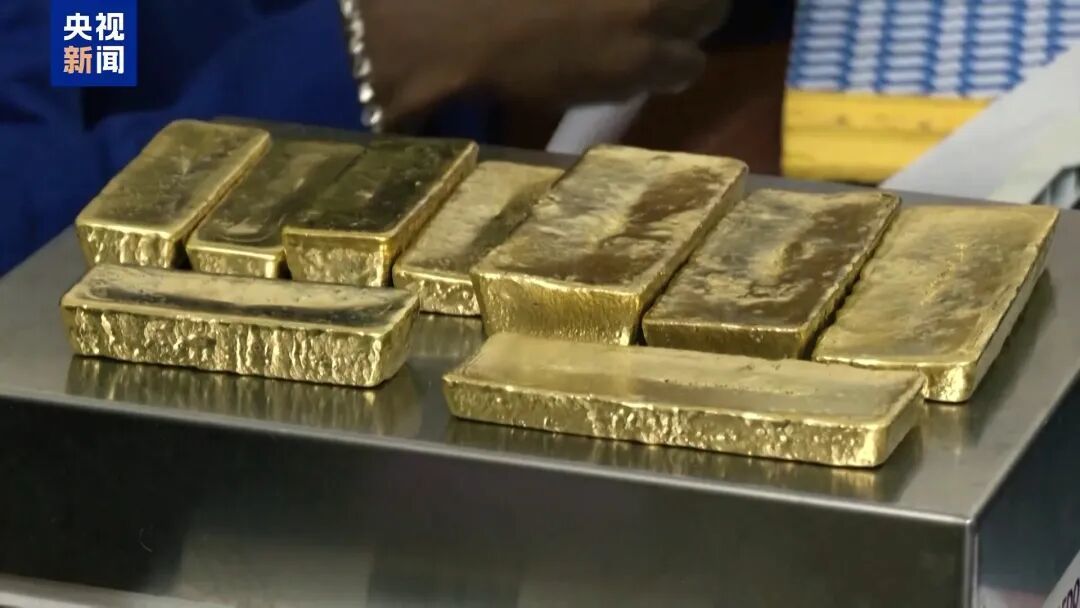
来源:央视新闻 关注" 新华网财经 "视频号 更多财经资讯等你来看 15日,纽约商品交易所黄金期货市场交投最活跃的2025年12月黄金期价一度超过每盎司4200美元,创历史新高。 总票房,突破50亿! 身份证换证高峰来了!最全攻略→ 往期推荐 数据显示,国际金价今年以来的涨幅已超过50%。黄金是典型的避险资产。分析认为,美国政府停摆、法国政局动荡、美日等国的经济隐忧以及持续的地 缘冲突等多重因素叠加,共同推动了市场对黄金的避险需求。 ...