全球央行购金

Search documents
贵金属日评20251208:全球债务膨胀预期支撑贵金属价格-20251208
Hong Yuan Qi Huo· 2025-12-08 06:15
1. Report Industry Investment Rating No information provided in the report. 2. Core View The report indicates that the Fed's expected rate cut in December, global debt expansion, central bank gold - buying, and geopolitical risks are likely to support precious metal prices in the medium - to - long - term. However, the high price of platinum may curb downstream demand, and the supply - demand situation of lithium is expected to shift from tight to loose, which may lead to price adjustments for both [1]. 3. Summary by Related Catalogs 3.1 Precious Metal Market Data - **Gold**: Shanghai gold futures' closing price was 958.27 yuan/gram, with a change of 7.56 compared to the previous day and - 2.27 compared to the previous week. International gold's COMEX futures active contract closing price was 4227.70 dollars/ounce, with a change of - 10.20 compared to the previous day and 31.60 compared to the previous week [1]. - **Silver**: Shanghai silver futures' closing price was 13687.00 yuan/ten - grams, with a change of 263.00 compared to the previous day and 409.00 compared to the previous week. International silver's COMEX futures active contract closing price was 58.80 dollars/ounce, with a change of 1.27 compared to the previous day and 5.04 compared to the previous week [1]. 3.2 Important Information - China's gold reserves at the end of November were reported at 74.12 million ounces (about 2305.39 tons), a month - on - month increase of 30,000 ounces (about 0.93 tons), marking the 13th consecutive month of increase [1]. - The Fed's favored inflation indicator, the September core PCE index, increased by 2.8% year - on - year, in line with expectations, and real personal spending stagnated. US consumer confidence ended a four - month decline, and short - term inflation expectations dropped to the lowest point at the beginning of the year [1]. 3.3 Multi - and Short - Logic - **Gold and Silver**: The mixed performance of the US economic and employment data, along with some Fed officials' support for a December rate cut, keeps the probability of a December rate cut above 80%. Fiscal easing policies in multiple countries lead to expectations of debt expansion and fiscal deficit growth, and central banks' continuous gold - buying, along with geopolitical risks, may support precious metal prices in the medium - to - long - term [1]. - **Platinum**: High mining costs, unstable power supply, and aging equipment limit platinum production, while increased demand from traditional fuel and hybrid vehicles due to stricter emission standards and optimistic demand from other industries lead to a tight global platinum supply - demand situation in 2025 - 2026. However, high platinum prices may curb downstream demand [1]. - **Lithium**: Supply is affected by deep - mine mining, power shortages, etc., but increased recycling is expected. Demand from the automotive industry is expected to decline, while demand from other industries has low elasticity. The global lithium supply - demand situation is expected to shift from tight to loose in 2025 - 2026 [1]. 3.4 Trading Strategies - **Gold and Silver**: When prices decline, it is advisable to go long. For London gold, pay attention to support levels around 3900 - 4100 and resistance levels around 4300 - 4600; for Shanghai gold, support levels are around 890 - 920 and resistance levels are around 970 - 1000. For London silver, support levels are around 49 - 54 and resistance levels are around 59 - 63; for Shanghai silver, support levels are around 12500 - 15000 and resistance levels are around 14000 - 15000 [1]. - **Platinum**: Temporarily stay on the sidelines for single - side trading. Hold "long platinum, short palladium" positions cautiously. For London platinum, pay attention to support levels around 1300 - 1500 and resistance levels around 1800 - 2000; for domestic platinum, support levels are around 335 - 385 and resistance levels are around 465 - 516 [1]. - **Lithium**: Temporarily stay on the sidelines for single - side trading. For London lithium, pay attention to support levels around 1190 - 1390 and resistance levels around 1600 - 1800; for domestic lithium, support levels are around 305 - 357 and resistance levels are around 415 - 465 [1].
华安期货:12月8日黄金白银偏强震荡
Sou Hu Cai Jing· 2025-12-08 03:58
贵金属年内累积较大涨幅,高位波动加剧。短期,美联储政策预期变化及官方经济指标缺失等带来不确定性。中长期,全球央 行购金趋势延续、债务问题冲击货币信用等因素仍为贵金属提供支撑。 华安期货:12月8日黄金/白银偏强震荡 重要信息: 1、经合组织发布最新经济展望报告,今明两年,预计全球经济增速分别为3.2%和2.9%,与今年9月预测一致;美国经济预计将 分别增长2%和1.7%,欧元区经济将增长1.3%和1.2%。 核心逻辑: 金银方面,白银继续创新高,金融属性增加及供需面向好带来支撑。黄金高位盘整,短期关注12月多个主要经济体利率决议, 长期看全球经济前景。 铂钯方面,广期所铂、钯期货上市一周,市场几个特点,一是目前成交还少,且集中在2606合约;二是没有夜盘,建议可以同 步关注纽约铂钯期货行情;三是期权同步上市。 市场展望: 偏强震荡 2、美国11月ISM制造业PMI指数下降0.5点至48.2,连续九个月低于50的荣枯线。 3、新的一周关注美联储利率决议、美国CPI及进出口等;中国CPI和PPI、M2、社融等指标。 ...


李槿:12/7黄金震荡失守4200!下周走势预测!
Sou Hu Cai Jing· 2025-12-07 04:56
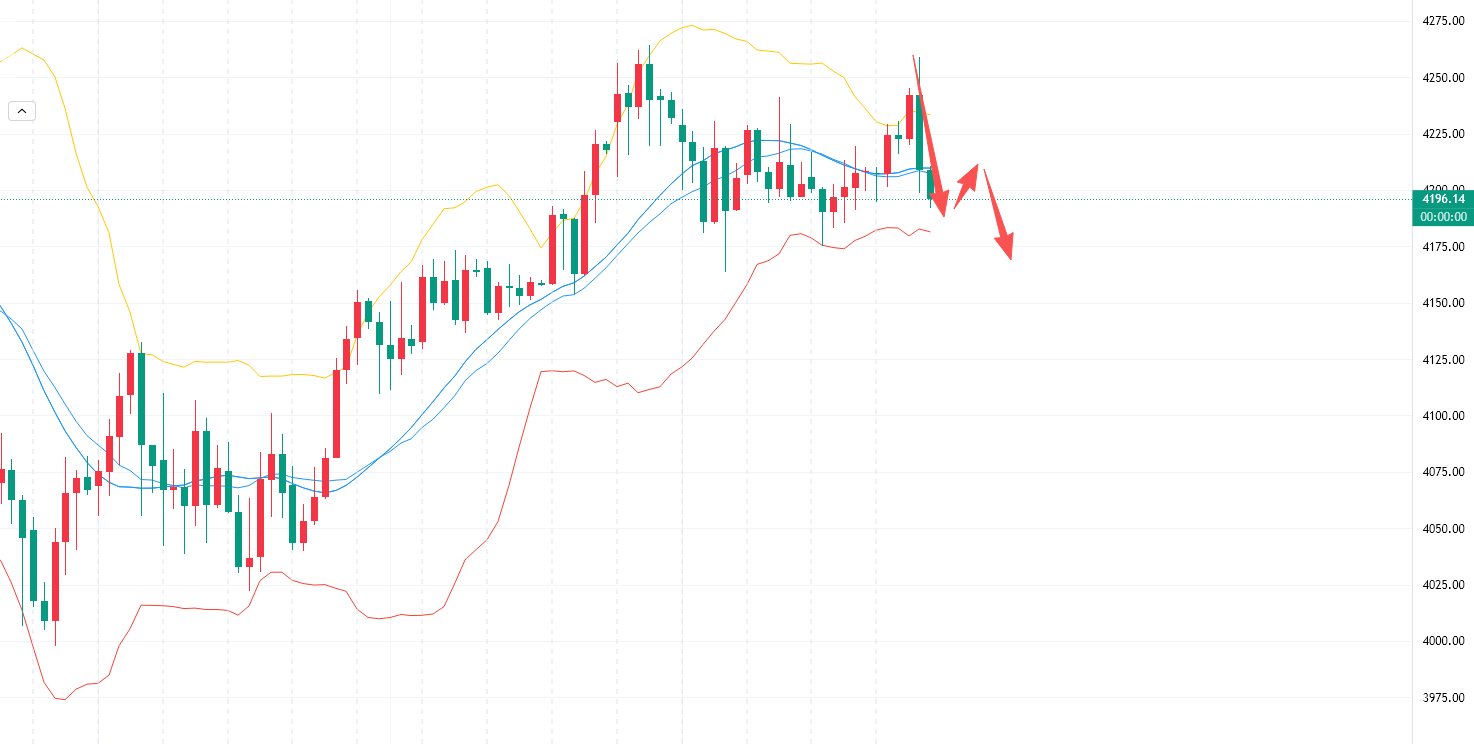
Core Viewpoint - The overall trend of gold is experiencing fluctuations, with significant resistance at 4260 and support levels around 4163 and 4131, indicating a potential for further testing of these levels in the near term [1][4]. Group 1: Market Analysis - Gold prices initially rose to 4264 but faced resistance and retreated, closing at 4196 after a drop below the 4200 mark [1]. - Factors supporting gold include a nearly 90% probability of a Federal Reserve rate cut in December, geopolitical risks in the Middle East and Ukraine, and ongoing gold purchases by global central banks [1]. - Strong U.S. non-farm payroll data for November has stabilized the U.S. dollar, putting pressure on gold prices [1]. Group 2: Trading Strategy - The trading strategy suggests looking for short positions in the 4215-4220 range, with a focus on entering short at 4208 if the market weakens [4]. - Initial support is noted at the recent low of 4163, with further attention on 4131 and a critical level at 4084 for unexpected weakness [1][4]. - The potential for upward movement exists if gold can break above 4260, with targets set at 4300 and possibly 4350 [1].
紧急提醒!金价在4200关口磨蹭,现在是入场时机吗?
Sou Hu Cai Jing· 2025-12-05 04:25
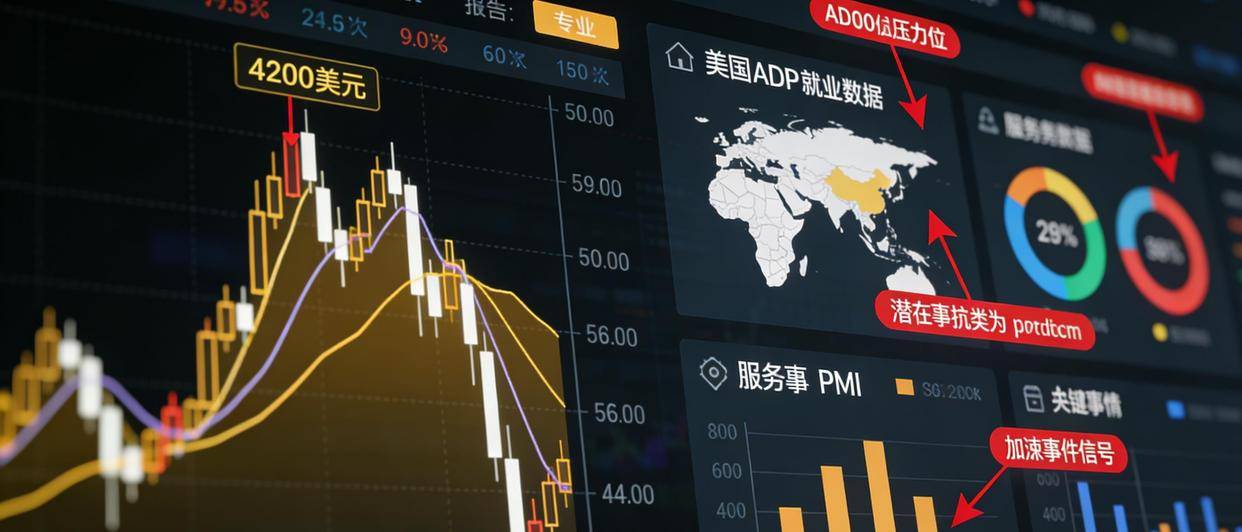
Core Viewpoint - The gold market is currently experiencing a tug-of-war between profit-taking selling pressure and strong support levels, with prices hovering around the critical $4200 mark after a recent peak of $4264 [1][6]. Group 1: Market Dynamics - Gold prices are currently reported at $4207.76 per ounce, showing a slight decline of $4.73 or 0.11% [1]. - The recent ADP employment report indicated a surprising decrease of 32,000 jobs in November, contrasting sharply with the expected increase of 10,000, which has heightened expectations for a potential interest rate cut by the Federal Reserve [3]. - The probability of a 25 basis point rate cut by the Federal Reserve has surged to nearly 89%, up from 71% a week prior, influencing market sentiment towards a weaker dollar and providing support for gold prices [3]. Group 2: Technical Analysis - The $4200 level has become a focal point for both bulls and bears, with the overall trend remaining within an upward channel [6]. - Key resistance levels are identified between $4250 and $4260, while support is found in the $4180 to $4200 range; a break below this support could lead to a drop towards $4150 [8]. - The market is currently in a consolidation phase, with a lack of clear directional signals as indicated by the narrowing Bollinger Bands and the alignment of moving averages [10][14]. Group 3: Institutional Behavior - Global central banks, particularly the People's Bank of China, have been increasing their gold reserves for 12 consecutive months, providing a buffer against price declines [6]. - There is a divergence in views among Wall Street analysts regarding gold's outlook, with some seeing current adjustments as technical and others cautioning against overly optimistic rate cut expectations [8][10]. Group 4: Future Indicators - Upcoming economic data, including initial jobless claims and the PCE inflation index, are expected to significantly influence market perceptions of future interest rate paths and, consequently, gold prices [14]. - Analysts suggest that if PCE data continues to show cooling inflation, the likelihood of gold breaking through the $4250 level increases significantly [14][16]. - The market is currently in a state of flux, with both bulls and bears awaiting new catalysts to determine the next direction for gold prices [18].
贵金属市场宏观趋势与基本面分析
2025-12-04 15:36
贵金属市场宏观趋势与基本面分析 20251204 摘要 美联储降息预期摇摆不定,受劳动力市场放缓和经济疲软影响,12 月降 息概率上升,但官员对降息路径存在分歧,鲍威尔言论偏鹰派,数据缺 失也增加不确定性,12 月或降息 25 个基点后暂停。 美国消费表现疲软,零售销售同比接近零,个人储蓄下降,劳动力市场 和薪资增速放缓抑制消费,信用卡违约率创新高,消费对 GDP 增长形成 压力。 全球黄金需求第三季度创历史新高,总需求量同比增加 3%,总金额飙 升 44%,达 1,460 亿美元,央行购金、ETF 投资、金条金币及首饰需 求均增加,投资需求占据主导地位。 全球央行持续购金,新兴市场国家如中国、土耳其、印度和波兰大规模 购入黄金,中国已连续 12 个月增持,央行行为可能影响个人投资者决 策。 白银市场供需缺口依然存在,预计今年全球白银供需缺口为 3,657 吨, 这将进一步支撑白银价格,但白银价格波动率高于黄金,对国内政策变 动更敏感。 Q&A 宏观经济因素对贵金属市场有何影响? 宏观经济因素对贵金属市场影响显著。目前,美联储降息预期的不确定性增加, 主要由于美国劳动力市场放缓和经济走弱迹象明显。美联储主席人 ...
金荣中国:黄金震荡调整蓄力待发
Sou Hu Cai Jing· 2025-12-04 06:30
Group 1 - The core viewpoint indicates that despite the current fluctuations in gold prices, the overall trend remains bullish due to supportive factors such as anticipated interest rate cuts and strong global central bank demand for gold [1][3][4] - The market is currently awaiting key economic data, including U.S. non-farm payrolls and CPI, which are expected to influence future interest rate decisions and support gold prices [3][4] - The upcoming Federal Reserve meeting is seen as a pivotal moment, with expectations of a dovish shift in monetary policy that could further bolster gold prices in the long term [4] Group 2 - The U.S. dollar index has shown a recent decline, which typically supports gold prices; however, the current market conditions are causing gold to experience some resistance near key levels [1][3] - The market is in a phase of adjustment, with gold prices oscillating near resistance levels, indicating a potential accumulation phase before a breakout [3][4] - Geopolitical tensions and strong demand from central banks are providing a solid foundation for gold prices, suggesting a bullish outlook for the next year [4]
新世纪期货交易提示-20251203
Xin Shi Ji Qi Huo· 2025-12-03 03:34
Industry Investment Ratings - Iron ore: Volatile [2] - Coking coal and coke: Volatile [2] - Rolled steel and rebar: Volatile [2] - Glass: Weakly volatile [2] - Soda ash: Volatile [2] - CSI 500: Rebound [4] - CSI 1000: Rebound [4] - 2 - year treasury bond: Volatile [4] - 5 - year treasury bond: Volatile [4] - 10 - year treasury bond: Upward [4] - Gold: Strongly volatile [4] - Silver: Strongly volatile [4] - Logs: Bottoming out with volatility [5] - Pulp: Volatile [5] - Offset paper: Volatile [5] - Soybean oil: Range - bound [7] - Palm oil: Range - bound [7] - Rapeseed oil: Range - bound [7] - Soybean meal: Weakly volatile [7] - Rapeseed meal: Weakly volatile [7] - Soybean No.2: Weakly volatile [7] - Soybean No.1: Weakly volatile [7] - Live pigs: Strongly volatile [8] - Rubber: Volatile [11] - PX: Widely volatile [11] - PTA: Volatile [11] - MEG: Weakly volatile [11] - PF: Await - and - see [11] Core Views - The overall market shows a complex and volatile trend, with different products affected by various factors such as supply - demand relationship, policy, and international situation. For example, the iron ore market is in a supply - surplus pattern, and the price is volatile at a high level; the gold price is supported by central bank purchases and geopolitical risks, and the short - term fluctuations are affected by the Fed's interest rate policy and risk aversion sentiment [2][4][6] Summary by Category Black Industry - Iron ore: Global iron ore shipments increased by 44.7 million tons to 33.232 billion tons, 47 - port foreign ore arrivals decreased by 155.5 million tons to 27.84 billion tons, and daily average hot metal production decreased by 1.6 million tons to 2.3468 billion tons. The demand core lies in the real estate, and the new construction has dropped to the 2005 level. The supply - surplus pattern is difficult to reverse, and the price is volatile at a high level [2] - Coking coal and coke: On December 1st, the first round of coke price cuts was implemented, and there are still expectations of further cuts. After the previous continuous decline, the valuation is reasonable, and there was a bottom - rebound on Monday. The market is worried about the resumption of production on the supply side. Steel and coke enterprises still have restocking needs, and the price is supported at a low level in the short term [2] - Rolled steel and rebar: The downstream demand is sluggish, and the winter restocking has not started yet. The core lies in steel demand, and the real estate new construction has dropped to the 2005 level. The steel price depends on the implementation of production reduction and anti - "involution" policies. The price is expected to remain at the bottom and fluctuate [2] - Glass: There are supply - side disturbances. The market expects three production lines in Hubei to be cold - repaired in December, but there are rumors of a delay. The float glass inventory has decreased, but the real - estate completion decline drags down the demand. The price is weakly volatile, and attention should be paid to the cold - repair progress and macro situation [2] - Soda ash: The report does not provide detailed information other than the investment rating of "volatile" [2] Financial - Stock index futures/options: The previous trading day, the CSI 300 index fell by 0.48%, the SSE 50 index fell by 0.51%, the CSI 500 index fell by 0.87%, and the CSI 1000 index fell by 1.00%. The market has short - term adjustments, but the medium - term trend is still optimistic [4] - Treasury bonds: The central bank increased the net investment of medium - and long - term liquidity tools in November. The 10 - year treasury bond yield rose by 1bp, and the market trend rebounded slightly [4] - Gold: The pricing mechanism is shifting from being centered on real interest rates to central bank gold purchases. The Fed's interest rate policy and risk aversion sentiment are short - term disturbance factors, and the long - term price is supported by the Fed's interest rate cut cycle, central bank gold purchases, and geopolitical risks [4][6] Light Industry - Logs: The average daily port shipment volume decreased last week. The import volume in October showed different trends, and the expected arrival volume decreased significantly. The inventory pressure has weakened, and the price is expected to bottom out with volatility [5] - Pulp: The spot market price became stronger on the previous trading day, and the cost support increased, but the paper mills' acceptance of high - price pulp is low, and the price is expected to be volatile [5] - Offset paper: The spot market price was partially raised on the previous trading day. The supply is stable, the orders are expected to increase, and the price is expected to be volatile [5] Oilseeds and Oils - Oils: The US soybean crushing reached a record high, but the US biodiesel policy is uncertain. The palm oil production and inventory in Malaysia in October were higher than expected, and the export in November decreased. The domestic oil supply is abundant, and the price is expected to be range - bound [7] - Meals: The US soybean supply is structurally tight, but the global supply is relatively loose. The domestic soybean meal supply is abundant, and the demand is mainly for rigid needs. The price is expected to be weakly volatile [7] Agricultural Products - Live pigs: The average trading weight is declining. The supply is abundant, the demand is limited, and the settlement price is decreasing. The slaughtering rate increased slightly but is expected to weaken next week. The average weekly price is expected to continue to decline [8] Soft Commodities and Chemicals - Rubber: The raw material price in Yunnan is stable, and the output in Hainan decreased due to temperature. The supply in Thailand and Vietnam is affected by rain. The inventory is increasing seasonally, and the price is expected to be widely volatile [11] - PX: The crude oil supply is in surplus, and the price is falling. The PX supply is high, but the downstream demand is good, and the price is widely volatile [11] - PTA: The cost is loosening, the short - term supply - demand situation has improved, but the industry is seasonally weakening, and the price is expected to follow the cost [11] - MEG: The long - term inventory pressure exists, and the short - term price is weakly volatile [11] - PF: The market is expected to be narrowly adjusted under the game of multiple factors [11]
张尧浠:美联储更宽松周期前景升温、金价预酝酿进一步牛市
Sou Hu Cai Jing· 2025-12-03 01:04
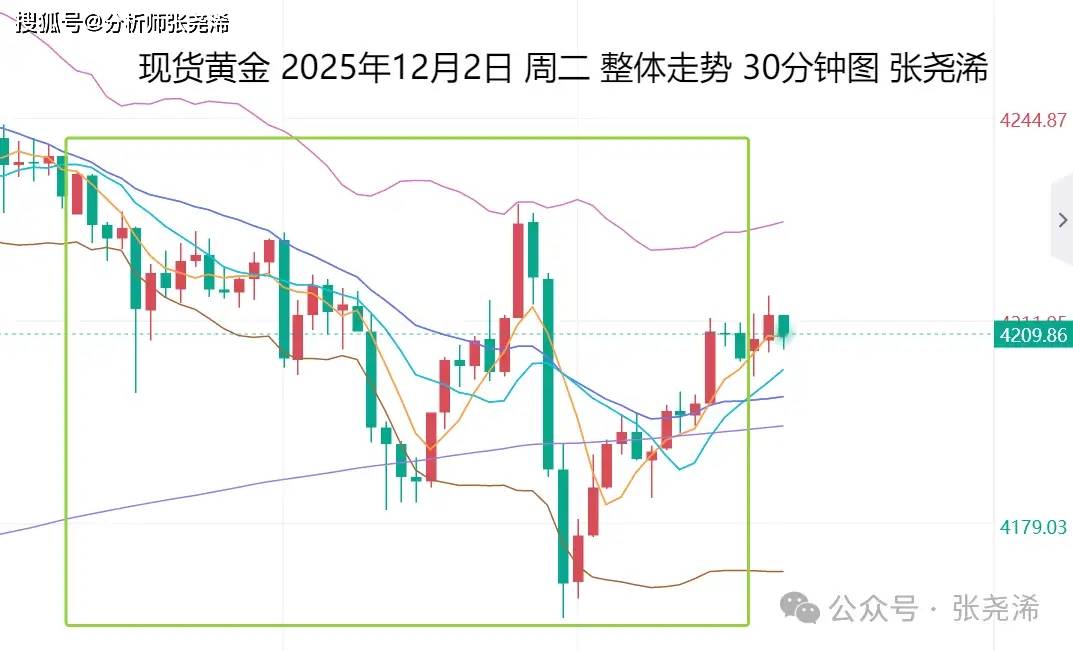
Core Viewpoint - The outlook for a more accommodative monetary policy from the Federal Reserve is increasing, which is expected to support a further bull market for gold prices [1][3][5]. Group 1: Market Performance - On December 2, international gold prices opened at $4231.36 per ounce, reached a high of $4235.97, and then fell to a low of $4163.81 before closing at $4205.63, resulting in a daily decline of $25.73 or 0.61% [1][3]. - The daily trading range was $72.16, indicating volatility in the market [1]. Group 2: Influencing Factors - Technical resistance and profit-taking led to a decline in gold prices, but support buying and expectations of a more dovish Federal Reserve under Trump's potential nominee for chair, Hassett, helped gold prices recover [3][5]. - The upcoming U.S. ADP employment figures and core PCE inflation data are anticipated to influence market expectations for interest rate cuts, which could further support gold prices [3][5]. Group 3: Long-term Outlook - The U.S. dollar index is expected to remain under pressure, which is favorable for gold prices, as it is trading below key moving averages [5]. - Strong demand for gold from global central banks continues, with a reported net purchase of 53 tons in October, a 36% increase month-over-month, marking the largest monthly net demand since early 2025 [5]. - Geopolitical tensions are also providing a solid support base for gold prices [5]. Group 4: Technical Analysis - Monthly and weekly charts indicate a bullish trend for gold, with the need to break above the $4400 level to open further upside potential [8]. - Short-term pullbacks are viewed as buying opportunities, with historical trends suggesting that corrections during rate-cutting cycles often lead to significant upward movements [6][8]. Group 5: Price Levels - Key support levels for gold are identified at $4195 and $4180, while resistance levels are at $4220 and $4245 [10]. - For silver, support is noted at $58.10 and $57.70, with resistance at $59.00 and $59.70 [10].
财经随笔记:黄金今日行情走势要点分析(2025.12.3)
Sou Hu Cai Jing· 2025-12-03 00:42
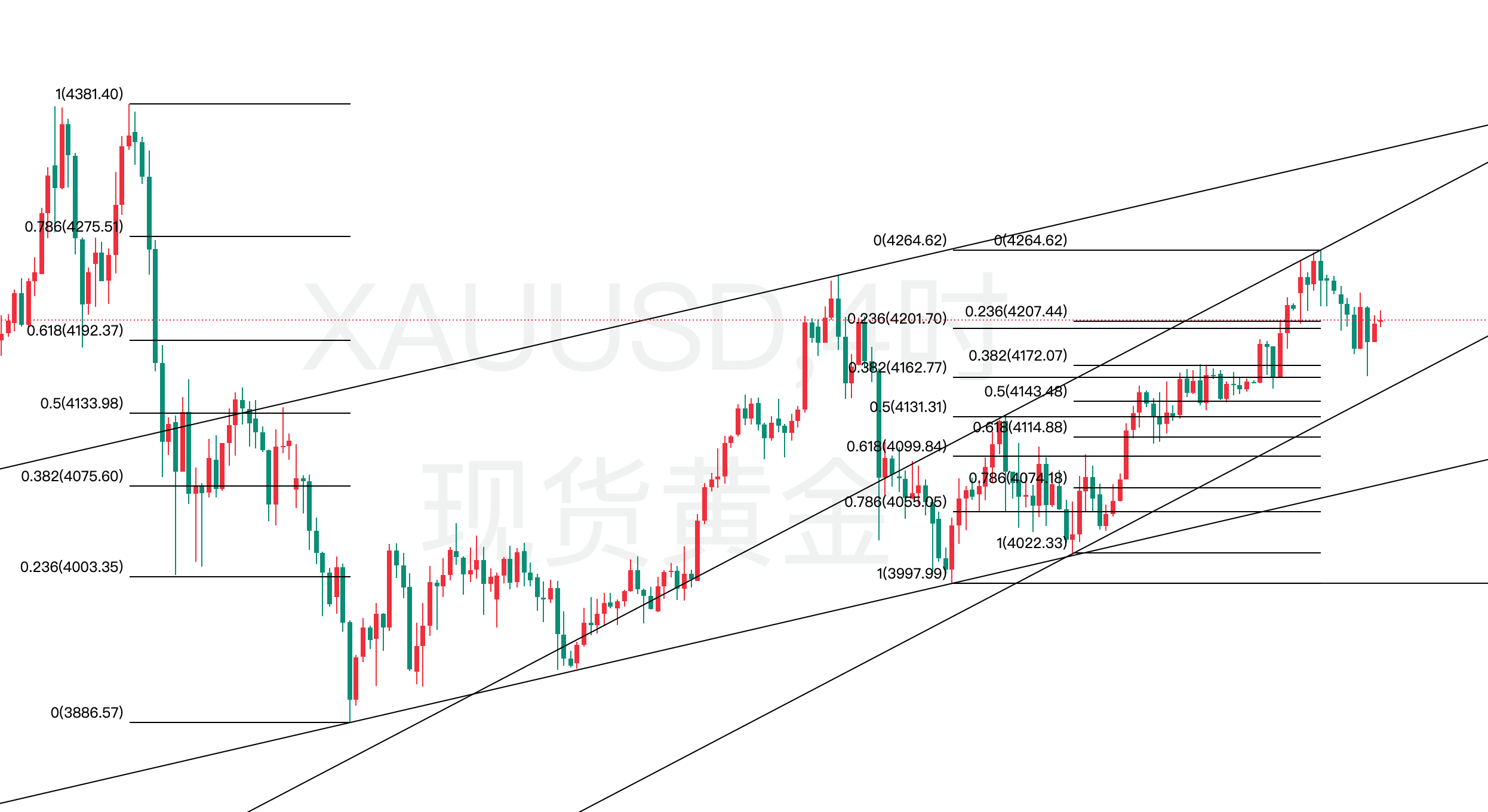
Core Viewpoint - The gold market is experiencing fluctuations influenced by strong expectations of a Federal Reserve interest rate cut, increased central bank gold purchases, and rising geopolitical risks, which collectively support gold prices. Group 1: Fundamental Analysis - Strong expectations for a Federal Reserve rate cut: The market has priced in an 89% probability of a 25 basis point cut in December, up from 63% a month ago, driven by weaker-than-expected U.S. manufacturing data and signs of economic slowdown [2] - Surge in global central bank gold purchases: In October, central banks net purchased 53 tons of gold, a 36% month-on-month increase, marking the highest monthly demand since early 2025, indicating a strong preference for gold as a reserve asset amid geopolitical risks and currency depreciation [2] - Escalating geopolitical risks: Ongoing tensions between the U.S. and Russia regarding Ukraine and Trump's statements on drug trafficking have heightened international tensions, driving investors towards gold as a safe haven [2] - Key economic data to watch: Upcoming reports on U.S. ADP employment, import price index, industrial output, and ISM non-manufacturing PMI will provide insights into economic health, potentially amplifying gold's upward potential if they indicate weakness [2] Group 2: Technical Analysis - Daily chart analysis: Gold showed a weak oscillating trend, closing with a long lower shadow, indicating strong volatility. The price briefly fell below the 5-day moving average but recovered before the close, suggesting that the 5-day average remains a key support level [3] - Four-hour chart analysis: After being resisted at 4264/4265, gold has shown a series of declines, transitioning to a mixed pattern of declines and rebounds. Key support levels to monitor include 4163/4164, with further support at 4143, 4131, and 4100/4099 if the price continues to weaken [5] - Resistance levels: Immediate resistance is seen at 4226 and 4243, with a critical resistance zone at 4264/4265. A strong breakout above this zone could lead to further resistance at 4275/4276 [5]
金价12月1日:大家要有心理准备,下周金价恐迎大风暴
Sou Hu Cai Jing· 2025-12-02 05:15
Core Viewpoint - The gold market is experiencing a significant surge, with international gold prices surpassing $4,150 per ounce and domestic gold prices exceeding 950 yuan per gram, marking a cumulative increase of 54% in 2025, reflecting a historical record driven by global central bank gold purchases [1][3]. Central Bank Actions - The People's Bank of China has been actively accumulating gold, impacting the supply-demand balance in the market, akin to a wealthy homeowner hoarding a commodity [3]. - Central banks are now replacing part of their foreign exchange reserves with gold, indicating a shift in reserve management strategies [5]. Economic Indicators - Upcoming economic data releases, including U.S. non-farm employment and consumer spending, are expected to influence gold prices significantly, as the market is at a crossroads regarding its direction [3][13]. - The Federal Reserve's recent interest rate cuts and the expectation of further reductions are contributing to a decline in the dollar index, which in turn supports higher gold prices [7]. Geopolitical Factors - Geopolitical tensions, particularly in the Middle East, have led to increased demand for gold as a safe-haven asset, with significant price spikes observed during periods of risk escalation [9]. Supply and Demand Dynamics - Global gold demand reached 1,249 tons in Q2 2025, a 3% year-on-year increase, with central banks being a crucial pillar of this demand [11]. - The supply of gold is stagnating due to rising mining costs and diminishing easy-to-extract resources, reinforcing the price support for gold [11]. Investment Strategies - Investors are advised to adopt differentiated strategies in response to high gold prices, such as prioritizing gold bars and coins over jewelry to minimize costs [15]. - The increase in holdings of gold ETFs by institutional investors indicates a trend that retail investors may consider following [15]. Market Outlook - The ongoing central bank gold purchases are seen as a critical support for gold prices, providing a "safety cushion" against potential market corrections [15]. - The evolving role of gold in household assets is being redefined, as it is increasingly recognized for its value in risk management and as a cultural symbol [15].