消费升级

Search documents
“稳定健康、不断进步的中国经济值得看好”——外国媒体和国际人士热议中国春节经济
Ren Min Ri Bao· 2026-02-24 22:04
Core Viewpoint - The prolonged Spring Festival holiday has significantly boosted China's economic vitality, showcasing the resilience and potential of the country's vast market, while also providing opportunities for global economic growth [1][6]. Group 1: Consumer Market Performance - During the Spring Festival holiday, China's consumer market exhibited strong demand across various sectors, including tourism, retail, and entertainment, with notable sales growth [2]. - In Sichuan, monitored retail sales reached 2.78 billion yuan, a year-on-year increase of 10.9%, while Guangdong welcomed 86.59 million tourists, generating 84.89 billion yuan in tourism revenue, up 8.1% and 13.9% respectively compared to last year [2]. - The overall cross-regional movement of people during the Spring Festival is expected to reach 9.5 billion, with railway and civil aviation passenger volumes projected at 540 million and 95 million respectively [2]. Group 2: Consumption Trends and Innovations - The consumption structure in China is continuously optimizing, with new growth points emerging, such as smart devices and organic foods becoming popular choices for the holiday [3]. - Su Ning's report indicated a 78% increase in foot traffic at its stores, with smart watches and smart glasses sales rising by 62% [3]. - Various local governments have implemented measures like issuing consumption vouchers and promoting trade-in programs to stabilize consumer expectations, indicating a shift towards high-quality growth driven by domestic demand [3]. Group 3: External Economic Impact - The "spillover effect" of the Spring Festival economy is increasingly evident, benefiting international suppliers and enhancing trade relationships, particularly with countries like Peru, which is seeing a surge in blueberry exports to China [4]. - The influx of foreign products, such as chocolates and cosmetics, into the Chinese market is contributing to the development of local industries in exporting countries [4]. - Statistics show that 17.8 million people crossed borders during the holiday, with a daily average increase of 10.1% compared to last year, and foreign tourist flight bookings to China increased over fourfold [4]. Group 4: Global Economic Outlook - The Spring Festival economy is seen as a catalyst for global economic growth, enhancing trade and tourism while fostering deeper economic ties among nations [6]. - The positive performance during the holiday sets a strong foundation for China's economic development throughout the year, reflecting the country's comprehensive development advantages and robust supply capabilities [6]. - The ongoing release of domestic demand and continuous reform measures are expected to lead China towards higher quality and more sustainable economic growth [6].
春节消费“新三样”释放啥信号
Xin Hua Ri Bao· 2026-02-24 21:19
Group 1 - The core consumption trend during the Spring Festival has shifted from traditional products like tobacco, alcohol, and sweets to new categories focused on green, smart, and health-oriented products, indicating a significant transformation in consumer behavior [1][2] - Sales of smart wearable devices increased by 130%, while sales of smart blood pressure monitors and blood glucose meters grew by over 60%, and organic food sales rose by 52% during the holiday period, reflecting a growing preference for quality and health [1] - The rise of the "new three items" signifies a comprehensive upgrade in consumer values, with a focus on health, comfort, convenience, and emotional value, as well as a shift towards sustainable living and efficiency through technology [1][2] Group 2 - The popularity of the "new three items" highlights the need for policy guidance and market vitality to align, with government support for green and smart consumption playing a crucial role in stimulating holiday spending and laying the groundwork for long-term consumption upgrades [2] - Businesses are encouraged to move away from traditional production methods and optimize product structures based on consumer demand, particularly in the areas of energy-efficient products, smart technology applications, and health-related offerings [2][3] - The trend towards the "new three items" is driving the industry towards higher-end, intelligent, and green transformations, necessitating increased R&D investment and a focus on core technological breakthroughs to elevate Chinese manufacturing to intelligent production [3]
年货“小包裹”照见消费“大活力”
Zheng Quan Ri Bao Zhi Sheng· 2026-02-24 15:45
Core Insights - The logistics network has efficiently supported the surge in express delivery during the Spring Festival, with a total collection of approximately 806 million packages and a delivery volume of about 630 million packages from February 16 to February 22, indicating a strong recovery in consumer demand and the ongoing growth of the "New Year goods economy" [1][2] Group 1: Logistics and Delivery Performance - The express delivery industry maintained operations during the holiday, with fresh food and New Year gift packages accounting for 35% to 40% of the delivery volume in Beijing, while clothing and cultural products made up 20% to 25% and 10%, respectively [2] - The average daily processing volume at a specific SF Express station in Beijing increased from about 1,500 packages to around 2,000 packages after February 20, showing growth compared to the previous year [3] - The logistics network's ability to operate continuously during the holiday period has ensured that consumer demand is met, with a quick recovery in online shopping as people return to work [2][3] Group 2: Changes in Consumer Behavior - The efficient logistics network has transformed consumer habits, with tourists increasingly opting for express delivery services for local specialties instead of carrying them home [4][5] - Merchants in tourist areas have adapted by offering nationwide shipping, which has led to increased sales of larger gift packages and repeat purchases from customers [5][6] - The integration of express delivery into the consumer experience is expected to enhance the growth of the logistics industry, making it a crucial support for expanding domestic demand [6] Group 3: Future Outlook for the Express Delivery Industry - The express delivery sector is anticipated to evolve into a modern distribution system characterized by efficiency, sustainability, resilience, and fairness, providing a strong foundation for the stable operation of the Chinese economy [6] - The ongoing implementation of policies promoting the exchange of old consumer goods for new ones is expected to create new growth points in the delivery of electronic products and value-added services [6]
马年春节假日盘点·消费篇
Xin Lang Cai Jing· 2026-02-24 14:12
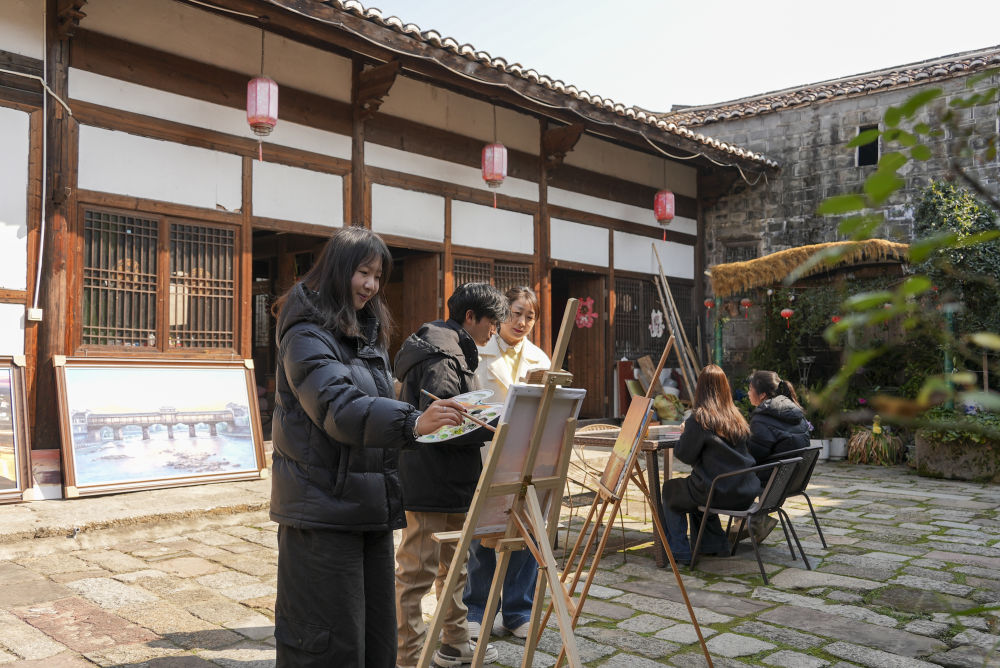
Group 1: New Scenes - The 2026 Spring Festival is characterized by a shift towards "traveling for the New Year" and "vacation-style celebrations," with families increasingly opting for travel experiences over traditional visits [2][4] - In Fuzhou, the ancient city of Lichuan saw a surge in family outings, with fully booked accommodations and popular activities like free oil painting experiences attracting visitors [2][4] - Young consumers are becoming the main force in Spring Festival spending, with unique venues like Yuefang ID MALL in Changsha and the "Future Ocean" exhibition in Tianjin drawing significant crowds [4][6] Group 2: New Trends - There is a noticeable shift from purchasing physical goods to services, with consumers willing to pay for convenience and quality [5][6] - In Chongqing, the rise of home chef services reflects this trend, with families finding value in customized meal preparations [5][6] - Professional cleaning services are also gaining popularity, particularly among younger families, indicating a growing trend of outsourcing household tasks [5] Group 3: New Flow - The Spring Festival has seen a boost in "China Travel" and "China Shopping," with an increase in foreign tourists and a more open approach to international visitors [6][7] - In Hainan, the duty-free shopping experience has become a major attraction, with significant sales figures reported during the holiday period [6][7] - The implementation of visa-free policies for certain countries has further enhanced the appeal of China as a destination for international travelers, with predictions of over 2.05 million travelers entering the country during the holiday [7]

春节返乡激活小城经济 县域消费“热气腾腾”
Zheng Quan Ri Bao Zhi Sheng· 2026-02-24 13:46
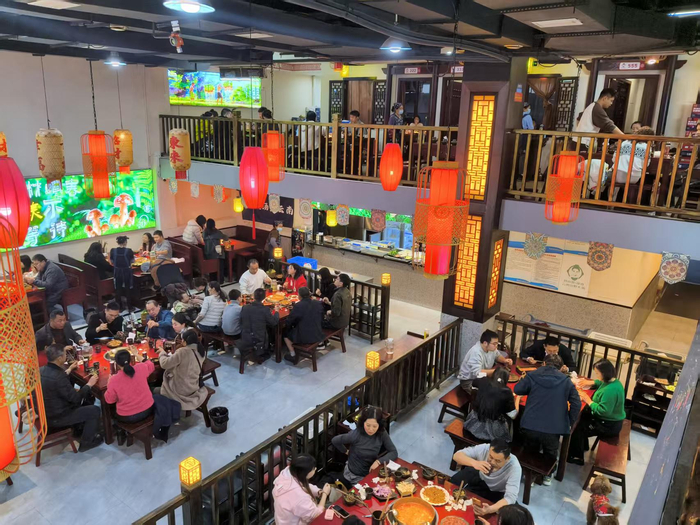
Core Insights - The article highlights the significant increase in consumer activity in county-level cities during the 2026 Lunar New Year, driven by returning young people and tourists, leading to a vibrant consumption scene [1][5]. Group 1: Restaurant Industry - The restaurant business in Xichong County experienced a surge in popularity, with full occupancy and long waiting times reported during the holiday period. The average revenue during this time doubled compared to regular days [2][5]. - Young people made up a significant portion of the clientele, indicating a shift in dining habits and preferences towards unique and local offerings [4][5]. Group 2: Hospitality Sector - Hotels and guesthouses in Xichong County reported full bookings throughout the holiday, with a notable increase in demand for comfortable and private accommodations among returning young people [6][10]. - Data from Wanda Hotels and Resorts indicated a significant rise in hotel occupancy rates in county markets, with some locations achieving over 90% occupancy [6][10]. Group 3: Cultural and Entertainment Activities - Various cultural and entertainment events were organized in Xichong County to enhance the festive atmosphere, attracting both locals and visitors [7][9]. - Traditional cultural activities in other counties also contributed to increased tourism, with hotel bookings in places like Huangshan and Pingyao seeing over 400% growth compared to previous years [10]. Group 4: Infrastructure and Transportation - The improvement in transportation infrastructure, particularly the expansion of high-speed rail, has facilitated easier access to county-level cities, contributing to increased consumer traffic and spending [10][12]. - The rise in the availability of ride-hailing services reflects changing transportation habits among young people returning to their hometowns, further supporting local economic activity [12].
湖北春节消费市场热度攀升 7天交易额305.5亿同比增11.5%
Chang Jiang Shang Bao· 2026-02-24 13:24
Core Insights - The consumption market in Hubei province experienced a significant boost during the Spring Festival, with retail and catering industries achieving a total transaction volume of 30.55 billion yuan, marking an 11.57% increase compared to the same period in 2025 [1][3] Group 1: Consumption Trends - The theme "Enjoy in Hubei, Shop for the New Year" was promoted, leading to a rise in quality, integrated, and experiential consumption trends, with hot sales in bulk commodities and local cuisine [1][5] - The government provided nearly 600 million yuan in consumption subsidies starting January 24, which stimulated a total consumption of 3.155 billion yuan across various sectors [2] Group 2: Retail Performance - Major retail categories such as automotive, home appliances, and electronic products saw transaction volume increases of 23.68%, 36.55%, and 28.52% respectively during the holiday period [2] - Offline shopping areas experienced a surge in foot traffic, with significant increases reported in stores like JD MALL in Wuchang [2] Group 3: Experiential Consumption - The integration of commerce, culture, and sports created diverse new consumption scenarios, shifting consumer focus from mere purchasing to experiential enjoyment [4] - Key monitored pedestrian streets in Hubei saw revenue and foot traffic growth of 22.24% and 23.25% respectively during the holiday [4] Group 4: Culinary Innovations - The local cuisine gained popularity through initiatives like the "My Ideal Hubei New Year Dinner" contest, which involved over a thousand restaurants offering unique dishes [5] - Innovative dining experiences, such as themed banquets and cultural performances, attracted large crowds and enhanced the festive atmosphere [5]
山姆如何“算计”中国中产?年轻人宁交260元,也不逛免费超市?
Sou Hu Cai Jing· 2026-02-24 09:29
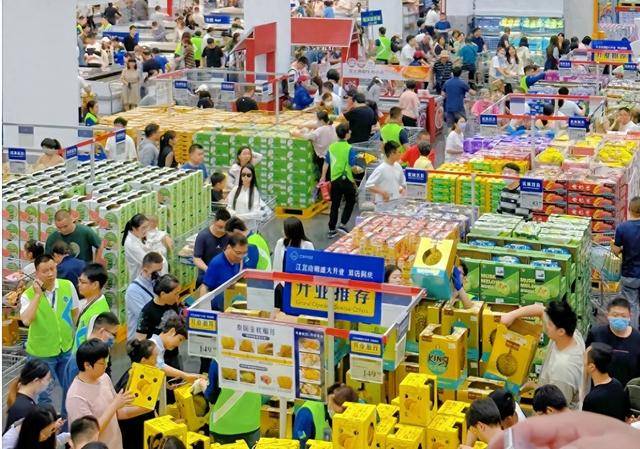
Core Insights - The article highlights the growing preference of young consumers for Sam's Club over traditional free supermarkets, emphasizing that they are willing to pay a membership fee of 260 yuan for a better shopping experience and quality products [1][18]. Membership Fee and Business Model - Sam's Club's membership fee of 260 yuan serves as a "filter" to attract high-value customers, ensuring that only those with stable incomes and a willingness to pay for quality enter the store [4][6]. - The membership fee is a significant source of profit for Sam's Club, projected to generate nearly 3 billion yuan annually from regular memberships alone, with total membership revenue exceeding 6 billion yuan when including premium memberships [6][8]. - The high renewal rates of 80% for regular members and over 90% for premium members indicate strong customer loyalty and a sustainable business model [8]. Consumer Behavior and Preferences - Young consumers prioritize time efficiency, quality, and a pleasant shopping experience, which traditional supermarkets fail to provide due to their chaotic environments and extensive product ranges [9][12]. - Sam's Club offers a streamlined shopping experience with around 4,000 carefully selected SKUs, allowing customers to complete their shopping in 15-20 minutes, contrasting sharply with the lengthy shopping times at traditional supermarkets [12][14]. - The quality control at Sam's Club is notably stringent, with only 8.2% of suppliers passing the entry criteria, ensuring high product standards that appeal to discerning young consumers [14]. Experience and Social Aspects - The shopping experience at Sam's Club is designed to be enjoyable and social, with spacious stores and generous sampling opportunities, making it a leisure activity rather than a chore [16][20]. - Young consumers are drawn to the "Instagrammable" aspects of shopping at Sam's Club, where they can share their experiences on social media, fulfilling their social needs [16][23]. Market Dynamics - The article suggests that traditional free supermarkets are struggling due to their outdated business models, which rely on high product prices and frequent promotions to attract customers, leading to a cycle of inefficiency [21][23]. - The shift in consumer mindset from valuing "free" to valuing "quality" and "experience" is a critical factor in the decline of free supermarkets, as they fail to meet the evolving demands of young shoppers [18][21].
连续7年跑赢恒指,最高管理规模超500亿!险资老将加盟百亿私募
Zhong Guo Zheng Quan Bao· 2026-02-24 08:41
Core Viewpoint - The article highlights the investment philosophy of Zhan Hongfeng, emphasizing deep value and left-side contrarian strategies, where stock price declines are viewed as opportunities rather than risks [1][2]. Group 1: Investment Philosophy - Zhan Hongfeng's investment approach is characterized by a rigorous psychological test to determine if he would continue to invest if a stock's price dropped by 20% without significant changes in fundamentals [1]. - His investment framework is summarized in twelve characters: "uphold long-term value, pursue absolute returns," which has been validated through years of market experience and substantial capital [3]. - The strategy includes three rules: concentrated stock holdings for excess returns, a barbell strategy to mitigate portfolio risk, and controlling holding costs to achieve absolute returns [3]. Group 2: Investment Strategy - The barbell strategy involves allocating assets to two low-correlation categories: growth-oriented technology sectors and low-volatility, high-dividend defensive assets, allowing for dynamic adjustments based on market sentiment [3][4]. - Zhan emphasizes the importance of valuation as a safety margin, rejecting the notion that a good company is necessarily a good stock, and insists on investing within reasonable valuation ranges to avoid severe volatility [4]. Group 3: Market Insights and Opportunities - The current economic environment in China is undergoing structural transformation, presenting new opportunities in hard technology and consumption upgrades, which require more flexible strategies and efficient decision-making [6][10]. - Zhan identifies five clear stock selection directions: focusing on hard technology aligned with national strategies, capitalizing on K-shaped consumption trends, exploring high-dividend sectors, identifying export-competitive leading enterprises, and trading in industries benefiting from anti-involution policies [11]. Group 4: Transition to Private Equity - Zhan's transition from insurance asset management to private equity is described as a "third entrepreneurial venture," driven by the need for a more adaptable strategy and the alignment of market opportunities with investment vehicles [5][6]. - The shift to a private equity model allows for quicker decision-making and the ability to invest in smaller growth stocks and niche market leaders, enhancing sensitivity to market opportunities [7].
2026年以旧换新已惠及3053万人次,三天新增销售额逾65亿元,智能绿色产品成换新主流
Sou Hu Cai Jing· 2026-02-24 07:49
Group 1 - The core viewpoint of the articles highlights the effectiveness of the 2026 consumer goods trade-in policy, which has significantly boosted consumer participation and sales figures [1][2] - As of February 22, 2026, the trade-in policy has benefited 30.53 million people, generating sales of 204.54 billion yuan, showing a notable increase from previous data [1] - The policy's impact is evident in the sales of smart and green products, with smart glasses sales increasing by 47.3% and water-saving bathroom fixtures by 23.2% during the Spring Festival [1] Group 2 - The coverage of the trade-in policy has expanded to include digital and smart products such as smartphones, tablets, and smart wearables, with subsidies of up to 500 yuan for eligible items [2] - Data from the Spring Festival period indicates a sustained release of consumer spending potential, with a reported 8.6% increase in daily sales for major retail and catering enterprises compared to the previous year [2] - The trade-in policy is expected to continue driving demand for smart and green products, reflecting a shift in consumer preferences towards quality and technology [2]
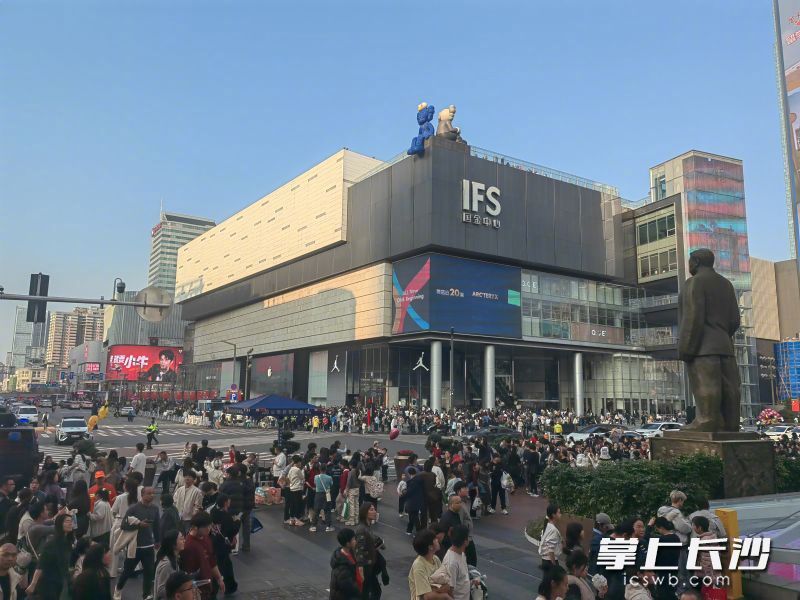
星城春节消费成绩单亮眼!2月15日至23日实现销售额222.42亿元
Chang Sha Wan Bao· 2026-02-24 07:15
Core Insights - The article highlights the vibrant consumer activity in Changsha during the extended Spring Festival holiday, with a total sales revenue of 22.242 billion yuan, marking a year-on-year increase of 7.76% [1] Group 1: Consumer Activity and Trends - The Five One Square in Changsha has become a popular destination for tourists, showcasing the city's charm and attracting significant foot traffic, with 4.5697 million visitors recorded from February 15 to 23, a 15% increase compared to the same period last year [5] - The peak visitor day recorded 704,300 people on the fourth day of the new year, representing a 28.23% year-on-year increase [5] - The dining and retail sectors experienced a surge in activity, with restaurants like Fei Dafu reporting over 1,000 tables booked in a single day [3][5] Group 2: Cultural and Entertainment Activities - Various cultural and entertainment activities contributed to the festive atmosphere, including performances and immersive experiences that catered to diverse cultural needs [6] - Events such as lion dances and traditional crafts attracted large crowds, enhancing the overall consumer experience in commercial areas [9][10] Group 3: Policy and Economic Incentives - The introduction of a prize invoice program during the Spring Festival encouraged consumer spending, with 227,000 invoices submitted and a total prize amount of 4.2905 million yuan distributed [12] - The "old for new" consumption promotion saw participation from over 83,200 individuals, generating sales of 5.85 billion yuan and demonstrating the effectiveness of government incentives in stimulating consumer behavior [14] - The "Driving Enjoyment in Star City" automotive promotion received significant financial backing, leading to a combined effect on sales and consumer engagement [14]