消费补贴

Search documents
21社论丨发力国内需求,巩固经济回升向好势头
21世纪经济报道· 2025-08-16 03:56
Economic Overview - The national economy shows a steady development trend, with a need for macro policies to effectively release domestic demand potential and promote dual circulation [1][2] - In July, exports increased by 7.2% year-on-year, surpassing the previous value of 5.9%, while social retail sales grew by 3.7%, down from 4.8% in June [1][2] - Fixed asset investment from January to July grew by 1.6%, a decline of 1.2 percentage points compared to the first half of the year, with manufacturing, infrastructure, and real estate investments showing a slowdown [1][2] Industrial Performance - In July, the industrial added value for large-scale enterprises increased by 5.7% year-on-year, lower than the previous value of 6.8%, influenced by slowing investment and consumption growth [2] - The producer price index for industrial producers fell by 0.2% month-on-month, with a year-on-year decrease of 3.6% [2] Consumption and Policy Measures - Starting in August, measures to expand consumption include the introduction of childcare subsidies and the exemption of certain education fees, aimed at boosting consumer spending [3][4] - The third batch of 690 billion yuan in central fiscal consumption subsidies will be implemented, with a fourth batch expected to continue until the end of the year, supporting retail growth [2][3] Challenges and Future Outlook - The real estate sector and local infrastructure investment present ongoing challenges, requiring time to address accumulated issues [3][4] - Short-term factors such as extreme weather and adjustments in consumption subsidies have impacted July's economic data, but the introduction of macroeconomic policies in August is expected to promote effective investment and enhance domestic demand [4]


9月1日新政落地,贷款也国补?贴息开抢倒计时!
Sou Hu Cai Jing· 2025-08-16 02:21
Core Viewpoint - The Chinese government has introduced a personal consumption loan interest subsidy policy to stimulate the economy amid weak consumer spending, effective from September 1, covering 23 banks and financial institutions [1][12]. Summary by Sections Subsidy Details - The subsidy policy is not universal; it has specific rules based on consumption amount and purpose. A key threshold is set at 50,000 yuan, where consumers can receive up to a 1% interest subsidy for loans below this amount [2]. - For loans exceeding 50,000 yuan, subsidies are limited to specific categories such as car purchases, home renovations, and travel, with a cap of 5,000 yuan on the subsidy amount [2]. Strategy for Maximizing Benefits - Consumers can maximize benefits by strategically splitting loans across different banks, as each bank has a cap of 3,000 yuan on total subsidies for the year [4]. - For example, a consumer could take out multiple loans of 50,000 yuan each from different banks to receive the maximum subsidy [4]. Beneficiaries - Small business owners in the service industry are identified as the biggest winners, as they can receive a 1% subsidy on loans up to 1 million yuan, significantly reducing their effective interest rates [7]. Application Process - The application process is simplified; consumers do not need to fill out forms, as banks automatically apply the subsidy based on loan transactions [9]. Policy Background - The policy aims to address the current anxiety in the consumer market, where retail sales growth has been sluggish, with a mere 5% increase in the first half of the year [10]. Participating Institutions - The subsidy program includes a mix of traditional banks and internet financial platforms, allowing consumers to access loans through various channels like Alipay and WeChat [12]. Local Government Involvement - Some local governments, such as those in Zhejiang and Guangdong, have the authority to expand the list of participating banks, potentially increasing subsidy opportunities for consumers [13]. Timeframe - The personal consumption loan subsidy policy is set to last for one year, ending on August 31, 2026, while the corporate loan subsidy has a tighter deadline, expiring on December 31 of this year [13].
外卖竞争,主动权已在淘宝闪购手上
雷峰网· 2025-08-15 11:24
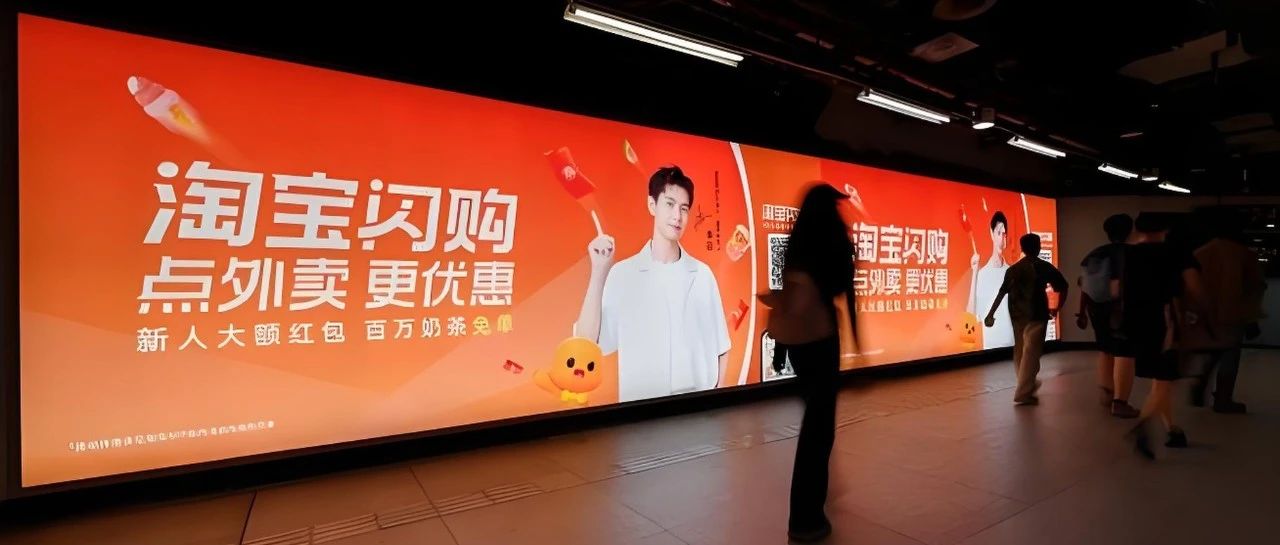
Core Viewpoint - Taobao Flash Purchase has rapidly gained market share in the food delivery sector, surpassing Meituan in daily order volume within just three months of its launch, indicating a significant shift in competitive dynamics in the industry [2][4][12]. Group 1: Market Performance - In August, Taobao Flash Purchase achieved a peak daily order volume exceeding 100 million, with its market share surpassing Meituan for the first time on August 8 and 9 [2][9]. - The market share distribution has shifted from a previous ratio of 1:2 between Ele.me and Meituan to a more competitive landscape where Taobao Flash Purchase and Ele.me together could capture 45% of the market, while Meituan holds a similar share [3][12]. Group 2: Strategic Moves - Taobao Flash Purchase's success can be attributed to its strategic entry timing, coinciding with increased competition from JD.com, which had previously disrupted the market [6][7]. - The platform's marketing strategy included a substantial budget of over 100 billion yuan for promotional activities, which is considered rare in the internet industry [6][8]. - Taobao Flash Purchase employed a three-pronged strategy: focusing on tea drinks as a low-barrier entry point, leveraging the Alibaba ecosystem for customer retention, and protecting partnerships with merchants and delivery personnel [10][11][15]. Group 3: User Engagement and Retention - The introduction of a new membership system on August 6, which integrates various Alibaba services, aims to enhance user engagement and retention across platforms [16]. - The "Autumn Milk" campaign significantly boosted order volumes, particularly in lower-tier cities, demonstrating the effectiveness of targeted regional subsidies [14][17]. Group 4: Industry Implications - The competition between Taobao Flash Purchase and Meituan has not only altered market shares but has also expanded the overall market size, creating new opportunities in instant retail and other segments [19][20]. - The ongoing battle is seen as a catalyst for healthier industry dynamics, with rationalized subsidies benefiting consumers, merchants, and delivery personnel alike [19].

保民生、促消费 财政政策持续加码 | 财税益侃
Di Yi Cai Jing· 2025-08-14 14:31
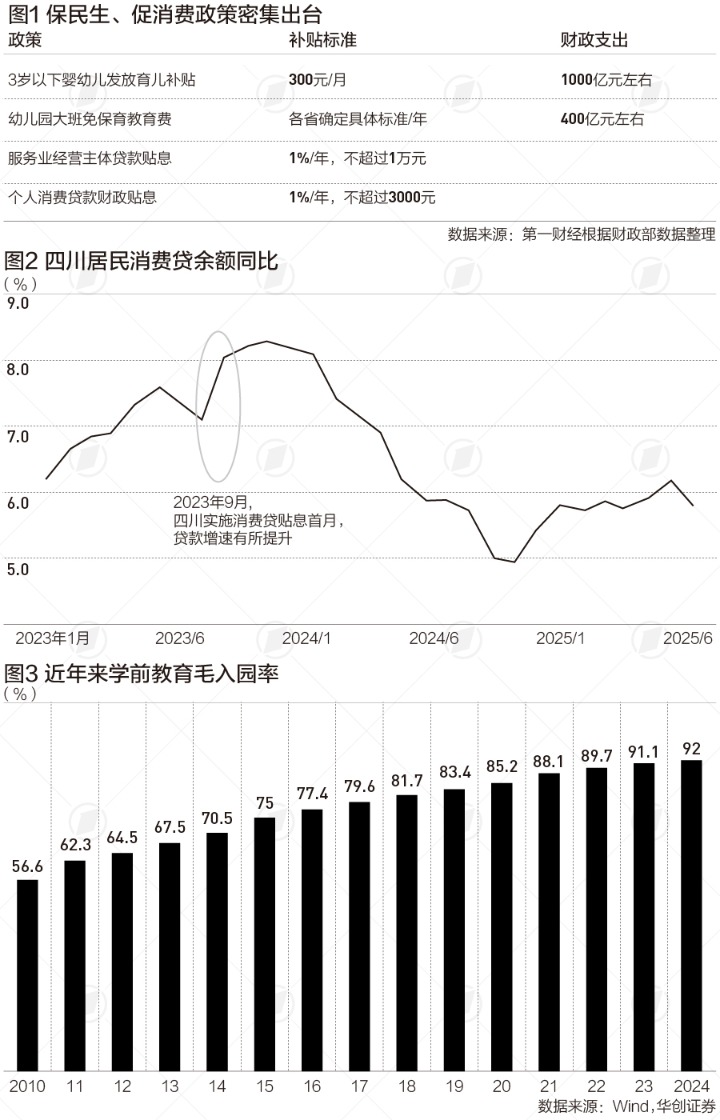
Group 1 - The recent fiscal policies aim to invest more in people's livelihoods and stimulate consumption to stabilize the economy [1][2] - The implementation of a childcare subsidy program starting January 1, 2025, will provide 300 yuan per month for each child under three years old, benefiting over 28 million infants, with a total potential subsidy of up to 10,800 yuan per newborn over three years [1] - The estimated annual increase in fiscal expenditure due to the childcare subsidy policy is around 100 billion yuan, with the central government covering approximately 90% of the costs [1] Group 2 - The introduction of free preschool education starting in the fall semester of 2025 will exempt about 12 million children from annual kindergarten fees, with an estimated fiscal expenditure increase of about 400 billion yuan over a year [1][2] - The basic pension for retirees has increased by 2%, benefiting approximately 150 million retired individuals [2] Group 3 - The implementation of personal consumption loan interest subsidies and service industry loan interest subsidies aims to reduce credit costs for residents and businesses, thereby promoting consumption and economic circulation [4] - The maximum interest subsidy for personal consumption loans is 3,000 yuan, while for service industry loans, it is 10,000 yuan [4] Group 4 - The fiscal policies are expected to leverage financial resources effectively, enhancing the vitality of the consumption market, particularly in the service sector [5] - The interest subsidy policies are designed to stimulate both demand and supply sides of the economy, contributing to stable economic growth [5] Group 5 - Previous local implementations of consumption loan interest subsidies, such as in Sichuan province, have shown positive results, with an increase in consumption loan balances from 7.2% to 8.1% [6][7] - The overall consumer market has seen improvements in sectors like automobiles and home appliances, although some areas like home renovation remain weak [7]
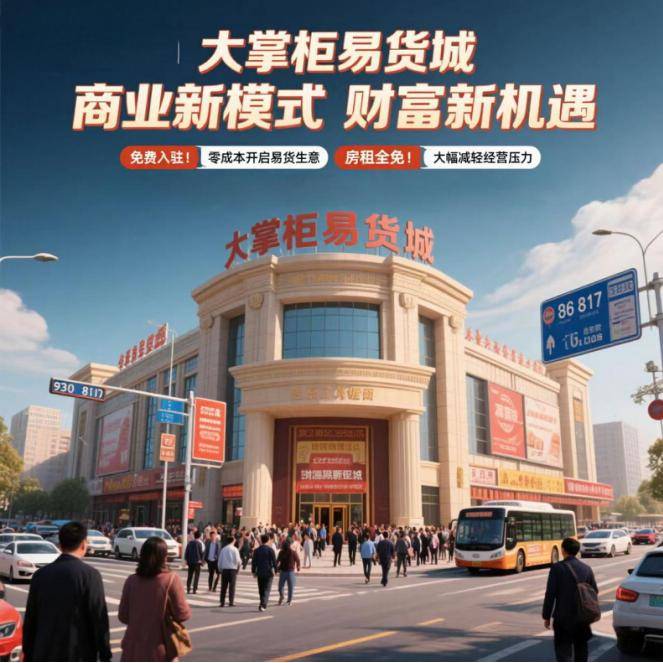
京东燕郊,大掌柜易货城全国招商盛大启幕,入驻租金全免
Sou Hu Cai Jing· 2025-08-12 15:26
Core Viewpoint - The launch of the "Dazhanggui Barter City" in Yanjiao, Beijing, represents a revolutionary business model aimed at revitalizing inventory and creating wealth opportunities through a barter system, appealing to manufacturers, distributors, and retailers alike [1][3]. Group 1: Business Model and Features - The "Dazhanggui Barter City" employs a revolutionary "barter for goods" model that effectively addresses traditional sales bottlenecks, allowing for the quick conversion of idle resources into cash [3]. - The platform offers a unique "cash exchange" service, enabling participants to convert 80%-90% of their goods' value into cash immediately upon transaction completion, enhancing liquidity and operational efficiency [10]. - The city spans 63,000 square meters, strategically located on the 102 National Road, providing significant operational space for businesses [7]. Group 2: Entrepreneurial Support and Incentives - The platform features unprecedented entrepreneurial support policies, including zero-cost entry, free rent, and comprehensive guidance from a professional team to facilitate business success [5]. - Participants benefit from extensive traffic support, including free access to online marketplaces and promotional exposure across major media platforms, ensuring high visibility for their products [8]. - The platform is actively recruiting nationwide, targeting manufacturers, distributors, and retailers, with a focus on creating a collaborative environment for wealth generation [12]. Group 3: Compliance and Safety Measures - The platform emphasizes compliance with legal regulations, ensuring that operations adhere to consumer protection laws and financial regulations, thereby safeguarding user funds [14]. - The "Barter Credit Card" serves as a consumption voucher, facilitating transactions within the platform while ensuring that funds are not mismanaged or misallocated [14]. Group 4: Strategic Initiatives - The "One County, One Product" initiative aims to empower local economies by providing a zero-cost, risk-free platform for unique regional products to access international markets [22]. - This initiative includes a strict selection process for local products, ensuring that only the most competitive and distinctive items represent their counties, thus avoiding market saturation [23]. - The platform's global outreach strategy is designed to enhance brand visibility and facilitate trade connections, ultimately supporting the sustainable growth of local products on an international scale [26].
见证太多事情,无论什么消息,都要往好处想
Hu Xiu· 2025-08-11 05:39
Group 1 - The article discusses the current bullish sentiment in the stock market, with predictions of a potential bull market starting soon [22][23] - Notable figures in the investment community, such as Sun Jiaying and Liu Jipeng, have expressed optimistic views on market indices, suggesting a possible breakthrough of key resistance levels [26][27] - The margin trading balance has reached a record high of 2 trillion yuan, indicating strong market participation and confidence [29][30] Group 2 - The article highlights the significant inflow of capital into the Hong Kong stock market, with net inflows exceeding 800 billion yuan, indicating a robust liquidity environment [40][41] - Hong Kong's asset and wealth management market is projected to grow by 13% year-on-year, reaching 35 trillion HKD, positioning it as a potential global leader in wealth management [43][44] - The competition between Hong Kong and Singapore in the wealth management sector is intensifying, with both markets showing substantial growth [45][46] Group 3 - The article outlines the government's focus on managing local government debt risks, with a significant reduction in financing platforms and a push for transparency [56][58] - The issuance of long-term bonds has increased, with 76.65% of bonds being over 10 years in duration, reflecting a shift in debt management strategy [68] - The average issuance rate of local government bonds has decreased from 2.6% to 1.8%, indicating a favorable borrowing environment [71] Group 4 - Toyota's decision to source components from Chinese suppliers for its production in Thailand marks a significant shift in the automotive supply chain dynamics [82][83] - This move is seen as a response to increasing global competition and aims to leverage China's cost advantages [84][85] - The article also notes the growing recognition of China's supply chain resilience by major global manufacturers, including German firms [87] Group 5 - The article discusses the ongoing consumer subsidy programs aimed at stimulating domestic consumption, with significant funding allocated for trade-in programs [113][114] - Domestic tourism has seen a substantial increase, with a 20.6% rise in travel numbers, indicating a recovery in consumer spending [117][118] - The competitive landscape in the service industry is intensifying, with regulatory actions being taken to ensure fair competition and prevent price wars [121][122]

李迅雷:以旧换新,换什么乘数效应更大|立方大家谈
Sou Hu Cai Jing· 2025-08-05 14:37
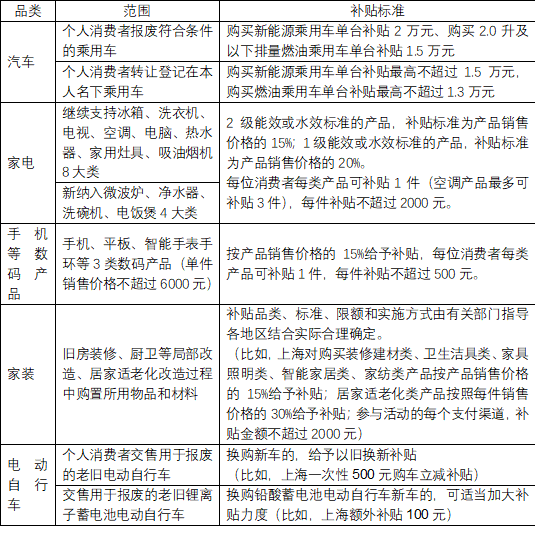
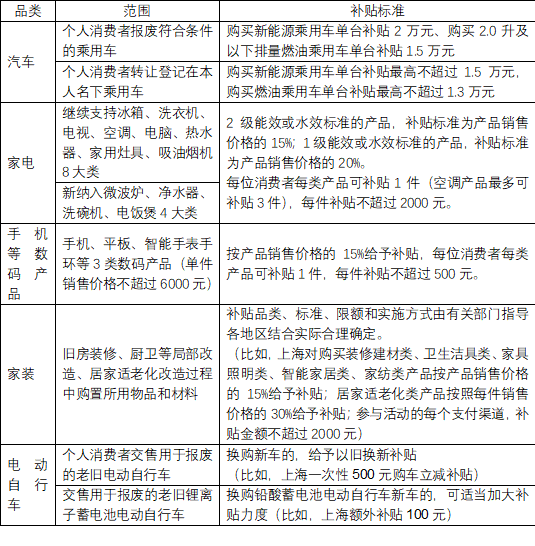
Group 1 - The core viewpoint of the articles is that the "old-for-new" policy is expected to significantly boost consumer spending in various sectors, particularly in automobiles, home appliances, and digital products, with substantial government support through subsidies [1][2][3] - In 2024, the government will implement a consumption upgrade program with a budget of 150 billion yuan, increasing to 300 billion yuan in 2025, aimed at stimulating sales in categories such as automobiles, home appliances, and home renovations [1][2] - The estimated sales driven by the "old-for-new" policy in 2024 is projected to exceed 1.3 trillion yuan, with the central government's funding of 162 billion yuan in the first half of the year leading to over 1.6 trillion yuan in sales [1][2][3] Group 2 - The 2025 "old-for-new" policy will expand to include five major categories, with specific subsidy standards for automobiles, home appliances, digital products, home renovations, and electric bicycles [2][3] - The estimated subsidy amounts for various categories in 2025 include up to 20,000 yuan for new energy vehicles and 1,500 to 2,000 yuan for home appliances, with a total estimated subsidy cap of 233.4 billion yuan [2][3][6] - The policy is expected to have a multiplier effect on consumer spending, contributing to a 5% increase in retail sales of consumer goods in the first half of the year, with significant growth in categories such as home appliances and communication equipment [7][9] Group 3 - The contribution of final consumption to economic growth reached 52% in the first half of the year, indicating the foundational role of consumption in economic development [9][10] - The "old-for-new" policy's impact on retail sales is estimated to contribute between 0.74% and 0.96% to the total retail sales growth, suggesting a modest multiplier effect [10] - The total number of individuals benefiting from the subsidies is estimated at 280 million, indicating a significant reach of the policy, although the actual number of unique beneficiaries may be lower [17] Group 4 - Recommendations for optimizing the "old-for-new" policy include expanding the subsidy scale and diversifying the categories of supported products to include essential goods and services, thereby benefiting a broader demographic [18][19] - The policy is seen as having both direct and indirect effects on overall consumption, as the savings from subsidies may lead to increased spending in other areas [19] - The articles suggest that the current subsidy structure may favor higher-income groups, and adjustments could enhance the policy's equity and accessibility [17][18]
以旧换新:换什么乘数效应更大?
Hu Xiu· 2025-08-05 13:57
Group 1 - The core viewpoint of the article is that the "old-for-new" policy for consumer goods will be implemented starting in 2024, with a funding support of 150 billion yuan from long-term special government bonds, increasing to 300 billion yuan in 2025, which is expected to significantly boost sales in various sectors [1][4][26] - The policy is projected to drive sales exceeding 1.3 trillion yuan in 2024 for categories such as automobiles, home appliances, home decoration, and electric bicycles, with central funding of 162 billion yuan in the first half of the year leading to over 1.6 trillion yuan in sales [1][7] - The article discusses the specific categories and subsidy amounts for the "old-for-new" policy in 2025, which includes automobiles, home appliances, digital products, home decoration, and electric bicycles [4][6][9] Group 2 - The estimated sales driven by subsidies in 2024 include 920 billion yuan for automobiles, 270 billion yuan for home appliances, and approximately 40 billion yuan for electric bicycles, totaling around 1.3 trillion yuan [9][18] - The contribution of final consumption to economic growth reached 52% in the first half of the year, indicating the foundational role of consumption in economic development, with the "old-for-new" policy playing a positive role in optimizing economic structure [18][20] - The article suggests that the multiplier effect of the "old-for-new" policy on retail sales is relatively modest, contributing approximately 0.74% to 0.96% to the total retail sales growth of 1.3% in the first half of the year [18][20] Group 3 - Recommendations for optimizing the "old-for-new" policy include expanding the subsidy scale to maintain stable consumption growth in the fourth quarter and adjusting subsidy standards in response to rapid fund usage [26][27] - The article proposes broadening the categories of items eligible for the "old-for-new" program to include essential goods and services, which would benefit a larger population, particularly lower-income groups [28] - It emphasizes the indirect effects of the "old-for-new" policy on overall consumption, suggesting that initial subsidies can lead to increased spending in other areas, thereby enhancing the overall economic impact [28][29]
多维发力提质扩量 大连消费领域交出亮眼“期中卷”
Sou Hu Cai Jing· 2025-08-04 01:15
原标题: 多维发力提质扩量 我市消费领域交出亮眼"期中卷" 本年度,我市将114类产品纳入补贴范围,其中家电类在国家规定的12类家电产品基础上我市自主扩品 34类,补贴产品品类极大丰富,超过全国绝大部分省市。在丰富补贴品类的基础上,我市加强消费品以 旧换新补贴活动全流程的风险防控,营造规范市场环境,保障补贴活动合规有序开展。在风险可控的前 提下,将个体工商户纳入补贴活动。支持品牌企业经销商销售公司落户大连,开设"线上商城+小程 序"开展以旧换新补贴活动。目前,全市共有595家经营主体,2765个门店商户参与消费品以旧换新补贴 活动,为消费者提供广泛便捷的补贴权益申领模式。"从家电赛道来看,以旧换新政策的创新与流程优 化,有效激发了消费活力。"大商电器集团公司副总经理王晓男介绍,政策红利释放消费潜力,技术迭 代与产品创新满足了消费诉求,在国补政策的加持下,2025年上半年大商电器实现销售同比增长18%, 其中空调补贴拉动销售贡献突出,上半年增幅达到35%。"当政策紧贴民生、民意,也就搭起了消费速 通的桥梁。"王晓男表示。 场景创新多维融合 市场潜能持续释放 随着今年中超赛季的开启,全国首家滨海国际名品运动小镇— ...
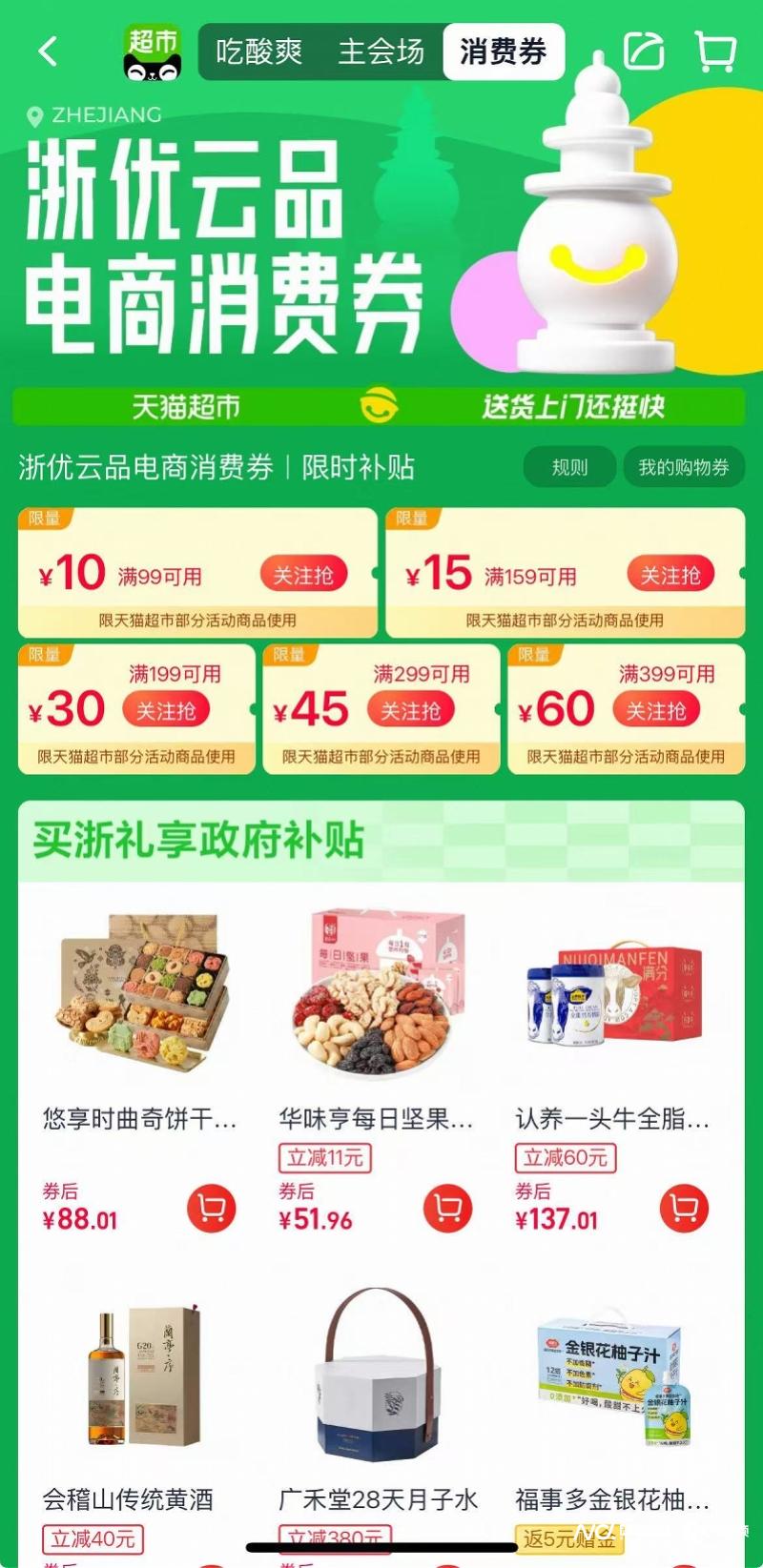
全国可用!天猫联合浙江商务厅发五千万消费券,推广浙江品牌
Nan Fang Du Shi Bao· 2025-07-24 10:22
Core Insights - The "Zhejiang Excellent Cloud Products E-commerce Consumption Coupons" initiative, launched by Tmall Supermarket under the guidance of the Zhejiang Provincial Department of Commerce, aims to distribute a total of 50 million yuan in consumer subsidies nationwide from July 23 to the end of September [1][4]. Group 1: Coupon Distribution and Usage - The initiative has already seen significant engagement, with over 7 million visits to the coupon section on the first day and more than 600,000 coupons claimed by 8 PM on July 23 [1][4]. - The coupons have a redemption threshold ranging from 10 yuan to 60 yuan, catering to various household needs, from couples to larger families [4]. Group 2: Product Categories and Consumer Preferences - The most popular product categories among consumers include maternal and infant products, health products, and alcoholic beverages, indicating a strong preference among family-oriented users [4]. - The initiative focuses on promoting high-quality brands from Zhejiang, covering a wide range of categories such as agricultural products, food, daily necessities, and health care [4]. Group 3: Brand Participation and Market Expansion - Over 100 brands and more than 1,000 popular products are currently included in the "Zhejiang Excellent Cloud Products E-commerce Consumption Coupons" program, with participation expected to grow [4]. - The Zhejiang Provincial Department of Commerce will recommend additional quality brands and enterprises to Tmall Supermarket, which will leverage its supply chain and digital capabilities to facilitate market entry for eligible brands [4].