
自动驾驶

Search documents
2025中国汽车驶出增长新动能
Xin Lang Cai Jing· 2026-01-15 22:40
Core Insights - The Chinese automotive industry has achieved significant milestones in 2025, with total vehicle production and sales exceeding 34 million units, and new energy vehicles (NEVs) surpassing 16 million units, marking a structural upgrade in the industry [5][6] - NEVs now account for over 50% of new car sales in China, indicating their dominance in the market [6][7] - The industry is experiencing rapid technological advancements, particularly in smart driving and battery technology, which are enhancing the competitiveness of electric vehicles [9][10] Industry Performance - In 2025, China's NEV production reached 16.62 million units, with sales at 16.49 million units, reflecting year-on-year growth of 29% and 28.2% respectively, maintaining the global leadership for 11 consecutive years [6][7] - BYD has surpassed Tesla in annual pure electric vehicle sales, marking a significant achievement for the company [7] - The introduction of L3-level autonomous driving vehicles by Changan and BAIC marks a transition from technology validation to mass production applications [8] Technological Advancements - The automotive industry is witnessing breakthroughs in battery technology, with advancements in energy density and charging efficiency, contributing to the reduction of "range anxiety" for electric vehicle users [9] - The integration of AI and robotics into the automotive sector is creating new opportunities for innovation and efficiency [10] - The collaboration between companies like JD, GAC Group, and CATL is enhancing the entire automotive value chain from R&D to sales [9][10] Regulatory and Market Dynamics - The industry is facing challenges related to "involution" competition, prompting regulatory measures to ensure fair market practices and promote high-quality development [12][13] - New guidelines and safety standards are being implemented to enhance the safety and reliability of electric vehicles [13][14] - The focus on building a modern industrial system and promoting green consumption is expected to drive the future growth of the automotive sector [14][15]

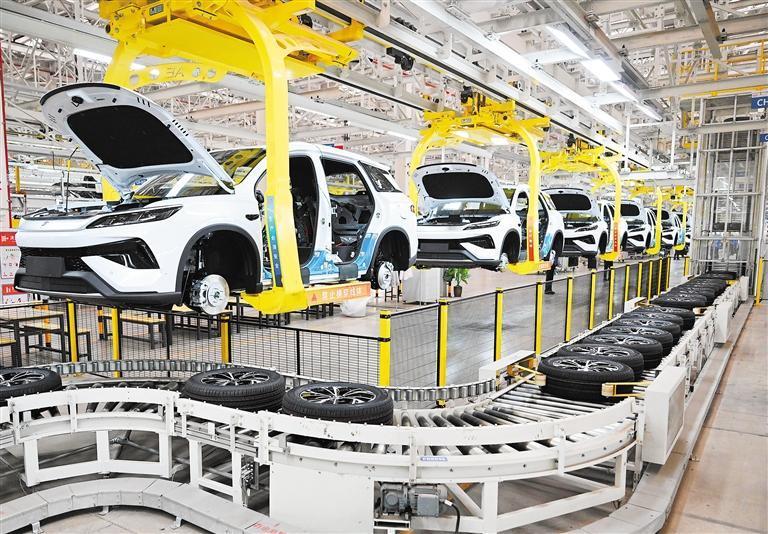
自动驾驶出行图景 加速“驶来”
Zhong Guo Zheng Quan Bao· 2026-01-15 21:12
Core Insights - The launch of the first L3-level conditional autonomous driving vehicles in China marks a significant milestone in the industry, indicating the transition to a new era of operational autonomous vehicles [1][4][8] Group 1: Industry Developments - The Ministry of Industry and Information Technology has granted approval for the first L3-level autonomous vehicles, allowing them to operate in designated areas of Beijing and Chongqing [1] - The L3-level vehicles are expected to achieve a penetration rate breakthrough by 2026, paving the way for higher-level autonomous driving technologies (L4) to enter large-scale commercial deployment [1][7] - The trial operation of L3 vehicles signifies a shift from "assisted driving" to "system-led" driving experiences in specific scenarios [2] Group 2: Technical and Operational Insights - The trial of L3 vehicles has already accumulated over 70,000 kilometers of autonomous driving mileage in complex urban environments, showcasing their capability in handling various driving scenarios [2][3] - The vehicles are currently being tested with enterprise users who possess professional skills, providing valuable feedback for system optimization [3] - The introduction of L3 vehicles establishes a legal framework for liability and safety standards, enhancing industry confidence and encouraging hardware deployment and data collection for future advancements [3][4] Group 3: Future Projections - By 2026, L2 technology is projected to become standard in mainstream vehicles, with a penetration rate exceeding 70%, while L3 technology is expected to accelerate in development and testing across major cities [6][7] - The Robotaxi sector is expanding, with a significant increase in fleet size anticipated, indicating a shift in user acceptance from novelty to regular use [7] - The ongoing advancements in AI and autonomous driving technologies present a strategic opportunity for the industry, with expectations for a more integrated and innovative future in transportation [8]

自动驾驶出行图景加速“驶来”
Zhong Guo Zheng Quan Bao· 2026-01-15 20:48
Core Insights - The approval of the first batch of L3-level conditional autonomous driving vehicles in China marks a significant milestone for the industry, allowing these vehicles to operate in designated areas of Beijing and Chongqing [1][2] - The introduction of L3-level vehicles is expected to catalyze the industry, with projections indicating a breakthrough in penetration rates by 2026, paving the way for higher-level autonomous driving technologies [1][5] Industry Developments - The L3-level vehicles are currently undergoing pilot testing, with 46 vehicles from Deep Blue having accumulated over 70,000 kilometers in autonomous driving over 19 days in Chongqing [1][2] - The pilot program is designed to gather real-world data and feedback from skilled enterprise users, which will help optimize the autonomous driving systems [2][3] Regulatory and Safety Framework - The pilot program establishes a legal framework for the responsibilities of manufacturers during the activation of the L3 systems, enhancing industry confidence and redefining safety standards [2][3] - The initiative is seen as a critical step towards addressing commercial challenges such as liability, insurance, and operational models for autonomous vehicles [3][4] Future Projections - By 2026, L2-level technology is expected to become standard in mainstream vehicles, with a penetration rate exceeding 70%, while L3-level technology is on the verge of mass production and commercial application [5][6] - The pilot testing of L3-level vehicles is anticipated to expand to more cities and complex traffic scenarios, further pushing the boundaries of L3 capabilities [5][6] Market Trends - The autonomous driving industry is experiencing rapid technological advancements and policy support, with Robotaxi services transitioning from pilot programs to broader market acceptance [6] - The growth of Robotaxi fleets, such as the one from Pony.ai, indicates a shift in user acceptance from novelty to regular use, with plans to expand fleet sizes significantly by 2026 [6]
重夺“汽车第一城” 西部大佬杀回来了
Mei Ri Jing Ji Xin Wen· 2026-01-15 15:14
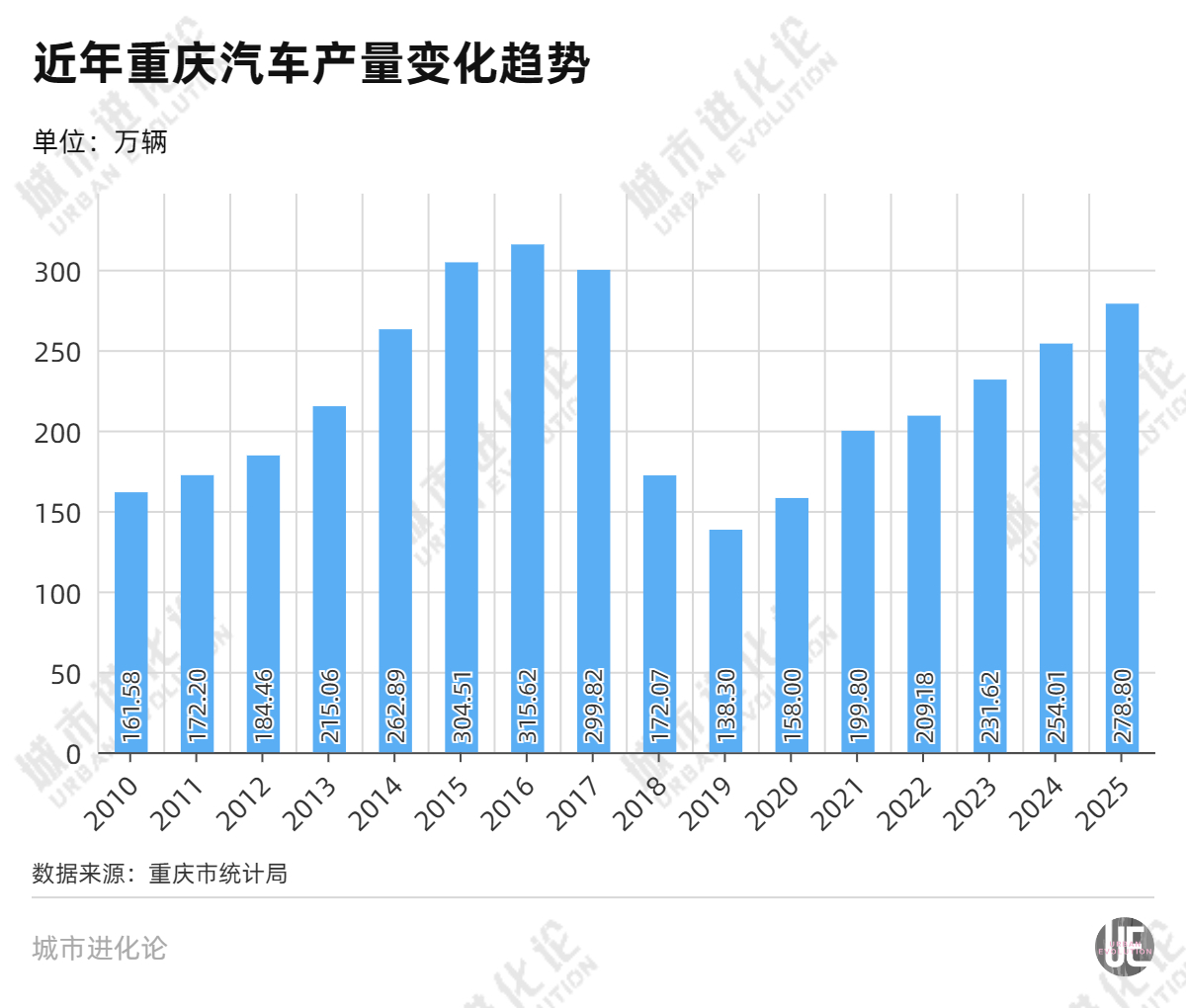
Core Insights - The competition for the title of "Automobile Capital" in China is intensifying, with Chongqing projected to produce 2.788 million vehicles in 2025, marking a 9.7% increase and solidifying its position as the top city in vehicle production [1] - Chongqing's automotive industry is experiencing a resurgence after a decade, particularly in the production of new energy vehicles (NEVs), which are expected to reach 1.296 million units, a 36% increase [1] - The issuance of China's first L3-level autonomous driving license to Changan Automobile signifies a historic milestone for smart driving in China, positioning Chongqing as a leader in this domain [1] Industry Overview - Chongqing aimed to become "China's Detroit" in 2013, achieving the highest vehicle production in the country by 2014, with production peaking at 3.156 million units in 2016 [4] - However, from 2017, Chongqing's vehicle production began to decline, dropping to 1.383 million units by 2019, attributed to a shift in consumer preferences towards mid-to-high-end vehicles and insufficient production capacity [5] - The rise of NEVs has disrupted the traditional automotive landscape, with national NEV sales surpassing 1 million units within three years after first exceeding 100,000 units in 2015 [6] Company Developments - Changan Automobile launched the "Shangri-La" plan in 2017, aiming for full electrification by 2025, but initially faced challenges as NEV production in Chongqing grew slowly from 40,400 units to 51,100 units by 2020 [7] - A turning point occurred in 2021 when Changan partnered with Huawei and CATL to introduce new high-end NEV brands, leading to a significant increase in sales, with total vehicle sales reaching 2.913 million units and NEV sales at 1.11 million units, a 51.1% increase year-on-year [7] - Seres, another key player, transitioned from traditional automotive manufacturing to NEVs, achieving profitability in 2024 and selling 472,300 NEVs in the previous year, a 10.63% increase [7] Competitive Landscape - The collaboration with Huawei has been pivotal for Chongqing's NEV transformation, with Seres being the first to adopt Huawei's smart selection model [8] - The automotive industry is entering a new competitive phase characterized by smart electric vehicles, with Chongqing positioned to lead due to its early adoption of L3-level autonomous driving technologies [12] - The competition is heating up, with cities like Guangzhou and Shenzhen also vying for leadership in the NEV sector, each setting ambitious goals for future growth [17] Challenges and Future Outlook - Despite its recent successes, Chongqing faces challenges in AI and core technology competitiveness, ranking 14th nationally in AI industry competitiveness, indicating a need for improvement in talent attraction and retention [20] - The city aims to address these shortcomings by enhancing its automotive industry through innovation and integration with advanced technologies, targeting high-quality development by 2024 [14][21]


“廉价版”Model 3或进工信部目录 不到20万元买特斯拉?
Mei Ri Jing Ji Xin Wen· 2026-01-15 13:42
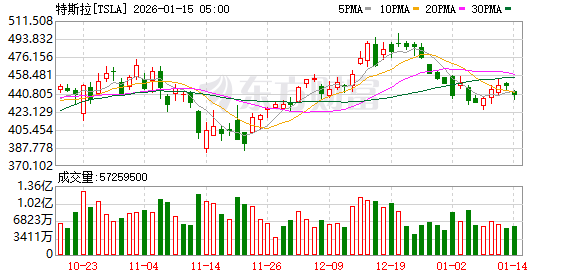
Core Viewpoint - Tesla is speculated to introduce a "budget version" of its Model Y in the Chinese market, following the appearance of related images on its official website, which have since been replaced, and the lack of official confirmation from Tesla China [2][4]. Group 1: Product Details - A new model, potentially the "budget version" of Model 3, has been listed in the Ministry of Industry and Information Technology (MIIT) vehicle directory, indicating its entry into the Chinese market [5]. - The "budget version" Model 3 is expected to feature a 52.9 kWh battery with a CLTC range of 480 kilometers, significantly lower than the current rear-wheel drive Model 3's range of 634 kilometers [5]. - The U.S. version of the "budget version" Model 3 has around 20 configuration reductions compared to existing models, including the removal of certain features like the continuous light strip and dual-layer soundproof glass [5]. Group 2: Pricing Strategy - Tesla has not yet announced the price for the upcoming Model 3 Standard Range Upgrade version in China, but it is speculated to be significantly lower than the U.S. price of $36,900 (approximately 258,000 RMB) to align with the "budget" positioning [6]. - Market analysts predict that the starting price for the rumored "budget version" Model 3 in China could drop below 200,000 RMB, which would create a new price benchmark and expand market coverage [7]. Group 3: Market Context - Tesla's introduction of a "budget version" is a strategic response to declining sales growth in both global and Chinese markets, with a projected 8.6% decrease in global deliveries to 1.636 million units in 2025 and a 4.8% decline in China to 625,600 units [8]. - The majority of new energy vehicle sales in China are concentrated in the 150,000 to 200,000 RMB price range, with 1.51 million units sold in the first half of 2025, indicating a significant market opportunity for Tesla if it enters this segment [8]. Group 4: Long-term Strategy - The launch of a lower-priced model may also support Tesla's long-term software and ecosystem strategy by increasing vehicle ownership, allowing for more data collection to enhance its autonomous driving systems and build a larger potential user base for future subscription services [9].

给颗小“甜枣”对冲降温 台积电(TSM.US)超预期带火科技硬件
Zhi Tong Cai Jing· 2026-01-15 13:35
Market Overview - The regulatory signals have led to market adjustments, with A-shares experiencing significant declines, while Hong Kong stocks saw a minor drop of 0.28% [1] - Ctrip (09961) faced a sharp decline of over 19% due to regulatory scrutiny [1] - The geopolitical situation in Iran is escalating, prompting the U.S. to reposition military assets and leading to increased tensions in the region [1] Gold Market - Domestic gold jewelry prices have risen, surpassing 1435 CNY per gram, with some brands reaching 1439 CNY [2] - Sixi Group (00590) has successfully leveraged marketing strategies, including collaborations with popular IPs, resulting in a sales increase and a stock price rise of over 6% [2] - The People's Bank of China announced a 0.25 percentage point reduction in relending and rediscount rates, signaling a potential easing of monetary policy [2] Real Estate Sector - Hong Kong's real estate market is showing strong activity, with a record high of 80,702 property sale agreements registered in 2025 [3] - New World Development (00017) saw a nearly 10% increase in stock price due to acquisition rumors and positive valuation adjustments [3] - Vanke (02202) is proposing differentiated options for bondholders, which has positively impacted its stock price, rising nearly 7% [3] Foreign Investment and Industry Trends - Foreign investors remain optimistic about the Chinese stock market, citing low valuations and supportive policies as reasons for increased capital inflow [4] - The lithium battery sector is experiencing a surge in demand due to export incentives, with companies like Ganfeng Lithium (002460) and Tianqi Lithium (002466) seeing stock increases of over 6% [4] - Hydrogen fuel technology is gaining traction, with Yihua Tong (02402) reporting successful international deliveries of fuel cell products [4] Semiconductor Industry - TSMC reported a 35% increase in Q4 profits, exceeding expectations, and plans significant capital expenditures for 2025 and 2026 [5] - Semiconductor companies like Huahong Semiconductor (01347) and SMIC (00981) are benefiting from TSMC's positive outlook, with stock increases of over 6% and nearly 2% respectively [5] Autonomous Driving and Technology - Shanghai's government has launched a plan to scale up high-level autonomous driving applications by 2027, positively impacting companies like Zhejiang Shibao (002703) [6] - Apple is expected to introduce new products, including the iPhone 17E and AI glasses, which may drive growth in the supply chain [6] - Companies like Sunny Optical Technology (02382) are benefiting from advancements in optical technology for smartphones and autonomous vehicles [8][9] Supply Chain Developments - There is a reported shortage of high-end glass fiber cloth, prompting major tech companies to seek new suppliers, benefiting companies like Kingboard Laminates (01888) [7] - Kingboard Group (00148) is also expected to gain from the increased demand for glass fiber products [7]



向质而行!2025中国汽车驶出增长新动能
Zhong Guo Jin Rong Xin Xi Wang· 2026-01-15 13:33
Group 1 - The core viewpoint of the article highlights that China's automotive industry has achieved significant milestones in 2025, with production and sales both exceeding 34 million units, and new energy vehicles (NEVs) surpassing 16 million units, marking a continuous 17-year dominance in the global market [1][2] - The market share of NEVs in domestic new car sales has exceeded 50%, indicating that NEVs have become the dominant force in China's automotive market [2][3] - Major breakthroughs in the automotive sector include BYD surpassing Tesla in annual pure electric vehicle sales, and significant milestones achieved by other companies like FAW-Volkswagen and Changan Automobile [2] Group 2 - The penetration of intelligent assisted driving technology has accelerated, with over 60% of new passenger cars sold featuring advanced driving assistance systems [3] - The cost of battery cells has decreased, and improvements in battery life and charging speed have alleviated "range anxiety" for electric vehicles, with a growing charging infrastructure [3] - The automotive industry is experiencing a convergence with robotics and low-altitude economy, creating a new ecosystem that enhances technological integration and innovation [6] Group 3 - The automotive industry in China is undergoing a phase of standardization, with measures being implemented to regulate market competition and ensure safety [7][9] - A series of reforms have been introduced to combat "involution" in the market, promoting a shift from scale expansion to value enhancement among car manufacturers [9][10] - The "14th Five-Year Plan" emphasizes the importance of building a modern industrial system and enhancing the supply-demand adaptability of consumer goods, with smart connected vehicles being a key focus area [10]


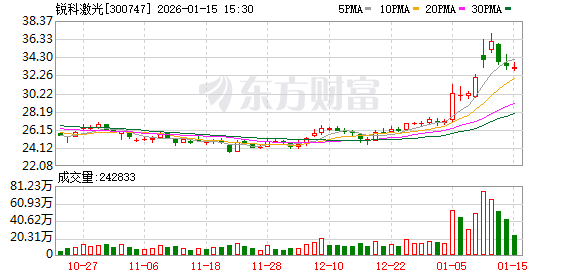
锐科激光:公司自研的激光雷达专用脉冲光纤激光器全面适配自动驾驶、测绘遥感等前沿领域
Zheng Quan Ri Bao· 2026-01-15 13:17
Core Viewpoint - The company is actively expanding its product market in various cutting-edge fields, including autonomous driving and medical applications, through self-developed laser technology [2] Group 1: Product Development - The company has developed a self-researched pulsed fiber laser specifically for lidar applications, operating at wavelengths of 1550/1535nm [2] - The laser technology is applicable in multiple sectors such as autonomous driving, remote sensing, drone navigation, satellite terrain mapping, industrial inspection, and security monitoring [2] Group 2: Market Expansion - The company is pursuing market expansion through diversified channels [2] - It is also focusing on the medical laser field, providing various fiber laser products and supporting application solutions to downstream medical equipment manufacturers [2] Group 3: Clinical Focus - The company is concentrating on two main clinical directions: urological laser lithotripsy and the removal of benign prostatic hyperplasia [2]
工信部定调高级别自动驾驶,L3级产业化按下“快进键”
2 1 Shi Ji Jing Ji Bao Dao· 2026-01-15 11:26
Core Insights - The launch of L3-level autonomous driving vehicles in Chongqing marks a significant milestone in the commercialization of advanced autonomous driving technology [1][2] - The Chinese government is actively supporting the development of high-level autonomous driving as part of its national industrial strategy [1][2] - The penetration rate of L2-level and above driving assistance features in new energy passenger vehicles reached 82.6% in the first half of 2025, indicating a shift towards accelerated development in automotive intelligence [1] Policy and Regulatory Developments - The Ministry of Industry and Information Technology (MIIT) has granted conditional licenses for L3-level autonomous driving vehicles, indicating a move from testing to limited commercial applications [2] - A report by the China Automotive Industry Association suggests the need for a clear management roadmap for autonomous driving levels, including safety responsibilities and market access standards [4] - The Shanghai "Mosu Zhixing" action plan aims to establish a collaborative data system for smart connected vehicles and enhance safety measures for autonomous driving [6][7] Industry Trends and Challenges - The transition to L3-level autonomous driving faces challenges such as the lack of formal standards and the need for safety supervision during operation [3] - The commercial viability of L3 systems is currently limited due to high development costs and regulatory constraints, with companies like Mercedes-Benz opting to focus on L2++ systems instead [8] - The Robotaxi segment is seen as the most promising area for early commercialization of autonomous driving technology, with companies competing on scalability [8][9] Market Projections - By 2030, the integration of advanced driving assistance and connected features is expected to create significant value in the automotive industry, with urban NOA becoming a mainstream function [5] - Companies like Baidu and WeRide are expanding their autonomous driving services globally, with Baidu reporting a 212% year-over-year increase in orders for its fully autonomous service [9] - The market is anticipated to see a shift towards L4-level autonomous driving within the next 2-3 years, with a focus on commercializing the Robotaxi business model [9]
浦东建设:1月15日召开董事会会议
Mei Ri Jing Ji Xin Wen· 2026-01-15 10:40
Group 1 - The company Pudong Construction announced that its ninth board meeting will be held on January 15, 2026, in Shanghai, discussing the registration and issuance of TOP chip-linked REITs products [1] - The meeting will take place at a specific address in Pudong New District, indicating the company's ongoing operational activities and governance [1] Group 2 - A report suggests that a "cheap version" of the Tesla Model 3 may enter the Chinese market, priced under 200,000 yuan, with a range of 480 kilometers [1] - The U.S. market is experiencing significant adjustments regarding autonomous driving, which may impact the competitive landscape for electric vehicles [1]
