
银发经济

Search documents
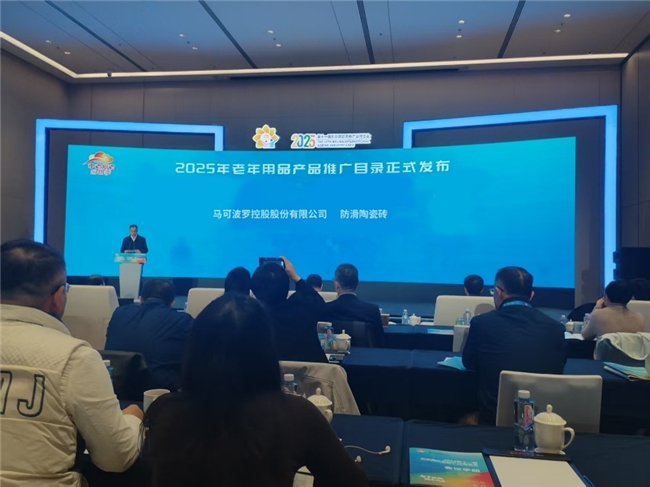
马可波罗:适老创新 赋能美好生活
Sou Hu Wang· 2025-11-26 13:33
Core Insights - The article highlights the innovative approach of Marco Polo Tiles in developing anti-slip ceramic tiles tailored for the elderly, addressing real-life challenges faced by this demographic in the context of an aging population [1][3][4] Industry Overview - The silver economy is becoming a significant driver of economic growth in China, with over 310 million people aged 60 and above by the end of 2024, accounting for 22% of the national population [3] - The number of age-friendly products has surged, with a 255.2% year-on-year increase, reflecting the urgent demand from the elderly for improved living conditions [3] Product Development - Marco Polo Tiles has been recognized for its anti-slip tiles, which have been included in the Ministry of Industry and Information Technology's promotion directory for elderly products [1] - The company emphasizes a shift from "product thinking" to "user thinking," focusing on safety, comfort, and convenience in the design of age-friendly tiles [4][5] Technological Advancements - Marco Polo has a long history of innovation in anti-slip technology, evolving from the first generation of slip-resistant tiles to advanced versions that prioritize safety and comfort [5] - The upgraded R series comfort anti-slip tiles feature a 30%+ improvement in tactile comfort and enhanced slip resistance through proprietary multi-layer nano composite glaze [7] Market Positioning - The company aims to cover all scenarios in elderly living spaces, ensuring safety in areas prone to slipping, such as bathrooms and kitchens, while also promoting a shift in elderly consumer needs from survival to enjoyment and quality [7] - The innovation in age-friendly products not only supports the company's growth but also contributes to creating safer, more comfortable living environments for the elderly [7]

4名董事投弃权票!昂立教育拟跨界收购上海乐游
Shen Zhen Shang Bao· 2025-11-26 12:32
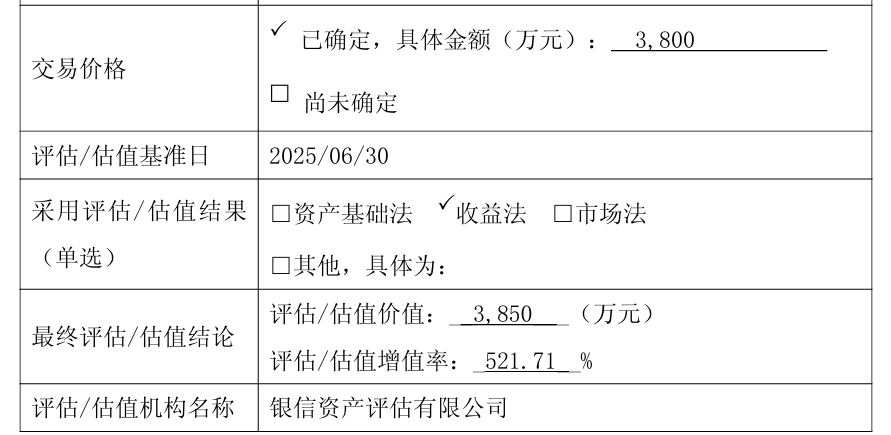
Core Viewpoint - The acquisition of Shanghai Leyou by Angli Education is primarily aimed at achieving strategic and business synergies, particularly in catering to the aging population and enhancing the company's core education business [1][2]. Group 1: Acquisition Details - Angli Education plans to acquire 100% equity of Shanghai Leyou for 38 million yuan, despite the latter's net asset value being -9.1295 million yuan, resulting in a premium rate of 516.23% [1]. - The acquisition is expected to provide personalized travel services to the elderly demographic, which aligns with the company's strategy to tap into the silver economy [1]. - Shanghai Leyou has a significant customer base of elderly clients, with over 70% of its offline store clientele being seniors, which can drive traffic to Angli Education's "Happy Community" initiative [2]. Group 2: Board and Governance - During the board's review of the acquisition, 4 out of 11 directors abstained from voting, which is noted as unusual in M&A cases [2]. - The reasons for the abstentions included concerns over the small scale of the target company and insufficient clarity regarding its operational status [3]. Group 3: Financial Performance and Projections - The acquisition includes performance commitments, requiring Shanghai Leyou to achieve a total revenue of no less than 480 million yuan and a net profit of at least 5 million yuan from 2025 to 2028, which poses a significant challenge given the company's current losses [3][4]. - Angli Education's revenue for the first three quarters of 2025 reached 1.081 billion yuan, marking a year-on-year increase of 12.03%, while net profit rose by 141.11% to 45.9309 million yuan [5].

516%溢价收购亏损旅行社 昂立教育跨界豪赌“银发经济”
Bei Jing Shang Bao· 2025-11-26 11:19
Core Viewpoint - The acquisition of Shanghai Leyou by Angli Education has raised concerns due to a high premium of 516.23%, with discussions around the valuation's rationality and associated risks [2][4][5]. Group 1: Acquisition Details - Angli Education plans to acquire 100% of Shanghai Leyou for 38 million yuan, despite Leyou's negative net asset value of -9.1295 million yuan [4]. - The acquisition is expected to generate approximately 47 million yuan in goodwill [4]. - The deal has faced skepticism from some board members, with four out of eleven directors abstaining from voting, indicating internal disagreements [5]. Group 2: Strategic Rationale - The primary motivation for the acquisition is to achieve strategic and business synergies, particularly in the context of the aging population, positioning the silver economy as a second growth curve for the company [5][11]. - Angli Education has already begun exploring the silver economy sector, launching the "Happy Community" project aimed at providing educational services for the elderly [11]. Group 3: Financial Projections and Risks - Shanghai Leyou's projected revenues are expected to grow from 55.3684 million yuan in the second half of 2025 to 148 million yuan by 2028, with net profits anticipated to turn positive by 2028 [9]. - The acquisition includes performance guarantees, with commitments for Leyou to achieve a total audited revenue of at least 480 million yuan and a net profit of 5 million yuan from 2025 to 2028, with potential compensation of up to 19 million yuan if targets are not met [8][9]. Group 4: Market Competition and Challenges - The silver economy sector is becoming increasingly competitive, with various educational companies entering the market, posing challenges for Angli Education [12]. - The success of the acquisition hinges on Angli Education's ability to transform Shanghai Leyou from a loss-making entity into a profitable business, requiring effective integration of educational and tourism services [13].
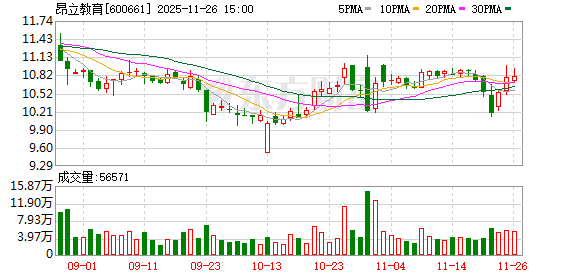
516%溢价收购亏损旅行社,昂立教育跨界豪赌“银发经济”
Bei Jing Shang Bao· 2025-11-26 11:03
Core Viewpoint - The acquisition of Shanghai Leyou by Anli Education has sparked market attention and skepticism due to a high premium rate of 516.23%, raising questions about valuation and associated risks [1][3][4]. Acquisition Details - Anli Education plans to acquire 100% of Shanghai Leyou for 38 million yuan, despite Leyou's negative net asset value of -9.1295 million yuan, resulting in a premium of 516.23% [3][4]. - The acquisition is expected to generate approximately 47 million yuan in goodwill [3][4]. - Anli Education's chairman stated that the acquisition aims to achieve strategic and business synergies, particularly focusing on the silver economy as a second growth curve for the company [3][10]. Board Concerns - Some board members expressed concerns about the acquisition's support for the main business, with four out of eleven directors abstaining from the vote, indicating internal disagreements [4][12]. - Independent directors later supported the valuation methods used, asserting that the assessment reflects the true value of the target company [4][12]. Financial Implications - The acquisition could lead to significant financial risks, including potential impairment if performance does not meet expectations [5][12]. - Anli Education has set performance targets for Shanghai Leyou, requiring a total audited revenue of at least 480 million yuan and a net profit of at least 5 million yuan from 2025 to 2028, with a maximum compensation of 19 million yuan for unmet targets [7][8]. Market Strategy - Anli Education is positioning itself in the silver economy sector, targeting active elderly individuals with personalized travel services through Shanghai Leyou [10][11]. - The company has already begun exploring opportunities in the silver economy, launching projects aimed at elderly education and entertainment [10][11]. Competitive Landscape - The silver economy market is becoming increasingly competitive, with various educational companies entering the space, which may pose challenges for Anli Education [11][12]. - Anli Education believes that Shanghai Leyou's offline model aligns well with the preferences of the elderly demographic, potentially providing a large customer base for future growth [11][12].

我国发布262项适老化国家标准,银发经济迎来标准化支撑
Xin Jing Bao· 2025-11-26 10:28
Core Insights - China has entered a moderately aging society, leading to significant policy support for the silver economy, with a total of 262 national standards related to aging and accessibility expected to be published by October 2025 [1][2] Group 1: Policy and Standards Development - The 20th National Congress of the Communist Party has emphasized the development of the silver economy, aiming to address the challenges of population aging, cultivate new economic growth drivers, and improve the quality of life for citizens [1] - The State Administration for Market Regulation is collaborating with the Ministry of Civil Affairs and other departments to enhance the standardization of aging-related products and services, focusing on both aging-friendly renovations and elderly products [1] Group 2: Standardization of Elderly Products - The State Administration for Market Regulation has released 13 national standards for elderly products, including standards for aging-friendly home appliances, furniture, shoes, and adult diapers, effectively addressing the specific needs of the elderly [2] - Related departments are conducting standard promotion activities to guide companies in improving the usability, compatibility, and safety of existing products based on the established standards [2]
养老服务有了“新标尺” 乐享“夕阳红”美好愿景进一步照进现实
Yang Shi Wang· 2025-11-26 10:24
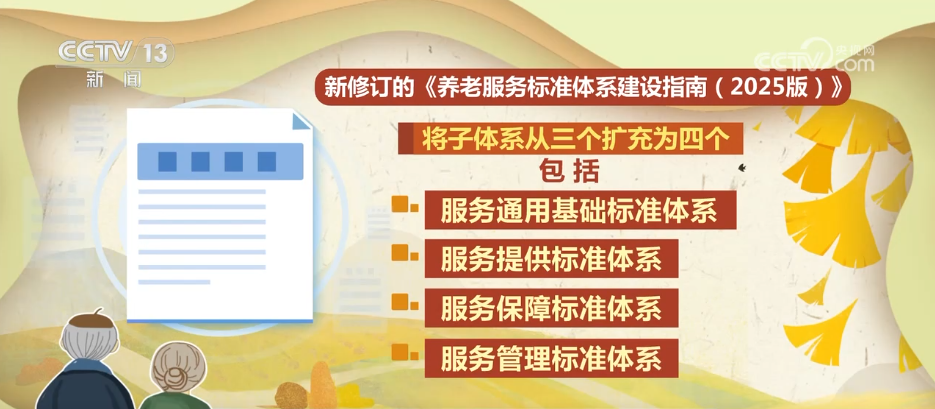
Core Viewpoint - The Ministry of Civil Affairs and the State Administration for Market Regulation have jointly released the "Guidelines for the Construction of the Elderly Care Service Standard System (2025 Edition)" to enhance the standardization and evaluation system for elderly care services, aiming for high-quality development in this sector [1][5]. Group 1: Standard System Expansion - The revised 2025 edition expands the sub-systems from three to four, including: 1. General Basic Standards System 2. Service Provision Standards System 3. Service Guarantee Standards System 4. Service Management Standards System [3][5]. - The General Basic Standards System aims to unify basic and general concepts in the elderly care sector, while the Service Provision Standards System specifies the content and requirements of elderly care services [3]. Group 2: Focus on Core Standards - The Ministry of Civil Affairs emphasizes the need to address shortcomings in the standardization framework, including an imbalance in standard supply, with more recommended standards than mandatory ones [5]. - The new guidelines will accelerate the development of key core standards, focusing on speed, quality, and mandatory nature to increase effective standard supply [5][6]. Group 3: Integration with Other Sectors - The elderly care standardization work will focus on creating a supply structure that combines home-based care, community support, and professional institutional care, integrating resources from various sectors such as housing, health, culture, and finance [6][8]. Group 4: New Indicators and Standards - The updated guidelines introduce new secondary and tertiary indicators, particularly in service provision, to address the characteristics of different service scenarios, including home, community, and institutional care [8]. - New indicators include "entrusted consulting services" and "traveling elderly care services," aligning with the trends in the silver economy [8]. Group 5: Progress in Standards Development - As of October this year, the State Administration for Market Regulation has released a total of 262 national standards related to aging and accessibility, with 13 standards specifically for elderly products [9][11]. - Future efforts will focus on accelerating the development of standards for rehabilitation aids and other key areas related to elderly care [11].
“我是股东”走进昆药集团:解码中医药企业的创新发展与战略蓝图
Quan Jing Wang· 2025-11-26 00:32
Core Insights - The event "I am a Shareholder - Visiting Listed Company Kun Pharmaceutical Group" showcased the company's innovative path, strategic layout, and industrial upgrade achievements, emphasizing its status as a top 100 pharmaceutical enterprise in China [1] Group 1: Cultural Heritage and Innovation - Investors experienced an immersive journey into traditional Chinese medicine culture at Kun Pharmaceutical's subsidiary Kun Traditional Chinese Medicine's museum and intangible cultural heritage experience center, highlighting the company's 640-year development in Yunnan [2] - The museum displayed historical documents, traditional pharmaceutical tools, and local medicinal materials, illustrating Kun Traditional Chinese Medicine's resource advantages in producing high-quality national medicines [2] - The integration of traditional craftsmanship with smart manufacturing was demonstrated, showcasing the preservation of traditional essence while enhancing production efficiency [2] Group 2: Strategic Dialogue and Industry Upgrades - The event featured a dialogue with key executives, including the Secretary-General of the Yunnan Listed Companies Association, emphasizing Kun Pharmaceutical's role as a representative of China's pharmaceutical industry transformation [3] - The company has developed a diversified business structure encompassing traditional Chinese medicine, chemical drugs, and pharmaceutical distribution, with a focus on health products for the aging population [3] Group 3: Investment Focus Areas - Investors expressed interest in three main areas: the silver economy, collaboration with China Resources Sanjiu, and globalization strategies [3] - Kun Pharmaceutical aims to deepen the "medical-nursing integration" model to cater to the growing elderly health market, enhancing product competitiveness through scientific research and rational medication guidance [3] - The company is accelerating its internationalization process, leveraging its global network resources, particularly in artemisinin, and has established sales networks in 60 countries [3] Group 4: Growth Potential and Resilience - An investor noted that Kun Pharmaceutical's strategic layout is both pragmatic and forward-looking, aligning with national policies and market demands, showcasing strong growth potential and resilience [4] Group 5: Conclusion - The event fostered a bridge of trust between industry and capital, highlighting Kun Pharmaceutical's goal of becoming a leader in the silver health industry while advancing its strategic blueprint for high-quality development in China's pharmaceutical sector [5]


中国智慧养老行业研究报告
艾瑞咨询· 2025-11-26 00:06
Core Viewpoint - The Chinese smart elderly care industry is transitioning from "pilot projects" to "full-scale penetration" and from "technology stacking" to "ecological integration" due to the intersection of population aging and digital transformation [1][2][3] Industry Background - By the end of 2024, the population aged 60 and above in China will exceed 310 million, accounting for 22.0% of the total population, posing severe challenges to traditional elderly care models [3][5] - Factors such as changes in family structure, consumption upgrades among the elderly, and increased acceptance of digital technology are driving the development of the industry [5][22] - The technological revolution is reshaping the elderly care service ecosystem, pushing the industry towards precision, personalization, and efficiency [5][24] Industry Status - Smart elderly care has formed technical solutions covering three major scenarios: home, community, and institutions [5][34] - The industry exhibits a competitive landscape with three main types of players: comprehensive solution providers, vertical technology companies, and traditional elderly care enterprises [5][34] - Challenges such as data silos, insufficient technology adaptation for the elderly, and immature business models remain significant pain points for industry development [5][39] Research Significance - The integration of technology and services in smart elderly care not only meets the multi-layered needs of the elderly but also opens new pathways for the development of the silver economy [3][4] Research Content - The report systematically analyzes the overall picture of the Chinese smart elderly care industry from the dimensions of industry background and current status [5] Research Outlook - Demand-side trends indicate a shift from survival-oriented elderly care to quality-oriented elderly care [6] - Supply-side developments will focus on technology, resources, and scenarios to lead smart elderly care services towards large-scale development [6] - The ecological aspect will emphasize value closure and multi-dimensional collaboration, outlining a new development landscape for the smart elderly care ecosystem [6] Policy Emphasis - A series of policies have been introduced to support smart elderly care, highlighting its strategic importance [19][21] Social Demand - The demand for smart elderly care is driven by significant changes in family structure, an increase in solitary and empty-nest households, and a growing elderly population with varying needs [22] Technological Application - The integration of AI, IoT, big data, and cloud computing is reconstructing the elderly care service model, transitioning from passive care to proactive prevention [24][25] Market Dynamics - The smart elderly care industry is characterized by a shift from fragmented services to a comprehensive ecosystem, driven by technological innovation and humanistic care [2][4][42] Future Trends - The demand for smart elderly care is evolving from basic survival needs to a focus on quality and value realization, reflecting a societal shift in values [42] - The supply side is moving towards large-scale development, with technology, resources, and scenarios driving the evolution of services [45] - The industry is expected to see increased ecological collaboration, enhancing the synergy between policies, markets, and technologies [48]

更好满足老年群体精神文化需求 促进老年教育高质量发展
Ren Min Ri Bao· 2025-11-25 23:02
Core Viewpoint - The article emphasizes the importance of high-quality elderly education as a crucial support for ensuring a fulfilling, progressive, and enjoyable life for the elderly population in China, which is rapidly growing due to aging demographics [2][3]. Group 1: Importance of Elderly Education - Elderly education is essential for enhancing the quality of life for over 310 million elderly individuals in China, representing 22% of the total population by the end of 2024 [2]. - Promoting high-quality elderly education is vital for addressing the challenges of an aging population and transforming the demographic pressure into a human resource dividend [2][3]. - The development of elderly education is a key measure to ensure lifelong learning for all and to improve the modern education governance system [2][4]. Group 2: Policy and Institutional Framework - The article calls for a robust institutional framework to support the development of elderly education, including the establishment of specific regulations and responsibilities for various levels of government [4][5]. - It highlights the need for a comprehensive elderly education service system that covers urban and rural areas, ensuring accessibility and inclusivity [4][5]. Group 3: Collaborative Efforts and Resource Allocation - The article advocates for mobilizing social forces, including universities, vocational schools, and community organizations, to participate in elderly education [5][6]. - It suggests optimizing resource allocation to ensure that quality educational services reach grassroots levels, particularly in rural and remote areas [5][6]. Group 4: Educational Content and Methodology - The article stresses the importance of a balanced educational approach that includes moral, intellectual, and physical development, catering to the interests and learning patterns of the elderly [6][7]. - It proposes the establishment of a certification system for elderly learners to enhance their motivation and sense of achievement in lifelong learning [6][7]. Group 5: Integration with Social and Economic Development - The article encourages the integration of elderly education with the silver economy, promoting projects that combine health management and elderly services [7]. - It emphasizes the role of elderly education in fostering community engagement and volunteerism, allowing seniors to contribute to society while enhancing their own sense of purpose [7].
促进老年教育高质量发展
Ren Min Ri Bao· 2025-11-25 22:42
Core Viewpoint - The development of high-quality elderly education is essential for enhancing the quality of life for the elderly population in China, which is projected to exceed 310 million by the end of 2024, accounting for 22% of the total population [2][3]. Group 1: Importance of Elderly Education - Elderly education is a crucial component of lifelong education and reflects the level of a learning society [2]. - It is vital for improving the quality of life for the elderly, fostering family harmony, and promoting social stability [2][3]. - The emphasis on elderly education aligns with the broader goal of transforming the challenges of an aging population into a demographic dividend [2]. Group 2: Policy and Structural Support - The government is urged to enhance the institutional framework for elderly education, ensuring it is recognized in national education and aging development strategies [4]. - There is a need for specific regulations and responsibilities for various levels of government regarding planning, resource allocation, and evaluation of elderly education [4][5]. - A comprehensive service system for elderly education should be established, covering urban and rural areas [4]. Group 3: Collaborative Efforts and Resource Allocation - The government should mobilize social forces, including universities and community organizations, to participate in elderly education [5]. - Initiatives such as establishing local branches of elderly universities and providing tax incentives for educational investments are recommended [5][6]. - Optimizing resource distribution is crucial to ensure that quality educational services reach elderly individuals in remote and underserved areas [6]. Group 4: Educational Content and Methodology - Elderly education should focus on both knowledge and personal development, incorporating various subjects such as arts, health, and civic education [6][7]. - Innovative teaching methods that cater to the learning preferences of the elderly, such as experiential and discussion-based learning, should be explored [6]. - Establishing a certification system for elderly learners, like a "silver age diploma," can enhance their motivation and sense of achievement [6]. Group 5: Integration with Social and Economic Development - Elderly education should be integrated with the silver economy, promoting synergies with health management and elder care services [7]. - Programs that encourage elderly participation in community governance and volunteer activities can enhance their social value and sense of purpose [7].