关税战

Search documents
美滥施关税对全球体系造成严重破坏(国际论坛)
Ren Min Ri Bao· 2025-05-02 22:01
Group 1 - The core argument is that the unilateral tariff measures announced by the United States are reckless and detrimental to global markets, disrupting trade and supply chains, particularly affecting underdeveloped economies [2][3] - The U.S. is attempting to hinder the economic development of China and other emerging market countries, which is seen as a futile effort that ultimately harms the global economic system [2] - The imposition of tariffs and the disruption of supply chains will complicate the global economic recovery process, with negotiations for new agreements likely to be challenging and frustrating [2] Group 2 - The U.S. government's claims that its tariff measures are "fair" and "reciprocal" are dismissed as absurd, ignoring the realities faced by many underdeveloped economies in Asia, Africa, and Latin America [3] - The actions of the U.S. are characterized as a brutal attack aimed at obstructing the emergence and development of new production centers, despite the U.S. having a significant advantage in wealth and power over these countries [3] - In contrast, China is taking calm measures to respond to U.S. tariffs, focusing on building stronger trade and communication networks with economies in Asia, Africa, and Latin America, which are expected to grow [3]


亚马逊电话会:公司将在关税战中变得“更强大”,扩大Q2指引区间,为保低价“下架部分商品”
硬AI· 2025-05-02 15:45
Core Viewpoint - Amazon's CEO compares the current tariff war to the COVID-19 pandemic, expressing optimism that the company will emerge stronger from this situation, similar to its performance during the pandemic [2][5]. Financial Guidance Expanded - To address tariff uncertainties, Amazon has widened its operational profit guidance for Q2 to between $13 billion and $17.5 billion, while market expectations were around $17.8 billion [5][4]. - The CFO noted that ongoing uncertainties regarding tariffs and trade policies have led to this broader guidance range [5][6]. Maintaining Low Prices - To mitigate the impact of tariffs and maintain low prices, Amazon has preemptively removed certain products from its platform [7][9]. - The CEO emphasized the company's focus on keeping prices low, despite the unpredictable outcomes of tariffs [9][10]. AWS Capacity Expansion - AWS has shown strong performance in Q1 2025, with revenue and profit margins increasing, driven by the rapid growth of generative AI and accelerated cloud migration [12][21]. - The CEO mentioned that AWS's AI business is running at a multi-billion dollar annual revenue rate, growing at triple-digit percentages [12][27]. Advertising Growth - Amazon's advertising revenue reached $13.9 billion in Q1, marking a 19% year-over-year increase, indicating strong demand for its advertising services [20][33]. - The company continues to invest in expanding its advertising capabilities to support brands of all sizes [20][33]. Operational Efficiency - The company has improved its delivery and transportation network productivity through a redesigned inbound network, which optimizes inventory layout and increases shipping volume [31][32]. - Amazon's focus on enhancing its logistics infrastructure aims to reduce delivery costs and improve service efficiency [32][35]. Customer Trust and Market Share - During uncertain market conditions, customers tend to choose trusted suppliers, and Amazon's extensive selection, low prices, and fast delivery have helped it gain market share [19][2]. - The company believes that its diverse seller base allows it to better navigate challenges and maintain competitive pricing [19][47].


机构:这份报告可能助涨特朗普政府关税战的气焰
news flash· 2025-05-02 13:39
金十数据5月2日讯,Academy Securities宏观策略主管Peter Tchir指出,货币政策现在可能会根据今天报 告的强度来制定,但如果考虑到修正值和一些细节,该报告并不完全是很好的。在我看来,最大的风险 是,这份非农报告可能鼓励特朗普政府在他们的关税策略上更加激进,因为这可能被视为他们的关税策 略正在发挥作用并正在创造就业机会(尽管制造业就业减少了1千个)。考虑到市场对贸易局势缓和的 积极反应,任何加倍关税(而不是达成交易)都不会是好事。 机构:这份报告可能助涨特朗普政府关税战的气焰 ...
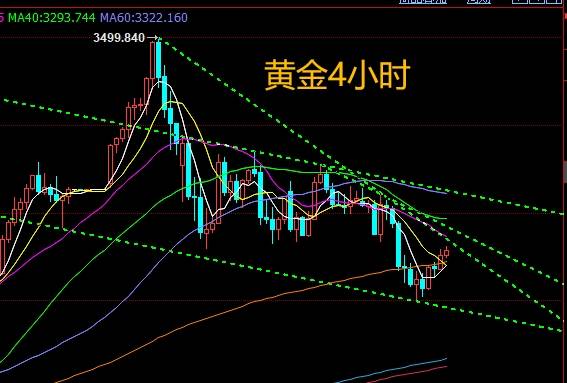
黄金,探底大涨迎非农,反弹后再向下!
Sou Hu Cai Jing· 2025-05-02 12:50
Group 1: Gold Market Analysis - The recent trading pattern for gold shows a consistent decline during the Asian session, followed by a rebound in the US session, with a significant drop of $88 to a low of 3202 before recovering [1][3] - The breaking of the downward trend since reaching a peak of 3500 indicates a potential reversal, with a short-term support level established around 3200 [1][5] - The upcoming US non-farm payroll data is expected to be favorable for gold, with a market consensus predicting an increase of 130,000 jobs, significantly lower than the previous 228,000, which could lead to a short-term rally in gold prices [3][4] Group 2: Market Indicators and Predictions - The US dollar index has shown a rebound but is expected to face resistance, with the focus on the non-farm payroll data for further direction [4] - The overall sentiment in the gold market suggests that excessive bearishness may not be warranted, as a rebound is anticipated before any further declines [5] - The S&P futures have broken through resistance levels, indicating potential upward movement towards historical highs unless significant resistance is encountered at the 5750 level [6][7] Group 3: Oil Market Insights - Crude oil has shown signs of recovery, with a focus on buying on dips, particularly around the support levels of 58.5 and 56.5, with a target of 65 for the upside [9]
新闻调查|美国关税战之害的世纪警示
Xin Hua Wang· 2025-05-02 12:23
Core Viewpoint - The negative impacts of the U.S. tariff policy have exceeded market expectations, causing troubles for the U.S. economy and increasing uncertainty in the global economy, reminiscent of the disastrous effects of the Smoot-Hawley Tariff Act in the 1930s [1][7]. Historical Context - The Smoot-Hawley Tariff Act, initiated in 1929, aimed to protect U.S. agricultural interests by significantly raising tariffs on over 20,000 imported goods, with rates reaching as high as 60% [2][3]. - The act faced strong opposition from academia and business but was signed into law by President Hoover, leading to retaliatory tariffs from other countries and igniting a global trade war [2][3]. Economic Consequences - Following the implementation of the Smoot-Hawley Tariff, U.S. imports from Europe plummeted from $1.334 billion in 1929 to $390 million in 1932, while exports dropped from $2.341 billion to $784 million, resulting in a 67% decrease in trade volume [3]. - The U.S. unemployment rate soared to 25.1% by 1933, and the Dow Jones Industrial Average fell by 89% from its peak in 1929 [3][4]. - The global trade volume and industrial output also suffered, with a 66% decline in global trade and a 33% drop in industrial output by 1934 [3][4]. Modern Implications - The current U.S. tariff policies, initiated under the Trump administration and continued by the Biden administration, have not achieved their intended goals of manufacturing return or trade deficit reduction, instead causing economic damage and loss of credibility [7][8]. - The U.S. agricultural sector faces estimated annual losses exceeding $12 billion due to these tariffs, which are ultimately passed on to consumers, exacerbating inflation risks [7][8]. Global Trade Dynamics - The persistence of high tariffs distorts price signals and hinders global productivity, leading to long-term economic damage [8]. - In today's highly specialized and integrated global economy, the negative impacts of protectionism spread rapidly, disrupting global supply chains and hindering economic growth [8][9].
美方真扛不住了,中方在美国主场直接定调“主战场”,特朗普已无路可走
Sou Hu Cai Jing· 2025-05-02 12:21
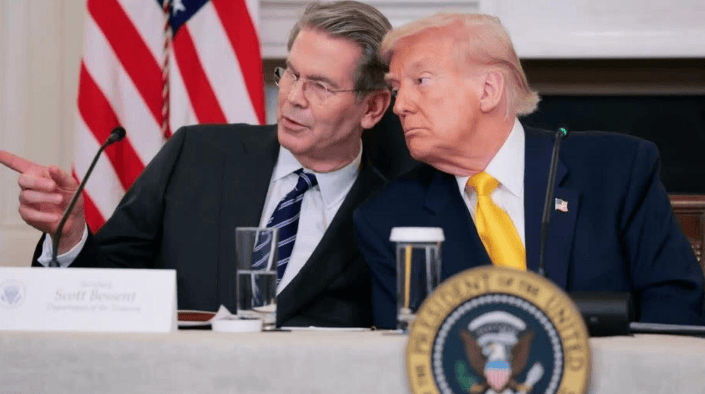
特朗普(资料图) 其实,清醒的人早就看清,特朗普的"关税战"本质上是借助关税武器剥削全世界,给"美国优先"买单。 特朗普在就职演说里赤裸裸地表示,他收外国的关税是为了增加美国一家之利,哪管他国洪水滔天。在 国际分工深度融合、各国利益紧密相连的全球化时代,这种自私自利、损人而肥的行为,严重损害了全 球各国包括美国自身的利益,不仅让"美国反对美国",更让"世界反对美国"。 特朗普和贝森特(资料图) 据报道,美国总统特朗普在白宫椭圆形办公室举行的记者会上表示,对中国商品加征的高关税将"大幅 下降"。当被问到是否会对中国采取"强硬态度"时,特朗普称:"不,我不会说'我要对中方强硬'。我们 会以非常友好的态度对待他们,他们也会友好相待,然后我们拭目以待会发生什么。"在谈到高达145% 的对华关税时,他称,"145%的税率非常高,它不应该这么高。它会大幅下降,但不会为零" 。 特朗普当天的表态虽有软化,却依旧拧巴。一方面,他明确对华释放友好谈判的信号,"我们以非常友 好的态度对待中方,他们也会友好相待。"在记者追问是否维持强硬立场时,他明确否认:"不,我不会 说'要对中方强硬'。"但同时,他仍不忘虚张声势,声称若谈判失败 ...
中美谈判,关税可能怎么降?中国股市会如何表现?|宏观经济
清华金融评论· 2025-05-02 10:37
Core Viewpoint - The article discusses the ongoing US-China tariff negotiations, emphasizing the short-term economic impact on China and proposing three strategies to mitigate these effects: expanding domestic demand, encouraging companies to go global, and reducing production capacity [1][6][12]. Group 1: Short-term Economic Impact - The tariff war poses a significant short-term challenge to the Chinese economy, with potential GDP impact estimated at 1.5 to 2 percentage points [8][12]. - There is a concern that some narratives downplay the impact on China, which may not be based on objective analysis [3][6]. Group 2: Proposed Strategies - **Expanding Domestic Demand**: It is suggested to increase the fiscal deficit by an additional 1 to 1.5 trillion RMB to stimulate consumption, alongside long-term reforms to enhance social welfare [6][7]. - **Encouraging Global Expansion**: Companies are encouraged to explore international markets, with many planning IPOs in Hong Kong to raise capital for expansion beyond Southeast Asia [7][8]. - **Reducing Production Capacity**: The article highlights the challenges of reducing production capacity due to historical reliance on supply-side policies and the need for a shift in development focus [7][8]. Group 3: Global Trade Dynamics - Most countries are unlikely to reach quick agreements with the US, which could prolong the global trade downturn and its effects on China [11][12]. - The complexity of US-China negotiations suggests that any reduction in tariffs will take time, with expectations for some tariffs to decrease by mid-year but more significant reductions possibly not occurring until late in the year [12][14]. Group 4: Market Reactions - The article notes a shift in investor sentiment towards China, with increased interest from global investors, although concerns remain about China's ability to maintain a role in global free trade [8][18]. - The Chinese stock market is expected to perform relatively well, supported by government interventions, despite concerns from overseas investors regarding the underlying economic fundamentals [14][15].
波音CEO:中国已停止接收波音客机
Sou Hu Cai Jing· 2025-05-02 06:21
中方正式停止接收预订的客机订单后,美国波音公司终于坐不住了,要求中方接收飞机,然而中方没搭理,反手和别国签下大单。 据悉,中国加速从美国市场转移,开始将订单倾斜到其他"替代国"。近日,中国不仅大量购买巴西产大豆,还向加拿大进口石油,以及增加澳大利亚和阿根 廷进口牛肉订单等。 对于美国来说,中国的地位是不可替代的。而对于中国来说,美国并非"无可替代"的贸易伙伴。特朗普的步步紧逼,换来的是中国的疏远。美国疯狂施压中 国,最终适得其反。 奥特伯格还透露,目前,已经有几架在中国等待交付的波音737 Max客机飞回美国。而其他部分原定交付中国,以及计划在今年内为中国生产的客机,将转 让给其他客户。 就在中国"退单"后,特朗普给波音出了个"好点子",不过中方的一个动作,就让美方图谋破产。 什么点子呢?特朗普要求波音指责中方退回波音飞机的行为"违约"。说白了,就是想逼迫波音就此事向中方索要"赔偿金",以挽回波音公司遭受的损失。表 面上看,这完全符合美国"全球霸主"的作风,但实际上这是一个馊主意。因为一旦波音向中方开口索赔,中方肯定会坚决反对,并且有充分的理由的证据。 届时波音非但没有让中国回心转意,反而会进一步激怒中国,引 ...

关税战传来新消息!全球股市沸腾,恒生科指一度涨3%,标普500期货涨0.7%
Hua Er Jie Jian Wen· 2025-05-02 04:02
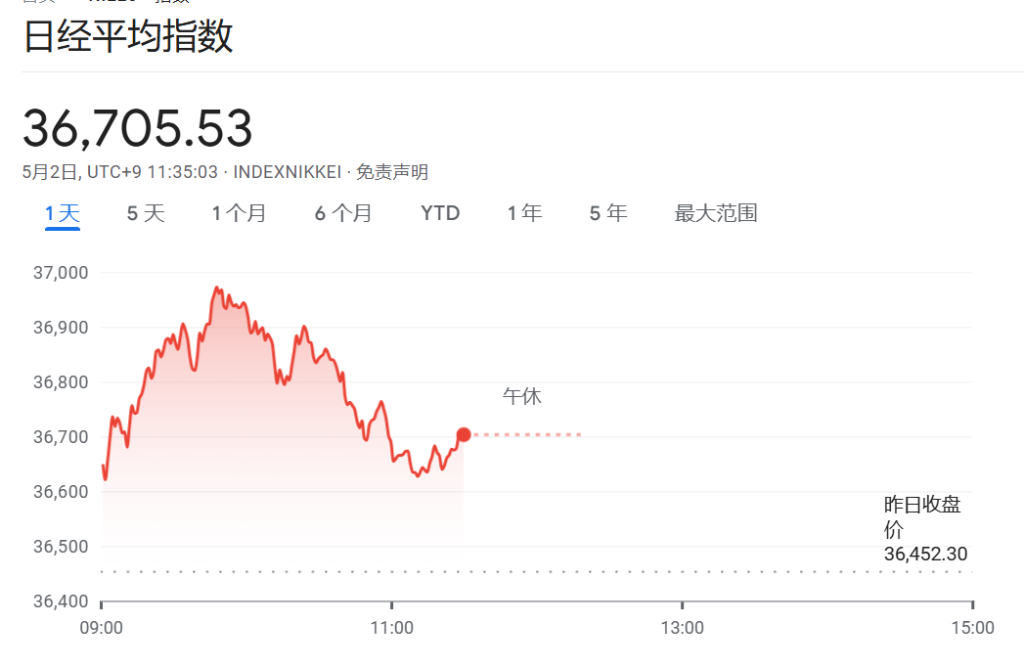
据证券时报报道,中国商务部周五表示,美方近期通过相关方面多次主动向中方传递信息,希望与中方谈起来。对此,中方正在进行评估。 这一消息瞬间点燃市场乐观情绪,全球股市周五普遍走强。与此同时,美国科技巨头业绩喜忧参半,而投资者正将目光转向周五即将公布的美国 非农就业报告。 富时中国A50指数涨近1%。港股大涨,恒指涨逾1%,恒生科技指数一度涨逾3%,小鹏汽车领涨,小米集团涨逾4%。A股因五一劳动节休市。 | 名称 | 最新价 V | 涨跌额 | 涨跌幅 | | --- | --- | --- | --- | | 恒生指数 | 22358.15 | +238.74 | +1.08% | | 800000 | | | | | 国企指数 | 8172.59 | +96.33 | +1.19% | | 800100 | | | | | 恒生科技指数 | 5218.67 | +131.25 | +2.58% | | 800700 | | | | 欧美市场方面,标普500指数期货扭转早前跌势,跃升0.7%,道指期货涨0.8%,纳指100指数期货涨0.4%。 亚太股市周五显著走高,MSCI亚太指数上涨0.6%,日经225指数一度 ...
美国税率提至395%,中方果断出手,给邻国兜底
Sou Hu Cai Jing· 2025-05-02 01:57
此外,近日中国与越南签署了《中华人民共和国商务部与越南社会主义共和国工贸部关于加强产供链合作的谅解备忘 录》。双方将充分发挥双边机制的作用,鼓励两国企业通过贸易、投资和技术合作等方式,进一步加强在多领域的产供 链合作。近年来,中越经贸合作日益加深,两国的产供链逐步融合。《备忘录》的签署,将推动双方携手打造中越畅 通、稳定且富有韧性的产业链供应链,进一步深化贸易投资合作。统计数据显示,中国已连续20年保持越南最大贸易伙 伴的地位,越南也是中国西部多个省区市在东盟的第一大贸易伙伴。2024年,重庆与越南的进出口总额达397.7亿元,占 重庆与东盟外贸总额的33.8%;而广西今年一季度对越南的进出口已达706.3亿元。位于广西凭祥的友谊关口岸,已成为 中国西部乃至全国通往越南最便捷的陆路大通道之一。在这里,载满水果的货车从越南驶入中国-东盟(崇左)水果交 易中心。 近日,中国国防部长与越南国防部长潘文江共同主持了中越第九次边境国防友好交流活动。期间,潘文江参观了边防部 队、智慧口岸、学校和村庄,种植了友谊树,视频观摩了北部湾联合巡逻起航仪式,并举行了会谈。国防部长表示,在 两党两国领导人的战略引领下,两军将进一步加 ...