
产业升级

Search documents
为长三角生命健康产业升级注入强劲动能,绍兴民生医药股份有限公司搬迁提升集聚项目正式开工
Qi Lu Wan Bao· 2025-12-08 09:24
项目建成后,可为社会提供更多高质量的原料药及中间体,满足国内外市场对创新药物日益增长的需 求,同时带动地方就业、促进产业集聚,为长三角医药创新与制造高地建设注入新动力。 开工仪式上,中建三局三公司党委书记、董事长王延波表示,公司将充分发挥全产业链整合、核心技术 支撑与精细化管理优势,集结最优管理团队、专业技术力量与精良施工队伍,严格遵循"安全第一、质 量至上、进度可控、绿色环保"理念,高标准规划、高质量建设、高效率推进,为绍兴乃至长三角医药 产业高质量发展注入新动能。 项目规划总建筑面积约10万平方米,涵盖多个生产车间、甲类与丙类仓库等配套建筑。项目聚焦高端原 料药及医药中间体的研发与生产,产品涵盖抗肿瘤、抗感染、心血管系统、肠外营养代谢等多个重大疾 病治疗领域,包括丙氨酰谷氨酰胺、氟康唑、地高辛、托吡卡胺等44个品种,年设计总产能约1075吨。 12月8日,由中建三局三公司承建的绍兴民生医药股份有限公司搬迁提升集聚建设项目在浙江省绍兴市 上虞工业园正式开工。该项目是绍兴市推进化工产业集约化、绿色化转型的重要示范工程,也是企业迈 向高端原料药领域、实现技术升级与产能整合的关键布局。 ...
再上新台阶 潍柴2025交出了亮眼答卷
Zhong Guo Qi Che Bao Wang· 2025-12-08 09:19
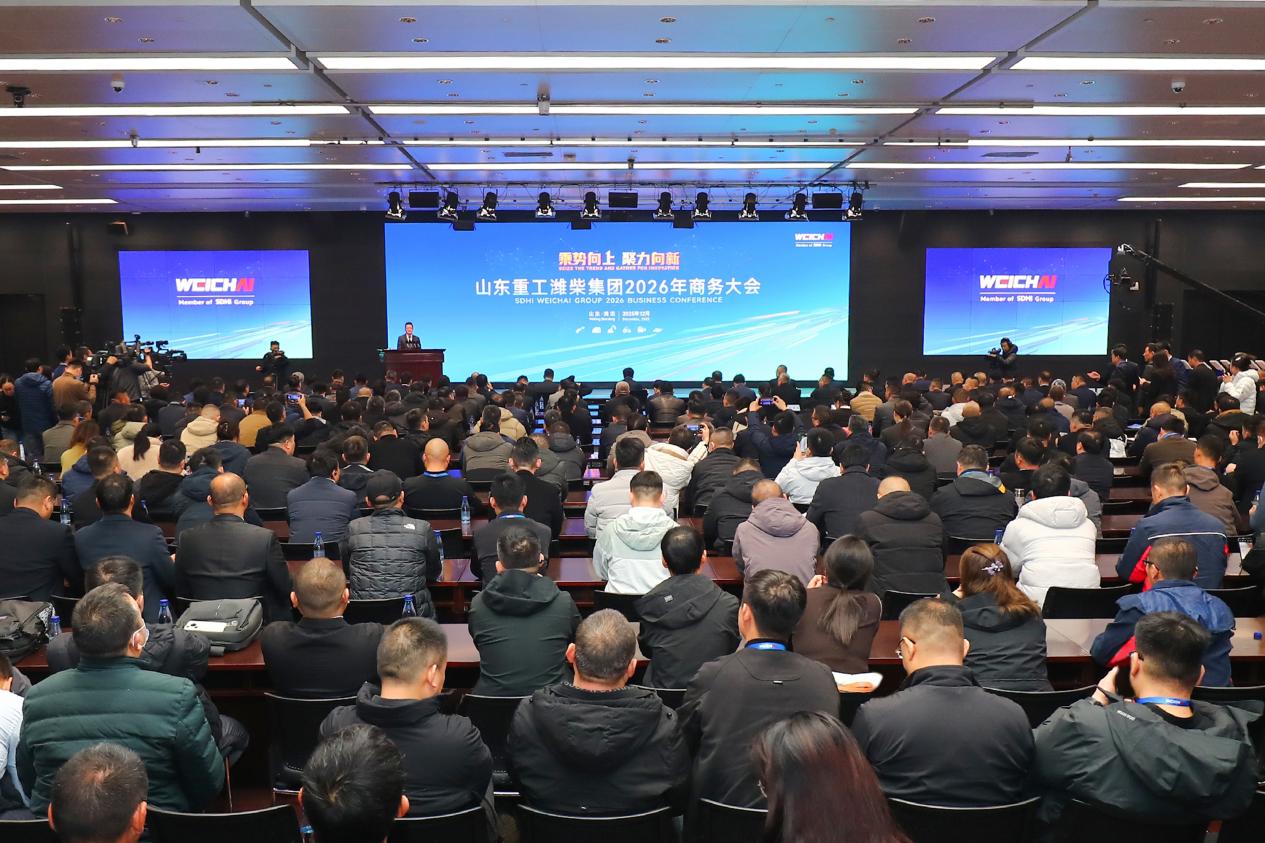
Core Insights - Shandong Heavy Industry Weichai Group held its 2026 Business Conference, showcasing over 150 green, low-carbon high-end products and launching more than ten new products and service models, highlighting its product mix advantages and technological strength [1] Group 1: Company Performance - Weichai has become a leading industrial equipment multinational group in China, with annual revenue exceeding 300 billion yuan, and ranks 87th in the "2025 China Enterprise 500" list with projected revenue of 312.29 billion yuan for 2024 [3][5] - The company is focusing on innovation-driven growth, aiming to enhance its multi-dimensional power industry structure and contribute to the upgrade of China's manufacturing industry [3][5] Group 2: Market Position and Product Development - Weichai's market leadership is reinforced, with its engine market share remaining the highest in the domestic industry, and significant sales growth in strategic markets such as Southeast Asia, Latin America, and Europe [6][10] - The company has launched the world's first 5-megawatt high-speed diesel generator set, achieving the highest power density globally, and has made breakthroughs in solid oxide fuel cell technology [8][10] Group 3: Future Strategy and Growth Areas - Weichai plans to leverage its strengths in high-end products, expand into new energy and hydraulic markets, and enhance its after-market service solutions, transitioning from a parts sales model to a service-oriented approach [10][12] - The company aims to deepen strategic collaboration, enhance digital capabilities, and build a new ecosystem in the power industry, positioning itself as a leader in technology and green development [12]

亚联机械(001395) - 投资者关系管理信息20251208
2025-12-08 08:28
Group 1: Market Structure and Competition - The domestic engineered wood machinery industry has a high concentration with few companies dominating the market, including Dieffenbacher, Siempelkamp, and Yalian Machinery [2][3] - High entry barriers exist due to the complexity of production processes and the need for integrated technology across multiple fields [3] - The core competitive advantages of Yalian Machinery include advanced technology, stable quality, strong brand recognition, and a skilled service team [3] Group 2: Capital Expenditure Outlook - Recent years have seen a push for capacity upgrades in the downstream engineered wood industry, leading to increased demand for advanced equipment [3][4] - The current supply-demand balance in the fiberboard industry is stable, while the particleboard sector is experiencing overheating in investment [4] - The overall profitability of the downstream industry is declining due to market pressures, leading to a decrease in new production line projects [4] Group 3: Order Fulfillment and Risks - The execution of engineered wood production line projects is complex and subject to various uncertainties, making timely delivery challenging [4] - Yalian Machinery currently has a sufficient order backlog, with most projects progressing as planned, and no significant risks of order cancellations [4] Group 4: International Expansion Strategy - Yalian Machinery's overseas business strategy focuses on regions with high demand for engineered wood, such as Southeast Asia, Eastern Europe, and Africa [5] - The company employs a direct sales model with customized pricing based on client needs, maintaining a consistent business model across domestic and international markets [5] - The overseas market presents significant growth opportunities due to rising demand and the need for improved equipment standards [5] Group 5: Profit Margins and Market Dynamics - The gross margin of Yalian Machinery's products is influenced by sales prices, procurement costs, and the scope of supply, with overseas projects typically having a broader scope [5] - While expanding the supply scope may dilute overall gross margins, it enhances total project profits and customer satisfaction through comprehensive solutions [5]
郑永年:科创为“帆” 产业为“锚”——上海“五个中心”建设须以实体经济“领航”
Xin Hua Cai Jing· 2025-12-08 06:05
Core Insights - The article emphasizes the need for Shanghai to leverage its role in the national development strategy by focusing on the real economy and technological innovation, creating a synergistic system of basic research, application technology transformation, and financial services to promote high-quality development of the "Five Centers" [1] Group 1: International Strategic Landscape - The current international order is undergoing four structural changes: the weakening of the US-led alliance system, limitations on multilateral mechanisms like the UN, fragmentation of global governance, and a shift in US strategic focus towards the Asia-Pacific region [1] - The breakthrough in scientific and technological capabilities and the resilience of the industrial system are seen as core determinants of national competitiveness [1] Group 2: Development of New Productive Forces - The core task during the "14th Five-Year Plan" period is to develop new productive forces and build a modern industrial system, which aligns with the strategic positioning of Shanghai's "Five Centers" [1] - Historical examples from Japan and the "Four Asian Tigers" illustrate that sustained investment in technological innovation is crucial for overcoming the "middle-income trap" and achieving a virtuous cycle of technological progress, industrial upgrading, job expansion, tax growth, and reinvestment in innovation [1] Group 3: Shanghai's Unique Advantages - Shanghai's advantages include a well-structured ecosystem for research and development, with a concentration of top universities and research institutions, and the establishment of a "Basic Research Pilot Zone" [1] - The manufacturing strengths of neighboring provinces like Jiangsu, Zhejiang, and Anhui provide ample opportunities for technology transfer from laboratories to production lines [1] - As a national financial center, Shanghai can offer diverse capital support for hard technology projects throughout the entire cycle from research and development to mass production [1] Group 4: Financial Integration with the Real Economy - The construction of a national financial center must prioritize the real economy, avoiding the pitfalls of "de-industrialization" seen in the UK and the US [2] - Financial services should act as a "booster" for technological innovation and industrial upgrading, rather than becoming a self-referential "bubble" [2] - Shanghai should focus on developing venture capital, industrial funds, and technology finance that align with the high-risk, long-cycle nature of hard technology projects [2] Group 5: Global Innovation Landscape - The main battleground for the fourth industrial revolution is concentrated in the US and China, with China having three strategic hubs: Beijing for basic research, the Greater Bay Area for market application, and the Yangtze River Delta, centered in Shanghai, for its integrated advantages in research, manufacturing, and finance [2] - Recommendations for Shanghai include improving the venture capital ecosystem and reforming institutional mechanisms to create an efficient closed loop between innovation, industry, and finance [2]
资本搭桥“蜀道”变“通途” 成就产业跃迁西部高地|决胜“十四五” 擘画“十五五”·地方资本市场高质量发展之四川篇
证券时报· 2025-12-08 04:20
Core Viewpoint - Sichuan is leveraging its capital market to transform the historically challenging "Shudao" into a smooth "Tongtu," facilitating capital flow and industrial upgrades [1]. Group 1: Capital Market Development - During the 14th Five-Year Plan, Sichuan has integrated capital market development into its broader economic and social development strategy, using policy innovation to eliminate institutional barriers and enhance capital flow efficiency [5]. - By the end of Q3 2025, Sichuan is expected to have 179 listed companies, a 32% increase from the end of 2020, with a total market capitalization of 3.4 trillion yuan [5]. - Sichuan's capital market has achieved significant growth, with direct financing exceeding 2.1 trillion yuan during the 14th Five-Year Plan, supporting various sectors such as advanced manufacturing and green energy [8]. Group 2: Quality and Structure of Listed Companies - Sichuan's listed companies have not only increased in number but also improved in quality and structural diversity, with total revenue reaching 823.1 billion yuan and net profit of 82.15 billion yuan in the first three quarters of 2025 [12]. - The industry structure of listed companies shows a clear trend of traditional industries stabilizing while emerging industries lead growth, with the market capitalization of industrial and information technology sectors rising from 26.69% to 51.76% [12]. Group 3: Mergers and Acquisitions - Sichuan's capital market has utilized mergers and acquisitions to optimize resource allocation, with 136 M&A transactions totaling 81.3 billion yuan during the 14th Five-Year Plan [13]. - The cash dividend mechanism has been enhanced, with listed companies distributing over 230 billion yuan in cash dividends, reflecting a commitment to shareholder returns [14]. Group 4: Innovation and Financing Tools - Sichuan is focusing on innovation-driven development, with 79 companies listed on the Sci-Tech Innovation Board, accounting for 44% of the total listed companies [16]. - The province has issued 168 innovative bonds, including Sci-Tech bonds and green bonds, raising over 100 billion yuan to support various projects [17]. Group 5: Risk Management and Investor Protection - Sichuan has established a comprehensive investor protection and risk prevention system, with significant achievements in risk monitoring and management during the 14th Five-Year Plan [19][21]. - The regulatory framework has been strengthened to combat financial fraud and ensure accountability among listed companies [22]. Group 6: Future Outlook - Looking ahead to the 15th Five-Year Plan, Sichuan aims to deepen the integration of its capital market with local economic development, focusing on nurturing core technology enterprises and enhancing the competitiveness of listed companies [24]. - The province plans to accelerate the construction of a Western financial center, enhancing the capital market's role in regional development [25].

邮储银行安徽省分行全力支持扩内需
Ren Min Wang· 2025-12-08 01:21
Core Insights - The 20th Central Committee emphasizes the importance of expanding domestic demand as a strategic foundation, integrating consumer welfare and investment in goods and people to stimulate new supply and demand interactions [2] Group 1: Financial Services and Consumer Focus - Postal Savings Bank of China Anhui Branch is actively implementing national policies by focusing on enhancing financial services in key consumer areas such as culture, tourism, and elderly care, significantly increasing credit resources in these sectors [3] - The bank has provided over 6.3 billion yuan in credit for 26 cultural and tourism projects, with nearly 2.4 billion yuan in loans disbursed, achieving over 50% credit coverage for national 5A tourist attractions [3] - In the elderly care sector, the bank has innovated business models and provided 1.1 billion yuan in credit for eight elderly care projects, supporting service capacity improvements in various counties [3] Group 2: Stimulating Consumer Spending - The bank has implemented fiscal interest subsidy policies to enhance consumer willingness, resulting in a 26% year-on-year increase in personal consumption loan applications and a nearly 40% increase in credit amounts since the policy's implementation [4] - Various promotional activities have been launched in collaboration with platforms like WeChat and Alipay to enhance consumer experiences in travel, dining, e-commerce, and entertainment [5] Group 3: Supporting Industrial Upgrades - The bank is committed to supporting the revitalization of local industries by providing tailored credit solutions and collaborating with agricultural departments to facilitate the growth of green food and specialty industries [6] - New credit products such as "Sci-Tech e-loans" and "Intellectual Property Pledge Loans" have been introduced to assist small and micro enterprises in overcoming financing challenges [6] - The bank aims to align its services with national strategies, including the integration of the Yangtze River Delta and rural revitalization, to enhance financial service quality and efficiency [6]

12月8日至14日展会活动预告
Zhong Guo Jing Ji Wang· 2025-12-07 23:56
Core Insights - The article highlights the upcoming major exhibitions in China's convention industry, showcasing economic vitality and international cooperation as the year comes to a close [1] Group 1: Major Exhibitions Overview - The China Convention Industry Annual Conference will take place from December 10 to 13 at the Cangzhou International Conference Center, featuring key activities such as keynote speeches, project signings, and the release of the "2025 China Convention Industry Development Report" [1] - The PME 2025 International Precision Machining Expo is scheduled for December 9 to 11 at the Shanghai New International Expo Center, focusing on surface treatment and precision machining technologies, with 679 exhibitors from over 20 countries and a total exhibition area of 32,000 square meters [2] - The 8th Global Unmanned Systems Conference and Guangzhou International Low-altitude Economic Trade Expo will occur from December 12 to 14 at the Canton Fair Complex, featuring a planned exhibition area of over 60,000 square meters and attracting over 600 industry chain enterprises [3] Group 2: Specific Exhibitions Details - The 2025 Asia Metal Architecture Design and Industry Expo will be held from December 11 to 13, 2025, at the Shanghai New International Expo Center, gathering over 600 companies from 35 countries, with a focus on new materials and sustainable development [5] - The 47th Shenzhen International Medical Equipment Exhibition will take place from December 10 to 12 at the Shenzhen International Convention and Exhibition Center, featuring over 1,000 medical device manufacturers from more than 20 countries and an exhibition area of approximately 100,000 square meters [6] - The 4th Beijing International Art Design Toy Exhibition will be held from December 12 to 14 at the National Convention Center, attracting over 100,000 visitors and showcasing more than 1,000 trendy toy brands [7] - The 21st China (Changsha) International Automobile Expo will run from December 10 to 15 at the Changsha International Convention and Exhibition Center, focusing on intelligent technology innovations and recognized as a "barometer" of the automotive market [7]
公募跨年布局各有“心思” 翻倍基净值波动普遍收窄
Zheng Quan Shi Bao· 2025-12-07 19:08
Group 1 - The core viewpoint of the articles highlights the mixed strategies of public funds as they approach year-end, with some aiming to preserve gains while others seek to boost performance in the limited time remaining [1][3][5] - As of December 5, 22 actively managed equity funds have achieved over 100% annual returns, with the top performer, Yongying Technology Smart A, boasting a return of 202.13% [2][3] - The performance gap between the top funds is significant, with Yongying Technology Smart A outperforming the second-place fund by over 50 percentage points, indicating a competitive landscape for year-end rankings [3][4] Group 2 - The difficulty of achieving additional gains as year-end approaches is emphasized, with market volatility and liquidity concerns being key factors [5][6] - Recent market trends show a shift from high-growth stocks to a focus on valuation and profit quality, influenced by institutional investment patterns [6][7] - The upcoming policy meetings in December are expected to be critical for market movements, with historical data suggesting price fluctuations around these events [7][8] Group 3 - The market is experiencing structural differentiation, with sectors like artificial intelligence, semiconductor equipment, and lithium resources performing well, while traditional real estate and consumer sectors lag [8] - Analysts suggest that the growth trend has room for expansion, but structural shifts and increased volatility are anticipated, with a potential focus on new investment opportunities in the energy and chemical sectors [8]
台州水务拟出资2亿元参与设立基金 履行国企职责聚焦汽车、医疗健康产业升级
Zhi Tong Cai Jing· 2025-12-07 11:11
Core Viewpoint - Taizhou Water (01542) announced a board resolution to establish a fund partnership agreement with several local investment entities, aiming for an initial fund size of RMB 1.01 billion, with the company contributing RMB 200 million, representing 19.8% of the total commitment [1] Group 1: Fund Establishment - The fund is designed to attract industry investment and support projects by mobilizing social capital and management resources [1] - The focus industries for the fund include automotive and healthcare, aligning with municipal market reforms to enhance the strategic value of the group within the state-owned asset system [1] Group 2: Policy Support - Recent national policies have encouraged mergers and acquisitions as tools for industrial upgrading and technological innovation, with specific support for listed companies to engage in supply chain mergers [1] - Local policies in Zhejiang Province and Taizhou have been introduced to promote the establishment of merger funds, guiding state-owned capital towards strategic emerging industries [1] Group 3: Regional Economic Context - Taizhou has 72 A-share listed companies, with 80% having a market value below RMB 10 billion and lacking large-scale leading enterprises [1] - The project reflects the proactive response of Taizhou's state-owned enterprises to national and local policies, fulfilling corporate responsibilities and promoting high-quality regional industrial development [1]
台州水务(01542)拟出资2亿元参与设立基金 履行国企职责聚焦汽车、医疗健康产业升级
Zhi Tong Cai Jing· 2025-12-07 11:10
Group 1 - The company Taizhou Water (01542) has announced a proposal to establish a fund with an initial suggested scale of RMB 1.01 billion, with the company's capital commitment being RMB 200 million, accounting for 19.8% of the total fund commitment [1] - The fund aims to attract industrial investment and support projects by mobilizing social capital, focusing on key industries such as automotive and healthcare, while enhancing the strategic value of the group within the state-owned asset system [1] - National policies have been continuously introduced to encourage mergers and acquisitions as tools for industrial upgrading and technological innovation, with specific support for listed companies to engage in mergers around supply chains [2] Group 2 - Taizhou has 72 A-share listed companies, but 80% of them have a market capitalization of less than RMB 10 billion, indicating a lack of leading enterprises in the region [2] - The project reflects the proactive response of state-owned enterprises in Taizhou to national and local policies, fulfilling corporate responsibilities and promoting high-quality regional industrial development [2]