绿色金融

Search documents
金融“活水”精准滴灌种业“芯片”
Zheng Quan Ri Bao· 2025-11-30 15:37
Core Viewpoint - The article highlights the proactive measures taken by Lin'an Rural Commercial Bank to support the development of the livestock industry in Zhejiang, particularly through tailored financial solutions for agricultural enterprises like Saino Ecological Agriculture, which is a national core breeding farm for sheep [1][2]. Group 1: Financial Support and Innovations - Lin'an Rural Commercial Bank has developed a customized financing plan for Saino Ecological Agriculture, providing a total of 7 million yuan (approximately 1 million USD) through a combination of credit loans and secured loans to meet the company's funding needs for breeding research and management [2]. - The bank has implemented a flexible loan repayment scheme tailored to the high investment and long cycle characteristics of the sheep industry, addressing the traditional financing challenges faced by agricultural enterprises [2][3]. - As of the end of October, Lin'an Rural Commercial Bank has issued loans to 530 agricultural enterprises, totaling 68 million yuan (approximately 9.5 million USD) [2]. Group 2: Commitment to Agricultural Development - Lin'an Rural Commercial Bank is focused on solving the "loan difficulty" issue for agricultural enterprises by introducing various loan products such as Grain Farmer Loans and Low-Income Farmer Subsidized Loans, and aims to create credit villages and towns by 2025 [3]. - The bank plans to enhance its services for the agricultural sector by conducting in-depth research, opening green credit channels, and innovating specialized financial products to ensure continuous financial support for agriculture, forestry, animal husbandry, and fishery industries [3].
银行业26年的业务增长点及投资映射
ZHONGTAI SECURITIES· 2025-11-30 13:37
Investment Rating - The report maintains an "Overweight" rating for the banking industry [2] Core Insights - The underlying logic of economic and financial policies supports "new quality productivity" and "bottom-line thinking" [2][3] - New growth points for the banking industry in 2026 include: - Infrastructure loans are expected to rebound, with ongoing structural adjustments, particularly in digital and green infrastructure [2][3] - Manufacturing loans are expected to remain resilient due to sustained export strength and opportunities from traditional industry upgrades and green finance [2][3] - Technology finance loans continue to grow rapidly, especially in the artificial intelligence industry chain [2][3] - Wealth management, particularly for high-net-worth clients, is expected to see significant growth [2][3] - Real estate and consumption are expected to stabilize, with marginal policy easing anticipated in 2026, although a "steady upward" trend requires unexpected policy support [2][3] - The mapping of business to investment indicates that banking operations can remain stable, with bank stocks transitioning from "pro-cyclical" to "weak-cyclical" [2][3] Summary by Sections Economic and Financial Policy Framework - The focus is on developing new quality productivity to break through economic growth ceilings, which is the core direction for future financial resource allocation [9] - Bottom-line thinking emphasizes the prevention of systemic risks related to real estate and local debt, providing a stable macro environment for the transition between old and new growth drivers [9][10] New Infrastructure Loans - Infrastructure investment in 2025 shows a significant slowdown, with a cumulative year-on-year growth rate of 1.51%, down 7.84 percentage points from 2024 [20] - New infrastructure, particularly digital and green projects, is expected to drive growth in 2026, with a focus on regional coordination and urban renewal [20][24] Manufacturing Loans - Manufacturing loans are expected to maintain resilience, supported by exports and traditional industry upgrades, with a market potential of 10 trillion over five years [31] - The growth of green finance remains significant, with major banks increasing their green credit ratios [31] Technology Finance - Technology finance is projected to maintain high growth, with a year-on-year increase of over 17% in high-tech loans [31] - There is a notable disparity in technology loan ratios between large and small banks, indicating room for growth in smaller institutions [31] Wealth Management - The wealth management sector is experiencing a shift from "scale-driven" to "precise matching," benefiting high-net-worth clients [31] Real Estate and Consumption - Real estate policies are expected to see marginal easing, with a focus on stabilizing the market in 2026 [31] - Consumption is projected to continue under a "policy support" framework, with internal dynamics needing to strengthen [31]
宏观经济和债券市场一周观点:本周信用债发行只数、规模环比增幅均超30%,发行成本环比整体下行3.28BP-20251130
大公国际资信· 2025-11-30 12:58
分析周期 2025.11.17-2025.11.23 技术研究部 联系电话:010-67413343 邮箱:research@dagongcredit.com 宏观经济和债券市场一周观点 ——本周信用债发行只数、规模环比增幅均超 30%,发行成本环比整体下行 3.28BP 本期观点摘要 宏观动态 债市观察 风险预警 1 经济运行:10 月财政收入端在税收带动下继续改善;财政支出端明显放缓,或与前 期财政靠前发力影响后续支出空间收窄、政府债券发行节奏提前造成资金安排趋于 谨慎有关。 资金面:11 月 17 日-11 月 21 日,央行公开市场逆回购操作合计净投放 4,340 亿 元。资金价格方面,受税期集中走款以及政府债缴款等扰动,周内资金面先紧后松, 前半周资金价格上行幅度大,后半周整体回落。全周 DR001、DR007 均值与前一周 基本持平。 债券发行:信用债发行数量、规模环比增幅均超过 30%,净融资额为净流入 1,899.86 亿元,平均发行成本环比下行 3.28BP。 新券种:国网租赁成功发行全国首单"绿色+两新+乡村振兴"三贴标债券。 主体级别下调:本周 4 家发行人主体级别被下调。 主体展望下调 ...
长三角6家上市城商行的韧性增长:息差承压之下营收净利双增,对公业务成信贷“主引擎”
Mei Ri Jing Ji Xin Wen· 2025-11-30 12:34
Core Insights - The six A-share listed city commercial banks in the Yangtze River Delta are demonstrating resilient growth despite the pressure of narrowing interest margins, achieving both revenue and net profit growth in the first three quarters of the year [1][2] Revenue and Profit Growth - All six banks reported year-on-year growth in net interest income, with Nanjing Bank and Jiangsu Bank leading with growth rates of 28.52% and 19.61% respectively, ranking among the top in A-share listed banks [2][3] - Jiangsu Bank achieved a revenue of 671.83 billion yuan and a net profit of 305.83 billion yuan, leading among city commercial banks [2] Asset Expansion - As of the end of September, Jiangsu Bank held total assets of 4.93 trillion yuan, marking a 24.68% increase from the beginning of the year, making it the fastest-growing bank in terms of asset size among A-share listed banks [4][5] - Other banks like Ningbo Bank and Nanjing Bank also reported double-digit asset growth rates [4] Loan and Deposit Growth - The six banks experienced robust growth in both loans and deposits, with Jiangsu Bank's deposits reaching 2.54 trillion yuan, a 20.22% increase, the only bank in A-share with such growth [5] - Corporate loans became the main driver for credit expansion, with significant increases in sectors like technology finance, inclusive finance, and green finance [5][6] Asset Quality - The overall asset quality of the six banks remained stable, with non-performing loan ratios either holding steady or declining, indicating effective risk management strategies [7][8] - Jiangsu Bank's non-performing loan ratio decreased to 0.84%, while Nanjing Bank's ratio remained stable at 0.83% [7] Capital Adequacy - Shanghai Bank reported a high core Tier 1 capital adequacy ratio of 10.52%, reflecting improvements in capital management and risk mitigation strategies [8] - Several banks have completed convertible bond conversions to strengthen their capital positions [8] Dividend Distribution - Several banks, including Shanghai Bank and Suzhou Bank, have completed mid-term dividend distributions, with Jiangsu Bank and Ningbo Bank also progressing on their dividend plans [9][10] - The focus on increasing cash dividends reflects a commitment to enhancing shareholder returns, with some banks planning to maintain a cash dividend ratio of no less than 30% in the coming years [10]





国泰君安期货研究周报:绿色金融与新能源-20251130
Guo Tai Jun An Qi Huo· 2025-11-30 10:21
1. Report Industry Investment Rating No relevant content provided. 2. Core Views of the Report - Nickel: Fundamental factors limit its upward potential, and it is expected to trade in a low - level range. Consider shorting at high levels and using options to hedge upside risks [4]. - Stainless steel: With high inventory, weak supply - demand balance, and cost factors limiting the downside, it is suitable for range - bound trading [5]. - Industrial silicon: Supply - demand situation has weakened, with inventory accumulation and a possible decline in supply from November, and demand showing a weak pattern [30][31][32]. - Polysilicon: Price fluctuations have intensified, and attention should be paid to the situation of warehouse receipt registration. The fundamental situation is weakening, but the market is focused on the narrative of fewer warehouse receipts [30][32][35]. - Lithium carbonate: Demand is seasonally weakening, and with the expected resumption of production by major manufacturers, the price faces upward pressure, and it is expected to fluctuate weakly [55][56][58]. 3. Summary by Relevant Catalogs 3.1 Nickel and Stainless Steel 3.1.1 Fundamentals - Nickel: The real - world fundamentals are under pressure, with refined nickel inventory accumulation and the expected increase in low - cost wet - process supply in the long - term. Although the Fed's dovish remarks have eased macro - pressure, and there are uncertainties in Indonesian policies, it is not advisable to short at low levels, and shorting at high levels is recommended [4]. - Stainless steel: The supply - demand situation is weakening, with high upstream inventory, low terminal investment growth, and a decrease in production in December. Cost factors limit the downside, and range - bound trading is appropriate [5]. 3.1.2 Inventory Tracking - Nickel: On November 28, China's refined nickel social inventory increased by 1,572 tons to 54,716 tons. LME nickel inventory increased by 810 tons to 254,760 tons [6]. - Stainless steel: On November 15, SMM nickel - iron inventory was 30,225 tons, with a month - on - month increase of 2% and a year - on - month increase of 3%. On November 27, the total social inventory of stainless steel was 108.61 million tons, a week - on - week increase of 1.11% [8]. 3.1.3 Market News - There are various events in Indonesia, including the takeover of a nickel mine by the forestry working group, sanctions on mining companies, and potential quota cuts. China has paused an unofficial subsidy for copper and nickel imports from Russia, and the Fed's dovish remarks have affected market sentiment [9][10][12]. 3.1.4 Key Data Tracking - Data on nickel and stainless steel futures, including closing prices, trading volumes, and prices of related products such as imported nickel, nickel - iron, and stainless steel products, are provided [14]. 3.2 Industrial Silicon and Polysilicon 3.2.1 Price Trends - Industrial silicon: The futures price has risen, while the spot price has fallen. The盘面 price closed at 9,130 yuan/ton on Friday, and the spot prices in Xinjiang and Inner Mongolia have decreased [30]. - Polysilicon: The futures price has continued to rise, while the downstream spot price has started to fall. The盘面 price closed at 56,420 yuan/ton on Friday [30]. 3.2.2 Supply - Demand Fundamentals - Industrial silicon: Supply - side, production has decreased in Sichuan and Xinjiang, and inventory has accumulated. Demand - side, downstream demand is weakly rigid, with reduced demand from polysilicon, uncertain organic silicon production cuts, low aluminum alloy procurement enthusiasm, and weak export demand [31][32]. - Polysilicon: Supply - side, short - term weekly production has decreased, and inventory has accumulated. Demand - side, silicon wafer production has decreased, and the willingness to accept spot prices has declined [32]. 3.2.3后市 Views - Industrial silicon: It is recommended to wait and see, with an expected trading range of 8,800 - 9,500 yuan/ton next week. Attention should be paid to whether organic silicon enterprises implement production cuts [34][35]. - Polysilicon: Attention should be paid to warehouse receipt registration, with an expected trading range of 53,000 - 58,000 yuan/ton next week. The market is in an extreme situation with high volatility [35]. 3.3 Lithium Carbonate 3.3.1 Price Trends - The lithium carbonate futures contract has continued to be highly volatile, with the overall center of gravity rising. The 2601 contract closed at 94,640 yuan/ton, a week - on - week increase of 3,620 yuan/ton, and the spot price increased by 1,450 yuan/ton to 93,750 yuan/ton [55]. 3.3.2 Supply - Demand Fundamentals - Policy: The Ministry of Industry and Information Technology will regulate the irrational competition in the battery industry. Raw material: The application for the renewal of Ningde Times' lithium mine license has been accepted, and the shipment volumes of Australian and Chilean mines are at relatively high levels. Supply - demand: Weekly production has decreased by 265 tons, mainly due to the seasonal decline in salt - lake production. December demand is uncertain, with some data showing a weakening trend, and the terminal energy - storage project winning bids have decreased [56]. - Inventory: This week, lithium carbonate inventory decreased by 2,452 tons, but the de - stocking was less than expected. After the centralized cancellation of futures warehouse receipts, the remaining warehouse receipts are relatively low [57]. 3.3.3后市 Views - The price is expected to fluctuate weakly, with an expected trading range of 85,000 - 98,000 yuan/ton for the futures main contract. A positive - spread strategy is recommended for inter - period trading. Lithium salt manufacturers are advised to hedge for profit - locking, and downstream enterprises are advised to reduce hedging ratios [58][59][62].
国开行发行90亿元绿色金融债券,欧盟将发布《工业脱碳加速器法案》立法提案
Xinda Securities· 2025-11-30 08:05
国开行发行 90 亿元绿色金融债券,欧盟将发布《工业脱碳加速器法案》立法 提案 [Table_Industry] ESG 周报 [Table_R 2025 年 1eportDate] 1 月 30 日 证券研究报告 行业研究 [Table_ReportType] 行业周报 | [Table_StockAndRank] ESG | | | --- | --- | | 投资评级 | —— | | 上次评级 | —— | 郭雪 环保公用联席首席分析师 执业编号:S1500525030002 邮 箱:guoxue @cindasc.com 吴柏莹 环保行业分析师 执业编号:S1500524100001 邮 箱:wuboying@cindasc.com 本期内容提要: [Table_S [Table_Summary 热点聚焦 ummary]:] 国内:国开行发行 90 亿元绿色金融债券,重点支持基础设施绿色升级。国 家开发银行日前在上海清算所成功发行 90 亿元 3 年期绿色金融债券,发行 利率为 1.52%,认购倍数 2.46 倍。截至 11 月 28 日,国开行已累计发行绿 色金融债券 2295 亿元。本次发行严格 ...
6400亿元!绿色金融债发行翻倍,中小银行加速入场
券商中国· 2025-11-30 07:29
Core Viewpoint - The issuance of green financial bonds in China has significantly increased in 2023, driven by supportive policies and a diverse range of issuing institutions, including small and medium-sized banks, which have become new growth points in the market [2][3][9]. Group 1: Green Bond Issuance - On November 27, the National Development Bank successfully issued 9 billion yuan of 3-year green financial bonds with an interest rate of 1.52%, achieving a subscription multiple of 2.46 times [1]. - Since the implementation of the "Green Bond Support Project Directory (2025 Edition)" in October, financial institutions have entered a "fast track" for green bond issuance, with 14 bank green bonds issued in November alone, marking the highest issuance density of the year [2]. - In November, various banks issued a total of 110.7 billion yuan in green financial bonds, setting a new monthly record for 2023 [3]. Group 2: Diverse Issuers - The issuance of green bonds has expanded beyond state-owned banks to include small and medium-sized banks and non-bank financial institutions, indicating a diversification of issuers [4][9]. - In November, several small banks issued green bonds ranging from 700 million yuan to 3.5 billion yuan, with specific examples including Tangshan Bank and Chongqing Three Gorges Bank [5][6][7]. Group 3: Policy Support and Market Growth - The explosive growth in green bond issuance is attributed to continuous policy support, particularly following the launch of the new project directory, which has unified various green financial products and reduced identification costs for financial institutions [9]. - As of November 28, over 240 green bonds have been issued by financial institutions, with a total issuance scale exceeding 640 billion yuan, doubling the issuance scale from 2024 [9]. Group 4: Cost Optimization and Innovation - The average issuance cost of bank green bonds has improved, decreasing from 1.94% in 2024 to 1.74% in 2023, enhancing the financing cost-effectiveness [3]. - There has been a notable increase in product innovation within the green bond market, with various financial institutions exploring new mechanisms, including floating rate bonds and thematic bonds focused on specific sectors like green manufacturing [11][13].





我国成全球最大绿色债券市场
中国能源报· 2025-11-30 00:45
Core Viewpoint - China's green bond market has transitioned from "scale expansion" to "quality and efficiency improvement" [3] Group 1: Market Performance - Global green bond issuance has decreased by 11% year-on-year to $506 billion, while China's green bond issuance has increased by 92% to $101.8 billion, accounting for 20% of the global market [3] - From 2016 to 2024, the issuance scale of China's green bonds grew from 201.8 billion RMB to 683.3 billion RMB, with an average annual growth rate of 16.5% [5] - The total outstanding scale of green bonds in China increased from 2,039 billion RMB to 21,621 billion RMB, with an average annual growth rate of 34.3% [5] Group 2: Innovation and New Products - There has been a strong growth in innovative green bond varieties, with transition bonds seeing a year-on-year increase of 53.6% in 2024 [8] - New products such as sustainable development-linked bonds and low-carbon transition-linked bonds are significantly supporting high-carbon industries [8] - The issuance of green rural revitalization bonds accelerated in Q3 2025, reaching 20.725 billion RMB, marking a historical high for quarterly issuance [8] Group 3: International Influence and Standards - The scale of green bonds held by foreign institutions in China increased from 200 million RMB to 31.88 billion RMB from 2016 to 2024, with an average annual growth rate of 40% [11] - China's green bond standards are closely aligned with international capital market standards, making them an important reference for ESG investments [11] - The report suggests enhancing the sustainable bond standard system and improving information disclosure standards to boost international influence [12]

中国绿色低碳发展释红利 机遇共享通世界
Zhong Guo Xin Wen Wang· 2025-11-29 10:00
中新社南昌11月29日电 (记者吴鹏泉)移动储能机器人、光伏汽车天窗、氢燃料电池电站……2025世界绿 色发展投资贸易博览会暨中国绿色食品博览会处处"绿意盎然"。透过这一国际化平台可发现,中国绿色 低碳发展正持续释放红利,为世界带来多重发展机遇。 11月27日至30日,本届博览会在江西南昌举行,中外2500余家企业参展觅商机,各类绿色低碳创新技术 和产品集中亮相。 11月27日,2025世界绿色发展投资贸易博览会暨中国绿色食品博览会现场,具身智能机器人的表演吸引 参观者观看。刘力鑫摄 江西省委书记尹弘表示,本次大会以"数智赋能绿色发展,开放江西链接全球"为主题,就是要践行生态 文明理念,顺应数智化发展潮流,交流绿色发展经验,共享时代机遇,共创美好未来,为高质量发展注 入强劲绿色动能。 博览会现场,一家新能源企业展示的光伏汽车天窗引人注目。"天窗采用高效光伏组件,单日发电量2度 左右,可提升续航里程约20公里,后续我们还会研发集成于玻璃间的太阳能板产品。"该企业产品总监 蔡伟认为,随着中国力推绿色发展,车辆零部件会更注重绿色低碳设计。 加快全面绿色转型是中国的发展方向。《中共中央关于制定国民经济和社会发展第十五 ...

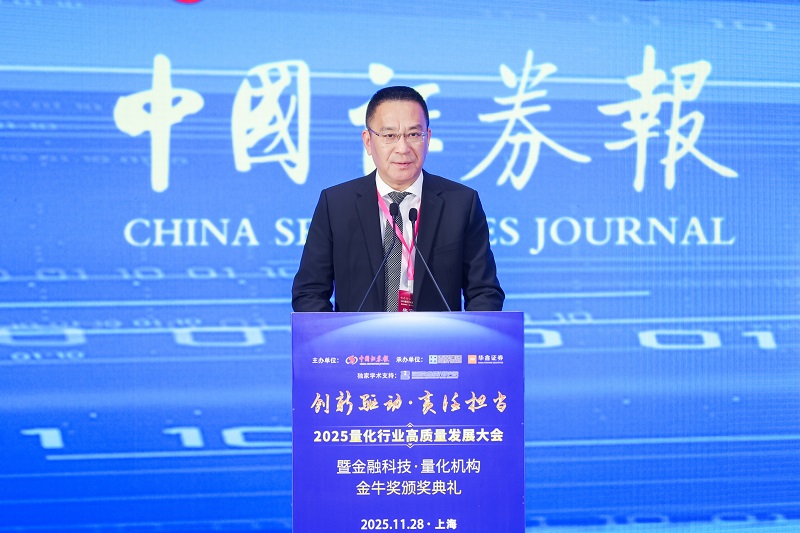
华鑫证券党委书记、董事长俞洋:兼顾创新与责任 量化投资才能行稳致远
Zhong Guo Zheng Quan Bao· 2025-11-29 02:46
Core Insights - The development of quantitative investment is at a new historical starting point, emphasizing the integration of innovation and responsibility for sustainable growth [1][3] - The 2025 Securities Industry Golden Bull Award highlights outstanding quantitative institutions, showcasing their innovation and compliance in the industry [1][3] Industry Development - Quantitative investment has evolved over more than half a century globally, significantly impacting capital market operations [3] - Despite its late start in China, quantitative investment is experiencing a golden development period characterized by innovation and responsibility, driven by a large market capacity and advancing financial technology [3][4] Technological Innovation - Quantitative investment is a core application of financial technology, integrating big data, artificial intelligence, and cloud computing to shift investment management from experience-driven to data-driven and intelligent [3][4] - The focus on rational investment principles enhances decision-making logic and objectivity, reducing irrational trading impacts on the market [3][4] Market Efficiency - Quantitative investment acts as an engine for market efficiency, improving trading liquidity and price discovery mechanisms through innovative trading tools and pricing models [4] Social Responsibility - Financial institutions, including quantitative firms, must uphold social responsibility while innovating, ensuring the protection of investors' legal rights [6] - Quantitative institutions play a crucial role in guiding investor structure optimization and providing professional investment channels [6] Regulatory Alignment - The development of quantitative investment aligns with the regulatory focus on enhancing capital market functions, particularly in technology finance, green finance, and inclusive finance [6] Company Strategy - The company has positioned financial technology at the core of its development strategy since 2017, focusing on technology-driven competitive differentiation [7] - A comprehensive service ecosystem is being built, covering product design, strategy incubation, trading execution, risk control, and custody services [7] Future Outlook - The company aims to leverage this event to reinforce its innovation-driven path and fulfill its industry mission, contributing to the high-quality development of the capital market and the transformation of the real economy [8]