AI大模型

Search documents
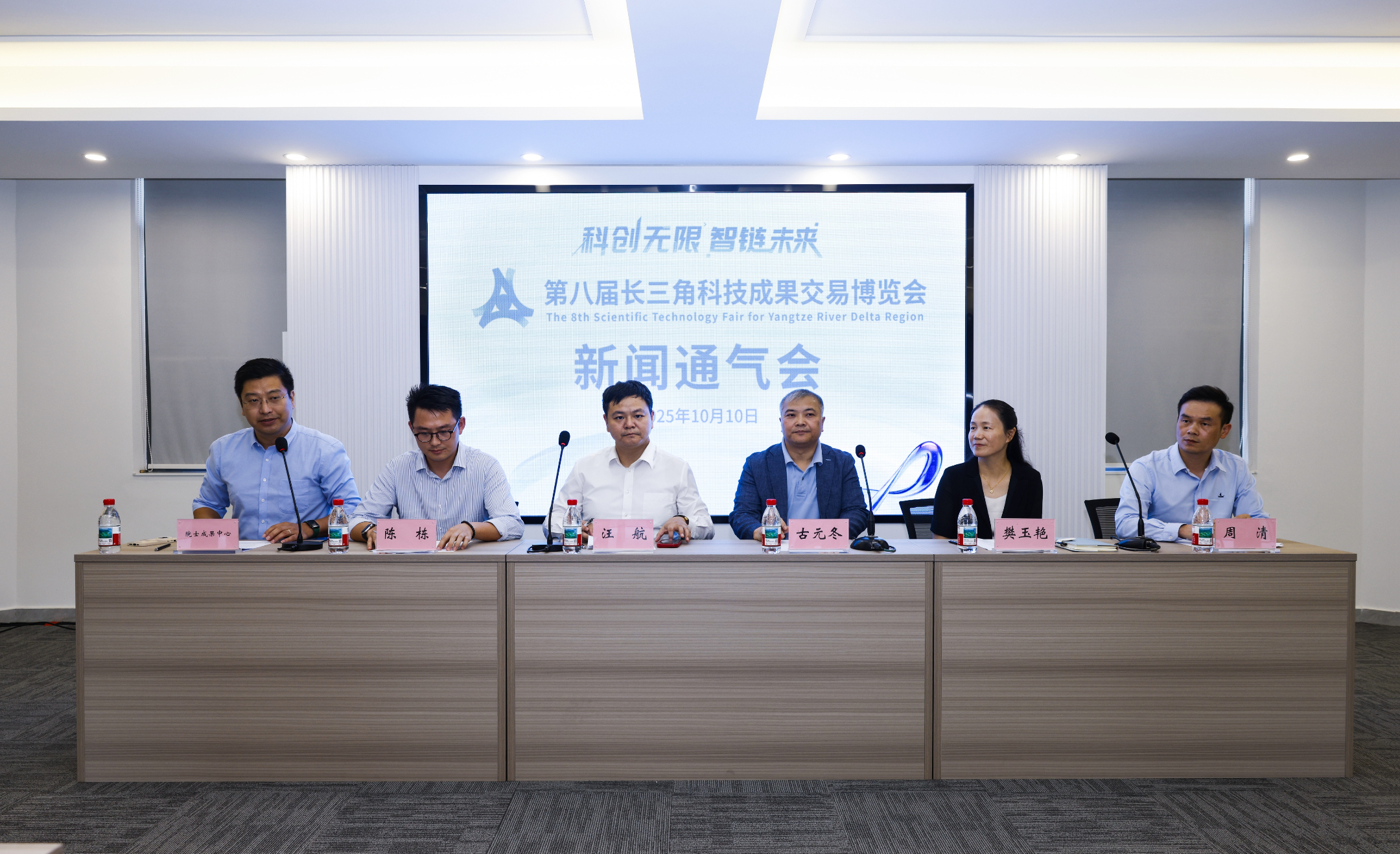
第八届长三角科技成果交易博览会将于10月15日开幕 主题展区逾1万平方米
Zheng Quan Shi Bao Wang· 2025-10-10 14:50
Core Insights - The 8th Yangtze River Delta Science and Technology Achievements Trading Expo will be held from October 15 to 17 in Shanghai, focusing on future industries such as intelligent technology, energy, materials, health, and space [1][2] - The expo will feature a total exhibition area of over 10,000 square meters, with participation from 41 core cities in the Yangtze River Delta region [1] - Since its inception in 2018, the expo has hosted nearly 400 events and facilitated over 4,000 connections with technology enterprises, resulting in a transaction volume exceeding 1.7 billion yuan [2] Industry Developments - The Yangtze River Delta region is enhancing its technological innovation cooperation, particularly between Shanghai Jiading and neighboring cities, showcasing its pivotal role in regional development [4] - A joint investment fund for industrial upgrades has been established by Jiading, Kunshan, and Taicang, with a total investment exceeding 4.6 billion yuan, aimed at promoting companies to list on the Sci-Tech Innovation Board [4] - Jiading aims to accelerate the transformation of traditional industries and foster new industrial clusters, focusing on integrating technological and industrial innovation to create new economic growth drivers [4]


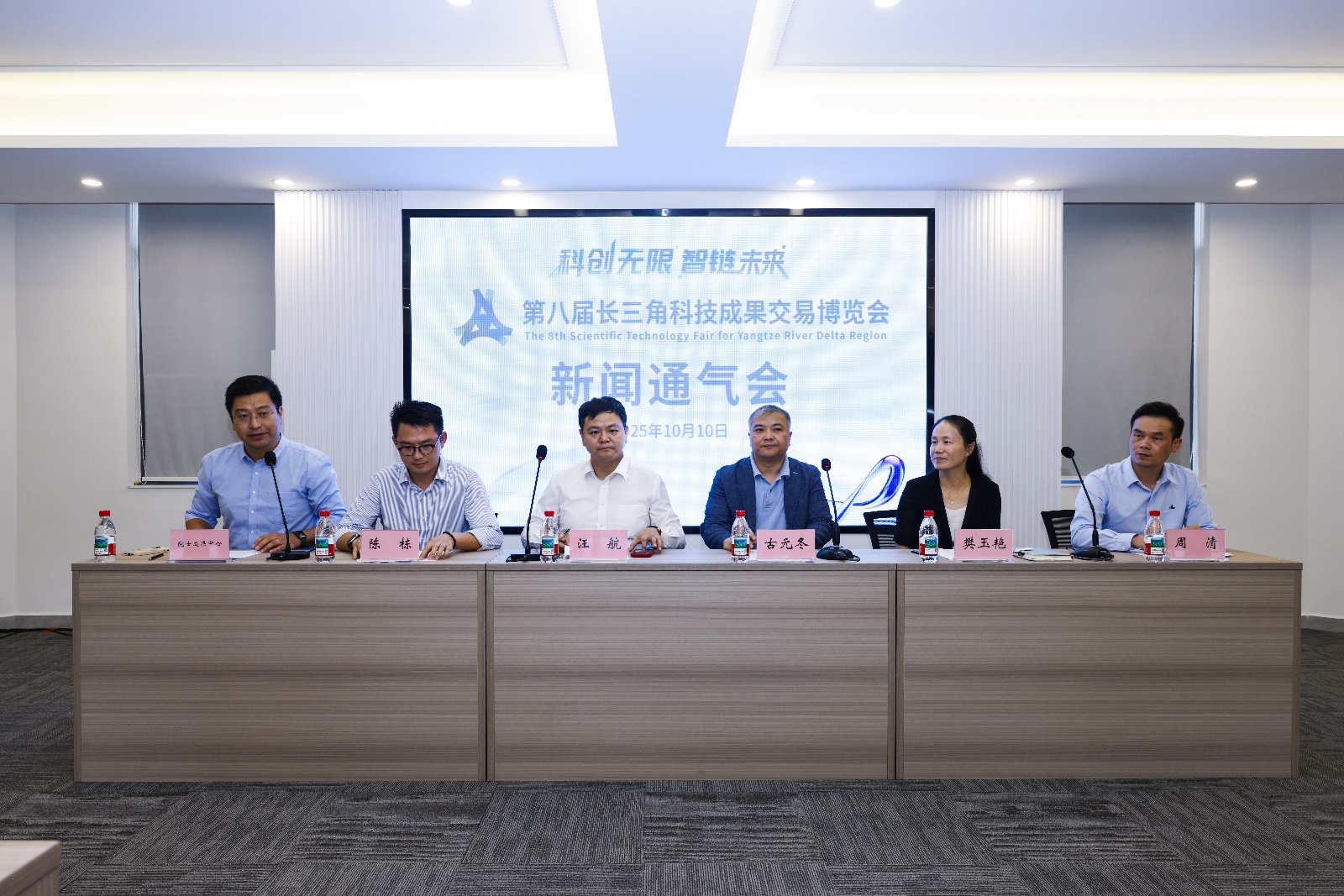
五大未来产业齐聚!第八届长三角科交会10月15日开幕
Guo Ji Jin Rong Bao· 2025-10-10 13:58
Core Insights - The 8th Yangtze River Delta Science and Technology Achievements Trading Expo will be held from October 15 to 17 in Shanghai, featuring a theme exhibition area exceeding 10,000 square meters with participation from 41 core cities in the Yangtze River Delta [1][2] Group 1: Event Overview - The expo focuses on five future industry tracks: future intelligence, future energy, future materials, future health, and future space, aiming to showcase new achievements and cases [2][5] - The event will include five major exhibition areas: Yangtze River Delta Cooperation City Area, National Innovation Center Area, Technology Transfer and Transformation Area, Frontier Technology Demonstration Area, and Technology Ecosystem Area [2][5] Group 2: Exhibition Areas - The Yangtze River Delta Cooperation City Area will display local industrial development and technological innovation achievements from cities like Nantong, Kunshan, and Taicang [4] - The National Innovation Center Area will focus on enterprise technology demand matching, crowdfunding research, and concept verification center construction, showcasing new mechanisms and achievements [5] - The Technology Transfer and Transformation Area will integrate various technology transfer service institutions to facilitate technology trading and investment matching [5] - The Frontier Technology Demonstration Area will highlight innovative achievements from universities and research institutions, promoting collaboration with different industries [5] - The Technology Ecosystem Area will involve technology parks, incubators, and industry associations to create a comprehensive technology service exchange platform [5] Group 3: Strategic Goals - The expo aims to enhance the regional innovation chain and industrial chain integration, providing strategic support for improving the technological competitiveness of the Yangtze River Delta [7] - It will feature approximately 60 brand activities, including forums and competitions, to foster dialogue among technology, industry, academia, and investment sectors [8] Group 4: Long-term Initiatives - The event will continue to promote a "3+365" technology service model, facilitating ongoing technology transactions and collaborations across the region [9] - Since its inception in 2018, the expo has become a significant platform for advancing international innovation center construction and collaborative innovation in the Yangtze River Delta [10]
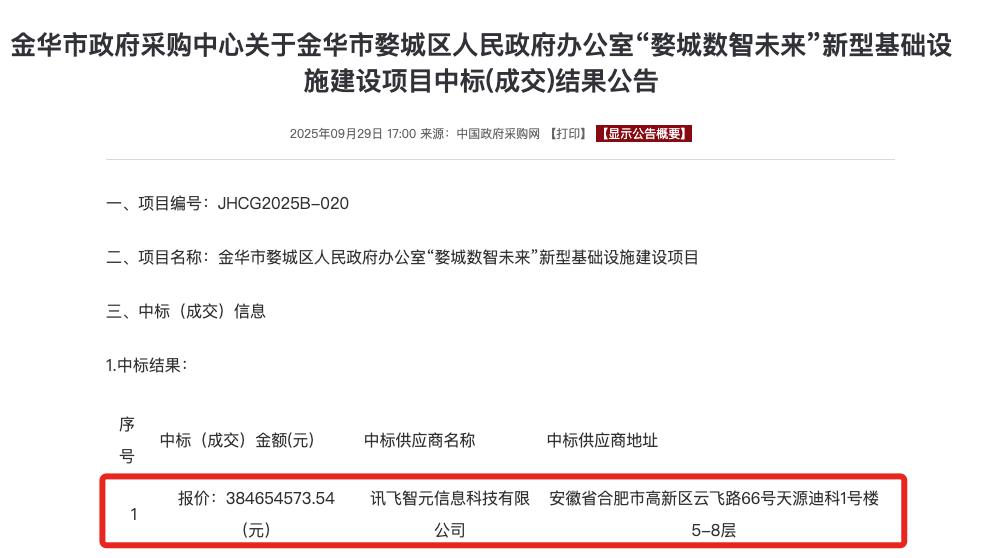
3.8亿大模型大单,讯飞拿下,华为宇树都赚了
3 6 Ke· 2025-10-09 11:44
Core Insights - The project "Wucheng Smart Future" won by iFlytek Zhiyuan marks a significant milestone in the large-scale implementation of AI models, with a total contract value of approximately 380 million yuan [1][20]. - The project encompasses a comprehensive digital infrastructure, including a smart base, ten AI scenarios, and three data service scenarios, indicating a shift from isolated software and hardware to integrated intelligent systems [2][20]. Project Overview - The project was awarded to iFlytek Zhiyuan, which outperformed competitors such as China Unicom, Guotai Xindian, and China Mobile, based on the highest score in the bidding process [6][20]. - The total budget for the project is set at 388.91 million yuan, with the breakdown of costs showing that software expenses significantly exceed hardware costs, indicating a trend where AI models are becoming monetized [3][4]. Financial Breakdown - The cost distribution for the project is as follows: software (41% or 156 million yuan), hardware (38% or 144 million yuan), cloud resources (11% or 42 million yuan), data services (6% or 21 million yuan), security (3% or 10 million yuan), research and renovation (2% or 6 million yuan), and hardware-software integration (1% or 5 million yuan) [4]. AI Scenarios - The project includes ten AI scenarios that integrate large models and intelligent agents across various sectors such as education, public security, human resources, and healthcare, showcasing the versatility of AI applications [10][20]. - For instance, the AI+Education scenario incorporates a large model AI teacher assistant, utilizing iFlytek's educational resources, with a quoted price of 800,000 yuan [10][11]. Data Service and Infrastructure - The project also features three data service scenarios, including a data circulation service platform and a city data operation platform, which are essential for managing and utilizing data effectively [13][20]. - The infrastructure includes an AI innovation center equipped with Huawei's high-performance computing units, further emphasizing the integration of domestic AI technologies [14][20]. Industry Implications - The successful bid by iFlytek Zhiyuan not only represents a substantial order but also highlights the growing trend of AI technology moving from conceptual validation to large-scale industrial application [20]. - The project reflects a complete domestic AI industry chain, showcasing the capabilities of Chinese AI technologies and their integration into various sectors, marking a significant advancement in the digital transformation of urban infrastructure [20].

泰安高新区两家企业获省级“先投后股”项目支持
Qi Lu Wan Bao Wang· 2025-10-09 08:19
高新区高度重视科技项目申报工作,将科技项目作为推动企业创新发展的重要抓手,建立科技企业项目 储备库,坚持"一企一档",动态跟踪、精准培育,为企业提供覆盖政策解读、材料梳理、创新亮点提 炼、申报流程指导等全环节的"保姆式"服务,全方位提升项目申报质量。 据悉,山东省科技型中小企业创新能力提升工程是省级科技计划的重要组成部分,聚焦新兴产业和关键 短板领域,旨在支持科技型中小企业联合高校、科研院所开展技术攻关与成果转化。根据省级财政资金 支持方式的不同,2025年度提升工程项目分为财政直补、先投后股两类。其中,"先投后股"类项目是省 科技厅推出的一种创新财政支持方式,通过"财政资金先期注入+市场基金后续接力"的方式,既缓解企 业创新发展的资金压力,又通过市场化机制实现资金的良性循环。 (齐鲁晚报·齐鲁壹点客户端欢迎各界投稿,提供线索,包括文字、照片、短视频。泰安新闻素材请联 系齐鲁晚报泰安融媒中心,热线电话:0538-6982110。) 近日,省科技厅公布了2025年度科技型中小企业创新能力提升工程(先投后股类)项目名单,全市共4 家企业入选,其中高新区2家。 此次入选的2个项目分别是泰安东大新材表面技术有限公司" ...
万亿赛道开启“去伪存真”淘汰赛
老徐抓AI趋势· 2025-10-09 05:15
Group 1 - The core viewpoint of the article is that humanoid robots are transitioning from concept to commercialization, with 2024 being a pivotal year for the robotics industry, as demonstrated by products from companies like Tesla, Figure AI, and Boston Dynamics [2][6]. - The capital market is entering a "survival of the fittest" phase, where only companies with genuine technological strength and commercialization capabilities will stand out [6][8]. - The humanoid robot market is projected to exceed 1 trillion RMB by 2030, becoming a significant terminal market following smartphones and electric vehicles [8]. Group 2 - The robotics industry chain consists of three main segments: upstream core components, midstream manufacturing, and downstream application scenarios, with core components accounting for approximately 70% of total costs [12]. - Domestic supply chains have made breakthroughs in certain areas, such as reducers and servo systems, which will enhance the penetration rate of domestic core components as China's manufacturing upgrades [12][13]. - Investment strategies should focus on core component manufacturers, companies with comprehensive solution capabilities, and supply chain firms closely collaborating with industry giants [13]. Group 3 - The article emphasizes the importance of technological advancements, particularly the development of AI models, which provide robots with the ability to understand and execute complex instructions [5]. - The article highlights the need for investors to avoid speculative investments and instead focus on companies with real technological barriers and commercialization progress [13].

能源化工数智化,华为如何驱动跃升?
Zhong Guo Hua Gong Bao· 2025-10-09 03:04
Core Insights - The application of digital intelligence technology in the energy and chemical industries shows significant potential, with predictive maintenance accuracy reaching 90%, a 20% reduction in manual inspection time, and software investment costs decreasing by 50% to 80% [1][4] Group 1: Industry Transformation - The industry is undergoing a critical transformation, focusing on leveraging digital intelligence technologies to address complex production challenges and enhance operational efficiency [2] - The integration of AI and big data in the chemical sector is exemplified by the Kunlun AI model developed by China National Petroleum Corporation and Huawei, which aims to rejuvenate the oil and gas industry across various domains [2] Group 2: Operational Efficiency - Companies like Guizhou Phosphate Chemical have achieved significant results in energy consumption optimization and resource recycling through AI-driven models [3] - The accuracy of predictive maintenance has reached 90%, and the efficiency of standard operating procedure (SOP) document reviews has improved by 50%, significantly reducing human labor input [3] Group 3: Collaborative Innovation - Huawei's collaboration with various industry partners has led to the development of innovative industrial AI solutions that cover multiple core scenarios, resulting in substantial business value [4] - The introduction of the NIICA SPE network solution aims to enhance data transmission capabilities while reducing resource consumption, showcasing the potential for improved operational efficiency [5][6]
OpenAI最大的对手其实是谷歌
阿尔法工场研究院· 2025-10-09 02:49
以下文章来源于柳叶刀财经 ,作者刀哥 柳叶刀财经 . 买股票就是买公司。专注公司基本面分析,包括但不限于主营业务、护城河、内生式增长、财报、管理层、公司产品、行业等等。 导语:openAI其实是核心,英伟达、AMD、甲骨文,其实都算是算力或者基础服务商,核心还是openAI未来的发展。 国庆这几天,美股、日经都很热闹,挑一些重点的说。 1)先说下美股的AI科技股的联姻。最重磅的消息是关于AMD,看下AMD这涨幅,怎么有点类似oracle? | 最高: 226.71 | 今开:226.44 | 成交量: 2.49亿股 | 换手:15.33% | | --- | --- | --- | --- | | 最低: 203.01 | 昨收:164.67 | 成交额:526.75亿 | 振幅: 14.39% | | 52周最高: 226.71 | 量比: 5.97 | 市盈率(TTM): 116.65 | 市净率:5.54 | | 52周最低: 76.48 | 委比: 14.29% | 市盈率(静): 201.46 | 市销率:11.17 | | 每股收益: 1.75 | 股息(TTM): -- | 每手股数:1 | 总 ...




AI耳机大爆发,不到500元搭载大模型,传统耳机完犊子了?
3 6 Ke· 2025-10-09 00:32
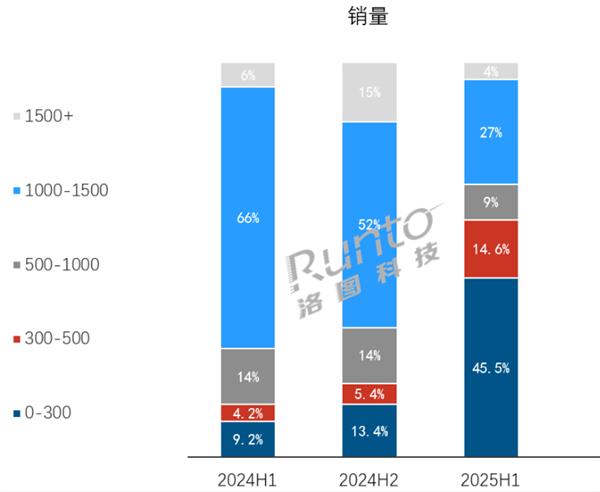
Core Insights - AI headphones are becoming mainstream in the wireless headphone market, with over 60% of sales for AI headphones priced below 500 yuan [1][3] - The rapid adoption of AI headphones is outpacing the previous trend of TWS (True Wireless Stereo) headphones [3][15] - The integration of AI into wireless headphones enhances features such as voice interaction, noise cancellation, and translation, making them more appealing to consumers [4][11] Market Trends - The prevalence of AI headphones is driven by a strong demand for application ecosystems and a significant reduction in AI costs [15][22] - Many AI headphones now include features like smart voice assistants and AI translation, even at lower price points [4][11] - The market for AI headphones is expected to continue expanding, particularly in the entry-level segment priced below 500 yuan, while mid-to-high-end products will focus on differentiated features [22][23] Technological Advancements - AI headphones leverage AI models to provide enhanced functionalities, such as adaptive noise cancellation and real-time translation, improving user experience [12][14] - The cost of implementing AI in hardware has decreased significantly, allowing for broader adoption of AI features in headphones [15][17] - The reliance on smartphone apps for AI functionality minimizes the need for additional hardware costs in headphones [17][18] User Experience - While AI headphones offer improved functionalities, user experiences can vary significantly, with some products failing to deliver on their promises [18][21] - Professional-grade AI headphones provide superior performance in real-time translation compared to standard models [19][21] - Concerns regarding privacy and data security in AI headphones are prevalent, as many features require internet connectivity for processing [21][22] Future Outlook - The future of AI headphones is likely to see a clear distinction between entry-level and premium products, with the latter focusing on specific user needs [22][23] - The integration of AI into headphones is expected to become standard, similar to the evolution of smartphones, making AI a fundamental aspect of wireless headphones [23]
博泰车联与商汤科技联合打造汽车AI“超级大脑”
Zheng Quan Shi Bao Wang· 2025-10-08 04:59
Core Insights - The strategic partnership between Botai Vehicle Networking Technology and SenseTime marks a significant step towards the integration of AI in smart cockpit technology, indicating a new phase in China's intelligent connected vehicle industry [1][2] Group 1: Strategic Collaboration - Botai and SenseTime will focus on the deep integration of AI large models in smart cockpits, while also investing in humanoid robots and integrated cockpit-driving solutions [1] - The collaboration aims to create a platform-level AI agent that offers a comprehensive solution from software to cloud services, enhancing the user experience in smart cockpits [1][2] Group 2: Technological Advancements - The partnership will leverage AIDC infrastructure and self-developed AI inference and training chips to reconstruct the smart cockpit experience across multiple dimensions, including personalized interaction and safety [2] - A high-efficiency collaborative mechanism for "end-side large models" will be established, forming an integrated smart connected vehicle platform [2] Group 3: Humanoid Robotics Development - The collaboration will combine SenseTime's advanced visual perception algorithms with Botai's expertise in hardware design and mass production to develop a new generation of flexible and intelligent humanoid robots [2] - These robots are expected to excel in scenarios such as smart cockpit services and vehicle maintenance, potentially transforming the robotics industry [2] Group 4: Ecosystem Development - The companies will work together to create a full-stack solution focusing on integrated cockpit-driving, vehicle-road collaboration, and international expansion [3] - The integration of driving decisions with cockpit experiences will be enhanced through AI-generated personalized features, promoting unified interaction among people, vehicles, and the environment [3]
上市公司耐心资本数据(2007-2025年)
Sou Hu Cai Jing· 2025-10-07 04:20
Core Insights - Patience capital is reshaping the value assessment system in capital markets during a critical period of economic transformation towards "new productive forces" [2] - The article reveals the quantitative characteristics and strategic value of patience capital data from 2007 to 2025, providing insights for investors, policymakers, and enterprises [2] Definition and Quantitative Revolution - Patience capital is defined through a dynamic evaluation system based on the ratio of relational debt and the stability of strategic equity, moving beyond traditional financial metrics [3] - The relational debt ratio reflects the proportion of long-term liabilities in total liabilities, indicating a company's ability to support strategic innovation through debt financing [3] - Strategic equity stability is quantified by the ratio of institutional investors' shareholding and the standard deviation of their holdings over the past three years, indicating stronger strategic commitment [3] Data Innovations - A dual-factor model combining "debt structure + equity stickiness" provides a multidimensional portrayal of capital attributes [4] - Time series standard deviation analysis captures changes in investor behavior patterns, revealing the dynamic evolution of capital patience [4] Industry Distribution and Hard Technology Preference - Patience capital shows significant industry clustering effects, particularly in strategic emerging industries like semiconductors, biomedicine, and new energy [4] - Shenzhen's unicorn enterprises exhibit an average relational debt ratio of 41%, with 13 new unicorns receiving long-term funding from the National Integrated Circuit Industry Investment Fund [4] Regional Competition and Patience Capital Density - The Yangtze River Delta and Pearl River Delta form a dual-core driving pattern for the development of patience capital, with Shenzhen's model centered around industrial funds exceeding one trillion yuan [5] - The high density of patience capital supports the growth of hard technology benchmarks like DJI and BYD, creating a virtuous cycle of "capital-technology-industry" [5] Generational Evolution of Investor Structure - The investor group for patience capital exhibits distinct generational characteristics, with the first generation focusing on absolute returns and risk control, while the second emphasizes industrial synergy and strategic value [6] - The third generation incorporates ESG considerations into long-term investment perspectives, blending value investment with social responsibility [6] Capital Strategic Upgrades - Companies should enhance the efficiency of patience capital allocation through "technological credibility + governance transparency" [8] - Institutional investors need to innovate long-term value assessment models that include non-financial indicators like "technology maturity curve" and "industry ecological niche" [8] - Local governments should implement policies such as tax incentives to lower the participation costs of patience capital [9] Future Outlook - The strategic value of patience capital will become more prominent with the emergence of disruptive technologies like AI and quantum computing [10] - Companies receiving patience capital support in technology fields with R&D cycles exceeding five years have a success rate 2.3 times higher than the market average [10] - Capital markets must leverage this historical opportunity through institutional innovations to attract global patience capital [10]