AI泡沫

Search documents
美银Hartnett:标普AI泡沫太大,黄金与中国股票或是最佳对冲工具
Hua Er Jie Jian Wen· 2025-10-31 13:44
Core Viewpoint - The current market environment, driven by the AI boom, has led to high valuations in the U.S. stock market, prompting Bank of America strategist Michael Hartnett to recommend gold and Chinese stocks as the best hedging tools against potential AI bubble risks [1]. Valuation Concerns - The S&P 500 index's forward P/E ratio has reached 23 times, significantly above the 20-year average of 16 times, indicating overvaluation [2]. - The "Magnificent Seven" tech giants dominate the S&P 500, with a combined weight exceeding one-third and a forward P/E ratio of 31 times, highlighting the valuation concerns within this group [5]. Gold and Chinese Stocks as Diversification Options - Gold is viewed as an effective hedge against future inflation risks, especially in the context of potential economic expansion and loose monetary policy [6]. - Despite a recent record outflow of $7.5 billion from global gold funds, the rationale for gold as a hedging tool remains valid [6]. - Chinese stocks have significantly outperformed the S&P 500 this year, with the MSCI China Index soaring by 33%, driven by optimism regarding China's competitiveness in generative AI [9].

微软创始人比尔·盖茨:AI行业正处于泡沫时期,大量投资将成坏账
Sou Hu Cai Jing· 2025-10-31 12:18
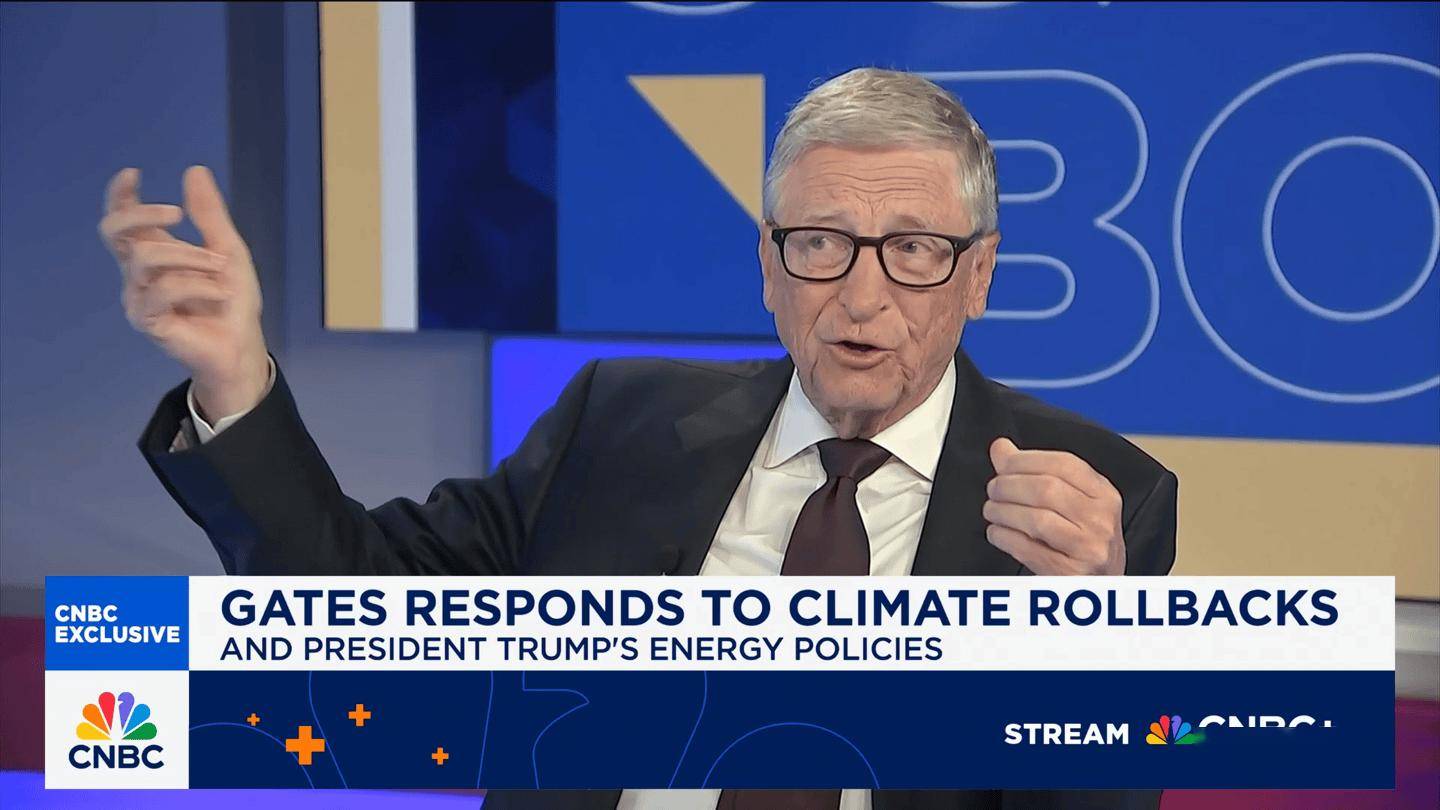
IT之家 10 月 31 日消息,微软联合创始人、前 CEO 比尔・盖茨本周(10 月 28 日)出席 CNBC 电视台《Squawk Box》节目,与主持人对谈 AI 行业目前的 现状,并预测未来 AI 行业将出现"泡沫破裂"。 IT之家注:互联网泡沫指的是 1995 年-2002 年前后,全球互联网行业发展初期出现的一场投机潮,当时人们对"互联网改变世界"展现巨大期待,大量资金疯 狂涌入网络公司,甚至许多资金流向了没有盈利能力的骗子企业。 最终这场泡沫在 2000 年 3 月 10 日达到顶峰,纳斯达克指数达到 5048 点,但从 4 月开始科技股票就大幅下跌,逐步导致市场信心崩溃,引发大量互联网公 司破产,最终纳指在 2002 年 10 月跌至 1100 点左右,不过这场泡沫也淘汰掉了许多不良商业模式,留下了亚马逊、谷歌、eBay 等真正能赚钱的公司。 他对"互联网泡沫"破裂时的景象回忆道:"最终整个行业发生了具有深远意义的事件(指 2002 年纳指跌至 1100 点左右),世界变得完全不同。一些公司最 终在泡沫破裂时站稳了脚跟,但大多数公司只是跟风投机,消耗资本最终倒闭"。 盖茨预测道,一些投资数十亿 ...

十万亿美元的 AI 泡沫,是等待爆发的灾难,还是通向进步的必然?
晚点LatePost· 2025-10-31 10:10
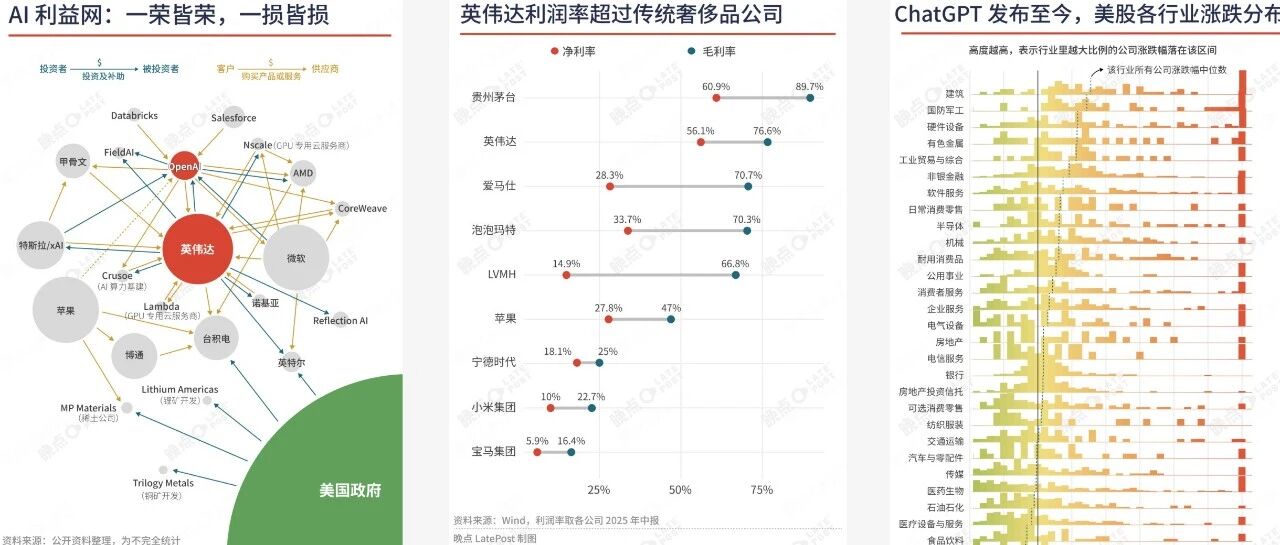
Core Viewpoint - The article discusses the AI bubble, highlighting the rapid increase in valuations of AI-related companies, particularly Nvidia and OpenAI, and the potential consequences of this bubble on the economy and technology advancement [4][9][12]. Group 1: Valuation Growth - Nvidia became the first company to reach a market capitalization of $5 trillion, up from $400 billion before the launch of ChatGPT, reflecting a massive increase in value linked to AI [4]. - OpenAI's valuation surged by $480 billion, surpassing the GDP of many countries, while Nvidia's market value increase exceeded the combined stock markets of the UK, France, and Germany [4][8]. - Nvidia's stock price increased approximately 11 times, while OpenAI's valuation expanded 24 times, and CoreWeave's stock price rose 4.5 times shortly after its IPO [8]. Group 2: Bubble Dynamics - Analysts suggest that the current AI bubble is significantly larger than previous bubbles, with misallocation of capital in the U.S. market being a key concern [9]. - The article references a book that argues financial bubbles have historically driven technological advancements, suggesting that the current AI bubble could similarly lead to progress [9][11]. - The interconnectedness of major tech companies in the AI space has created a complex web of financial relationships, with OpenAI and Nvidia at the center [12][13]. Group 3: Investment Trends - Significant investments are flowing into AI, with venture capital funding in AI expected to exceed $200 billion this year, compared to just $10.5 billion in 2000 for internet companies [22][23]. - Major tech companies are increasingly relying on debt financing to fund their AI initiatives, raising concerns about the long-term implications for the financial system [21][22]. - The article notes that the majority of AI investments are concentrated in a few companies, with OpenAI alone valued at $500 billion despite generating only $4.3 billion in revenue in the first half of the year [23][30]. Group 4: Economic Implications - The potential fallout from a burst AI bubble could be severe, with estimates suggesting losses could exceed $10 trillion if the bubble collapses [12][21]. - The article discusses the historical context of financial bubbles and their aftermath, suggesting that the nature of the capital invested and who bears the losses will determine the impact of a potential AI bubble burst [26][29]. - The shift in focus from consumer-driven growth to AI infrastructure as a key economic driver reflects changing priorities in investment narratives [45][46]. Group 5: Geopolitical Factors - The article highlights how AI has become a strategic asset in geopolitical competition, with governments investing heavily in AI-related technologies and infrastructure [36][37]. - The U.S. government's recent investments in semiconductor companies and AI infrastructure signal a shift towards prioritizing technological advancement for national security [36][41]. - The narrative around AI is increasingly tied to national competitiveness, with companies feeling pressured to invest heavily to avoid falling behind [46].

黄金,陷入两难!
Sou Hu Cai Jing· 2025-10-31 09:19
此外,美联储方面也有了新消息。 据悉,下一任美联储主席人选,可能很快就会出炉。 隔夜,现货黄金上演惊天逆转,从盘初一度跌至3915后震荡上涨,收复4000整数关口,最高触及4026.88美元,收报4024.18美元,涨幅约2.4%,为10月20 日刷新历史高点回落以来最大单日涨幅。今日欧市盘中,黄金窄幅震荡,目前在4007美元附近徘徊。 终止特朗普"全球征税"! 隔夜,美股三大指数集体收跌,截至收盘,纳指下跌377.33点,跌幅1.57%;标普500指数跌0.99%;道指跌0.23%。 消息面上,美参议院通过终止特朗普全面关税政策决议。 当地时间10月30日,美国参议院以51票赞同、47票反对的结果通过决议,终止美国总统特朗普在全球范围内实施的全面关税政策。 据悉,美国参议院宣布,已批准终止总统为实施全球关税而宣布的国家紧急状态的联合决议。本周早些时候,参议院已通过两项决议,旨在取消对加拿大 和巴西征收的关税。 据悉,这些决议接下来还须经众议院表决。但此前众议院共和党人已多次阻止推翻关税的立法行动,这些决议预计很难在众议院获得投票表决。即便众议 院最终通过,国会仍需三分之二绝对多数才能推翻总统否决。 当地时间 ...
王文涛最新发文:详解全面落实扩大高水平对外开放四大主要任务
证券时报· 2025-10-31 08:30
Core Viewpoint - The article emphasizes the importance of expanding high-level opening-up in China, focusing on self-initiated openness, trade innovation, bilateral investment cooperation, and high-quality construction of the "Belt and Road" initiative [1]. Group 1: Expanding Self-Initiated Openness - The Ministry of Commerce aims to align with international high-standard economic and trade rules while expanding market access, particularly in the service sector [2]. - Plans include expanding pilot projects in value-added telecommunications, biotechnology, and foreign-funded hospitals, as well as enhancing openness in education and culture [2]. - The government will implement zero-tariff treatment for all least developed countries with diplomatic relations and accelerate regional and bilateral trade investment agreements [2]. - The strategy includes optimizing the layout of regional openness and enhancing the internationalization of the Renminbi [2]. Group 2: Promoting Trade Innovation Development - The focus is on improving the quality and efficiency of foreign trade, with an emphasis on optimizing goods trade and expanding green and digital trade [3]. - There is a push for increased imports and the establishment of national import trade innovation demonstration zones [3]. - The article highlights the importance of developing service trade and encouraging the export of knowledge-intensive services [3]. - It also mentions the need for improved export control and trade remedy systems [3]. Group 3: Expanding Bilateral Investment Cooperation - The initiative aims to create a strong "Invest in China" brand and enhance international cooperation in industrial and supply chains [4]. - The government plans to reduce the negative list for foreign investment and improve the service guarantee system for foreign enterprises [4]. - There is a focus on promoting a transparent and stable institutional environment for foreign investment [4]. Group 4: High-Quality Construction of the "Belt and Road" - The article stresses the importance of strengthening mutual trust and benefit with countries involved in the "Belt and Road" initiative [5]. - It calls for enhanced strategic alignment and the development of a comprehensive connectivity network [5]. - The government aims to expand cooperation in green development, artificial intelligence, digital economy, and other emerging fields [5]. - There is a focus on protecting overseas interests and providing legal support for enterprises investing abroad [5].

中美贸易协定最早于下周签署?中方回应
证券时报· 2025-10-31 08:30
10月31日,外交部发言人郭嘉昆主持例行记者会。 郭嘉昆表示,中美元首在釜山会晤期间讨论了经贸关系等议题,同意加强经贸等领域的合作,中方主管部门昨 天介绍了吉隆坡经贸磋商的成果。中美经贸关系的本质是互利共赢,正如习近平主席指出,经贸应该成为中美 关系的压舱石和推进器,而不是绊脚石和冲突点。 转载与合作可联系证券时报小助理,微信ID:SecuritiesTimes 郭嘉昆指出,中方愿同美方一道,落实好两国元首重要共识,本着平等、尊重、互惠原则,通过对话协商,不 断压缩问题清单,拉长合作清单,推动中美关系健康、稳定、可持续发展,为世界注入更多的确定性和稳定 性。 路透社记者提问,美方昨天表示,中方宣布将暂停实施10月9日公布的稀土出口管制措施一年,请问这适用于 所有国家,还是仅针对美国? "具体问题建议你向中方的主管部门进行询问。"郭嘉昆说。 综合自:央视新闻、环球网、北京日报 责编:李丹 校对:吕久彪 版权声明 证券时报各平台所有原创内容,未经书面授权,任何单位及个人不得转载。我社保留追 究相关 行 为主体 法律责任的权利。 路透社记者提问,美国财长贝森特表示,中美贸易协定最早可以于下周进行签署。中方对此有何评 ...

债市日报:10月31日
Xin Hua Cai Jing· 2025-10-31 08:09
Market Overview - The bond market showed a mixed performance on October 31, with the long-end strengthening further while the mid-short end remained stable [1] - The main contracts for government bond futures had varied results, with the 30-year contract up by 0.42% and the 2-year contract down by 0.02% [2] - The overall funding environment is balanced and slightly loose, supporting a strong fluctuation in the interest rate bond market [1][6] Interest Rate Movements - The yield on the 30-year government bond decreased by 1.6 basis points to 2.147%, while the 50-year bond yield fell by 4.25 basis points to 2.205% [2] - In the interbank market, most interest rate bonds saw a decline in yield, particularly long and ultra-long bonds [2] International Bond Market - In the Eurozone, yields on 10-year bonds increased, with French bonds rising by 1.7 basis points to 3.416% and German bonds up by 2.2 basis points to 2.642% [3] - In North America, U.S. Treasury yields collectively rose, with the 10-year yield increasing by 2.32 basis points to 4.097% [4] Funding Operations - The central bank conducted a reverse repurchase operation of 3,551 billion yuan at a fixed rate of 1.40%, resulting in a net injection of 1,871 billion yuan for the day [6] - Shibor rates showed mixed performance, with the overnight rate rising by 0.4 basis points while the 7-day rate fell by 4.5 basis points [6] Institutional Insights - Guosheng Fixed Income noted that the trend of deposit liquidity is driven by various factors, primarily changes in interest rates, with expectations of continued decline in deposit costs [7] - Huatai Securities indicated that the cautious stance of the Federal Reserve marks a shift back to data reliance, which may lead to a tightening of monetary policy [8] - Dongfang Jincheng highlighted that early issuance of debt replacement quotas will help local governments free up more funds for infrastructure investment, stabilizing economic operations in Q4 [8]
深夜暴跌,“AI泡沫”担忧再起
Zheng Quan Shi Bao· 2025-10-30 22:54
Group 1: Market Overview - Major US stock indices opened lower on October 30, with the Dow Jones rising by 0.44%, while the S&P 500 and Nasdaq fell by 0.44% and 0.91% respectively [1] - Concerns about potential AI investment bubbles have resurfaced as significant capital expenditures by tech giants raise investor apprehensions [1] Group 2: Federal Reserve Insights - Federal Reserve Chair Jerome Powell indicated uncertainty regarding a potential rate cut in December, highlighting strong disagreements among committee members [3][4] - The likelihood of a December rate cut dropped from 90% to 67% according to CME FedWatch data [5] Group 3: Earnings Reports from Tech Giants - Alphabet, Meta, and Microsoft reported a combined capital expenditure of approximately $78 billion in Q3, an increase of 89% year-over-year, primarily for data center development [7] - Meta's stock plummeted nearly 12% following its earnings report, attributed to unexpected high capital expenditures and warnings of significantly higher spending in 2026 compared to 2025 [7][10] - Microsoft also faced investor skepticism regarding its substantial AI investments, with Q3 capital expenditures reaching a record $34.9 billion [11] Group 4: Company-Specific Developments - Meta's Reality Labs division reported a loss of $4.4 billion in Q3, with revenues of only $470 million, raising concerns about its AI-related investments [10] - Despite the losses, Meta's CEO Mark Zuckerberg emphasized the potential of smart glasses and the importance of adequate investment in AI [10] - Microsoft CFO Amy Hood acknowledged the ongoing high demand for AI services, despite the company's significant investments [11]


深夜暴跌,超21万人爆仓,黄金直线拉升
Zheng Quan Shi Bao· 2025-10-30 22:34
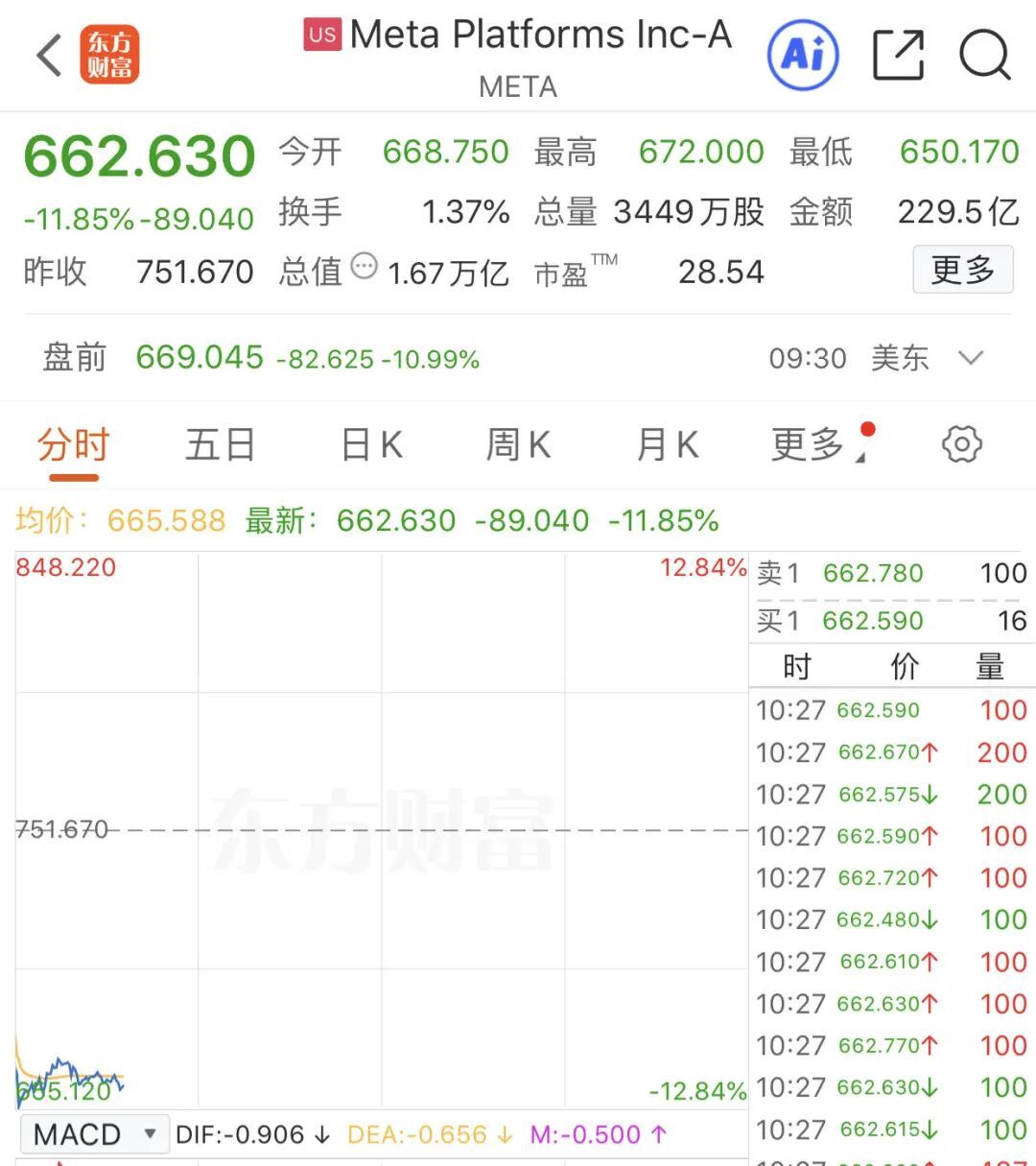
Core Viewpoint - The U.S. stock market experienced significant volatility, with major indices showing mixed performance, particularly in the tech sector, where several large companies faced substantial declines [1][3]. Group 1: Market Performance - The Nasdaq index fell by 0.93%, while the Dow Jones increased by 0.72%, indicating a divergence in market trends [3]. - Major tech stocks suffered losses, with Meta dropping nearly 13%, Tesla and Oracle down over 4%, and Broadcom down over 3% [3]. - eBay's stock plummeted over 15%, marking its largest drop since 2008, despite reporting a 9% year-over-year sales increase to $2.82 billion [4]. Group 2: Cryptocurrency Market - The cryptocurrency market faced a significant downturn, with Bitcoin and Ethereum both dropping over 3%, leading to over $11 billion in liquidations and affecting more than 210,000 traders [4][5]. - The decline in cryptocurrency prices also impacted related stocks, with companies like Canaan and Coinbase experiencing notable drops [4]. Group 3: Gold and Silver Prices - In response to rising market risk aversion, gold prices increased by 1.65% to $3,994.26 per ounce, while silver prices surged by 2.61% to $48.72 per ounce [5]. Group 4: AI Bubble Discussion - Discussions around a potential AI bubble are intensifying, with UBS noting that six out of seven conditions for bubble formation are currently present [7]. - The report highlights that the current P/E ratio for major tech companies is 35, significantly lower than the 60 seen during the dot-com bubble, suggesting that while enthusiasm exists, extreme valuation levels have not yet been reached [8]. - UBS warns that if a bubble exists, it may manifest in high profit margins for tech and semiconductor stocks, which could face pressure from increased competition [9].


深夜,暴跌!超21万人爆仓!黄金,直线拉升!
券商中国· 2025-10-30 15:38
北京时间10月30日晚间,美股三大指数走势分化,以科技股为主的纳指低开低走,道指持续走高,截至 23:00,纳指跌0.93%,道指涨0.72%,标普500指数跌0.29%。 美股大型科技股多数大跌,Meta暴跌近13%,特斯拉、甲骨文大跌超4%,博通大跌超3%,英伟达、微软跌超 2%,亚马逊跌超1%,苹果小幅下跌;谷歌A逆势大涨超5%。 据最新披露的业绩,推动美股上涨的"七大科技巨头"业绩呈现分化,投资者质疑Meta在AI基础设施方面的巨额 投资能否带来回报。 与此同时,特斯拉也传来一则利空消息。美国最大的公共养老金计划——加州公务员退休系统(CalPERS)正 计划投票反对特斯拉CEO马斯克价值1万亿美元的特斯拉公司薪酬协议,这对特斯拉公司试图为马斯克授予美 国企业史上最丰厚薪酬方案之一的计划构成了阻碍。媒体数据显示,CalPERS持有约500万股特斯拉股票。 马斯克一直在推动这项薪酬计划,希望在11月6日于奥斯汀举行的公司年度股东大会上获得批准。这位全球首 富在本月的公司财报电话会议上,敦促投资者支持该计划,并批评那些反对该方案的股东咨询公司。 美股画风突变。 今晚,美股开盘后,三大指数震荡分化, 纳指一 ...