互联网泡沫

Search documents
两头“灰犀牛”来袭,350000亿美元蒸发?
Hu Xiu· 2025-10-20 09:47
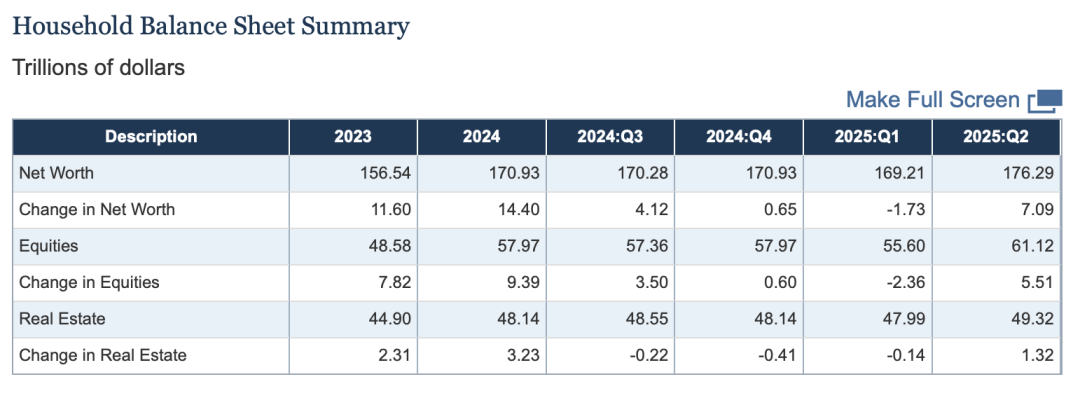
Core Insights - The International Monetary Fund (IMF) has raised alarms about the fragility of the global financial system, highlighting risks from the private credit market and potential stock market crashes [1][2][3] Group 1: Private Credit Market Risks - IMF President Kristalina Georgieva warned that the private credit market has surpassed $2.3 trillion, exceeding regulatory and monitoring capabilities, which poses a significant risk [1] - The high leverage and low transparency of private credit funds could trigger the next round of credit tightening [1] Group 2: Stock Market Crash Implications - Gita Gopinath, the IMF's First Deputy Managing Director, stated that a U.S. stock market crash could lead to losses exceeding $20 trillion for American households and around $15 trillion for foreign investors, surpassing the impact of the 2000 internet bubble [2][4] - If a market correction similar to the internet bubble occurs, it could erase over 70% of the projected 2024 U.S. GDP in household wealth [4] Group 3: Historical Context and Comparisons - The internet bubble burst (2000-2002) saw the NASDAQ index drop approximately 78% and the S&P 500 index decline about 49% [7] - The potential losses from a 35% market correction today would be significantly larger due to the increased market size and global exposure to U.S. assets compared to 2000 [6][12] Group 4: Economic Impact and Consumer Spending - A significant stock market decline could severely impact consumer spending, which has been growing at a slower rate compared to the late 1990s [15][19] - The top 10% of income earners, who are most sensitive to stock market fluctuations, account for nearly half of U.S. consumption, indicating a potential for substantial economic repercussions [17][18] Group 5: Challenges in Crisis Recovery - Unlike previous crises, the current economic environment may not support a quick recovery due to various factors, including high government debt and trade tensions [24][26] - The potential for a more severe and prolonged economic downturn is heightened by the lack of coordinated global responses and diminished trust in U.S. financial assets [22][25][26]

两头“灰犀牛”来袭!350000亿美元蒸发?
华尔街见闻· 2025-10-20 09:24
Core Viewpoint - The International Monetary Fund (IMF) has issued warnings about the increasing fragility of the global financial system, highlighting the risks posed by the private credit market and the potential consequences of a stock market crash in the U.S. [6][7] Group 1: IMF Warnings - IMF President Kristalina Georgieva expressed concerns that the private credit market has surpassed $2.3 trillion, exceeding regulatory and monitoring capabilities, which could trigger a credit tightening [6]. - Gita Gopinath, the IMF's First Deputy Managing Director, indicated that a stock market crash in the U.S. could lead to losses exceeding $20 trillion for American households and around $15 trillion for foreign investors, potentially resulting in a more severe global economic crisis than the 2000 dot-com bubble [6][9]. Group 2: Historical Context and Comparisons - The potential losses from a stock market downturn today would be significantly larger than those experienced during the 2000-2002 internet bubble, where foreign losses were approximately $2 trillion, equivalent to about $4 trillion in today's value [10][11]. - The analysis suggests that a 35% market correction, representative of the internet bubble's impact, could erase $20 trillion in U.S. household wealth, which is about 70% of the projected 2024 U.S. GDP [9][14]. Group 3: Economic Implications - The current economic environment shows that U.S. consumer spending growth is already weak, with real personal consumption expenditures (PCE) expected to grow at around 2.5%-2.6%, compared to 4%-5% during the late 1990s [20][21]. - A significant decline in the stock market could lead to a substantial drop in consumer spending, which constitutes about 70% of U.S. GDP, potentially lowering GDP growth by at least 2 percentage points [22][23]. Group 4: Recovery Challenges - Historical patterns of "safe-haven" investments during crises may not hold in the next downturn, as recent political actions have raised doubts about the Federal Reserve's independence and effectiveness [25][26]. - The current geopolitical landscape and high levels of government debt limit the U.S.'s ability to implement fiscal stimulus measures similar to those used in past crises, making recovery more challenging [26].

美股“恐慌指数”飙升!动荡来袭,是危还是机?
Sou Hu Cai Jing· 2025-10-18 16:35
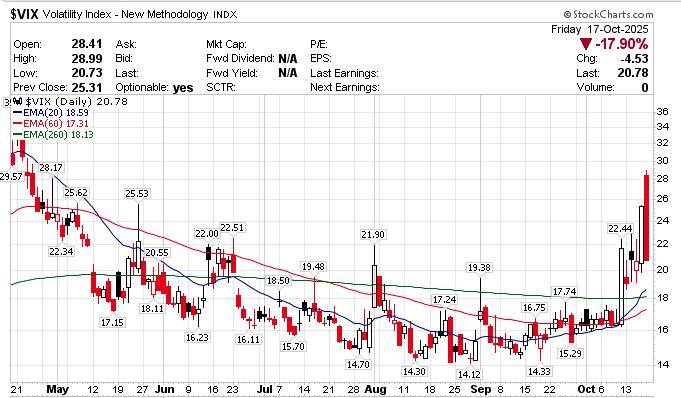
Core Viewpoint - The recent market turmoil signifies the end of a prolonged period of calm in the U.S. stock market, driven by multiple negative factors, indicating that market tranquility is often a precursor to volatility [1][4]. Group 1: Market Indicators - The VIX index, known as the "fear index," surged to 28.99, the highest level since late April, reflecting heightened investor anxiety and expectations of increased volatility [1]. - Investors are aggressively buying options that profit when the VIX reaches 47.5 and 50, showcasing collective anxiety about a looming market storm [2]. Group 2: Contributing Factors - The resurgence of trade war threats, particularly following Trump's social media announcement about potential new tariffs, triggered significant market declines, ending a 33-day period of minimal volatility for the S&P 500 [4]. - Regional bank failures, highlighted by Zions Bancorp's substantial bad debt losses, have intensified concerns about the banking system's fragility, reminiscent of earlier bankruptcies [4]. - The once-prominent AI stocks are now facing skepticism, with some investors questioning whether the AI hype has turned into a dangerous bubble, drawing parallels to the late 1990s internet bubble [5]. Group 3: Market Behavior - A notable shift in capital is occurring, with funds moving from high-risk assets to defensive sectors such as utilities, healthcare, and consumer staples, indicating a "flight to safety" behavior among investors [5]. - High-risk assets, including Bitcoin, have experienced significant declines, with Bitcoin dropping 8.7% in its worst weekly performance since February, reflecting a shift from a "greed" to a "fear" mode among investors [5]. Group 4: Analyst Perspectives - Analysts are divided, with optimists viewing the market adjustment as a healthy sign that prevents excessive overvaluation, while pessimists warn that the current high valuations, particularly in tech stocks, may indicate a dangerous bubble [6]. - Historical comparisons are being drawn to past market events, suggesting that while current conditions share similarities with previous bubbles, each market turmoil has unique contexts and causes [7].
“恐慌指数”飙升:美股平静期结束了?
财联社· 2025-10-18 10:20
Core Viewpoint - The U.S. stock market is experiencing significant volatility due to multiple uncertainties, including trade war threats, regional bank loan defaults, and skepticism surrounding the AI bubble, marking the most turbulent period since April [1][4]. Market Volatility - The Cboe Volatility Index (VIX) reached a peak of 28.99, the highest level since late April, indicating heightened market fear and expectations of continued volatility [2]. - Investors are increasingly buying options that profit when the VIX rises to 47.5 and 50, reflecting growing concerns about market stability [4]. Economic Concerns - Recent declines in regional bank stocks have raised fears about the credit market, suggesting that the U.S. economy may be weaker than it appears, compounded by renewed trade war threats that could lead to a recession [4][5]. - The market's reaction to former President Trump's threat of new tariffs resulted in the largest single-day drop since April, ending a record period of calm in the S&P 500 [5]. Sector Performance - Despite strong earnings reports from major banks like JPMorgan and Bank of America, the regional banking sector has faced sharp declines due to significant bad debt losses reported by Zions Bancorp [5]. - Defensive sectors such as utilities, healthcare, and consumer staples have recently outperformed, contrasting with the poor performance of banks and energy companies [5]. High-Risk Investments - High-risk assets, including Bitcoin, have seen substantial declines, with Bitcoin dropping approximately 8.7%, marking its worst weekly performance since February [6]. - Popular stocks like Opendoor Technologies have also experienced significant losses, down 5.4% [6]. Market Sentiment - Some industry insiders believe the recent market downturn does not indicate a long-term sell-off, viewing the adjustment as a healthy correction after a rapid market rise [7]. - Concerns persist regarding the market's vulnerability to shocks, as elevated valuations of large-cap stocks may mask underlying issues, reminiscent of the late 1990s tech bubble [8][9].

台积电(TSM.US)为“AI信仰”添把火!Q3业绩超预期后上调2025年指引
Zhi Tong Cai Jing· 2025-10-16 08:09
Core Insights - TSMC has raised its revenue growth forecast for 2025 to the mid-range of 30%, reflecting strong confidence in demand for AI components such as chips from Nvidia [1][3] - In Q3, TSMC reported revenue of $33.1 billion, a year-on-year increase of 40.8%, significantly exceeding market expectations [1] - The company's Q3 profit surged 39% to NT$452.3 billion (approximately $14.8 billion), prompting an increase in the lower limit of its capital expenditure target for 2025 to at least $40 billion [1] - Advanced technologies (7nm and above) accounted for 74% of TSMC's total wafer revenue, with 3nm shipments making up 23% and 5nm 37% [1] Revenue and Profit Performance - TSMC's preliminary Q3 sales reached NT$990 billion (approximately $33.05 billion), surpassing guidance expectations, indicating strong demand for AI and iPhone chips [5] - The gross margin is expected to remain at the high end of the forecast range of 55.5%-57.5% due to robust orders for Apple A19 and Nvidia Blackwell chips [5] Market Position and Industry Dynamics - TSMC plays a crucial role in the AI investment boom, being the exclusive manufacturer of chips for major devices like the iPhone and essential for AI services such as ChatGPT and Google Gemini [3] - The company is preparing for potential disruptions in the global semiconductor supply chain due to geopolitical tensions, including export restrictions on rare earth minerals from China and additional tariffs from the U.S. [3][6] - TSMC's CEO has expressed confidence in the sustainability of AI demand, while the company is expanding its manufacturing capabilities in the U.S. to mitigate risks associated with geopolitical uncertainties [6]

如果我们正处于AI泡沫之中,为何毫无泡沫之感?
阿尔法工场研究院· 2025-10-16 00:07
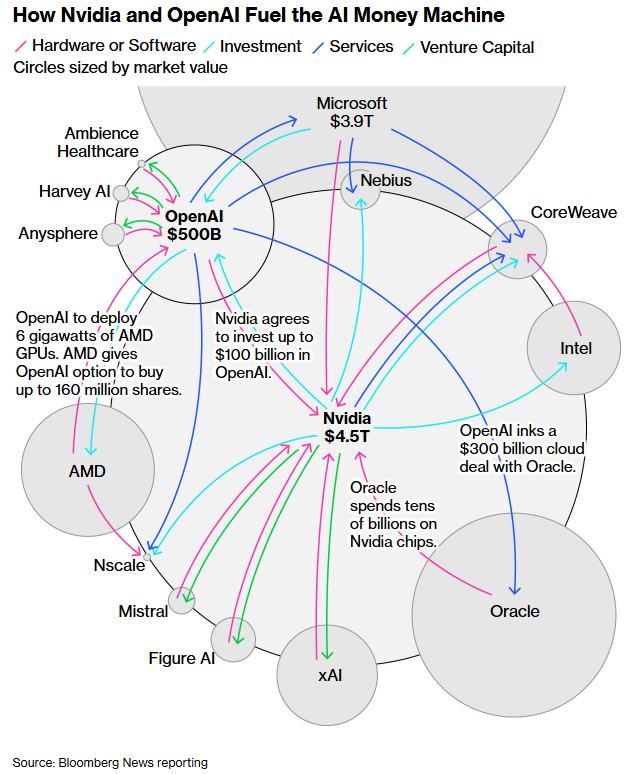
Core Viewpoint - The article discusses the potential existence of an artificial intelligence (AI) bubble, with OpenAI being a significant player in this phenomenon, both as a driver and a beneficiary of the bubble [2][3]. Group 1: Historical Context of Bubbles - The author reflects on past bubbles, including the internet bubble of the late 1990s, the real estate bubble, and the cryptocurrency bubble during the pandemic, highlighting the common characteristics of these bubbles [4][5]. - Each bubble was marked by widespread public enthusiasm and investment, with people discussing their experiences and investments in these sectors, creating a palpable sense of excitement [5][6]. Group 2: Current AI Landscape - Currently, AI has become a central topic of conversation, but the sense of a bubble is not as pervasive as in previous instances, as it seems confined to specific industries or circles [6][9]. - Unlike past bubbles where a significant portion of the population was directly involved in investments, the AI sector appears to be dominated by a few large tech companies, limiting broader public engagement [9][10]. - Major tech firms like Nvidia and Microsoft have driven recent market gains, with a small number of stocks holding substantial weight in the S&P index, indicating that most Americans are indirectly exposed to AI assets through retirement accounts [10]. Group 3: Perception of the AI Bubble - While there are signs of an AI bubble, characterized by massive spending and unrealistic expectations, this bubble feeling seems to be more prevalent in corporate boardrooms than in the daily lives of ordinary people [10][11]. - The article raises the question of whether the general public would feel the impact if the AI bubble were to burst, suggesting a disconnect between corporate investment and everyday experiences [11].



前IMF首席经济学家警告全球过度依赖美股风险
Sou Hu Cai Jing· 2025-10-15 14:59
Core Viewpoint - The global dependence on the U.S. stock market has become dangerously high, with potential unprecedented impacts on the world economy if a significant downturn occurs [1][3]. Group 1: Market Dynamics - Recent volatility in the U.S. stock market is driven by escalating trade tensions, yet it remains close to historical highs [2]. - The current market rally is fueled by the AI boom, reminiscent of the late 1990s tech bubble, which ultimately led to the 2000 internet crash [2][4]. Group 2: Wealth Impact - A market correction similar to the internet bubble could result in over $20 trillion in lost wealth for American households, equating to about 70% of the U.S. GDP in 2024 [4]. - Foreign investors could face wealth losses exceeding $15 trillion, representing around 20% of the GDP of other countries, significantly higher than the losses during the internet bubble [4]. Group 3: Global Economic Interconnections - The interconnectedness of global markets means that a sharp decline in the U.S. market would have widespread repercussions [4][5]. - The traditional role of the U.S. dollar as a safe haven during crises may no longer hold, as recent trends show a weakening of the dollar against major currencies [5]. Group 4: Structural Vulnerabilities - Current economic conditions present stronger headwinds than in 2000, including high U.S. government debt and trade tensions, which contribute to increased uncertainty [5][6]. - The need for other regions to find new growth drivers is critical to mitigate the imbalance created by the U.S. market's dominance [7]. Group 5: Future Outlook - There are signs of capital beginning to flow back into emerging markets, but sustained growth in these economies is essential to maintain this trend [8]. - The potential consequences of a market crash today could be more severe than those experienced after the internet bubble, with less policy space available to cushion the impact [8][9].

AI引爆美国电力需求,燃气轮机成“关键瓶颈”,GE Vernova、西门子能源和三菱重工“三巨头”面临抉择
美股IPO· 2025-10-11 12:52
Core Viewpoint - The three major gas turbine manufacturers are exercising caution in their expansion plans due to a deep understanding of industry cyclicality and the painful memories of the early 2000s industry disaster [1][5]. Group 1: Market Demand and Policy Support - The demand for gas turbines is surging due to the AI data center-driven "electricity competition," as stable and large-scale power supply is essential for AI operations [6]. - Gas turbines have replaced coal-fired units as the mainstay of the U.S. power grid due to their efficiency, flexibility, and lower pollution levels compared to coal [6]. - Since mid-2023, the cost of new gas power plants has roughly doubled, primarily driven by rising gas turbine prices, as utility companies and tech giants secure orders through the end of the decade [6]. - U.S. energy policies are favoring natural gas power, with the Trump administration prioritizing gas turbines as a key transitional solution before new nuclear plants are built [6]. Group 2: Historical Lessons and Caution - The cautious approach of the gas turbine manufacturers is influenced by the memory of the 2000s internet bubble, which led to over-optimistic power demand forecasts and subsequent industry collapse [7]. - Siemens Energy's CEO emphasized the cyclical nature of the industry, acknowledging that gas turbine demand will eventually decline [7]. - The challenge for companies lies in distinguishing between genuine demand and speculative demand [8]. Group 3: Limited Expansion Plans - In light of historical lessons and current market realities, the three major manufacturers are opting for limited capacity expansions [9]. - GE Vernova plans to invest over $300 million to increase its heavy gas turbine annual delivery capacity from an average of 55 units to 80 units [10]. - Siemens Energy aims to increase its capacity by 30% to 40% while avoiding high-risk bets on the market outlook for the 2030s [11]. - Mitsubishi Heavy Industries is expected to invest hundreds of millions to expand its production scale in the U.S. [12]. - Analysts note that these expansion plans are not commensurate with the growth in demand over the past two years, indicating a reluctance to overcommit [13]. - Supply chain bottlenecks are shifting from assembly plants to upstream suppliers, with critical materials like specialty alloys facing shortages [13].

AI引爆美国电力需求,燃气轮机成“关键瓶颈”,GE Vernova、西门子能源和三菱重工“三巨头”面临抉择
Hua Er Jie Jian Wen· 2025-10-11 07:19
Group 1 - The demand for gas turbines is surging due to the need for stable and large-scale electricity supply for AI data centers, making gas turbines the primary support for the U.S. power grid [2][4] - The cost of new gas power plants has roughly doubled since mid-2023, driven by rising gas turbine prices, as utility companies and tech giants secure orders through the end of the decade [2][3] - U.S. energy policies are favoring natural gas power, with the previous administration prioritizing gas turbines as a key transitional solution before new nuclear power plants are completed [2][3] Group 2 - The three major gas turbine manufacturers, GE Vernova, Siemens Energy, and Mitsubishi Heavy Industries, are exercising caution in expanding production due to the cyclical nature of the industry and memories of the 2000 internet bubble [4][6] - There is a significant challenge in distinguishing between real and inflated demand, as highlighted by industry executives [4][6] - Current expansion plans by these companies are not commensurate with the growth in demand over the past two years, indicating a reluctance to overcommit [7] Group 3 - GE Vernova plans to invest over $300 million to increase its heavy gas turbine annual delivery capacity from an average of 55 units to 80 units [8] - Siemens Energy aims to boost its production capacity by 30% to 40%, while avoiding high-risk bets on the market outlook for the 2030s [8] - Mitsubishi Heavy Industries is expected to invest hundreds of millions to expand its production scale in the U.S. [8]
AI热潮会不会重蹈互联网泡沫的覆辙?
第一财经· 2025-10-10 15:55
2025.10. 10 本文字数:2469,阅读时长大约4分钟 作者 | 第一财经 冯迪凡 得益于人们对人工智能(AI)促进增长潜力的兴奋,科技行业正在蓬勃发展。 但如果科技行业未能达到预期,AI会不会重蹈互联网泡沫的覆辙? 近期,各大国际机构、投行在观察到AI相关产品支出的增加提振全球经济和贸易的同时,也对AI带来的资本热潮正推 动科技股估值快速攀升发出警示。 国际货币基金组织(IMF)总裁格奥尔基耶娃近期表示,全球股价在对AI提升生产率潜力的乐观情绪推动下飙升,但 金融状况可能突然转向,当前估值"正逼近25年前互联网热潮的水平",若市场发生剧烈回调,将拖累全球增长。 德意志银行(下称"德银")最近的研究报告显示,AI热潮正在帮助美国经济避免陷入衰退,但这种状况无法无限期持 续。 德银全球外汇研究主管萨拉韦洛斯(George Saravelos)表示,如果没有大型科技企业大量投资建设新AI数据中 心,美国今年将接近经济衰退。 牛津经济研究院也在最新报告中警示,科技行业一直是近期美国经济增长的主要驱动力,其股价飙升,并在设备和软 件方面投入巨资。"但如果科技行业遭遇衰退,美国将面临风险:如果没有科技投资,到2 ...