
原油库存

Search documents
EIA周度报告点评-20250918
Dong Wu Qi Huo· 2025-09-18 05:36
1. Report Industry Investment Rating - The report implies a relatively bearish outlook for the oil market [8] 2. Report's Core View - The EIA report for the week is a mixed bag, with a significant decline in crude oil inventory exceeding market expectations and a substantial drop in gasoline inventory. However, more forward - looking data shows weakness, such as the decline in refinery operating rates indicating the start of autumn maintenance, and the poor performance of distillates leading to a counter - seasonal increase in inventory, which may promote refinery maintenance. Overall, it is a relatively bearish report [8] 3. Summary by Related Data 3.1 Inventory Data - As of September 12, U.S. commercial crude oil total inventory was 415.361 million barrels, a week - on - week decrease of 9.285 million barrels, far exceeding the expected decrease of 857,000 barrels. Cushing inventory decreased by 296,000 barrels, and strategic reserve inventory increased by 504,000 barrels. Gasoline inventory decreased by 2.347 million barrels, contrary to the expected increase of 1 million barrels, while distillate inventory increased by 4.046 million barrels, exceeding the expected increase of 1 million barrels [2][3] - The total inventory of the U.S. crude oil chain increased by 1.675 million barrels [3] 3.2 Production, Import, and Processing Data - U.S. crude oil production decreased by 13,000 barrels per day to 13.482 million barrels per day [3] - U.S. crude oil net imports decreased by 3.111 million barrels per day to 415,000 barrels per day [3] - U.S. crude oil processing volume decreased by 394,000 barrels per day to 16.424 million barrels per day [3] 3.3 Demand Data - U.S. crude oil terminal apparent demand (four - week smoothing) decreased by 217,250 barrels per day to 20.671 million barrels per day [3] - U.S. gasoline apparent demand (four - week smoothing) decreased by 8,000 barrels per day to 8.91875 million barrels per day [3] - U.S. distillate apparent demand (four - week smoothing) decreased by 86,500 barrels per day to 3.72675 million barrels per day [3] - U.S. jet fuel apparent demand (four - week smoothing) decreased by 69,000 barrels per day to 1.70275 million barrels per day [3] 3.4 Market Impact and Analysis - The large - scale decline in U.S. crude oil inventory last week was mainly due to a significant increase in exports, resulting in a large decrease in net imports. The single - week export data reached 5.277 million barrels per day, a new high since 2024. However, the domestic refinery operating rate decreased by 1.6% to 93.3%, indicating the gradual start of traditional autumn maintenance [4] - In the traditional autumn harvest consumption season, distillate demand decreased instead of increasing, causing inventory to rise during the period of declining refinery operating rates. The current large increase in distillate inventory is counter - seasonal, which may affect distillate cracking and accelerate the progress of refinery autumn maintenance [6] - After the release of the EIA report, oil prices fell slightly and further declined after the Federal Reserve's interest - rate meeting [8]
美国原油出口增加253.2万桶/日 为2023年12月29日当周以来最高
Jin Tou Wang· 2025-09-18 02:38
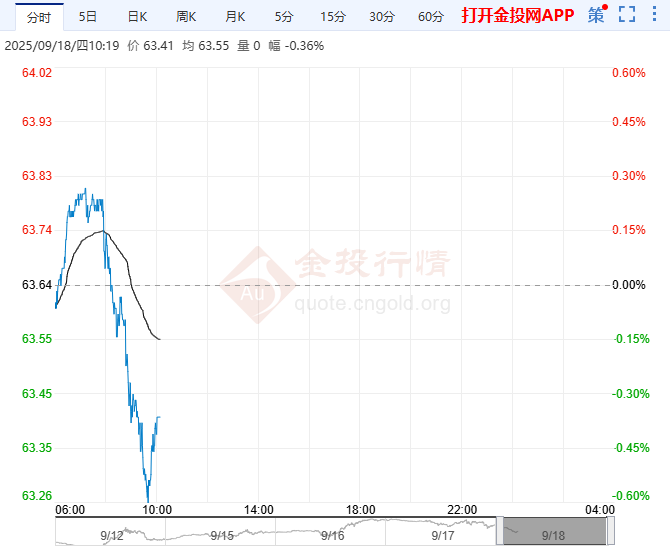
Group 1 - As of the week ending September 12, 2025, U.S. commercial crude oil inventories decreased by 9.285 million barrels to 415 million barrels, marking the largest decline since June 13, 2025, against market expectations of a decrease of 0.857 million barrels and a previous value of 3.939 million barrels [1] - U.S. Strategic Petroleum Reserve (SPR) inventories increased by 504,000 barrels to 40.57 million barrels, the highest level since October 7, 2022 [1] - Gasoline inventories decreased by 2.347 million barrels, compared to a previous value of 1.458 million barrels [1] - Distillate inventories increased by 4.046 million barrels, exceeding expectations of 0.975 million barrels and a previous value of 4.715 million barrels [1] Group 2 - U.S. domestic crude oil production decreased by 13,000 barrels to 13.482 million barrels per day as of the week ending September 12, 2025 [1] - The four-week average supply of U.S. crude oil products was 20.671 million barrels per day, an increase of 1.69% compared to the same period last year [1] Group 3 - U.S. commercial crude oil imports, excluding the Strategic Reserve, were 5.692 million barrels per day, a decrease of 579,000 barrels per day, the lowest level since June 13, 2025 [1] - U.S. crude oil exports increased by 2.532 million barrels per day to 5.277 million barrels per day, the highest level since December 29, 2023 [1] Group 4 - As of September 18, 2025, WTI crude oil was reported at $63.41 per barrel, down 0.36%, while Brent crude was reported at $67.13 per barrel, down 0.42% [2]

OPEC+8月已按计划上限实施增产 | 投研报告
Zhong Guo Neng Yuan Wang· 2025-09-18 01:43
Oil Price Sector - As of September 16, 2025, the prices for Brent crude, WTI crude, Russian EPSO crude, and Russian Urals crude are $68.47, $64.52, $63.69, and $65.49 per barrel respectively [1][2] - The month-on-month price changes for major oil products are as follows: Brent crude (+2.81%), WTI crude (+2.90%), Russian EPSO (+3.02%), and Russian Urals (0.00%) [1][2] - Year-to-date price changes from the beginning of 2025 to September 16, 2025, show Brent crude (-9.82%), WTI crude (-11.77%), Russian EPSO (-11.48%), and Russian Urals (-4.41%) [2] Oil Inventory Sector - The IEA, EIA, and OPEC predict global oil inventory changes for 2025 to be +195.06, +171.83, and -53.06 thousand barrels per day respectively, with adjustments from August predictions being +17.80, +9.25, and -17.83 thousand barrels per day [2] - The average forecast for global oil inventory changes in 2025 is +104.61 thousand barrels per day, an increase of +3.07 thousand barrels per day from the previous month [2] Oil Supply Sector - For September 2025, the IEA, EIA, and OPEC predict global oil supply to be 10,582.51, 10,552.82, and 10,460.46 million barrels per day respectively, with increases from 2024 supply being +267.18, +233.92, and +200.88 million barrels per day [3][4] - The 2026 oil supply predictions are 10,787.62, 10,664.34, and 10,618.42 million barrels per day, reflecting increases of +205.12, +111.53, and +157.96 million barrels per day from 2025 [3] Oil Demand Sector - The IEA, EIA, and OPEC forecast global oil demand for 2025 to be 10,387.45, 10,380.99, and 10,513.52 million barrels per day respectively, with year-on-year increases of +73.68, +89.62, and +129.47 million barrels per day [5] - For Q3 2025, the demand predictions are +93.54, +116.34, and +156.83 million barrels per day, with adjustments from August predictions being +40.99, +12.22, and -0.07 million barrels per day [5] Related Companies - Relevant listed companies include China National Offshore Oil Corporation (CNOOC), China Petroleum & Chemical Corporation (Sinopec), and China National Petroleum Corporation (PetroChina) among others [6]
EIA数据显示,美国一周原油库存减少928.5万桶,市场预估为减少85.7万桶
Mei Ri Jing Ji Xin Wen· 2025-09-17 14:39
Core Insights - The EIA reported a significant decrease in U.S. crude oil inventories, with a reduction of 9.285 million barrels, which is substantially higher than the market expectation of a decrease of 0.857 million barrels [1] Industry Summary - The reduction in crude oil inventories indicates a tighter supply situation in the U.S. oil market, which could lead to upward pressure on oil prices [1] - The discrepancy between actual inventory reduction and market expectations suggests potential volatility in oil prices as market participants adjust their forecasts [1]
原油成品油早报-20250915
Yong An Qi Huo· 2025-09-15 12:06
Report Summary 1. Report Industry Investment Rating No relevant information provided. 2. Core View of the Report The report indicates that oil prices closed higher this week, with absolute price fluctuations intensifying due to geopolitical news. The US proposed extensive sanctions on Russian energy, urging G7 allies to impose a 100% tariff on Russian oil purchases. Fundamentally, the global oil market is in a state of inventory build - up, with US EIA commercial crude oil and refined products inventories increasing, and global refinery profits declining. In the baseline scenario, there will be an oversupply of over 200,000 barrels per day in the fourth - quarter oil balance sheet, and an expected oversupply of 180,000 - 250,000 barrels per day in 2026. The fundamentals are turning to the off - season, and the medium - term oversupply pattern remains unchanged. The report expects the absolute price center in the fourth quarter to fall to $55 - 60 per barrel, and it is necessary to pay attention to the impact of US sanctions on Russia and its potential influence on Russian supply [5]. 3. Summary by Relevant Catalogs 3.1 Oil Price Data - From September 8 to September 12, 2025, WTI crude oil prices increased by $0.32, BRENT by $0.62, and DUBAI by $0.35. Other related refined products and by - products also showed various price changes. For example, domestic gasoline prices decreased by $50, and domestic diesel prices decreased by $35 [3]. 3.2 News - Trump stated that when all NATO countries stop buying Russian oil, he will impose major sanctions on Russia, aiming to end the Russia - Ukraine war and save lives. He also threatened new economic sanctions on Russia due to the stalled cease - fire negotiation efforts [3]. - The US proposed that the G7 impose extensive sanctions on Russian energy, including a 100% tariff on Russian oil purchases and the creation of a legal way to confiscate frozen Russian sovereign assets to fund Ukraine's defense [3]. - The US Energy Secretary said the EU may phase out Russian natural gas in 6 - 12 months and replace it with US LNG [4]. 3.3 Regional Fundamentals - In the week of September 5, US crude oil exports decreased by 1.139 million barrels per day to 2.745 million barrels per day, while domestic crude oil production increased by 72,000 barrels to 13.495 million barrels per day. Commercial crude oil inventories (excluding strategic reserves) increased by 3.939 million barrels to 425 million barrels, with a growth rate of 0.94%. The four - week average supply of US crude oil products was 20.888 million barrels per day, a 1.97% increase year - on - year. Strategic Petroleum Reserve (SPR) inventories increased by 514,000 barrels to 405.2 million barrels, with a growth rate of 0.13%. Crude oil imports (excluding strategic reserves) decreased by 471,000 barrels per day to 6.271 million barrels per day [4]. - From August 22 - 29, the operating rate of major refineries and Shandong local refineries increased slightly. Domestic gasoline production decreased while diesel production increased, and both gasoline and diesel inventories decreased. The comprehensive profit of major refineries fluctuated weakly, and the comprehensive profit of local refineries declined month - on - month [4].
油价又有新变化了,来看9月13日全国各地加油站最新汽油价格表
Sou Hu Cai Jing· 2025-09-14 04:10
Group 1 - The next round of domestic oil price adjustment is scheduled for September 23, with an expected decrease of approximately 55 yuan per ton for gasoline and diesel [1][2] - The oil price trend this year has been highly volatile, resembling a roller coaster [3] - The 18th price adjustment was particularly dramatic, with initial expectations of a 90 yuan increase per ton, but international oil prices unexpectedly dropped, resulting in a 50 yuan decrease instead [5][6][7] Group 2 - The recent decline in international oil prices is attributed to a significant increase in U.S. crude oil inventories, which rose by 3.9 million barrels, exceeding market expectations [9][10] - Additionally, OPEC announced plans to restore a daily production cut of 2.2 million barrels in September and to increase production by 137,000 barrels per day starting in October, contributing to downward pressure on oil prices [12][13][14] Group 3 - The current national average prices for 92-octane gasoline vary by region, with the lowest price in Urumqi at 6.89 yuan and the highest in Hainan at 8.23 yuan [21][26] - For 95-octane gasoline, prices range from 7.40 yuan in Shaanxi to 8.74 yuan in Hainan, indicating regional disparities influenced by demand and transportation costs [30][31]
原油周报:下跌空间或有限-20250912
Hong Yuan Qi Huo· 2025-09-12 08:33
1. Report Industry Investment Rating No relevant content provided. 2. Core Viewpoints of the Report - The decline on Friday was mainly due to fundamental negatives, such as OPEC+ accelerating production increases and the full inventory build - up of US oil products by EIA, which dampened market bullish sentiment. However, the possibility of short - term trading on this negative is low because the market has some expectations for OPEC+ production increases and the overall inventory pressure of US crude oil and refined products is not large [3][72]. - The main driver to watch next week is the Fed's interest - rate meeting. The market currently expects a 25 - basis - point rate cut. If it is just a matter of the expected cut, it may not be bullish for the market. Attention should be paid to whether there will be an unexpectedly large rate cut [3][72]. 3. Summary According to the Table of Contents 3.1 Market Review - **Price Movement**: This week, oil prices first rose and then fell. The Israeli attack on Qatar drove up the geopolitical premium, but it did not further develop. OPEC and IEA monthly reports re - emphasized the oversupply pressure, causing oil prices to give back their gains. As of September 11, the active contract of WTI crude oil futures closed at $62.24 per barrel, Brent crude oil at $66.31 per barrel, and the active contract of SC crude oil futures at 489.2 yuan per barrel [8]. - **Inter - month Spread**: The inter - month spread was oscillating weakly [9]. - **WTI Fund Net Long Positions**: As of the week ending September 2, WTI fund net long positions were 27,323 lots, a week - on - week increase of 2,702 lots. Brent fund net long positions were 240,729 lots, a week - on - week increase of 38,583 lots. In the refined products market, gasoline net long positions increased by 7,853 lots, diesel by 9,927 lots, and heating oil by 6,329 lots [13]. 3.2 Crude Oil Supply - **OPEC+**: At the September 7 meeting, OPEC+ announced that eight countries would adjust production by 137,000 barrels per day starting from October 2025 from the additional voluntary production cut of 1.65 million barrels per day announced in April 2023. The OPEC latest monthly report showed that in August, OPEC+ crude oil production increased by 509,000 barrels per day compared to July, with OPEC production increasing by 478,000 barrels per day, mainly contributed by Saudi Arabia with an increase of 259,000 barrels per day. IEA raised its forecast for global oil supply growth in 2025 from 2.5 million barrels per day to 2.7 million barrels per day [18]. - **US**: US crude oil production was oscillating at a high level. As of the week ending September 5, 2025, the weekly US crude oil production was 1,349.5 million barrels per day, a week - on - week increase of 72,000 barrels per day, and the average weekly production in the past four weeks was 1,343.5 million barrels per day. However, with limited changes in the number of rigs, the production increase capacity was also limited, and producers' willingness to expand the mining scale was low at low oil prices [29]. - **Risk**: In the Russia - Ukraine situation, although there were signs of a willingness to negotiate peace before, there has been no progress or news regarding leader meetings or the previously mentioned security agreements. The conflict is still far from ending, and follow - up developments should be monitored [30]. 3.3 Crude Oil Demand - **US**: US refined product demand declined in the off - season. As of the week ending September 5, gasoline demand was 850,800 barrels per day, a week - on - week decrease of 609,000 barrels per day and a year - on - year increase of 30,000 barrels per day; distillate demand was 337,700 barrels per day, a week - on - week decrease of 391,000 barrels per day and a year - on - year decrease of 181,000 barrels per day; jet fuel demand was 175,500 barrels per day, a week - on - week increase of 51,000 barrels per day and a year - on - year increase of 258,000 barrels per day. The total US petroleum product demand was 1,978,100 barrels per day, a week - on - week decrease of 871,000 barrels per day and a year - on - year increase of 398,000 barrels per day [32]. - **Cracking Spread**: Gasoline and diesel cracking spreads were at neutral levels, and the valuation of refined product prices relative to crude oil prices was neutral [38]. - **Refinery Data**: Downstream refinery operations increased slightly and will enter the traditional autumn maintenance period. As of the week ending September 5, the US refinery capacity utilization rate was 94.9%, a week - on - week increase of 0.6 percentage points and a year - on - year increase of 2.1 percentage points; crude oil processing volume was 1,681,800 barrels per day, a week - on - week decrease of 51,000 barrels per day and a year - on - year increase of 59,000 barrels per day [41]. - **China**: The bullish sentiment in the domestic commodity market has been greatly boosted recently, but the sentiment in the oil market is relatively flat. It mainly depends on whether the anti - involution policy can drive the recovery of the domestic manufacturing industry and then boost crude oil demand. In July, crude oil processing volume continued to grow to 63.06 million tons, a month - on - month increase of 815,000 tons and a year - on - year increase of 3.998 million tons, mainly due to the high - level operation of major refineries. The operation of local refineries has improved but is still at a low level, affected by the adjustment of refined product tax policies and the transformation of domestic energy demand [45]. 3.4 Crude Oil Inventory - **US**: Both US crude oil and refined products had inventory builds. As of the week ending September 5, US crude oil inventory (excluding SPR) was 424.646 million barrels, a week - on - week increase of 3.939 million barrels and a year - on - year increase of 5.503 million barrels. The SPR inventory was 405.224 million barrels, a week - on - week increase of 514,000 barrels. In the Cushing area, the weekly crude oil inventory was 23.86 million barrels, a week - on - week decrease of 360,000 barrels. In the refined products market, due to the off - season, all refined product inventories increased. Gasoline inventory was 219.997 million barrels, a week - on - week increase of 1.458 million barrels and a year - on - year decrease of 1.555 million barrels; distillate inventory was 120.638 million barrels, a week - on - week increase of 4.715 million barrels and a year - on - year decrease of 4.385 million barrels; jet fuel inventory was 43.267 million barrels, a week - on - week increase of 474,000 barrels and a year - on - year decrease of 4.723 million barrels [55][57][60]. - **OECD**: With the implementation of OPEC+ production increases, the global crude oil supply - demand surplus pressure increased, and OECD inventories continued to build up. In August 2025, the global monthly crude oil supply was 10,669,000 barrels per day, demand was 10,457,000 barrels per day, and the supply - demand gap was 212,000 barrels per day (the previous value was 118,000 barrels per day). The OECD inventory at the end of August was 2.839 billion barrels, a month - on - month increase of 350 million barrels [67].
EIA原油周度数据报告-20250911
Ge Lin Qi Huo· 2025-09-11 07:21
Report Summary 1. Report Industry Investment Rating No investment rating information is provided in the report. 2. Core Viewpoints - The EIA weekly crude oil data shows that as of September 5, 2025, the refinery utilization rate continued to decline, net imports increased by 4.7 million barrels, and U.S. commercial crude oil inventories, gasoline inventories, and distillate inventories all increased [1]. - The U.S. traditional fuel consumption peak season is coming to an end, and OPEC+ will start a new round of production increase in October, with an increase of 137,000 barrels per day [1]. - Geopolitical risks, such as the Israeli attack on the Hamas leader in Qatar and the large - scale Russian air strikes in Ukraine, may lead to the second - stage restrictive measures by the West, increasing concerns about potential supply risks and supporting oil price increases [1]. 3. Key Data Summaries Inventory Data - The total U.S. crude oil inventory, including strategic reserves, was 829.81 million barrels, an increase of 4.45 million barrels from the previous week; commercial crude oil inventories were 424.646 million barrels, an increase of 3.94 million barrels; gasoline inventories were 219.997 million barrels, an increase of 1.46 million barrels; distillate inventories were 120.638 million barrels, an increase of 4.72 million barrels [1]. - Compared with the same period last year, crude oil inventories were 1.31% higher, gasoline inventories were 0.70% lower, and distillate inventories were 3.51% lower. Compared with the five - year average, crude oil inventories were 3% lower, gasoline inventories were flat, and distillate inventories were 9% lower [1]. - The U.S. strategic petroleum reserve inventory increased by 514,000 barrels to 405.224 million barrels, a 0.13% increase [2]. Production and Trade Data - U.S. refinery utilization rate was 94.9%, a 0.6 - percentage - point increase from the previous week, or 0.64% [2]. - U.S. crude oil production was 13.495 million barrels per day, an increase of 72,000 barrels per day, or 0.54% [2]. - U.S. crude oil imports were 6.271 million barrels per day, a decrease of 471,000 barrels per day, or 6.99% [2]. - U.S. crude oil exports were 2.745 million barrels per day, a decrease of 1.139 million barrels per day, or 29.33% [2]. Inventory Change Table | Item | 2025 - 09 - 05 | 2025 - 08 - 29 | Change | Percentage Change | | --- | --- | --- | --- | --- | | U.S. commercial crude oil inventory (thousand barrels) | 424,646 | 420,707 | 3,939 | 0.94% | | Cushing crude oil inventory (thousand barrels) | 23,857 | 24,222 | - 365 | - 1.51% | | U.S. gasoline inventory (thousand barrels) | 219,997 | 218,539 | 1,458 | 0.67% | | U.S. distillate inventory (thousand barrels) | 120,638 | 115,923 | 4,715 | 4.07% | | U.S. total oil product inventory (thousand barrels) | 1,281,250 | 1,265,820 | 15,430 | 1.22% | | U.S. strategic petroleum reserve inventory (thousand barrels) | 405,224 | 404,710 | 514 | 0.13% | | U.S. refinery utilization rate (%) | 94.9 | 94.3 | 0.6 | 0.64% | | U.S. crude oil production (thousand barrels per day) | 13,495 | 13,423 | 72 | 0.54% | | U.S. crude oil imports (thousand barrels per day) | 6,271 | 6,742 | - 471 | - 6.99% | | U.S. crude oil exports (thousand barrels per day) | 2.745 | 3.884 | - 1.139 | - 29.33% | [2]
EIA周度报告点评-20250911
Dong Wu Qi Huo· 2025-09-11 07:18
Report Industry Investment Rating - The medium - to long - term outlook for oil prices is bearish, but the short - term market is subject to supply - side disturbances [8] Core View of the Report - The EIA weekly report is relatively bearish. Although refinery operating rates indicate that U.S. refineries have not fully started autumn maintenance, inventory and demand indicators suggest it is inevitable. With declining refining demand and increasing supply, oil prices are bearish in the medium to long term, while the short - term market is affected by supply - side factors [8] Summary by Relevant Catalog 1. Main Data - As of September 5, U.S. commercial crude oil inventories were 424,646 thousand barrels, a week - on - week increase of 393,900 barrels, contrary to the expected decrease of 100,000 barrels. Cushing inventories decreased by 36,500 barrels, and strategic reserve inventories increased by 51,400 barrels [2][3] - Gasoline inventories increased by 145,800 barrels, contrary to the expected decrease of 20,000 barrels, and distillate inventories increased by 471,500 barrels, exceeding the expected increase of 4,000 barrels [2][3] - U.S. crude oil production increased by 72 thousand barrels per day to 13,495 thousand barrels per day, and net imports increased by 668 thousand barrels per day to 3,526 thousand barrels per day [3] - U.S. crude oil processing volume decreased by 51 thousand barrels per day to 16,818 thousand barrels per day [3] - The four - week smoothed values of U.S. crude oil, gasoline, distillate, and jet fuel terminal apparent demand all decreased [3] 2. Report Review - Last week, U.S. crude oil inventories unexpectedly increased due to a significant drop in exports leading to increased net imports. However, the sustainability of the export decline needs further observation as there is a periodic decline pattern at the beginning of the month [4] - Refinery operating rates increased by 0.6% week - on - week to 94.9%, indicating that traditional autumn maintenance has not fully begun [4] 3. Product Oil Situation - All major crude oil product inventories rose this week, with gasoline inventories unexpectedly rising and distillate inventories rising far more than expected, driving a significant increase in the total crude oil chain inventory [6] - Except for propane and propylene, the four - week smoothed values of all terminal demand categories decreased. The single - week implied demand for gasoline was only 850,800 barrels per day, far lower than the previous level of around 900,000 barrels per day, which is in line with seasonal patterns [6] - The significant increase in distillate inventories is counter - seasonal. Usually, after September, distillate inventories tend to decline during refinery autumn maintenance and the autumn harvest consumption peak, but this week's large - scale inventory build - up will suppress future refinery operating rates and corresponding refining demand [6]
大越期货原油早报-20250910
Da Yue Qi Huo· 2025-09-10 08:50
Report Industry Investment Rating No information provided in the report regarding the industry investment rating. Core Viewpoints of the Report - The overnight Israeli air - strike on the Hamas base in Qatar has increased the risk sentiment of geopolitical concerns, and the situation in Gaza is unlikely to improve. The EIA's short - term energy outlook remains pessimistic about future oil prices, and the API inventory has increased more than expected, putting pressure on prices. In the short term, continue to monitor geopolitical changes. Oil prices are expected to fluctuate. It is predicted to operate in the range of 480 - 490 in the short term, and long - term long positions should be held [3]. Summary by Directory 1. Daily Prompt - **Fundamentals**: Israel's air - strike on Hamas leaders in Qatar has escalated the military operation in the Middle East. The EIA predicts that global oil prices will drop significantly in the coming months as OPEC+ production increases, causing a large increase in oil inventories. The U.S. economic employment figures may be 911,000 less than previously estimated. Overall, it is neutral [3]. - **Basis**: On September 9, the spot price of Oman crude oil was $70.05 per barrel, and that of Qatar Marine crude oil was $69.38 per barrel. The basis was $37.67 per barrel, with the spot price higher than the futures price, which is bullish [3]. - **Inventory**: The U.S. API crude oil inventory for the week ending September 5 increased by 1.25 million barrels, exceeding the expected decrease of 1.869 million barrels. The EIA inventory for the week ending August 29 increased by 2.415 million barrels, contrary to the expected decrease of 2.031 million barrels. The Cushing area inventory for the week ending August 29 increased by 1.59 million barrels. As of September 9, the Shanghai crude oil futures inventory remained unchanged at 5.721 million barrels, which is bearish [3]. - **Disk**: The 20 - day moving average is flat, and the price is below the moving average, which is neutral [3]. - **Main Position**: As of September 2, the main position of WTI crude oil is long, with a decrease in long positions; the main position of Brent crude oil is long, with an increase in long positions, which is neutral [3]. - **Expectation**: Oil prices are expected to fluctuate. In the short term, it will operate in the range of 480 - 490, and long - term long positions should be held [3]. 2. Recent News - **Israeli Attack in Qatar**: On September 9, there were several explosions in Doha, Qatar. Israel's military and security agencies admitted responsibility for the attack on Hamas leaders. The targeted Hamas leaders were said to be responsible for the 2023 attack on Israel and were planning new operations. The attack occurred during a meeting of Hamas leaders discussing a U.S. - proposed cease - fire in Gaza [5]. - **U.S. Employment Data Revision**: The U.S. government stated that the total number of employment positions in the economy as of March may be 911,000 less than previously estimated, indicating that employment growth had stagnated before Trump's tariff policies. The data revision means that the average monthly increase in non - farm employment is about 71,000 instead of 147,000. The financial market's reaction was limited, and the Fed is expected to resume interest - rate cuts next Wednesday [5]. - **Iran - IAEA Agreement**: On the evening of September 9, Iran's foreign minister and the IAEA director - general announced a new cooperation agreement in Cairo, aiming to build a new cooperation framework between Iran and the IAEA, which is the first meeting since the June bombing of Iranian nuclear facilities by Israel and the U.S. [5]. 3. Bullish and Bearish Concerns - **Bullish Factors**: None mentioned in the report. - **Bearish Factors**: The possibility of a cease - fire between Russia and Ukraine, and the continuous tension in U.S. trade relations with other economies [6]. - **Market Drivers**: In the short term, geopolitical conflicts are decreasing, while the risk of trade tariffs is rising. In the medium - to - long - term, supply will increase after the peak season [6]. - **Risk Points**: Disunity within OPEC+ leading to increased production, and the escalation of war risks [6]. 4. Fundamental Data - **Futures Market**: The settlement prices of Brent crude oil, WTI crude oil, SC crude oil, and Oman crude oil have all increased, with increases of $0.37, $0.37, $7.20, and $0.34 respectively, and the increase rates are 0.56%, 0.59%, 1.51%, and 0.49% respectively [7]. - **Spot Market**: The spot prices of UK Brent, WTI, Oman crude oil, Shengli crude oil, and Dubai crude oil have all increased, with increases of $0.22, $0.37, $0.67, $0.39, and $0.56 respectively, and the increase rates are 0.33%, 0.59%, 0.97%, 0.61%, and 0.81% respectively [9]. - **Inventory Data**: The API inventory for the week ending September 5 increased by 1.25 million barrels, and the EIA inventory for the week ending August 29 increased by 2.415 million barrels [3]. 5. Position Data - **WTI Crude Oil**: As of September 2, the net long position of WTI crude oil funds was 102,428, a decrease of 7,044 [16]. - **Brent Crude Oil**: As of September 2, the net long position of Brent crude oil funds was 251,054, an increase of 44,511 [18].