
智能网联

Search documents
宇通客车:打造中国制造“新名片” 推动区域新能源车生态圈搭建
证券时报· 2025-12-02 00:18
中国客车统计信息网数据显示,今年前三季度,宇通客车出口总销售10742辆,同比增长18.17%,市场份额达19.32%。而刚刚披露的三季报中,宇通客车三季度单 季营收超百亿元,产销规模持续扩大,整体呈现稳健发展态势。 当前在全球客车市场格局中,中国客车出口正成为拉动行业增长的核心引擎,展现出强劲的竞争力。作为客车行业龙头,宇通客车多年来凭借过硬的产品质量 与强大的自主科技,海内外市场规模占比优势明显。 宇通客车智能网联巴士"小宇2.0"。 宋春雨/摄 资本助力 客车龙头成中国制造"新名片" 作为一家集客车产品研发、制造与销售为一体的大型制造业企业,扎根于河南郑州的宇通客车,通过多年来的自主研发和系统技术创新,已形成相应的领先技术和 产品优势。 "公司是沪深300、上证180等指数成份股。从上市之初IPO发行股价9.75元/股,到2025年10月30日复权价格1292.76元/股(分红、转增复权后价格),公司复权股价 增长近132倍。"回顾上市以来取得的成绩,宇通客车相关负责人表示,上市至今的28年里,累计实现归母净利润353.5亿元,累计分红28次,分红总额达到271.3亿 元,远超公司资本市场融资总额29. ...



人才缺口超百万!智能网联汽车被明确列为“万亿消费领域”,产教融合破解人才困局
Hua Xia Shi Bao· 2025-11-29 10:37
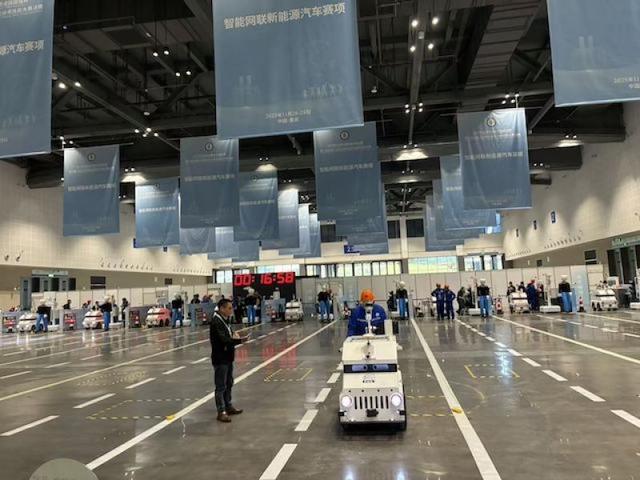
Group 1 - The core focus of the articles is the rapid development and potential of the intelligent connected vehicle (ICV) sector, which is expected to reach a trillion-level consumption market by 2027, alongside other sectors like elderly products and consumer electronics [2][4]. - The Ministry of Industry and Information Technology has set a target to form three trillion-level consumption areas and ten billion-level consumption hotspots by 2027, with ICV being one of the key areas [2][4]. - In the first seven months of this year, the sales of new passenger cars with Level 2 driving assistance features reached 7.76 million units, with a penetration rate of 62.58% [2]. Group 2 - There is a significant talent gap in the ICV sector, with an estimated shortage of 1.03 million professionals in manufacturing and service roles related to new energy and intelligent connected vehicles [3][5]. - Current educational institutions are only producing about 120,000 graduates annually in relevant fields, which is insufficient to meet the industry's demands [3][5]. - The job market for ICV is evolving rapidly, with over 260 distinct job roles identified, each requiring hundreds to thousands of professionals [7][8]. Group 3 - The integration of traditional automotive skills with new technologies such as AI and electronic systems is essential, as the industry shifts towards a more complex skill set [8][9]. - The recent national skills competition introduced new categories focused on ICV, emphasizing the need for practical skills in hardware assembly, fault detection, and system integration [9][10]. - Educational programs are adapting to include a mix of foundational and specialized courses to better prepare students for the evolving job market in ICV [10].
智能网联汽车冲刺万亿级消费蓝图:从“买车”到“订阅生活”
Bei Ke Cai Jing· 2025-11-29 02:38
Core Insights - The automotive market is experiencing a surge in consumer demand, particularly for smart connected vehicles, as highlighted by recent sales reports from dealerships in Beijing [1][2] - The Chinese government aims to establish three trillion-level consumption sectors and ten hundred-billion-level consumption hotspots by 2027, with smart connected vehicles being a key focus area [1][3] Group 1: Market Trends - Retail sales of new energy passenger vehicles reached 10.15 million units in the first ten months of this year, marking a year-on-year growth of 21.9% [3] - The penetration rate of new cars equipped with Level 2 driving assistance features reached 64% in the first three quarters of 2025, with a year-on-year growth of 21.2% [3] Group 2: Consumer Behavior - Consumers are shifting their focus from merely having smart connected features in vehicles to the quality and reliability of these features [4][5] - The perception of cars is evolving from being mere transportation tools to becoming intelligent mobile spaces, leading to higher expectations for driving assistance systems [5][9] Group 3: Challenges and Opportunities - There are significant structural mismatches in supply and demand, including inadequate personalized offerings and imbalanced charging infrastructure between urban and rural areas [2][6] - The automotive industry is exploring new business models, such as subscription services and integrated charging solutions, to enhance consumer experience and address existing challenges [7][8][9] Group 4: Future Outlook - The future of automotive consumption is expected to transition from purchasing products to a subscription-based lifestyle, catering to diverse consumer needs [9][10] - The integration of artificial intelligence and automotive technology is anticipated to create a digital ecosystem that enhances user experience and service precision [9][10]
调研速递|中海达接受个人投资者战君屹调研 智能驾驶车载业务收入翻倍、年内交付超100万套
Xin Lang Cai Jing· 2025-11-28 10:49
Core Viewpoint - The company, Guangzhou Zhonghaidah Satellite Navigation Technology Co., Ltd., focuses on high-precision navigation and positioning technology, offering a comprehensive range of products and solutions across three core business segments: spatiotemporal perception equipment, Beidou high-precision industry applications, and intelligent driving and navigation control [1][2]. Business Segments Summary Spatiotemporal Perception Equipment - The company provides high-precision positioning equipment and solutions primarily for industries such as natural resources and construction, utilizing technologies like high-precision satellite positioning and LiDAR to deliver intelligent solutions with millimeter to centimeter measurement accuracy [4]. Beidou High-Precision Industry Applications - Zhonghaidah employs a "product + scenario application" model, offering integrated solutions that include a Beidou high-precision positioning cloud platform and operational equipment, aimed at enhancing safety monitoring and digital transformation across various industries [3]. Intelligent Driving and Navigation Control - This segment has shown significant growth, with over 1 million high-precision positioning products delivered in 2025, including partnerships with major automotive manufacturers. The company is also expanding its presence in engineering machinery and agricultural machinery control, establishing a sales network in Europe and Asia [5].

陕汽奏响中国商用车变革强音
Zhong Guo Qi Che Bao Wang· 2025-11-28 06:42
Core Viewpoint - Shaanxi Automobile Holding Group (Shaanxi Auto) has been recognized for its achievements in the commercial vehicle sector, particularly in the fields of new energy and intelligent networking, as evidenced by multiple awards received at the "Wheels of China" event, highlighting its technological strength and commitment to industry transformation [1][3]. Group 1: Industry Leadership and Innovation - The commercial vehicle industry in China is undergoing significant transformation, with Shaanxi Auto positioned as a leader in this evolution, contributing to the nation's goal of becoming a strong commercial vehicle power [3]. - Under the "Four New" directive, Shaanxi Auto is advancing its dual-driven development strategy, focusing on the integration of new energy and intelligent networking across its commercial vehicle platforms, which is essential for high-quality industry development [3][4]. - The company has established a top-tier research and development laboratory for new energy heavy trucks, holding 555 patents in new energy and intelligent networking technologies, and has undertaken key national high-tech projects [3][4]. Group 2: Product Development and Market Performance - Shaanxi Auto has developed a comprehensive product matrix that meets diverse market needs, with its new energy vehicles being utilized across various sectors such as steel, coal, and cement, demonstrating strong market adaptability [4]. - The company achieved sales of 167,100 commercial vehicles in 2024, a year-on-year increase of 5.13%, with an industrial output value of 84.3 billion yuan, marking an 11.27% growth [4]. - In the first ten months of the year, Shaanxi Auto sold 165,000 commercial vehicles, with heavy truck sales reaching 148,000 units, capturing a 16% market share, solidifying its position as the third-largest player in the industry [4]. Group 3: Technological Advancements and Product Features - The awarded models, including the Shaanxi Auto Smart Cloud and the Hydrogen Fuel Cell Heavy Truck, exemplify the company's advanced new energy technology and its ability to meet user demands effectively [6][8]. - The Shaanxi Auto Smart Cloud brand focuses on pure electric products, featuring long-range capabilities and superior maintenance, leading the light truck market with innovative electric drive technology [6]. - The Proton Automobile Hydrogen Fuel Cell Truck has been widely adopted in various transport scenarios, with over 2,500 units sold, showcasing its competitive energy consumption and advanced safety features [8]. Group 4: Future Goals and Strategic Vision - Shaanxi Auto aims to become a globally recognized leader in the commercial vehicle sector, driven by innovation, quality, and a global perspective, as part of its long-term strategic vision [10]. - The company is committed to structural adjustments and innovation, with a focus on new energy and intelligent networking as core drivers of industry transformation, while also expanding its international market presence [10].

天津“十五五”规划建议:加快推动信创、生物医药、新能源、新材料、航空航天等成长为支柱产业
Zheng Quan Shi Bao Wang· 2025-11-27 23:59
Core Viewpoint - The Tianjin Municipal Committee emphasizes the development of advanced manufacturing, focusing on high-end, intelligent, and green directions, while promoting new industrialization and upgrading traditional industries [1] Group 1: Advanced Manufacturing Development - The plan aims to enhance competitiveness in industries such as petrochemicals, automotive, equipment manufacturing, and metallurgy through intelligent and green manufacturing [1] - There is a strong push for the large-scale application of new technologies, products, and scenarios, particularly in emerging industries like biomedicine, new energy, and aerospace [1] Group 2: Future Industry Layout - The strategy includes exploring viable business models, market regulation rules, and risk-sharing mechanisms to promote sectors like biomanufacturing, low-dimensional materials, and hydrogen energy [1] - The initiative aims to establish new economic growth points through innovations in brain-machine interfaces, embodied intelligence, and advanced computing [1] Group 3: Consumer Goods Manufacturing - The plan also focuses on actively developing the terminal consumer goods manufacturing sector and cultivating advanced manufacturing brands [1] - There is an emphasis on improving quality infrastructure and standard systems, alongside strengthening environmental and safety regulations [1]
万马科技(300698.SZ):子公司为哈啰的首款Robotaxi自研车型提供高阶网联等服务
Ge Long Hui· 2025-11-27 06:37
Core Viewpoint - Wanma Technology's subsidiary, Shanghai Youka Technology, has partnered with Hello to provide advanced connectivity services for Hello's first self-developed Robotaxi model [1] Company Summary - Wanma Technology's full subsidiary, Shanghai Youka Technology, is actively engaging in the autonomous vehicle sector through its collaboration with Hello [1] - The partnership focuses on delivering high-level connectivity services, indicating a strategic move towards enhancing the technological capabilities of autonomous vehicles [1] Industry Summary - The collaboration highlights the growing trend of partnerships in the autonomous vehicle industry, particularly in the area of connectivity services [1] - This development may signal increased competition and innovation within the Robotaxi market as companies seek to improve their offerings [1]

广州车展:年度“收官之展”如何承前启后
Bei Jing Ri Bao Ke Hu Duan· 2025-11-26 23:27
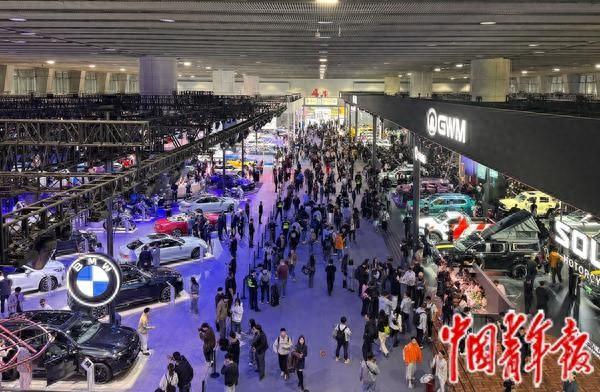
Core Insights - The Guangzhou International Auto Show serves as a significant platform for showcasing the achievements of the automotive market in the past year and indicates the development direction for the upcoming year [3][10] - The event features a total of 1,085 vehicles, with 629 being new energy vehicles and 93 global debuts, highlighting the growing emphasis on electric and intelligent vehicles [3][10] Industry Trends - Domestic brands are making significant advancements in technology, particularly in smart driving and battery range, with consumers increasingly impressed by the capabilities of local manufacturers [3][4] - The focus on innovation is evident, as companies like Geely and Deep Blue showcase new hybrid systems and advanced driver-assistance technologies, indicating a shift towards energy efficiency and performance [4][5] - The trend of software innovation is gaining traction, with several domestic brands moving from hardware-centric development to software updates via OTA, enhancing user experience [5][10] International Brand Strategies - Joint venture brands are actively transforming to adapt to market changes, with Volkswagen planning to launch around 40 new models in China from 2025 to 2027, over half of which will be electric [6][10] - Toyota's GAC is implementing a "dual fuel" strategy, moving away from the "sister car" approach to differentiate its product offerings [6][10] - Luxury brands like BMW and Mercedes-Benz are showcasing extensive lineups, emphasizing their commitment to both electric and hybrid technologies [6][7] Marketing and Consumer Engagement - The marketing approach at this year's auto show has shifted from exaggerated promotional tactics to more practical product demonstrations, reflecting a more mature consumer base [8][9] - Companies are focusing on providing hands-on experiences for consumers, allowing them to better understand vehicle features and capabilities [9][10] Future Outlook - The automotive industry in China is undergoing profound changes, with technology innovation being the core driver of development, particularly in the fields of new energy and intelligent connectivity [10] - The future landscape will likely see a coexistence of various technological routes, including pure electric, plug-in hybrid, and range-extended vehicles, alongside intensified competition between domestic and joint venture brands [10]
上海汽配展:中国已成为全球汽车产销及新能源技术创新的重要枢纽
Zhong Guo Jin Rong Xin Xi Wang· 2025-11-26 12:33
Core Insights - The 2025 Automechanika Shanghai has set new records in exhibitor numbers and exhibition area, with 7465 exhibitors and an exhibition area of 383,000 square meters, marking increases of 10% and 9% respectively compared to the previous edition [1] - 40% of exhibitors are involved in the fields of new energy and intelligent connected solutions, highlighting China's role as a global hub for automotive production, sales, and innovation in new energy technology [1] - The new energy and intelligent connected exhibition area has expanded by 50% to 40,000 square meters, featuring 650 companies showcasing key components and systems related to electrification, intelligent connectivity, and more [1] Industry Trends - An emerging trend is the shift of vehicle manufacturers from being mere visitors in previous editions to becoming exhibitors, indicating a proactive approach to optimizing supply chain layouts and fostering closer collaboration between vehicle and parts manufacturers [2] - The exhibition is co-hosted by Frankfurt Exhibition (Shanghai) Co., Ltd. and China National Machinery Import & Export Corporation, and is expected to attract over 24,000 visitors from nearly 160 countries and regions, with pre-registered visitor numbers up by approximately 25% compared to the previous edition [2]

汽车智能化月报系列(三十):9月城区NOA渗透率达16%,小鹏发布第二代VLA、Robotaxi、全新一代IRON-20251126
Guoxin Securities· 2025-11-26 08:56
Investment Rating - The report maintains an "Outperform" rating for the automotive industry [4][6]. Core Insights - The penetration rate of NOA (Navigation on Autopilot) in urban areas reached 16% in September, with significant advancements in autonomous driving technologies from companies like Xiaopeng and others [1][16]. - The report highlights a continuous increase in the adoption of high-resolution cameras, with 800 million pixel cameras accounting for 46.7% of the market by September 2025, reflecting a year-on-year increase of 28 percentage points [2]. - The market share of lidar technology is also on the rise, with a penetration rate of 12.2% for passenger vehicles by September 2025, up 5.3 percentage points year-on-year [2]. Summary by Sections Industry News - Xiaopeng launched its second-generation VLA, Robotaxi, and the new generation IRON, marking a significant step in the integration of AI in transportation [1][16]. - Other notable developments include the mass production plans for autonomous trucks by Xiaoma Zhixing and the acquisition of a pure unmanned license by WeRide in Switzerland [1]. High-Frequency Core Data Updates - The penetration rate of front-view cameras in passenger vehicles reached 67.8% by September 2025, with a notable increase in the adoption of 800 million pixel cameras [2]. - The share of Nvidia chips in the driving domain increased to 57.6%, reflecting a year-on-year growth of 25.9% [2]. Smart Driving - The penetration rate of passenger vehicles equipped with L2-level or higher functions reached 34.8% by September, with significant growth in both highway and urban NOA functionalities [3]. - The report indicates that the penetration rates for various sensors, including front-view cameras and lidar, have shown consistent growth [3]. Investment Recommendations - The report recommends investing in companies such as Xiaopeng Motors, Leap Motor, and Geely for complete vehicles, while suggesting Xiaoma Zhixing and WeRide for L4 technologies [4]. - For components, it recommends companies like Hesai Technology for data acquisition and Horizon Robotics for data processing [4].
