能源革命

Search documents
内蒙古能源革命的破局与远征
Xin Hua Wang· 2025-11-20 08:40
Traditional Energy Industry - Inner Mongolia is transforming its coal industry by developing a modern coal chemical industry system, focusing on clean and efficient utilization of coal, which is projected to exceed 100 million tons by 2024 [2] - The coal-to-olefins demonstration project will convert 3 million tons of coal into 1.8 million tons of methanol, generating an annual revenue of approximately 6 billion yuan [2] New Energy Industry - Inner Mongolia has become the first province in China to exceed 100 million kilowatts of installed renewable energy capacity, with a total of 150 million kilowatts, surpassing thermal power capacity [5] - The region has established a complete photovoltaic industry chain, including silicon materials, rods, slices, and modules, significantly reducing production costs and energy consumption [5] - The Tengger Desert's 2 million kilowatt photovoltaic project can meet the electricity needs of 1.3 million households annually [5] Future Energy Industry - The launch of the largest green ammonia project in China marks a significant step towards the commercialization of the green hydrogen and ammonia industry, with an annual production capacity of 320,000 tons [8] - Inner Mongolia is developing a green hydrogen corridor and hydrogen pipeline network, aiming to become a major hub for green hydrogen production and application [9] New Energy Storage - Inner Mongolia is actively developing new energy storage projects, with 34 new projects initiated in the first half of the year, aiming for a total installed capacity of 10.32 million kilowatts by the end of 2024 [10] - New energy storage is seen as a crucial component for stabilizing the power system and supporting the development of a new power system [10] Electricity Market Reform - Inner Mongolia is leading in green electricity trading, with a total of 76.2 billion kilowatt-hours traded in 2024, and is integrating into the national unified electricity market [11] - The region is encouraging long-term power purchase agreements between renewable energy producers and key users to enhance market efficiency [12]
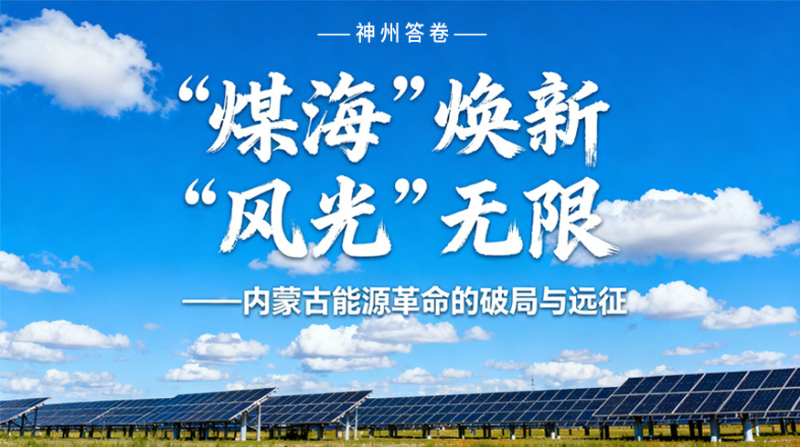
神州答卷|“煤海”焕新 “风光”无限——内蒙古能源革命的破局与远征
Xin Hua Wang· 2025-11-20 01:45
Core Insights - Inner Mongolia is undergoing a significant energy transformation, leveraging its abundant coal, wind, and solar resources to drive a comprehensive energy revolution [2][10]. Traditional Energy Industry - Inner Mongolia is developing a modern coal chemical industry, transforming coal into high-value products like polyethylene and polypropylene, with a projected conversion scale exceeding 100 million tons by 2024 [3][5]. - The coal-to-olefins demonstration facility in Baotou processes 3 million tons of coal annually to produce 600,000 tons of methanol and generates approximately 6 billion yuan in annual revenue [5]. New Energy Industry - Inner Mongolia has become the first region in China to exceed 100 million kilowatts of installed renewable energy capacity, with current installations reaching 150 million kilowatts, surpassing thermal power capacity [11]. - The region is developing a complete photovoltaic industry chain, producing high-purity polysilicon and solar panels, with innovative processes reducing energy consumption and costs [13][16]. Future Energy Industry - The launch of the largest green ammonia project in China marks a significant step in the green hydrogen and ammonia industry, with an annual production capacity of 320,000 tons [19][21]. - Inner Mongolia is planning to establish a green hydrogen corridor and hydrogen pipeline network, aiming to become a national leader in green hydrogen production and applications [21]. New Energy Storage - A series of new energy storage projects are underway, with a target of reaching 10.32 million kilowatts of installed capacity by the end of 2024, and projections of over 16 million kilowatts by 2025 [23]. - The region is actively reforming its electricity market, leading the nation in green electricity trading volumes, with 76.2 billion kilowatt-hours settled in 2024 [24].

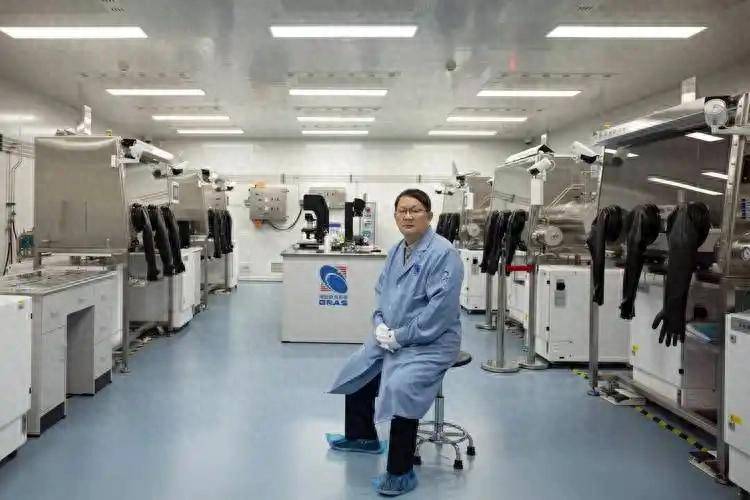
全球唯一突破!甘肃民勤钍基堆实现钍铀转换,能源革命有了新玩法
Sou Hu Cai Jing· 2025-11-14 10:53
Core Viewpoint - The announcement of the successful operation of a 2 MW liquid fuel thorium molten salt experimental reactor in Gansu marks a significant breakthrough in China's fourth-generation nuclear energy sector, showcasing a strategic leap in technology [1][3]. Group 1: Technological Breakthrough - The experimental reactor is the only one globally that has achieved thorium fuel loading and is currently operational [1][6]. - This achievement is not merely a technical upgrade but represents a strategic advantage for China in the nuclear energy landscape [3][11]. Group 2: Resource Advantage - China has a significant resource advantage with over 1.4 million tons of proven thorium reserves, accounting for nearly three-quarters of the global total, which is often extracted alongside rare earth elements [9][11]. - In contrast, China relies heavily on imported uranium, with over 80% of its needs met through imports, highlighting the importance of developing thorium-based technology [5][9]. Group 3: Development Roadmap - The development plan includes building a 10 MW modular demonstration reactor by 2029 and advancing to a 100 MW power station by 2035, focusing on regions rich in thorium resources [11][13]. - The successful operation of the 2 MW reactor is a critical first step in this roadmap, aimed at gathering essential data for future developments [11][13]. Group 4: Economic Implications - The cost of nuclear power in China has halved over the past decade, contrasting with rising costs in the U.S., positioning low-cost electricity as a significant advantage for China's economic development [19][20]. - The increasing demand for electricity, particularly from industries like AI, underscores the importance of cost-effective energy solutions like thorium molten salt reactors [22][24]. Group 5: Global Energy Dynamics - The advancement in thorium molten salt technology could potentially reshape global energy dynamics, reducing the importance of oil and impacting the oil-dollar system [26][28]. - Historical precedents show that energy revolutions have been pivotal in shifting global power, suggesting that China's technological progress in this area may lead to a reconfiguration of international order [24][30].
国家能源局有关负责同志就《石油天然气基础设施规划建设与运营管理办法》答记者问
国家能源局· 2025-11-14 02:52
Core Viewpoint - The revised "Management Measures for the Planning, Construction, and Operation Management of Oil and Gas Infrastructure" aims to enhance the regulatory framework and operational efficiency of the oil and gas sector in response to new industry demands and the need for a unified national market [2][3][4]. Group 1: Background and Purpose of the Revision - The original management measures, implemented in 2014, were effective but required updates to align with new industry developments and regulatory needs [3]. - The revision is part of the broader energy reform initiated in 2017, particularly focusing on the independent operation of oil and gas pipelines and the transition to a new market structure [3][4]. - The revision also aims to improve the management system within the oil and gas industry, reflecting recent experiences and achievements in infrastructure planning and investment [4]. Group 2: Key Revisions in the Management Measures - The revised measures emphasize supporting the green and low-carbon development of the oil and gas industry, promoting digitalization and innovation in infrastructure [5]. - A separate chapter for oil and gas infrastructure planning has been established, ensuring alignment with national plans and preventing fragmented local planning [5]. - The investment and construction mechanisms for oil and gas infrastructure have been clarified, allowing for greater participation of social capital in non-mainline projects [5][6]. - The measures promote a unified national pipeline network, ensuring financial independence and market integration of provincial networks [6]. - The management of facility access and usage has been streamlined, with a focus on high-quality industry development [6][7]. - The measures set clear requirements for natural gas reserves and peak-shaving market mechanisms, including specific emergency storage capacity mandates [7]. Group 3: Regulatory and Operational Enhancements - The revised measures will enhance the regulation of natural monopoly sectors, ensuring that companies focus on their core responsibilities and do not misuse their market position [8][9]. - There is a commitment to improving the overall layout of infrastructure investment and ensuring compliance with national strategies and safety responsibilities [8][9]. - The measures advocate for a dual approach of enhancing physical infrastructure while also improving the regulatory environment to foster competition and efficiency [9][10]. - The management framework will adapt to the current development stage of the oil and gas industry, focusing on optimizing existing infrastructure and promoting new investments [10]. Group 4: Implementation and Future Directions - The National Development and Reform Commission and the National Energy Administration will coordinate efforts to implement the revised measures and ensure compliance [11]. - Key tasks include developing a national oil and gas development plan and enhancing the integration of provincial planning efforts [11].
动力电池产业协同创新描绘能源新图景
Zheng Quan Ri Bao· 2025-11-13 23:58
Core Insights - The 2025 World Power Battery Conference held in Yibin, Sichuan, showcased 180 signed projects with a total value of 86.13 billion yuan, focusing on key areas in green energy such as power batteries and new energy vehicles [1] - China's power battery industry has seen significant growth, with production increasing from 83.4 GWh in 2020 to over 1000 GWh by 2024, representing a growth of over 10 times [1] - The industry is expanding into new applications such as energy storage and low-altitude economy, driven by technological innovation and global collaboration [2][3] Industry Growth and Market Dynamics - China's power battery industry has improved its global competitiveness, with six Chinese companies in the top ten global power battery manufacturers, holding over 60% market share [2] - In the first three quarters of this year, the cumulative installed capacity of power batteries reached 493.9 GWh, a year-on-year increase of 42.5% [2] - The energy storage sector is emerging as a new growth engine, with domestic lithium battery shipments expected to reach 580 GWh in 2025 [2] Technological Innovations - Companies like GCL are collaborating with tech giants to develop energy models and infrastructure, focusing on distributed energy and virtual power plants [3] - CATL has introduced a fourth-generation lithium iron phosphate battery, leading in energy density and lifespan, and is also producing sodium-ion batteries to reduce reliance on lithium [5] - The industry is witnessing advancements in semi-solid and solid-state batteries, with expectations for commercial viability in the coming years [6][5] Sustainability and Recycling - The recycling of power batteries is becoming crucial for resource stability and environmental protection, with calls for a comprehensive lifecycle management system [7] - The industry is integrating recycling into its operations, enhancing the sustainability of the supply chain and expanding the application of recycled materials [7] Global Integration and Future Outlook - China's power battery industry is deeply integrating into the global supply chain, supplying about 70% of battery materials and over 60% of power batteries globally [8][9] - The export volume of power batteries reached approximately 130 GWh in the first three quarters, marking a year-on-year increase of 32.7% [8] - Future strategies emphasize technological innovation, green development, and international cooperation to strengthen the industry's position as a pillar of the national economy [9]

安徽首富曹仁贤:放弃铁饭碗,在澡堂边拼出4000亿新能源帝国
Sou Hu Cai Jing· 2025-11-12 14:06
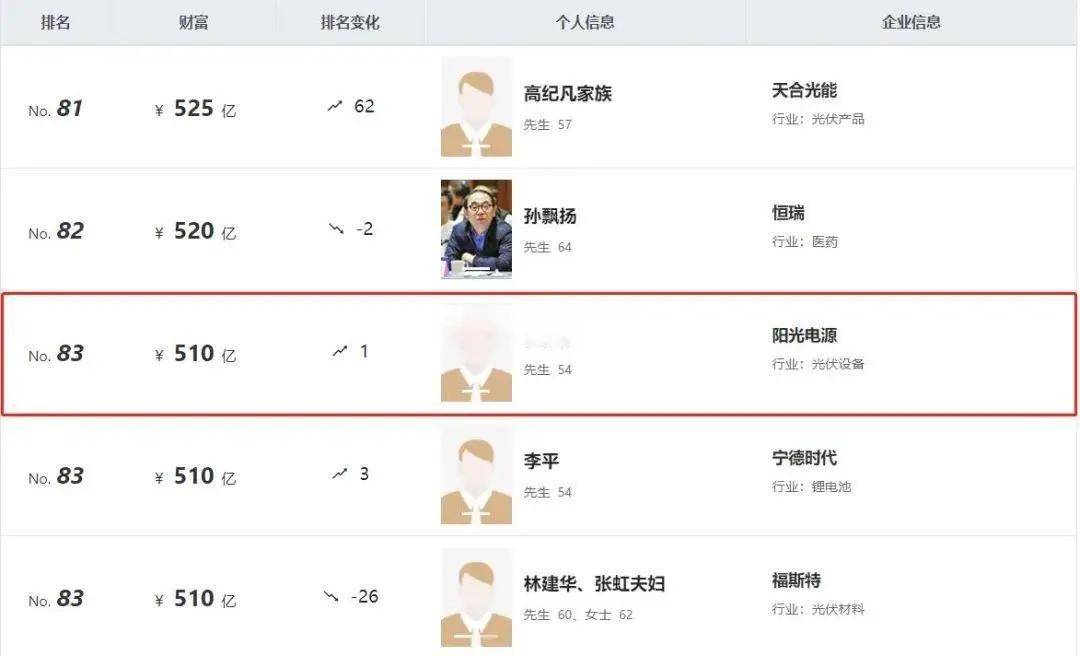
Core Insights - The 2025 Hurun Rich List ranks Cao Renxian and his wife as the 76th richest individuals in China with a wealth of 67.5 billion yuan, significantly ahead of the second-ranked individual in Anhui, Yu Zhuyun, by 44.5 billion yuan [1] - Sunshine Power, the company founded by Cao Renxian, is recognized as the "first stock in China's new energy power industry" with a market capitalization exceeding 400 billion yuan [1] Company Overview - Sunshine Power was established in 1997 with an initial capital of 500,000 yuan, operating from a small space next to a bathhouse in Hefei [3] - The company initially focused on traditional power products before pivoting to renewable energy solutions, particularly solar energy [3][4] Strategic Decisions - In 2004, the company made a controversial decision to eliminate its most profitable UPS and emergency power businesses to concentrate on renewable energy products, which was a painful but strategic choice [6][7] - The company entered the energy storage market in 2015, anticipating the increasing penetration of renewable energy and the need for storage solutions [7] Technological Innovation - Sunshine Power developed China's first solar inverter with complete independent intellectual property rights in 2003, breaking the monopoly of foreign companies [8] - The company has consistently invested heavily in R&D, with a reported expenditure of 2.037 billion yuan in the first half of 2025, marking a 37% year-on-year increase [9] Market Performance - Sunshine Power went public in November 2011, leading to significant revenue growth from 1.083 billion yuan in 2012 to 19.286 billion yuan in 2020, a twelvefold increase over eight years [11] - The company has maintained its position as a global leader in solar inverter shipments, although its market share has faced challenges from competitors like Huawei [11] Recent Developments - By 2023, Sunshine Power's energy storage systems generated revenue of 17.803 billion yuan, accounting for approximately 40.89% of total revenue, surpassing the revenue from solar inverters for the first time [12] - The company has successfully integrated energy storage solutions with existing inverter technology, positioning itself competitively in the global market alongside Tesla [12] Business Philosophy - Cao Renxian emphasizes a long-term and focused approach to business, believing that success comes from making the right decisions at the right time [13] - The company's mission is to provide clean energy access to everyone, reflecting its commitment to sustainable development [13]
山西首场“高质量完成‘十四五’规划”系列主题新闻发布会举行
Zhong Guo Hua Gong Bao· 2025-11-11 08:24
Core Viewpoint - Shanxi Province has effectively completed the main objectives set in the "14th Five-Year Plan," demonstrating progress in economic transformation, energy reform, and digital economy development [1][2][3][4][5] Group 1: Economic Development - The quality and efficiency of economic development in Shanxi have steadily improved, with the added value of large-scale manufacturing and strategic emerging industries growing by an average of 8.1% and 8.7% respectively [1] - The province's innovation capability has significantly enhanced, with the transaction value of technology contracts increasing fivefold compared to 2020, achieving the best ranking since the "12th Five-Year Plan" [1] Group 2: Energy Sector - Shanxi has taken on its responsibilities as a major energy province, with over a quarter of the national coal production coming from its large-scale industrial sector during the first four years of the "14th Five-Year Plan" [2] - By the end of September this year, the proportion of installed capacity for renewable and clean energy in Shanxi reached 54.55%, with a notable reduction in coal consumption as part of the energy consumption structure [2] Group 3: Reforms and Openings - Significant reforms have been implemented, including the completion of the three-year action plan for state-owned enterprise reform and the professional restructuring of provincial coal enterprises [2] - Shanxi is transitioning from an inland region to a frontier of reform and opening up, enhancing its development vitality [2] Group 4: Environmental Protection - The province has successfully met all ecological and environmental constraints set by the national government during the "14th Five-Year Plan," achieving record levels in several indicators [3] Group 5: Carbon Neutrality Goals - Shanxi has committed to achieving carbon peak by 2030 and carbon neutrality by 2060, with a 16.1% reduction in energy consumption per unit of GDP during the first four years of the "14th Five-Year Plan," exceeding national targets [4] Group 6: Digital Economy - The provincial government has prioritized the development of the digital economy as a key driver for transformation, achieving significant progress in data infrastructure, digital industrialization, and the integration of digital and real economies [5] - The private economy in Shanxi has shown robust growth, with improvements in the business environment and innovation, making private enterprises the largest and most dynamic group in the province [5]
我省经济总量跃上2.5万亿台阶
Sou Hu Cai Jing· 2025-11-11 01:08
Economic Growth and Development - The average annual GDP growth rate is expected to reach 5%, with significant contributions from the manufacturing and strategic emerging industries, which are projected to grow at 8.1% and 8.7% respectively, outpacing GDP growth [1] - The economic total is anticipated to surpass 20 trillion and 25 trillion yuan, with a projected increase of over 750 billion yuan over five years, equivalent to creating an economic entity the size of Taiyuan and Datong combined [1] - Per capita GDP is expected to exceed 10,000 USD, marking a transition to a middle-income economy [1] Energy Revolution and Environmental Initiatives - The province has made significant strides in energy supply diversification and green transformation, with renewable and clean energy installations accounting for 54.55% of total capacity by September this year [3] - The coal consumption ratio in primary energy consumption is decreasing annually, with energy intensity reduction ranking among the best in the country [3] - The province has implemented over 20 action plans for climate change and energy conservation, achieving a 16.1% reduction in energy consumption per unit of GDP, exceeding national targets [4] Social Welfare and Employment - 80% of annual fiscal spending is directed towards social welfare, with significant improvements in life expectancy and other key social indicators [5] - The province has created 1.928 million new urban jobs over the first four years of the 14th Five-Year Plan, with income growth outpacing economic growth [5] - Initiatives for elderly and child care have been prioritized, achieving nationwide leadership in universal childcare subsidies and community-based elderly care services [5] Investment and Consumption - The province has implemented over 2,000 key engineering projects, with total investment exceeding 1 trillion yuan, supported by various funding sources including central budget investments and local government bonds [8] - Social retail sales have shown continuous growth, with an annual increase in resident consumption of 7.6%, surpassing the national average [8][9] - The interaction between effective investment and market consumption is accelerating, with increased investment directly promoting consumption and vice versa [9] Digital Economy Development - The province has made significant progress in digital economy development, with a focus on data infrastructure and the establishment of a data trading center [10] - The implementation of "Artificial Intelligence+" initiatives has led to the creation of numerous innovation platforms and significant growth in key industries [10][11] - The number of private enterprises has increased significantly, with a notable rise in the number of high-tech and digital economy firms [12]
业界交流生物质气化及高值利用技术
Zhong Guo Hua Gong Bao· 2025-11-10 02:56
Core Viewpoint - The conference on biomass gasification and downstream high-value utilization technologies highlighted the importance of coupling biomass energy with the coal chemical industry as a key measure to implement the national "energy revolution" strategy and promote green and low-carbon transformation in the industrial sector [1] Group 1: Industry Developments - Recent advancements in biomass gasification, catalytic conversion, and green fuel synthesis technologies have provided strong support for building a clean and low-carbon energy system in China [1] - Biomass gasification is recognized as an effective supplement for the clean and efficient utilization of coal, transitioning from laboratory research to industrialization [1] Group 2: Technical Innovations - Experts presented reports on various aspects of biomass gasification technology, low-carbon coupling, catalytic conversion, green fuel certification, and project engineering, showcasing a full chain of innovative achievements from key technological breakthroughs to commercial certification and project implementation [1] - The "Coal Science Furnace" biomass gasification pilot facility demonstrated efficient conversion of various biomass feedstocks and low-carbon operation, based on years of gasification technology accumulation by the China Coal Research Institute [2] Group 3: Future Directions - The China Coal Research Institute plans to accelerate the integration of clean and efficient coal utilization technologies with biomass gasification technologies, aiming to expand pathways for low-carbon products such as green methanol and sustainable aviation fuel [2]
【邀请函】和讯财经中国2025年会听众报名正式启动
和讯· 2025-11-08 02:08
Core Viewpoint - The event "Finance China 2025 Conference and the 23rd Finance Wind and Cloud List" aims to explore pathways for China's economic breakthrough, focusing on macroeconomic trends, technological innovation, and capital market restructuring [1][3]. Group 1: Event Overview - The conference will take place on December 7 at JW Marriott Hotel in Beijing, featuring over 20 authoritative policy advisors and top scholars [1]. - The event will gather more than 300 representatives from politics, business, and academia to discuss the balance between short-term challenges and long-term growth [1]. Group 2: Key Themes - The core themes include stimulating private sector vitality, reshaping industrial chain advantages, promoting technological innovation, and improving expectations and confidence [3]. - Discussions will revolve around the "14th Five-Year Plan" outlook, macroeconomic direction, energy revolution, and the ecological restructuring of capital markets [1][3]. Group 3: Agenda Highlights - The agenda includes keynote speeches, panel discussions, and dialogues on various topics such as real estate, consumption stimulation, and the role of China in global trade fragmentation [13]. - Notable sessions will cover low-interest rate challenges, monetary transformation, artificial intelligence, and energy revolutions [13]. Group 4: Participation and Impact - The event is expected to generate over 200 million in exposure through media coverage and engage over 50,000 users in interactive content [15]. - The participation of over 100 media outlets and a high-net-worth user base exceeding 10 million indicates significant interest and potential impact [15].