货币政策正常化

Search documents
传日本政府高层为12月加息“开绿灯” 蝴蝶效应冲击下全球市场风暴将重演?
智通财经网· 2025-12-04 10:32
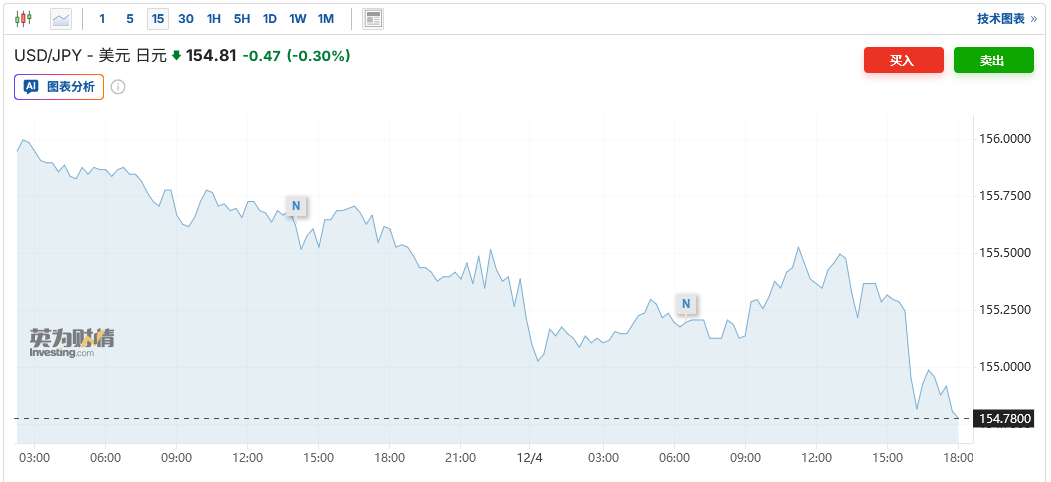
通过提及某次具体政策会议,植田和男很可能在暗示届时采取利率行动的可能性正在上升。回顾去年12月末,这位日本央行行长曾明确承诺会在下次 会议上仔细评估经济状况——而正是那次会议上,日本央行最终决定加息。 在植田和男周一发表讲话之前,就已有多位日本央行官员表态暗示日本央行可能即将加息。最新加入日本央行政策委员会的增田一之表示,加息时点 正在逼近。另一名委员会成员小枝淳子也表示,日本央行应推动政策正常化,尽管她并未表态下一步行动是否应在12月进行。就连鸽派成员野口旭上 周也指出政策调整过晚的风险正在上升。 智通财经APP获悉,据知情人士透露,若日本央行决定在12月加息,高市早苗政府的主要官员不会试图阻止,尽管一些高级官员反对这一加息时机。 在市场对日本央行将于12月19日政策会议上加息25个基点的预期日益升温之际,日本政府的这一立场增加了该国央行在本月加息的可能性。截至发 稿,美元兑日元汇率下跌,至1美元兑154.81日元。日本两年期国债收益率则涨至1.022%。 日本央行12月加息"箭在弦上" 周四已有媒体援引三位日本政府消息人士报道称,日本央行很可能在本月加息,并且日本政府将容忍这一举措。尽管日本央行独立于政府 ...

独家洞察 | 日本加息信号引爆全球债市,美债收益率重回4%以上
慧甚FactSet· 2025-12-03 06:29
Core Viewpoint - The Bank of Japan, led by Governor Kazuo Ueda, is signaling a potential shift towards interest rate hikes, with discussions planned for December 18-19, indicating a move away from the negative interest rate era and towards monetary policy normalization [1][4]. Market Reaction - Following Ueda's announcement, Japanese government bonds saw significant declines, with the 20-year yield rising by 5.5 basis points to 2.88%, the highest since June 1999; the 5-year yield increased by 6.5 basis points to 1.375%; and the 10-year yield jumped by 7 basis points to 1.87%. The Nikkei 225 index also fell by over 2% [3]. - The rise in bond yields is attributed to investors reassessing Japan's interest rate environment, leading to a sell-off of older bonds as the market demands higher returns [3]. Global Impact - Japan's position as one of the largest foreign holders of U.S. Treasury bonds means that an increase in domestic rates could reduce demand for U.S. debt, potentially lowering its prices and raising yields. This shift is seen as a signal that the global tightening cycle may extend, reinforcing expectations for sustained high global interest rates [4]. - The increase in Japanese rates is expected to lead to a stronger yen, which could further diminish the incentive for Japanese institutions to hold U.S. Treasuries, adding upward pressure on U.S. bond yields [4]. Policy Outlook - Ueda emphasized that any adjustments to monetary policy will be gradual and will not cause sudden economic shocks. He noted that Japan's real interest rates remain low, and the current rate hike is a necessary step to stabilize inflation around the 2% target [5]. - Analysts from Nomura Securities are monitoring two key signals: Ueda's assessment of wage negotiations and any upward revisions to core inflation forecasts, which could indicate a more hawkish stance [5]. - OCBC Bank strategists suggest that while the market is betting on an imminent rate hike, the sustainability of the yen's rebound will depend on clearer policy guidance from the Bank of Japan [5].
日本央行政策转向预期升温 日元跌势受限
Xin Hua Cai Jing· 2025-12-02 11:09
新华财经北京12月2日电(王姝睿)市场避险情绪日内降温,日元维持弱势,但日本央行的政策转向预 期使其跌势受到明显限制。分析称,日本央行加息的预期日益高涨正在提振日元,但要实现日元的持续 复苏还需要更多行动。 荷兰合作银行分析师Jane Foley预计,由于市场预期日本央行将于12月19日加息,美元兑日元汇率可能 在三个月内跌至147。尽管政策制定者已暗示加息的可能性很大,但投资者一直对加息时机持观望态 度。会议前公布的数据,包括第四季度短观报告,仍然至关重要。不过,除非数据表现非常疲软,"否 则日本央行不会改变其信号"。 日本央行近期释放的信号强化了市场对12月加息的押注。日本央行行长植田和男周一指出,"日本的经 济与通胀前景正逐步满足货币政策正常化的条件。" 植田和男在名古屋对商界领袖发言时表示,日本央行将通过审视国内外的经济、通胀和金融市场状况, 综合考量加息利弊后做出适当决定。这一表态被市场解读为最直接的加息"预告",这些前瞻指引旨在避 免政策突变对市场造成冲击。植田和男同时指出,任何加息都将仅仅是对宽松程度的调整,当局将基于 全面评估做出恰当决策。 植田和男强调,日本央行正通过总部与分支机构"积极"收 ...
日本批准18.3万亿日元补充预算,发债计划大幅向短债倾斜
Hua Er Jie Jian Wen· 2025-11-28 08:09
Core Viewpoint - The Japanese government has announced a significant bond issuance plan to fund a new economic stimulus package, raising concerns about fiscal discipline and market reactions to rising bond yields [1][4]. Group 1: Bond Issuance Plan - The Japanese cabinet approved an additional budget of 18.3 trillion yen, with 11.7 trillion yen to be covered by new bond issuance [1]. - The government plans to increase the issuance of 2-year and 5-year government bonds by 300 billion yen each, and significantly raise the issuance of short-term treasury bills by 6.3 trillion yen [1][3]. - The total bond issuance for the fiscal year will reach 40.3 trillion yen, a decrease of approximately 4.3% from the previous year's 42.1 trillion yen [4]. Group 2: Market Reactions - Concerns about Japan's fiscal discipline have led to a rise in long-term bond yields to their highest levels in over two decades [4]. - The demand for 2-year government bonds was weak during the recent auction, with yields climbing to 0.97%, the highest since 2008 [1][5]. - The bid-to-cover ratio for the auction was 3.53, lower than the previous auction and the 12-month average, indicating reduced investor demand [5]. Group 3: Economic Context - The issuance strategy focuses on short-term debt to minimize market impact, as the demand for ultra-long-term bonds has been declining [3]. - The market is reacting to expectations of a potential interest rate hike by the Bank of Japan, with traders estimating a 57% chance of action in the coming month [5][7]. - Recent economic data, including stable inflation and unexpected increases in industrial output, are supporting the case for a rate hike [7].

债市用脚投票!加息预期升温拖累下两年期日债拍卖遇冷 投资者焦点转向植田和男讲话
智通财经网· 2025-11-28 07:26
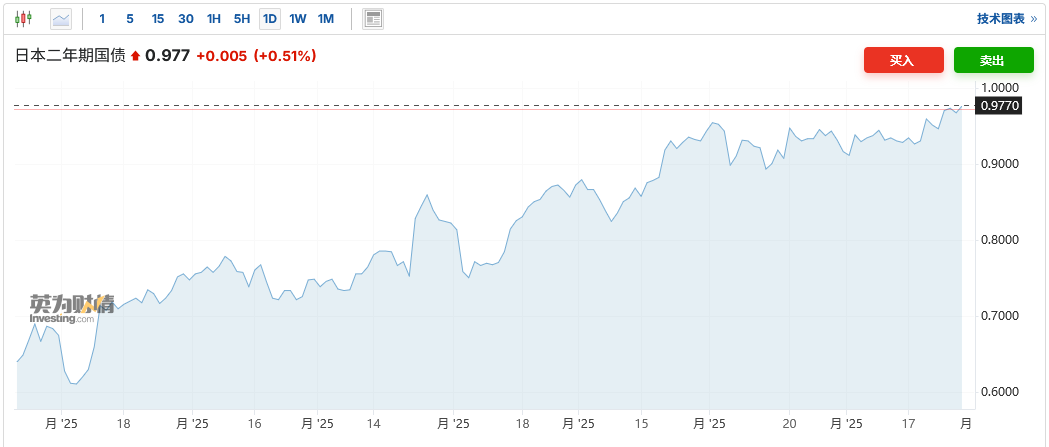
Core Viewpoint - The expectation of an interest rate hike by the Bank of Japan (BOJ) has intensified, leading to a decline in demand for Japanese two-year government bonds, as evidenced by lower bid ratios and increased tail spreads in recent auctions [1][3][4]. Group 1: Bond Market Dynamics - The bid-to-cover ratio for the recent two-year bond auction was 3.53, down from 4.35 in the previous auction and below the 12-month average of 3.66 [1]. - The tail spread for the auction reached 0.012, significantly higher than the previous auction's 0.002, indicating weaker demand [1]. - The yield on two-year government bonds rose to 0.977%, the highest level since 2008, reflecting market reactions to the BOJ's potential policy changes [1]. Group 2: Economic Indicators - Tokyo's core consumer price index (CPI) rose by 2.8% year-on-year in November, slightly above the median forecast of 2.7%, suggesting persistent inflationary pressures [4]. - Industrial output in October increased by 1.4%, far exceeding market expectations of a 0.6% decline, indicating stronger economic performance [4]. - Early signs from labor negotiations suggest robust wage growth, with Japan's largest labor union aiming for a 5% increase in 2026, supporting the case for further rate hikes [4]. Group 3: Central Bank Officials' Statements - Former BOJ official Kazuo Ueda indicated that the recent depreciation of the yen increases the likelihood of a rate hike in December, suggesting that no significant negative signals are needed to justify such a move [5]. - Political pressure to maintain low interest rates appears to be easing, with Prime Minister Fumio Kishida's administration likely to support BOJ's rate normalization efforts [5]. - New BOJ policy committee member Masayoshi Amamiya noted that the timing for a rate hike is approaching, reflecting a shift in the central bank's stance [5]. Group 4: Investor Sentiment and Future Outlook - Investors are cautious ahead of BOJ Governor Kazuo Ueda's upcoming speech, which is anticipated to provide insights into the central bank's interest rate trajectory [6]. - Concerns over Japan's fiscal situation, including a projected supplementary budget of approximately 18.3 trillion yen for FY2025, are contributing to investor apprehension [6]. - Major dealers are requesting increased issuance of shorter-term bonds while reducing long-term bond issuance, indicating a cautious market sentiment [7].
日央行这只“黑天鹅”正在起飞
Sou Hu Cai Jing· 2025-11-27 12:54
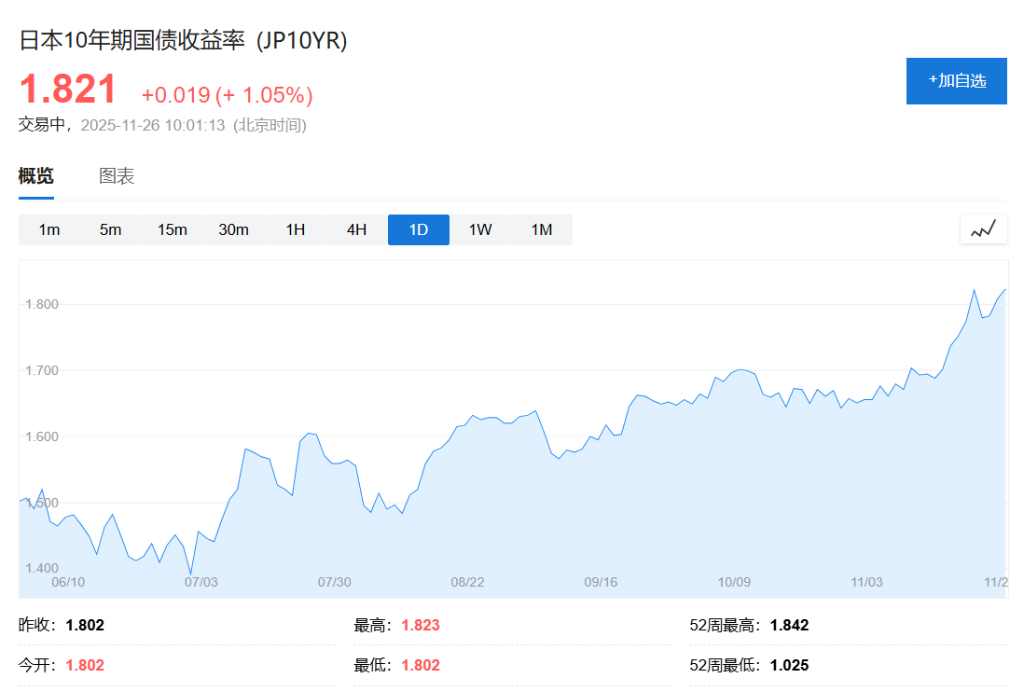
Core Viewpoint - The Bank of Japan (BOJ) is signaling a potential shift from its long-standing ultra-loose monetary policy, with indications that interest rate hikes could begin as early as December, amidst a backdrop of a weakening yen and rising inflation pressures [1][2]. Group 1: Monetary Policy Changes - The BOJ has adjusted its communication strategy to focus on the inflation risks posed by the weak yen, preparing the market for a possible interest rate hike in December [2]. - A recent survey indicates that just over half of economists expect the BOJ to raise rates at its next meeting on December 18-19, with projections suggesting rates could rise to 0.75% by March next year [2]. - The yield on Japan's 10-year government bonds has surged to 1.821%, reflecting investor re-evaluation of Japan's monetary policy outlook [2]. Group 2: Government Stimulus and Economic Impact - The Japanese government has announced a massive stimulus package totaling 21.3 trillion yen, financed by issuing at least 11.5 trillion yen in new debt, marking the largest fiscal stimulus since the easing of pandemic restrictions [3]. - The government has abandoned its goal of achieving an annual fiscal surplus, raising concerns about the sustainability of Japan's fiscal policy, especially as government debt exceeds twice the GDP [3][4]. Group 3: Policy Dilemma - There exists a "policy deadlock" where the need for low interest rates to support fiscal stimulus conflicts with the increased debt burden that would result from rate hikes [4]. - The lack of normalization in monetary policy amidst high inflation could heighten the risk of inflation detachment, while concerns over fiscal sustainability may elevate risk premiums on long-term Japanese government bonds [5]. Group 4: Economic Growth and Market Sentiment - Japan's economy has already shown negative growth in Q3, a direct impact of U.S. tariffs, particularly affecting the automotive sector [5]. - The Japanese government has revised its economic growth forecast for FY2025 down from 1.2% to 0.7% [5]. - The volatility of the yen is influencing the broader Asian financial markets, with the Korean won showing heightened sensitivity to fluctuations in the yen [5]. Group 5: Potential for Currency Intervention - Japanese officials have reiterated their readiness to respond to excessive market volatility, echoing language used prior to significant interventions in the past [6]. - There is a risk of unexpected government intervention in the currency market, which could be considered a "black swan" event [5][6]. Group 6: Global Monetary Policy Dynamics - A successful rate hike in December could reshape asset pricing in Japan, marking a historic divergence in monetary policy between the U.S. and Japan, as both countries may adopt opposing monetary stances for the first time in decades [7]. - This convergence of policies could redefine the role of the yen within the global monetary system [7].
每日机构分析:11月26日
Xin Hua Cai Jing· 2025-11-26 10:05
Group 1 - The Federal Reserve's expectations for interest rate cuts have increased, leading to a weaker US dollar, influenced by mixed economic data and potential changes in leadership [1] - The Reserve Bank of New Zealand is cautious about further rate cuts unless economic data shows significant weakness [1] - Consumer confidence in the US has sharply declined, with the unemployment rate rising, indicating significant pressure on consumer sentiment [2] Group 2 - Australia's inflation pressures are intensifying, posing serious policy challenges for the Reserve Bank of Australia, which has already cut rates three times this year, but the effects are not yet fully realized [1] - The Australian economy's inflation remained stable in October, and core indicators have rebounded, making further rate cuts unlikely [1] - The Bank of Japan is likely to guide market expectations ahead of a potential rate hike in December, with indications from government officials supporting this move [1][2]
日元跌太多,日本央行下月加息?
Hua Er Jie Jian Wen· 2025-11-26 03:13
日本央行正向市场释放信号,最早可能在下月加息。 据路透社11月26日援引两位知情人士消息报道,日本央行在过去一周正在释放更加"鹰派"的信号,旨在提醒市场,12月加息仍是一个现实的选 项。而这一鹰派转向的背后,是上周日本央行行长植田和男与新任首相高市早苗举行的一次关键会议,该会议似乎消除了新政府对加息的直接政 治反对。 市场的反应立竿见影。受加息预期推动,日本10年期国债收益率飙升至1.821%。此前,因一位理事会成员的鹰派言论,5年期国债收益率已触及 17年高位。一项调查显示,略过半数的经济学家预计日本央行将在12月18日至19日的会议上加息。 尽管最终决定是在12月还是明年1月行动仍是"一线之差",且很大程度上取决于美联储的利率决策,但日本央行官员近期的表态反映出一种日益增 长的共识:疲软的日元已成为一种趋势,其推高通胀的风险比以往任何时候都大。 行情显示,近日日元兑美元持续走弱,已经跌至"干预"预警水平——155附近。 日本财务大臣片山皋月上周表示,她对日本央行的加息路径"没有特别的反对意见"。植田和男在与首相会晤后也表示,首相似乎已经认可了央行 逐步加息以引导通胀平稳迈向2%目标的计划。 三菱日联摩根士 ...
投21万亿日元救市 大把撒钱有用吗?
Sou Hu Cai Jing· 2025-11-26 01:12
Economic Overview - Japan's economy has entered a phase of negative growth, with a reported GDP decline of 1.8% year-on-year in Q3, marking a return to negative growth since Q1 2024. The primary cause is a sharp contraction in external demand, contributing -0.2 percentage points to economic growth [1] - The U.S. has increased tariffs on Japanese goods, particularly raising auto tariffs from 2.5% to 15%, severely impacting Japan's automotive industry and creating a vicious cycle of order shrinkage and economic recession [1] Domestic Demand and Consumption - Domestic demand remains weak, exacerbated by high inflation and declining real wages, which have led to reduced consumer spending. Personal consumption, which accounts for over half of Japan's economy, saw a slight increase of 0.1% quarter-on-quarter, while private residential investment fell by 9.4%, contributing -0.2 percentage points to economic growth [1] Political and Economic Response - In response to the economic challenges, Prime Minister Fumio Kishida's government approved a fiscal stimulus package worth 21.3 trillion yen (approximately 135.4 billion USD) aimed at addressing rising prices and boosting investment in sectors like semiconductors and AI. However, this plan relies heavily on fiscal expansion and monetary easing without addressing structural economic reforms [2] Structural Issues - Japan's government debt has reached approximately 263% of GDP, and further spending increases could raise long-term interest rates, intensifying debt repayment pressures and limiting investment in public welfare and innovation [3] - The government’s approach has been criticized for lacking prioritization, with resources spread across over ten industries, leading to a "follow-the-leader" strategy that fails to drive significant industrial breakthroughs [3] Long-term Economic Outlook - Japan's economy faces a dual pressure of weak external demand and sluggish domestic consumption, with limited effectiveness of policy tools due to high debt levels and structural deficiencies. Analysts suggest that Japan's economy may oscillate around the growth line for an extended period, with fiscal stimulus potentially providing only short-term relief [4] - For genuine economic recovery, Japan needs to focus on institutional reforms and technological innovation rather than relying on short-sighted policies or external confrontations, although the prospects for such a transformation appear bleak under the current circumstances [4]
日本经济难突重围
Sou Hu Cai Jing· 2025-11-24 22:29
Economic Overview - Japan's economy has entered a negative growth phase again, with a GDP decline of 1.8% year-on-year in Q3, primarily due to a sharp contraction in external demand [2] - The contribution of external demand to Japan's economic growth in Q3 was -0.2 percentage points, exacerbated by increased tariffs on Japanese goods, particularly automobiles [2] - Domestic demand remains weak, with personal consumption showing only a slight increase of 0.1% quarter-on-quarter, while residential investment fell by 9.4% [2] Government Response - The Japanese government, led by Prime Minister Fumio Kishida, has approved an economic stimulus plan worth 21.3 trillion yen (approximately 135.4 billion USD) to address rising prices and boost investment in sectors like semiconductors and AI [3] - The stimulus plan relies heavily on fiscal expansion and monetary easing, without addressing necessary structural reforms in the economy [3][4] Structural Challenges - Japan's government debt has reached approximately 263% of GDP, limiting the effectiveness of further spending and increasing long-term interest rates [4] - The aging population, with 29% aged 65 and above, is contributing to labor shortages and a shrinking consumer market [4] - Japan's automotive industry is struggling to adapt to the global shift towards electric vehicles, missing opportunities in the transition to new energy sources [4] Market Impact - Tensions in Sino-Japanese relations, exacerbated by controversial statements from the Japanese Prime Minister, have led to a significant decline in tourism revenue, estimated to be between 11.5 billion to 14 billion USD, impacting GDP growth by 0.29 to 0.36 percentage points [3] - The stock market has reacted negatively, particularly in the retail and transportation sectors, as civil exchanges between China and Japan are postponed or canceled [3] Long-term Outlook - Analysts suggest that Japan's economy may continue to fluctuate around the growth line without achieving effective growth, as the current fiscal stimulus may only provide short-term relief [5] - A genuine recovery will require institutional reforms and technological innovation rather than reliance on short-sighted policies or external confrontations [5]