
全球化布局

Search documents
宸展光电(003019) - 投资者关系活动记录表 IR2025-003
2025-05-23 08:44
Group 1: Company Performance - In 2024, the company achieved revenue of 2.214 billion CNY, a year-on-year increase of 31.76% [3] - The net profit attributable to shareholders was 188 million CNY, up 18.16% year-on-year [3] - Growth driven by strong demand from European clients, expansion of MicroTouch™ brand, and new products from subsidiary Hongtong Technology entering mass production [3] Group 2: Strategic Plans for 2025 - Focus on three main business segments: ODM, MicroTouch™ brand, and smart cockpit, with strategic adjustments for collaborative development [3] - Continuous improvement of the global manufacturing system to enhance core competitiveness [3] - Ongoing enhancement of core technology R&D capabilities [3] - Development of an efficient global team to expand and maintain global customer relationships [3] Group 3: Impact of Tariffs and Trade - Current tariff rates for exports to the U.S. are between 20-30% due to recent adjustments [4] - Limited short-term impact on business due to product exemptions in the U.S. customs list, but potential long-term benefits if tariff policies stabilize [4] Group 4: Factory Developments - The Thailand factory achieved mass production in 2024, establishing a dual factory layout for smart cockpit business [5] - Plans to expand production capacity in Thailand with new assembly lines to enhance supply chain resilience [5] Group 5: Market Expansion and Product Strategy - The company is evaluating the possibility of establishing factories in Europe and the U.S. to mitigate geopolitical risks [6] - As of the end of 2024, the smart cockpit industry application increased to 30%, while retail remains the largest sector at over 40% [7] - Sufficient orders on hand for Q2 2025, with management aiming to meet revenue targets despite challenges [8] Group 6: MicroTouch Brand Development - In 2025, the focus will shift from channel construction to product development, enhancing product design capabilities to increase market share and brand value [9] Group 7: Automotive Display Business - Multiple vehicle models will enter mass production in 2025, targeting both new energy vehicles and traditional car manufacturers [10] - Strategies to improve gross margins in the automotive display sector include new customer acquisition and optimizing product structure [11]
轮胎:成本上涨 业绩分化
Zhong Guo Hua Gong Bao· 2025-05-23 03:12
Core Viewpoint - The tire industry in China is experiencing moderate growth in 2024, with a year-on-year revenue increase of 5.7% but a profit decline of 8.5%, indicating a disparity in economic performance among companies [1] Group 1: Industry Performance - The overall performance of the tire industry is characterized by a significant divergence, with leading companies achieving substantial profit growth while many others face declining profits [4] - Major companies like Linglong Tire, Sailun Tire, and Senqilin have reported impressive profit increases of 26.01%, 31.42%, and 59.74% respectively, while Triangle Tire experienced a profit drop of 21.03% due to rising raw material costs and inventory issues [2][4] - The prices of natural and synthetic rubber have risen significantly, impacting the industry's fundamentals, with natural rubber prices reaching a seven-year high earlier in the year [2] Group 2: Demand and Supply Dynamics - The automotive sector's growth has slowed, affecting tire demand, with a 2.7% increase in steel radial tire production in the first half of 2024, followed by a 3.2% decline in the second half [3] - The production of semi-steel tires has remained positive, with a 22% increase in the first half and a 15% increase in the second half of the year [3] Group 3: Export and International Market - China's tire exports have shown growth, with a 4.9% increase in weight, a 10.5% increase in quantity, and a 5.5% increase in export value in 2024 [5] - Chinese tires are increasingly replacing foreign brands in the European and American markets due to competitive pricing, with significant demand growth in Asia, Africa, and Latin America [5] Group 4: Future Outlook and Challenges - The tire industry is expected to enter a phase of capacity reduction due to ongoing cost pressures and trade frictions, with raw material prices likely to fluctuate but not significantly increase [7] - The demand for tires is anticipated to be bolstered by the growth of the electric vehicle market, with production and sales of new energy vehicles expected to rise by 34.4% and 35.5% respectively in 2024 [7] - Trade tensions, particularly with the U.S. and Mexico, pose significant risks to the industry, prompting companies to enhance their overseas operations to mitigate these challenges [8]
联检科技汽车检测业务经营状况良好 将加速资质效能释放,努力提升经营业绩
Zheng Quan Shi Bao Wang· 2025-05-22 07:47
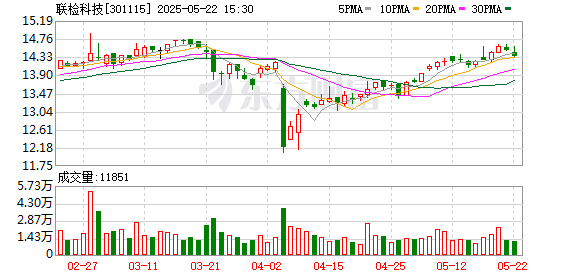
Core Viewpoint - The company is undergoing a strategic transformation to focus on high-value detection sectors, particularly in automotive and consumer goods, to offset the decline in traditional construction-related businesses [2][3]. Group 1: Business Performance - In Q1 2025, the company achieved a year-on-year revenue growth of 20.37% and a net profit growth of 30.13%, driven by the rapid expansion of emerging businesses like automotive and consumer goods testing [2]. - The acquisition of Guanbiao (Shanghai) Testing Technology Co., Ltd. has enabled the company to enter the automotive testing sector, enhancing its technical capabilities and customer resources [3]. Group 2: Market Expansion - The company has made significant strides in overseas markets in 2024, including partnerships in Indonesia and Tanzania, and has engaged with various international entities to expand its global footprint [3]. - The establishment of specialized overseas teams and departments targeting Southeast Asia, the Middle East, and Africa is part of the company's strategy to build a grid-based service system along the "Belt and Road" initiative [3]. Group 3: M&A Strategy - The company plans to achieve external growth through targeted mergers and acquisitions, focusing on acquiring local laboratories to quickly gain regional qualifications and customer networks [4]. - The M&A strategy emphasizes "regional penetration, track expansion, and qualification enhancement," aiming to select high-growth sectors driven by policy and to build technical barriers through acquisitions [4]. Group 4: Future Growth Drivers - The company aims to optimize its business structure by focusing on high-value emerging fields such as new energy and electronics, which are rapidly developing markets [5]. - The integration of digitalization and technological innovation, including AI and IoT applications, is expected to enhance testing efficiency and service quality, supporting future performance growth [5][6].

福耀玻璃:汽玻主业持续“量价齐升”,汇兑收益推动利润增厚-20250522
China Securities· 2025-05-22 02:25
Investment Rating - The report maintains a "Buy" rating for the company [5]. Core Views - The company's revenue, net profit attributable to shareholders, and net profit excluding non-recurring items for Q1 were 9.91 billion, 2.03 billion, and 1.99 billion respectively, representing year-on-year growth of 12.16%, 46.25%, and 30.90% [2][3]. - The main business of automotive glass continues to show a "volume and price increase" logic, with profits further boosted by foreign exchange gains [3]. - The decline in gross profit margin is mainly due to changes in accounting policies and capacity ramp-up, but it is expected to recover steadily in the future [3][4]. - The company is focused on the automotive glass business and is steadily advancing its global layout, with high value-added products like panoramic glass and HUD glass continuing to penetrate the market, driving up the value per vehicle [3][10]. Summary by Sections Financial Performance - In Q1, the automotive glass main business revenue was 9.03 billion, with a year-on-year increase of 11.5% and a quarter-on-quarter decrease of 9.3%, outperforming the downstream industry [3]. - The sales volume of Fuyao automotive glass increased by 7.84% year-on-year, indicating a potential market share increase, while the average selling price rose by 3.36% due to a higher proportion of high value-added products [3]. - The gross profit margin and net profit margin for Q1 were 35.40% and 20.50%, respectively, with year-on-year changes of -1.42 percentage points and +4.78 percentage points [4]. Capacity Expansion - The company is entering a new round of global capacity expansion, with new plants in Fuzhou and Hefei expected to start production in Q4 2025 or early 2026, which will significantly increase production capacity [9]. - The U.S. plant has been successfully built and is expected to enhance Fuyao's business layout in North America, with current annual capacity near 7 million sets [9]. Investment Outlook - The company is expected to further consolidate its leading position in the industry with an increase in market share and steady global expansion [10]. - The report forecasts net profits of 8.8 billion and 10.2 billion for 2025 and 2026, respectively, corresponding to current P/E ratios of 17X and 15X [10][11].

东莞外贸“破局”!
Guang Zhou Ri Bao· 2025-05-21 19:23
Group 1: Trade Dynamics and Market Response - The adjustment of tariffs between China and the US has led to a surge in production and shipping activities among Dongguan's foreign trade companies, with reports of container shortages and increased shipping costs [1][2] - Companies are actively working to fulfill US orders while simultaneously exploring new markets, indicating a shift from a single-market focus to a more globalized approach [1][3] - The Dongguan government has initiated plans to support local enterprises in linking and promoting their products in domestic markets, including a special live-streaming event for "export to domestic sales" [3][8] Group 2: Transformation Strategies - Companies like Dongguan's Jollybaby are transitioning from export to domestic sales, signing significant contracts with platforms like JD.com, which has resulted in rapid sales turnover [2][3] - The shift from pure OEM (Original Equipment Manufacturer) to brand development is becoming a trend, with companies registering their own brands to gain pricing power and mitigate risks associated with tariffs [5][6] - Dongguan's foreign trade enterprises are increasingly adopting a dual strategy of exploring Southeast Asian manufacturing while enhancing their domestic e-commerce presence [6][7] Group 3: Economic Outlook and Policy Support - Dongguan's foreign trade is projected to reach approximately 1.39 trillion yuan in 2024, with cross-border e-commerce transactions expected to hit 91.29 billion yuan, reflecting a robust growth trajectory [8][9] - The local government has outlined a plan to stabilize foreign trade growth, aiming for a 30% export share to Belt and Road Initiative countries by 2027, while promoting the transformation of foreign trade enterprises [8][9] - Recommendations for companies include enhancing market research, optimizing product design, and leveraging e-commerce platforms to build brand awareness and adapt to domestic consumer trends [9]
积极利用香港资本市场 助力新能源企业做大做强
Zheng Quan Ri Bao· 2025-05-21 16:41
笔者认为,新能源企业需以战略眼光谋划高质量发展,从技术创新、全球化布局、供应链整合三大维度 着手,打造全球竞争力。 第一,以技术创新筑牢核心竞争力。企业需持续加码研发,将技术创新作为高质量发展的核心引擎。在 电池领域,企业需聚焦高能量密度、长寿命、低成本、高安全性的电池技术研发;在光伏领域,则应致 力于提升光电转化效率。在材料、工艺甚至商业模式上构建"护城河",提升竞争力及盈利能力。 第二,以全球化布局拓展市场边界。企业可通过港股上市推动全球化战略实施,积极拓展海外市场、分 散经营风险,同时着力提升国际影响力。 第三,优化产品结构、供应链,并开展并购投资。赴港上市的新能源企业可借力港股,通过广泛合作、 投资等,引领产业协同、整合。这也有利于企业不断巩固自身行业地位。 总之,赴港上市是新能源企业全球化发展的重要助推力,而在"双碳"背景下的全球新能源投资热潮中, 谁能率先借力资本市场,尤其是借力于港股这样的全球金融枢纽,谁就有望在全球市场竞争中赢得先 机,更有可能成长为全球新能源巨头。 ■李婷 在"双碳"目标引领与全球能源转型浪潮的双重驱动下,新能源产业成为全球资本竞逐的"价值高地"。一 时间,新能源企业赴港上市 ...

兆易创新港股上市背后:全球化布局与资本协同的必然选择?警惕行业周期性风险
Xin Lang Zheng Quan· 2025-05-21 10:33
Core Viewpoint - The company, Zhaoyi Innovation, is set to go public in Hong Kong to raise funds aimed at enhancing R&D capabilities, product iteration, strategic investments, and global marketing efforts [1] Group 1: Strategic Motivations - The decision to initiate the H-share listing is driven by the dual demands of technological independence and market expansion, with 77.51% of the company's revenue projected to come from overseas by 2024 [2] - The company plans to allocate 45% of the raised funds to enhance R&D capabilities, focusing on AI chip architecture and automotive-grade MCU development to compete in emerging fields [2] Group 2: Industry Context and Financial Position - The semiconductor industry is currently experiencing a phase of "domestic substitution achievements" and intensified global technological competition, with Hong Kong's lower valuation window providing a cost-effective financing channel for Zhaoyi Innovation [3] - The company has a cash reserve of 9.409 billion and short-term borrowings of only 970 million, with a R&D expense ratio of approximately 15% for 2024, indicating a need for continuous funding to support R&D efforts [3] Group 3: Industry Trends and Policy Benefits - Over 30 A-share hard tech companies are planning to list in Hong Kong by 2025, reflecting a collective strategy of "technology going abroad + capital returning" [4] - Regulatory cooperation between the China Securities Regulatory Commission and Hong Kong authorities is streamlining the listing process, enhancing liquidity through the Hong Kong Stock Connect mechanism [4]

伊利金领冠新品全面登陆香港市场 全球化布局持续深化
Xin Hua Cai Jing· 2025-05-21 07:39
Group 1: Core Insights - Yili Group held a global product launch in Hong Kong, introducing three new infant formula products, marking a significant step in its internationalization strategy [1] - The collaboration with health retail chain Mannings will see the new products available in over 200 stores and online in Hong Kong, enhancing Yili's presence in the Guangdong-Hong Kong-Macao Greater Bay Area [1] - The launch event also featured the release of the "2025 Key Research Findings on Breast Milk," showcasing Yili's advancements in maternal and infant nutrition research [1][3] Group 2: Industry Positioning - Inner Mongolia has prioritized "dairy industry revitalization" as a strategic focus for modernizing agriculture and enhancing international competitiveness, with Yili as a leading enterprise [2] - Yili's production base in Hohhot, known as "Yili Health Valley," is recognized as a global benchmark for infant formula manufacturing, utilizing advanced technologies from over 50 international suppliers [2] - The company has established 81 production bases across various countries, covering a wide range of dairy products and reaching over 60 countries and regions globally [4] Group 3: Research and Innovation - Yili has invested in maternal and infant nutrition research, accumulating data on over 10 million breast milk components and securing more than 290 patents [3] - The company has developed a "Four-in-One" breast milk research strategy and holds 28 patents related to human milk oligosaccharides (HMOs), a key area of focus in maternal nutrition [3] - The "2025 Key Research Findings on Breast Milk" includes significant studies on amino acid composition and the relationship between HMOs and infant gut microbiota [3] Group 4: Global Strategy - Yili is committed to quality, innovation, and internationalization, with Hong Kong serving as a crucial hub for its global strategy [5] - The launch of the "Jinlingguan" brand in Hong Kong signifies a deeper integration of Inner Mongolia dairy enterprises into the global market [5][6] - The company aims to elevate the reputation of Inner Mongolia's dairy products on the world stage, emphasizing high-quality offerings from the region [6]

潮宏基筹划赴港上市,股价涨停!国际化战略加速推进中
Sou Hu Cai Jing· 2025-05-21 00:49
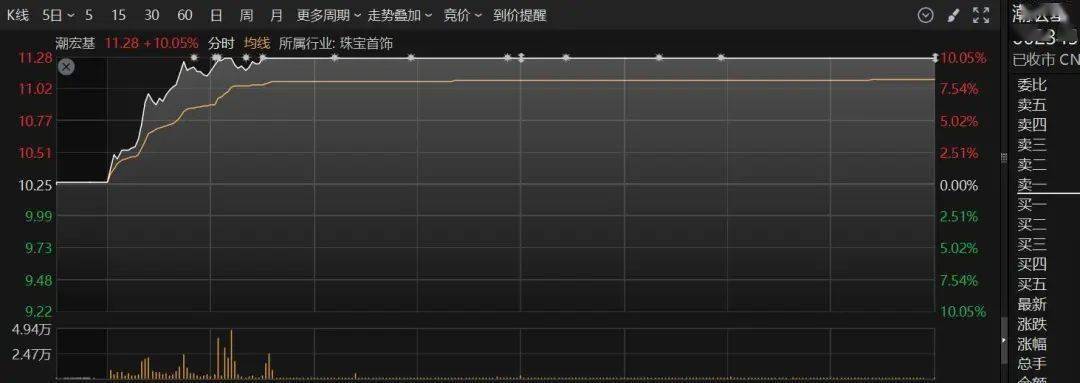
Group 1 - The core point of the news is that潮宏基's stock price surged to the daily limit on May 20, closing at 11.28 yuan per share, with a daily increase of 10.05% [1] -潮宏基's stock price deviation exceeded 20% over the last three trading days, prompting the company to issue a stock price fluctuation announcement [3] - The company is planning to issue H-shares and list on the Hong Kong Stock Exchange to enhance its global presence and brand image, with discussions ongoing with relevant intermediaries [3][5] Group 2 -潮宏基's financial performance for 2024 showed a revenue of 6.518 billion yuan, a year-on-year increase of 10.48%, while net profit attributable to shareholders was 194 million yuan, a decrease of 41.91% [6] - In Q1 2025, the company achieved a revenue of 2.252 billion yuan, a year-on-year increase of 25.36%, and a net profit attributable to shareholders of 189 million yuan, a year-on-year increase of 44.38% [6] - The company plans to implement a 1+N brand matrix strategy to meet diverse consumer needs and expand growth opportunities, while also accelerating its overseas market layout [6]

康拓医疗:新一代“高端骨结合种植体及附件”产品已获批并逐步投入上市
Cai Jing Wang· 2025-05-20 13:30
Core Insights - The company is facing challenges in its oral business due to product iteration and increasing market competition, leading to smaller revenue scale [1] - A new generation of high-end bone integration implants and accessories has been approved and is gradually being launched to enhance competitiveness in the oral sector [1] - The company is diversifying its product offerings in the oral field through external investments in oral tissue repair products [1] Group 1 - The company is actively expanding its business into thoracic surgery, oral surgery, maxillofacial repair, and skin filling, aiming for stable growth through diversification [1] - The company has developed a PEEK material injection molding process and additive manufacturing technology platform, becoming the only known supplier of a full PEEK material solution for cranial repair fixation [1][2] - The PEEK 4D bioactive plates produced using additive manufacturing enhance cell adhesion and proliferation, improving postoperative experiences for patients [2] Group 2 - The company is accelerating its global expansion, with sales covering over 30 countries, and is focusing on enhancing operational efficiency [2] - A localization project for PEEK bone plates is being implemented in the U.S. market to improve supply chain responsiveness and support overseas business growth [2]
