
即时零售

Search documents
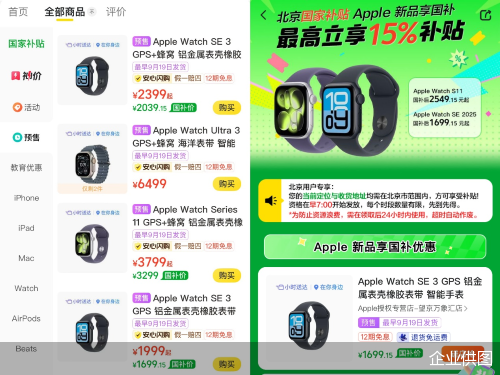
即时零售国补首度覆盖Apple新品,北京市民可在美团闪购预订新款Apple Watch
Bei Jing Shang Bao· 2025-09-11 05:42
Group 1 - The new Apple Watch is available for pre-order on Meituan's flash purchase platform, with consumers in Beijing able to reserve it at a national subsidy price [1] - This marks the first time national subsidies have been applied to Apple products through an instant retail platform, offering consumers a "30-minute national subsidy new product delivery" experience [3] - The national subsidy policy has expanded to instant retail platforms this year, significantly boosting digital consumption, with mobile phone sales on Meituan's platform increasing threefold and Apple store sales more than doubling since the subsidy implementation [3] Group 2 - As the instant retail platform becomes a key channel for purchasing digital products, the launch of Apple products this year features new highlights, including the first-time application of national subsidies [3] - Meituan's flash purchase has introduced a dedicated IP for the launch of consumer electronics, "Meituan Lightning New Products," providing preferential traffic and resource exposure to help brands gain additional business growth through "instant retail product launches" [3]



近八成营收来自线下,江南布衣暂无推即时零售计划丨服饰财报观察
2 1 Shi Ji Jing Ji Bao Dao· 2025-09-11 03:52
Core Insights - Jiangnan Buyi's total revenue for the fiscal year ending June 30, 2025, increased by approximately 4.6% to 5.548 billion yuan, driven by growth in online sales and expansion of offline stores [1] - The company's net profit rose by 6.0% to 899 million yuan, indicating that nearly 80% of revenue still comes from offline stores [1] - The overall gross margin remained at 65.6%, a slight decrease of 0.3 percentage points from the previous fiscal year, which contributed to a significant drop in stock price by 12.12% on September 9 [1] Revenue Breakdown - Online channel revenue grew by 18.3% to 1.201 billion yuan, marking a significant contribution to the overall revenue [1] - The JNBY brand, with over 30 years of history, accounted for 54.3% of total revenue, with a 2.3% increase [2] - Emerging brands, including POMMEl DE TERRE, JNBYHOME, onmygame, and B1OCK, generated 361 million yuan, a 107.4% increase, representing 6.5% of total revenue [3] Customer Engagement - Brand membership contributed over 80% of retail sales, with active member accounts exceeding 560,000 [3] - Members who spent over 5,000 yuan accounted for more than 60% of offline retail sales, totaling 4.86 billion yuan [3] Strategic Focus - The company aims to maintain its retail target of 10 billion yuan for the fiscal year 2026, focusing on domestic market growth despite current challenges [4] - The strategy includes dual-track development for emerging brands, emphasizing product strength and brand foundation while leveraging existing mature brands for growth [4] Store Network and Digitalization - As of June 30, 2025, the number of independent retail stores increased from 2,025 to 2,117, covering all provinces in mainland China and 10 other countries [5] - Both online and offline channels achieved positive growth, with online sales surpassing 20% of total revenue for the first time [5] - The company is reducing direct-operated stores while increasing distributor-operated stores, focusing on refined operations across different store types [6]
近八成营收来自线下,江南布衣暂无推即时零售计划
2 1 Shi Ji Jing Ji Bao Dao· 2025-09-11 03:47
Core Insights - Jiangnan Buyi Limited reported a total revenue increase of approximately 4.6% to 5.548 billion yuan for the fiscal year ending June 30, 2025, driven by growth in online sales and expansion of offline stores [2] - The company's net profit rose by 6.0% to 899 million yuan, indicating that nearly 80% of brand revenue still comes from offline stores [2] - The overall gross margin remained at 65.6%, a slight decrease of 0.3 percentage points from the previous fiscal year [2] Revenue Breakdown - Online channel revenue grew by 18.3% to 1.201 billion yuan, marking a significant contribution to the overall revenue [2] - The JNBY brand, with over 30 years of history, accounted for 54.3% of total revenue, with a revenue increase of 2.3% [3] - Emerging brands, including POMMEl DE TERRE, JNBYHOME, onmygame, and B1OCK, generated revenue of 361 million yuan, a substantial increase of 107.4% year-on-year, contributing 6.5% to total revenue [4] Membership and Customer Engagement - Brand members contributed over 80% of retail revenue, with active member accounts exceeding 560,000 [4] - Members with total purchases exceeding 5,000 yuan accounted for over 60% of offline retail revenue, totaling 4.86 billion yuan [4] Strategic Focus - The company aims to maintain its retail target of 10 billion yuan for the fiscal year 2026, focusing on domestic market growth despite current challenges [5] - The strategy includes a dual approach for emerging brands, emphasizing product strength and brand foundation while leveraging existing mature brands for growth [5] - The total number of independent retail stores increased from 2,025 to 2,117, covering all provinces in mainland China and 10 other countries and regions [5] Market Dynamics - The company experienced positive growth in both online and offline channels, with online sales surpassing 20% of total revenue for the first time [5] - The gross margin for both online and direct sales channels improved, reflecting stable pricing and discount strategies [6] - The retail scale in first- and second-tier cities remains dominant, with over 40% of offline store numbers and more than half of retail revenue coming from these areas [6]
闭关60多天,阿里又憋出大招
创业邦· 2025-09-11 03:09
Core Viewpoint - Alibaba's launch of the "Gaode Street Ranking" is a significant step in enhancing its local retail ecosystem, focusing on user needs and real consumer behavior data to create a trustworthy ranking system [2][16]. Project Overview - The "Gaode Street Ranking" project was initiated in June, with a high level of confidentiality and a dedicated team of over 20 members relocated from Beijing to Hangzhou for its development [4][6]. - The project aims to provide rankings in three main categories: food, hotels, and scenic spots, with a strong emphasis on local dining experiences [5][12]. User Needs and Market Research - The Gaode team identified a market need for a new ranking product based on user feedback, highlighting discrepancies in restaurant ratings and the challenges faced by small businesses in marketing [5][12]. - The ranking system is designed to address user pain points, ensuring that it reflects genuine consumer experiences and preferences [7][12]. Product Features and Functionality - The "Gaode Street Ranking" combines rankings, ratings, and reviews, with a focus on food as the core content area, particularly traditional Chinese cuisine [12][18]. - The ranking factors include the number of navigations to a store, repurchase rates, and the diversity of visitors, emphasizing the concept of "voting with feet" [12][14]. Evaluation System - The evaluation system is based on real user behavior, integrating a credit scoring system to enhance the credibility of reviews [14][15]. - The data used for rankings is derived from actual user navigation and search activities, making it the first ranking system globally based on user travel data [15][21]. Strategic Importance - The timing of the launch aligns with Alibaba's increased investment in instant retail, marking a significant move in the local lifestyle sector [16][18]. - The "Gaode Street Ranking" is considered an S-level project within Alibaba, indicating its strategic importance for the company's future growth [16][19]. Competitive Landscape - Gaode's daily active user count has reached 170 million, significantly surpassing competitors like Dazhong Dianping, positioning it as a strong player in the local services market [18][21]. - The project aims to cover over 300 cities in China, competing primarily with Meituan and other emerging platforms in the local service sector [21].


美团闪购近7000家Apple授权专营店将同步首发开售iPhone新品
Zhong Guo Jin Rong Xin Xi Wang· 2025-09-11 02:40
Group 1 - Apple launched the iPhone 17 series, Apple Watch, and AirPods at a press conference on September 10, with pre-orders available through Meituan Flash Purchase [1] - The number of Apple authorized specialty stores participating in pre-sales has significantly increased, covering third and fourth-tier cities and county markets [2] - The number of Apple authorized specialty stores on Meituan Flash Purchase has grown from nearly 500 to nearly 7000, covering over 2000 counties and districts nationwide [2] Group 2 - The consumer electronics category has experienced rapid growth in the instant retail market, with a projected compound annual growth rate of 68.5% from 2021 to 2026 [2] - By 2026, the instant retail consumer electronics industry is expected to exceed 100 billion [2] - Meituan Flash Purchase will launch a dedicated IP "Lightning New Products" to support the first release of consumer electronics [3]

阿里携高德扫街榜破局,本地生活“三国杀”升级
Tai Mei Ti A P P· 2025-09-11 00:52
Core Insights - Alibaba's recent launch of the "Gaode Street Ranking" is seen as a direct challenge to Meituan in the local lifestyle market, indicating a significant shift in competition dynamics among Alibaba, Meituan, and JD.com [1][9] - The fierce competition in the food delivery sector has intensified, with Alibaba's Taobao Shanguo and Ele.me reporting over 80 million daily orders, while Meituan's instant retail orders exceeded 120 million, and JD.com reached 25 million [1][5] - The ongoing battle is not just about market share but also about redefining the boundaries between local services and e-commerce, with all three companies vying to become the new retail benchmark [2][12] Alibaba's Strategy - Alibaba is leveraging its vast traffic from Taobao and the delivery resources from Ele.me to enhance its "hourly delivery" service, aiming to strengthen its position in the local lifestyle sector [2][5] - The company has faced challenges in the past, such as the failure of "Taodidian" due to inadequate delivery capabilities, highlighting its historical struggles in the local services market [3][13] - The launch of the "Gaode Street Ranking" is part of Alibaba's strategy to regain its footing in the local lifestyle sector, which has seen it lag behind competitors for a decade [9][12] Meituan's Position - Meituan has established a stronghold in the local lifestyle market, with a user base exceeding 700 million and a robust delivery network, allowing it to maintain a competitive edge [3][8] - The company has responded to the competitive pressure by increasing its marketing expenditures significantly, with a 51.8% year-on-year rise in Q2, amounting to 22.5 billion yuan [6][8] - Meituan's strategy includes expanding its instant retail offerings, which have seen substantial growth, particularly in the 3C product category [6][8] JD.com's Entry - JD.com has disrupted the market with its aggressive entry into food delivery, promising zero commission fees and social security for its delivery personnel, which has attracted a significant number of users [4][6] - The company's rapid growth in order volume, reaching 5 million daily orders within 40 days of launching its food delivery service, has intensified competition among the three giants [4][6] - JD.com's focus on 3C products has put additional pressure on both Meituan and Alibaba, as it seeks to capture market share in this lucrative segment [7][8] Financial Impact - The intense competition has led to a significant decline in profits across all three companies, with Meituan's adjusted net profit dropping by 89% year-on-year, while JD.com and Alibaba also reported substantial declines [8][12] - Collectively, the three companies are estimated to have lost over 20 billion yuan in profits due to the ongoing price wars and increased marketing expenditures [8][12] - The financial strain reflects the high stakes involved in the battle for dominance in the local lifestyle and e-commerce sectors [8][12] Industry Trends - The competition is evolving from a focus on user acquisition to retaining delivery personnel, with companies now prioritizing the welfare of their riders as a key competitive factor [14][15] - The shift towards high-quality, multi-dimensional competition is reshaping the landscape, as companies move from aggressive spending to enhancing service quality and operational efficiency [14][15] - The integration of technology and supply chain optimization is becoming crucial for success in the local lifestyle market, as businesses aim to improve service delivery and customer experience [15]

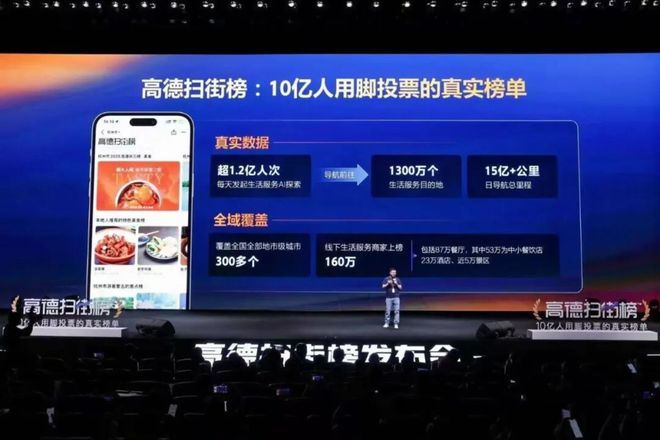
高德高调出炉“扫街榜”,大众点评重启品质外卖对阵
2 1 Shi Ji Jing Ji Bao Dao· 2025-09-10 23:11
Core Viewpoint - The competition strategy of food delivery platforms is shifting towards deeper exploration of "quality" and "value," with differentiation strategies set to reshape the industry landscape [1] Group 1: Market Developments - Meituan announced the relaunch of its quality food delivery service, leveraging AI and real user reviews to enhance decision-making for consumers [1] - JD reported a significant revenue increase of 199% in its new business segment, which includes food delivery, indicating a robust growth trajectory in the market [1] - Taobao Shanguo achieved a peak daily order volume of 120 million, reflecting strong market performance and consumer engagement [1][3] Group 2: Strategic Initiatives - The relaunch of Meituan's quality food delivery service integrates resources from both Meituan and Dazhong Dianping, aiming to meet evolving consumer demands [2] - Dazhong Dianping has curated over one million high-rated restaurants for its quality food delivery service, enhancing consumer choice and decision-making [2] - JD's strategic partnership with Jinjiang Hotels marks a significant move to expand its food delivery business into the hospitality sector [3] Group 3: Competitive Landscape - The competition among platforms is intensifying, with each adopting various subsidy strategies, leading to significant impacts on profitability [6] - High competition has resulted in Meituan experiencing unexpected losses in Q2, raising concerns about its long-term market share [5] - Despite the competitive pressures, Meituan maintains a strong operational foundation, with established barriers in supply chain integration and service systems [5] Group 4: Regulatory Environment - The State Administration for Market Regulation has engaged with major food delivery platforms to ensure compliance with laws and regulations, aiming to promote fair competition and protect consumer interests [7]
"真品质、真堂食、真评价",大众点评"重启"品质外卖
Ge Long Hui· 2025-09-10 20:31
Core Insights - Dazhong Dianping has announced the "restart" of its quality takeout service, utilizing a self-developed large model to analyze user needs based on vast amounts of real review data, aiming to eliminate non-authentic reviews and provide reliable decision-making through "AI + real high scores" [1][8] - The quality takeout service has already aggregated over one million high-rated dining merchants, leveraging high-rated restaurants, genuine in-store reviews, and Meituan's delivery system to offer users "true quality, true dining, true reviews" [1][4] Summary by Sections Service Launch and Features - The quality takeout service now covers various high-quality dining categories, including the "must-eat list," "black pearl" restaurants, and high-star hotels, with over 1,400 restaurants listed on the 2025 "must-eat list," nearly 30 "black pearl" restaurants, and around 1,500 high-star hotel restaurants participating [3][7] - Dazhong Dianping plans to distribute 25 million different types of high-value takeout coupons to promote the service [1][8] Consumer Behavior and Market Trends - Instant retail has become a common lifestyle, with takeout being a mainstream dining consumption habit in China, leading to higher consumer expectations regarding the environment, food quality, safety, and merchant qualifications [4] - In the past year, Dazhong Dianping recorded 363 million real reviews, with daily "photo reviews" browsing volume increasing by 11% year-on-year, and the rate of users prioritizing negative reviews rising by 36% [5] Strategic Goals and Future Plans - The service aims to fill the information gap for consumers when ordering takeout by showcasing merchant ratings and reviews, linking them to tags like "must-eat list," "chain," and "old store" [8] - Dazhong Dianping is open to inviting more restaurants to join the evaluation system, aiming to provide comprehensive services for all high-rated dining establishments across the country [9]
顺丰同城(9699.HK)深度报告:三方即时配送领军者 品质与协同共筑护城河
Ge Long Hui· 2025-09-10 19:40
Core Viewpoint - The company, SF Tongcheng, is a leading third-party delivery platform in China, leveraging its advantages to meet the growing demand for instant delivery services across various new consumption scenarios [1] Group 1: Company Overview - SF Tongcheng operates an open and flexible instant delivery network, providing services for businesses and individuals, with revenue contributions in 2024 expected to be 42% from merchant delivery, 15% from personal errands, and 42% from express collection and delivery services [1] - The company is experiencing rapid growth in its ToB (business-to-business) orders, with a projected 28.1% year-on-year revenue increase from merchant delivery services in 2024 [1] - Collaboration with the group's express delivery business is enhancing operational efficiency, leading to a 32.5% year-on-year revenue growth in express collection and delivery services in 2024 [1] Group 2: Industry Trends - Instant retail is emerging as a new online retail ecosystem that meets the demand for "instant consumption" and "hourly delivery," driven by changes in consumer behavior towards more frequent, smaller purchases [1] - The industry is witnessing significant growth as e-commerce platforms and local service providers actively invest in instant retail to capture market opportunities, with the potential for cross-selling and increased platform traffic [1] - The ongoing optimization of supply chain efficiency is expected to expand the range of products available for instant retail, indicating a broad market space in the medium term [1] Group 3: Delivery Infrastructure - Instant delivery serves as the foundational infrastructure for instant retail, relying on a positive cycle of order volume, rider availability, and fulfillment efficiency [2] - The company differentiates itself by maintaining a neutral position as the largest third-party delivery platform, ensuring high-quality service and customized solutions for various industries [2] - The operational model of rider management is crucial, with SF Tongcheng employing a "quasi-direct" management approach to ensure service quality, contrasting with the franchise model used by some competitors [2] Group 4: Financial Projections - The company's net profit is projected to grow significantly, with estimates of 310 million, 600 million, and 900 million yuan for the years 2025 to 2027, respectively, reflecting a PE ratio of 38.9, 19.8, and 13.2 [3]
美团闪购休食行业负责人刘国庆:即时零售赋能休食产业发展,下沉市场增长潜力显著
Bei Jing Shang Bao· 2025-09-10 14:59
Group 1 - The core viewpoint of the article highlights the significant growth of the ready-to-eat food industry driven by instant retail, particularly through Meituan's flash purchase service [1] - Since the launch of Meituan's flash purchase, the ready-to-eat food category has experienced rapid growth, with increased penetration in lower-tier markets [1] - The collaboration between the well-known snack brand "Hao Xiang Lai" and Meituan's flash purchase has resulted in a monthly order surge to nearly 2 million orders within just four months of partnership [1]