
价值投资

Search documents
波动面前,价值投资者的生存法则:看透、稳住、少看
Xin Lang Cai Jing· 2025-09-27 09:33
Core Insights - The article emphasizes the importance of understanding companies and their fundamentals rather than being swayed by market volatility, highlighting that true value investing is about thriving amidst fluctuations [2][3][4][5] Group 1: Understanding Companies - Value investors view stock price fluctuations as temporary waves, focusing instead on the intrinsic value of companies, akin to a ship's keel [2] - Historical data from the S&P 500 shows that despite 12 bear markets since 1957, the annualized return rate remains at 10.26%, indicating that quality companies endure through cycles [3] - Familiarity with a company's products, research, and cash flow helps investors remain calm during short-term price changes [3] Group 2: Avoiding Leverage - Leverage can amplify both gains and losses, with historical examples like Bear Stearns during the 2008 financial crisis illustrating the dangers of excessive leverage [3][4] - The nature of volatility changes with leverage; a 50% drop can wipe out an investor's capital if leverage is involved, whereas it may only represent a paper loss without leverage [4] - Behavioral finance suggests that leverage can lead to irrational decisions, such as panic selling during downturns, which is contrary to Warren Buffett's investment principles [4] Group 3: Staying Away from Market Noise - The principle of "holding stocks without being emotionally attached" is crucial for managing volatility, as excessive trading can erode returns [5] - Data indicates that investors with a monthly turnover rate exceeding 200% have a median three-year return of -18.7%, significantly lower than the 34.2% return of low-frequency traders [5] - Successful investors focus on analyzing quarterly reports and conducting field research rather than obsessively monitoring market movements, allowing them to make informed decisions without succumbing to market noise [5]



波动面前,价值投资者的生存法则:看透、稳住、少看
美股研究社· 2025-09-27 09:11
Core Viewpoint - The article emphasizes that the essence of value investing lies not in avoiding volatility but in developing a system to survive and profit from it, encapsulated in three key concepts: understanding the business, avoiding leverage, and distancing from the market [1][5]. Understanding the Business - True value investors recognize that daily stock price fluctuations are akin to waves, while the intrinsic value of a company is the foundation. For instance, Warren Buffett's investment in Coca-Cola during the 1987 market turmoil was based on the brand's strong consumer loyalty, which proved to be a solid investment over time [1][2]. - Quality companies can sustain themselves through continuous product innovation and stable profit growth, as evidenced by the S&P 500's annualized return of 10.26% since 1957, despite experiencing 12 bear markets [2][3]. Avoiding Leverage - Leverage can amplify both gains and losses, acting as a trigger for potential destruction during market volatility. The case of Bear Stearns, which collapsed due to excessive leverage during the 2008 financial crisis, illustrates the dangers of high leverage [2][3]. - The article highlights that without leverage, a 50% drop in stock price may only represent a paper loss, allowing time for recovery, whereas with leverage, the same drop could wipe out the principal entirely [3]. Distancing from the Market - Investors should maintain a healthy distance from market noise, focusing instead on analyzing quarterly reports and conducting on-site research. This approach allows them to avoid the pitfalls of overtrading, which can lead to significant losses [5]. - The article notes that investors who frequently trade, such as those with a monthly turnover rate exceeding 200%, tend to have lower median returns compared to those who trade less frequently [3][5].

Opendoor Technologies: Still No Discount For Risk Bearing (NASDAQ:OPEN)
Seeking Alpha· 2025-09-26 16:02
Opendoor Technologies Inc. (NASDAQ: OPEN ) is a stock I covered in July in the aftermath of a rally that brought it over $3 and saved it from delisting. More updates have affected the outlook, and I wantedI analyze securities based on value investing, an owner's mindset, and a long-term horizon. I don't write sell articles as those are considered short theses, and I never recommend shorting.Former advisory representative at Fidelity. I do my own investing now and share my research here.Analyst’s Disclosure: ...


段永平最新这样看茅台
Sou Hu Cai Jing· 2025-09-26 09:22
今天的文章,我们继续分享段永平的言论。 最近几天,段永平在雪球平台(ID:大道无形我有型)格外活跃,多次与网友围绕茅台话题展开探讨。交流中,他不仅分享了对茅台的观点,更 是结合了现金流折现,分享了其对于茅台估值思路。干货很多,值得思考。 我们认为大道言简意赅的言论,对于生意本质的把握还是很清晰到位的。所以,今天的文章我们就再来和大家分享一些大道的最新感悟。 以下为主要内容: 事情的起因是有网友问段永平,有关未来现金流折现的问题。 网友1:一家公司今天的价值,等于它在未来整个生命周期里所能产生的所有自由现金流的现值总和。 (他认为)这句话有两个核心关键词: 1. 自由现金流:这是公司真正能赚到手的、可以自由支配的"真金白银",而不是会计上的利润。简单理解就是:公司每年赚的钱里,扣除掉维持 生意运转必须再投入的钱之后,剩余的部分。这部分钱可以用来分红、回购股票或再投资。 2. 折现:未来的钱不如现在的钱值钱。因为你有机会成本(比如把钱存银行也有利息),而且未来有不确定性(风险)。因此,必须把未来的 钱"打折"成现在的价值。 随后并依托他的思路,给出了推理的计算过程(此处略),并询问大道对此的看法。 对此,大道的回 ...


中欧基金刘勇:锚定绝对收益,打造低波动财富增长曲线
Southwest Securities· 2025-09-26 07:29
Group 1 - The core investment philosophy of the fund manager emphasizes "value investment + absolute return," focusing on valuation, cash flow, and fundamental certainty to achieve long-term stable returns [1][14] - The fund adopts a "core + satellite" allocation framework, avoiding trends and focusing on undervalued assets, with a balanced sector allocation to mitigate risks [1][14] - The fund manager has a strong track record, with a total return of 10.71% since taking over the fund, ranking in the top 28.96% among peers [2][23] Group 2 - The fund's asset allocation primarily consists of high-grade credit bonds, with a significant portion (50%-87%) allocated to credit bonds, and a recent increase in interest rate bonds to 21.33% [3][35] - The equity allocation remains below 20%, with an average historical stock position of 13.14%, focusing on large-cap, undervalued, and high-quality stocks [2][40] - The fund's industry allocation is heavily weighted towards electricity and public utilities, maintaining a proportion of 17.84%-28.06% from Q4 2023 to Q2 2025 [2][48] Group 3 - The fund has demonstrated strong performance in controlling drawdowns, with a maximum drawdown of -1.29%, significantly better than the peer average [2][24] - The probability of making a profit after holding the fund for three months is 92.41%, indicating a high success rate for investors [2][29] - The fund manager employs a dynamic stock selection strategy, focusing on large-cap stocks with low valuations and high quality, while maintaining a balanced growth style [2][40]
林园被迫买科技股难眠,任泽松重仓AI却踏空,投资风向彻底变了?
Mei Ri Jing Ji Xin Wen· 2025-09-26 07:23
Core Viewpoint - The A-share market has entered a structural bull market characterized by a significant rise in technology stocks, while traditional value stocks have underperformed, leading to a divergence in investment strategies [1][2]. Group 1: Market Trends - Since the "9·24" event last year, the rapid development of artificial intelligence has catalyzed a bull market in technology stocks, with "small-cap" stocks experiencing substantial gains [1]. - As of September 25, 2023, "small-cap" stocks in the communication and electronics sectors have risen by 67.91% and 53.58% respectively, while traditional blue-chip sectors like coal and food & beverage have declined by 6.70% and 5.64% [2]. Group 2: Investor Performance - Notable investors like Lin Yuan and Ren Zesong have struggled to keep pace with the market, with Lin Yuan's products underperforming and even recording losses this year [3][4]. - Lin Yuan's private fund products, such as Lin Yuan Investment No. 21, reported a loss of 2.77% this year despite a cumulative gain of 135.88% since inception [4]. Group 3: Investment Strategies - Lin Yuan, who previously avoided technology stocks, has made a small investment in this sector, citing passive allocation as a source of distress [3]. - The investment landscape has shifted from traditional value investing to a focus on technology-driven growth, reflecting a broader change in market dynamics [6][7]. Group 4: Future Outlook - Experts suggest that technology leaders, once they navigate through a complete cycle of "technology-profit-cash flow-dividend/repurchase," will solidify their positions as core assets in the market, akin to past successes like Apple and Nvidia [7].
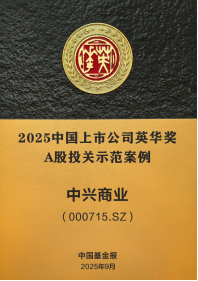
中兴商业荣获2025中国上市公司英华奖——A股投关示范案例
Zheng Quan Shi Bao Wang· 2025-09-26 06:35
Core Viewpoint - Zhongxing Commercial (000715.SZ) has been awarded the "A-share Investor Relations Demonstration Case" for its solid performance in investor relations management, reflecting recognition from the capital market and institutional investors [1][3] Group 1: Company Performance - The company adheres to a value investment philosophy, focusing on enhancing its internal value and continuously innovating its business model, resulting in impressive performance [3] - Zhongxing Commercial has maintained a stable image in the capital market, characterized by stable performance, high asset quality, and compliant operations [3] Group 2: Investor Relations Management - The company places high importance on investor relations management, investing significantly in various communication methods such as information disclosure, roadshows, investor site visits, and earnings briefings to convey its value to the market [3] - Zhongxing Commercial has implemented 23 cash dividend distributions since its listing, with a total dividend amount of 498 million yuan, and plans to distribute 41.4% of its net profit attributable to shareholders as cash dividends in 2024, alongside a stock bonus plan [3] Group 3: Future Outlook - The company aims to continue focusing on its core business and innovation for high-quality development while enhancing investor relations management for transparent and efficient communication with the capital market [3] - Zhongxing Commercial is committed to increasing investor returns and strengthening its value delivery capabilities to create long-term, stable value for shareholders and society [3]

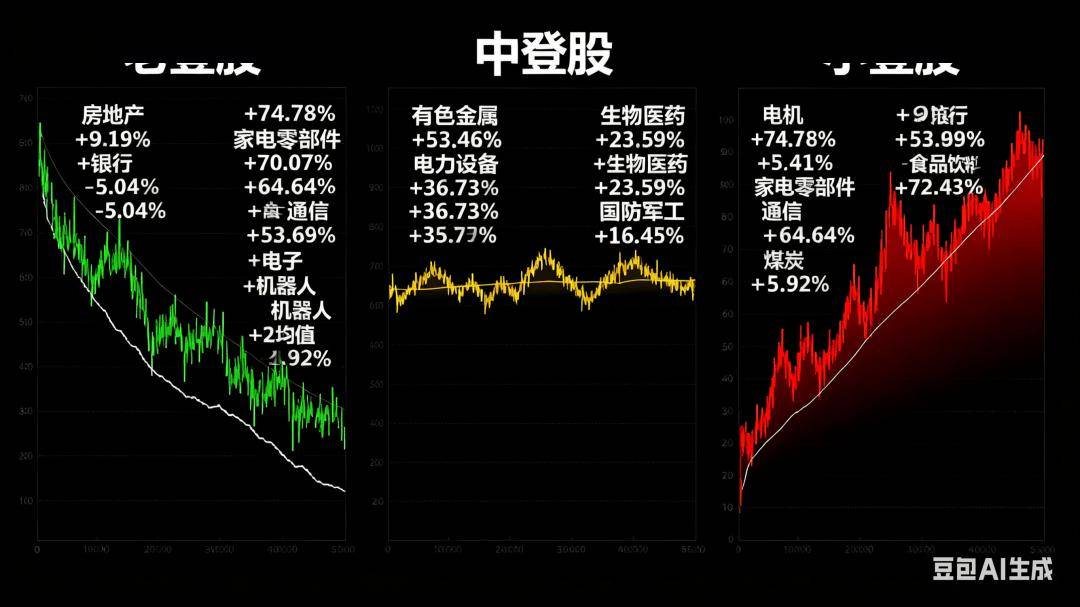
远离“老登”股,拥抱小登股”
Sou Hu Cai Jing· 2025-09-26 05:32
Group 1 - The article discusses the generational divide in A-share investment strategies, represented by "Old Deng," "Middle Deng," and "Young Deng," highlighting their differing investment philosophies and market performances [2][3][4] - "Old Deng" investors, typically over 50, prefer traditional sectors like banking and consumer goods, while "Young Deng" investors, under 30, focus on high-growth sectors such as AI and semiconductors [3][4] - "Middle Deng" investors, aged 30-50, seek a balance between stability and growth, investing in sectors like new energy and military [4][9] Group 2 - Performance data shows that "Young Deng" stocks have significantly outperformed "Old Deng" stocks, with notable gains in sectors like electronics and home appliances, while traditional sectors lag behind [4][8] - "Old Deng" stocks, characterized by low valuations and high dividends, face challenges as traditional industries like liquor see declining revenues and market performance [5][6] - "Young Deng" stocks exhibit high volatility and risk, with some stocks experiencing substantial price increases, but they also carry the potential for significant downturns if market conditions change [6][8] Group 3 - "Middle Deng" stocks are positioned between the two extremes, offering moderate growth potential and stability, but they face criticism for lacking a clear investment focus [9][10] - The article emphasizes the importance of a diversified investment strategy that accommodates the different generational approaches, suggesting a balanced allocation across the three categories [10][11] - The investment landscape is dynamic, and investors are encouraged to adapt their strategies to changing market conditions, recognizing that no single approach guarantees success [14][15][16]
炒股心得:从新手到老鸟的十年经验分享
Sou Hu Cai Jing· 2025-09-26 03:36
Group 1: Market Overview - The stock market is not a cash machine but a reflection of corporate value, with 90% of retail investors failing to profit during bull markets due to incorrect mindsets [3] - In 2025, the Nasdaq index surpassed 20,000 points, and the Shanghai Composite Index returned to 4,000 points, indicating a significant market recovery [3] Group 2: Stock Selection Principles - Emphasis on buying familiar and strong companies, avoiding speculative "concept stocks" [4] - The semiconductor market is valued at $800 billion, with only leading firms like TSMC likely to benefit long-term [4] - Recommended metrics for stock selection include ROE above 15%, stable gross margins, and ample cash flow [4] Group 3: Risk Management and Positioning - Avoid full investment; maintain 20%-30% cash reserves to manage risk effectively [6] - Historical data shows leveraged investors faced an average loss rate of 50% during market volatility [6] - Implement strict stop-loss rules, selling stocks that decline by 10% [6] Group 4: Technical and Fundamental Analysis - Basic analysis should take precedence over technical indicators, with a focus on company financials and industry trends [7] - Long-term holding strategies are favored over frequent trading, as 90% of returns come from 10% of the time invested [7] Group 5: Common Pitfalls and Continuous Learning - Common pitfalls include following unreliable trading strategies and neglecting macroeconomic factors [9] - Continuous learning and humility are essential, with a focus on reputable sources for market information [9]
中航基金|《行动方案》落地进行时:以制度创新守护投资者未来
Xin Lang Ji Jin· 2025-09-26 02:01
Core Viewpoint - The article discusses the launch of the "Beijing Public Fund High-Quality Development Series Activities," emphasizing the importance of aligning the interests of investors and fund companies to enhance investor protection and promote sustainable development in the public fund industry [1] Group 1: Constructing Investor and Fund Company Interest Binding Mechanism - The "Action Plan" introduces a floating management fee mechanism that links fund management fees directly to fund performance, aiming to reform the operational model of fund management [2] - When fund performance is below the benchmark, management fees will automatically decrease, and conversely, they will increase when performance exceeds expectations, promoting a win-win value-sharing concept [2] - The policy emphasizes long-term performance assessments, linking fund manager compensation to three-year investment performance, which is expected to curb short-term speculative behavior [2] Group 2: Optimizing Investor Fund Advisory Service Supply - The traditional fund sales model relies heavily on transaction commission sharing, leading to issues such as excessive marketing during bull markets and a lack of ongoing investor education during bear markets [3] - The "Action Plan" aims to establish regulations for securities fund investment consulting, promoting the transformation of fund sales institutions into advisory service providers [3] - Tools like AI financial assistants are being developed to provide personalized services, helping investors make rational investment decisions and avoid market volatility [3] Group 3: Directly Reducing Fund Investor Holding Costs - The "Action Plan" guides the industry to steadily lower investor costs by regulating subscription fees and sales service fees for public funds [4] - It encourages the reduction of management and custody fees for large-scale index funds and money market funds, benefiting investors directly [4] - These measures aim to strengthen investor protection and reshape the industry ecosystem around long-term value creation, contributing to the high-quality development of the public fund sector [4]