
存储超级周期

Search documents
存储器涨价等因素扰动供应链转趋保守 机构预计第四季晶圆代工产值季增幅收窄
Zheng Quan Shi Bao Wang· 2025-12-12 12:52
Core Insights - The global wafer foundry industry is experiencing growth driven by the AI boom, with the top ten foundries' revenue increasing by 8.1% to nearly $45.1 billion in Q3 2025 [1][2] - However, due to international conditions and rising memory prices, the supply chain is becoming conservative regarding demand for mainstream terminal applications in 2026, leading to a forecasted slowdown in capacity utilization growth in Q4 [1][7] Group 1: Industry Performance - The top ten foundries' revenue growth in Q3 2025 was significantly supported by high-performance computing (HPC) and consumer electronics, particularly from advanced processes of 7nm and below [2] - TSMC's revenue reached approximately $33.1 billion, a 9.3% increase, with a market share rise to 71%, driven by smartphone and HPC demand [2] - Samsung's revenue remained stable at about $3.18 billion, with a market share of 6.8%, while SMIC's revenue grew by 7.8% to $2.38 billion, ranking third [2] Group 2: Future Outlook - The wafer foundry industry is projected to grow by 19% in 2026, with AI-related demand driving advanced process markets to a 28% annual increase [2] - TSMC is advancing to 2nm production and plans to move towards 1nm technology, with advanced packaging capacity expected to grow by 27% next year [3] - The semiconductor industry is focusing on increasing capacity and technological trends, especially with the rise of ASIC chips and domestic chip innovations from companies like Huawei and Cambrian [3] Group 3: Consumer Electronics Impact - Consumer electronics are a significant driver for wafer foundry performance, affecting the rankings of the top ten foundries [4] - Nexchip's revenue increased by 12.7% to $409 million, allowing it to surpass Tower Semiconductor to rank eighth [4] - UMC's revenue grew by 3.8% to nearly $1.98 billion, benefiting from demand for smartphones and PCs, while GlobalFoundries' revenue remained stable at about $1.69 billion [5] Group 4: Q4 Expectations - The growth rate for Q4 is expected to slow due to conservative demand forecasts influenced by international conditions and rising memory prices [7] - SMIC's Q4 revenue guidance indicates a modest growth of 2%, reflecting cautious customer production planning amid price pressures [7] - Hua Hong Group anticipates Q4 sales revenue between $650 million and $660 million, with limited growth expected [8]


半导体设备ETF(561980)午后涨超3%,Omdia:2025年全球半导体营收将站上8000亿美元
Jin Rong Jie· 2025-12-12 06:43
Group 1 - The semiconductor industry is projected to achieve a significant milestone, with global semiconductor revenue expected to reach $216.3 billion in Q3 2025, marking the first time quarterly revenue surpasses $200 billion, and an annual revenue forecast of $800 billion [1] - The strong growth in the semiconductor industry is attributed to the expansion of AI advanced processes and a super cycle in storage, with logic chip revenue expected to grow by 37.1% in 2025 and global storage market growth projected at 39.4% in 2026, surpassing the 27.8% growth expected in 2025 [2] - The semiconductor equipment sector is positioned as a critical upstream component of the industry, with expectations for a significant increase in domestic semiconductor equipment orders and performance in 2025, driven by advancements in AI and the expansion projects of major domestic storage manufacturers [2] Group 2 - The semiconductor equipment ETF (561980) tracks the CSI Semiconductor Industry Index, with over 50% equipment content, and has seen a year-to-date increase of over 55%, outperforming similar indices in the semiconductor sector [2] - The semiconductor equipment segment is recognized as a foundational element of the industry, with a clear long-term growth logic supported by structural strong dynamics [2]



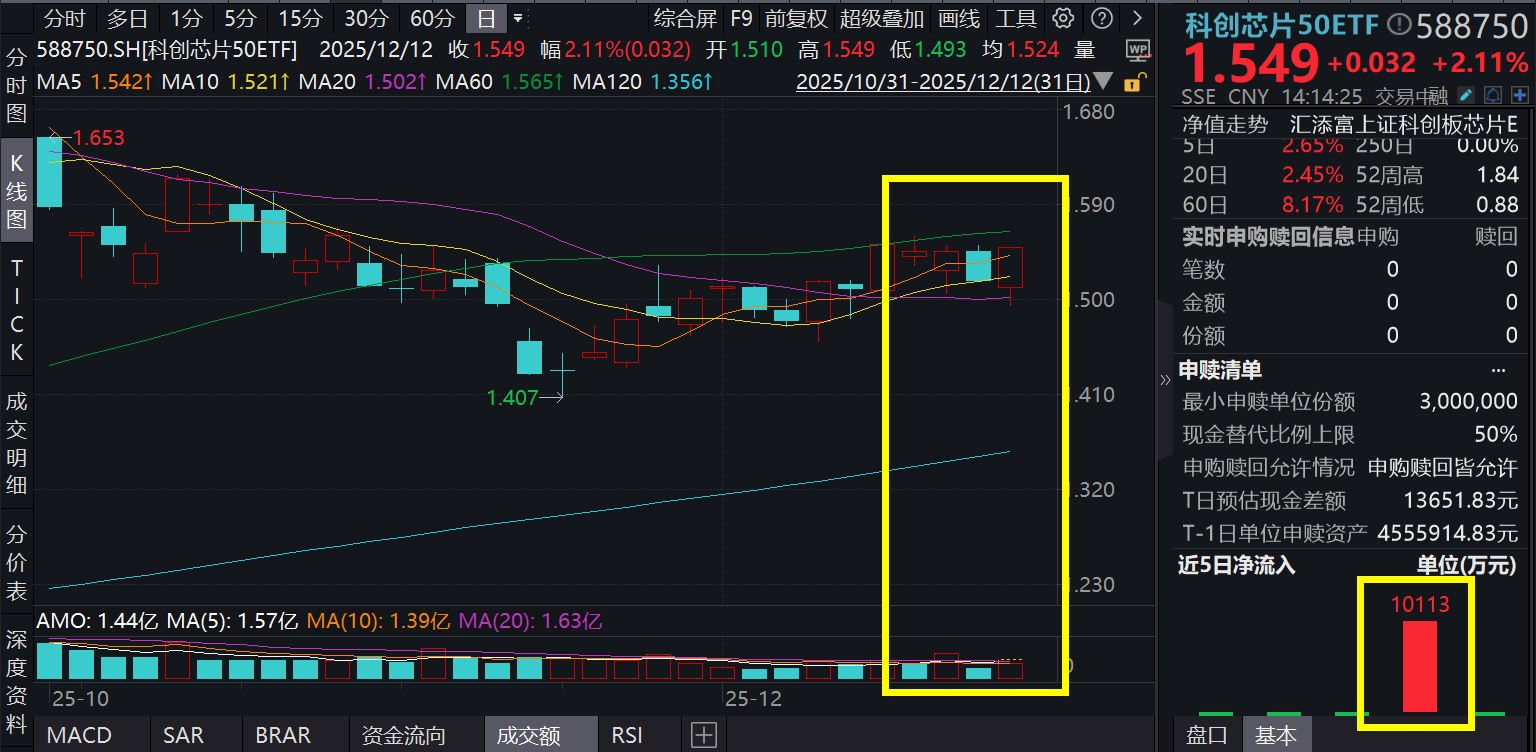
全球“存储荒”愈演愈烈,内存芯片Q4或涨价35%!拓荆科技暴涨超8%,科创芯片50ETF(588750)放量涨超2%,2026年芯片产业怎么看?
Xin Lang Cai Jing· 2025-12-12 06:38
Core Viewpoint - The semiconductor sector is experiencing a short-term surge, with significant gains in stocks such as Tuojing Technology and Chip Origin, while some stocks like Haiguang Information and Cambricon are experiencing pullbacks [2][4]. Group 1: Stock Performance - The majority of the component stocks in the Sci-Tech Chip 50 ETF (588750) have seen price increases, with Tuojing Technology rising over 10% and Chip Origin increasing over 8% [2]. - As of 14:16, the performance of key stocks includes: Haiguang Information down 1.36%, Cambricon down 2.14%, Zhongwei Company up 3.98%, and Zhongxin International up 2.31% [3]. Group 2: Market Trends and Demand - The AI industry's rapid development is driving significant demand for chips, with UBS predicting a continued shortage in DRAM supply until Q1 2027, with a projected 20.7% increase in DDR memory demand [4]. - The NAND flash shortage is expected to persist until Q3 2026, leading to the most intense price increase cycle in nearly 30 years, with DDR contract prices expected to rise by 35% in Q4 this year [4]. Group 3: Investment Opportunities - Huatai Securities highlights three investment opportunities in the semiconductor market for 2026: expansion of advanced process logic related to AI, a storage supercycle, and increased domestic production rates in the Chinese market [5]. - The Sci-Tech Chip sector is positioned to benefit from both AI demand and domestic substitution trends, suggesting a focus on index-based investment strategies to navigate the complexities of the industry [6]. Group 4: Index Characteristics - The Sci-Tech Chip 50 ETF (588750) focuses on the core segments of the semiconductor industry, with a high concentration of 96% in upstream and midstream sectors, indicating stronger growth potential compared to other indices [7]. - The index is adjusted quarterly, allowing it to more effectively reflect trends in the semiconductor supply chain [8]. Group 5: Financial Performance - The net profit growth rate for the Sci-Tech Chip index is projected to reach 94% for the first three quarters of 2025, with an expected annual growth rate of 100%, significantly outperforming peers [10]. - The index has shown a maximum increase of 187.69% since September, indicating strong upward elasticity compared to other industry indices [11].


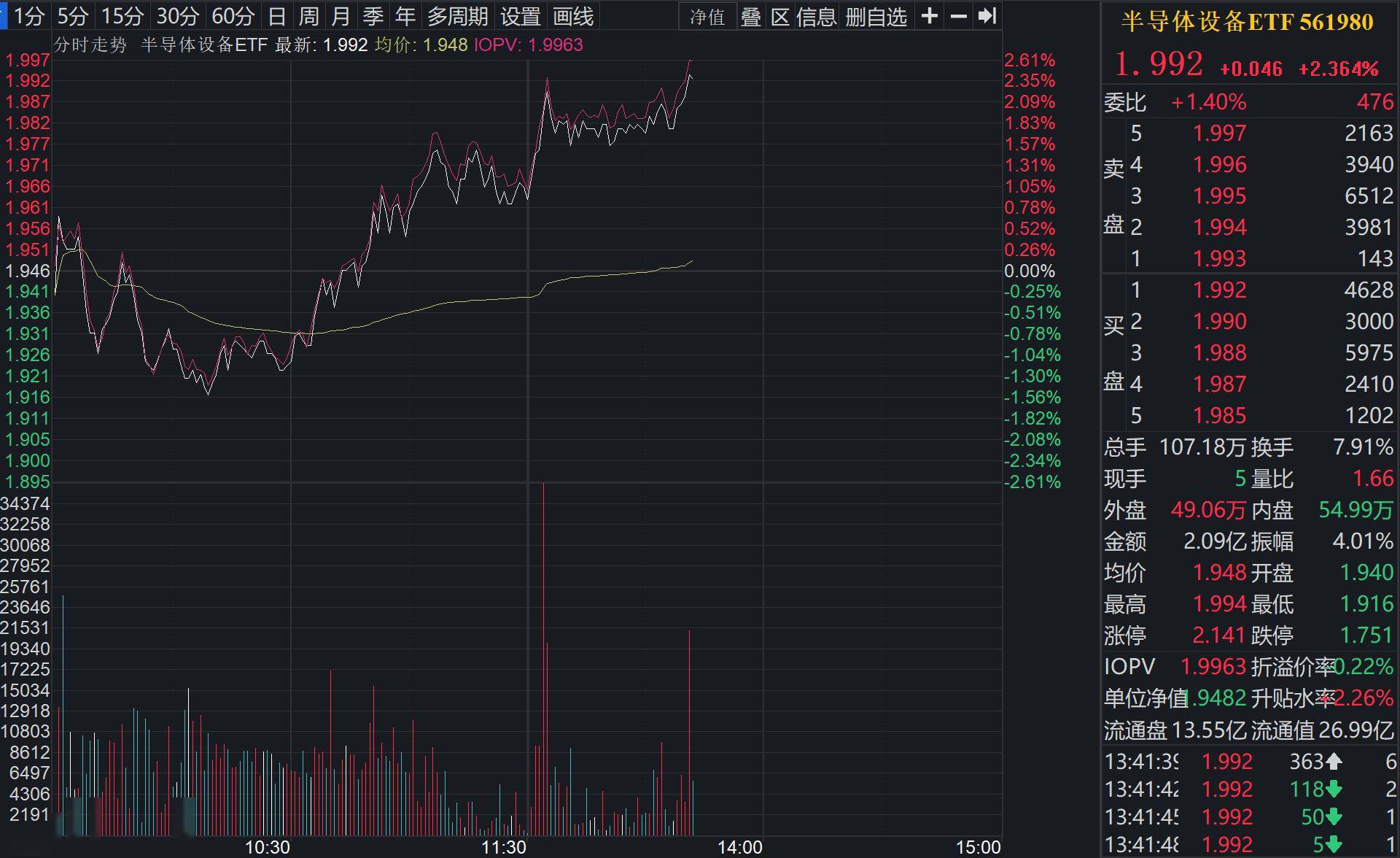
先进逻辑扩产、存储超级周期与国产替代共振,半导体设备ETF(561980)午后涨超2.3%
Sou Hu Cai Jing· 2025-12-12 06:00
Core Insights - The semiconductor equipment industry is experiencing a rebound, with significant increases in stock prices for key companies [1] - Global semiconductor market is projected to grow significantly, reaching approximately $975.46 billion by 2026, driven by advancements in AI and storage technologies [3][4][5] Group 1: Market Growth Projections - According to WSTS, the global semiconductor market is expected to grow by 22.5% in 2025 and accelerate to 26.3% growth in 2026 [3] - The logic semiconductor segment, particularly GPUs, is anticipated to see a revenue increase of 37.1% in 2025, becoming a major growth driver [4] - The global storage market is projected to grow by 39.4% in 2026, surpassing the 27.8% growth rate of 2025 [5] Group 2: Investment Opportunities - Key investment themes identified include AI-related advanced process logic expansion, a storage supercycle, and increasing domestic production rates in the Chinese market [3][6] - The Chinese semiconductor equipment market is expected to grow by 2% in 2026, reaching $51 billion, with a domestic production rate projected to rise to 29% [7] - The semiconductor equipment ETF has shown strong performance, with a year-to-date increase of 55.56% and a maximum increase of over 80% [8]
手机电脑被迫涨价,小米多次预警、联想囤货,业内:未来1年内难降价
2 1 Shi Ji Jing Ji Bao Dao· 2025-12-09 16:40
Core Insights - The electronic consumer industry is facing a significant price increase driven by a "storage super cycle" triggered by the AI boom, leading to rising costs for PC and smartphone manufacturers [2][5][12] - The price adjustments are not straightforward; manufacturers are employing various strategies to manage consumer perception of price increases [4][5] Group 1: Price Increases and Market Dynamics - The PC industry is experiencing the most immediate impact, with expected price increases of 10% to 20% for laptops and commercial PCs due to soaring DRAM and SSD costs [5] - In the smartphone market, manufacturers are adopting "stealth price hikes" by reducing initial discounts or promotional offers rather than raising official prices [5][10] - The surge in storage prices is attributed to the high demand from AI data centers, which has led to a significant shortage in DRAM supply [7][12] Group 2: Supply Chain and Inventory Strategies - Companies like Xiaomi are warning about the unprecedented BOM cost increases, indicating a high reliance on storage components [9] - Lenovo, on the other hand, has built up inventory levels by 50% above normal to mitigate the impact of rising costs, leveraging long-term supply agreements to maintain price stability [9][12] - Smaller brands with limited inventory and weaker bargaining power are at risk of being forced to raise prices or delay new product launches [10] Group 3: Long-term Industry Trends - The current price surge is fundamentally different from previous cycles, as it is driven by structural shortages due to AI demand rather than traditional consumer electronics sales [7][12] - The shift in production capacity towards high-margin AI-related products is expected to continue, with major manufacturers prioritizing advanced memory types over consumer-grade products [7][12] - Lenovo's acquisition of Infinidat is a strategic move to enhance its control over high-end storage solutions, reflecting a broader trend of viewing storage as a strategic asset rather than just a cost component [12][13]


手机电脑被迫涨价,小米多次预警、联想囤货,业内:未来1年内难降价
21世纪经济报道· 2025-12-09 16:32
Core Viewpoint - The article highlights a significant price increase in the electronic consumer industry driven by a "storage super cycle" caused by the AI boom, leading to a severe cost challenge for downstream PC and smartphone manufacturers [1][5]. Price Increase Dynamics - The price changes for electronic products are often subtle, reflected in adjustments to discounts, specifications, and release schedules rather than direct price hikes [3]. - The PC industry is the first to feel the impact, with expected price increases of 10%-20% for laptops and commercial PCs due to rising costs of DRAM and SSDs [3]. - In the smartphone market, manufacturers are adopting "stealth price increases" by reducing initial discounts or gifts while keeping official prices stable to mitigate BOM cost increases [3]. Supply Chain and Production Capacity - The core reason for the price surge is the demand from AI data centers and servers, leading to a significant increase in global DRAM prices and a shortage in supply [5]. - Unlike traditional cycles driven by mobile and PC sales, this price increase is structurally driven by AI-related demand, causing a "capacity squeeze" where manufacturers prioritize high-margin AI products over consumer-grade memory [7]. Manufacturer Strategies - Companies are at a crossroads in how to respond to upstream cost pressures. Xiaomi has warned about the significant BOM cost increases, indicating a struggle to absorb these costs [10]. - Lenovo, on the other hand, has a robust inventory strategy, increasing key component stock levels by 50% and utilizing long-term supply agreements to ensure adequate memory supply [11]. - The ability to manage inventory effectively is seen as a critical factor for manufacturers to navigate price volatility, with larger firms like Lenovo having a competitive advantage [11]. Future Outlook - The current price surge is expected to persist for 6-12 months, with high storage prices likely to continue until 2026 due to structural imbalances caused by AI demand [13]. - As major international players exit mature processes like DDR4, domestic manufacturers are stepping in to fill the gap, indicating a shift in the supply landscape [13]. - Lenovo's acquisition of Infinidat is a strategic move to enhance its control over high-end storage technology, reflecting a broader trend of viewing storage as a strategic asset rather than just a cost component [14].


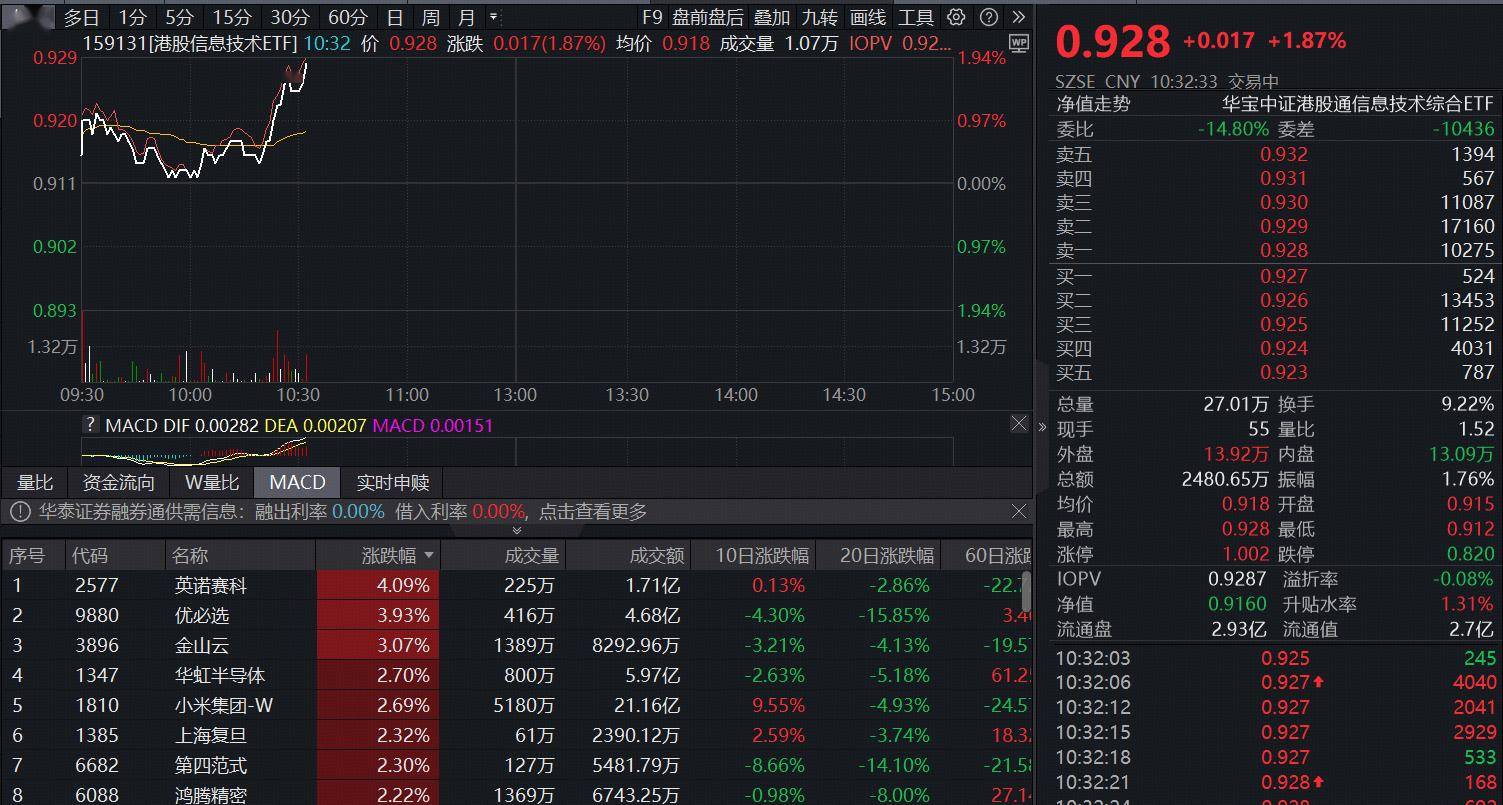
国产AI芯片销售额猛增至160亿美元!“港股芯片”触底反弹?159131直线上涨1.87%
Sou Hu Cai Jing· 2025-12-04 02:47
Group 1 - The Hong Kong stock market's semiconductor industry chain showed resilience, with the "A-share chip" index slightly up by 0.30% and the "Hong Kong chip" index up by 1.18% as of the morning of December 4 [1] - The first Hong Kong ETF focused on the semiconductor industry chain, the Hong Kong Information Technology ETF (159131), saw a price increase of 1.87% with a trading volume exceeding 24 million yuan [1] - The semiconductor, consumer electronics, and computer software sectors were collectively active, with notable gains from companies such as InnoCare (up over 4%), UBTECH, and Kingsoft (up over 3%) [3] Group 2 - According to SEMI, global semiconductor equipment sales are projected to grow by 11% year-on-year to reach $33.66 billion in Q3 2025, driven by strong investments in advanced technology, particularly in AI computing [3] - The demand for domestic AI chips is expected to surge due to continuous computational power needs and the exit of NVIDIA from the Chinese market, leading to a significant increase in market share for domestic AI chip manufacturers [3] - Bernstein's report indicates that domestic AI chip sales are expected to rise from $6 billion last year to $16 billion, with market share increasing from 29% to 42%, representing a growth rate of 112%, nearly three times that of foreign chips [3] Group 3 - CITIC Securities states that the memory sector is in the early stages of a super cycle, with high visibility of shortages expected in the next six months, and contract prices likely to increase or maintain their rise until the end of Q1 2026 [4] - The report emphasizes that companies closely aligned with memory manufacturers will benefit more during this upcycle, with recommendations for niche memory firms and companies involved in enterprise-level storage and SSD/memory chip design [4] - The Hong Kong Information Technology ETF (159131) is structured with a 70% hardware and 30% software composition, focusing on 42 Hong Kong hard tech companies, with significant weights in companies like SMIC (20.27%) and Xiaomi (9.11%) [4]
当AI数据中心不断抛来存储超大单 美光(MU.US)果断砍掉消费端业务
智通财经网· 2025-12-04 01:41
Core Viewpoint - Micron Technology (MU.US) plans to cease sales of storage products to the PC/DIY consumer market to focus on providing sufficient storage products for high-performance AI chip-driven computing clusters, highlighting a shift in the storage industry from PC/smartphone growth cycles to an "AI storage supercycle" led by large AI data centers [1][2] Group 1: Company Strategy - Micron's decision to exit the Crucial consumer business is a significant capacity restructuring aimed at enhancing supply and support for large strategic customers in faster-growing segments [2][7] - The Crucial consumer business includes retail storage products such as DRAM modules and SSDs, which are sold to individual consumers and DIY players [2][3] Group 2: Market Dynamics - The demand for DRAM and NAND products has surged due to the exponential expansion of AI data center infrastructure, driven by commitments from major tech companies and government agencies to invest hundreds of billions in AI data centers [1][5] - Micron is positioned as a direct beneficiary in the "AI high-performance memory + storage stack," focusing on HBM, server DRAM (including DDR5), and high-end data center SSDs [4][6] Group 3: Competitive Landscape - Micron competes with major players like Samsung and SK Hynix in the high-bandwidth memory (HBM) market, with a notable advantage as the only U.S.-based supplier amid a trend of U.S. companies shifting to domestic suppliers [6] - The demand for enterprise-level SSDs and high-performance DDR5 memory is expected to continue growing, with Micron being a key supplier for AMD's AI GPU clusters [6][8] Group 4: Financial Outlook - Micron's cloud computing memory business saw a remarkable year-on-year growth of 213% in the last quarter, indicating strong market performance [7] - Analysts predict that memory and storage prices will continue to rise, with Micron's upcoming quarterly results expected to exceed market expectations [7][9] - The current storage supercycle is anticipated to last until at least mid-2027, with significant price and profit growth expected for major storage companies [9]

存储超级周期之下市场疯抢HDD 花旗押注“高容量存储双雄”超级牛市
智通财经网· 2025-12-03 04:20
Core Viewpoint - The storage sector, particularly HDD leaders Seagate and Western Digital, is experiencing unprecedented growth driven by a "storage supercycle" fueled by AI data center demands and strong product pricing dynamics [1][2][4]. Group 1: Stock Performance - Seagate and Western Digital have seen stock price increases of 215% and 256% respectively year-to-date, reflecting strong market performance [1]. - SanDisk, a spinoff from Western Digital, has experienced an astonishing 500% increase in stock price this year [1]. Group 2: Market Dynamics - The demand for storage products is surging due to the rapid expansion of AI data centers, which require various storage solutions including HBM, SSD, and HDD [2][3]. - The HDD industry has maintained supply discipline, which, combined with a recovery in NAND cycles and long-term contracts with cloud providers, has led to increased visibility in orders and pricing for Seagate and Western Digital [2]. Group 3: Future Outlook - Analysts predict that the current storage supercycle will last at least until mid-2027, with expectations of continued price increases and strong demand for high-performance storage products [4][7]. - Citigroup has raised the target price for Seagate from $275 to $320 and for Western Digital from $180 to $200, indicating confidence in their continued growth [6]. Group 4: Competitive Landscape - Major players in the storage chip market, including SK Hynix, Samsung, and Micron, are also benefiting from the AI boom, with significant price increases expected for traditional DRAM and NAND products [6][7]. - The competitive advantage of SK Hynix in HBM storage systems positions it favorably among major AI clients like NVIDIA and Google [6].


小米集团-W(1810.HK)Q3业绩点评:汽车实现单季度盈利 手机成本端短期或承压
Ge Long Hui· 2025-12-02 19:55
Core Viewpoint - Xiaomi reported Q3 2025 performance with total revenue of 113.1 billion yuan (+0.5% vs consensus), year-on-year growth of 22%; adjusted net profit reached 11.3 billion yuan (+12.6% vs consensus of 10 billion yuan), year-on-year growth of 81%, corresponding to a net profit margin of 10.0% [1] Group 1: Smartphone Business - Smartphone shipments in Q3 were 43.3 million units, a year-on-year increase of 0.5%, with a market share of 13.6%; market share in China was 16.7% [2] - Average Selling Price (ASP) was 1,062 yuan, down 4% year-on-year; smartphone revenue was 46 billion yuan (+0.3% vs consensus), year-on-year decline of 3.1% [2] - The increase in storage prices has led to a decline in gross margin, with Q3 smartphone gross margin at 11.1%; Q4 smartphone gross margin is expected to be 10% [2] Group 2: IoT and Internet Business - In Q3, IoT revenue was 27.6 billion yuan (-1.9% vs consensus), year-on-year growth of 5.5%; gross margin improved by 1.4 percentage points to 23.9% [3] - Major appliances faced pressure with a year-on-year revenue decline of 15% due to competition and subsidy reductions; attention is advised on overseas expansion and market share changes [3] - Internet business revenue for Q3 was 9.4 billion yuan (+2.2% vs consensus), year-on-year growth of 10.8% [3] Group 3: Automotive Business - The automotive segment achieved profitability for the first time, with Q3 deliveries of 108,800 units and an ASP of 260,000 yuan; gross margin decreased by 0.9 percentage points to 25.5% [3] - November deliveries exceeded 48,000 units, with expectations of nearing full production by year-end; total annual deliveries are projected to exceed 400,000 units [3] - Q3 automotive revenue was 29 billion yuan, with other related businesses contributing 700 million yuan [3] Group 4: Financial Forecast and Valuation - Projected revenues for Xiaomi Group in 2025 and 2026 are 471.7 billion yuan and 545 billion yuan (year-on-year growth of 29% and 16% respectively); adjusted net profits are forecasted at 43.3 billion yuan and 44.9 billion yuan (year-on-year growth of 59% and 4%) [3] - The company is assigned a 20x PE for its main business in 2026 and a 2.5x PS for the automotive segment, with a target price of 51.1 HKD and a "buy" rating [3]