
数字经济

Search documents
拒绝“漫灌”,“一对一”护航求职路
Xin Lang Cai Jing· 2026-01-07 19:17
Group 1 - The employment service in Xuzhou's Quanshan District focuses on precision rather than a broad approach, aiming to deliver targeted support to university graduates and job seekers [1] - In the past year, Quanshan District conducted 144 recruitment events, involving nearly 800 employers and offering over 12,000 quality job positions [1] - The district plans to introduce upgraded employment packages this year, including skill night schools and tiered recruitment [1] Group 2 - Quanshan District is home to several higher education institutions, providing a steady stream of talent for local industries [2] - The area has seen significant growth in high-energy industrial platforms, particularly in the digital economy, with nearly 5,000 enterprises contributing to talent demand [2] - Training programs focusing on emerging fields like digital economy and low-altitude economy have trained over 1,000 individuals last year [2] Group 3 - The district offers a comprehensive "1151" service package to assist university students in enhancing their employability, including policy briefings and job recommendations [3] - By 2025, Quanshan plans to distribute various subsidies totaling 26.17 million yuan to 1,586 university graduates, accounting for nearly 40% of the city's total subsidies [3] - The district has developed a talent community equipped with amenities and furnished apartments to facilitate the relocation of young professionals [3] Group 4 - A newly established AI video production company in Quanshan has rapidly expanded its team to 30 members and plans to hire 300 more employees this year due to a supportive industrial ecosystem [4]
竞速未来产业 各地如何抢占新增长极
Xin Lang Cai Jing· 2026-01-07 16:09
Group 1 - The core viewpoint of the articles emphasizes the strategic importance of future industries in the "14th Five-Year Plan" across various provinces, highlighting the focus on emerging sectors such as artificial intelligence, low-altitude economy, and commercial aerospace as key growth areas for regional economic development [1][2][6] - Provinces are leveraging their unique resources and industrial foundations to create differentiated development paths, with examples including Guangdong's focus on "AI + robotics" and Hainan's integration of agriculture, deep-sea, and aerospace [1][3] - The integration of technology and industry is a common theme, with provinces like Beijing aiming to cultivate a leading AI industry ecosystem and Jiangsu focusing on deepening integration within the Yangtze River Delta's aerospace industry cluster [2][4] Group 2 - The articles highlight the importance of regional collaboration, such as the Beijing-Tianjin-Hebei model, which optimizes resource allocation through a cooperative framework, and the Guangdong-Hong Kong-Macau Greater Bay Area, which fosters differentiated policy matrices to support industrial development [5][6] - The need for systemic innovation in mechanisms to support future industries is emphasized, including talent cultivation, technological breakthroughs, and ecosystem development, as well as the importance of capital support from various sources to drive growth in these sectors [7][8] - The articles suggest that achieving successful outcomes in future industries requires not only market-driven initiatives but also precise policy support to facilitate the transformation of research results into marketable products [8]
韩国总统李在明访华行程结束
Bei Jing Shang Bao· 2026-01-07 15:26
Group 1 - The core message of the news is the emphasis on restoring and enhancing the cooperative relationship between China and South Korea, as articulated by South Korean President Lee Jae-myung during his visit to China [1][2]. - The visit marks the first by a South Korean president in over eight years, highlighting the significance of this diplomatic engagement [2][3]. - The two countries signed 15 cooperation documents in various fields, including technology innovation and trade, indicating a commitment to deepen bilateral ties [3]. Group 2 - Approximately 300 representatives from industries such as smart manufacturing, new materials, artificial intelligence, healthcare, and cultural creativity attended the forum, showcasing the breadth of collaboration opportunities [2]. - China has become South Korea's largest trading partner, with projected trade volume for 2024 estimated at $328.08 billion, reflecting a year-on-year increase of 5.6% [3]. - Despite the positive outlook, there has been a slight decline in trade for the first eight months of 2025, with a reported trade volume of $212.26 billion, down 0.1% year-on-year, indicating a shift towards competition in certain sectors [3].


抖音第二总部落子南山,深圳市2026首批重点项目开工启幕
Sou Hu Cai Jing· 2026-01-07 15:24
Group 1 - The Shenzhen Municipal Government held a project construction promotion meeting on January 5, 2026, launching 222 key projects with a total investment of 157.34 billion yuan, laying a solid foundation for the city's 14th Five-Year Plan [1] - Nanshan District leads with 30 projects and a total investment of 30.99 billion yuan, including the notable "Pan-video Technology R&D Headquarters" project, which is positioned as Douyin's second headquarters, indicating Douyin Group's increased commitment to Shenzhen [1][3] - The new Douyin headquarters will focus on supporting the R&D of core products like Douyin and Toutiao, as well as expanding new business areas such as payment services, while also establishing an AI lab and SaaS platform service center [3] Group 2 - Douyin's ongoing expansion reflects the vibrant "headquarters economy" in Shenzhen, with other major companies like Xiaomi, Walmart China, and Yum China also increasing their investments in the city [5] - Shenzhen has nearly 400 recognized municipal headquarters enterprises, with the Houhai Central District gathering many key companies, forming a distinctive "Shenzhen Headquarters Economy Corridor" [5] - The headquarters economy is a core competitive arena for cities, and Shenzhen aims to cultivate this sector as part of its 14th Five-Year Plan, leveraging its geographical advantages and strong economic foundation to attract global and industry-leading companies [7]

未来产业竞速,各地如何抢占新增长极
Bei Jing Shang Bao· 2026-01-07 14:59
近期,多个省份陆续公布地方版"十五五"规划建议,勾勒新质生产力培育、产业创新图景。当人工智能、低空经济、商业航天渗透到千家万户,未来产业已 成为各省"十五五"规划的"必争赛道"。未来产业作为现代化产业体系的重要组成,以其前瞻性、引领性、颠覆性等特点,成为培育新质生产力的重要抓手。 从广东的"AI+机器人"、浙江的低空经济到海南"种业+深海+航天"等特色布局,各地立足资源禀赋与产业基础,走出差异化发展路径,推动未来产业从概念 落地为区域经济增长极。 前瞻布局发展未来产业,四川则聚焦第六代移动通信、量子科技、生物制造、氢能和核聚变能、深空深地、脑机接口、具身智能、前沿半导体等领域,提出 加快突破前沿关键核心技术,建设一批未来产业孵化器和先导区。推动新技术新产品新场景应用示范,完善产业生态,建设新场景推广应用中心,建立未来 产业投入增长和风险分担机制,加快新兴产业规模化发展。促进中小企业专精特新发展,培育瞪羚企业、独角兽企业。 布局策略:从选对方向到跑好赛道 如果说赛道选择是"选对方向",那么系统的布局策略则是"跑好赛道"的关键。部分省、直辖市将建设国家实验室、大科学装置等顶级平台作为关键路径。例 如北京规划着力建 ...

浙江“经济第一区” ,瞄准“5000亿”
Zhong Guo Xin Wen Wang· 2026-01-07 14:13
Core Viewpoint - The article discusses the economic ambitions of Yuhang District in Hangzhou, Zhejiang Province, aiming to become the first county-level area in Zhejiang to achieve a GDP exceeding 500 billion yuan during the 14th Five-Year Plan period [1][2]. Group 1: Economic Goals - Yuhang District has set a target to surpass a GDP of 500 billion yuan, which is a significant milestone for county-level economies in China [1]. - Currently, Yuhang's GDP is projected to reach 335.57 billion yuan in 2024, with a strong performance in the first three quarters of 2022, achieving 271.32 billion yuan [1]. - Achieving the 500 billion yuan target by 2030 would represent a doubling of GDP from 250.22 billion yuan in 2021, indicating a robust growth trajectory [2]. Group 2: Advantages and Strategies - Yuhang has established a strong technological innovation advantage, particularly in artificial intelligence, with notable companies like Alibaba leading the charge [5]. - The district has seen a significant influx of talent, with over 59,000 university graduates under 35 years old expected to be recruited by 2025, contributing to a total talent pool growth from 310,000 to 500,000 during the 14th Five-Year Plan [6]. - Yuhang is enhancing its urban development environment, having achieved national recognition for its business environment and urban planning initiatives, which include the construction of a modern transportation network and educational resources [8].

专访香港贸发局:透视中亚贸易激增逻辑,搜罗丝路风口新商机
Nan Fang Du Shi Bao· 2026-01-07 14:11
Core Insights - The Central Asian countries are strategically located as a land hub connecting East Asia and Europe, playing a crucial role in the Belt and Road Initiative. Trade between China and these countries has rapidly increased, with China becoming the largest trading partner and main source of investment in the region [2][5]. Trade and Investment - The total trade volume between China and Central Asian countries has grown from 50.2 billion USD in 2013 to approximately 94.8 billion USD in 2024, marking an increase of nearly 90% [5]. - Hong Kong's trade with Central Asia has also seen significant growth, with total trade rising from 19.4 million USD in 2013 to 66.9 million USD in 2024, a 3.4-fold increase [5][7]. Infrastructure Development - The China-Kyrgyzstan-Uzbekistan railway is expected to be completed by 2031, which will shorten the distance from China to Europe by 900 kilometers and save 7 to 10 days in shipping time [5]. - In 2024, nearly 12,000 Central Asia trains are expected to operate, sending 880,000 TEUs of goods, achieving double-digit growth year-on-year [5]. E-commerce and Digital Economy - The Guangdong-Hong Kong-Macao Greater Bay Area is positioned to enhance cross-border e-commerce and smart logistics with Central Asia, leveraging Hong Kong's air transport network [9][12]. - Kazakhstan's retail e-commerce transaction volume is projected to reach 6 billion USD in 2024, a 29% increase year-on-year, accounting for 14.1% of the national retail trade total [9][11]. Financial Technology and Digital Infrastructure - Chinese companies, particularly from the Greater Bay Area, are expected to play a key role in enhancing digital infrastructure in Central Asia, including payment systems and financial inclusivity [14][15]. - Central Asian countries are focusing on digital economy as a national strategy, but they require improvements in infrastructure, digital talent, and investment to advance [15][16]. Market Opportunities and Challenges - Approximately 90% of surveyed mainland enterprises plan to expand into international markets, with 95.2% focusing on Belt and Road markets, including Central Asia [19][20]. - Challenges for enterprises expanding into Central Asia include trade policies, import tariffs, brand recognition, and consumer behavior [20][21]. Country-Specific Insights - Kazakhstan and Uzbekistan are highlighted as having significant cooperation potential due to their resource wealth and relatively open market policies [21][23]. - Kazakhstan has been a pioneer in market reforms since the 2000s, while Uzbekistan has initiated large-scale reforms since late 2016, creating favorable business environments [21][23].

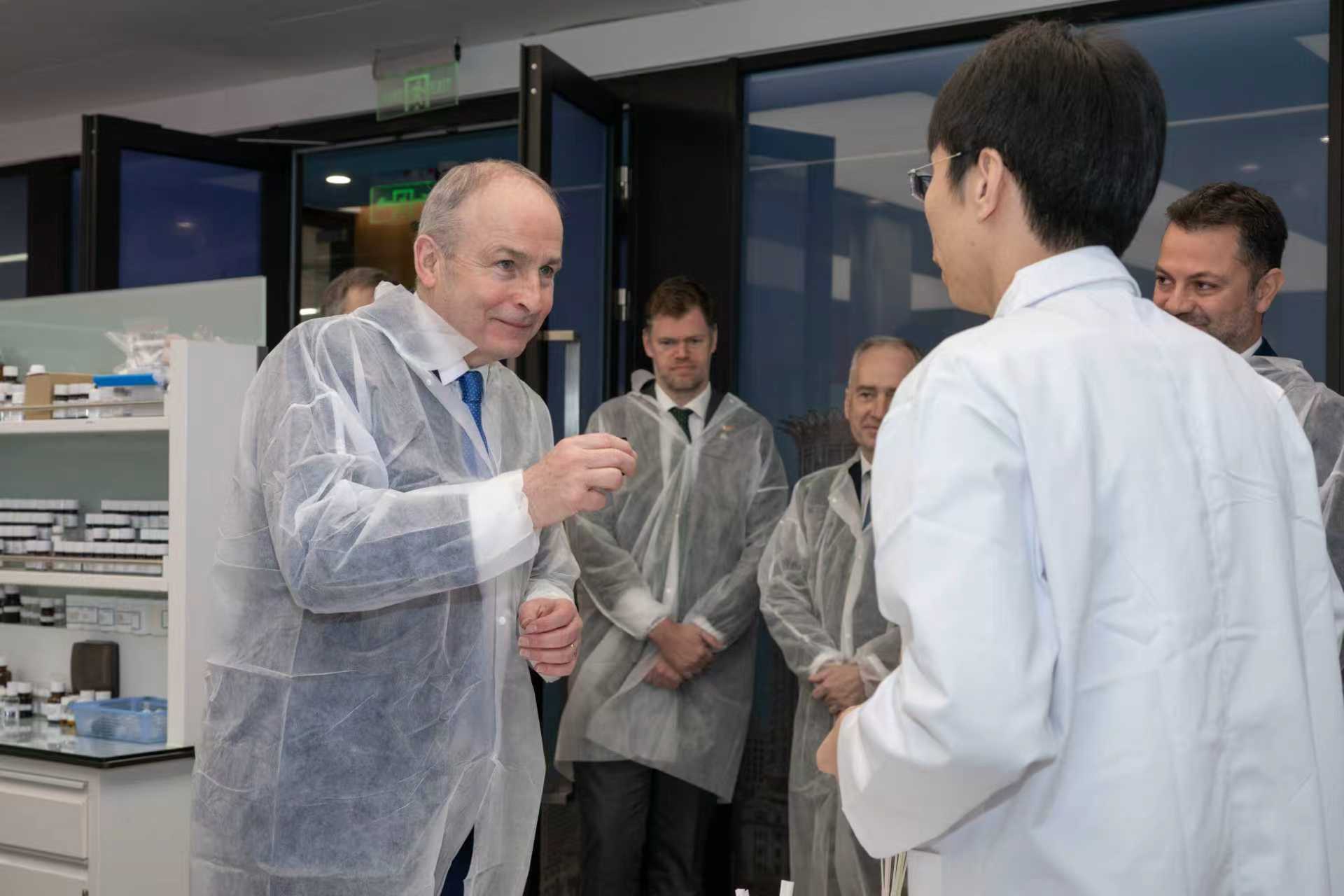
爱尔兰总理时隔14年访华,“探路”新时代中欧关系
2 1 Shi Ji Jing Ji Bao Dao· 2026-01-07 12:24
Group 1: Overview of the Visit - Irish Prime Minister Martin's visit to China from January 4 to 8 marks a significant moment in Sino-European relations, being the first visit by a European leader to China in 2023 and the first by an Irish Prime Minister in 14 years [2][3] - The visit aims to deepen bilateral cooperation between China and Ireland, particularly in trade and investment, while also serving as a demonstration of stabilizing Sino-European relations during a period of structural adjustment [2][5] Group 2: Economic Cooperation - China and Ireland are looking to expand cooperation in various sectors, including aircraft leasing, insurance, healthcare, green energy, digital economy, artificial intelligence, and life sciences [2][3] - The bilateral trade volume between China and Ireland has reached approximately €46 billion, with Ireland maintaining a trade surplus with China for several years [6][7] - In 2023, Chinese direct investment in Ireland amounted to $380 million, with a total stock of direct investment reaching $2.04 billion by the end of the year [7] Group 3: Education and Cultural Exchange - Education is a key area of focus, with both countries emphasizing the importance of higher education and continuing education as pillars of cooperation [8][9] - As of July 2025, there are expected to be 110 cooperative educational institutions and projects between China and Ireland, with over 12,000 students enrolled [9] - The signing of new cooperative education projects between Irish and Chinese universities highlights the ongoing commitment to educational collaboration [8][9]
开年新变化!公募基金仓位“高低切换”,这一赛道爆发在即?
券商中国· 2026-01-07 11:04
Core Viewpoint - The digital economy is expected to become a key focus for funds in the new year, reflecting a shift in investment strategies towards AI and software applications after a period of strong performance in hard technology sectors [1][2]. Group 1: Digital Economy Performance - The digital economy sector has shown remarkable performance at the start of the new year, leading among various thematic funds with significant elasticity [3]. - Notable funds such as the Shenwan Lingxin Digital Industry Fund and Huayin Health Life Fund have reported substantial net value increases, with the latter achieving daily gains of 11.8% and 6.77% on January 5 and 6, respectively [3]. - QDII products have also benefited from the strong performance of the digital economy sector, with the China Europe Hong Kong Digital Economy Fund ranking high among public QDII funds [3]. Group 2: Fund Manager Insights - Fund managers believe that the strong performance of the digital economy sector indicates a critical phase in the tech stock market, transitioning from hard technology to software's role in productivity enhancement [4][5]. - The shift in fund allocation strategies reflects a "high-low switch" approach, with a focus on reallocating from overexposed hard technology sectors to the more promising digital economy [5][6]. - The digital economy sector is seen as an ideal target for fund switching due to its relatively lower previous performance compared to hard technology sectors [6]. Group 3: Future Expectations - Fund managers anticipate that the digital economy sector is on the verge of significant earnings releases, as AI applications transition from infrastructure development to commercial realization [7][8]. - The balance between domestic and overseas computing power, as well as between computing and application within the AI field, is expected to enhance the sector's growth potential in 2026 [8].

开年新变化!公募基金仓位“先硬后软”,这一赛道爆发在即?
Xin Lang Cai Jing· 2026-01-07 11:01
Core Insights - The digital economy is becoming a focal point for funds as they adjust their strategies for the new year, indicating a shift in investment focus towards AI applications and away from traditional hard technology sectors [1][3]. Group 1: Digital Economy Performance - The digital economy sector has shown strong performance at the beginning of the year, with significant gains in various thematic funds, highlighting its explosive potential [1]. - Specific funds like Huayin Health Life and others have reported substantial single-day net value increases, indicating a strong market response to digital economy investments [1]. - QDII products have also benefited from the robust performance of the digital economy sector, with notable net value elasticity [1]. Group 2: Fund Holdings and Market Trends - Major funds are heavily invested in digital economy stocks, with significant holdings in companies like Jingtai Holdings and Bilibili, reflecting strong market confidence [2]. - The recent market rally, termed "开门红," has been building since late December 2025, confirming a trend towards digital economy investments [2]. - Analysts suggest that the strong performance of the digital economy sector indicates a critical phase in the tech stock narrative, shifting focus from hard assets to software's role in productivity [2]. Group 3: Fund Strategy Adjustments - Public funds are employing a strategy of "high-low switching" in their asset allocation, moving from overexposed hard technology sectors to the more promising digital economy [3]. - Data shows that as of Q3 2025, the highest allocated sectors for public funds were electronics, pharmaceuticals, power equipment, and communications, with electronics being the most heavily weighted [3]. - The shift in strategy is seen as a response to profit-taking in hard technology, with digital economy sectors viewed as ideal for new investments [3]. Group 4: Future Outlook - Fund managers are optimistic about the upcoming performance of the digital economy sector, anticipating a transition from infrastructure investment to commercial realization of AI applications [6]. - The consensus among fund managers is that the digital economy is on the verge of significant earnings releases, as AI applications begin to materialize [6]. - Predictions indicate that the technology sector will maintain a balanced growth trajectory, with an emphasis on both domestic and international AI capabilities [7].