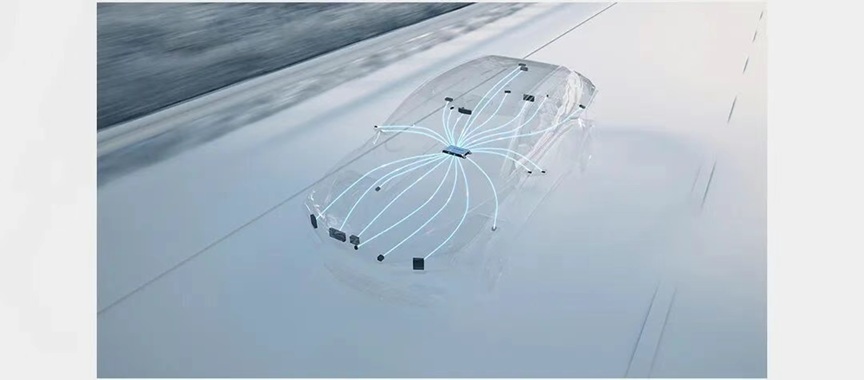
自动驾驶

Search documents
从三组数据看中国EV发展潜能
Huan Qiu Shi Bao· 2026-01-08 06:02
Core Insights - BYD has surpassed Tesla to become the world's largest electric vehicle manufacturer, selling 2.26 million pure electric vehicles in 2025 compared to Tesla's 1.64 million [1] - This shift signifies a symbolic moment for the rise of Chinese automotive companies, marking a transition from following to leading in the electric vehicle sector [1] Group 1: R&D Investment - BYD's revenue for the first three quarters of the year reached 566.27 billion yuan, with R&D expenses amounting to 43.75 billion yuan, representing 7.7% of its revenue [1] - BYD's R&D investment exceeds Tesla's by 10.9 billion yuan, with cumulative R&D spending surpassing 220 billion yuan [1] - The company employs over 120,000 R&D personnel across 11 research institutes, with more than 50,000 recent graduates hired in the last three years, of which over 70% hold master's or doctoral degrees [2] Group 2: Competitive Landscape - BYD's R&D expenditure as a percentage of revenue is comparable to that of international giants like Volkswagen and Toyota, which typically range from 3% to 5% [3] - The company has maintained a high R&D investment ratio, ensuring continuous breakthroughs in core technologies [3] - The success of BYD and other Chinese automakers is attributed to sustained high-intensity R&D investments driving technological and product upgrades [3] Group 3: Battery Technology - In 2022, global battery installations reached 1,046 GWh, a 32.6% increase year-on-year, with six of the top ten companies being Chinese, and BYD ranking second [5] - Chinese companies hold a 70% market share in global battery installations, indicating a strong position in the electric vehicle sector [5] - BYD's comprehensive coverage of the automotive manufacturing supply chain, including battery technology, provides a significant competitive advantage [5] Group 4: International Expansion - BYD's overseas sales reached 1.049 million units in 2025, a 145% increase year-on-year, accounting for over 22% of total sales [7] - The company is actively contributing to the electrification of markets like Brazil, where it has established local manufacturing facilities [7] - Despite facing restrictions in the U.S. market, BYD is focusing on expanding in developing regions, which represent about 40% of the global market share [9] Group 5: Future Outlook - Analysts suggest that BYD has the potential to surpass Toyota in global sales, with a current gap of approximately one million units [9] - The transition from internal combustion engines to electric vehicles is seen as an unstoppable trend, with BYD positioned to capitalize on this shift [9] - Geopolitical factors may influence the pace of expansion, but the overall trend towards electric vehicles remains strong [9]

自动驾驶迎来头号玩家:英伟达亲自下场,行业盈利拐点已至
2 1 Shi Ji Jing Ji Bao Dao· 2026-01-08 05:53
Group 1 - Nvidia's CEO Jensen Huang announced the Alpamayo platform at CES, enabling cars to perform "inference" in the real world, and open-sourced the first inference VLA model, Alpamayo 1, to accelerate the development of safe autonomous driving technology [2] - Huang emphasized that a significant shift from non-autonomous to autonomous vehicles could occur soon, predicting that a large portion of cars will be autonomous or highly autonomous within the next decade [2] - The first cars equipped with Nvidia technology are set to hit the roads in the US in Q1 2025, Europe in Q2, and Asia later in the year [2] Group 2 - Under the dual push of policy support and technological breakthroughs, the commercialization of autonomous driving is expected to accelerate, with Goldman Sachs forecasting the Chinese Robotaxi market to grow from $54 million in 2025 to $12 billion by 2030, with a fleet of 500,000 Robotaxis by 2030 [3] - Recent domestic policies have been introduced to facilitate the deployment of autonomous driving technology, including the issuance of product access permits for L3 autonomous vehicles, marking a significant step towards commercialization [4] - As of December 2025, the first batch of L3 autonomous vehicles, including models from Chang'an and BAIC's Arcfox, received access permits for trial operations in designated areas [4] Group 3 - XPeng Motors received an L3 autonomous driving road testing permit in Guangzhou, initiating regular L3 road tests [5] - BYD announced the start of comprehensive internal testing for mass-produced L3 autonomous driving in Shenzhen, having completed over 150,000 kilometers of real-world validation [6] - The capital market for autonomous driving is accelerating, with nearly 10 companies entering the secondary market since 2025, including the dual listings of WeRide and Pony.ai on the Hong Kong Stock Exchange [6] Group 4 - Pony.ai achieved a significant milestone by realizing single-vehicle profitability for its seventh-generation Robotaxi in Guangzhou, indicating the commercial viability of the unit economic model for autonomous driving in major cities [7] - The company plans to expand its Robotaxi fleet from 961 vehicles to over 3,000 by the end of 2026, while also reducing the cost of the autonomous driving kit by 20% [7] - WeRide has successfully launched its Robotaxi service in over 10 cities globally, with operations in Beijing, Guangzhou, and Abu Dhabi achieving pure unmanned commercial operation [8] Group 5 - Hesai Technology, a leader in the lidar sector, reported a significant turnaround to profitability, with Q3 2025 revenue reaching 800 million yuan, a 47.5% increase, and net profit climbing to 260 million yuan [8] - The overall performance of the autonomous driving sector has been strong, with the autonomous driving index showing a 45.35% increase for the year [8]


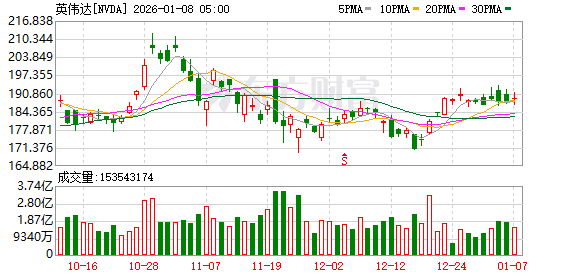
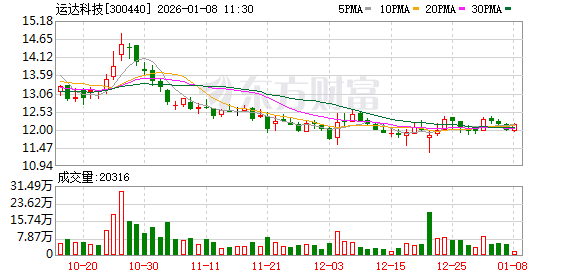
运达科技:参股公司扬斯科技涉及L4级自动驾驶物流机器人的研发量产和自动驾驶卡车干线物流解决方案等业务
Mei Ri Jing Ji Xin Wen· 2026-01-08 04:34
Group 1 - The core focus of the news is on the involvement of Yangsi Technology, a subsidiary of Yunda Technology, in the development and production of L4 level autonomous driving logistics robots and solutions for autonomous truck trunk logistics [2] - Yunda Technology confirmed its participation in the autonomous driving sector through its investment in Yangsi Technology, highlighting the company's commitment to advancing logistics technology [2] - The inquiry from investors reflects growing interest in the autonomous driving business and its potential applications in logistics [2]


自动驾驶发展的正道,离不开最重要的两个字
Xin Lang Cai Jing· 2026-01-08 03:31
Core Insights - The commercialization of autonomous driving has taken a significant step forward with the recent approval of two L3 conditional autonomous driving models in China, marking a transition from technology validation to mass production application [1][2] - L3 level autonomous driving allows the automated system to take over driving tasks under specific conditions, representing a critical milestone in the evolution from assisted driving to fully autonomous driving [1][2] - The approval of L3 models indicates that their safety operation capabilities have been preliminarily validated, necessitating updates in traffic accident liability, insurance product design, and human-machine interaction ethics [1][2] Industry Development - The development of autonomous driving technology is guided by the principle of "safety first, gradual progress," with initial applications in logistics and delivery before moving to more complex environments [2][3] - As autonomous driving technology matures, the industry is approaching large-scale application, highlighting the need to validate safety redundancy mechanisms in extreme scenarios and clarify responsibility boundaries between humans and machines [2][3] - The industry faces challenges such as cost control and technology upgrades, but the focus remains on ensuring safety as the core value of autonomous driving [2][3] Public Trust and Safety - The tolerance for errors in the autonomous driving sector is extremely low, making public trust crucial yet fragile; any incidents can significantly undermine confidence and halt commercialization efforts [3] - Companies emphasize that obtaining technical approval is just the beginning, with the ultimate goal being the safety of passengers, which is essential for gaining public trust [3] - The industry is encouraged to maintain patience and focus on building a solid safety foundation to ensure that every journey is trustworthy, thereby expanding the potential for autonomous driving to enhance societal welfare [3]
CES亮点
数说新能源· 2026-01-08 03:20
Group 1: Consumer Electronics - Pebble launched the Pebble Index 0.1, a wearable device priced at $75, which focuses on functionality rather than health monitoring, featuring a programmable button and microphone for reminders and messaging, with a lifespan of 2-3 years and no need for charging [1] - January AI has transitioned its scientifically validated "virtual blood glucose monitoring" technology to an enterprise-level API application, aimed at health management systems and longevity tech companies, converting daily life data into structured metabolic health data for diabetes management [1] - Naqi Logix is redefining human-computer interaction by transforming smart earbuds into powerful neural interfaces, allowing users to control digital devices through subtle facial movements without the need for physical actions or voice commands [2][3] - ASUS and XREAL launched the AR glasses ROG XREAL R1, which provide a cinema-like experience equivalent to a 171-inch screen and feature a 240Hz refresh rate, enhancing gaming experiences significantly [4] Group 2: Physical AI - LG introduced the home robot CLOiD, designed for emotional interaction and household tasks, featuring flexible robotic arms for tasks like folding clothes and controlling home appliances, although its operational range is limited to above knee height [5] - Weifeng Power Technology developed an AI-driven smart firefighting robot capable of autonomous navigation in smoke, real-time identification of burning materials, and automatic fire suppression without human intervention, enhancing emergency response capabilities [6] Group 3: Intelligent Driving and Mobility - RAPA has overcome the inherent sparsity and noise issues of radar technology with its 4D imaging radar, providing a cost-effective solution for autonomous driving with superior performance, achieving over 40% higher accuracy in target detection and tracking compared to competitors [8]

Robotaxi-行业近况更新
2026-01-08 02:07
Summary of Robotaxi Industry Conference Call Industry Overview - The Robotaxi industry is experiencing accelerated development due to the opening of autonomous driving road rights, expanding from remote areas like Shanghai Lingang to the entire Pudong and Minhang districts. Other cities such as Beijing, Guangzhou, Shenzhen, and Hangzhou are following similar trends, with large-scale rollout expected by 2026 [1][2]. Key Points and Arguments Policy and Regulatory Changes - Significant changes in policy and enterprise progress in L4 and L3 autonomous driving are noted, with 2025 being seen as the "Robo Taxi Year." The opening of road rights has expanded significantly, with Shanghai allowing operations in popular areas by 2025 [2]. - Platforms must now apply for demonstration operation licenses through local ride-hailing or taxi companies, limiting the direct operational profitability of tech platforms [1][2]. - The assessment for intelligent connected vehicle licenses involves three stages: road testing, demonstration application, and demonstration operation, with a total of 12 types of licenses being gradually integrated across regions [3]. Technological Approaches - Three main technological routes are identified: 1. High-precision map solutions, exemplified by companies like Baidu and Pony.ai, which are mature but costly [4]. 2. Clear map or no-map solutions that rely on advanced algorithms, reducing mapping costs but increasing algorithm complexity [4]. 3. Pure visual end-to-end solutions, like those used by Tesla, which can operate without signals or navigation, closely mimicking human driving [4]. Market Participants - The domestic Robotaxi market consists of three main groups: 1. Technology companies (e.g., Baidu, Pony.ai) with high single-vehicle costs. 2. OEM-backed platforms (e.g., T3 Mobility, Cao Cao Mobility) with lower vehicle costs but weaker algorithm capabilities. 3. Traffic platforms (e.g., Didi, Amap) leveraging user data to enhance competitiveness [5][6]. Commercialization Progress - Companies are nearing single-vehicle breakeven, with Baidu and Pony.ai optimizing hardware and service quality to expand market coverage [7]. - Baidu has deployed 3,000 vehicles, primarily in Wuhan, with daily rides averaging 12-18. Pony.ai operates in major cities but on a smaller scale [11]. Financial Metrics - Baidu's vehicle cost is approximately 280,000 RMB, with daily operational costs around 290 RMB, achieving breakeven in Wuhan and profitability in Shanghai. Pony.ai's daily revenue in Guangzhou is about 299 RMB with a 40% utilization rate [15][16]. Future Industry Landscape - The Robotaxi industry is expected to evolve into three main player types: license holders (local taxi or ride-hailing companies), OEMs with vehicle manufacturing capabilities, and traffic platforms benefiting from data and mapping services [18]. - Amap is positioned to gain significant market share in the autonomous driving sector due to its large user base and partnerships with OEMs [19]. Cost Differences - Operational costs for overseas Robotaxi services are significantly higher than in China, with costs in regions like the Middle East and Europe being 1.5 times higher, and vehicle prices three times higher than in China [21]. Data and Connectivity Costs - Robotaxi operations incur substantial data costs, with each vehicle generating approximately 40GB of data daily, leading to high monthly expenses for data storage and processing [20]. Additional Important Insights - The industry is witnessing a shift towards lower vehicle-to-driver ratios, which will reduce data transmission volumes and associated costs, indicating a trend towards profitability and cost reduction in the Robotaxi sector [22][23].

耐世特20260107
2026-01-08 02:07
Key Points Summary Company Overview - The company discussed is **Nexteer Automotive**, focusing on its **steer-by-wire** technology and market strategies in the automotive industry [2][3][4]. Industry Insights - The steer-by-wire business is accelerating, with mass production expected to start by the end of Q1 or early Q2 2024, and small-scale production in 2025, with some projects potentially delayed until 2026 [2][3]. - New regulations for steer-by-wire in China will take effect on July 1, 2024, which will not impact current projects but will accelerate the commercialization of the technology in the long term [4][5]. - The company competes with major players like Bosch and ZF in the global steer-by-wire market, leveraging localized R&D and quick response to customer needs [2][6]. Financial Performance and Projections - The company anticipates improved profitability in 2026 due to the end of the new product introduction phase and the realization of scale effects [4][10]. - The financial performance for the second half of 2025 is expected to remain stable despite external factors like tariffs, with a better performance in the Chinese market compared to the first half [11][12]. Customer and Market Dynamics - The company is set to launch multiple steer-by-wire projects in the first half of 2026, including partnerships with North American electric vehicle leaders and Chinese new energy vehicle companies [3][12]. - The Chinese market is expected to outperform the European and American markets, driven by a diverse customer base including BYD, Li Auto, and Xiaomi [12][15]. Product Pricing and Trends - Initial pricing for steer-by-wire products is high, estimated between 3,000 to 4,000 RMB, but may decrease with standardization and economies of scale [8][9]. - The steer-by-wire technology offers significant advantages in extreme conditions, enhancing driving experience and safety, which justifies the higher costs [9]. Competitive Advantages - The company’s competitive edge lies in its localized R&D and ability to respond quickly to market demands, particularly in the L3 and above autonomous driving sectors [6][16]. - The company is also focusing on maintaining strong export business and expanding into new product lines like rear-wheel steering [17]. Regulatory Impact - The implementation of new regulations is expected to accelerate the adoption of steer-by-wire technology among new energy vehicle manufacturers, who are likely to move faster than traditional automakers [4][5]. Future Growth Potential - The company believes that despite challenges in the Chinese market, it can outperform the market due to its strong customer relationships and diverse product offerings [12][15][16].
中金:维持禾赛-W“跑赢行业”评级 升目标价至241.1港元
Zhi Tong Cai Jing· 2026-01-08 01:39
Core Viewpoint - The report from CICC maintains the revenue forecast for Hesai Technology (02525) for 2025, raises the 2026 revenue forecast by 6.4% to 4.53 billion yuan, and introduces a first-time revenue forecast for 2027 at 6 billion yuan, while maintaining an outperform rating for the industry [1] Group 1: Company Current Status - In January 2026, Hesai Technology showcased its latest lidar technology achievements at CES 2026 and updated its delivery volume, production capacity planning, and strategic partnerships [2] Group 2: Production and Delivery Capacity - The company is expected to deliver over 1.6 million units in 2025, with 24 OEMs securing over 120 models for mass production as of January 5. The annual production capacity is planned to increase from 2 million units in 2025 to 4 million units in 2026, achieving a doubling growth. The Bangkok Galileo factory is expected to commence production in early 2027. The company has a strong order backlog and is actively expanding domestic and international production capacity, which is likely to drive future shipment volume and revenue growth [3] Group 3: L3 Vehicle Approval and Lidar Quantity Increase - On December 15, 2025, the Ministry of Industry and Information Technology approved L3 level conditional autonomous driving vehicles for trial operation in designated areas. This is expected to accelerate penetration, with the number of lidar units per vehicle likely to increase to 3-6. The 2026 models of Avita 12 and Lantu Tianshan are expected to be equipped with 4 lidar units. Hesai showcased a new generation L3 automotive lidar solution at CES 2026, which has received the first mass production approval for passenger vehicles, with production planned to start by the end of 2026 or early 2027 [4] Group 4: Next-Generation AI and Lidar as a Key Engine - Global companies are accelerating the large-scale deployment of L4 autonomous driving fleets. The company has partnered with leading firms such as Motional, Baidu, Didi, WeRide, and Pony.ai, and has been selected by NVIDIA as a lidar partner for the "NVIDIA DRIVE AGX Hyperion 10 platform." Additionally, Hesai's JT series lidar is widely used in the robotics and industrial markets, with cumulative shipments exceeding 200,000 units, including applications in mowing robots, smart companion robots, and 3D spatial digitization devices [5]
中金:维持禾赛-W(02525)“跑赢行业”评级 升目标价至241.1港元
智通财经网· 2026-01-08 01:38
量产交付能力领先行业;国内外产能稳步推进 公司2025年全年交付量超160万台,截至1月5日公司已获24家主机厂超120个车型的量产定点。公司规划 年产能将由2025年的200万台提升至2026年的400万台、实现翻倍增长,公司预计泰国曼谷伽利略工厂将 在2027年初投产。该行认为,公司在手订单充沛、国内外产能拓展积极,有望带动未来出货量及收入高 增。 智通财经APP获悉,中金发布研报称,维持禾赛-W(02525) 2025年营收预测不变,上调2026年营收预测 6.4%至45.3亿元,首次引入2027年营收预测60.0亿元。维持跑赢行业评级。当前港/美股分别对应6.0/5.8 倍2026年P/S。考虑到智驾及机器人板块估值中枢上移,该行上调港/美股目标价32.1%/34.3%分别至 241.10港币/31.56美元,对应7.5倍2026年P/S,较当前股价分别有24.3%/30.1%的上行空间。 中金主要观点如下: 公司近况 2026年1月,禾赛科技在CES 2026上展示最新激光雷达技术成果,并更新了交付量、产能规划、战略合 作等经营情况。 2025年12月15日,工信部首次批准L3级有条件自动驾驶车型在 ...
麦格纳:与英伟达扩大合作 共推自动驾驶系统规模化落地
Zhong Guo Qi Che Bao Wang· 2026-01-08 01:11
Core Insights - Magna has announced an expansion of its strategic partnership with NVIDIA to support automakers in implementing projects based on the NVIDIA DRIVE Hyperion platform, facilitating the automotive industry's transition towards intelligent and software-defined vehicles [1] - The collaboration focuses on providing a comprehensive service solution that includes system integration, functional validation, and mass production support for various levels of autonomous driving systems [1][3] Group 1: Partnership Details - The partnership combines NVIDIA's AI computing power with Magna's expertise in system engineering and integration validation, enhancing the capabilities of the DRIVE AV autonomous driving software stack [3] - Magna offers flexible service options for automakers, allowing them to select full or partial system-level services, which include system integration coordination, comprehensive performance testing, and global deployment support [3] Group 2: Technological Advancements - The NVIDIA DRIVE AV software stack covers essential functions such as emergency braking, lane keeping, and parking assistance, while also integrating advanced modules for urban road autonomous driving [3] - Magna's global manufacturing and engineering capabilities enable full-process support for system mass production, particularly focusing on high-performance computing control units and sensors that are critical to system functionality [3] Group 3: Executive Perspectives - Executives from both companies have praised the partnership, highlighting Magna's role in helping automakers scale integrated systems and accelerate the marketization of next-generation technologies [4] - The collaboration is seen as a testament to the expanding ecosystem of AI-defined vehicles, with Magna's hardware compatibility and integration validation capabilities aiding automakers in the development of multi-level autonomous driving systems [4]