
贸易战

Search documents
继续下调,美国一季度经济环比萎缩0.5%
Sou Hu Cai Jing· 2025-06-27 09:29
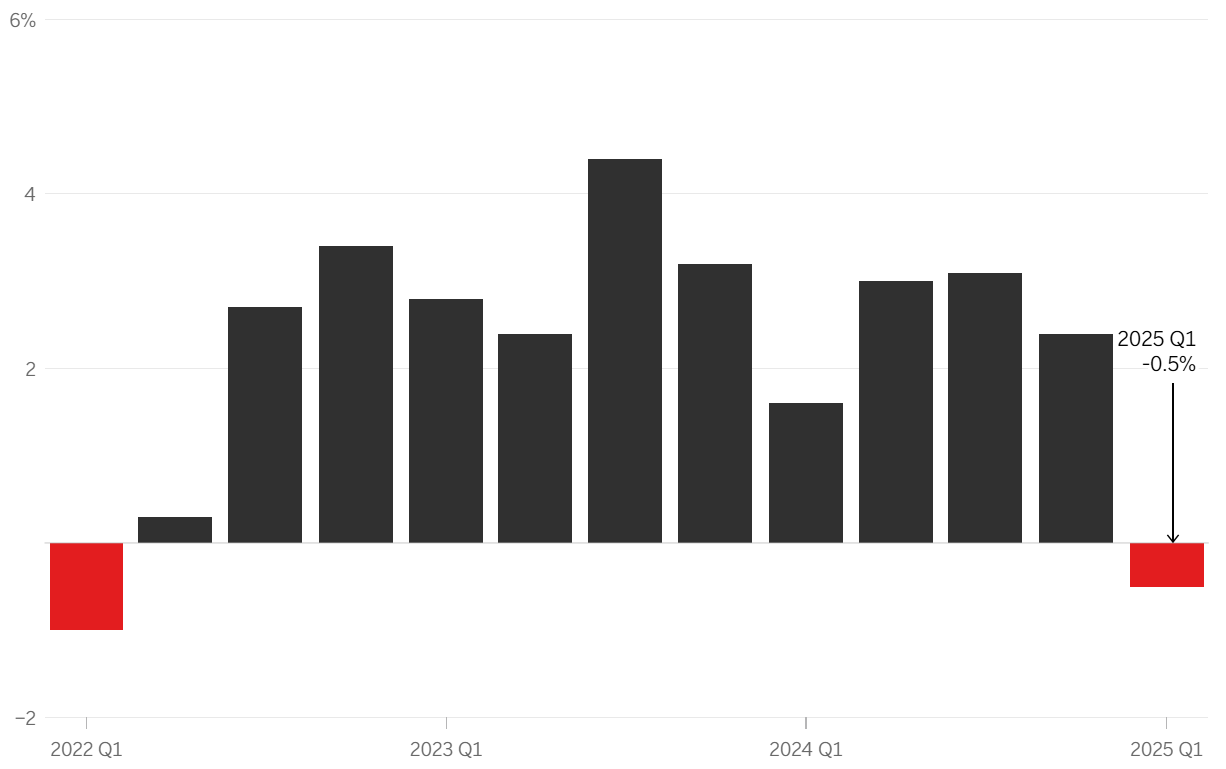
美国各季度经济增长率美联社 据美联社报道,当地时间6月26日,美国商务部报告称,由于美国总统特朗普的贸易战扰乱商业活动,美国国内生产总值(GDP)在今年一季度环比按年率 计算萎缩0.5%,较该部门前两次公布的估值明显下调。 分析认为,造成经济萎缩的重要原因,是美国企业和家庭赶在关税上涨前大幅增加进口,从而造成国内生产销售减少。美商务部4月初次估值预计第一季度 经济将萎缩0.3%,5月将该数据修正为萎缩0.2%。经济学家们曾预测,商务部的第三次也是最后一次估算值将不会有任何改变。 美商务部数据显示,今年一季度美国GDP出现下滑,扭转了2024年最后一个季度2.4%的增长,标志着该国经济三年来首次出现萎缩。其中,美国进口增长 37.9%,为2020年以来最快增速,拖累GDP下降近4.7个百分点。 同时,美国一季度消费者支出也急剧放缓,仅增长0.5%,低于去年第四季度4%的增速,较美商务部此前预期大幅下调。占美国经济总量约70%的个人消费 支出对一季度GDP的贡献也下调至约0.3个百分点。 衡量美国经济潜在实力的一个GDP分项数据以1.9%的年率增长。这一数字低于2024年第四季度的2.9%,也低于商务部此前预估的 ...

“硬刚”军费要求 特朗普:贸易措施惩罚 西班牙:不公平
Xin Hua She· 2025-06-27 08:57
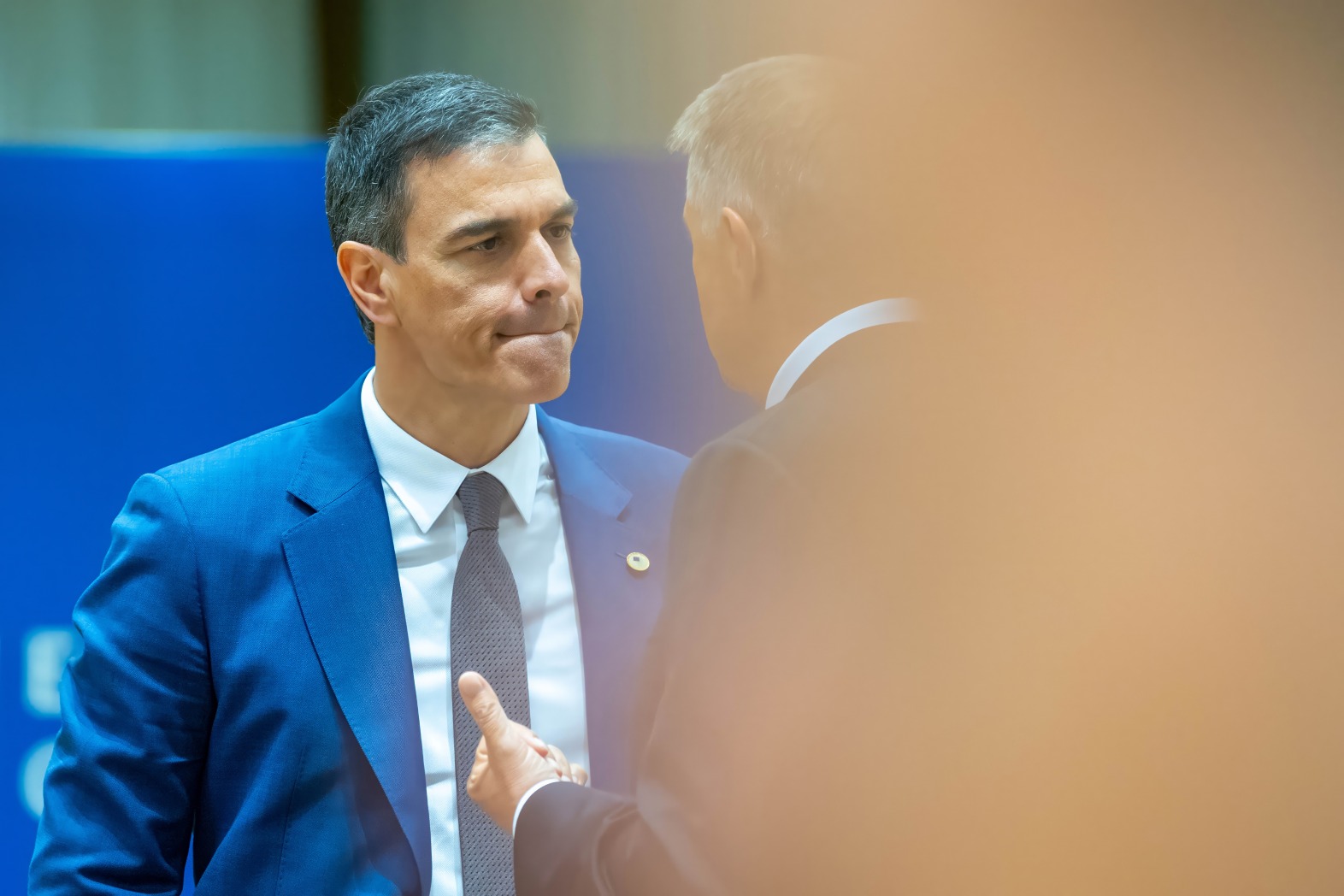
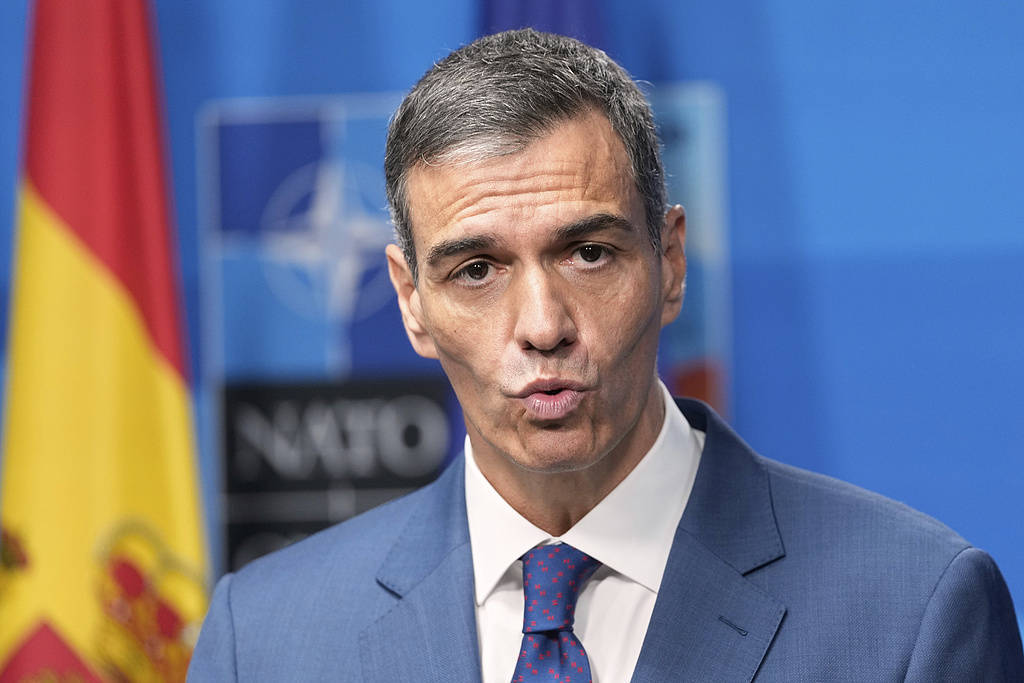
新华财经北京6月27日电在日前于荷兰海牙举行的北约峰会上,西班牙拒绝按美国要求提高本国国防支出水平。美国总统特朗普回应称要在贸易领域让西班 牙弥补,西班牙首相桑切斯26日则在出席欧盟峰会期间反击,美国政府当前的贸易政策不公平且充斥单边主义,欧洲乃至全球正遭遇一场贸易战。 在北约峰会上,成员国承诺在2035年前逐渐将本国国防支出在国内生产总值(GDP)中的占比提高至5%。在26日的白宫例行记者会上,白宫新闻秘书卡罗 琳·莱维特将上述成果称为"对北约集体防御能力最显著的增强",并强调"得益于此,美国将承担更轻的负担"。 然而,西班牙是个特例。该国首相桑切斯虽然在包含上述内容的"海牙峰会宣言"上签了字,但仍坚持把本国国防支出维持在当前计划水平,即占GDP的 2.1%。 特朗普继续他对西班牙的指责:"他们想稍微搭个便车,但他们必须在贸易上补偿我们,因为我不会让这(搭便车行为)发生。" 这是2024年4月17日拍摄的西班牙首相桑切斯。新华社记者孟鼎博摄 《纽约时报》报道,美国正与欧盟进行贸易谈判,并未与作为欧盟成员国的西班牙一对一谈判,尚不清楚特朗普如何在贸易上"惩罚"西班牙。埃菲社报道, 美国政府正在与布鲁塞尔谈判一 ...
比稀土更狠!中国又一张反击美国的底牌出现了,特朗普没料到
Sou Hu Cai Jing· 2025-06-27 01:52
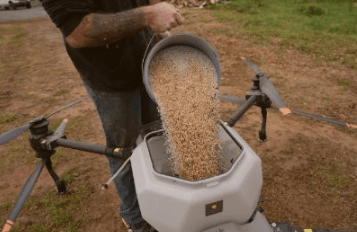
据中国新闻网报道,当地时间2月27日,美国总统特朗普再次对中国全商品增加10%的关税制裁,3月4 日正式生效。这意味着特朗普上台不足2个月时间,就已经对中国发起两次关税制裁,额外加征总额度 达到20%。在贸易战的持续交锋中,中国手中的反制牌一直备受关注。此前,稀土出口管制彰显了中国 在关键资源领域的话语权。如今,一项比稀土技术门槛更高的产业,正成为中国反击美贸易战的又一张 有力底牌,那便是无人机产业。 美国农民使用大疆无人机进行播种(资料图) 2023年至2024年期间,中国商务部及海关总署动作频频,发布了一系列无人机出口管制措施,并于特定 时间正式实施。2024年9月1日起正式施行的规定明确指出,最大持续功率超过16千瓦,专门用于特定无 人驾驶航空飞行器或无人驾驶飞艇的航空发动机,未经许可不得出口。还有满足一定技术指标的专门用 于特定无人驾驶航空飞行器或无人驾驶飞艇的载荷,像具有特定波长范围、瞬时视场角的红外成像设 备;作用距离大于5千米的特定合成孔径雷达;能在高于55摄氏度环境中稳定工作,具备多项特性的用 于目标指示的激光器;有着特定航向精度、姿态精度和分辨率的惯性测量设备等,都被纳入管制范围。 专门用于 ...
涨势如虹的股市面临重大变数!“232”关税利剑高悬各国头顶 美国贸易谈判陷入僵局
智通财经网· 2025-06-27 01:43
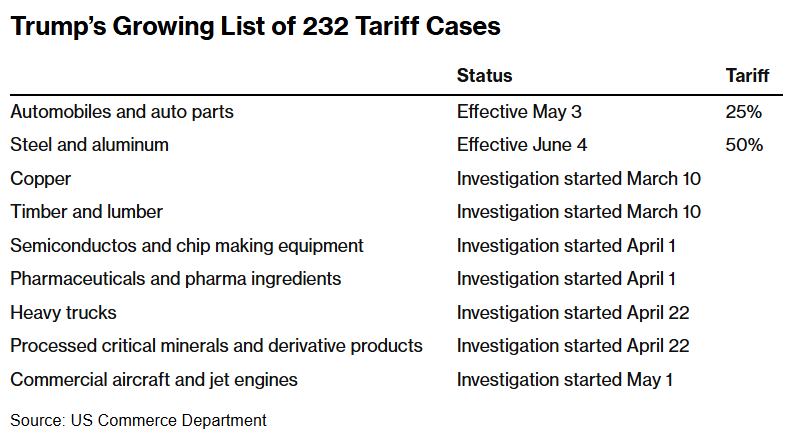
Group 1: Trade Negotiations and Tariffs - The threat of additional tariffs by Trump has led to increased caution among key U.S. trading partners regarding new trade agreements, creating a stalemate that could negatively impact global stock markets, particularly tech giants [1] - The U.S. Department of Commerce is expected to release final investigation results on tariffs related to national security sectors, including chips, pharmaceuticals, and industrial metals, under Section 232 of the Trade Expansion Act [2] - Countries like India are taking a hard stance, unwilling to sign agreements that do not resolve their concerns regarding export tariffs and reciprocal tariffs [6][8] Group 2: Impact on Global Markets - The MSCI global index reached a historical high due to easing geopolitical tensions and expectations of interest rate cuts by the Federal Reserve, but uncertainty surrounding trade agreements poses a risk to market sentiment [1] - The ongoing trade negotiations, particularly regarding the automotive sector, are critical as they represent a significant portion of trade deficits and economic stability for countries like Japan [5] Group 3: Specific Tariff Details - A list of tariffs under investigation includes automobiles (25%), steel and aluminum (50%), and various other sectors such as pharmaceuticals and semiconductors, with investigations initiated on specific dates [2] - The potential for new tariffs on pharmaceuticals and semiconductor imports is particularly concerning for India, as these sectors are vital to its economy and export capabilities [8]
2025风暴中前行:不确定环境下的经济展望报告(英文)
Sou Hu Cai Jing· 2025-06-27 01:24
Trade Situation - The US has initiated a full-fledged trade war, imposing a 130% tariff on Chinese imports, raising the global import tariff rate to 25.5%, the highest since the 1890s [1][10][13] - Global export losses due to the trade war are projected to reach $480 billion by 2025, significantly impacting major economies like China and the EU [1][14][16] Global Economic Outlook - Global GDP growth is expected to decline to 2.3% in 2025, the lowest since the pandemic, with the US and Eurozone both forecasted to grow at 0.8% [2][17][32] - Emerging markets, excluding China, are projected to grow at 3.5%, with some countries benefiting from trade agreements and import diversification [2][4] Inflation and Monetary Policy - Inflation in the US is anticipated to peak at 4.3% in 2025, prompting the Federal Reserve to maintain interest rates until October before cutting them to 4% by year-end [3][41][50] - The European Central Bank is expected to lower rates to 1.5% as inflation pressures ease, contrasting with the US's inflationary challenges [3][51] Corporate Strategies - Companies are adopting short-term strategies such as frontloading imports and diversifying supply chains to mitigate tariff impacts, with about two-thirds of US firms likely to pass tariff costs onto consumers [4][11][24] - Global corporate bankruptcies are projected to rise by 7% in 2025, with significant increases in the US and Western Europe [4][11] Capital Markets - Capital markets have reacted negatively to the trade war, with expectations of further declines in bond yields and volatility in equity markets [5][11][12] - The mispricing of Trump's second term policies has led to a risk-off sentiment in the markets, although a recovery is anticipated by year-end [5][11][12] Regional Economic Projections - The US is expected to experience a mild recession in 2025, with GDP growth rebounding to 2.2% in 2026 due to policy support [6][28] - The Eurozone's growth is projected at 0.8% in 2025, with Germany's fiscal stimulus partially offsetting trade war impacts [6][28]

不肯涨军费遭特朗普威胁要征“双倍”关税,西班牙首相反击称这是“双倍不公”
Sou Hu Cai Jing· 2025-06-26 22:36
【文/观察者网 邵昀】 因西班牙,将国防开支占国内生产总值(GDP)比例提高到5%,美国总统特朗普暗示要对西班牙征收"双倍"关税。据彭博社报道,西班牙首相桑 切斯26日在比利时布鲁塞尔对此反唇相讥,谴责特朗普此举对西班牙而言是"双倍的不公平"(doubly unfair)。 桑切斯对媒体说:"欧洲乃至全世界一直饱受贸易战的折磨,我们——至少在西班牙——从一开始就认为这些关税措施不公平,而且是单方面的。 就西班牙而言,这些措施更是双倍的不公平。"桑切斯强调,特朗普的关税政策通常是针对那些对美存在贸易顺差的国家,但西班牙对美只有贸易 逆差。 英国《卫报》评价,相比其他欧洲国家,桑切斯对特朗普的关税威胁更加直言不讳。英国《金融时报》称,一名西班牙官员说,桑切斯团队对特 朗普的威胁"毫不动摇",因为上周桑切斯给北约秘书长吕特发公开信,拒绝5%的目标时,马德里方面就已经估算过潜在的美方报复影响,结论 是:关税威胁并不严重。 报道指出,如果美国针对西班牙出口份额大的产品,如钢铁、铝和汽车加税,将不可避免地波及其他26个欧盟成员国,其中也包括那些愿意接受 特朗普5%军费目标的国家。美国当然也可以选择打击西班牙特有的商品,如 ...
欧盟就美关税陷两难抉择 冯德莱恩将向成员国介绍谈判情况
news flash· 2025-06-26 15:41
金十数据6月26日讯,欧盟领导人将讨论他们应对特朗普贸易战的战略,其选择实质归结为接受不平等 贸易协议或冒险升级报复措施。据知情人士透露,欧盟委员会主席冯德莱恩将在周四的晚宴上向欧盟领 导人介绍与美国谈判的进展情况。欧盟需要在7月9日之前与特朗普达成协议,否则对美国几乎所有出口 商品的关税都将增加到50%。消息人士表示,近周谈判已加码推进,双方就关税/非关税壁垒展开详细 磋商,同时涉及关键产业、战略采购及欧盟简化议程力图解决的监管议题。官员们认为最佳方案仍是达 成原则性协议,使谈判能延续至7月初截止期后。但同时也应筹备反制预案,丹麦首相弗雷泽里克森周 四强调:"建议全力避免贸易战,但若美国坚持立场,我们必须对等反制。" 欧盟就美关税陷两难抉择 冯德莱恩将向成员国介绍谈判情况 ...
欧盟对美开出1160亿反制清单,特朗普坚持二选一,中国通告全球
Sou Hu Cai Jing· 2025-06-26 13:33
Group 1 - The meeting between Trump and von der Leyen during the G7 summit did not lead to the expected easing of US-EU relations, with Trump criticizing the EU and demanding a "choose one" approach [1] - The EU has announced a countermeasure list against the US worth €116 billion, reflecting ongoing trade tensions [1][12] - The EU's previous countermeasure list from May 8 included €95 billion worth of goods, aiming to use it as leverage in negotiations with the US [4] Group 2 - Trump's announcement of a 20% "reciprocal tariff" on EU goods in April, followed by a temporary delay, indicates a strategy of extreme pressure in trade negotiations [6] - EU officials privately believe that even if negotiations conclude, the US is unlikely to fully remove additional tariffs on EU goods, likely retaining a 10% baseline tariff [9] - The EU is preparing retaliatory measures if the US maintains the 10% baseline tariff, indicating a potential for ongoing trade conflict [11] Group 3 - The trade dispute has escalated to a point where the aviation industry is becoming a significant battleground, with concerns over unfair competition between Airbus and Boeing [8] - Trump's trade policy reflects a unilateral approach, viewing the EU as a structural trade adversary, which complicates negotiations [16][20] - The EU's internal divisions are evident, with France opposing acceptance of the 10% tariff, highlighting the challenges in reaching a unified stance [12] Group 4 - The ongoing trade tensions between the US and EU are seen as a precursor to a broader restructuring of global trade order, with potential negative impacts on both economies [31] - The Davos Forum in China presents a contrasting narrative of open cooperation amidst rising protectionism, emphasizing the need for a rules-based global economy [33][29] - The outcome of the US-EU trade conflict could lead to a scenario where both parties suffer significant economic consequences, underscoring the importance of finding a cooperative solution [31][33]
他诉苦:请中方理解下欧洲的恐惧,下个月给解决稀土吧
Sou Hu Cai Jing· 2025-06-26 06:51
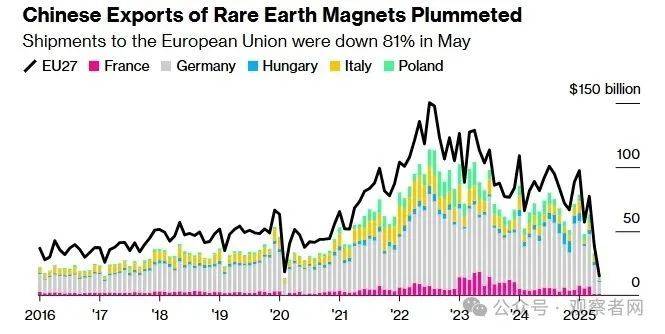
Group 1 - The European Union (EU) is requesting China to address the severe impact of rare earth magnet shortages on European companies, emphasizing the need for a resolution by next month [1] - China's export of rare earth magnets to Europe has significantly declined in recent months, disrupting global supply chains, particularly in the automotive and high-tech sectors [1] - The EU's trade and economic relationship with China is described as "unclear," with upcoming visits from EU leaders to China planned for next month [1] Group 2 - Since 2017, China's economy has grown by 40%, while EU exports to China have decreased by 30%, highlighting a disparity in trade dynamics [2] - In the first five months of this year, China's trade surplus with the EU increased by nearly 23%, reaching a record $117 billion [5] - The EU has been gradually increasing trade pressure on China, planning to impose tariffs on Chinese electric vehicles in 2024 to address perceived unfair subsidies [5] Group 3 - At the G7 summit, EU leaders criticized China's export restrictions on critical materials, labeling China as a "real challenge" to global trade [6] - The EU has announced restrictions on Chinese companies' participation in public procurement for medical devices, reflecting ongoing trade tensions [8] - China has expressed strong dissatisfaction with the EU's unilateral actions, urging the EU to correct its course and maintain fair competition [8]
五矿期货农产品早报-20250626
Wu Kuang Qi Huo· 2025-06-26 00:59
五矿期货农产品团队 农产品早报 2025-06-26 五矿期货农产品早报 从业资格号:F0273729 交易咨询号:Z0002942 邮箱:wangja@wkqh.cn 白糖、棉花研究员 从业资格号:F03116327 交易咨询号:Z0019233 邮箱:yangzeyuan@wkqh.cn 从业资格号:F03114441 交易咨询号:Z0022498 电话:010-60167188 邮箱:sxwei@wkqh.cn 王俊 组长、生鲜研究员 周三美豆继续回落,交易天气较好及贸易战担忧,不过美豆估值略低,可能存在一定支撑。国内豆粕期 货继续回落,现货压榨量本周或创新高,累库压力增大,周三国内豆粕现货跌 30 元/吨左右,华东报 2820 元/吨。据 MYSTEEL 统计周三国内豆粕成交较弱,提货也回落。 杨泽元 美豆产区未来两周降雨偏好,覆盖大部分产区,前期偏干区域迎来降雨。前期我们预判美豆年度级别进 入了震荡磨底过程,不过走出底部区间仍然需要产量、生物柴油需求、全球宏观、贸易战的进一步驱动。 当前美豆端生物柴油政策提供利好,意味着需求端压榨量的预测边际向好,美豆的库销比水平可能支撑 其估值,但考虑到全球蛋白供 ...