
能源转型

Search documents
“铜争夺战”对国际市场影响有多大?
Zhong Guo Chan Ye Jing Ji Xin Xi Wang· 2025-11-11 00:10
Core Insights - The international copper price has seen a significant increase this year, with a rise exceeding that of gold, driven by surging demand due to energy transition and AI development [1][2] - Major copper-producing countries have faced supply disruptions, raising concerns about global copper shortages, which are now viewed as critical for future industrial dominance [1][5] Group 1: Copper Demand and Usage - Each electric vehicle requires approximately 80 kilograms of copper, which is 4-5 times more than traditional gasoline vehicles [4] - The International Copper Association estimates that global copper consumption is distributed as follows: 46% in construction, 21% in electrical applications, 16% in transportation, and 17% in consumer products and industrial machinery [3] - The United Nations Conference on Trade and Development has identified copper as a strategic material for clean energy and digital technology, essential for electric vehicles, solar panels, and AI infrastructure [3][4] Group 2: Supply Shortages and Challenges - A projected global copper supply shortage of 150,000 tons is expected next year, contrasting sharply with previous forecasts of surplus [6] - The International Energy Agency warns that copper demand for energy transition will exceed supply in the next decade, with a potential 30% shortfall by 2035 if no action is taken [6][7] - Key factors contributing to supply imbalances include the concentration of copper resources in a few countries, declining ore grades, and lengthy mining cycles [6][7] Group 3: Global Competition for Copper Resources - The U.S. has imposed a 50% tariff on imported copper to boost domestic production and reduce reliance on foreign sources [8] - India is actively working to increase its copper production capacity and reduce import dependence by attracting foreign investment in smelting and refining [8][9] - Japan is investing in the Reko Diq copper project in Pakistan to address copper supply concerns, while Canada is focusing on developing new copper mines to enhance its resource independence [9][10] Group 4: Future Implications and Market Dynamics - The ongoing "copper race" reflects a broader competition for critical resources, technological innovation, and control over supply chains, influenced by geopolitical factors [10] - Experts predict that this competition will lead to significant volatility in international copper prices and may increase the costs of copper-containing products such as appliances and electric vehicles [10]
戈壁生绿拼三劲(中国道路中国梦·每一个人都是主角)
Ren Min Ri Bao· 2025-11-10 22:41
Core Insights - The project focuses on developing a renewable energy base in the harsh environment of the "Shagohuang" region, which includes desert and Gobi areas rich in wind and solar resources [1][3] - The construction of a "small green grid" using solar power and energy storage has enabled the project to achieve 100% self-sufficiency and low-carbon operations [2][3] - The project has transformed a previously neglected area into a modern energy oasis, showcasing China's rapid energy transition and leadership in renewable energy [3][4] Group 1 - The "Shagohuang" region is characterized by extreme weather conditions, with high temperatures in summer and severe cold in winter, presenting significant challenges for construction [1][3] - The project includes a 2×1 million kilowatt coal power project and a 6.1 million kilowatt renewable energy project, aimed at enhancing energy delivery capabilities [1] - The construction team has adopted innovative solutions to overcome logistical challenges, such as building a small green grid to provide power sustainably [2][3] Group 2 - The project site experiences over 200 days of high wind speeds, complicating construction efforts and requiring careful planning to maximize operational days [3] - The successful implementation of renewable energy solutions in this challenging environment reflects China's commitment to modernizing its energy infrastructure and promoting green energy [3][4] - The transformation of the "Shagohuang" area into an energy oasis serves as a model for future renewable energy projects in similar environments [3]
第四十一届阿布扎比国际石油展举行—— 人工智能技术助力全球能源转型
Ren Min Ri Bao· 2025-11-10 22:15
Core Insights - The 41st Abu Dhabi International Petroleum Exhibition focused on energy transition, smart technology applications, and enhancing industry influence, attracting over 2,250 companies and more than 200,000 attendees, establishing itself as a key platform for global energy collaboration [1] Group 1: Event Highlights - The exhibition featured four main areas: artificial intelligence and digital transformation, decarbonization, shipping and logistics, and chemical and low-carbon solutions, aimed at addressing energy transformation challenges and promoting sustainable development [1] - UAE's Vice President and Prime Minister emphasized the country's commitment to balancing economic growth with environmental protection through investments in advanced technology and clean energy [1] Group 2: Technological Innovations - AI applications in the energy sector were a major highlight, with the Abu Dhabi National Oil Company reporting a 90% accuracy in production forecasting through AI technology [1] - Mohammed bin Zayed University of Artificial Intelligence showcased autonomous inspection robots and smart cooling systems, indicating AI's evolution into a new infrastructure for industry advancement [2] Group 3: Global Participation - Chinese companies demonstrated significant advancements in digital energy transformation, with China National Petroleum Corporation presenting the world's largest AI system for the energy sector, enhancing various operational processes [2] - China National Offshore Oil Corporation and Sinopec showcased their leading capabilities in deepwater exploration and digital transformation through interactive displays and multi-screen presentations [2] Group 4: Industry Trends - The International Energy Agency reported that the deep integration of AI with the energy sector is an irreversible trend, enhancing energy allocation, reducing emission costs, and improving system resilience [3] - The exhibition served as a crucial bridge for global energy technology exchange, highlighting a shared vision for addressing energy challenges through innovation and collaboration [3]
Oil Holds Steady as Focus Shifts from Surplus Fears
Youtube· 2025-11-10 21:28
Group 1: Market Conditions - The oil market is currently experiencing an oversupply, with U.S. inventories building and indications that China is also increasing its inventories, suggesting a supply glut [2][3] - Recent surveys indicate that 75% of oil producers in the Dallas area are either significantly or slightly curbing their production activities, reflecting uncertainty about long-term market dynamics [4] - The current depressed oil prices are affecting smaller producers who require prices above $65 per barrel to be profitable, contrasting with larger companies that have achieved efficiencies and lower costs [1] Group 2: Policy and Investment - Energy company executives are seeking certainty in policy to effectively plan capital expenditures and budgets, highlighting the importance of stable regulatory environments [6] - There are ongoing investments in alternative energy sources, including solar and carbon capture technologies, despite the U.S. lagging in the energy transition compared to other regions [8][9] - China is leading in renewable energy capacity, having added more than the rest of the world combined last year, and is making significant progress in electric vehicle adoption [9] Group 3: Energy Transition - The global energy transition towards cleaner energy is progressing, but the U.S. and Gulf regions are not aligning with this trend as rapidly [7] - While there are changes in U.S. policy regarding incentives for alternative energy, the overall pace of transition remains uneven across different regions [8][9]


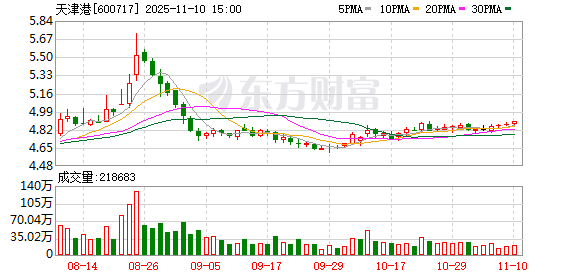
天津港拟转让中铁储运60%股权
Zheng Quan Shi Bao· 2025-11-10 18:21
Core Viewpoint - Tianjin Port is divesting 60% of its stake in China Railway Storage and Transportation Co., Ltd. to optimize its asset structure and focus on core business operations, with a transfer price set at 22.5243 million yuan [2][3] Group 1: Company Overview - Tianjin Port is a significant modern comprehensive port in China, engaged in loading, sales, logistics, and integrated port services [2] - For the first three quarters of 2025, Tianjin Port reported a revenue of 9.372 billion yuan and a net profit attributable to shareholders of 780 million yuan [2] Group 2: Details of the Divestment - The divestment involves transferring 60% of the shares of China Railway Storage and Transportation, which was established in 2004 and primarily engages in warehousing and transportation services [2] - The assessed value of the total equity of China Railway Storage is 37.5405 million yuan, with a value increase rate of 0.06% [3] - The transaction will not include performance guarantees, and the transfer price will be settled in a lump sum [3] Group 3: Strategic Rationale - The divestment aims to shed non-core businesses, reduce low-yield operations, and enhance operational efficiency and competitiveness [3] - The company anticipates that this move will mitigate investment risks associated with the coal trade sector due to energy transition and improve cash flow and asset-liability structure, potentially increasing gross margin by approximately 7.57 percentage points [3] Group 4: Port Operations and Performance - Tianjin Port has a diverse range of berths for various cargo types and is actively expanding its port functions to enhance risk resilience [4] - The port maintains trade relations with over 500 ports in more than 180 countries and regions, with 147 container shipping routes [4] - As of the first half of 2025, Tianjin Port ranked 7th in cargo throughput and 6th in container throughput among coastal ports in China [4]

收评:尾盘拉升,再次站上4000点,释放重要信号!周二大盘可能这样走
Sou Hu Cai Jing· 2025-11-10 17:54
Core Viewpoint - The market is experiencing a structural shift, with funds moving from high-valuation technology growth sectors to lower-valuation, high-visibility consumer and cyclical sectors, indicating a change in institutional allocation focus for the fourth quarter [1][14]. Group 1: Consumer Sector - The consumer sector showed remarkable strength, with the liquor index surging 4.7%, marking the third-largest increase of the year, alongside strong performances in duty-free, department stores, and dairy sectors [2]. - The recovery in macroeconomic data, particularly the October CPI turning positive and exceeding market expectations, alleviated deflation concerns and signaled a rebound in consumer demand [2][3]. - Preliminary data from major e-commerce platforms during the Double Eleven shopping festival indicated significant year-on-year sales growth in categories like liquor, cosmetics, and home appliances, enhancing market sentiment towards liquor and duty-free industries [3]. - Regional liquor companies and leading duty-free operator China Duty Free Group outperformed high-end liquor brands, reflecting a focus on growth potential rather than brand premium in current consumer allocation strategies [4]. Group 2: Cyclical Sector - The cyclical sector also performed strongly, with significant gains in chemical, phosphate, and photovoltaic equipment sectors [5]. - Demand for new energy materials, particularly lithium iron phosphate and fluorinated chemicals, has notably increased due to global energy transition, leading to improved order visibility for leading companies [6]. - The photovoltaic industry chain has seen a recovery in production scheduling, with stable pricing for upstream silicon materials and components, attracting investor interest [7]. - The CRB commodity index has risen by 3.2% over the past two weeks, boosting confidence in the price recovery of metals and chemicals, which typically draws in more short-term and trend-following funds [8]. Group 3: Technology Growth Sector - The technology growth sector faced significant outflows, with AI, CPO, and humanoid robot sectors generally declining [10]. - A mismatch between valuations and earnings has emerged, as many high-growth sectors reported slowing net profit growth post-Q3 disclosures, leading to increased valuation pressure [11]. - Northbound funds and some public offerings have significantly reduced their exposure to technology sectors, shifting towards sectors with strong cash flow and short-term earnings certainty, such as liquor and chemicals [12]. - The previously overheated themes of artificial intelligence and robotics are experiencing a downturn due to a lack of new policies or technological breakthroughs, resulting in decreased investor interest [13]. Group 4: Market Dynamics and Investment Strategy - The collective strength of consumer and cyclical sectors reflects a broader trend of institutional reallocation, favoring low-valuation, stable cash flow industries as earnings expectations for technology growth sectors have not been met [14]. - The market's preference for "certainty over high elasticity" during a weak economic recovery phase suggests that the concentration of funds in consumer and cyclical sectors may continue for the next 2-4 weeks until new policies or industry catalysts emerge [19]. - Investment strategies should focus on identifying leading companies within the consumer recovery narrative and sectors showing marginal improvements in the new energy cycle, while being cautious with technology growth stocks until adjustments are complete [18].

陶氏、科思创、赢创、杜邦、霍尼韦尔,密集签约!
DT新材料· 2025-11-10 16:03
Core Viewpoint - The article highlights multiple strategic partnerships announced during the 8th China International Import Expo, focusing on sustainable solutions in the new materials sector, particularly in automotive coatings, synthetic leather, and other applications, with an emphasis on bio-based and recycled materials [2]. Group 1: Strategic Partnerships - Covestro and Nippon Paint have established a strategic cooperation focusing on automotive and industrial coatings, aiming for low-carbon material development and VOC reduction [3]. - DuPont and Amcor are deepening their partnership to enhance sustainable medical packaging, aligning with China's "Healthy China 2030" initiative [4]. - Henkel and Datong CRRC Coal Chemical Co. are collaborating on lightweight materials and noise reduction technologies for rail transit vehicles [5]. - Honeywell has signed multiple agreements with companies like Sinochem Energy and China National Petroleum Corporation to enhance catalyst and adsorbent technologies for sustainable production [6]. - Evonik has partnered with Yulin High-tech Innovation Construction Group to develop catalysts and low-carbon processes in the fine chemicals and new materials sector [6]. Group 2: Focus on Sustainable Development - Evonik and Asahi Kasei are working together to develop environmentally friendly synthetic leather products using solvent-free polyurethane technology [7]. - The synthetic leather market in China is rapidly growing, driven by stricter environmental regulations and increasing consumer demand for sustainable products [8]. - Evonik has announced the establishment of an innovation fund in China, focusing on investments related to sustainable topics such as bio-based solutions and circular economy [9]. - Evonik and Hebei Yadong Chemical Group are collaborating to develop high-performance polyurethane solutions tailored to the Chinese market [10]. Group 3: Innovations in Material Science - Dow has signed agreements with various companies, including 3M China and Zhejiang Pengfulong, to explore green materials and sustainable packaging solutions [12][13]. - Dow's collaboration with Qingdao Qinghe focuses on sustainable packaging resins, integrating recycled materials to enhance resource efficiency [14]. - Dow and Zhongnan Construction are working together to promote high-quality green building development through advanced material technologies [15][16].


站在人民币资产长牛的起点
雪球· 2025-11-10 13:00
Core Viewpoint - The article discusses the end of the low inflation era in the West, highlighting that the inflation rate is unlikely to return to the previously accepted target of 2%, with a new normal around 3% becoming more probable [4][12]. Inflation Dynamics - The average hotel prices in the U.S. have increased by approximately 20% from 2019 to 2024, with significant price hikes in major cities and high-end hotels [3]. - Food prices have also risen, with typical fast food meals increasing from $15-$18 to over $20, and dinner costs rising from around $60 to $80-$100 [3]. - The inflation rate surged from 2% to between 7% and 9% due to supply chain disruptions, soaring energy prices, and expansive fiscal and monetary policies during the pandemic [4]. Structural Changes in Inflation - The previous low inflation era was largely driven by globalization, which allowed for cost reductions through outsourcing and just-in-time production [4]. - Current trends emphasize supply chain resilience and localization, leading to increased costs as companies build redundancy into their operations [5]. - The transition to green energy and carbon neutrality is creating a long-term capital expenditure cycle, further raising cost structures [5][6]. Labor Market and Cost Pressures - Population aging and labor market constraints are limiting the potential for increased labor participation, leading to upward pressure on wages [6]. - The service sector is experiencing slow recovery, making it difficult to revert to pre-pandemic pricing levels [6]. - Wage stickiness means that even with tightened monetary policy, achieving a 2% inflation rate will be challenging [6]. Fiscal Policy and Inflation Targets - Post-pandemic, public debt and fiscal deficits in the West have increased, complicating the management of inflation and interest rates [7]. - The political landscape may lead to a tolerance for slightly higher inflation rates, with a practical target shifting towards 3% rather than the nominal 2% [8]. China's Role in Global Manufacturing - China is identified as a critical player in the global cost structure, contributing nearly 30% of global manufacturing value added [9]. - The country leads in advanced industries such as electric vehicles and renewable energy, maintaining a comprehensive manufacturing capability across various sectors [9][10]. - Despite some companies diversifying their supply chains, key components and intermediate goods still predominantly come from China, indicating its irreplaceable role in global manufacturing [11]. Investment Implications - In a higher inflation environment, global capital will increasingly favor assets linked to real industrial capabilities and efficient supply chains [12]. - Companies involved in new energy, advanced manufacturing, and critical materials are likely to attract more investment as they possess stable demand and pricing power [12].
头部电池厂集体押注“零碳”,除湿高能耗困局何解?
高工锂电· 2025-11-10 11:32
Group 1 - The domestic new energy industry has supplied approximately 25,000 dehumidifiers in the past five years, with over 13,000 being traditional high-energy-consuming models, indicating significant energy-saving potential through technological upgrades that can achieve energy savings of 20%-60% [1][12]. - The lithium battery industry is experiencing a surge in zero-carbon transformation efforts, with leading battery companies actively securing "zero-carbon" orders from local governments, transitioning from concept to reality by 2025 [2][4]. - Major companies like CATL and Envision are elevating the planning and construction of zero-carbon factories and parks to a strategic level, with CATL's chairman emphasizing the company's transition to a zero-carbon technology provider [4][5]. Group 2 - CATL has set clear zero-carbon goals, aiming for carbon neutrality in all battery factories within the year and actively providing technology and solutions to assist traditional industries in their energy transitions [5][6]. - The energy transition path outlined in the "China Energy Transition Outlook 2024" emphasizes low-carbon energy production as a core direction, with lithium battery production being a key area [5][6]. - The high energy consumption of lithium battery production, particularly from dehumidification systems, poses significant challenges to achieving zero-carbon goals, as these systems account for 43% of total energy consumption in production [9][10]. Group 3 - The urgent need for carbon reduction and rising cost pressures highlight the importance of energy-saving modifications in the lithium battery sector, with traditional dehumidifiers representing a significant opportunity for energy savings [12][14]. - The introduction of low-energy technology can reduce energy consumption by 50%, creating a positive cycle of cost reduction and carbon reduction for companies [13][14]. - The EK-AIoT energy management platform developed by Ouko Industrial Air Conditioning integrates various energy consumption data, enabling dynamic optimization and efficient energy management across the entire dehumidification system [15][17]. Group 4 - The ADR-DRY series of integrated high-efficiency rotary dehumidifiers from Ouko incorporates advanced technologies that significantly reduce energy consumption and improve operational efficiency [19][20]. - The system's adaptive control strategy allows for real-time adjustments based on environmental changes, ensuring efficient operation while minimizing energy use [21][22]. - Successful energy-saving projects have demonstrated significant reductions in operational costs and resource consumption, validating the effectiveness of Ouko's solutions in real-world applications [23][25]. Group 5 - The energy-saving upgrades in lithium battery dehumidification systems are essential for reducing costs and achieving zero-carbon goals, supporting the high-quality development of the entire new energy industry [27][28]. - Ouko's technology and experience have been recognized in the industry, with successful applications in various new energy companies, contributing to a replicable and scalable energy-saving solution for the sector [27][28]. - The collaboration between low-energy technology and green electricity is expected to create a powerful synergistic effect, enhancing value for companies even as energy structures transition to decarbonization [29][30].

储能与固态电池行业前景分析与投资机会
Xin Lang Cai Jing· 2025-11-10 10:15
Core Insights - The energy storage and solid-state battery technologies are gaining significant attention due to the global energy transition and rapid development of electric vehicles [1][2] - The global energy storage market is projected to reach $50 billion in 2023, with an annual growth rate exceeding 20% [1] - Solid-state batteries are entering commercial stages, offering higher energy density and safety compared to traditional lithium-ion batteries, which is expected to significantly impact the electric vehicle market [1] Market Dynamics - The expansion of the energy storage market is driven by policy support and technological advancements, with governments incentivizing investments in storage projects [1] - During peak electricity demand periods, energy storage systems can effectively balance grid loads and enhance energy efficiency [1] Investment Trends - Investment in the energy storage and solid-state battery sectors has seen a notable increase, with global investments reaching $15 billion in 2022, a 30% increase from the previous year [2] - Investors are encouraged to focus on companies with core technologies and market competitiveness, such as leading energy storage solution providers and solid-state battery manufacturers [2] Future Outlook - The solid-state battery technology is expected to significantly enhance the range of electric vehicles, with major automotive manufacturers accelerating their development efforts [1] - The energy storage and solid-state battery industry is in a rapid growth phase, presenting substantial market potential and investment opportunities [2]