
国产替代

Search documents
瑞达期货铝类产业日报-20260119
Rui Da Qi Huo· 2026-01-19 09:02
铝类产业日报 2026/1/19 | 项目类别 | 数据指标 最新 | 最新 | 环比 数据指标 | | 环比 | | --- | --- | --- | --- | --- | --- | | | 沪铝主力合约收盘价(日,元/吨) | 24,090.00 | +165.00↑ 氧化铝期货主力合约收盘价(日,元/吨) | 2,733.00 | -18.00↓ | | | 主力-连二合约价差:沪铝(日,元/吨) | -100.00 | +15.00↑ 主力-连二合约价差:氧化铝(日,元/吨) | -121.00 | +1.00↑ | | | 主力合约持仓量:沪铝(日,手) | 337,097.00 | +3198.00↑ 主力合约持仓量:氧化铝(日,手) | 490,989.00 | +873.00↑ | | | LME铝注销仓单(日,吨) | 41,425.00 | 0.00 库存:氧化铝:合计(周,万吨) | 217,143.00 | +21062.00↑ | | 期货市场 | LME电解铝三个月报价(日,美元/吨) | 3,134.00 | -33.50↓ LME铝库存(日,吨) | 488,000.00 ...
沪铜产业日报-20260119
Rui Da Qi Huo· 2026-01-19 08:52
Report Industry Investment Rating - Not provided in the content Core Viewpoints - The Shanghai copper main contract shows a volatile trend, with a decrease in open interest, a spot discount, and a weakening basis. The copper concentrate TC spot index continues to decline, and the cost support from tight ore supply for copper prices remains. Supply is relatively sufficient, but affected by the off - season and high previous copper prices, downstream procurement is cautious, leading to continuous accumulation of refined copper social inventory. The option market sentiment is bullish, and the implied volatility slightly decreases. It is recommended to conduct light - position short - term long trades when the price is low, while paying attention to controlling the rhythm and trading risks [2] Summary by Relevant Catalogs Futures Market - The closing price of the Shanghai copper futures main contract is 101,180 yuan/ton, up 410 yuan; the LME 3 - month copper price is 12,841 dollars/ton, up 38 dollars. The main contract's inter - month spread is - 180 yuan/ton, up 10 yuan; the open interest of the Shanghai copper main contract is 217,432 lots, down 8,501 lots. The net position of the top 20 futures holders of Shanghai copper is - 51,946 lots, up 8,753 lots. The LME copper inventory is 143,575 tons, up 2,450 tons; the Shanghai Futures Exchange's cathode copper inventory is 213,515 tons, up 32,972 tons; the LME copper cancelled warrants are 49,575 tons, down 525 tons; the Shanghai Futures Exchange's cathode copper warrants are 152,655 tons, down 2,856 tons [2] 现货市场 - The SMM 1 copper spot price is 100,940 yuan/ton, down 915 yuan; the Yangtze River Non - ferrous Market 1 copper spot price is 101,805 yuan/ton, down 1,005 yuan. The CIF (bill of lading) price of Shanghai electrolytic copper is 36 dollars/ton, unchanged; the average premium of Yangshan copper is 28 dollars/ton, down 3.5 dollars. The basis of the CU main contract is - 240 yuan/ton, down 1,325 yuan; the LME copper cash - to - 3 - month spread is 61.52 dollars/ton, up 23.92 dollars. The monthly import volume of copper ore and concentrates is 252.62 million tons, up 7.47 million tons; the weekly rough smelting fee (TC) of domestic copper smelters is - 46.53 dollars/kiloton, down 1.12 dollars [2] 上游情况 - The price of copper concentrate in Jiangxi is 91,540 yuan/metal ton, down 540 yuan; the price of copper concentrate in Yunnan is 92,240 yuan/metal ton, down 540 yuan. The weekly processing fee for blister copper in the south is 2,000 yuan/ton, unchanged; the weekly processing fee for blister copper in the north is 1,200 yuan/ton, unchanged. The monthly output of refined copper is 123.60 million tons, up 3.20 million tons; the monthly import volume of unwrought copper and copper products is 440,000 tons, up 10,000 tons [2] 产业情况 - The weekly social inventory of copper is 41.82 million tons, up 0.43 million tons. The price of 1 bright copper wire in Shanghai is 68,690 yuan/ton, down 800 yuan; the price of 2 copper (94 - 96%) in Shanghai is 83,300 yuan/ton, down 850 yuan. The ex - factory price of 98% sulfuric acid of Jiangxi Copper is 1,030 yuan/ton, unchanged [2] 下游及应用 - The monthly output of copper products is 222.60 million tons, up 22.20 million tons. The cumulative monthly completed investment in power grid infrastructure is 5,603.90 billion yuan, up 779.56 billion yuan; the cumulative monthly completed investment in real estate development is 82,788 billion yuan, up 4,197.10 billion yuan; the monthly output of integrated circuits is 4,810,000,000 pieces, up 418,000,000 pieces [2] 期权情况 - The 20 - day historical volatility of Shanghai copper is 28.11%, down 0.10%; the 40 - day historical volatility of Shanghai copper is 23.35%, down 0.02%. The implied volatility of the current - month at - the - money IV is 30.54%, down 0.0098%; the call - to - put ratio of at - the - money options is 1.62, up 0.1004 [2] 行业消息 - In 2025, the national industrial added value above designated size increased by 5.9% year - on - year. Among the three major sectors, the added value of the mining industry increased by 5.6%, the manufacturing industry increased by 6.4%, and the production and supply of electricity, heat, gas, and water increased by 2.3%. The added value of the equipment manufacturing industry increased by 9.2%, and the high - tech manufacturing industry increased by 9.4%. The output of 3D printing equipment, industrial robots, and new energy vehicles increased by 52.5%, 28.0%, and 25.1% respectively. In December 2025, the total retail sales of consumer goods were 451.36 billion yuan, a year - on - year increase of 0.9%. In 2025, the total retail sales of consumer goods were 5,012.02 billion yuan, a year - on - year increase of 3.7%. The GDP in 2025 was 14,018.79 billion yuan, a year - on - year increase of 5.0% at constant prices. The Fed's Vice - Chair Jefferson said the interest rate is in a range consistent with the neutral level; Fed Governor Bowman said that if the employment situation does not improve, officials should be prepared to further cut interest rates [2]
低空经济系列(九):通航动力产业深度:国产替代,道阻且长
GUOTAI HAITONG SECURITIES· 2026-01-19 07:56
Investment Rating - The report indicates a clear investment value in the aviation engine industry, emphasizing the importance of domestic substitution despite the challenges ahead [4][10]. Core Insights - The aviation engine sector is crucial for a country's technological, industrial, and defense capabilities, with significant investment potential despite the long road to domestic substitution [4][10]. - The global general aviation engine market is projected to grow from approximately $5.66 billion in 2025 to $8.71 billion by 2034, with a CAGR of 4.9% [4][17]. - The U.S. dominates the global market with a 28% share, while China holds a significant position in the Asia-Pacific region with a 9% share, primarily driven by flight training needs [4][30]. Summary by Sections 1. Global Aviation Power Industry Development - The aviation engine industry has evolved from piston engines to turbine engines, reflecting advancements in materials science, thermodynamics, fluid mechanics, and control technologies [14]. - The market is primarily composed of turboprop, turbofan, turboshaft, and piston engines, each suited for different aircraft types [20]. 2. Competitive Landscape - Major players in the aviation engine market include GE Aviation, Pratt & Whitney, Rolls-Royce, and Safran, which have established significant barriers to entry through technology, market, and policy advantages [38][40]. - The domestic aviation engine industry is supported by national policies aimed at breaking through existing barriers and enhancing competitiveness [52]. 3. Market Trends and Investment Opportunities - The report identifies a transition phase for the aviation engine sector in China, where leading companies are moving from military to civilian applications, while smaller firms focus on high-power and hybrid propulsion technologies [5]. - The report highlights the need for breakthroughs in high-end materials, manufacturing equipment, and control systems to enhance domestic production capabilities [2][5]. 4. Engine Types and Market Share - In the piston engine segment, major manufacturers include Lycoming, Continental, and Rotax, with the global market size estimated at $570 million in 2025 [54]. - The turboprop engine market is led by Pratt & Whitney Canada with the PT6 series, which has a significant share in both military and civilian applications [61]. 5. Domestic Substitution Challenges - Key challenges for domestic substitution in the aviation engine industry include high-end material production, manufacturing equipment reliance on imports, and stringent airworthiness certification barriers [2][4].
国家大基金重仓锁定,芯片唯一“扫地僧”觉醒,第三代半导体+先进封
Xin Lang Cai Jing· 2026-01-19 06:14
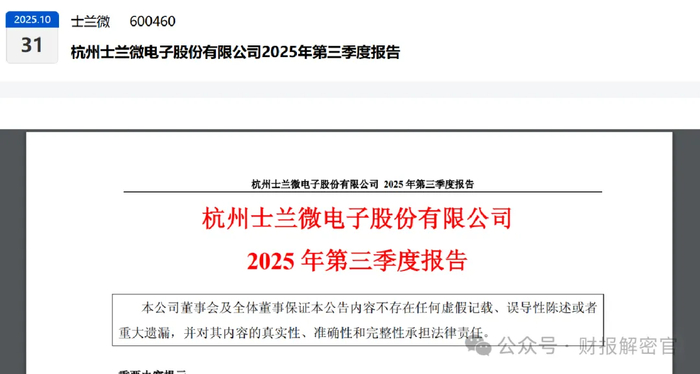
Core Viewpoint - The company Silan Microelectronics reported a significant increase in net profit for Q3, reaching 349 million yuan, a year-on-year growth of 1108.75% [1][3]. Financial Performance - The net cash received from sales reached 1.199 billion yuan, more than three times the net profit, with a year-on-year increase of 722.38% [3]. - The net increase in cash and cash equivalents was reported at -3.757 million yuan, reflecting a 74.87% change [3]. - The company's bad debt provision at the end of the reporting period was 46.8482 million yuan, a 39.62% increase compared to the same period last year, which is significantly higher than the growth rates of revenue and profit [9][10]. Shareholder Dynamics - Key shareholders include the National Integrated Circuit Industry Investment Fund, holding 5.22%, and Hong Kong Central Clearing Limited, indicating strategic interest from significant institutional investors [4][5]. - The presence of the National Fund serves as a "national certification," suggesting alignment with national strategies to address critical issues in the semiconductor industry [5]. Strategic Positioning - The company has successfully transitioned from traditional consumer electronics to high-demand sectors such as new energy vehicles, photovoltaic storage, and industrial control, which are characterized by high added value [7]. - The shift in product structure and the company's entry into high-end markets have led to a transformation in its business model from "order-based production" to "strategic supply," enhancing customer relationships and cash flow [7]. Long-term Outlook - The company's identity as a key enterprise in national planning, along with support from the National Fund, provides advantages in R&D investment, capacity expansion, and ecosystem collaboration [8]. - The simultaneous interest from institutional investors suggests that the fundamental changes in the company may be long-term and strategic rather than short-term fluctuations [6]. Conclusion - The financial report indicates a significant transformation for Silan Microelectronics, reflecting a successful transition from technological breakthroughs to commercial realization, supported by national strategies and institutional backing [11][12].


国产第一、全球第四,巨亏400亿
Xin Lang Cai Jing· 2026-01-19 03:53
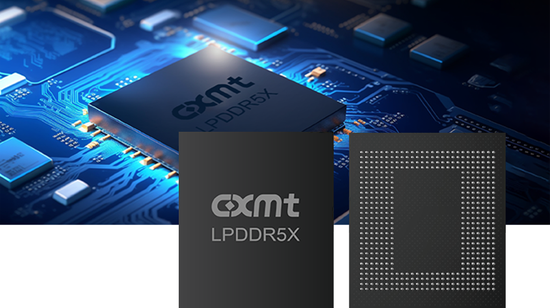
Core Viewpoint - The DRAM market, crucial for devices like smartphones and computers, is dominated by international players, but Chinese company Changxin Technology has emerged as a significant competitor, marking a breakthrough in China's semiconductor industry [1][20]. Group 1: Market Overview - DRAM, or Dynamic Random Access Memory, is a key component that affects device performance and multitasking capabilities [1]. - The global DRAM market is projected to reach $97.6 billion (approximately 680 billion yuan) in 2024, accounting for about 59% of the overall storage chip market [3][23]. - Samsung, SK Hynix, and Micron collectively hold over 90% of the global market share, maintaining a dominant position for over a decade [1][3]. Group 2: Changxin Technology's Development - Changxin Technology, established in a push for semiconductor localization, began mass production of its first DRAM chip in 2019 and has since expanded its product offerings [5][27]. - The company has secured significant clients, including Alibaba Cloud, ByteDance, Tencent, Lenovo, and Xiaomi, and anticipates revenues between 55 billion to 58 billion yuan by 2025 [1][21]. - After eight rounds of financing, Changxin's valuation has exceeded 150 billion yuan, and it plans to raise 29.5 billion yuan through an IPO, potentially becoming the second-largest financing in the history of the Sci-Tech Innovation Board [21][28]. Group 3: Financial Performance - From 2022 to 2024, Changxin's main business revenue is expected to grow at a compound annual growth rate of 72.04%, increasing from 8.287 billion yuan in 2022 to 24.178 billion yuan in 2024 [28]. - By the first three quarters of 2025, the company reported revenues of 32.084 billion yuan, reflecting a year-on-year growth of 97.79% [28]. Group 4: Competitive Landscape - Despite being the fourth largest globally, Changxin's market share of 3.97% is significantly lower than the leading firms, indicating limited bargaining power and market influence [10][29]. - In contrast, Samsung, SK Hynix, and Micron are projected to generate revenues of $13.75 billion, $13.5 billion, and $10.65 billion respectively in Q3 2025, while Changxin's revenue is estimated at 16.646 billion yuan (approximately $2.387 billion) [10][29]. Group 5: Technological Challenges - Changxin's products are approaching international standards, with recent releases achieving transmission speeds of up to 8000 Mbps and capacities of 24 Gb for DDR5 [11][30]. - However, the company lags in process technology, currently producing at a 17nm level compared to the 10nm advancements of its competitors, which affects performance metrics [11][31]. - High Bandwidth Memory (HBM) remains a critical bottleneck for Changxin, as it lacks experience in this advanced technology area, which is essential for high-end applications [12][32]. Group 6: Market Dynamics and Future Outlook - The current surge in AI demand has created a global shortage of storage chips, presenting an opportunity for Changxin to expand its market presence [14][33]. - The company projects revenues to exceed 55 billion yuan for the previous year and aims for profitability by 2026 or 2027, contingent on the DRAM industry remaining in an upward cycle [34]. - The cyclical nature of the DRAM industry poses risks, as price fluctuations can significantly impact profitability, especially for companies in a growth phase like Changxin [15][19].
华泰研究:AI链洁净室与电子布高景气延续
HTSC· 2026-01-19 03:10
Investment Rating - The report maintains a "Buy" rating for several companies including 亚翔集成 (603929 CH), 中材国际 (600970 CH), 四川路桥 (600039 CH), 精工钢构 (600496 CH), 东方雨虹 (002271 CH), 凯盛科技 (600552 CH), 华新建材 (600801 CH), 中国巨石 (600176 CH), 中国核建 (601611 CH), and 上峰水泥 (000672 CH) [10][32][33][34][35][36] Core Insights - The report highlights that AI upgrades and domestic substitution are driving continued high demand in cleanroom and electronic fabric sectors, with significant capital expenditure increases from major companies like Micron and TSMC [2][13] - The cleanroom and electronic fabric markets are expected to maintain a tight supply-demand balance, particularly for high-end products, due to ongoing investments in advanced processes and PCB [13][14] - The report emphasizes the importance of emerging industries and traditional sectors, recommending a balanced investment approach in Q1 2026 [2][13] Summary by Sections Industry Overview - The cleanroom and electronic fabric sectors are experiencing sustained high demand driven by AI hardware investments, with TSMC raising its 2026 capital expenditure guidance to USD 52-56 billion, a 30% increase from 2025 [2][13] - The report notes that the supply of high-end electronic fabrics is tight, particularly for second-generation fabrics and Low CTE (LCTE) products, which are expected to see price increases [2][13] Company Dynamics - 亚翔集成's revenue forecast has been adjusted upwards based on strong order growth and capital expenditure increases from major semiconductor companies [14][33] - 中材国际 reported a 12% year-on-year increase in new orders for 2025, indicating a recovery in its order structure and a shift away from reliance on the domestic cement industry [34] - 四川路桥's revenue for the first three quarters of 2025 increased by 1.95% year-on-year, with a significant rise in net profit, reflecting strong project execution and order growth [35] Market Trends - The report indicates that the cement market is facing a slight decline in prices, with a 1.4% decrease week-on-week, while the glass market shows mixed performance across regions [22][23] - The electronic fabric market is experiencing stable prices after recent increases, with a continued tight supply for high-end products [20][27] Recommendations - The report recommends focusing on companies that are well-positioned to benefit from the ongoing trends in cleanroom and electronic fabric sectors, including 亚翔集成, 中材国际, and 四川路桥, among others [2][10][32][33][34][35][36]


AI算力破局关键,先进封装板块暴涨,风口来了?
3 6 Ke· 2026-01-19 02:56
Core Insights - The demand for AI computing power is surging, pushing chip power consumption to its limits, with traditional packaging methods unable to keep up [3][6] - Advanced packaging technologies, particularly the combination of advanced packaging and Silicon Carbide (SiC), are seen as key solutions to these challenges [5][17] Group 1: Industry Trends - AI model training and data center computing power are expected to grow exponentially, with China's intelligent computing scale projected to reach 1037.3 EFLOPS by 2025, increasing by 40% in 2026 [3] - Traditional packaging methods are failing to manage the heat generated by increased power consumption, with silicon interlayers having a thermal conductivity of only 148 W/m·K [3][6] - The global advanced packaging market is predicted to exceed $79 billion by 2030, with 2.5D/3D packaging experiencing a growth rate of 37% [5] Group 2: Technological Innovations - The core upgrade logic of advanced packaging involves breakthroughs in both materials and processes, with SiC emerging as the optimal interlayer material due to its superior thermal conductivity of 490 W/m·K [7][8] - The transition from 2.5D to 3D packaging, utilizing hybrid bonding technology, has reduced interconnect spacing from 20μm to less than 10μm, resulting in a 30% reduction in signal delay [6][7] Group 3: Market Opportunities - Companies are encouraged to focus on four key areas to capitalize on the growth driven by advanced packaging and SiC technologies: SiC materials and equipment, advanced packaging OSAT, critical materials, and hybrid bonding/3D packaging technologies [12][13][14][15][16] - Domestic companies like TianYue Advanced and Sanan Optoelectronics are positioned to benefit from the upcoming production ramp-up of 12-inch SiC substrates [13][17] Group 4: Equipment and Supply Chain - The equipment sector is crucial for mass production, with domestic manufacturers breaking through foreign monopolies in hybrid bonding machines and CMP equipment [11] - The demand for semiconductor packaging equipment is expected to grow significantly, with the market projected to reach 28.27 billion yuan in 2024, a year-on-year increase of 18.9% [11]



SK海力士、三星加速HBF商业化进程,存储材料设备板块或受益于国内存储大厂融资扩产
Mei Ri Jing Ji Xin Wen· 2026-01-19 02:54
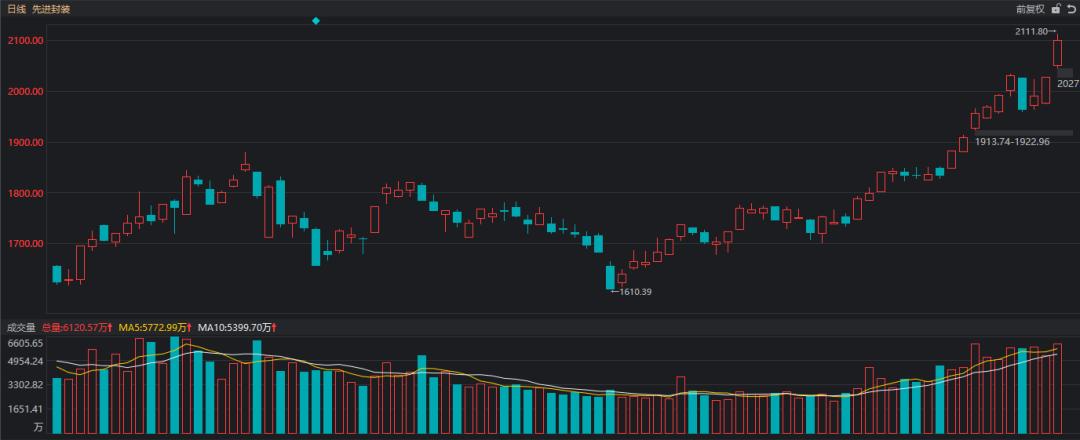
Group 1 - The Shanghai Stock Exchange Sci-Tech Innovation Board semiconductor materials and equipment theme index (950125) decreased by 0.80% as of January 19, 2026, with mixed performance among constituent stocks [1] - The semiconductor equipment ETF Huaxia (562590) fell by 0.77%, with a latest price of 2.05 yuan and a trading volume of 2.06 billion yuan [1] - The semiconductor materials and equipment sector is seen as a key area for domestic substitution, benefiting from low domestic replacement rates and high ceilings for domestic alternatives, driven by the AI revolution and technological advancements [3] Group 2 - SK Hynix is collaborating with SanDisk to establish the HBF standard, with plans to launch HBF1 samples as early as this year, utilizing 16-layer NAND flash memory stacking [2] - The HBF technology is expected to be applied in products from Nvidia, AMD, and Google by late 2027 or early 2028, with predictions that the HBF market will surpass the HBM market by around 2038 [2] - Huafu Securities anticipates that the performance release in the storage sector will occur in three stages, benefiting from price increases in module manufacturers and subsequent orders for equipment manufacturers [2]
新兵冲刺A股,角逐WiFi芯片赛道!
是说芯语· 2026-01-19 02:37
Core Viewpoint - AIC Semi, a Shanghai-based wireless communication chip design company, has officially initiated its A-share IPO process, marking a significant entry into the domestic WiFi chip market [1]. Company Overview - AIC Semi was established in August 2018 with a registered capital of 73.76 million yuan. The company operates without a controlling shareholder, which enhances its research independence and decision-making flexibility [2]. - The core research team consists of top talents with extensive entrepreneurial experience and technical expertise, providing a solid foundation for product development [2]. Competitive Advantage - AIC Semi's core competitiveness lies in the WiFi6 chip sector, having achieved large-scale production of its self-developed WiFi6 chip, which is the first in China to pass WiFi Alliance certification. The company holds multiple certifications, creating a differentiated barrier in the market [3]. - The AIC8800 series chips are notable products, with the AIC8800D80P supporting dual-band WiFi6 and achieving data rates of up to 600.4 Mbps, successfully integrated into Lenovo's 5G portable WiFi [3]. Market Position and Partnerships - AIC Semi has gained broad market recognition, collaborating with major companies across various sectors, including consumer electronics and smart home devices, establishing a diversified supply chain [5]. - The domestic WiFi chip market has been historically dominated by international firms like Qualcomm and Broadcom, but AIC Semi has emerged as a leading domestic supplier, leveraging cost-effectiveness and localization advantages [5]. Industry Landscape - The domestic WiFi chip sector is becoming increasingly competitive, with several listed companies creating a differentiated competitive ecosystem. Notable competitors include Espressif Systems, Allwinner Technology, and Broadcom, with AIC Semi positioned to compete alongside them [7]. - AIC Semi's IPO will likely enhance its funding reserves, accelerating technological iterations and market expansion in the WiFi chip sector, thereby solidifying its competitive position in the domestic substitution process [9].
开山股份20260118
2026-01-19 02:29
Summary of Key Points from the Conference Call Company Overview - The company discussed is **Kaisan Co., Ltd.** (开山股份), which operates in the geothermal energy and compressor industries [2][3]. Industry Insights - **Geothermal Energy Market**: The global geothermal resource potential is significant, with the U.S. market demand increasing, particularly driven by tech giants like Meta and Google for data centers. Large-scale geothermal power agreements have been signed, expected to significantly boost geothermal power demand [2][4]. - **Compressor Industry**: The compressor industry is experiencing accelerated domestic substitution, with Kaisan emerging as a key player in the air compressor market. The demand for ship compressors is also notably increasing [2][8]. Financial Performance - **Revenue and Profitability**: Kaisan's compressor business generated nearly 3 billion RMB, while the geothermal power business has a gross margin close to 50%. The company expects substantial revenue growth from existing projects due to a 45% increase in potential order prices for geothermal power [2][5][9]. - **Projected Growth**: Kaisan anticipates rapid profit growth over the next few years, with expected profits of 400 million, 600 million, and 950 million RMB for 2025, 2026, and 2027, respectively, reflecting growth rates of approximately 30%, 50%, and 50% [3][9]. Market Dynamics - **U.S. Geothermal Market**: The U.S. geothermal market is projected to grow significantly due to the demand from data centers. Meta and Google have signed contracts for 150MW and 110MW of geothermal power, respectively, which will contribute to a substantial increase in overall demand [4][10]. - **Global Geothermal Resource Distribution**: The richest geothermal resources are found in the U.S., Indonesia, and the Philippines. The cost of geothermal power generation is on a downward trend, with fluctuations across different projects and regions [7]. Strategic Positioning - **Global Expansion**: Kaisan is focusing on global expansion and transitioning to renewable energy, with plans to double its overseas compressor business revenue to 300 million USD within 2-4 years [2][5]. - **Dual Business Model**: The company operates a dual business model with compressors and geothermal power, benefiting from synergies between the two sectors. This model positions Kaisan favorably for future growth [12]. Investment Outlook - **Market Valuation**: Given Kaisan's leadership in domestic geothermal power and the rapid growth of its overseas compressor business, the market valuation is expected to be above the industry average [3][9]. - **Future Opportunities**: The company is well-positioned to capitalize on the increasing demand for geothermal energy driven by data centers, both in the U.S. and globally, including markets in Indonesia and Kenya [11][12].
