智能化

Search documents
活力广交 | 第138届广交会第三期“美好生活”三大温度看点
Shang Wu Bu Wang Zhan· 2025-11-10 16:51
Core Insights - The 138th Canton Fair's third phase focuses on "Beautiful Life," featuring five major sectors: fashion, home textiles, toys and baby products, stationery, and health and leisure, with a total exhibition area of 515,000 square meters and approximately 25,000 booths, creating a global trade event that combines cultural care and fashion trends [1] Group 1: Consumer Demand and Trends - The event addresses deep consumer needs, covering diverse scenarios from personal to pet products, and from basic functionality to emotional value, catering to global buyers' demand for high-quality products [2] - Key exhibition categories such as clothing, footwear, bags, and stationery exceed global counterparts in exhibition area, highlighting strong international competitiveness [2] - Emerging themes like pet supplies, camping leisure, and new consumption for the elderly are focal points, responding accurately to global consumption upgrade trends [2] Group 2: Industry Participation and Innovation - Over 12,000 participating companies are present, with more than 200 new additions compared to the previous session, including over 2,900 high-quality enterprises such as national high-tech firms and specialized "little giants," showcasing the fair's strong industrial aggregation effect [3] - A number of "invisible champions" in niche markets are present, leveraging technological innovation across the supply chain to maintain industry leadership [3] Group 3: New Supply Trends - Companies are reshaping lifestyles through intelligence, sustainability, and personalization, with each exhibit representing an innovative proposal for a better life [4] - Smart products like customizable treadmills and intelligent surgical robots are highlighted, integrating technology with traditional health management practices [5] - Eco-friendly products such as biodegradable toys and recycled ski suits demonstrate a commitment to green manufacturing, with a 40% carbon reduction achieved through fluorine-free processes [6] - Innovative designs, including pet protective gear and 3D-printed shoes, showcase technology's role in meeting specific needs while enhancing personalization and functionality [7]

机器人加速进社区 物管行业探索“人机共生”新图景
Zheng Quan Ri Bao· 2025-11-10 16:17
Core Insights - The integration of AI and robotics is redefining community services, marking a new phase of "human-machine coexistence" in the property management industry [1][3] - The property management industry in China is entering a trillion-yuan era, with projected revenue reaching 1.75 trillion yuan by 2024, and the market size expected to grow from 259.1 billion square meters in 2020 to nearly 380 billion square meters by 2029 [1] Industry Overview - The property management industry is facing structural challenges such as rising labor costs, compressed profit margins, and expanding service boundaries, necessitating a shift towards technology and intelligence for sustainable growth [1] - A number of property companies are leading the charge in technological upgrades, focusing on robotics and smart management platforms to enhance operational efficiency and service quality [1] Company Developments - Country Garden Services has developed the "Zero Resident" robot, which has been deployed in over 17 projects across cities like Guangzhou and Shanghai, with plans to increase the number to 1,000 by year-end [2] - The robot is designed to perform tasks such as autonomous cleaning and obstacle avoidance, significantly improving operational efficiency and safety [2] Future Trends - The property service model is transitioning towards "human-machine coexistence," where human workers will manage multiple robots, allowing them to focus on higher-value tasks [3] - The application of robotics in the property sector signifies not only technological advancement but also a shift in business logic, moving from scale-driven growth to refined operations [3]

开源晨会-20251110
KAIYUAN SECURITIES· 2025-11-10 15:21
Macro Economic Insights - The Producer Price Index (PPI) showed a year-on-year increase, driven by the non-ferrous and downstream manufacturing sectors, with October PPI at -2.1%, an improvement from previous expectations of -2.3% [3][7] - The Consumer Price Index (CPI) for October was reported at 0.2%, slightly above the expected -0.1%, indicating a modest recovery in consumer prices [3][4] Industry Analysis Electric Forklift Industry - The penetration rate of electric forklifts is increasing, with a current rate of 67.87% in China, lower than the global average of 72.23% and Europe's 88.71%, suggesting significant growth potential [11] - The industry is moving towards automation and intelligence, with a notable increase in sales of unmanned forklifts, which saw a year-on-year growth of 266.7% in the first half of 2025 [12] Coal Mining Sector - The price of thermal coal has surpassed 800 RMB per ton, driven by supply constraints and increased demand due to seasonal heating needs, with prices expected to stabilize between 800-860 RMB [22][24] - The focus on coal prices is on achieving a balance between coal and power generation profitability, with a target price of around 750 RMB for 2025 [25] Media and Entertainment - The gaming sector continues to show strong performance, with significant revenue increases from mobile games and a focus on expanding into overseas markets [27] - The rise of video podcasts is noted as a new growth curve for content platforms, with Bilibili reporting a 270% increase in consumption time for video podcasts in Q1 2025 [18] Pharmaceutical Sector - The company is advancing its HIV drug pipeline, with the ACC017 tablet entering phase III clinical trials, indicating strong growth potential in the HIV treatment market [39][40] - The global sales of HIV integrase inhibitors are projected to reach nearly 25 billion USD in 2024, highlighting the market's growth trajectory [39] Semiconductor Industry - The domestic storage chip market is expected to see significant growth due to increasing demand driven by AI applications, with AI servers requiring substantially more storage than traditional servers [33] - Domestic equipment manufacturers are making breakthroughs in key processes, which is expected to enhance the localization rate of storage equipment [36]

热销!13连涨,全球下单
Xin Hua Wang· 2025-11-10 13:00
Core Insights - China's machinery exports, particularly excavators, are experiencing rapid growth, with a significant share in the total export volume, exceeding 60% [1][5] - The demand for intelligent and automated machinery in Africa is rising, driven by the need for efficiency and reliability in harsh working conditions [3][5] Group 1: Market Performance - Excavator exports to Africa reached $4 billion in the first half of 2025, marking a 51.6% year-on-year increase, with excavators accounting for 27.6% of total engineering machinery exports [7] - The export volume of excavators has shown continuous growth, with a 14.6% increase year-on-year in the first nine months of 2025, totaling 84,162 units [14] - In September 2025, excavator exports reached 10,600 units, reflecting a 29% year-on-year growth [14] Group 2: Technological Advancements - Chinese excavators are equipped with intelligent features that enhance performance in challenging environments, such as high temperatures and dust [3][7] - Remote control technology allows operators to manage excavators from hundreds of meters away, ensuring precision and efficiency [18][20] - The industry is transitioning from selling hardware to providing comprehensive smart solutions and lifecycle services, reshaping the value chain and competitiveness of excavator exports [22] Group 3: Industry Insights - The South African market is identified as having significant potential for mining machinery, presenting substantial opportunities for Chinese manufacturers [9] - Companies are ramping up production to meet increasing overseas demand, with some reporting that over 70% of their excavator sales come from exports [12][14] - The growth in excavator sales is primarily driven by expanding overseas markets, particularly in Southeast Asia, the Middle East, Africa, and South America [12]
万达轴承:多维度指标稳中向好,机器人业务拓圈加速
Jin Tou Wang· 2025-11-10 08:44
Core Viewpoint - Wanda Bearing has demonstrated steady growth in its financial performance for the first three quarters of 2025, driven by the recovery in demand for forklift bearings and the expansion of its product offerings in emerging markets [1][2][4]. Financial Performance - For the first three quarters of 2025, the company achieved operating revenue of 268 million yuan, a year-on-year increase of 2.13%, and a net profit attributable to shareholders of 47.7 million yuan, up 5.92% [1]. - The third quarter alone saw revenue of 88.51 million yuan, reflecting a 4.10% year-on-year growth [1]. Business Operations - The main business of Wanda Bearing focuses on the research, production, and sales of forklift bearings and slewing bearings, with key products including various types of forklift bearings and slewing bearings [2]. - The company has established long-term stable partnerships with leading forklift manufacturers, which has supported the growth of its forklift bearing business [2]. Market Trends - The recovery in the forklift market and the increasing penetration of electric forklifts have been significant drivers for the growth of the forklift bearing industry, contributing to Wanda Bearing's sustained performance [2]. - The slewing bearing business has also seen rapid growth, with revenue reaching 14.91 million yuan in the first half of the year, marking a 13.85% increase [3]. Financial Structure - As of the end of the third quarter of 2025, the company's debt-to-asset ratio was 8.68%, a slight decrease from 8.85% at the end of the previous year, indicating a strong financial position [4]. Growth Potential - The company has increased its construction projects by 13.68 million yuan, indicating ongoing capacity expansion plans [5]. - Wanda Bearing is actively expanding into new fields such as forklift steering systems, industrial robots, and automation technologies, while also investing in R&D for core technologies in robot bearings [5]. - Collaborations with universities and a focus on high-end, intelligent product development are part of the company's strategy to enhance its competitive edge in emerging markets [5].
研报掘金丨长江证券:比亚迪盈利能力向上趋势明确,维持“买入”评级
Ge Long Hui A P P· 2025-11-10 08:05
Core Viewpoint - The report from Changjiang Securities indicates that the company is expected to achieve a net profit attributable to shareholders of 7.82 billion yuan in Q3 2025, reflecting a year-on-year decrease of 32.6% but a quarter-on-quarter increase of 23.1% [1] Financial Performance - The company's gross profit margin and per-vehicle profitability are improving, indicating a clear upward trend in profitability [1] - The projected net profit for the company in 2025 is 35 billion yuan, corresponding to a price-to-earnings ratio of 27X, maintaining a "buy" rating [1] Strategic Initiatives - The company is building competitive advantages through technology and scale, with a strong focus on intelligent transformation and high-end market expansion [1] - The launch of the Super E platform marks a significant innovation in pure electric technology, reinforcing the company's advantages in electrification [1] Product Development - The company has a rich reserve of models including Tengshi, Yangwang, and Fangchengbao, accelerating its layout in the high-end market [1] International Expansion - The company is actively enhancing its overseas channels and model matrix, with ongoing efforts to expand internationally [1] - The upcoming peak season in the second half of the year is expected to improve scale effects, with profitability anticipated to continue rising as international expansion and high-end offerings ramp up [1]


长城汽车在大连设立新公司,经营范围覆盖零部件研发
Ju Chao Zi Xun· 2025-11-10 06:27
Core Viewpoint - The establishment of Dalian Great Wall Intelligent Technology Automotive R&D Co., Ltd. by Great Wall Motors is a strategic move to enhance its smart and new energy vehicle initiatives, leveraging Dalian's automotive industry advantages and aiming to extend the automotive value chain [2][3] Group 1: Company Overview - Dalian Great Wall Intelligent Technology Automotive R&D Co., Ltd. was founded on November 7 with a registered capital of 100,000 yuan [2] - The company’s business scope includes information technology consulting, digital advertising, professional design services, engineering and technology research, new material technology R&D, automotive parts R&D, new energy vehicle sales, and software development among others [2] - Great Wall Motors holds 100% ownership of the new company, with its chairman and general manager, Wei Jianjun, as the actual controller [2] Group 2: Industry Context - Dalian has developed a comprehensive vehicle and parts production system, housing major companies like Chery, Dongfeng Nissan, and over 150 automotive industry enterprises [3] - The automotive parts industry in Dalian has a strong foundation with a wide range of products, including critical components like CNC machine tools, engines, transmissions, electrical systems, and tires [3] - The strategic layout of Dalian Great Wall Intelligent Technology Automotive R&D Co., Ltd. integrates upstream R&D with downstream sales, facilitating a feedback loop that enhances product technology based on market demands [3]

“双料龙头”临工重机:年营收超百亿,仍难掩周期性风险
Zhi Tong Cai Jing· 2025-11-10 05:39
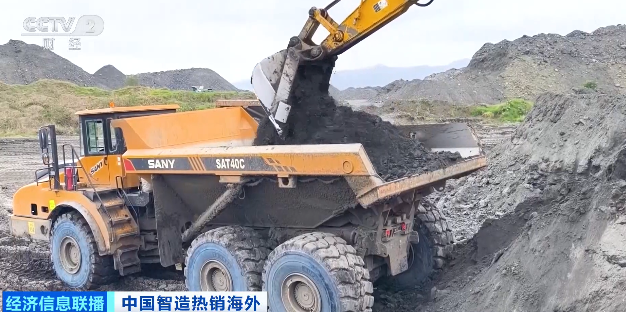
Core Viewpoint - The company, Lingong Heavy Machinery, is set to go public on the Hong Kong Stock Exchange, positioning itself as a "dual leader" in both mining and aerial work equipment sectors, which may spark a listing frenzy in the Hong Kong market [1][4]. Company Overview - Lingong Heavy Machinery, established in 2012, specializes in the research, design, manufacturing, sales, and service of machinery for mining, aerial work, and material handling [1]. - The company ranks third among domestic enterprises in the global mining transportation equipment and excavator market, and first in the domestic market for new energy mining transportation equipment as of 2024 [1][2]. Financial Performance - Revenue figures for Lingong Heavy Machinery from 2022 to 2024 are as follows: 10.529 billion yuan, 9.897 billion yuan, and 12.028 billion yuan, with a slight decline in 2023 followed by a recovery in 2024 [3]. - The company achieved a net profit of 0.954 billion yuan, 0.974 billion yuan, 1 billion yuan, and 0.635 billion yuan from 2022 to the first half of 2025, indicating a steady growth trend [3]. - The gross profit margin improved from 17.7% in 2022 to 22.4% in the first half of 2025, driven by increased sales of high-margin products and a decrease in raw material prices [3]. Market Position and Strategy - Lingong Heavy Machinery has expanded its global footprint, reaching over 100 countries and increasing its overseas revenue share from 26.8% in 2022 to 44% in the first half of 2025 [2]. - The company has diversified its product lines, focusing on high-altitude work machinery, wide-body dump trucks, drilling rigs, and special machinery, while also leading in the electrification and automation of mining equipment [2]. Industry Growth Potential - The global engineering machinery market is projected to grow from 1.5372 trillion yuan in 2024 to 2.1319 trillion yuan by 2030, with a compound annual growth rate (CAGR) of approximately 5.6% [5]. - The aerial work equipment market is expected to grow from 62.6 billion yuan in 2020 to 136.6 billion yuan in 2024, with a CAGR of 21.5% [5]. - The mining equipment market is forecasted to expand from 736.7 billion yuan in 2024 to 1,025.6 billion yuan by 2030, with a CAGR of 5.7% [6]. Competitive Landscape - The engineering machinery industry is becoming increasingly competitive, with major players like XCMG and SANY accelerating their overseas expansion [7]. - Lingong Heavy Machinery faces significant competition in the aerial work equipment sector, where its revenue is projected to decline by 57% in 2024, highlighting the challenges posed by domestic competitors [7].
燃油车又杀回来了
创业邦· 2025-11-10 03:38
Core Viewpoint - Despite the rise of electric vehicles, traditional fuel vehicles continue to show resilience in the market, with recent data indicating a rebound in sales and market share [5][6][10]. Sales Performance - In September, domestic sales of traditional fuel vehicles reached 1 million units, marking a year-on-year increase of 6.4% and a month-on-month increase of 10.9% [5]. - From January to September, cumulative sales of traditional fuel vehicles totaled 8.141 million units, reflecting a year-on-year growth of 1.7% [5]. - Fuel vehicles accounted for 47.76% of total passenger car sales in the same period, indicating their significant market presence [5]. Market Dynamics - The rebound in fuel vehicle sales is attributed to a rational market adjustment following a period of high demand for electric vehicles [6]. - Price reductions have played a crucial role in this recovery, with discounts averaging around 30%, and some luxury models seeing discounts exceeding 40% [8][10]. - The Nissan Sylphy emerged as the best-selling fuel vehicle in September, with sales of 33,000 units, benefiting from substantial price cuts [8]. Strategic Responses from Automakers - Traditional automakers are adjusting their product positioning and pricing strategies to compete with electric vehicles, with many reducing prices to below 80,000 yuan [10]. - Major brands like Honda and FAW-Volkswagen reported significant sales increases, with Honda's CR-V and FAW-Volkswagen's overall sales showing strong performance [12][14]. - Companies like Geely and Chery are launching new fuel vehicle strategies, emphasizing the importance of fuel vehicles alongside electric models [11][15]. Technological Advancements - Fuel vehicles are increasingly incorporating advanced technologies, such as intelligent driving systems and high-performance chips, to enhance their competitiveness [17][20]. - Recent models from various manufacturers are equipped with features like intelligent parking and advanced driver assistance systems, narrowing the technological gap with electric vehicles [19][20]. - The perception that fuel vehicles are lagging in intelligence is changing, as they now offer many of the same smart features as electric vehicles [20][21]. Future Outlook - The market is expected to evolve into a more diverse landscape where both fuel and electric vehicles coexist, catering to different consumer needs [21]. - Automakers are likely to adopt a multi-faceted strategy, balancing investments in both fuel and electric vehicle technologies to meet varying market demands [21].

奔驰全新纯电CLA:用“中国配方”追逐年轻流量
Jing Ji Guan Cha Wang· 2025-11-10 03:24
Core Insights - The collaboration between table tennis player Wang Chuqin and Mercedes-Benz for the electric CLA model represents a strategic marketing move aimed at reshaping the brand's value system in China, focusing on technology and premium capabilities [2][3] - The Mercedes-Benz electric CLA is positioned as a core strategic product for the year, with a starting price of 249,000 yuan, which is 10,000 yuan lower than the pre-sale price, and features such as an 800V high-voltage architecture and a range of 866 kilometers [2][3] - Mercedes-Benz aims to narrow the technological gap with local brands by increasing local R&D and collaborating with domestic technology suppliers, a common goal among joint venture brands in the current market [2][3] Product Strength and Differentiation - The electric CLA emphasizes safety with standard features like 11 airbags and a five-star rating in China's electric vehicle fire safety index, along with leading the development of international standards for electromagnetic safety [3] - The marketing strategy includes engaging younger consumers, with the new leadership in the China region and a focus on appealing to the younger demographic through relatable marketing efforts [3][4] - The pricing strategy of the electric CLA, set below 250,000 yuan, is a direct response to the increasing price sensitivity of Chinese consumers and aims to compete in a crowded market alongside models like Tesla Model 3 and Zeekr 007 [4] Market Positioning and Challenges - Mercedes-Benz is adapting to a more localized approach in its marketing and product offerings, acknowledging the diminishing "technology halo" and the need to balance brand premium with cost control [4] - The entry into the competitive segment of electric vehicles means that Mercedes-Benz will face challenges in brand recognition, channel service, and user engagement in the Chinese market [4]