全球化

Search documents
听美国企业主讲述“制造业回流”难在哪
Huan Qiu Shi Bao· 2025-05-28 23:02
Core Viewpoint - The article discusses the challenges faced by American small business owners in the context of the U.S. government's "reciprocal tariff" policy aimed at bringing manufacturing back to the U.S. It highlights the reluctance of consumers to pay higher prices for "American-made" products, despite public support for domestic manufacturing [1][3]. Group 1: Challenges of "American Manufacturing" - A small business owner conducted an online test revealing that all nearly 600 showerheads sold were produced in Asia, with zero sales for the "American-made" option priced at $239 compared to $129 for the Asian-made version [1][2]. - The high cost of "American-made" products, which can exceed $100 more than their Asian counterparts, is attributed to the lack of specialized manufacturing facilities in the U.S. and the need for collaboration with multiple manufacturers to produce a single product [2][5]. - The complexity and cost of logistics in the U.S. further hinder the competitiveness of "American manufacturing," as multiple factories are required to complete different production stages, leading to increased expenses and time delays [5][6]. Group 2: Economic Implications - The "reciprocal tariff" policy may lead to job losses among small business owners who rely on global supply chains, as raising prices to maintain profitability could result in zero sales [7][9]. - The article emphasizes that the U.S. lacks the necessary resources, infrastructure, and skilled labor to support a fully domestic manufacturing model, making it impractical to produce all consumer goods within the country [5][6]. - The uncertainty surrounding future tariffs and trade policies has led companies to pause new product development and reduce marketing efforts, reflecting a cautious approach to risk management in an unpredictable environment [8][9].
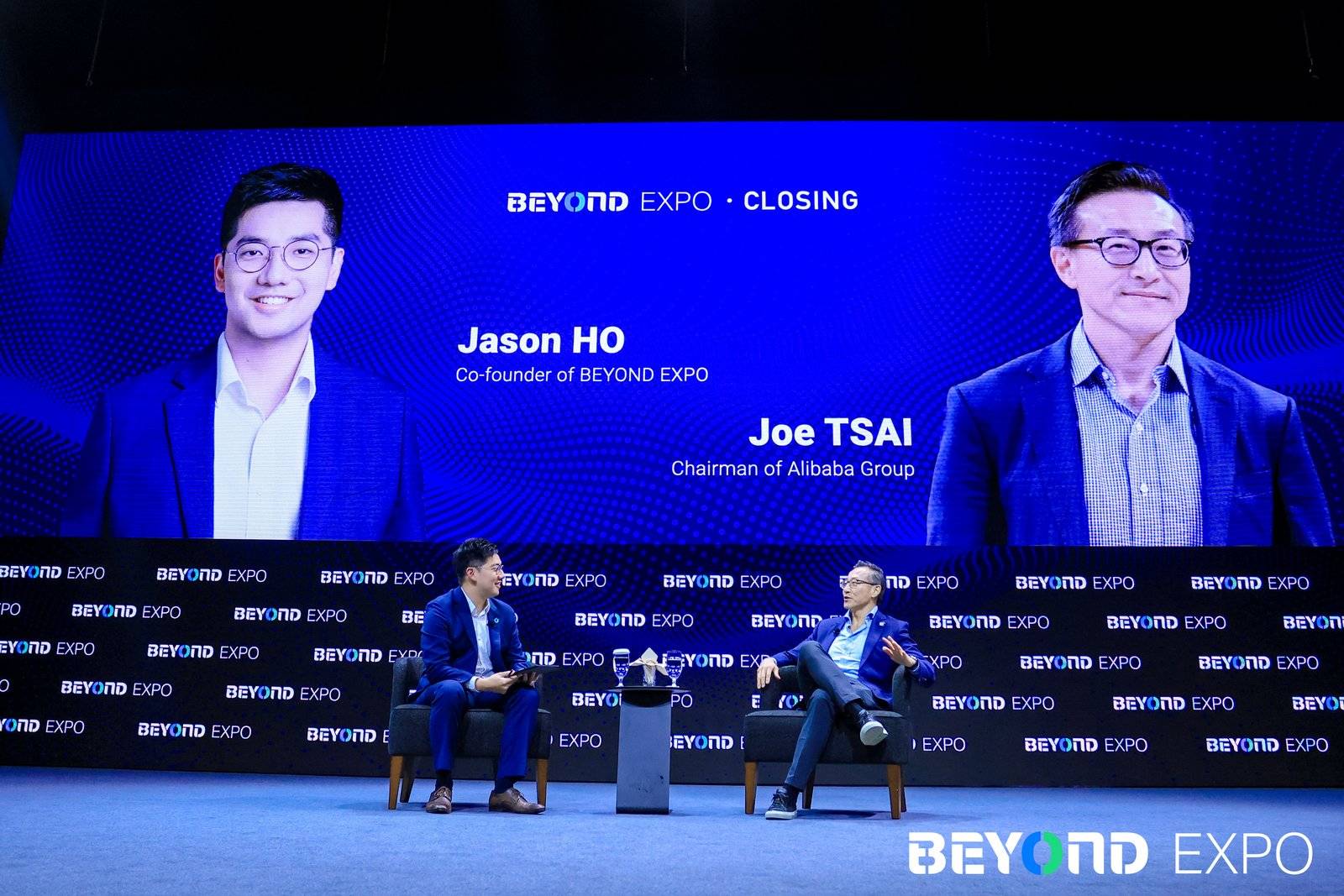
蔡崇信:机器人不必像人,年轻人要追求能力而非履历|BEYOND Expo 2025专题报道
Sou Hu Cai Jing· 2025-05-28 19:20
Group 1: Trust and Globalization - Trust is built over time through shared goals and mutual respect, which is essential for business cooperation [3][4] - Alibaba's mission to help small businesses access global markets remains relevant today, emphasizing the importance of understanding local cultures for entrepreneurs [3][5] - The global business environment has become unpredictable, necessitating proactive communication between companies and regulatory bodies [4][5] Group 2: Globalization Strategies - Alibaba's revenue is predominantly from the Chinese market, highlighting the importance of local understanding in international operations [5] - Successful globalization requires a combination of Chinese technology and local management teams, as demonstrated by Alibaba's approach in Turkey [5] - Language barriers present challenges for Chinese companies abroad, but advancements in AI and translation technology may offer solutions [5][6] Group 3: Robotics and AI - The integration of AI into robotics is transforming their capabilities, moving beyond simple automation to intelligent actions [6] - Most applications do not require humanoid robots, as functionality is prioritized over form [6] - The key challenge for the robotics industry lies in developing spatial intelligence, which remains superior in humans [6] Group 4: Sports and Culture - Sports can serve as a cultural product rather than just a competitive activity, allowing for global engagement [6] - The Brooklyn Nets aim to represent local culture on a global scale, expanding their brand beyond basketball [6] Group 5: Resilience and Career Development - Companies must adopt a mindset of resilience, viewing failures as opportunities for growth [7] - Young professionals should focus on acquiring skills and knowledge rather than merely building a resume, with an emphasis on finding mentors who foster growth [8] - Emotional value in the workplace is crucial, as positive contributions to team dynamics are remembered [8] Group 6: Future of Asia - Asia has been a major beneficiary of globalization, but the dismantling of global bridges necessitates increased internal connectivity among Asian countries [8]


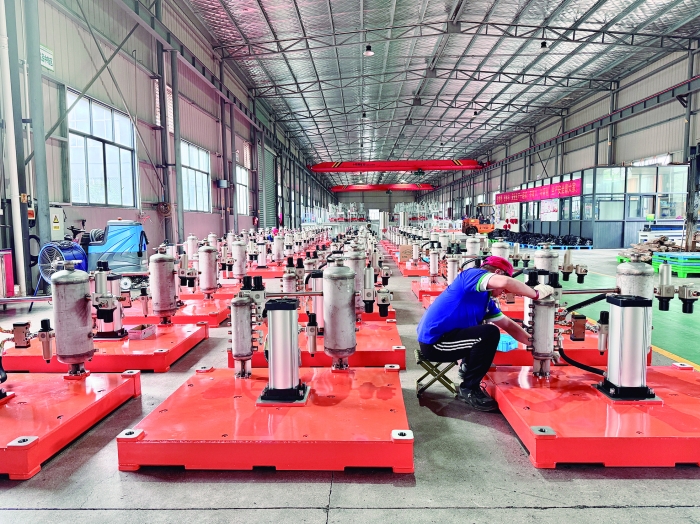
从浙江金华到泰国金池 众鑫股份加速全球化“藤蔓生长”
Shang Hai Zheng Quan Bao· 2025-05-28 18:11
Core Viewpoint - The company is transitioning from a traditional foreign trade factory to a global enterprise, focusing on "global production, global sales, and global service" to meet increasing international demand, particularly from the U.S. and Thailand [2][3]. Expansion and Production Capacity - The company is accelerating overseas capacity construction, with the Thailand factory being a crucial step, expected to fully meet U.S. customer orders by the second quarter and additional demand by the fourth quarter [3][4]. - The Thailand factory has achieved full production capacity for its biodegradable tableware project, with an annual output of 35,000 tons, completed in just nine months [4]. - An additional investment of $80 million will be made to expand the Thailand facility to produce 65,000 tons of biodegradable tableware [4]. Market Strategy and Product Development - The company currently derives approximately 52% of its revenue from U.S. exports and is focusing on expanding its market share in non-U.S. markets while developing new product lines beyond tableware [3][5]. - The company has a domestic capacity of 150,000 tons and is exploring ways to utilize this capacity effectively as U.S. orders shift to Thailand [5]. - The company is also developing high-end industrial packaging products, which have shown promising growth and are expected to contribute significantly to revenue [5]. Industry Position and Future Outlook - The company is a leader in the pulp molding industry, utilizing natural plant fibers like sugarcane bagasse and bamboo pulp, distinguishing itself from competitors who primarily use waste paper [6]. - The global demand for biodegradable products is projected to be substantial, with the company positioned to capitalize on this trend amid increasing regulations against plastic [6]. - The company anticipates that once the Thailand factory reaches full capacity, profitability will exceed that of domestic operations, with potential for revenue to double in the coming years [6]. Technological and Operational Excellence - The company has developed its production equipment and systems, which enhances its cost efficiency and market competitiveness [8]. - The focus on innovation and maintaining high-quality production processes is seen as a key competitive advantage, allowing the company to achieve higher profit margins than industry averages [8]. Challenges and Strategic Vision - The company acknowledges the challenges posed by the changing external environment but views these as opportunities for growth and transformation [9]. - The leadership emphasizes the need for a shift from a scale-driven approach to a value-driven strategy, aiming to create a robust industrial ecosystem [9].
小米集团-W(01810):业绩再创新高,经营效率提升,关注中长期战略持续兑现
Guotou Securities· 2025-05-28 03:03
Investment Rating - The investment rating for Xiaomi Group-W (01810.HK) is "Buy-A" with a 12-month target price of 73.23 HKD [3][7]. Core Insights - Xiaomi reported a record high performance in Q1 2025, achieving revenue of 111.29 billion, a year-on-year increase of 47.4%, and an adjusted profit of 10.68 billion, up 64.5% [1]. - The company has improved operational efficiency in its mobile and AIoT segments, with a mobile and AIoT gross margin of 22.8%, up 2.2 percentage points quarter-on-quarter [1]. - The automotive segment is showing signs of growth, with a delivery volume of 76,000 units and an average selling price (ASP) of 238,000, contributing significantly to revenue [3]. Summary by Sections Financial Performance - In Q1 2025, Xiaomi's revenue reached 1112.93 billion, a 47.4% increase year-on-year, with an adjusted profit of 106.75 billion, reflecting a 64.5% growth [1]. - The mobile segment's revenue was 506.12 billion, up 8.9%, with a notable ASP increase of 5.8% to 1210.6 [2]. - IoT revenue was 323.4 billion, a 58.7% increase, with a gross margin of 25.2%, up 4.7 percentage points [2]. Market Position - Xiaomi regained the top market share in mainland China with a 40% increase in mobile shipments, reaching 13.3 million units [2]. - The company is expanding its high-end product strategy, which has positively impacted internet service revenue, growing 12.8% to 9.1 billion [2]. Automotive Segment - The automotive division's revenue reached 185.8 billion, with a gross margin of 23.2%, indicating ongoing scale effects [3]. - The Yu7 model is expected to be a strong performer, with attention on its sales and production capacity in the upcoming months [3]. Long-term Strategy - Xiaomi's focus on ecosystem investments, AI capabilities, and operational efficiency is expected to drive future growth and valuation [6][7]. - Revenue projections for 2025-2027 are estimated at 501.5 billion, 634.4 billion, and 733.2 billion respectively, with a compound annual growth rate (CAGR) of 17.4% for the mobile and AIoT segments [7][9].

特朗普一生经历的13起全球化大事件
Hu Xiu· 2025-05-27 12:19
Core Viewpoint - The trade conflict initiated by the Trump administration on April 2, 2025, marks a significant moment in U.S.-China relations, highlighting a deepening mistrust that may hinder future cooperation and poses a threat to globalization itself [1][12] Summary by Sections Historical Context of Globalization - Globalization has ancient roots, evolving through significant historical events such as the Silk Road and the Age of Exploration, culminating in the modern era post-World War II [1] - The establishment of the United Nations Charter in 1945 laid the political framework for the current wave of globalization, aiming to prevent conflicts similar to those of the World Wars [1] Economic Foundations - The creation of international financial institutions like the IMF and World Bank aimed to facilitate global trade liberalization and prevent the recurrence of economic crises [2] - The Marshall Plan initiated in 1947 provided crucial economic support to war-torn Europe, fostering a transatlantic market that became central to early globalization [2][3] Key Events in Globalization - The Colombo Plan and the Fourth Plan were early aid initiatives that integrated former colonies into the global economy, enhancing their productivity and purchasing power [3] - The transportation revolution, particularly the advent of container shipping, drastically reduced logistics costs, facilitating international trade [3] - The computer revolution provided the technological backbone for subsequent financial and internet revolutions, further accelerating globalization [3] Acceleration of Globalization - The 1970s marked a significant acceleration in globalization, driven by the Nixon Shock, which decoupled the dollar from gold, enhancing the dollar's role as a global currency [5] - Nixon's visit to China in 1972 opened the door for China to engage with the U.S.-led global market, setting the stage for future economic reforms [5] Expansion and Challenges - The Reagan-Thatcher era introduced deregulation and privatization, which contributed to the globalization process but also led to issues like "deindustrialization" in the U.S. [6] - The collapse of the Soviet Union expanded the global market, integrating former socialist states into the capitalist system [6] - The commercialization of the internet and satellite communications in the 1990s further connected global markets, although the 2008 financial crisis prompted a reevaluation of globalization's benefits [7][8] Recent Developments - The COVID-19 pandemic raised concerns about supply chain security, prompting countries to reconsider their reliance on global manufacturing, particularly from China [10] - The rise of populist movements, exemplified by Brexit and Trump's election, reflects a backlash against globalization, with leaders advocating for more protectionist policies [11][12]
海天味业港股二次上市:老牌巨头的全球化突围与隐形挑战
Xin Lang Zheng Quan· 2025-05-27 10:20
Core Viewpoint - Haitian Flavor Industry is pursuing a secondary listing on the Hong Kong Stock Exchange to address growth bottlenecks in the domestic market and to tackle challenges related to brand trust and international competition [1][2]. Group 1: Reasons for Secondary Listing - The secondary listing is driven by dual motivations: "valuation repair" and "strategic restructuring" [2]. - In 2024, Haitian's revenue reached 26.901 billion yuan, a year-on-year increase of 9.53%, while the domestic seasoning industry growth rate slowed to 1.3% [2]. - Following the "double standard incident" in 2021, Haitian's market value dropped over 60% from its peak of 700 billion yuan, although its stock price rebounded by 23% in 2024 [2]. - The price-to-earnings ratio (PE) has decreased from a historical high of 65 times to 37 times [2]. - The Hong Kong market values consumer leaders based on long-term cash flow, and Haitian aims to present itself as a "global food group" to enhance its valuation [2]. - Despite being present in over 100 countries, overseas revenue accounted for only 4.01% in 2024, significantly lower than competitors like Lee Kum Kee, which has over 50% [2]. - The new chairman has set a goal to double overseas revenue in three years, with plans to establish factories and acquire local brands in Vietnam and Indonesia [2]. - The company aims to raise 1 billion USD (approximately 7 billion yuan) to support supply chain development in Southeast Asia, international certifications, and brand promotion [2]. Group 2: Challenges Ahead - Haitian must overcome three significant challenges in its Hong Kong journey [4]. - The first challenge is rebuilding brand trust, as concerns about the safety of Chinese food products persist, highlighted by past incidents like the removal of Haitian products from Singapore supermarkets [4]. - The second challenge involves localizing products for overseas markets, as the strong regional characteristics of seasonings pose difficulties; for instance, Japanese soy sauce has a penetration rate of less than 3% in Europe and the U.S. [4]. - The company faces consumer resistance to its high-salt soy sauce, which contains 15%-18% salt, exceeding the average acceptance level of 10% in Western markets [4]. - The third challenge is compliance with stricter regulations, such as the EU's revised arsenic content standard for soy sauce, which is 2.3 times stricter than China's [4]. - Haitian will need to invest 200 million yuan to upgrade its filtration processes, leading to an estimated 5% increase in production costs [4]. Conclusion - The secondary listing is not an endpoint but a starting point for Haitian's global expansion [5]. - The short-term valuation recovery will depend on its ESG performance and overseas revenue growth, which is expected to reach 1.5 billion yuan [5]. - The long-term success hinges on whether Haitian can become a "flavor translator" for global consumers as it expands beyond the Chinese market [5].

元征科技(02488)投资者开放日:聚焦全球化、智能化汽车诊断,“三驾马车”驱动业绩增长
智通财经网· 2025-05-27 10:01
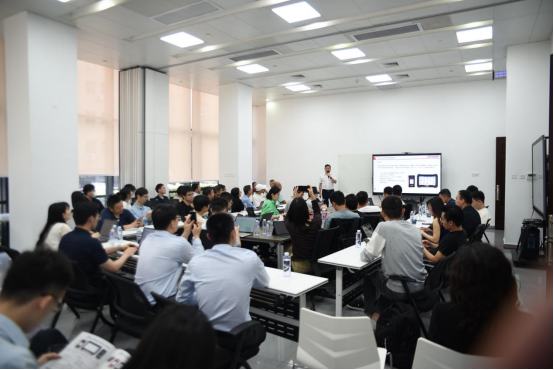
5月22日,汽车诊断服务商元征科技(02488)在深圳总部举办投资者开放日活动。公司管理层及多位核 心业务负责人围绕公司战略布局、核心业务进展、财务表现、技术成果及未来规划等议题展开深度交 流,并展示了多款创新产品。 本次开放日活动吸引了近百名机构投资者参与,现场座无虚席。开放日上,投资者参观了元征科技展 厅,亲身体验 X-939 汽车智能驾驶校准&四轮定位机器人、X-613无线3D四轮定位仪、EVMIX-240模组 均衡充放电扩展工作站等创新产品的实操演示。随着智能化和新能源的浪潮推进,元征科技有望在全球 化与技术创新双轮驱动下,开启新一轮增长周期。 三十年深耕汽车后市场,全球化布局成效显著 智通财经APP了解到,元征科技成立于1992年,是一家专注于汽车诊断设备及解决方案的全球领先企 业。公司管理层在与投资者交流中强调:"30多年来,我们始终聚焦汽车诊断与维修行业的技术创新, 业务覆盖全球230多个国家和地区,客户涵盖修理厂、修理工、整车厂、车主及汽修学校、保险公司、 二手车商等汽车业各环节。"截至2024年,元征科技在全球有约1000名员工,人均产值达180万元,并在 西安、南京等地持有物业资产,营业收 ...
小鹏汽车
数说新能源· 2025-05-27 03:32
Group 1: Core Data - In Q1, the company delivered 94,008 vehicles, a year-on-year increase of 331%, achieving a record high for a single quarter and ranking first among new car manufacturers in both domestic and global markets [1][11] - The automotive gross margin has increased for seven consecutive quarters, reaching 15.6% in Q1, with a net loss narrowing quarter-on-quarter and free cash flow exceeding 3 billion yuan [1][20] Group 2: Growth Drivers - The company is focusing on three growth curves: AI vehicles (core), globalization (second curve), and humanoid robots (third curve) [2][12] Group 3: Product Performance - The Mona 03 has delivered over 100,000 units in 8 months, becoming the champion of A-class pure electric sedans; the P7 has completed 50,000 units in 5 months; the 2025 models G6/G9 delivered over 7,500 units in the first month, maintaining a monthly delivery of over 30,000 units for six consecutive months [3][11] Group 4: Globalization Strategy - To address EU tariffs, the company is localizing partnerships, adjusting product mix, and considering potential local investments to mitigate impacts [4] - The company aims to enter global markets as a high-tech company, focusing on R&D, manufacturing, and localized services to create a differentiated mid-to-high-end brand [4][14] Group 5: Intelligent Technology - The Turing chip is expected to achieve successful tape-out in 2024, with effective AI computing power 3-7 times that of mainstream industry chips, and mass production of certain models in Q2 2025 [5][16] - The Eagle Eye pure vision solution will enable intelligent driving assistance without relying on LiDAR, enhancing safety and experience in complex scenarios [5][15] - The cloud-based model has reached 72 billion parameters, with a fleet efficiency exceeding 90%, and the physical world model will be fully applied to vehicles by 2025 [5][17] Group 6: Future Plans - The company plans to launch the Mona M03 Max on May 28, bringing Turing AI-assisted driving to models priced at 150,000 yuan; new models G7 SUV and the next-generation P7 will be delivered in Q3 [6][12] - The company expects overseas sales to grow over 370% year-on-year in Q1 2025, with 40 new overseas stores opened in key markets like the UK and Indonesia [6][14] Group 7: Financial Performance - In Q1 2025, total revenue was 15.81 billion yuan, a year-on-year increase of 141.5%, with automotive sales revenue at 14.37 billion yuan, up 159.2% year-on-year [20] - The company anticipates Q2 2025 deliveries of 102,000 to 108,000 units, with revenue projected at 17.5 billion to 18.7 billion yuan, and expects to achieve profitability in Q4 [7][19] Group 8: R&D Investment - The total R&D expenditure for 2025 is projected to be 8.5 billion yuan, focusing on AI, chips, large models, and robotics [10][32]


中国公司全球化周报|欧盟、日本计划对小包裹收税/霸王茶姬计划今年海外新增110+门店
3 6 Ke· 2025-05-25 04:05
Group 1: Industry Insights - A series of themed events will be launched to help Chinese companies tap into Indonesia's $50 billion healthcare market, featuring insights from Indonesian government officials on industry growth potential and policy incentives [2] - The China-ASEAN Free Trade Area 3.0 negotiations have been completed, aiming to enhance regional economic integration and cooperation in various sectors, including digital economy and green economy [12] - The EU plans to impose taxes on small packages valued under €150, which could impact cross-border e-commerce, particularly from China [12] Group 2: Company Developments - Meituan's overseas grocery retail business, Keemart, has officially launched in Riyadh, Saudi Arabia, with significant recruitment efforts underway [4] - Bawang Tea Ji aims to expand its store count significantly by 2025, targeting over 1,000 new stores in mainland China and additional locations in Hong Kong and Southeast Asia [4] - Ningde Times has successfully listed on the Hong Kong Stock Exchange, with its shares rising 16.43% on the first day, marking one of the largest IPOs in recent years [5] - Miniso reported a 30% year-on-year increase in overseas revenue for Q1 2025, with a total of 3,213 overseas stores [5] - BYD's electric vehicle sales in Europe surpassed Tesla for the first time, with a 169% year-on-year increase in April [6] - Ctrip's Q1 2025 revenue grew by 16%, driven by a significant increase in overseas bookings [6] - Starry Meizu plans to increase its overseas sales proportion to over 50% in the future [6] - Geely has partnered with the National Bank of Egypt to provide locally assembled vehicles, enhancing its local production capabilities [7] - 52TOYS is preparing for an IPO in Hong Kong, with significant growth in overseas revenue projected [8] - Baidu's autonomous driving service, Apollo, has expanded its operations to Dubai and Abu Dhabi, with over 1,000 autonomous vehicles deployed globally [8] Group 3: Investment and Financing - Airwallex has completed a $300 million Series F funding round, achieving a post-money valuation of $6.2 billion [15] - Square and KSK Fund have led a nearly ¥650 million Series A funding round for Kagu E-commerce, aimed at expanding its market presence [16] - IMCOCO Group has secured a significant Pre-A funding round to enhance its production capabilities and expand its global presence [16]



WAVES 2025:新的开始,新的人
混沌学园· 2025-05-24 10:48
W AVES 2025 邀您一起走向新纪元。 今年的WAVES大会,将在良渚文化艺术中心的"大屋顶"下展开。这座由日本建筑大师安藤忠雄设计的良渚 的精神地标,将为WAVES提供独特的文化、艺术、创造的空间。在这里,今年的WAVES将打造一个活跃、 国际化、人文融合的创投生态圈,邀请创投领域顶级投资人、新锐企业创始人,抑或是深耕科技、创新、 商业的科学家、创作者与学者,一起讨论、寻找、走向"新纪元"。 一场平衡了"智性思考" 与"青春想象"的狂欢盛宴 在持续两日的"WAVES大会"上,在良渚的晨光与暮色之间,我们将搭建两个平行的思想宇宙,一边是体系 化的思考框架,一边是野蛮生长的商业力量——主会场的穹顶下,投资人与青年创业者将重构创投的语 法,我们会讨论AI、全球化与价值重估。转角的分会场剧场内,年轻的造梦者们将用TED式的独白,拆解 他们眼中的商业理想和未来世界。 值得期待的,还有分会场当晚的"00后之夜 "!这是一场聚焦"00后"群体的自我主张表达大会,在表达与交 流、赞同与反对中——真实的交流、思想的碰撞,等待你的到来! 2024年的创投圈,像极了钱塘江的潮水——表面波澜不惊,水下暗流汹涌。AI赛道的沸腾 ...