
人才培养

Search documents
中国能建葛洲坝集团与铁建重工集团深化合作
Zheng Quan Shi Bao Wang· 2025-08-19 12:07
Core Viewpoint - The meeting between China Energy Construction Corporation and China Railway Construction Heavy Industry Group focused on deepening strategic cooperation in technology innovation, major equipment research and development, and talent cultivation [1] Group 1: Strategic Cooperation - The two companies reached a broad consensus on enhancing collaboration in various strategic areas [1] - Discussions included the importance of technological innovation and the development of major equipment [1] Group 2: Talent Development - Emphasis was placed on the cultivation of talent as a key component of their strategic partnership [1]

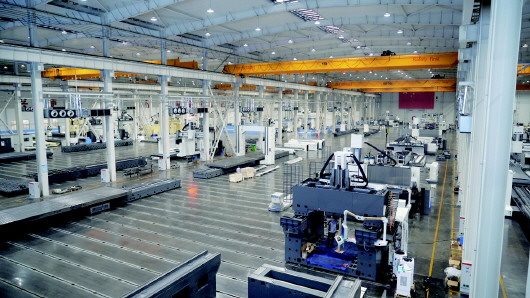
山东威达精工:产业链上的创新引擎
Qi Lu Wan Bao· 2025-08-14 21:32
Core Viewpoint - The resilience and vitality of the industrial chain are crucial indicators of regional economic competitiveness, with Shandong Weida Precision Intelligent Equipment Co., Ltd. leading the small and medium-sized CNC machine tool industry cluster in Shandong, playing an irreplaceable role in the high-end CNC machine tool sector [2] Group 1: Company Overview - Shandong Weida is recognized as one of the top 30 machine tool companies in China and is the largest machine tool enterprise in Tengzhou, which is known as the "Capital of Small Machine Tools" [3] - The company has won the highest award in the machine tool industry, the "Spring Swallow Award," for three consecutive years and is designated as a national-level specialized and innovative "Little Giant" enterprise [3] - Weida has established a collaborative innovation platform that attracts numerous upstream and downstream enterprises, enhancing the overall industrial chain [4] Group 2: Production and Supply Chain - Approximately 60% of the components required for a machine tool can be produced locally in Tengzhou, indicating a strong local supply chain [3] - The production of a machine tool involves over 2,000 components, and local collaboration is essential for efficient production [3] Group 3: Technological Innovation - The company invests about 20% of its annual revenue in technological innovation, focusing on breakthroughs in key components such as spindles, turntables, tool magazines, and five-axis milling heads [5] - The newly constructed Tengzhou International High-end CNC Machine Tool Five-axis Processing Center is set to enhance precision machining capabilities, achieving an accuracy of 0.003 mm, which is on par with international standards [5] Group 4: Talent Development - Weida emphasizes talent development as a core competitive advantage, establishing a comprehensive talent cultivation system to support the company's and the industrial chain's growth [6] - Through partnerships with educational institutions and skills training, the company has built a high-quality, professional talent pool that contributes to technological innovation and operational efficiency [6] Group 5: Future Outlook - Weida aims to continue its leadership role in the industry, contributing to the high-quality development of Shandong's manufacturing sector and enhancing its presence in the global industrial chain [6]


民航湖北空管分局举办2025年新员工岗前培训
Zhong Guo Min Hang Wang· 2025-08-14 10:46
Core Viewpoint - The training program for new employees at Hubei Air Traffic Management Bureau is designed to facilitate their transition from students to professionals, focusing on comprehensive empowerment through a structured curriculum and practical experiences [1]. Group 1: Thought Leadership and Professional Foundation - The training integrates party regulations with education on traditional values and ideal beliefs, emphasizing the importance of legal awareness and professional ethics among new employees [2]. - New employees are guided to establish a correct professional outlook and develop a meticulous work style, enhancing team cohesion [2]. Group 2: Comprehensive Capability Enhancement - The training program is meticulously designed to meet the growth needs of new employees, covering administrative management, professional norms, legal education, safety production, and specialized knowledge [3]. - A team of experienced instructors from various functional departments provides insights into core business operations and practical problem-solving techniques, making the training both informative and applicable [3]. Group 3: Immersive Job Cognition - The training includes on-site observation of key construction projects, allowing new employees to experience real work environments and understand core job requirements [4]. - This immersive experience bridges theoretical knowledge with practical application, preparing new employees for their future roles and responsibilities [4]. - The training is a crucial initiative for talent development within the air traffic management sector, aiming to instill professional qualities and the core values of loyalty, dedication, excellence, and responsibility [4].
北京注册会计师协会举办“数智赋能 人才重塑”分享会
Zhong Guo Jing Ji Wang· 2025-08-14 06:50
Core Viewpoint - The conference highlighted the transformative impact of AI technology on the accounting profession, emphasizing the need for talent restructuring and innovative training pathways to optimize and transition the industry [1][2] Group 1: Conference Overview - The "Digital Intelligence Empowerment Talent Restructuring" conference was held on August 7, 2025, organized by the Beijing Institute of Certified Public Accountants [1] - The event gathered nearly 150 participants, including industry elites and representatives from various accounting associations [1] - Keynote speeches were delivered by prominent figures from major accounting firms, discussing AI applications and innovative talent cultivation in the accounting sector [1] Group 2: Industry Insights - Participants unanimously agreed that AI has become an unavoidable key variable in industry development, with future competitiveness focusing on computational power and algorithm models [2] - The level of AI application may become a criterion for enterprise bidding, highlighting the importance of talent in enhancing AI application capabilities [2] - The conference called for the industry to innovate AI talent cultivation models through systematic measures to nurture professionals that meet the demands of the era, thereby injecting new momentum into high-quality industry development [2]
三一集团与中国能建葛洲坝集团深化战略合作
Zheng Quan Shi Bao Wang· 2025-08-14 02:12
Group 1 - Sany Group's delegation, led by Chairman Qi Jian, visited China Energy Engineering Group's Gezhouba Group for strategic cooperation discussions [1] - The discussions focused on deepening collaboration in technology innovation, intelligent construction, major equipment research and development, talent cultivation, market development, and capital cooperation [1] - A technical exchange meeting was held on August 12, resulting in a joint research project on the application of unmanned dump trucks, laying a technological foundation for national strategic hydropower engineering construction [1]
有研硅: 有研硅2025年度“提质增效重回报”行动方案的半年度评估报告
Zheng Quan Zhi Xing· 2025-08-13 11:11
Core Viewpoint - The company has made significant progress in its "Quality Improvement and Efficiency Enhancement" action plan for 2025, focusing on high-quality development and increasing investor returns through various strategic initiatives [1][2]. Group 1: Business Performance - In the first half of 2025, the company achieved operating revenue of 491 million yuan and a total profit of 150 million yuan, maintaining a high operating rate and a 37% year-on-year increase in 8-inch silicon wafer production [2][5]. - The company's comprehensive gross profit margin reached 39.98%, an increase of 5.16 percentage points compared to the same period last year [5]. Group 2: Research and Development - The company invested 44.2153 million yuan in R&D, accounting for 9.01% of its operating revenue, and has made advancements in new product development, including 8-inch zone-melt silicon wafers and ultra-low oxygen silicon wafers [3][4]. - The company received a national award for its project on "Innovation and Technology Improvement of Ultra-Large Size Monocrystalline Silicon" [3]. Group 3: Supply Chain and Cost Management - The company has focused on domestic sourcing of key raw materials and equipment, increasing the proportion of domestic procurement while ensuring quality, which has effectively reduced production costs and enhanced supply chain security [2][5]. - The company has implemented measures for systematic process optimization and cost control, enhancing operational efficiency [2]. Group 4: Financial Management - As of June 2025, the company maintained a cash balance of 643 million yuan and trading financial assets of 1.841 billion yuan, ensuring a strong liquidity position [5]. - The company has actively sought investment opportunities in the upstream and downstream sectors to optimize resource allocation and improve capital returns [5]. Group 5: Governance and Risk Management - The company has restructured its board to include a "Strategic and Sustainable Development Committee" to enhance governance and sustainability management [6]. - The company has established a market value management system and a public opinion management system to protect investor rights and enhance transparency [6]. Group 6: Investor Relations - The company emphasizes high-quality information disclosure, having published two regular reports and 24 temporary announcements in the first half of 2025, and received an "A" rating in ESG governance [7][8]. - The company maintains a 100% response rate on the Shanghai Stock Exchange's interactive platform, ensuring effective communication with investors [8]. Group 7: Shareholder Returns - The company has implemented a stable profit distribution policy, distributing a cash dividend of 0.6 yuan per 10 shares to shareholders, reflecting a commitment to sharing operational results with investors [9]. - The company has granted stock options to key personnel to align their interests with those of shareholders, reinforcing a shared responsibility for long-term value creation [9][10].

高管降薪、离职频现,家居企业如何破局?
Sou Hu Cai Jing· 2025-08-12 12:31
Group 1 - The home furnishing industry is experiencing a downturn, reflected in the significant reduction of executive salaries, such as the drop in Pan Xiaozhen's salary from 822,600 yuan in 2023 to 616,000 yuan in 2024, and Li Weiguo's salary decreasing from 850,000 yuan to 460,000 yuan, a decline of 45.9% [1][3][12] - Frequent executive turnover is noted, with over ten listed companies in the building materials and home furnishing sectors experiencing executive resignations or changes within a month [3][4][7] - Specific cases of executive resignations include Zheng Zhiyuan from Shenzhen Guangtian Group and Lu Jianhui from Jiangshan Oupai, both citing personal reasons for their departures [4][7][10] Group 2 - The departure of key figures, such as Xie Jinpeng from Royal Furniture due to health reasons, raises concerns about the future development of these companies [9][12] - The ongoing trend of executive changes is not limited to one company, as seen with Hu Jianrong and Zhu Dan from Hisense Home Appliances also resigning [11][12] - The industry faces numerous challenges, and while salary cuts and resignations may provide temporary relief, a robust internal management structure is essential for long-term stability and growth [12][13]


促进高质量充分就业观察|稳岗扩岗 企业多措夯实人才根基
Xin Hua Wang· 2025-08-12 05:53
Group 1: Recruitment Initiatives - Multiple companies are actively conducting offline job fairs and launching talent recruitment plans to strengthen their workforce [1][2] - The "Million Talents Gathering in South Guangdong" job fair highlighted high demand for positions in emerging industries such as low-altitude economy and artificial intelligence [1] - Tencent announced plans to train 10 million AI talents over the next five years, while Baidu and Alibaba are also expanding their recruitment efforts significantly [2] Group 2: Talent Development and Retention - Companies are focusing not only on recruitment but also on talent retention through enhanced training programs and career development pathways [2][3] - Tencent has established a dual-channel development system for technical talents, allowing them to either deepen their expertise or pursue management roles [3] - Meituan has implemented a rider development system that includes support for new riders and management training, with 86% of management positions filled by promoted riders [4] Group 3: Employment Growth and Economic Impact - The recruitment drive and talent training activities are seen as effective measures to stabilize and expand employment opportunities [5] - Fuyao Group has created a comprehensive training system, adding over 10,000 jobs in the past three years, demonstrating a commitment to workforce development [3] - Didi has announced a 2 billion yuan investment to support employment and consumer spending, particularly for new drivers [4]




从山姆到盒马,中国的会员店“开不下去”是“人”的问题吗?
Sou Hu Cai Jing· 2025-08-10 12:43
Core Insights - The article discusses the challenges faced by membership-based retail, particularly focusing on the human resource aspects that are often overlooked in the context of rapid expansion and competition in the market [2][10]. Group 1: Membership Retail Dynamics - Membership retail requires a customer-centric and data-driven approach, contrasting with traditional retail's focus on traffic and sales [3][8]. - The need for continuous engagement and "freshness" for members is crucial, necessitating strong user insight and operational design capabilities among staff [3][5]. - Supply chain management in membership retail emphasizes "selection and high cost-performance," requiring precise alignment with member needs and robust control over the supply chain [5][10]. Group 2: Talent Acquisition and Retention Challenges - Rapid expansion in membership retail leads to significant talent acquisition challenges, with a competitive landscape making it difficult to find qualified personnel [10][13]. - There is a mismatch between the skills required for new roles in membership retail and the traditional standards used for evaluation, complicating recruitment efforts [10][13]. - Retaining talent is particularly difficult in key positions, with high turnover rates observed in procurement, operations, and member services [13][18]. Group 3: Training and Development Systems - Many companies face a "heavy construction, light operation" issue in talent development, often neglecting ongoing training after initial setup [15][16]. - A continuous training system is essential, covering the entire employee lifecycle and integrating learning into daily work [15][16]. - Feedback mechanisms should be established to ensure that insights from frontline employees are utilized for operational improvements [15][16]. Group 4: Learning from Successful Models - Successful companies like Hai Di Lao and Pang Dong Lai combine culture, training, and incentive mechanisms to enhance employee engagement and service quality [18][22]. - The focus should be on creating a work environment where employees feel valued and recognized, which in turn enhances customer service [18][22]. Group 5: Future Talent Structure and AI Integration - The membership retail industry must evolve its talent structure to include hybrid roles that combine business acumen with digital skills [26][28]. - Companies need to foster a data-driven culture to leverage AI for better decision-making in product selection and marketing strategies [30][31]. - Integrating technology and business operations is crucial for maximizing the value of talent and ensuring sustainable growth [32][33].

今天,我们怎样回答“钱学森之问”
Ren Min Ri Bao· 2025-08-10 07:56
Core Viewpoint - The article reflects on the 70th anniversary of Qian Xuesen's return to China and the 20th anniversary of the establishment of the first "Qian Xuesen Class," emphasizing the ongoing relevance of his question regarding the cultivation of innovative talent in China's education system [1][2]. Group 1: Historical Context and Current Status - In 2005, China's higher education gross enrollment rate was 21%, and R&D expenditure was only 1.34% of GDP, highlighting the need for improvement in education and innovation [2]. - The "Qian Xuesen Question" addresses the challenges and achievements of China's education system since the reform and opening up, indicating a shift from population dividends to talent dividends [2]. Group 2: Educational Reforms and Innovations - Over the past 20 years, reforms such as the establishment of the college system, credit system, and mentorship system have been implemented to enhance the cultivation of top talent [2]. - Significant innovations in various fields, including quantum physics and space exploration, demonstrate the progress of China's innovation ecosystem [2]. Group 3: Future Directions and Challenges - Transitioning from an education power to an education stronghold requires a deep understanding of the needs of modernization in education, technology, and talent [3]. - The focus should shift from merely achieving high scores to fostering comprehensive development and innovative thinking among students [3][4]. Group 4: Long-term Vision - The answer to the "Qian Xuesen Question" lies not in specific achievements but in the potential of millions of young students, emphasizing the importance of nurturing an environment conducive to talent development [4]. - The question may not have a definitive answer, serving instead as a continuous measure of each generation's responsibility towards education and innovation [4].