差异化竞争

Search documents
遏制保险业“内卷”,又一地发文,恶性竞争如何彻底消除
Bei Jing Shang Bao· 2025-07-27 12:38
Core Viewpoint - The insurance industry is actively addressing the issue of "involution" in competition, with various regions, including Guangdong, implementing self-regulatory agreements to promote healthy competition and prevent harmful practices [1][3]. Group 1: Regulatory Actions - Guangdong Province has released the "Self-Regulatory Convention for the Insurance Industry" to guide companies in avoiding "involution" and to establish a framework for fair competition [1][4]. - Other regions such as Fujian and Anhui have also introduced similar initiatives to combat "involution" in the insurance sector, emphasizing the need for self-regulation and adherence to ethical practices [1][4]. Group 2: Issues in the Industry - The insurance industry has been plagued by practices such as excessive price competition, inflated fees, and high commissions, which have led to increased costs and reduced profitability [5][6]. - Companies have engaged in unethical behaviors like falsifying expenses and using misleading marketing tactics to attract customers, which has resulted in a distorted pricing structure and industry-wide losses [5][6]. Group 3: Impacts of Reducing Involution - Reducing "involution" is expected to stabilize pricing, ensure reasonable profit margins, and shift the focus from price competition to service and technology-driven competition [7][8]. - The transition from a "price-driven" to a "value-driven" industry will encourage companies to invest in product innovation and customer service, ultimately leading to a healthier industry ecosystem [8]. Group 4: Future Directions - The industry must adopt a long-term perspective, moving away from short-term profit strategies to build trust and enhance customer loyalty [8]. - Regulatory bodies are expected to continue guiding the industry while companies need to embrace strategic transformations to foster sustainable growth and resilience [8].


“卷价格”转向“优价值”才是正道(评论员观察)
Ren Min Ri Bao· 2025-07-24 22:19
Core Viewpoint - The article emphasizes the need for companies to shift their focus from "price" to "value" and from "peers" to "users" to enhance innovation and market competitiveness, ultimately leading to efficiency improvements and technological advancements [1][3][4] Group 1: Market Competition Dynamics - Recent discussions have arisen regarding the "low-price for market share" and "price for traffic" behaviors on food delivery platforms, prompting regulatory attention [1] - There is a growing recognition that "involution" competition among platforms is detrimental to industry health and merchant growth, although some argue it benefits consumers [1][2] - Short-term consumer benefits from "involution" competition, such as refunds and price wars, may lead to long-term negative impacts on service quality and product standards [2][3] Group 2: Regulatory and Industry Responses - The Chinese Automotive Industry Association has called for an end to malicious competition through price-cutting and comparison tactics, advocating for a focus on value creation [3] - The Central Financial and Economic Committee has stressed the importance of legally regulating low-price disorderly competition, with new laws prohibiting platforms from forcing merchants to sell below cost [4] - The article suggests that fostering a healthy competitive environment requires companies to innovate and differentiate themselves rather than engage in price wars [3][4]
叮咚买菜CEO梁昌霖首谈即时零售大战 不要零和博弈要增量
Sou Hu Cai Jing· 2025-07-23 06:24
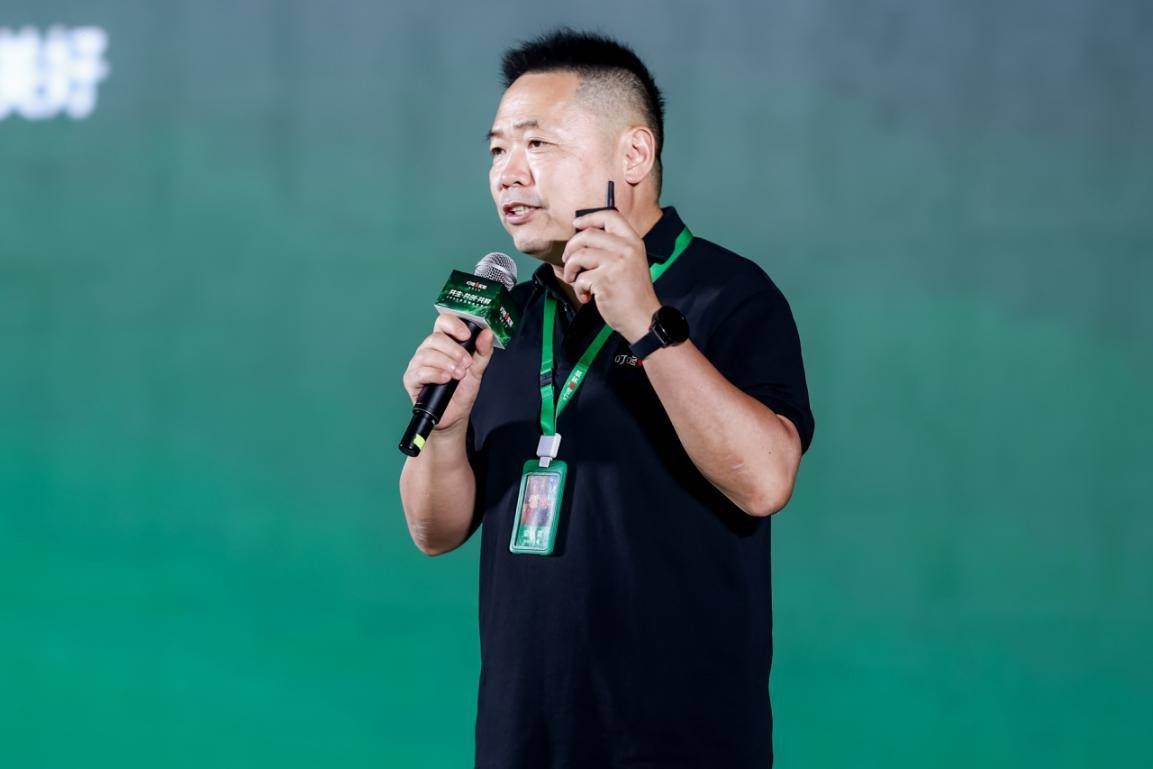
Core Insights - The instant retail sector is experiencing a massive subsidy wave, with platforms investing hundreds of billions to capture a trillion-dollar market [1] - Dingdong Maicai's CEO emphasizes the need for long-term strategies and differentiation in a highly competitive environment, aiming for sustainable growth rather than a zero-sum game [1][5] - Dingdong Maicai has achieved profitability for ten consecutive quarters under non-GAAP standards and five quarters under GAAP standards, with a focus on deepening supply chain management and product quality [1][6] Group 1: Competitive Landscape - The competition in instant retail is described as a zero-sum game, where only a few players will survive, leading to intense price wars and user acquisition battles [1] - Dingdong Maicai's strategy focuses on "narrowing down" to specific product categories and deepening supply chain management to differentiate from competitors [5][6] Group 2: Business Strategy - The "4G" strategy emphasizes quality over quantity, focusing on "good users, good products, good service, and good mindset" [3] - Dingdong Maicai aims to enhance product quality by investing in upstream supply chains and developing differentiated products that meet consumer demands for health and safety [6][9] Group 3: Product Development - The company has replaced over 4,000 mediocre products in the past six months, with "good products" now accounting for 40% of its SKU [6] - Dingdong Maicai is developing a low-GI food section and plans to create a comprehensive low-GI product line, collaborating with research institutions to improve product standards and consumer awareness [9][7] Group 4: Technological Integration - The integration of AI is transforming the instant retail landscape, enhancing supply chain management and product lifecycle oversight [10] - Dingdong Maicai is developing a traceability system to ensure transparency from production to delivery, leveraging digital capabilities and AI applications [10]

叮咚买菜梁昌霖:不参与行业“内卷”,聚焦生鲜食品即时零售差异化竞争
Zheng Quan Shi Bao Wang· 2025-07-22 12:55
Core Insights - The company announced a new "4G" strategy focusing on "good users, good products, good services, and good mindset" to differentiate itself from competitors relying on price and subsidies [1] - The CEO emphasized the increasing consumer demand for high-quality food products, indicating a shift in consumer awareness and preferences [1] Group 1: Strategic Adjustments - The company aims to move away from the mainstream approach of competing on price and subsidies, opting for a differentiated competition strategy [1] - The new strategy involves replacing the mainstream focus on traffic and platform thinking with a product and ecosystem mindset, concentrating on the fresh food sector and enhancing the entire supply chain [1] Group 2: Product Development and Supply Chain - The internal product development department has been tasked with higher standards, resulting in the replacement of over 4,000 products in the past six months, with quality products now making up 40% of the SKU [2] - The company has been actively establishing upstream supply chain initiatives, including partnerships to create black pig breeding bases and digital fishing warehouses, enhancing control over fresh food quality [2] Group 3: Health-Oriented Market Expansion - There is a significant consumer demand for healthy eating, prompting the company to accelerate its focus on low glycemic index (GI) products [2] - Sales of health-labeled products exceeded 500 million yuan in the first half of the year, while low GI product sales surged from under 1 million yuan to nearly 60 million yuan in the same period [2]
“反内卷”系列之五:海外如何“反内卷”?
Shenwan Hongyuan Securities· 2025-07-22 09:42
Group 1: Japan's Experience - Japan's industrial policy focuses on encouraging mergers and acquisitions to develop economies of scale, addressing the issue of excessive competition from the 1950s to the 1980s[2] - Financial institutions' shareholding in Japanese companies increased from 30% in 1960 to 45% in 1990, following the relaxation of the Antimonopoly Act[2] - The average cross-shareholding ratio among Japan's six major groups rose from 12% in 1962 to 18% in 1998, facilitating the formation of "Keiretsu" corporate groups[2] Group 2: UK and US Experience - In the UK, the government ceased financial subsidies and gradually exited the coal price protection system, leading to the closure of about one-third of coal mines between 1985 and 1986[4] - The US steel industry eliminated approximately 52.8 million tons of crude steel capacity from 1998 to 2003, with the market share of the top four companies rising from 38% in 1999 to 67% by 2005[4] - The UK implemented various employment support measures, covering about 57,000 individuals, or 40% of the unemployed population, between 1984 and 1995[5] Group 3: Germany's Experience - Germany's Beer Purity Law, established in 1516, set strict standards for beer production, ensuring quality and protecting local industries[6] - The German government encourages regional styles and has established detailed certification mechanisms to ensure product authenticity and quality[6] - By aligning with international beer classification standards, Germany promotes high-quality, non-price competition in the beer market[7]
热点思考 | 海外如何“反内卷”?——“反内卷”系列之五(申万宏观·赵伟团队)
赵伟宏观探索· 2025-07-22 09:32
Group 1 - The article emphasizes the importance of learning from international experiences in addressing industrial disorder and overcapacity, suggesting that policies encouraging mergers and acquisitions, raising industry standards, and implementing market-based clearance alongside safety net policies could be effective [8][42]. Group 2 - Japan's experience highlights the formation of cross-shareholding and mergers to create an industrial network, which helps mitigate excessive competition and enhance economies of scale. The revision of the Antimonopoly Act in 1953 and the introduction of the "New Industrial Structure Theory" in 1963 were pivotal in promoting corporate mergers [2][49]. - The shareholding of financial institutions in Japanese companies increased from 30% in 1960 to 45% in 1990, and the average cross-shareholding ratio among Japan's six major groups rose from 12% in 1962 to 18% in 1998 [2][49]. - The establishment of "Keiretsu" groups, which consist of horizontal and vertical alliances, has stabilized supply chains and reduced price wars, thereby promoting industrial upgrades [3][50]. Group 3 - The UK and US experiences demonstrate the significance of market-based clearance while ensuring social safety nets. The UK government ceased financial subsidies and gradually exited the coal price protection system in the mid-1980s, leading to the closure of about one-third of coal mines [4][51]. - In the US, the steel industry faced similar challenges, with the government eliminating tax incentives and facilitating mergers in the 1980s, resulting in a reduction of crude steel capacity by approximately 52.8 million tons from 1998 to 2003 [4][25]. - Both countries implemented various employment support measures, such as the UK's "Enterprise Allowance Scheme" and the US's Pension Benefit Guaranty Corporation (PBGC), which provided safety nets for displaced workers [5][32]. Group 4 - Germany's approach emphasizes setting high industry standards to foster differentiated competition. The Beer Purity Law established in 1516 set strict quality standards for beer production, which helped protect local industries and enhance product quality [6][37]. - The German government encourages regional styles and has established detailed certification mechanisms to ensure product authenticity and quality, promoting a diverse and competitive market [6][39]. - By aligning with international beer classification standards, Germany has guided the market towards high-quality, non-price competition, facilitating innovation and cultural positioning among breweries [6][54].
叮咚买菜发布“4G”战略,将开发全品类低GI商品
Bei Ke Cai Jing· 2025-07-22 09:22
Core Viewpoint - The company has officially launched its "4G" strategy, focusing on "good users, good products, good services, and good mindset" as its core development approach [1] Group 1: Strategic Focus - The company aims to differentiate itself from competitors who rely on price and subsidies to attract consumers, seeking to avoid industry homogenization and pursue a differentiated competition strategy [1] - The company will concentrate on the fresh food and grocery sector, enhancing its supply chain across the entire process [1] Group 2: Product Development - The company has introduced a low GI (low glycemic index) food section and plans to develop a full range of low GI products for various scenarios [1] - In the past six months, the company has eliminated over 4,000 mediocre products, with the proportion of "good products" in its SKU reaching 40% [1] Group 3: Supply Chain and Market Growth - The company is expanding its supply chain through large-scale direct procurement and order-based farming, while also exploring differentiated products with regional characteristics from China and abroad [2] - In the first half of this year, the sales of products with clean ingredient labels exceeded 500 million yuan, and sales of low GI products increased from less than 1 million yuan in the first half of 2023 to nearly 60 million yuan [2]
叮咚买菜寻找差异化竞争
Zhong Guo Jing Ji Wang· 2025-07-22 06:42
Group 1 - The core theme of the summit held by Dingdong Maicai is "coexistence, co-creation, and freshness," where the CEO Liang Changlin announced the "4G" strategy focusing on "good users, good products, good services, and good mindset" as the company's development core [1] - The "4G" strategy emphasizes a focus on quality rather than competing on price and subsidies, aiming to differentiate from market homogenization and pursue a unique competitive route [1] - The company plans to adopt a "narrow and deep" strategy, concentrating on the fresh food sector and enhancing the entire supply chain, which aims to attract consumers with higher demands for food quality and freshness [1] Group 2 - The sales of health concept labeled products have shown significant growth, with sales exceeding 500 million for clean ingredient labeled products in the first half of the year, and low GI products increasing from under 1 million to nearly 60 million in the same period [2] - As the company scales, it aims to collaborate with ecological partners to expand globally, participating in balancing supply and demand in larger markets through the export of China's fresh food supply chain [2]
山姆事件背后:中国供应链正从“规模优势”向“标准输出”进阶
智通财经网· 2025-07-22 04:09
Core Viewpoint - Sam's Club is facing criticism over its product selection strategy, with concerns about the introduction of mass-market brands and the removal of high-repurchase-rate items, leading to questions about the perceived decline in quality [1] Group 1: Product Selection and Supply Chain Logic - Sam's Club's product selection is based on a differentiated value creation logic centered around member needs, rather than a simple evaluation of brand prestige [1][4] - The company has a stringent supplier admission system, requiring products to meet high-quality sourcing standards, such as specific beef cuts and traceable cold-chain logistics [2] - Sam's Club emphasizes understanding member needs and trends, often leading the demand by half a step, which translates into high standards for brands regarding product quality and innovation [4][7] Group 2: Customization and Brand Collaboration - The customization process at Sam's Club involves deep supply chain engagement, where products are developed based on member insights and data analysis, pushing suppliers to upgrade their production systems [4][10] - Brands entering Sam's Club must maintain their identity and innovation capabilities, creating a mutually beneficial relationship rather than merely acting as private label producers [7][10] - The successful collaboration with brands like Wei Long demonstrates that market acceptance is driven by the combination of "Sam's standards + brand characteristics," rather than just brand recognition [10][12] Group 3: Consumer Perception and Quality Consensus - The controversy surrounding Sam's Club reflects a shift in consumer understanding of the relationship between customization and quality, indicating that true customized supply chains enhance standards through precise demand matching and rigorous process control [12] - The ability of domestic brands like Wei Long to maintain independence and achieve value output in international retail systems showcases the evolution of Chinese supply chains from scale advantages to standard outputs [12]
顺丰都在学!跨越速运到底牛在哪?
Sou Hu Wang· 2025-07-17 02:00
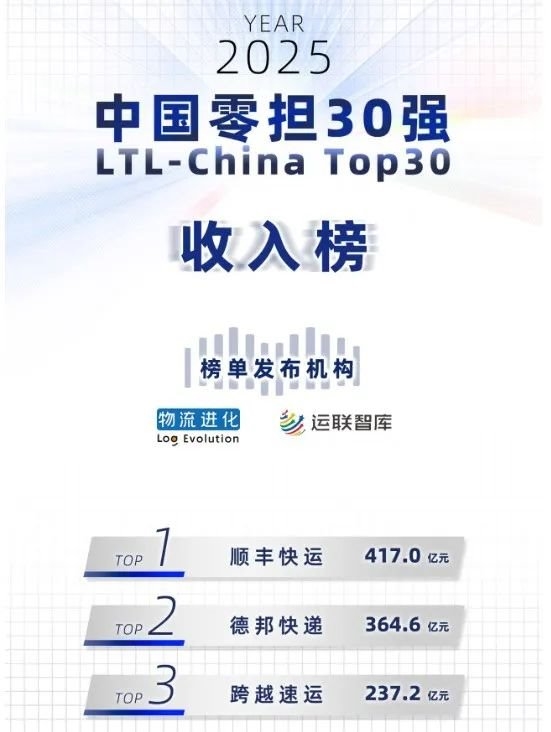
Core Insights - The core viewpoint of the article emphasizes the remarkable growth and strategic positioning of KuaYue Express, which has maintained a compound annual growth rate of over 25% in its less-than-truckload logistics revenue from 11.3 billion yuan in 2021 to 23.72 billion yuan in 2024, despite a challenging market environment [1][3] Group 1: Company Performance - KuaYue Express has achieved a significant milestone by being among the top three in the industry for four consecutive years, showcasing its status as a "good" company [1] - The company has successfully navigated a declining market, with the national less-than-truckload market expected to drop by 5.26% to 116 billion yuan in 2024, highlighting KuaYue's ability to grow against the odds [3] Group 2: Strategic Choices - The company's strategic choice to focus on "time-sensitive delivery" and B-end enterprise clients since its inception in 2007 has been pivotal in establishing its market position [5][7] - KuaYue's differentiation strategy has allowed it to avoid direct competition with major players like SF Express and Tongda, creating a unique space for growth [7] Group 3: Technological Investment - KuaYue Express has heavily invested in technology, exemplified by its intelligent central system, which processes millions of data streams per second and optimizes logistics efficiency by 35% [15] - The company has developed a customer profiling system that enhances service delivery for various industries, improving inventory turnover rates by 40% for manufacturing clients [15] Group 4: Customer-Centric Approach - KuaYue Express emphasizes a customer-first philosophy, with the CEO personally managing customer feedback to ensure high service quality [17][19] - The company has established a 24/7 dedicated service team, providing continuous support and tailored services to meet diverse customer needs [19] Group 5: Market Recognition - KuaYue Express has garnered significant recognition in the industry, winning the "Best Performance in Logistics Services" award from Hurun Report in 2024, reflecting its strong customer base and service reputation [20] Group 6: Focus and Consistency - The company has maintained a steadfast focus on its core business without diversifying into other areas, which has contributed to its sustained growth and brand strength [21][23] - KuaYue's commitment to quality over quantity has allowed it to resist market pressures and continue investing in service quality and operational efficiency [23]