
扩大内需战略

Search documents
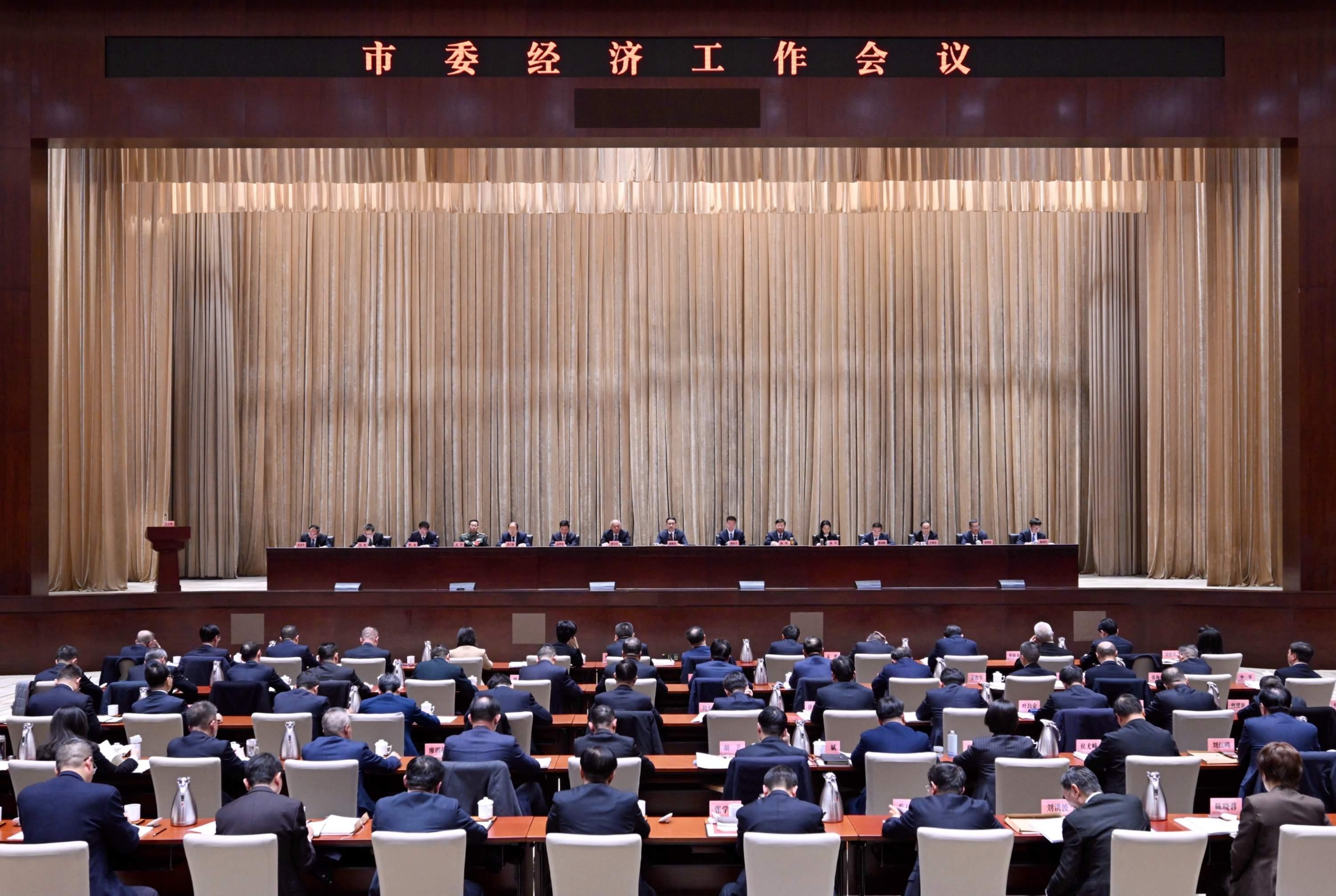
市委经济工作会议召开:坚定信心、鼓足干劲、奋发进取,确保实现“十五五”良好开局,盛阅春熊征宇讲话
Chang Jiang Ri Bao· 2025-12-28 00:34
Core Viewpoint - The meeting emphasized the importance of economic work for the upcoming year, which is crucial for the long-term development and aims to ensure a good start for the "15th Five-Year Plan" [5][9]. Economic Performance Summary - The city has successfully implemented policies to stabilize growth, promote transformation, improve people's livelihoods, and mitigate risks, resulting in accelerated growth and positive economic indicators [4]. - Traditional industries have recovered, and the transition to new growth drivers has gained momentum, with significant improvements in urban renewal and overall living standards [4]. Key Focus Areas for 2026 Economic Work - The meeting outlined five key areas for economic development in the coming year: 1. **Expanding Domestic Demand**: Prioritize consumption, implement income-boosting plans, and enhance the business environment to attract investment [6]. 2. **Promoting Technological and Industrial Innovation**: Foster a modern industrial system and enhance the overall effectiveness of the innovation system [7]. 3. **Enhancing Open Economy**: Strengthen high-level openness and develop a hub economy to boost regional collaboration [7]. 4. **Urban Renewal**: Accelerate urban renewal efforts to improve city management and ecological quality [8]. 5. **Improving Livelihoods**: Focus on employment stability, social security, and public service enhancement to ensure community well-being [8]. Implementation and Leadership - The meeting stressed the need for strong leadership in economic work, emphasizing the importance of responsibility, ambition, and effective execution of policies [9][10]. - It called for a focus on foundational and long-term projects, with a commitment to addressing challenges and enhancing the political environment for development [9].

期货市场助力扩大内需战略
Qi Huo Ri Bao Wang· 2025-12-24 03:09
Group 1 - The core viewpoint emphasizes that expanding domestic demand is a strategic move rather than a temporary measure, crucial for China's long-term development and stability [2] - Domestic demand has become the main driving force for China's economic growth, contributing over 90% to economic growth during the 13th and 14th Five-Year Plans, with final consumption and capital formation contributing 55% and 38% respectively [2] - The projected scale of final consumption and capital formation for 2024 is 76.3 trillion yuan and 54.8 trillion yuan, which are 2.7 times and 2.2 times that of 2012 [2] Group 2 - The futures market can support the strategy of expanding domestic demand by promoting effective investment and consumption [3] - The futures market helps enterprises conduct effective investments and improve supply quality by providing forward-looking price signals and diverse hedging methods [3] - Price volatility in commodities, such as new energy materials, has made it difficult for companies to lock in raw material costs, impacting capacity planning [3] Group 3 - The futures market enhances the stability of residents' wealth, contributing to the realization of the wealth effect by serving as an effective tool for diversified investment [4] - The financial futures market in China has been expanding, providing effective tools for various financial institutions to manage market risks [4] - The "insurance + futures" model has been successfully implemented for 10 years, helping to stabilize and increase farmers' income, thus releasing rural consumption potential [4] Group 4 - The futures market needs to enrich the supply of futures varieties and improve the market system to connect enterprises and end consumers effectively [5] - There is a lack of corresponding futures varieties for emerging industries and regional specialty agricultural products, which hinders hedging needs [5] - Innovative service models are required to address the challenges faced by small and micro enterprises in participating in the futures market [5] Group 5 - The design and promotion of wealth management products that focus on diversified investment and risk hedging should be innovated by futures operating institutions [6] - Investor education should be advanced to cultivate a risk management culture, as many market participants have a limited understanding of futures tools [6] - The futures market's development history is relatively short, and there is a need for more effective and diverse investor education methods [6]
天风策略:政策靠前发力 春季行情可期
Xin Lang Cai Jing· 2025-12-23 23:57
Group 1 - The core viewpoint of the articles emphasizes the expectation of maintaining policy continuity and stability in the coming year, with a focus on enhancing flexibility and predictability, particularly in the context of the "14th Five-Year Plan" [1][6] - The articles highlight the importance of gold and convertible bonds as key investment areas, indicating a strategic shift in asset allocation [1][6] - The initiation of the Hainan Free Trade Port's full closure is seen as a significant step towards deepening reforms, aligning with the central government's strategic decisions [2][10] Group 2 - The recent meeting of the State Council, chaired by Premier Li Qiang, aims to ensure effective implementation of the central economic work conference's decisions, reinforcing the economic stability trend [2][9] - The Bank of Japan's decision to raise its policy interest rate to 0.75% marks the highest level in 30 years, indicating a shift in monetary policy that could impact global markets [10] - The articles report on various domestic policies, including the launch of the Hainan Free Trade Port and the establishment of a financial standardization technical committee, which are part of broader efforts to stimulate economic growth [3][11] Group 3 - In the equity market, the A-share index showed a slight rebound, while other major indices experienced minor declines, reflecting the need for policy support in consumption and investment [12] - The central bank's net fund injection of 109 billion yuan during the third week of December indicates a balanced liquidity approach, with ongoing measures to support the financial market [12] - The commodity market saw stability in non-ferrous metals and a rebound in precious metals, alongside a slight decrease in oil prices, suggesting mixed trends across different sectors [5][12] Group 4 - The foreign exchange market experienced a rebound in the US dollar index after the Federal Reserve's rate cut, while the Chinese yuan appreciated slightly, indicating ongoing currency dynamics [13] - The articles note the importance of the upcoming "14th Five-Year Plan" and the need for proactive fiscal and monetary policies to navigate potential geopolitical risks and uncertainties [1][6]

静水流深:茅台“不变”中的战略定力
Zhong Guo Jing Ji Wang· 2025-12-23 00:02
Core Viewpoint - The article emphasizes that despite the fluctuations in the liquor market, Kweichow Moutai (600519) remains strategically focused on quality and long-term value, adapting to the evolving industry landscape while maintaining its core principles [1][8]. Group 1: Market Dynamics - The price of Moutai liquor has been volatile, with the retail price of Feitian Moutai reported at 1827 yuan per bottle, reflecting an increase in both price and sales [2]. - The liquor industry is undergoing a deep adjustment phase, characterized by high channel inventory, price discrepancies, and slowing growth, which presents challenges for many liquor companies [2]. - Moutai's management acknowledges the existence of challenges but emphasizes the importance of recognizing structural opportunities while maintaining brand value [2]. Group 2: Supply and Demand Management - Moutai has maintained normal shipments of 500ml Feitian Moutai, while reducing allocations for certain non-standard products by 30%-50% [3]. - The company is focused on adapting supply to meet demand, ensuring that product releases are based on market conditions rather than blanket decisions [3]. Group 3: Innovation and Consumer Engagement - Moutai's approach to innovation is strategic, aiming to enhance real consumption and cultural heritage rather than pursuing innovation for its own sake [4]. - The company is building a brand ecosystem that resonates with younger consumers through immersive experiences and digital engagement, transitioning from merely selling liquor to promoting a lifestyle [4]. - Moutai is also addressing digital challenges by collaborating with e-commerce platforms to enhance consumer access and ensure product authenticity [4]. Group 4: Cultural and Ecological Commitment - Moutai is reinforcing its cultural identity by integrating traditional craftsmanship with modern aesthetics, promoting Chinese liquor culture through innovative products [5]. - The company is committed to ecological sustainability, implementing a "green development" strategy that focuses on environmental protection and sustainable practices [6]. Group 5: Long-term Strategic Vision - Moutai's stability is rooted in its deep systemic capabilities, including ecological protection, production capacity, and talent development [6][7]. - The company is actively enhancing its talent pool through partnerships with educational institutions, ensuring a blend of traditional brewing techniques and modern innovation [7]. - Moutai's consistent approach aligns with national strategies to boost domestic demand, positioning the company to respond effectively to market fluctuations [7][8].

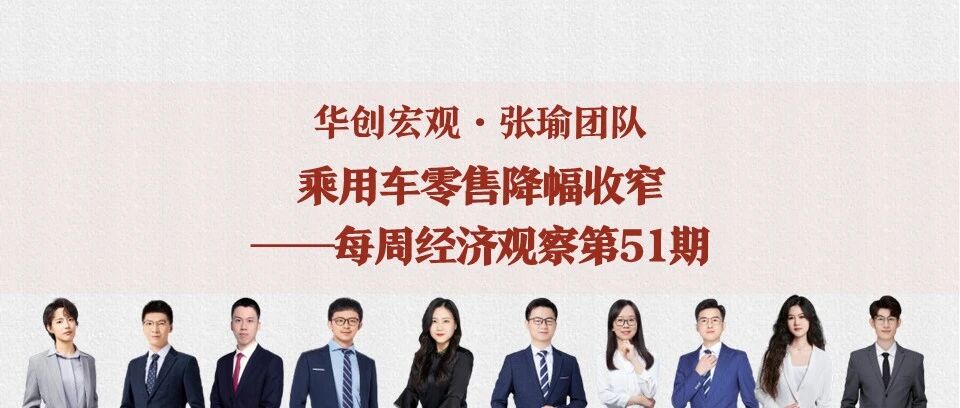
乘用车零售降幅收窄——每周经济观察第51期
一瑜中的· 2025-12-22 15:23
Group 1 - The core viewpoint of the article indicates a mixed economic outlook, with some indicators showing improvement while others reflect ongoing challenges in various sectors [2][3][20]. Group 2 - The Huachuang Macro WEI index has shown a slight increase to 5.17% as of December 14, up 1.05% from December 7, indicating a recovery in economic activity [2][8]. - Retail sales of passenger cars have seen a narrowing decline, with a year-on-year decrease of -17% in the second week of December, compared to -32% previously [2][13]. - The prices of three major new energy products have risen significantly, with industrial silicon up 3.1%, polysilicon up 6.4%, and lithium carbonate up 16.4% [2][36]. Group 3 - Most industries are experiencing a decline in operating rates, with only a few exceptions like Tangshan's blast furnaces showing stability [3][17]. - The average listing price of second-hand homes has dropped significantly, with first-tier cities down 0.6% and a cumulative decline of 6.2% for the year [3][38]. - The construction sector shows signs of weakness, with asphalt operating rates declining to an average of 27.8% from 34.4% earlier [9][17]. Group 4 - The port container throughput has increased year-on-year by 10.6%, although it has decreased by 0.9% compared to the previous week [2][20]. - The export container throughput from Chinese ports has shown a recovery, with a year-on-year increase in the number of outbound vessels [20][21]. - The overall import situation in the U.S. has rebounded, but imports from China remain weak, with a year-on-year decrease of -27.6% [22][23]. Group 5 - The current stock-bond Sharpe ratio difference stands at 2.65, indicating a favorable allocation value for stocks compared to bonds [11]. - The interest rates for various financial instruments have shown slight fluctuations, with DR001 at 1.2706% and DR007 at 1.4413% as of December 19 [48][49]. - The government is expected to maintain necessary fiscal deficits and debt levels while enhancing the precision and effectiveness of fiscal policies [41][42].
上海:“十五五”时期深入实施扩大内需战略,着力培育世界一流企业
Zheng Quan Shi Bao Wang· 2025-12-22 13:13
Core Viewpoint - The Shanghai Municipal Committee's recent meeting emphasizes the need to accelerate the construction of "five centers" and enhance the city's competitiveness and economic status during the 14th Five-Year Plan period [1] Group 1: Economic Development Goals - The meeting approved the proposal for the 15th Five-Year Plan, focusing on implementing the central economic work conference's spirit and setting development goals for the upcoming year [1] - The plan aims to enhance the international economic center status through innovation-driven and coordinated development [1] Group 2: Industrial System and Services - A modern industrial system will be constructed with a framework of "2+3+6+6," focusing on advanced manufacturing as the backbone and promoting high-quality development in the service sector [1] - The strategy includes deepening the implementation of domestic demand expansion and nurturing world-class enterprises [1] Group 3: Financial and Trade Centers - The plan aims to enhance the competitiveness and influence of the international financial center, establishing a global asset allocation center for RMB and a risk management center [1] - There is a focus on upgrading the international trade center, promoting trade innovation, and transforming trade structures while strengthening global supply chain management [1] Group 4: Shipping and Technology Innovation - The initiative includes building a leading global international shipping center and enhancing the status of global air and sea hubs, with a strong emphasis on modern shipping services and digital transformation [1] - The meeting highlights the importance of strengthening the role of the international technology innovation center, focusing on original innovation and key technology breakthroughs, and integrating technological and industrial innovation [1]
扩大内需战略解读与推荐
2025-12-22 01:45
Summary of Key Points from Conference Call Records Industry Overview - The focus is on the **expansion of domestic demand** as a long-term structural reform strategy to address challenges such as declining demographic dividends and globalization pressures. The shift is from supply-driven to demand-driven, emphasizing the need to supplement both upstream R&D and downstream consumption [1][2][3]. Core Insights and Arguments - **Increase in Resident Income**: A critical factor for expanding domestic demand. Policies like trade-in subsidies may have a short-term effect but can lead to over-reliance on such measures. The emphasis should be on increasing wage and asset income through fiscal reforms to achieve broad-based benefits [1][6]. - **Consumer Trends**: By 2026, service consumption, high-end consumption, and emerging self-reward consumption are expected to perform well. Policies may favor sectors like tourism and dining, while a declining real estate market could enhance purchasing power for younger consumers [1][9]. - **Investment Focus**: Effective investments are anticipated in water conservancy, energy, municipal infrastructure, and core technology sectors such as AI, biomedicine, and quantum communication. The green transition is expected to unlock consumption potential in areas like eco-tourism and energy-efficient appliances [1][11]. Industry-Specific Insights Home Appliance Sector - The home appliance industry is projected to experience a downturn in the second half of 2025 due to trade-in policies, but a recovery is expected in early 2026 as subsidies are renewed, leading to a replenishment cycle [1][12][13]. - **Sales Data**: By November 2025, air conditioner sales grew by approximately 2%, while refrigerator sales declined by about 1%. The overall industry saw a decline in the latter half of the year, particularly in Q4, where air conditioner sales dropped over 20% [12][13]. Fiscal Policy and Consumer Behavior - The fiscal reform is expected to shift focus from incremental taxation to more comprehensive measures, such as property and capital gains taxes, which will gradually influence overall household income and consumption [7][8]. - The effectiveness of subsidies is questioned, as they may lead to a crowding-out effect on autonomous consumption. For instance, a 300 billion yuan subsidy led to a 2.7 trillion yuan increase in retail sales, but the non-subsidy portion contributed negatively [6]. Investment Recommendations - **Home Appliances**: Companies like Midea, Haier, TCL, and Hisense are recommended for their strong domestic and international performance. The expectation is that these companies will benefit from the renewed subsidy policies in 2026 [15]. - **New Consumption Trends**: Focus on emerging brands in personal care and health products, as well as established brands with significant market barriers, such as Mao Geping and Shanghai Jahwa [18]. - **Health and Wellness Sector**: Companies like Xianle Health and Ximai Foods are highlighted for their growth potential in the health and wellness market, driven by the aging population and increasing health awareness [19][21]. Additional Insights - **Transportation Sector**: The aviation industry is expected to benefit directly from increased demand, while the shipping industry will see indirect benefits from heightened domestic trade activities [28]. - **Agricultural Sector**: Recommendations include focusing on the pet industry and functional ingredients, with companies like Zhongchong and Bailong Chuangyuan showing strong growth potential [31]. Conclusion - The overall sentiment is optimistic regarding the expansion of domestic demand, with significant investment opportunities across various sectors, particularly in health, home appliances, and new consumption trends. The emphasis on increasing resident income and effective fiscal reforms will be crucial in driving this growth [26][27].
坚定实施扩大内需战略
Xin Lang Cai Jing· 2025-12-21 19:39
编者按 党的二十届四中全会对扩大内需作出战略部署,刚刚闭幕的中央经济工作会议将"坚持内需主导,建设 强大国内市场"列为明年经济工作要抓好的八项重点任务之首。要结合学习贯彻党的二十届四中全会精 神和中央经济工作会议精神,深刻把握这一重要部署的战略考量和实践要求,坚定实施扩大内需战略, 进一步做强国内大循环,为加快构建新发展格局、推动高质量发展提供强有力的保障。本版摘发部分文 章,供读者学习参考。 ...
铜锅暖雪场 冰雪涮出昌平味——昌平区2025年涮肉美食节“涮肉+滑雪”主题快闪燃情军都山
Bei Jing Shang Bao· 2025-12-21 14:30
Core Viewpoint - The Changping District's 2025 Hot Pot Food Festival aims to enhance consumer spending and cultural experiences through innovative events like the "Hot Pot + Skiing" flash event, promoting winter consumption in Beijing [1][8]. Group 1: Event Highlights - The event features a unique "ski slope direct access" model, allowing skiers to seamlessly transition from skiing to enjoying hot pot, encapsulated in the slogan "from skiing to hot pot in just 1 second" [2]. - Eleven brands participated, including well-known names and local specialties, creating a comprehensive consumption matrix that combines hot pot, cultural tourism, and unique beverages [2]. Group 2: Cultural and Promotional Aspects - The event emphasizes both cultural and experiential elements, showcasing the regional characteristics of Changping through a winter setting that combines snow and hot pot, making it a new social media hotspot [6]. - A highlight includes the live demonstration of the national intangible cultural heritage "Qilin Whip," blending martial arts and folklore, enhancing the cultural experience for attendees [6][10]. Group 3: Economic Impact and Strategy - The flash event is part of a broader strategy to stimulate domestic demand, linking winter sports and dining to invigorate the local tourism market and expand customer bases for local restaurants [8]. - The initiative aligns with Changping's goal of becoming an "International Consumption Center City Demonstration Zone," leveraging the "ice and snow economy" to promote comprehensive consumption across various sectors [8]. Group 4: Future Plans - Future events will include "Hot Pot + Hot Spring" and "Hot Pot + Fruit Picking" themes, continuing to amplify the "Food +" effect and enhancing winter consumer engagement [11].

专家:如何让“零负债人群”在扩大内需中“激流勇进”
Zhong Guo Jing Ying Bao· 2025-12-21 14:00
Core Insights - The "zero-debt population" has gained popularity online, characterized by rational financial planning that ensures financial security and a relaxed lifestyle [1] - This group prioritizes essential goods with high cost-performance ratios and avoids luxury items, leading to lower economic pressure and greater autonomy in time management [1] - The shift from a survival-based consumption model to a development-oriented one is evident, with a growing focus on service consumption as opposed to durable goods [4] Group 1: Zero-Debt Population Characteristics - The zero-debt population emphasizes absolute financial safety, allowing them to focus on personal interests and learning rather than material consumption [1] - A young entrepreneur in the intangible cultural heritage sector transitioned from a high-pressure job in a first-tier city to achieve zero debt, enabling full commitment to his new venture [2] - Only 13.4% of the 90s generation in China is currently debt-free, highlighting the relative scarcity of this demographic [2] Group 2: Economic Context and Policy Implications - The National Development and Reform Commission (NDRC) emphasizes the need to activate the consumption potential of the zero-debt population through increased investment in public services [4] - By 2024, service consumption is projected to account for 46.1% of per capita consumer spending, indicating a significant shift in consumer preferences [4] - Current public services and social security systems in China face challenges, including insufficient supply in areas like elderly care and childcare, which could hinder the growth of the zero-debt population [5][6]