科技自立

Search documents
中国银河证券:A股下一阶段大概率将延续震荡上行走势,但需关注短期波动风险
Xin Lang Cai Jing· 2025-09-01 00:08
Core Viewpoint - The A-share market is likely to continue a trend of oscillating upward, but short-term volatility risks should be monitored [1] Group 1: Market Trends - In terms of trend rhythm, September's performance serves as an anchor while October's policies act as a driving force [1] - The market is expected to operate at a relatively high level in the short term, with potential for a phase of consolidation following previous gains [1] - Current market activity remains vibrant, with sustained capital flow and rising policy expectations providing support for market performance [1] Group 2: Future Focus Areas - Short-term attention should be on opportunities for catch-up gains [1] - In the medium to long term, three main lines of focus are identified: 1. The "anti-involution" concept driven by improved supply-demand dynamics and industry profit recovery, along with dividend assets that have a safety margin in valuation [1] 2. The domestic consumption sector, particularly undervalued service consumption stocks, which hold investment value under supportive policies [1] 3. The technology self-reliance direction, with sectors such as AI, robotics, semiconductors, and military industry benefiting from the rapid development of domestic high-tech industries [1]

A股开盘速递 | 三大股指集体高开 贵金属、算力、半导体、稀土永磁等板块涨幅居前
智通财经网· 2025-08-25 01:36
Group 1 - A-shares opened higher with the Shanghai Composite Index rising by 0.59% and the ChiNext Index increasing by 1.41%, driven by sectors such as precious metals, computing power, semiconductors, and rare earth permanent magnets [1] - Everbright Securities maintains a bullish outlook post-3800 points, expecting the market to continue its upward trend in the medium to long term, supported by favorable policies and improved market sentiment [1] - Everbright Securities highlights three main investment themes for the medium to long term: technological self-reliance, domestic consumption, and dividend stocks, with a focus on AI, robotics, semiconductor supply chains, and defense industries [1] Group 2 - Huatai Securities indicates that after recent market highs, there may still be room for growth, emphasizing AI, innovative pharmaceuticals, military industry, and large financial institutions as strategic investment focuses [2] - Huatai Securities notes that improvements in domestic liquidity and fundamentals are key pillars for the market's upward trend, suggesting that even if adjustments occur, they are unlikely to be significant [2] - Dongfang Securities asserts that despite major indices reaching new highs, the market is not overheated overall, with many sectors still at lower price levels, indicating potential for catch-up gains in a "slow bull" market [3]
策略周专题(2025年8月第3期):3800点后,继续看多市场
EBSCN· 2025-08-24 12:36
Group 1 - The A-share market continued to rise this week, driven by increased risk appetite and favorable policies, with the Sci-Tech 50 index showing the highest increase of 13.3% and the Shanghai 50 index the lowest at 3.4% [1][11] - The overall market performance has been strong since April 8, with the Shanghai Composite Index breaking last year's high and a maximum drawdown of only 2.48% [2][20] - The market is expected to continue its upward trend, supported by stable economic fundamentals and reasonable valuations, with new positive factors emerging such as the potential start of the Federal Reserve's interest rate cut cycle and a recovery in public fund issuance [3][32] Group 2 - Short-term investment focus should be on sectors that have lagged behind, with an emphasis on mechanical and electrical equipment, and specific industries like engineering machinery and commercial vehicles [4][56] - Long-term investment should concentrate on three main lines: technological self-reliance, domestic consumption, and dividend stocks, with particular attention to AI, robotics, and semiconductor industries [62][67] - The domestic consumption sector is expected to benefit from ongoing consumption stimulus policies, with a focus on home appliances and service consumption, particularly in sectors like dining and tourism [67][68]
ETF复盘0822-沪指突破3800点,创十年新高;H20暂停生产,半导体ETF(159813)收涨10%
Sou Hu Cai Jing· 2025-08-22 09:53
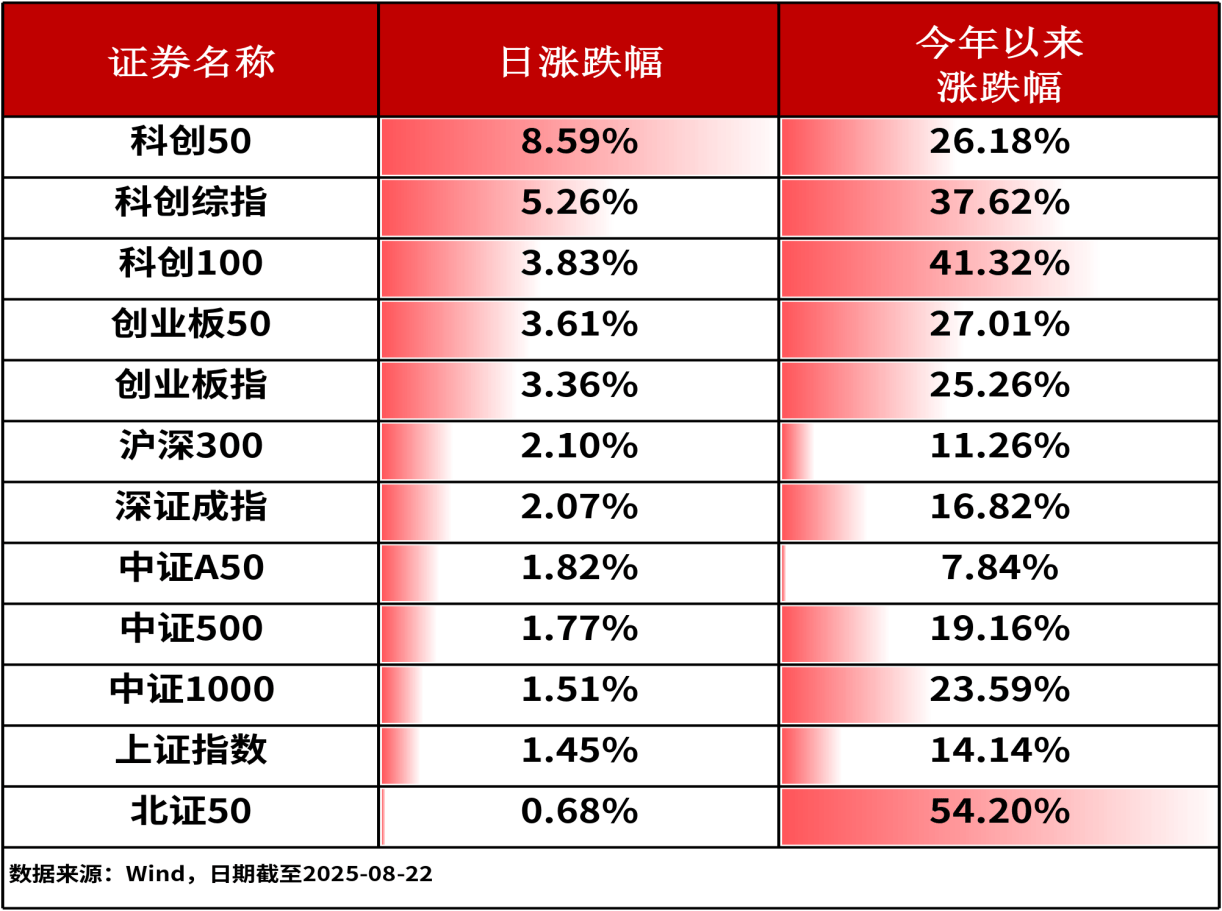
Market Overview - On August 22, A-shares saw all three major indices rise, with the Shanghai Composite Index up 1.45% to 3825.76 points, the Shenzhen Component Index up 2.07%, and the ChiNext Index up 3.36% [1] - The STAR Market 50 Index experienced the most significant increase, rising by 8.59% [1] - The total trading volume in the Shanghai and Shenzhen markets reached 25,467 billion RMB, showing a slight increase compared to the previous trading day [2] Sector Performance - The electronic, communication, and computer sectors led the gains, with increases of 4.82%, 3.77%, and 3.50% respectively [5] - Conversely, the banking, textile and apparel, and coal sectors saw declines of -0.30%, -0.20%, and -0.15% respectively [5] Semiconductor Sector - Nvidia's request for some suppliers to halt production of H20 chips tailored for the Chinese market led to a surge in semiconductor stocks, with the semiconductor ETF (159813) rising by 10% [5] - Analysts noted that the national commitment to technological self-reliance remains unchanged, and domestic leading companies are expected to accelerate iterations to overcome overseas restrictions [5] Securities Sector - The Shanghai Composite Index broke through the 3800-point mark, reaching its highest level since August 20, 2015, with the leading securities ETF (159993) rising by 3.99% [7] - Huatai Securities reported a significant increase in market trading activity and new account openings since the beginning of the year, indicating a recovery phase for securities firms [7] Chemical Sector - The chemical sector showed strength, with significant inflows into the chemical ETF (159870), which saw over 10 billion RMB in subscriptions over two consecutive days [8] - Analysts highlighted the potential for a rebound in the chemical sector as inventory cycles restart, with the possibility of structural demand surges [9] Investment Products - Key investment products include the semiconductor ETF (159813) and the chemical ETF (159870), which are positioned to benefit from current market trends [10][11]


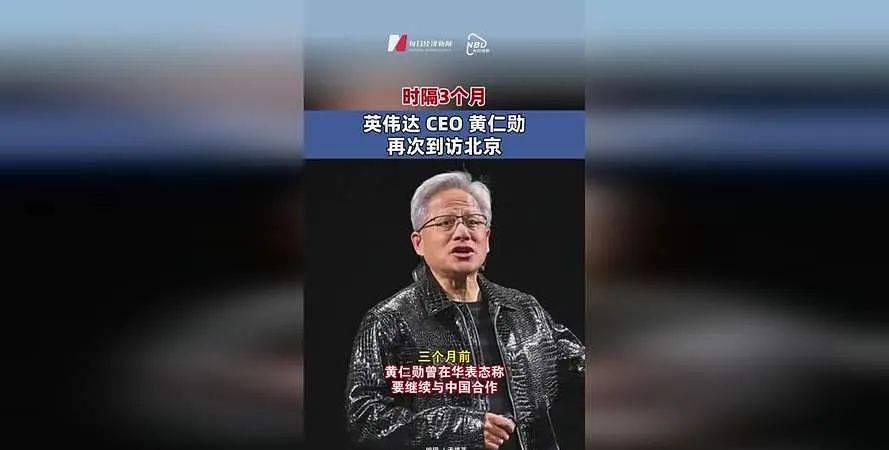
亲自走了一趟北京后,黄仁勋终于明白,中方已不再需要英伟达
Sou Hu Cai Jing· 2025-08-19 21:10
Core Insights - Huang Renxun's visit to Beijing highlights that Nvidia's influence in the Chinese market has diminished significantly, as China no longer relies on Nvidia for AI chip technology [1][14] - The Chinese AI chip industry has rapidly developed, with companies like Huawei, Cambricon, and Alibaba producing competitive chips that can rival Nvidia's offerings [3][9] Industry Developments - The Chinese AI chip market has seen the emergence of strong domestic players, with Huawei's Ascend 910, Cambricon's Shiyuan 290, and Alibaba's Hanguang 800 leading the charge [3][5] - Major Chinese tech firms such as Baidu, Alibaba, and Tencent have shifted to using domestic chips for training AI models, previously reliant on Nvidia [7][9] Market Dynamics - Nvidia's attempts to continue selling in China with modified versions of their chips (A800 and H800) have not been well received, leading to a loss of trust among Chinese consumers [5][10] - The demand for Huawei's Ascend chips has surged, with orders reportedly extending into the second half of next year, indicating a supply shortage and competitive pricing compared to Nvidia [7][9] Strategic Implications - Huang Renxun's visit was intended to explore opportunities for collaboration, but the Chinese market has made it clear that it no longer needs Nvidia's products [9][14] - The development of a complete AI industry chain in China, from chip design to application, poses significant challenges for Nvidia to re-enter the market [9][10]
科技相关ETF上周领涨,机构看好AI主线明确丨ETF基金周报
Sou Hu Cai Jing· 2025-08-18 02:56
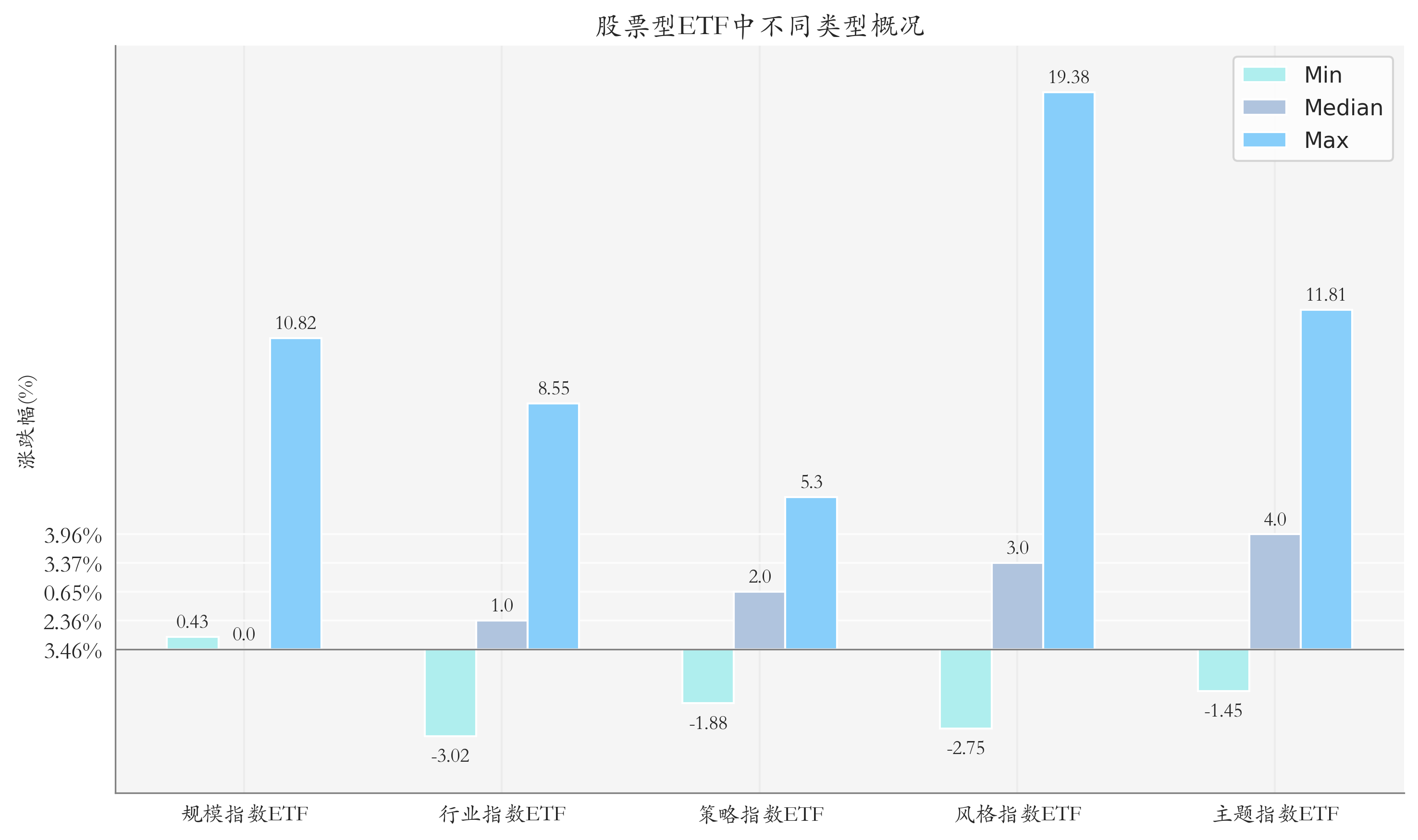
Market Overview - The Shanghai Composite Index rose by 1.7% to close at 3696.77 points, with a weekly high of 3704.77 points [1] - The Shenzhen Component Index increased by 4.55% to 11634.67 points, reaching a peak of 11647.39 points [1] - The ChiNext Index saw an 8.58% rise, closing at 2534.22 points, with a maximum of 2541.89 points [1] - Global markets also experienced gains, with the Nasdaq Composite up by 0.81%, the Dow Jones Industrial Average up by 1.74%, and the S&P 500 up by 0.94% [1] - In the Asia-Pacific region, the Hang Seng Index rose by 1.65% and the Nikkei 225 increased by 3.73% [1] ETF Market Performance - The median weekly return for stock ETFs was 3.38% [2] - The highest weekly return among scale index ETFs was 10.82% for the CMBI ChiNext Large Cap ETF [2] - The highest return in industry index ETFs was 8.55% for the China Securities Full Index Securities Company ETF [2] - The top-performing strategy index ETF was the Huaxia ChiNext Low Volatility Value ETF, with a return of 5.3% [2] - The best-performing thematic index ETF was the Huaxia CSI Financial Technology Theme ETF, returning 11.81% [2] ETF Liquidity - Average daily trading volume for stock ETFs increased by 34.6%, while average daily trading value rose by 45.6% [9] ETF Fund Flows - The top five stock ETFs by inflow were: Huaxia SSE 50 ETF (inflow of 2.474 billion), Huatai-PB CSI 300 ETF (1.598 billion), Southern CSI 1000 ETF (606 million), Southern CSI 500 ETF (494 million), and E Fund ChiNext ETF (494 million) [11] - The top five stock ETFs by outflow were: Huabao CSI Full Index Securities Company ETF (outflow of 631 million), Jiashi SSE ChiNext Chip ETF (544 million), E Fund SSE ChiNext 50 Component ETF (377 million), Tianhong CSI Full Index Securities Company ETF (292 million), and Jiashi CSI Software Service ETF (282 million) [12] ETF Financing and Margin Trading - The financing balance for stock ETFs decreased from 39.2071 billion to 38.9604 billion, while the margin balance fell from 2.2897 billion shares to 2.1635 billion shares [14] ETF Market Size - The total size of the ETF market reached 47,685.07 billion, an increase of 1,227.04 billion from the previous week [17] - Stock ETFs accounted for 32,082.18 billion, representing 67.3% of the total ETF market size [19] ETF Issuance and Establishment - No new ETFs were issued last week, but six new ETFs were established, including: Bosera ChiNext Comprehensive ETF, Huaan Hang Seng Hong Kong Stock Connect Technology Theme ETF, Penghua SSE ChiNext Artificial Intelligence ETF, E Fund ChiNext 50 ETF, Southern CSI General Aviation Theme ETF, and Jiashi Hang Seng Consumption ETF [20] Institutional Perspectives - Western Securities emphasized the clear mainline of AI, suggesting continued focus on domestic and overseas AI computing power and investment opportunities in AI server power supply [21] - Everbright Securities projected that the market may reach new highs in the second half of the year, driven by short-term expectation differences and opportunities in emerging industries [22]
与普京会晤后,特朗普称决定放中国一马,印度尴尬:我又成小丑了
Sou Hu Cai Jing· 2025-08-16 11:13
Group 1 - The U.S. has temporarily suspended the plan to impose additional tariffs on Chinese oil, while simultaneously increasing tariffs on Indian goods from 25% to 50% due to India's purchase of Russian oil [1][8] - The trade dynamics between the U.S. and China remain complex, with the U.S. maintaining a 30% tariff on Chinese goods and China keeping a 10% tariff on U.S. goods [3][6] - India's exports worth $50 billion are significantly impacted by the U.S. tariff increase, highlighting the disparity in treatment between India and China [8][10] Group 2 - China has diversified its soybean supply sources, significantly increasing imports from Brazil by 23% in the first half of 2025, while U.S. soybean market share has dropped to a ten-year low [3][11] - The U.S.-China trade volume reached $690.6 billion in 2022, while U.S.-India trade is less than one-sixth of that amount, indicating a weaker economic relationship for India [11][20] - India's reliance on Chinese electronic components is evident, with China accounting for over 60% of India's electronic imports, valued at $18 billion in the 2023-2024 fiscal year [16][18] Group 3 - The U.S. tariff policy appears to be increasingly ineffective, as China's exports to the U.S. have rebounded to pre-trade war levels by the first half of 2025 [20] - India's economic challenges are exacerbated by a GDP growth rate of 5.1% and a youth unemployment rate of 23%, pushing the government to reconsider its stance on China [16][18] - The geopolitical landscape is shifting, with India seeking to restore direct flights to China and enhance cooperation in semiconductor production, contrasting its previous "decoupling" strategy [15][18]
机构论后市丨牛市氛围不会轻易消失;下半年市场或冲击新高
Di Yi Cai Jing· 2025-08-10 09:51
Group 1 - The bull market atmosphere is unlikely to disappear easily, with technology and manufacturing sectors potentially becoming the main themes [1] - In July, high-risk capital saw significant inflows, while foreign and insurance capital allocations also increased [2] - The market may reach new highs in the second half of the year, with a focus on both short-term and long-term themes [3] Group 2 - The innovative drug sector is expected to benefit from new pricing mechanisms and supportive policies, leading to faster cash flow returns for high-quality innovative drug manufacturers [4] - The solid-state battery industry is at a critical point of industrialization, driven by policy support, technological advancements, and growing downstream demand [5] - The white liquor industry is undergoing a transformation, with stock prices likely to reach a turning point ahead of demand-side recovery [6][7]
策略周专题(2025年8月第1期):内外利好因素累积,国内市场或将延续强势表现
EBSCN· 2025-08-10 08:07
Group 1 - The A-share market has shown strong performance this week, with major indices such as the Shanghai Composite Index and the Wind All A Index recording significant gains, while the ChiNext Index and the Sci-Tech 50 Index lagged behind [1][14][16] - The market style this week favored small-cap growth and small-cap value stocks, while large-cap growth and mid-cap growth stocks underperformed [1][16] - Most sectors in the Shenwan first-level industry classification saw gains, with defense, non-ferrous metals, and machinery equipment leading the way, while pharmaceuticals, computers, and retail sectors experienced declines [1][16] Group 2 - The overall domestic market is performing well, supported by accumulating internal and external favorable factors, with expectations for continued strong performance in the future [2][22] - The weak U.S. labor market, highlighted by July's non-farm payrolls adding only 73,000 jobs and an increase in the unemployment rate to 4.2%, has raised concerns about the U.S. economy and increased expectations for a Federal Reserve rate cut in September [2][22][23] - Domestic policies are actively supporting the market, with July exports growing by 7.2% year-on-year, indicating resilience in foreign trade despite a complex international environment [4][48] Group 3 - The market is expected to reach new highs in the second half of the year, driven by short-term expectations and liquidity improvements, with a shift from policy-driven to fundamentals and liquidity-driven market dynamics [5][62] - Short-term focus should be on previously lagging sectors and those likely to benefit from improved overseas liquidity, while long-term attention should be on consumption, technological self-reliance, and dividend stocks [5][63][67][68][69] - Specific sectors to watch include machinery equipment and power equipment for short-term gains, and pharmaceuticals, home appliances, and food and beverage sectors for long-term benefits from overseas liquidity improvements [5][63][68]
【策略】当前该追涨,还是寻找补涨?——策略周专题(2025年7月第3期)(张宇生/王国兴)
光大证券研究· 2025-07-28 01:28
Market Overview - The A-share market has shown signs of recovery this week, driven by increased risk appetite and favorable policies, with major indices generally rising [4] - Among the major indices, the Sci-Tech 50 saw the largest increase, while the Shanghai 50 had the smallest gain [4] Industry Performance - In terms of industry performance, sectors such as building materials, coal, and steel performed relatively well, while banking, telecommunications, and public utilities experienced declines [5] Investment Strategy - The current market trend may lean towards "rotating supplementary gains" rather than "stronger strengths," with historical data indicating that both patterns can occur during slow bull markets [6] - The likelihood of a strong economic recovery is low, suggesting that the market will exhibit a "rotating supplementary gains" characteristic [7] - Potential supplementary gain opportunities should focus on sectors that have lagged in performance but have historically shown strong recovery potential [7] Future Market Outlook - The market is expected to trend upwards in the second half of the year, with the possibility of reaching new highs, transitioning from policy-driven to fundamentals and liquidity-driven growth [8] - Key investment themes for the medium to long term include domestic consumption, technological self-reliance, and dividend-paying stocks, with specific attention to sectors like AI, robotics, and defense [8]