绿色金融

Search documents
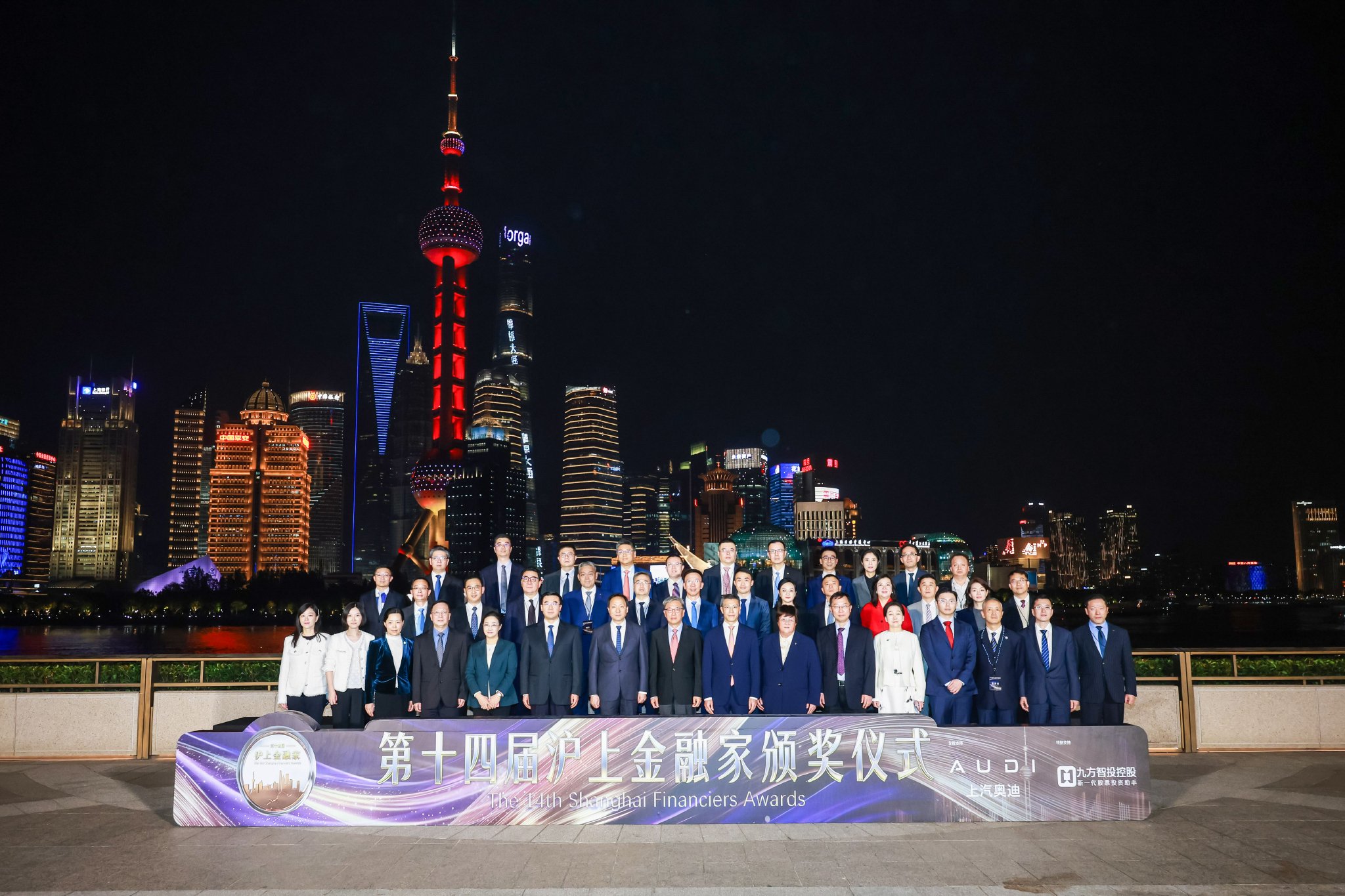
第十四届“沪上金融家”评选结果揭晓 21位上海金融英才分获三大奖项
Zhong Guo Jin Rong Xin Xi Wang· 2025-11-17 02:15
Core Insights - The 14th "Shanghai Financial Talents" awards recognized 21 outstanding financial professionals in Shanghai, highlighting the importance of talent in building a strong financial nation [1][2] - Key policies supporting the construction of Shanghai as an international financial center are set to be implemented by 2025, enhancing the city's financial capabilities [1][2] - Shanghai's financial market saw a total transaction volume of 2967.83 trillion yuan in the first nine months of 2025, marking a 12.7% year-on-year increase [2] Group 1: Awards and Recognition - The awards included categories such as "Annual Person of the Shanghai International Financial Center," "Leading Figures in Shanghai's Financial Industry," and "Innovative Figures in Shanghai's Financial Industry" [1][2] - Notable winners of the "Annual Person of the Shanghai International Financial Center" include leaders from major banks and investment companies [4][5] - The selection process involved self-nominations, committee nominations, media reviews, online voting, and expert evaluations [2] Group 2: Financial Market Performance - Shanghai's stock market and interbank bond market are among the largest globally, contributing to its status as a leading international financial center [2] - The city has successfully launched initiatives in green finance and technology finance, showcasing its role as a testing ground for financial reforms [2] Group 3: Talent Development and Future Prospects - The development of a strong financial talent pool is emphasized as a core element for building a financial powerhouse and enhancing international competitiveness [5][11] - Discussions during the event focused on how financial technology can further support the construction of Shanghai as an international financial center [5]

金融支持生态产品价值实现的思考与实践
Jin Rong Shi Bao· 2025-11-17 01:42
Core Insights - The article emphasizes the importance of establishing a mechanism for realizing the value of ecological products, which is crucial for the harmonious coexistence of humans and nature [1] - Yantai is highlighted as a pilot city for this mechanism, showcasing its rich ecological resources and active financial ecosystem, which supports the integration of ecological product value accounting and financial innovation [1] Group 1: Financial Mechanisms and Collaboration - The People's Bank of China in Yantai has shifted from a fragmented departmental approach to a collaborative governance framework, enhancing financial support for ecological product value realization [2] - A long-term cooperation mechanism has been established among various departments and financial institutions to facilitate the financing of ecological products, thereby converting ecological advantages into industrial development advantages [2] Group 2: Policy Development and Incentives - The article discusses the importance of well-defined policies that guide the processes of ecological product value accounting, trading, and financing, which stimulate market participation [3] - Several policy measures have been introduced to direct financial resources towards key ecological areas, addressing challenges in measuring and monetizing ecological assets [3] Group 3: Comprehensive Financial Support - Financial institutions in Yantai have developed a comprehensive financial empowerment system that covers all regions, industries, and scenarios, enabling ecological products to be tradable and valued [4] - Specific loans have been issued for various ecological projects, including a loan of 6.87 billion for a water reservoir and 92 billion for clean energy enterprises, demonstrating extensive financial support for ecological product value realization [4] Group 4: Innovative Financial Products - The article outlines the transition from single product financing to a diverse product matrix, showcasing the development of innovative financial products tailored to different ecological resources [5][6] - New financial products, such as "marine carbon sink loans" and "green + sustainable development linked loans," have been created to enhance the financial attributes of ecological products [6] Group 5: Collaborative Financial Ecosystem - Yantai has moved beyond traditional loan models to create a financial ecosystem that includes loans, insurance, and fiscal subsidies, enhancing the support for ecological product financing [7] - The introduction of various insurance products has provided significant risk coverage, with over 3 billion in policy-based marine aquaculture insurance [7] Group 6: Sustainable Financing Mechanisms - The article highlights the use of monetary policy tools to provide low-cost resources for ecological industries, improving capital accessibility for ecological products [8] - A total of 10.77 billion has been issued in loans and support tools, facilitating approximately 60 billion in loans for green industries and ecological agriculture [8] Group 7: Project Development and Support - The establishment of a project library containing 100 quality projects with ecological and economic value aims to ensure a sustainable supply of projects and precise financial support [10] - Financial support has been provided for 62 projects, with a total credit of 2.36 billion and loans of 870 million, promoting the development of current ecological projects and future sustainability [10]
胡彬:气候融资转向公平有效新方向
Jing Ji Ri Bao· 2025-11-17 00:03
Core Viewpoint - The COP30 conference in Brazil marks a critical juncture in global climate governance, focusing on the urgent need for a new climate financing system that is sufficient, equitable, and accessible to meet the funding gap required to achieve the Paris Agreement's temperature control goals [1][2]. Climate Financing Transition - The past decade has seen developed countries fail to fulfill their annual commitment of $100 billion in climate funding, leading to a significant imbalance in funding structures, particularly in adaptation investments [2][3]. - COP30 signifies a new phase of systematic restructuring in climate financing, with discussions centered around the "Baku-Belém Climate Financing Roadmap" aimed at significantly increasing global climate funding targets [2]. Balancing Fairness and Efficiency - Key disagreements between developed and developing countries revolve around responsibility definitions, funding nature, and usage priorities [3]. - Developed nations emphasize mobilizing private capital and market mechanisms, while developing countries insist on the primary responsibility of developed nations to provide funding as per the Paris Agreement [3]. - There is a critical shortage of funds for vulnerable nations to adapt to climate change, and high-risk countries struggle to access favorable funding due to debt and credit issues [3]. Innovative Financing Approaches - A shift from "aid logic" to "investment logic" in global climate financing is emerging, characterized by three main trends [4]. - The integration of public and private sectors is becoming the dominant model, with emerging market countries leveraging sovereign funds to attract international capital [4]. - Regional cooperation mechanisms are accelerating, with initiatives led by countries in Latin America, Africa, and ASEAN to create localized financing solutions [4]. - The deep integration of market mechanisms and financial tools is evident, with initiatives like the "Global Carbon Market Alliance" aiming to standardize and enhance transparency in carbon credits [4]. China's Role in Climate Financing - As a major developing country, China advocates for multilateralism and equitable cooperation in addressing climate financing challenges [6]. - China proposes establishing a "Global South Climate Financing Coordination Mechanism" to enhance collective bargaining power among developing nations [6]. - Sharing experiences in green finance, such as green credit and bonds, can help improve project transparency and reduce financing costs for partner countries [6]. - China aims to promote market connectivity and activate carbon asset potential by aligning carbon market standards with BRICS and ASEAN countries [6]. Conclusion - Climate financing serves as a "glue" for uniting climate action consensus and a "catalyst" for accelerating green transitions, with COP30 indicating a historic evolution in the global climate financing system [7].
银行应为农业绿色转型注入金融活水
Zheng Quan Ri Bao· 2025-11-16 14:43
Core Viewpoint - The Ministry of Agriculture and Rural Affairs emphasizes the need for a comprehensive green transformation in agriculture, which opens new avenues for banks to serve the agricultural sector [1] Group 1: Agricultural Green Transformation - The green transformation of agriculture requires long-term financial investment, with banks playing a crucial role as "blood suppliers" and "empowerers" [1] - The transformation faces challenges such as long cycles, strong public welfare nature, and unclear returns, necessitating banks to incorporate green transformation indicators into their credit rating systems [1][2] - Key areas for resource allocation include comprehensive utilization of livestock manure, research and development of green agricultural machinery, and carbon sequestration in planting [1] Group 2: Financial Product Innovation - The mismatch between traditional credit products and the needs of green transformation leads to issues of "difficult and expensive financing" [2] - Banks should innovate financial products tailored to the unique attributes of green agriculture, simplifying approval processes and adopting a "one-time approval, on-demand lending" model [2] - New collateral models should be explored, including loans backed by forestry carbon credits and pollution rights, to broaden financing channels for green agriculture [2] Group 3: Collaborative Efforts - The green transformation is a systemic project requiring collaboration among government, banks, enterprises, and farmers [3] - Banks need to break down "information silos" and strengthen cooperation with various departments to create a shared agricultural public information data platform [3] - Financial technology should be leveraged to enhance the accessibility and convenience of green financial services, particularly in rural areas [3] Group 4: Financial Responsibility and Goals - The comprehensive green transformation of agriculture is essential for food security and environmental improvement, presenting significant opportunities for banks [3] - Banks should integrate green development concepts into their agricultural financial services, ensuring continuous financial support flows into key areas of agricultural green transformation [3]
程实︱2026年香港经济展望:在交汇中重塑平衡
Di Yi Cai Jing· 2025-11-16 13:21
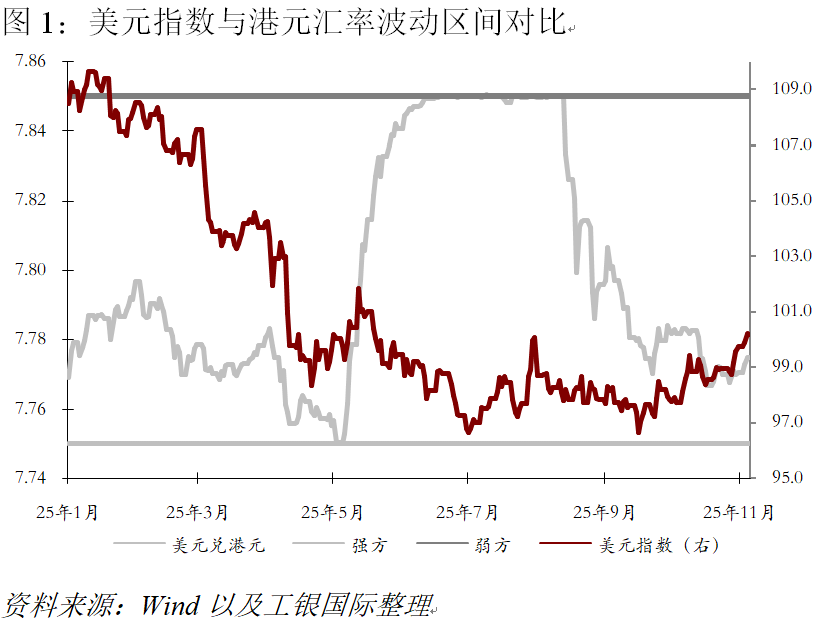
Economic Outlook - Hong Kong's economy is expected to maintain moderate growth, with GDP growth projected to reach around 3.5% in 2026 [1][15] - From 2025 to 2029, the economy is anticipated to sustain a growth rate of approximately 3%, significantly higher than developed economies in Europe and the US, which are below 2% [15] Financial Stability - Hong Kong's financial system remains robust amid global economic uncertainties, supported by a stable institutional framework and healthy fiscal conditions [1][19] - The Hong Kong Monetary Authority has intervened multiple times to maintain exchange rate stability, which has increased market liquidity [2] Trade Dynamics - Hong Kong's overall export value decreased by 7.8% in 2023 but is expected to rebound with an 8.7% growth in 2024, indicating a recovery in external demand [7] - By the first nine months of 2025, exports continued to rise, showing a year-on-year increase of 13.4% [7] Service Sector Growth - The service trade structure is optimizing, with financial, professional services, and high-end logistics expanding under policy guidance [10] - Increased demand for high-end services from mainland China is providing new external markets for Hong Kong's service exports [10] Internal Support Mechanisms - The government's budget aims to consolidate recovery momentum and enhance development capabilities, with GDP growth of 3.8% year-on-year in Q3 2025 [11][19] - Private consumption and fixed capital formation are showing positive growth, contributing to the overall economic recovery [11] Innovation and Industrial Upgrading - The government is accelerating re-industrialization and innovation through funding and support for advanced manufacturing and research projects [22] - Hong Kong is enhancing its role as a hub for cross-border private wealth management and hedge funds, with a growing venture capital ecosystem [22] Green Finance Initiatives - The government has issued approximately 240 billion HKD (about 31 billion USD) in green bonds, establishing a key pricing benchmark in the market [23] - The expansion of green finance is enhancing Hong Kong's financial system's resilience and international influence [23] Spatial Economic Development - The Northern Metropolis development strategy aims to create a diverse industrial system, integrating innovation, high-end services, and education [24] - This initiative is expected to foster a complete ecosystem from R&D to high-end manufacturing, promoting long-term growth [24]
国泰君安期货研究周报:绿色金融与新能源-20251116
Guo Tai Jun An Qi Huo· 2025-11-16 12:13
2025年11月16日 国泰君安期货研究周报-绿色金融与新能源 观点与策略 | 镍:镍价破位下行,承压震荡运行 | 2 | | --- | --- | | 不锈钢:弱现实压制钢价,但下方难言广阔 | 2 | | 工业硅:仓单去化,盘面仍具备上行驱动 | 11 | | 多晶硅:下周成都行业大会,关注情绪提振 | 11 | | 碳酸锂:动力和储能需求短期转弱,矿端发运起量,上方承压 | 20 | 国 泰 君 安 期 货 研 究 所 请务必阅读正文之后的免责条款部分 1 期货研究 商 品 研 究 二 〇 二 五 年 度 2025 年 11 月 16 日 镍:镍价破位下行,承压震荡运行 不锈钢:弱现实压制钢价,但下方难言广阔 张再宇 投资咨询从业资格号:Z0021479 zhangzaiyu@gtht.com 报告导读: 沪镍基本面:镍价破位下行,预计承压震荡。从基本面来看,现实仍然是以冶炼累库矛盾为主,全球 精炼镍显性库存维持累增,边际内盘累库更多导致进口亏损稍有扩大,同时,预期端亦呈现供增需弱,市 场普遍预期隐性补库放缓,且镍合金端使用镍铁取代镍板的比例有所提高,而纯镍投产仍有增加的预期, 叠加远端低成本湿法路径 ...
用“绿色金融”奏响乡村振兴新乐章
Zheng Quan Ri Bao Zhi Sheng· 2025-11-16 10:20
Core Viewpoint - Green finance is not only a core engine driving the green transformation of the economy and society but also a solid shield for achieving the vision of a beautiful China [1] Group 1: Green Finance Initiatives - Numerous green finance policies have emerged in recent years, with financial institutions actively increasing green credit [1] - The "green credit" initiatives are transforming ecological resources into shared capital and turning carbon reduction costs into development dividends [1] Group 2: Case Study - Bamboo Industry in Longyou County - In Longyou County, the bamboo industry is becoming a significant force in achieving the "dual carbon" goals, but funding remains a challenge for industry upgrades [2] - Longyou Rural Commercial Bank has launched specialized credit products such as "Government-Bank Guarantee," "Ecological Chain Loan," and "Green Transition Loan" to support the bamboo industry [3] - As of the end of October, the bank has issued loans to 45 bamboo industry clients, with a total balance of 119 million yuan [3] Group 3: Case Study - Waste Carbon Recycling - In Jiande City, a company specializing in the recycling of waste activated carbon faced financing challenges but received support from Jiande Rural Commercial Bank [4] - The bank provided a credit limit of 49 million yuan, with 24 million yuan allocated for technological upgrades and 19 million yuan for working capital [4] - The company implemented energy-saving technologies, achieving a carbon reduction of 37,500 tons and generating direct economic benefits of 110 million yuan [5] Group 4: Impact of Green Finance - Green finance is effectively converting "green mountains and clear waters" into "golden mountains and silver mountains," contributing to rural revitalization [6]
兴业银行落地湿地VEP质押贷款
Zheng Quan Ri Bao Zhi Sheng· 2025-11-16 10:09
■本报记者 陈衍水 近日,兴业银行落地了系统内首笔VEP质押贷款,以国家AAAA级风景区——四川西昌邛海湿地景区 一、二、三期特定地域生态价值(VEP)为质押,向项目运营方投放贷款1亿元。 据介绍,VEP是特定地域空间内,以生态系统为基础的适宜产业在未来一定开发期限内所能产生的各类 生态产品收益的价值总值,主要体现为物质供给、调节服务和文化服务三大类生态产品价值。VEP质押 贷款是兴业银行发挥绿色行业研究优势,以生态产品的供给服务、调节服务和支持服务等生态价值的核 算量化作为质押创设的一种绿色贷款产品,评价指标主要包括植被生物量、水源涵养、气候调节、释 氧、生态系统固碳、生物多样性维持等多方面。 邛海湿地景区一、二、三期VEP超4亿元,具有涵养水源、调节城市气候、净化水质、提供动植物栖息 等多重功效。 "我们通过给绿水青山标注'看得见'的价值,有效解决因生态资产难评估、评估结果难应用导致的生态 项目融资难等问题,是我行在生态产品价值实现领域的又一创新实践。"兴业银行绿色金融部相关负责 人表示。 作为国内绿色金融先行者,兴业银行深入践行"两山"理念,积极开发具有生态价值实现意义的特色产 品,在全国率先落地碳排放 ...

建设银行福建省分行:以绿为笔,共绘乡村振兴新画卷
Zheng Quan Ri Bao Zhi Sheng· 2025-11-16 10:09
Core Viewpoint - Fujian Construction Bank is enhancing its support for green finance and rural revitalization through innovative financing solutions, focusing on unique agricultural industries and ecological resources in Fujian province [1][2][3][4][5][6][7] Group 1: Financial Support and Innovations - As of the end of October, Fujian Construction Bank's agricultural loan balance reached nearly 130 billion yuan, with over 110 unique agricultural industries benefiting from specialized financing services [1] - The bank has provided over 500 million yuan in "Rural Revitalization Loans" to support farmers like Zhang Wenyue, helping them reduce financing costs and invest in green agricultural technologies [2] - The bank has developed a comprehensive financing solution for forestry projects, offering 118 million yuan in loans for a 16-year period, facilitating the transformation of ecological resources into economic value [4][6] Group 2: Agricultural and Ecological Development - The bank's "Financial Spring Rain" initiative has supported over 80,000 farmers in Fujian, promoting the growth of various agricultural sectors, including mushrooms, aquaculture, and tea [3] - Fujian Construction Bank has engaged in carbon finance initiatives, such as the "Carbon Credit Loan" model, to enhance the financial attributes of forestry and promote sustainable practices [5][6] - The bank has established a rural property rights trading platform, facilitating transactions exceeding 5.8 billion yuan, covering 42 counties in Fujian and extending to neighboring provinces [5][6] Group 3: Tourism and Rural Revitalization - The bank has launched tailored "Rural Homestay Loans" to support the development of tourism in rural areas, enabling local businesses to upgrade their facilities and attract more visitors [6][7] - Fujian Construction Bank has invested over 30 billion yuan in loans related to the forestry industry, benefiting more than 1,000 stakeholders in the sector [6] - The bank's comprehensive financial services have contributed over 30 billion yuan in loans to support the integration of agriculture, culture, and tourism, enhancing the appeal of rural areas to tourists [7]

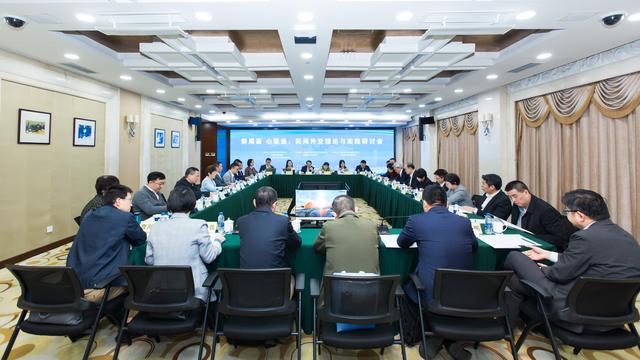
新局面心联通:民间外交理论与实践研讨会在沪成功举办
Guan Cha Zhe Wang· 2025-11-16 09:19
Group 1 - The seminar focused on the innovative development of non-governmental diplomacy, emphasizing cultural values, social organization internationalization, and AI empowerment [1][5] - Experts highlighted the importance of cultural diversity and criticized the Western narrative of universal values, advocating for mutual learning among civilizations [3] - The Shanghai Economic and Trade Mediation Center and the China Rural Development Foundation shared successful practices in social organization, demonstrating effective international cooperation through various projects [3] Group 2 - Climate diplomacy was identified as a significant area for non-governmental engagement, with social organizations encouraged to promote green finance international cooperation [4] - The use of new media and internet platforms was emphasized for enhancing non-governmental diplomacy, leveraging influencers to create emotional resonance and value recognition [4] - The role of AI in reshaping non-governmental diplomacy was discussed, showcasing its potential to lower participation barriers and facilitate cross-cultural communication [4] Group 3 - The seminar concluded that non-governmental diplomacy is evolving towards diversified stakeholders, professional cooperation, and youth engagement, necessitating improved institutional support and simplified processes [5] - Future efforts should integrate resources from government, social organizations, businesses, and the public, using culture as a bridge and technology as a facilitator for deeper development [5]