
人民币国际化

Search documents
弃用美元,改用人民币结算,欠债30多万亿的美元霸权还能支撑多久?
Sou Hu Cai Jing· 2025-10-21 13:37
Core Viewpoint - The article discusses the gradual decline of the US dollar's dominance in global trade as more countries begin to use the Chinese yuan for transactions, indicating a significant shift in the global financial landscape [1][19]. Group 1: Historical Context - The relationship between China and the US has evolved since China's entry into the WTO in 2001, marking a period of mutual benefit where China provided manufacturing while the US offered a consumer market and dollar-based transactions [3][5]. - The US has benefited from this relationship through financial mechanisms, but has also faced challenges such as industrial decline and increasing social issues due to its focus on financial speculation rather than manufacturing [5][11]. Group 2: Dollar's Role and Challenges - The US dollar has historically served as the "lubricant" for global trade, but recent actions by the US, such as the weaponization of the dollar through sanctions, have led to a growing distrust among other nations [7][9]. - The rise of China's manufacturing capabilities has diminished the necessity for global trade to rely solely on the US dollar, as countries seek alternative currencies for transactions [9][19]. Group 3: Future Outlook - The article suggests that the future of international currency may shift towards the yuan, contingent on China's ability to maintain its manufacturing base and avoid the pitfalls of financialization that have affected the US [13][19]. - The ongoing trend of de-dollarization is seen as a response to the US's failure to fulfill its international responsibilities, leading to a search for new monetary anchors among emerging economies [19][21].

仅用了9天时间,中国打赢了一场没有硝烟的战争,到底怎么回事?
Sou Hu Cai Jing· 2025-10-21 12:36
Group 1 - Iron ore is a crucial raw material for steel production, with China accounting for over half of global steel output and importing more than a billion tons annually, primarily from Australia and Brazil [2] - Major Australian companies like BHP and Rio Tinto dominate the global iron ore market, leading to a situation where Chinese steel mills have historically faced low profit margins, averaging less than 1% net profit [2] - In response to the unfavorable pricing dynamics, China has diversified its iron ore sources, focusing on the Simandou project in Guinea, which is the largest undeveloped iron ore mine globally, with an annual capacity of 120 million tons [4] Group 2 - China's steel production surged from 270 million tons in 2003 to 510 million tons within five years, causing iron ore prices to rise from under $40 per ton to over $140, resulting in significant financial outflows to Australian mining companies [5] - In 2022, the establishment of China Mineral Resources Group centralized 40% of iron ore import procurement, allowing for unified negotiations and reducing the fragmentation of previous purchasing strategies [4] - By 2024, China's crude steel production is projected to reach nearly 1 billion tons, with iron ore imports accounting for 72% of global seaborne trade, yet profit margins for Chinese steel mills remain low [7] Group 3 - In August 2023, negotiations between China and BHP for long-term contracts for 2026 stalled over currency settlement preferences, with China pushing for RMB settlements while BHP insisted on USD [9] - Following a suspension of all BHP's USD iron ore purchases, BHP's stock price fell, highlighting its dependency on the Chinese market, which accounts for 60% of its exports [11] - A subsequent agreement allowed for 30% of fourth-quarter transactions to be settled in RMB, marking a significant shift in pricing dynamics and reducing exchange rate risks for Chinese steel mills [11][13] Group 4 - The shift to RMB settlements represents a broader change in pricing rules, reducing costs for Chinese steel mills and increasing their profit margins, while also weakening the pricing power of Australian exporters [13] - With the full production of Simandou, global iron ore supply is expected to increase by 10%, further diminishing the monopoly held by Australian companies [13] - The move towards RMB in iron ore trade is expected to enhance China's position in resource trade and promote the internationalization of the RMB [13]



澳矿“卡脖子”时代落幕,中国1.2亿吨备胎,打破澳洲铁矿石垄断
Sou Hu Cai Jing· 2025-10-21 08:54
澳大利亚和中国的铁矿石恩怨,最近是闹得沸沸扬扬,一边是每年从中国赚得盆满钵满,赚的钱比美国、欧洲加起来还多。 一边是跟着美国处处针对中国,制裁、抹黑样样来,尤其是在铁矿石贸易上,仗着垄断地位漫天要价,为啥澳大利亚总喜欢针对咱们? 不过最近这事儿有了大反转,中国直接暂停了澳大利亚最大铁矿石企业必和必拓所有以美元计价的交易,这一下可把澳大利亚给整懵了。 要知道,铁矿石是澳大利亚的第一大出口商品,中国常年要吸纳它近70%的铁矿石,以前都是澳大利亚摆架子,动不动就威胁断供,现在轮到中国 主动说"停",它能不慌吗? 后来中国终于想明白了,要打破垄断,首先得团结起来,2022年,中国矿产资源集团成立了,所有铁矿石采购都由它统一负责。 这一下就不一样了,再也没有内部竞价的内耗,还能把零散的小订单整合成长大单,跟国外矿企谈判的时候,腰杆都硬了不少,议价能力直接翻 倍。 光靠内部整合还不够,还得从外部突破,中国开始在全球范围内收购矿业巨头的股份,这招叫"以资本换话语权"。 比如说,中国花1000块钱买铁矿石,矿企能赚800块,要是我们持有这家矿企50%的股份,那相当于实际只花了600块,这就是"权益矿"的好处。 更关键的是,中 ...
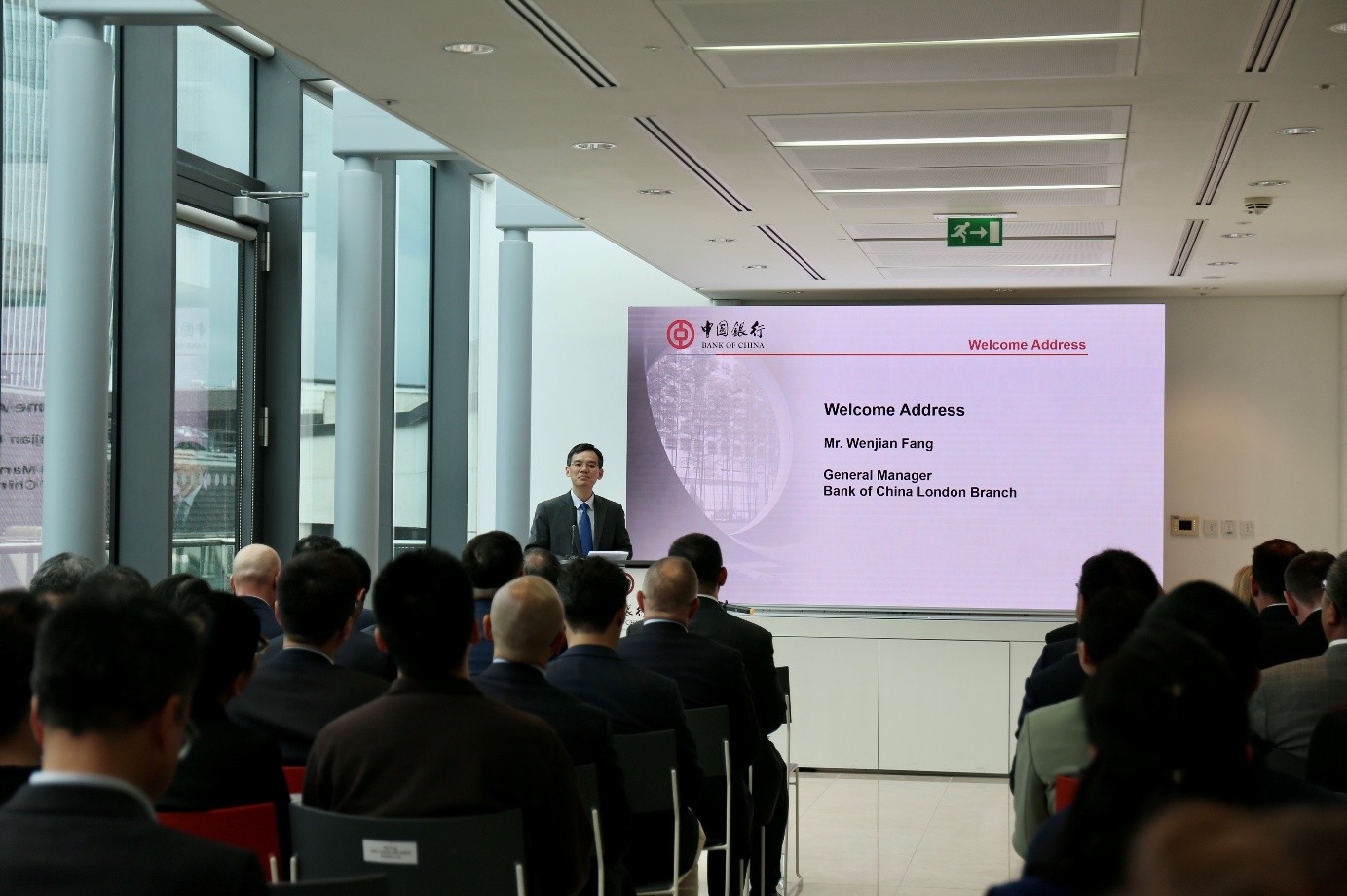
中国银行在伦敦举办人民币国际化路演
人民网-国际频道 原创稿· 2025-10-21 05:42
人民网伦敦10月20日电(徐量)中国银行于20号在伦敦举办"人民币国际化路演(伦敦站)"活动,吸引了来自中国人民银行、英国政府机构、伦敦金融 城、国际金融同业、跨国企业及智库代表等近百位嘉宾出席,共同探讨人民币国际化进程与跨境金融合作新机遇。 中国银行伦敦分行行长方文建致欢迎辞。主办方供图 本次活动是中国银行2025年人民币国际化全球系列推广活动的重要一站,旨在进一步推动人民币在跨境贸易与国际投融资中的使用,深化中英及欧洲地 区金融合作。活动现场,与会代表围绕人民币在跨境支付清算、贸易结算、投融资服务、外汇交易与风险管理、债券融资等领域的应用展开深入交流,并分 享人民币市场发展趋势、金融基础设施合作与产品创新最新进展。 与会嘉宾围绕人民币国际化进程与跨境金融合作展开热烈讨论。主办方供图 活动当天还举行了"人民币产品与项目奖"颁奖仪式,对在跨境人民币业务创新、服务推广及市场培育方面表现突出的八家合作机构给予表彰,进一步凝 聚市场合力,推动构建开放协同的人民币生态圈。 据了解,作为中国现代金融业在国际金融中心设立的第一家分支机构,中国银行伦敦分行自2011年在伦敦启动建设离岸人民币市场以来,稳步推进人民 币相关业 ...

澳洲铁矿、美国大豆都认可人民币!中方首拿铁矿定价权,澳最终妥协让步
Sou Hu Cai Jing· 2025-10-20 20:42
与中国矿产资源集团签署协议,接受人民币结算部分铁矿石贸易。这一突破标志着中国首次在铁矿石这一战略资源领域打破美元定价的垄断。 铁矿石作为 全球最庞大的实物贸易商品之一,年交易额超过1.2万亿美元,此前约80%以美元结算。 中国作为全球最大铁矿石进口国,占全球海运铁矿石贸易总量的75%,却长期在定价方面受制于人。 过去几十年,中国购买全球约七成的海运铁矿石,但 价格一直由国际矿商决定。 必和必拓、力拓和淡水河谷三大国际矿商通过操控现货溢价,曾让中国钢厂多支付超过200亿美元。 2021年,每吨铁矿石的溢价高达30美元,相当于中国钢 厂每生产一吨钢材就要多花200元人民币。 转机出现在2022年中国矿产资源集团的成立。 这家央企整合了国内钢铁厂的采购权,代表全国四成铁矿石进口量进行谈判,彻底改变了以往国内钢企分散 采购、被"逐个击破"的局面。 今年8月,中方在谈判中向必和必拓提出两个核心要求:用人民币结算,以及以80美元/吨的现货价格为基准锁定季度价格。 在澳方最初拒绝后,中国矿产 资源集团于9月30日发出暂停采购通知,导致谈判僵局公开化。 华东师范大学澳大利亚研究中心主任陈弘教授指出,这一举措撼动了美元主导的全 ...

2025我国经济社会发展内外部环境条件八大趋势
Sou Hu Cai Jing· 2025-10-20 12:53
External Environment Trends - The global political and economic landscape is experiencing deep adjustments, with increasing polarization and geopolitical conflicts, leading to a more complex international environment [2][19][20] - The rise of "global south" countries is weakening the US-led unipolar system, resulting in a shift towards a multipolar world where developing countries seek strategic autonomy [2][19][24] - The global governance system is undergoing reconstruction, with traditional multilateral institutions losing effectiveness and the emergence of "mini-lateralism" and flexible alliances [2][20][21] Technological Competition - The technology sector is becoming the core battleground for global competition, with increasing "techno-nationalism" leading to technology blockades and export controls, particularly against China [3][22][23] - China's long-term investment in technological innovation is expected to yield results, potentially entering a period of technological explosion, especially in green, digital, and AI sectors [3][22][23] Economic Growth and Trade - Global economic growth is projected to slow down, with an average annual growth rate of 3.1% over the next five years, lower than the previous five years [2][23][24] - Trade protectionism is on the rise, with global trade growth expected to average 3% annually, below the economic growth rate, indicating a significant adjustment in global trade dynamics [2][26][27] Investment Focus - Investment during the "15th Five-Year Plan" period will prioritize human-centered development, focusing on improving living standards and future industries [10][11] - Key investment areas include infrastructure for public health, elderly care, and digital transformation, with a strong emphasis on green and smart technologies [11][12][13] Financial Market Dynamics - The international financial market is characterized by divergence, with major economies adopting different monetary policies, leading to increased volatility in currency exchange rates [4][32][33] - The dominance of the US dollar is declining, with a growing trend towards a multi-currency system, where the euro and renminbi are gaining prominence [5][34] Consumer Trends - Domestic consumption is expected to grow steadily, with a shift towards more personalized and diversified consumer demands driven by technological advancements [7][8][9] - The aging population is creating a burgeoning silver economy, with significant growth in demand for elderly care products and services [9][10]

中国银行协助在港发行75亿元广东省政府债券 助力粤港澳大湾区深度融合发展
2 1 Shi Ji Jing Ji Bao Dao· 2025-10-20 12:09
Core Insights - The issuance of offshore RMB local government bonds by the Bank of China in Hong Kong aims to fund qualified green, blue projects, and major infrastructure projects in Nansha District, Guangzhou [1][2] - The bond issuance scale is RMB 7.5 billion, with different maturities and interest rates, indicating strong investor interest with an order book peak of RMB 20 billion and a subscription multiple of 2.7 times [1] Group 1 - The Bank of China served as the joint global coordinator, joint lead underwriter, and settlement agent for the bond issuance, providing comprehensive services including underwriting, cross-border clearing, and market research [1] - The bonds consist of three tranches: a 3-year green bond of RMB 3.5 billion at 1.72%, a 5-year Nansha-themed bond of RMB 2.5 billion at 1.80%, and a 10-year blue bond of RMB 1.5 billion at 2.09% [1] - The issuance is part of Guangdong Province's strategy to enhance cooperation within the Guangdong-Hong Kong-Macao Greater Bay Area and support the internationalization of the RMB [2] Group 2 - Guangdong Province is the first in China to issue local government bonds in both Hong Kong and Macau, aiming to attract international investors and enhance cross-border financial cooperation [2] - The Bank of China has facilitated the issuance of RMB 10 billion in offshore local government bonds for Guangdong Province this year, reinforcing financial market connectivity in the Greater Bay Area [2]
中国制造业连续15年全球第一,意味着什么?
Hu Xiu· 2025-10-20 11:24
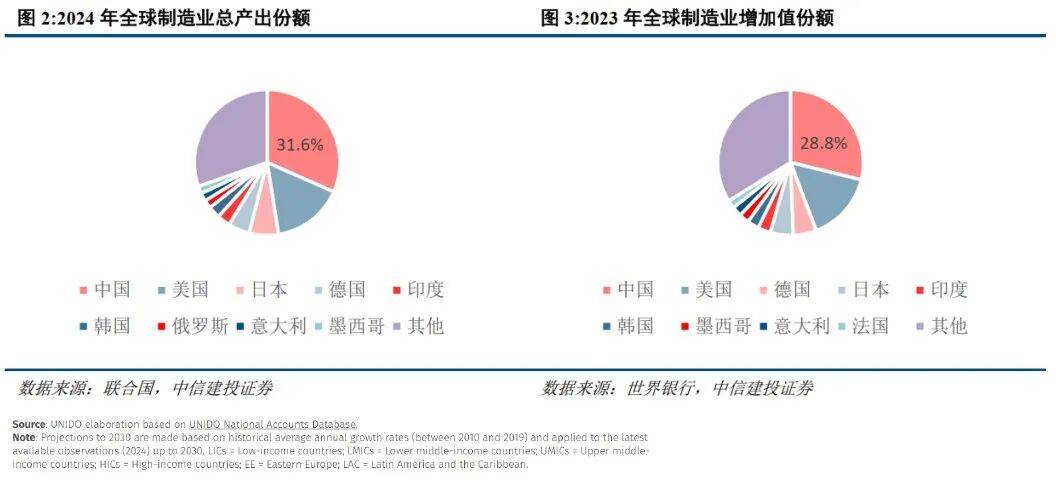
Group 1 - The core viewpoint of the articles highlights the significant growth and global dominance of China's manufacturing sector, which has seen its value-added manufacturing increase from 26.6 trillion yuan to 33.6 trillion yuan from 2020 to 2024, contributing over 30% to global manufacturing growth during the 14th Five-Year Plan period [2][3][4] - China's manufacturing value-added accounted for approximately 30% of the global total, maintaining the largest share for 15 consecutive years, with projections indicating it could rise to 45% by 2030 [6][9] - The manufacturing sector's output is primarily driven by domestic demand, with less than 30% of production being exported, indicating a strong internal market [14][15] Group 2 - The automotive and semiconductor industries are identified as key areas for growth, with China's automotive production expected to reach 31.28 million units in 2024, accounting for 33.8% of global output [10][11] - Despite the strong performance in manufacturing, challenges remain in specific sectors such as semiconductors, where China faces significant trade deficits, highlighting the need for improvement in these critical areas [12][18] - The articles emphasize the importance of China's manufacturing capabilities in supporting various sectors, including agriculture and services, and the potential for further development in the third industry [58][59] Group 3 - The articles discuss the implications of China's manufacturing strength on global trade dynamics, noting that China's trade surplus has reached unprecedented levels, significantly impacting the global economy [17][30] - The manufacturing sector's ability to adapt and respond to global demands is underscored, with the potential for continued expansion in international markets, particularly in developing regions [22][25] - The articles also highlight the increasing internationalization of the renminbi, driven by China's manufacturing exports, which is reshaping global payment systems [31][33] Group 4 - The articles point out the internal challenges within China's manufacturing sector, including issues related to overcapacity and the need for regulatory oversight to ensure fair competition [54][56] - The manufacturing industry's employment impact is significant, with approximately 1.3 billion people employed in this sector, underscoring its role in the broader economy [56] - The articles conclude that while China's manufacturing sector has achieved remarkable growth, it must navigate both domestic and international challenges to sustain its competitive edge [58][59]
美媒:中美关系还没有恶化到必须一战!但美国已落入“中国陷阱”
Sou Hu Cai Jing· 2025-10-20 08:56
Group 1: Trade Relations and Tariffs - The U.S. has increased tariffs on Chinese imports to 20%, affecting a wide range of products from electronics to machinery, while China retaliated with a 15% tariff on U.S. agricultural products like soybeans and corn [2] - The trade war has disrupted global supply chains, increased costs for businesses, and led to higher prices for U.S. consumers, exacerbating inflationary pressures [2] - The U.S. aims to protect its industries through tariffs, but this strategy has resulted in negative consequences for both American farmers and consumers [2] Group 2: Semiconductor and Technology Restrictions - The U.S. has expanded export controls on AI chips and semiconductor equipment, making it increasingly difficult for Chinese companies to access advanced technologies [4] - This strategy has led to significant losses in the German automotive sector due to chip shortages, highlighting the interconnectedness of global supply chains [4] - The U.S. approach is seen as a zero-sum game that may deplete its diplomatic resources and create a "China trap" [4] Group 3: Rare Earth Elements and Broader Trade Dynamics - The U.S. plans to impose an additional 100% tariff on Chinese goods and expand software export controls, prompting China to strengthen its rare earth export controls [6] - Rare earth elements are critical for various industries, and the U.S. military is particularly vulnerable due to its reliance on these materials [6] - The trade conflict is evolving from purely economic to a broader trade struggle, affecting not only the U.S. and China but also European countries [6] Group 4: Economic Outlook and Trade Volumes - The U.S. GDP growth forecast for the first half of 2025 has been revised down to 2.1%, with inflation remaining around 3.5% [8] - In contrast, China's economy is showing resilience with diversified exports and increasing trade volumes with EU countries, which rose by 8% in the first half of 2025 [8] - The U.S. strategy to contain China is inadvertently strengthening economic ties between China and its allies [8] Group 5: Public Sentiment and Political Dynamics - A growing number of Americans are expressing fatigue over the trade war, with 56% feeling economic difficulties are increasing [10] - There is a notable decline in trust towards U.S. leadership among allies, with only 45% of Australians considering the U.S. reliable [10] - The American public is increasingly focused on domestic issues rather than viewing China as the primary threat [16] Group 6: International Relations and Cooperation - The U.S. continues to use Taiwan as a bargaining chip, which may escalate tensions rather than foster cooperation [12] - Despite the tensions, there are indications of ongoing communication between the U.S. and China, suggesting a willingness to negotiate [20] - The Belt and Road Initiative is expanding, with significant investments and partnerships that enhance China's global economic influence [22] Group 7: Currency and Financial Systems - The internationalization of the Renminbi is progressing, with over 85 central banks incorporating it into their reserves, totaling over $350 billion [22] - The establishment of a currency swap network is enhancing financial security and facilitating trade, signaling China's intent for cooperative economic relations [24] - The U.S. is facing challenges as its "America First" policy loses appeal in the global market [26] Group 8: Future Outlook - While conflicts may persist, the risk of a direct confrontation between the U.S. and China remains low, as both nations recognize the need for stability [26] - The emphasis on cooperation in addressing global challenges like climate change and pandemic recovery is becoming more prominent [27] - The overarching narrative suggests that peace and development are the prevailing trends, with zero-sum thinking likely to be abandoned in favor of mutual benefits [27]
中国航运延续增势支撑外贸 未来如何穿越“风浪”
Di Yi Cai Jing· 2025-10-20 08:26
Core Viewpoint - The global shipping industry is facing significant challenges due to geopolitical changes and supply chain instability, yet there are opportunities for growth and innovation in the sector [1][2]. Current "Weather" - The international shipping industry is described as being in a "stormy" situation, influenced by four main factors: global economic growth, energy transition, new ship orders, and trade friction [2][3]. - The International Monetary Fund (IMF) projects global economic growth rates of 3.2% for this year and 3.1% for next year, indicating ongoing trade growth despite challenges [2]. - The shipping industry may face pressure in container shipping and potential losses by 2026 due to new ship order ratios and overcapacity issues [2][3]. China's "Path" - China's shipping industry has shown growth in key metrics, with a projected 9.5% increase in fixed asset investment and significant increases in cargo throughput and container volume [4]. - The focus on green and intelligent development is evident, with a growing number of new energy vessels and automated terminals [4][5]. - The introduction of the first methanol dual-fuel container ship and advancements in green fuel supply systems highlight China's commitment to sustainable shipping practices [6][7]. Future "Direction" - The global shipping industry remains a critical pillar of the economy, with China accounting for approximately 31% of global shipping volume [8]. - Despite a slight slowdown in global trade growth, there are signs of recovery, particularly in the oil tanker market [8][9]. - China is expected to deliver 52% of the world's new ships this year, reinforcing its importance in the global shipping market [8]. Strategic Recommendations - Suggestions for enhancing shipping productivity include strengthening supply chain collaboration, promoting data connectivity, and integrating AI technology into shipping operations [5][10]. - The need for a resilient supply chain system that incorporates technology, safety, and sustainability is emphasized [10][11]. - Financial support for the shipping industry's low-carbon transition and digital integration is crucial for future growth [12].