
能源转型

Search documents
越南能源转型国际研讨会在胡志明市举办
Shang Wu Bu Wang Zhan· 2025-11-07 16:11
越共中央政治局第70号决议明确了到2030年确保国家能源安全的重点任务,政府第328号决议也提 出发展竞争性透明能源市场的解决方案,以推动能源节约和高效使用,迈向绿色、低排放和碳中和经 济。国家能源发展战略目标是,到2030年,可再生能源将占总能源结构的20%,到2045年达到70%。在 适当的政策、技术和伙伴关系支持下,越南有望释放其潜力,成为区域可持续增长的领导者。 亚太城市能源协会(APUEA)执行董事彼得·伦德伯格(Peter Lundberg)表示,越南工业、建筑和 空调系统具有巨大的未开发能效潜力,开发这一潜力对于成功实现净零排放目标及节省成本至关重要。 同时,能源转型不会孤立发生,需要跨行业、跨领域和跨国界合作,越南需要适宜解决方案并建立伙伴 关系,以推动能源转型进程。 (原标题:越南能源转型国际研讨会在胡志明市举办) 越通社11月6日报道,越南工贸部电力局能源信息与电力市场发展中心、胡志明市工贸局和亚太城 市能源协会11月5日在胡志明市联合举办越南能源转型国际研讨会,聚焦能效解决方案与电力市场机 制。 能源信息与电力市场发展中心副主任阮氏芳燕表示,直接购电协议(DPPA)和竞争电力批发市场 ( ...
国家能源局发文推进煤炭与新能源融合发展
Xin Hua She· 2025-11-07 15:27
Core Viewpoint - The National Energy Administration has issued guidelines to promote the integration of coal and renewable energy, focusing on green low-carbon development and technological innovation to enhance energy stability and facilitate the transition to a green economy [1][2]. Summary by Sections Main Tasks - Accelerate the development of photovoltaic and wind power industries in mining areas, utilizing land resources from subsided coal mining and promoting diverse business models such as "photovoltaic + agriculture" and "photovoltaic + aquaculture" while advancing wind power development [2] - Promote clean energy substitution in mining areas by accelerating electrification in production processes, promoting electric and hydrogen-powered mining vehicles, and establishing charging and energy storage stations while phasing out inefficient boilers [2] - Advance renewable energy heating and cooling solutions by utilizing geothermal energy, solar energy, and residual heat from mines, exploring multi-source heating and renewable energy cooling [2] - Innovate in green energy development and utilization by constructing smart microgrids in mining areas, facilitating green electricity direct connection and trading, and promoting energy-saving and carbon reduction projects [2] - Foster collaboration between the coal industry and renewable energy, supporting coal companies in transitioning to comprehensive energy service providers and encouraging joint ventures in coal power and renewable energy projects, as well as the application of carbon capture, utilization, and storage (CCUS) [2] - Strengthen technological innovation and talent cultivation, focusing on key technologies such as coal-renewable energy coupling power generation and mine energy storage, while training specialized interdisciplinary talents [2] - Enhance policy coordination and support by incorporating integrated development into the "14th Five-Year" energy plan and reinforcing the assurance of funding, finance, and grid access [2] Implementation Path - The National Energy Administration will strengthen industry coordination and improve the policy and standard system; provincial energy authorities need to detail measures and enhance guidance [3] - Coal enterprises, especially those part of high-quality development mechanisms, are required to develop implementation plans and create exemplary cases [3] - All relevant parties must strictly enforce safety production responsibilities, enhance project supervision, and promote the orderly advancement of integrated development [3]
西门子能源进博会上签署多项合作协议
Zhong Guo Neng Yuan Wang· 2025-11-07 14:59
Group 1 - Siemens Energy's global executive committee members visited China to strengthen international cooperation and support energy transition, attending multiple cooperation agreement signings at the 8th China International Import Expo [1] - Siemens Energy signed intention cooperation agreements with China Electric Power Construction Group and East China Survey and Design Institute, focusing on resource sharing in transformers, high-voltage switchgear, and related services to explore global markets [1] - The agreements signify a commitment to win-win cooperation and provide new opportunities for deep integration of Chinese enterprises with international partners in the global energy industry chain [1] Group 2 - China Energy Construction Group Tianjin Electric Power Construction Co., Ltd. signed contracts with Siemens Energy for two F-class gas turbine generator sets for a 1000MW combined cycle power plant project in Malaysia [2] - Siemens Energy will provide transformers and high-voltage switchgear for two key projects of China Energy Construction International Group, enhancing competitiveness in the renewable energy sector [2] - Huaneng Energy Transportation Industry Holding Co., Ltd. signed a procurement intention agreement with Siemens Energy for offshore booster station prefabricated cabin equipment, promoting clean energy development and industrial upgrading [2] Group 3 - CNOOC's Tianjin and Zhanjiang branches signed procurement agreements with Siemens Energy for gas turbine services and fuel control valve systems, enhancing operational reliability under varying conditions [3] - China Datang Group signed a strategic partnership framework agreement with Siemens Energy to jointly develop diverse energy markets, including gas power, green hydrogen, and wind power [3] - China Petroleum Engineering Construction Corporation signed a procurement agreement with Siemens Energy covering gas turbines, compressors, transformers, and related services, supporting innovation in the oil and gas sector [3]



第八届虹桥国际经济论坛“新型储能高质量发展促进全球能源转型”分论坛在上海举办
Zheng Quan Ri Bao Wang· 2025-11-07 12:40
Core Viewpoint - The forum highlighted the rapid development of new energy storage in China, emphasizing its role in promoting renewable energy consumption and ensuring reliable electricity supply, with significant investments driving the industry forward [1][2]. Group 1: New Energy Storage Development - As of September 2025, China's installed capacity of new energy storage is expected to exceed 100 million kilowatts, marking it as a crucial technology for building a new power system [1]. - Since the 14th Five-Year Plan, new energy storage has directly driven project investments exceeding 200 billion yuan and has stimulated over 1 trillion yuan in upstream and downstream investments [1]. - The National Energy Administration aims to support technological innovation in new energy storage and improve market mechanisms to foster high-quality development [1]. Group 2: International Cooperation and Market Expansion - Chinese energy storage companies are seizing market opportunities, leveraging advanced technology and supply chain advantages to expand internationally, contributing significantly to global energy transition and green development [2]. - The scale of trade in energy storage is continuously expanding, and China's position as a global supply chain hub for the energy storage industry is becoming increasingly prominent [2]. - The National Energy Administration plans to enhance international cooperation, support foreign enterprises in establishing R&D centers in China, and guide domestic companies in international investments [2].
中欧正式更新2035年国家自主贡献,持续看好能源转型的景气度
China Post Securities· 2025-11-07 12:22
Industry Investment Rating - The industry investment rating is "Outperform the Market" and is maintained [2] Core Viewpoints - The report highlights significant progress in nuclear power modularization and molten salt reactors, indicating a positive outlook for the nuclear power industry's continued growth [5] - China and the EU have submitted updated 2035 national contributions to the UN, reinforcing the momentum for global energy transition [5] - China aims for a 7%-10% reduction in greenhouse gas emissions by 2035, with a target of achieving over six times the total installed capacity of wind and solar power compared to 2020 [5] - The EU has set legally binding targets for greenhouse gas emissions reduction, aiming for at least a 55% reduction by 2030 and a 66.25%-72.5% reduction by 2035 [5] Summary by Relevant Sections Industry Overview - The closing index is at 10728.43, with a 52-week high of 10728.43 and a low of 6107.84 [2] Investment Highlights - The report emphasizes the importance of carbon markets in driving global energy transition, with China expanding its carbon trading market and focusing on various energy sources including nuclear, distributed solar, and offshore wind [6] - The report suggests that as carbon markets develop, the value of green energy is expected to rise, recommending investments in green energy companies such as New Tian Green Energy and JinkoSolar, as well as nuclear power companies like Shanghai Electric and Harbin Electric [7]
自断臂膀!德国主动拆除能源支柱,如今工业正被动挨打
Sou Hu Cai Jing· 2025-11-07 10:58
Core Points - The demolition of the cooling towers at Gundremmingen Nuclear Power Plant marks the end of Germany's nuclear energy era, which previously supplied a quarter of Bavaria's electricity [3] - Germany's decision to phase out nuclear energy was influenced by historical events, including the Chernobyl and Fukushima disasters, leading to significant public debate and opposition [5][6] - The transition away from nuclear energy has resulted in increased energy costs and reliance on imports, particularly from France and the Czech Republic, which still utilize nuclear power [6][8] Energy Policy and Economic Impact - Germany's energy policy has led to a significant increase in renewable energy generation, currently accounting for 59.4% to 62.7% of total energy production, but this is hampered by weather dependency and stability issues [8] - The high energy costs have prompted many German companies to relocate operations abroad, with notable investments from BASF in China and expansions by BMW and Volkswagen [8] - German households are facing a 31% increase in energy expenditures compared to 2021, reflecting the broader economic impact of the energy transition [8] International Relations and Trade - Germany's energy strategy has created contradictions, as it seeks to reduce reliance on stable energy sources while simultaneously importing nuclear-generated electricity from neighboring countries [6][11] - The country is experiencing a paradox in its "de-risking" strategy towards China, as it remains economically dependent on Chinese supply chains despite political rhetoric advocating for reduced reliance [13][14] - The internal discord within Germany's ruling coalition regarding foreign policy, particularly towards China, has led to inconsistent diplomatic actions, undermining the country's international standing [13][16]


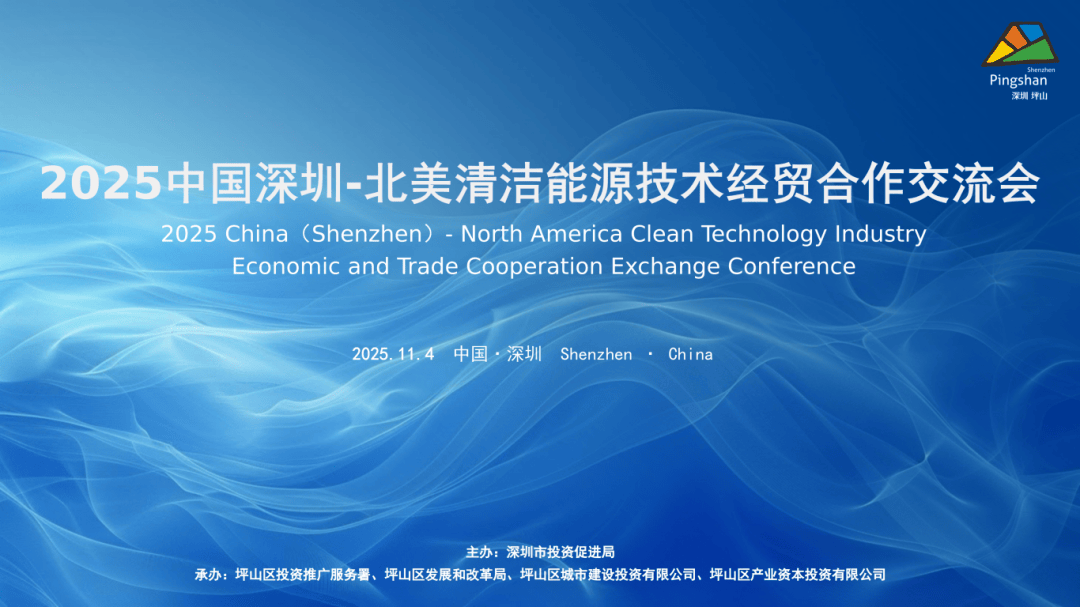
精准对接!北美清洁能源技术代表团在深圳坪山寻求绿色技术合作新机遇
Sou Hu Cai Jing· 2025-11-07 09:45
Group 1 - The "2025 China (Shenzhen) - North America Clean Energy Technology Economic and Trade Cooperation Exchange Conference" was successfully held in Shenzhen, aiming to promote deep cooperation between the Guangdong-Hong Kong-Macao Greater Bay Area and the United States in green low-carbon and energy-saving environmental protection fields [1] - Over 80 representatives from clean energy companies and investment institutions from North America, Shenzhen, and Hong Kong participated in the event, facilitating trade cooperation between the two regions [1][3] - The event featured presentations from executives of 12 North American clean energy and environmental technology companies, discussing cutting-edge areas such as clean energy, power management, environmental technology, new energy vehicles, and energy efficiency [3] Group 2 - Shenzhen's Investment Promotion Bureau highlighted the city's overall development and business environment, emphasizing its role as a core engine of the Greater Bay Area, with a projected GDP exceeding 3.68 trillion yuan in 2024 [3] - The president of the US-China Clean Technology Center noted Shenzhen's significant advantages in clean energy technology and industry chain, making it a global hub for clean energy technology investment and application [5] - The Pingshan District is developing a world-class automotive city and a global demonstration area for integrated solar storage and charging, with over 300 upstream and downstream enterprises clustered around BYD [7] Group 3 - The conference is a crucial step for Pingshan District in building a world-class new energy industry cluster and deepening Sino-US green technology cooperation [9] - Pingshan's new energy and intelligent connected vehicle enterprises increased from over 150 in 2022 to 250, with an annual growth rate of 18.6% [7] - BYD is projected to rank 91st in the Fortune Global 500 by 2025, solidifying its position as a leader in the global new energy vehicle industry [7]

国电南瑞(600406):海外与网外业务快速发展,特高压需求迎来复苏
Guoxin Securities· 2025-11-07 09:14
Investment Rating - The investment rating for the company is "Outperform the Market" [3][5][21] Core Views - The company has shown significant revenue growth in the first three quarters of 2025, achieving an operating income of 38.577 billion yuan, a year-on-year increase of 18.45%, and a net profit attributable to shareholders of 4.855 billion yuan, up 8.43% year-on-year [1][8] - The company's internal business continues to solidify its leading position, while external business expansion has made significant breakthroughs, with major projects in renewable energy storage and hydropower monitoring contributing to substantial revenue growth [2][19] - The company is accelerating its global layout, successfully entering markets in Saudi Arabia, Indonesia, Brazil, Chile, and Nicaragua, and has developed key technologies such as a 300MW variable-speed pumped storage system and hydrogen-electric coupling energy management system [20] Summary by Sections Financial Performance - In Q3 2025, the company reported revenue of 14.333 billion yuan, a year-on-year increase of 16.65%, but a quarter-on-quarter decrease of 6.61%. The net profit attributable to shareholders was 1.903 billion yuan, up 7.81% year-on-year but down 16.24% quarter-on-quarter [1][19] - The gross profit margin for Q3 was 26.50%, down 3.13 percentage points year-on-year, and the net profit margin was 14.11%, down 1.20 percentage points year-on-year [19] Business Development - The company has successfully deployed core products in the new generation dispatch system, electricity spot market, and distribution automation, enhancing its market share [2][19] - The "14th Five-Year Plan" for power grid investment is expected to increase, with significant projects in high-voltage direct current (HVDC) expected to be tendered soon, which may lead to further growth in orders for the company [20] Profit Forecast - The company is expected to achieve net profits of 8.369 billion yuan, 9.462 billion yuan, and 10.716 billion yuan for the years 2025, 2026, and 2027, respectively, with corresponding price-to-earnings ratios of 24, 21, and 19 times [3][21]

【环球财经】多国领导人呼吁加速应对气候危机行动
Xin Hua She· 2025-11-07 07:29
Core Points - The Belem Climate Summit, hosted by Brazil, aims to unite countries and international organizations to accelerate actions against the climate crisis [1][2] - Key topics include climate and nature, energy transition, assessment of the Paris Agreement's tenth anniversary, national contributions, and climate financing [1] - UN Secretary-General Guterres emphasizes the need for faster and more effective actions, particularly from wealthier nations, to reverse the current climate situation [1] - Brazilian President Lula highlights energy transition and nature protection as the most effective ways to combat global warming, advocating for science to guide decision-making [1] - French President Macron stresses the importance of respecting scientific evidence in climate issues and calls for increased clean energy investment and financing mechanisms for developing countries [1] Group 1 - The Belem Climate Summit serves as a political direction for the upcoming COP30 negotiations [1] - The summit's discussions are centered around the urgency of climate action and the need for international cooperation [1][2] - Leaders are calling for a unified approach to fulfill existing climate goals and find equitable solutions to the climate crisis [2]
德国政府召开“钢铁峰会” 呼吁欧盟加强本土市场保护
Zhong Guo Xin Wen Wang· 2025-11-07 07:20
Core Viewpoint - The German steel industry is facing a "survival-threatening crisis" due to international market changes and U.S. tariffs, necessitating trade protection measures [1][2] Group 1: Industry Challenges - The German steel sector is under pressure from low-priced competition from Asia and the exacerbation of export difficulties due to U.S. tariff policies [2] - Transitioning to green energy for high-energy steel production is costly, further intensifying the industry's challenges [2] Group 2: Government Response - The German government, led by Chancellor Friedrich Merz, is committed to advocating for trade protection at the EU level to support the domestic steel industry [1] - There is a proposal for prioritizing the use of steel produced in Europe and Germany in government procurement, reflecting a shift from the previous open market and fair competition stance [1] - The government plans to continue promoting energy transition and efficiency improvements, along with measures like industrial electricity price discounts to alleviate the burden on high-energy-consuming enterprises [1]