
产业升级

Search documents
搭上英伟达,惠州首富身家一年暴涨560亿元,年内股价涨超590%
21世纪经济报道· 2025-11-14 01:24
Core Viewpoint - The PCB industry is experiencing a new boom driven by strong demand for AI computing power, with leading companies like Shenghong Technology seeing significant stock price increases and revenue growth [1][3]. Market Overview - The global PCB market is projected to reach $73.565 billion in 2024, with a year-on-year growth of 5.8%, while China's market leads at $41.213 billion, growing at 9.0% [1]. - Guangdong province accounts for 60% of China's PCB production capacity, playing a crucial role in the global AI supply chain [1]. Company Performance - Shenghong Technology reported a revenue of 14.117 billion yuan for the year-to-date, an increase of 83.40% year-on-year, and a net profit of 3.245 billion yuan, up 324.38% [4]. - The company achieved a quarterly net profit growth of 260.52% in the third quarter, with gross and net profit margins of 35.19% and 21.66%, respectively [4]. Technological Advancements - Shenghong Technology has established a strong technical barrier in the high-end PCB sector, being one of the first to mass-produce advanced AI computing center products and possessing capabilities for high-layer precision PCBs [5][6]. - The demand for high-layer and high-density PCBs is expected to remain strong, with increasing technical challenges and value [6]. Industry Trends - The Chinese government is promoting the PCB industry's high-end, green, and intelligent development through new regulations aimed at eliminating outdated capacity and encouraging technological innovation [6][7]. - The PCB industry is shifting from low-end expansion to high-quality innovation, with a focus on enhancing competitiveness in the global market [7]. Regional Dynamics - Guangdong's PCB industry benefits from a robust industrial ecosystem, with a significant concentration of companies and resources in the Pearl River Delta region [9][11]. - The region's logistics advantages support the efficient operation of the PCB industry, which relies heavily on imported raw materials and exports finished products [13]. Future Projections - The PCB market in China is expected to grow to 415.6 billion yuan in 2024, driven by demand from emerging sectors such as AI, 5G, and new energy vehicles, with projections reaching 554.51 billion yuan by 2029 [14].


昆山赴沪发布300+合作场景
Xin Hua Ri Bao· 2025-11-13 23:47
Core Viewpoint - The event held on November 12, 2025, in Shanghai aimed to promote the integration of Kunshan into the Yangtze River Delta, showcasing over 300 cooperation scenarios across various sectors, including industrial innovation, transportation logistics, financial investment, education, healthcare, and modern cultural tourism [1] Group 1: Development Initiatives - The event highlighted Kunshan's strategic use of its geographical advantages and its proactive role in supporting national strategies [1] - The "Action Plan for High-Quality Integration of Kunshan into the Yangtze River Delta" was introduced, outlining six key areas and 22 measures to enhance regional collaboration [1] - A total of 28 cooperation projects between Shanghai and Kunshan were signed, focusing on public services, leading institutions, major capital, and modern cultural tourism [1] Group 2: Economic Performance - Kunshan is accelerating its industrial upgrade by establishing a new emerging industry system categorized as "2+3+3," transitioning from consumer electronics to automotive electronics and expanding from complete machine manufacturing to smart wearable technology [1] - In the first three quarters of the year, Kunshan's GDP and industrial output value increased by 6% and 5.3% year-on-year, respectively, indicating a positive economic trend [1] - The city aims to enhance its quality of life, making it a desirable place for talent, businesses, and residents, while fostering mutually beneficial development [1]
资本市场并购重组驶入“快车道”
Zhong Guo Zheng Quan Bao· 2025-11-13 20:02
Core Insights - The release of the "Six Guidelines for Mergers and Acquisitions" by the China Securities Regulatory Commission has led to a significant increase in merger and acquisition activities in the Chinese capital market, reflecting a transformation in economic development models and industrial structures [1][2] - Mergers and acquisitions are now viewed as essential tools for industrial integration and upgrading, rather than merely for expanding company size [1][3] M&A Activity Increase - Since the introduction of the "Six Guidelines," over 1,000 various M&A transactions have been disclosed by listed companies in the Shanghai Stock Exchange, with significant asset restructurings increasing by 138% year-on-year [2] - Half of the major asset restructurings are in the technology sector, which has seen a 287% year-on-year increase, indicating a focus on emerging and future industries [2] Industrial Upgrade - The "Six Guidelines" emphasize the need for increased support for industrial integration, encouraging leading listed companies to consolidate within their industry chains [3] - M&A is seen as a critical method for optimizing resource allocation and achieving high-quality growth, aligning with the need to transition from low-level homogeneous consumption to high-quality growth drivers [3][4] Cross-Border M&A Trends - The trend of Chinese companies "going global" has become a significant part of the global economy, with cross-border M&A being a key strategy for entering international markets [5] - New regulations have created favorable conditions for both Chinese companies expanding abroad and foreign investments entering China, facilitating deeper cross-border industrial cooperation [5][6] Value Creation in M&A - The underlying logic of cross-border M&A is value creation, with companies seeking to enhance their resource reserves and production capacity through acquisitions [6] - Successful integration post-M&A is crucial for realizing synergies and ensuring that the merger creates value, necessitating a systematic approach to post-transaction management [6]
未来三年房价大变局!一线稳涨三四线跌回2015,你的城市会怎样?
Sou Hu Cai Jing· 2025-11-13 14:41
Core Viewpoint - The Chinese real estate market is expected to experience a significant divergence over the next three years, with third and fourth-tier cities facing continuous decline while first-tier cities and strong second-tier cities show resilience and growth driven by population and industrial factors [1][3]. Group 1: National Housing Market Trends - A predicted nationwide decline in housing prices of 5%-10% by 2025, with third and fourth-tier cities being the hardest hit due to lack of industrial support and population attraction [3]. - By 2026, smaller cities may see an additional price drop of 5%-12%, while first-tier cities like Beijing and Shanghai maintain relative stability due to their financial and technological advantages [3]. - By 2027, 80% of third and fourth-tier cities are expected to face ongoing price declines, while satellite cities around major urban centers may experience a 5% structural price increase due to improved transportation links [3][5]. Group 2: Urban Disparities - The gap between cities is widening, with luxury properties in core areas of first-tier cities expected to see annual price increases capped at 5%, serving as a stable asset for high-net-worth individuals [3]. - Areas with national-level planning in strong second-tier cities may see annual price increases of 8%-10%, while cities like Hangzhou and Chengdu benefit from a dual engine of industry and population growth, projecting annual increases of 6%-8% [3]. - Ordinary second-tier cities may experience stagnant price movements, with fluctuations within a ±3% range, while the myth of "ever-increasing school district housing prices" may be shattered by reforms leading to declines exceeding 10% in older properties [3]. Group 3: Challenges in Third and Fourth-Tier Cities - Third and fourth-tier cities are facing a "dark moment," with 80% expected to experience price declines, particularly resource-depleted cities that are seeing a significant drop in fiscal revenue and housing demand [4][5]. - Some cities have vacancy rates exceeding 25%, far above international warning levels, indicating a severe oversupply of housing [4]. - Satellite cities around major urban centers may still present opportunities due to their ability to attract commuters and retirees, potentially leading to structural price increases [5]. Group 4: Investment Strategy - The real estate market is entering an era of "precise investment," where selecting the right city is more crucial than merely betting on price increases [6]. - Core assets in first-tier cities remain valuable, but there are risks associated with the failure of planned developments in peripheral areas [6]. - For investors, focusing on the economic fundamentals of cities—such as population inflow, industrial upgrades, and favorable policies—will be more important than simply predicting price movements [6].

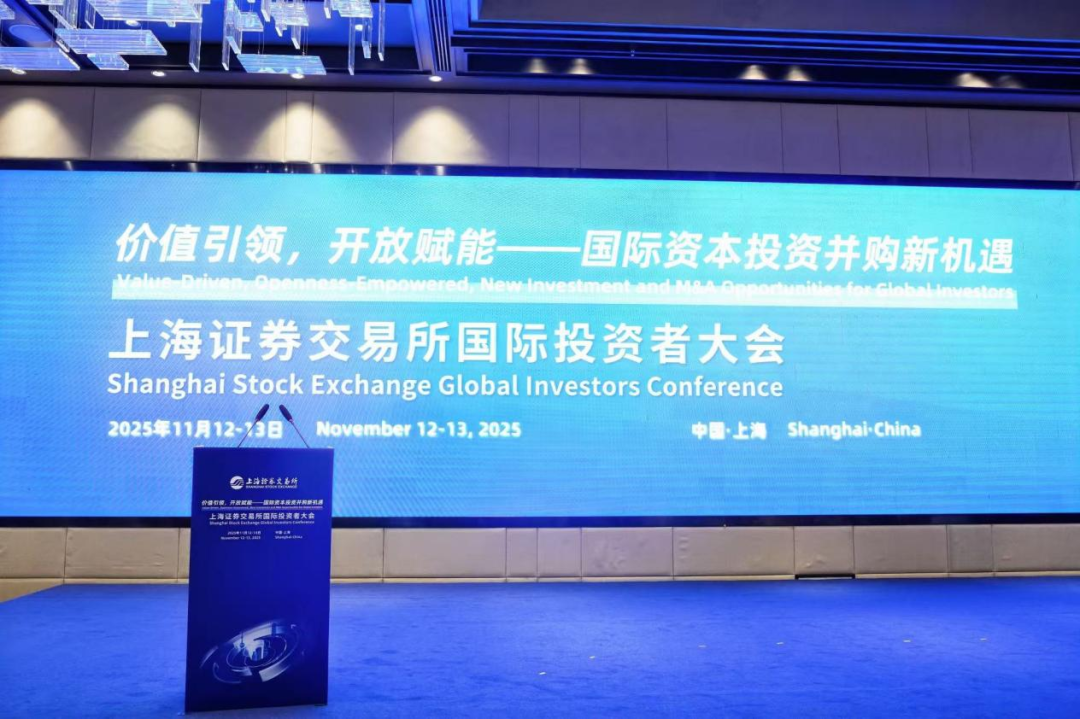
重磅国际会议!全球顶级投资机构发声
Zhong Guo Ji Jin Bao· 2025-11-13 11:04
Core Insights - The 2025 Shanghai Stock Exchange International Investor Conference highlighted the growing confidence of global investors in the long-term value of the Chinese market, driven by an increasingly open capital market and favorable policy environment [1][2][3]. Group 1: Investment Sentiment - Global investors are increasingly optimistic about the long-term investment potential in China, as indicated by the positive feedback from prominent investment institutions at the conference [1][2]. - Temasek's focus on sectors such as digitalization, new energy technology, and life sciences reflects the belief in China's future economic direction [4][5]. - Morgan Asset Management emphasized the current favorable conditions for investing in China's capital markets, particularly in the healthcare and consumer sectors [6][7]. Group 2: Investment Strategies - Temasek has diversified its investment strategies in China, engaging in public market investments, private equity, and strategic partnerships to support long-term economic development [5]. - The investment strategy of the Hilltop Group includes supporting domestic Chinese enterprises, introducing quality overseas companies, and facilitating cross-border growth for Chinese firms [8]. - Franklin Templeton noted the increasing focus of global wealth management on China, highlighting the importance of the country's economic contributions and strategic policy responses [10][11]. Group 3: Market Dynamics - Invesco pointed out that foreign investors are showing heightened interest in the Chinese market, with attractive asset valuations and a focus on company fundamentals and long-term growth potential [12]. - The shift from a manufacturing to an innovation-driven economy in China is creating significant investment opportunities in sectors like AI and semiconductors [12][13]. - The current transformation in China's economy is expected to attract more global long-term capital, especially if the country continues to demonstrate successful growth stories [14]. Group 4: Future Outlook - Analysts predict that China's economic transformation will lead to a recovery in nominal growth, with a focus on productivity improvements becoming more prominent than real estate concerns [15][16]. - The integration of AI-driven technological innovation is expected to sustain market vitality and attract international investment [16][18].
领益智造(002600) - 2025年11月12日投资者关系活动记录表
2025-11-13 08:06
Group 1: Transaction Necessity and Benefits - The acquisition is aimed at enhancing the company's core business and creating a second growth curve by integrating quality assets into the company, which will strengthen its position in the electric vehicle components sector [3][4] - Jiangsu Keda, the target company, has established qualifications as a first-tier supplier to multiple automotive manufacturers, providing a solid foundation for rapid market entry into the automotive parts industry [3][4] Group 2: Product Matrix and Industry Upgrade - Prior to the transaction, the company was already active in the new energy vehicle battery structural components sector, producing various battery-related products [4] - The acquisition will expand the company's product matrix in the automotive sector, enhancing its capabilities in designing, manufacturing, and selling automotive decorative parts [4] Group 3: Synergy and Risk Management - The transaction will deepen the company's presence in the automotive industry while diversifying its revenue structure, thus mitigating risks associated with fluctuations in its main business [6] - Jiangsu Keda will benefit from the company's management and financial resources, facilitating its growth and operational efficiency [6] Group 4: Customer and Global Expansion Synergy - The company has a significant advantage in AI terminal hardware manufacturing, and the acquisition will allow it to leverage Jiangsu Keda's established customer relationships in the automotive decorative parts sector [6] - The trend of "industry chain going abroad" is becoming prominent, and the company can utilize its global operational experience to assist Jiangsu Keda in localizing production for overseas markets [6]

日本“鸡娃”大败局
3 6 Ke· 2025-11-13 07:52
Group 1 - The core belief in the 1980s Japan was that graduating from university guaranteed a stable life, leading to a strong demand for university graduates in the job market [2][3] - Companies offered attractive benefits to recruit graduates, including free meals, gifts, and even cars, creating a culture of educational elitism [3][5] - The tutoring market in Japan saw significant growth, with a market size exceeding 1.2 trillion yen in 1985, as parents invested heavily in their children's education [3][4] Group 2 - The economic bubble burst in the 1990s led to a drastic decline in the job market, with corporate profits dropping by 20% and over 10,000 companies going bankrupt [7][8] - The job market faced an overwhelming influx of graduates from the baby boom generation, resulting in a sharp decline in employment rates starting in 1992 [9][10] - The once-coveted status of university graduates diminished, with many graduates struggling to find jobs despite sending out numerous applications [9][10] Group 3 - The trend of pursuing further education, such as graduate school, emerged as a coping mechanism, but it did not alleviate the worsening employment situation [12][13] - The number of applicants for civil service positions nearly doubled from 1991 to 1995, reflecting the high demand for stable jobs during the employment crisis [13] - The government implemented various measures to address the employment crisis, including increasing funding for higher education and promoting job training programs [17][18][22] Group 4 - The introduction of labor dispatch laws in 1999 led to a significant rise in non-regular employment, with non-standard employment forms becoming more prevalent in the job market [23][24] - The proportion of non-regular employees reached 34.6% by 2003, indicating a shift in employment dynamics and the challenges faced by job seekers [27] - Many individuals from the "lost generation" continued to struggle with non-regular employment, facing societal stigma and financial difficulties [28][29] Group 5 - In recent years, the employment market for university graduates in Japan has shown signs of recovery, with a record high employment rate of 98.1% for 2024 [31] - The demographic shift, characterized by an aging population and declining birth rates, has created a labor shortage, leading to improved job prospects for graduates [32] - The historical context of educational devaluation highlights the need for economic innovation and industry upgrades to align educational outcomes with labor market demands [33]

检验检测促进产业升级,12项重点项目通过验收
Xin Lang Cai Jing· 2025-11-13 07:39
Core Viewpoint - The State Administration for Market Regulation has successfully completed the acceptance of 12 key projects aimed at promoting the optimization and upgrading of the inspection and testing industry, achieving the set goals and requirements [1] Group 1: Focus Areas - The 12 projects focus on both strategic emerging industries and the quality enhancement of traditional industries, targeting sectors such as integrated circuits, high-end equipment, low-altitude economy, and energy conservation and environmental protection [1] - The projects also address traditional livelihood sectors, including agricultural products and rail transportation, by overcoming key bottlenecks in inspection and testing technologies [1] Group 2: Technological Breakthroughs - Significant advancements include the development of reliability testing technology for industrial mother machines, which provides quality benchmarks for high-end equipment manufacturing [1] - A comprehensive reliability testing solution for integrated circuits in aerospace applications, such as low-orbit satellites, remote sensing satellites, and navigation satellites, has been established to accelerate the integration of the aerospace and semiconductor industries [1] - The creation of a comprehensive performance testing system for low-altitude equipment aims to promote the transformation of the low-altitude economy towards quality leadership [1]
券商密集召开2026年度策略会;国联民生1.71亿元拿下民生证券0.72%股权 | 券商基金早参
Mei Ri Jing Ji Xin Wen· 2025-11-13 00:41
Group 1 - Major securities firms, including CITIC Securities and Guotai Junan, are holding annual strategy meetings for 2026, focusing on global market opportunities and industry transformation [1] - CITIC Securities' general manager highlighted that the "14th Five-Year Plan" period will present new characteristics in the global context, technology trends, and institutional environment, potentially leading to new opportunities [1] - Guotai Junan's president emphasized that the new round of capital market reforms aims to enhance institutional inclusiveness and competitiveness, which may lead to a broad revaluation of Chinese assets [1] Group 2 - Guolian Minsheng successfully acquired 0.72% of Minsheng Securities' shares for approximately 171 million yuan, increasing its stake to 99.98%, just shy of full control [2] - This acquisition is expected to enhance Guolian Minsheng's control over Minsheng Securities and improve resource integration efficiency, potentially boosting its stock price [2] - The trend of consolidation in the securities industry is accelerating, leading to increased competition for smaller firms [2] Group 3 - Public fund research activity has significantly increased in Q4, with a total of 10,115 research activities conducted, reflecting a more than 50% increase compared to the previous quarter [3] - The focus of these research activities is primarily on growth sectors such as industrial machinery, electronic components, and integrated circuits, indicating a strong interest in high-growth areas [3] - The rise in research activity suggests a consensus on improving macro liquidity and profit expectations among market participants [3] Group 4 - In October, the number of new margin trading accounts decreased to 130,200, a significant drop from 205,400 in September, while the total number of margin trading accounts reached approximately 15.4 million [4] - The margin trading balance has increased from less than 1.9 trillion yuan at the beginning of the year to 2.49 trillion yuan, indicating a growing participation of leveraged funds [5] - Several leading securities firms have raised their margin trading limits, with CITIC Securities increasing its limit from 150 billion yuan to 250 billion yuan, and Huatai Securities setting its limit at approximately 286.5 billion yuan [5]



中德贸易有望“更上层楼”
Jing Ji Ri Bao· 2025-11-12 22:22
Core Points - Germany has seen a shift in its largest trading partner, with China surpassing the US in trade volume for the first eight months of 2025, totaling 163.4 billion euros compared to 162.8 billion euros with the US [1] - The decline in exports to the US is attributed to increased tariffs imposed by the US, which have significantly impacted Germany's traditional industries such as automotive, machinery, and chemicals [1][3] - Germany's economy is facing challenges, including a GDP decline of 0.3% in 2023 and a projected further decline of 0.2% in 2024, indicating a trend of stagnation [2][3] Trade Dynamics - The demand for high-end equipment and green technology in China aligns with Germany's manufacturing strengths, making China a crucial market for German exports [2] - The restructuring of Germany's trade focus towards Europe and emerging markets is a response to reduced demand from the US, highlighting a strategic shift in trade partnerships [2][3] - The automotive sector in Germany is experiencing significant profit declines, with major companies like Volkswagen and Porsche reporting substantial drops in earnings [3] Future Cooperation - The renewed trade relationship with China is seen as a strategic opportunity for Germany to buffer against US market pressures while benefiting from China's market size and stability [4][5] - Potential areas for future cooperation include high-end manufacturing and green technologies, where both countries can leverage their respective strengths for mutual benefit [4][5] - The shift in trade dynamics is not just a temporary adjustment but reflects a longer-term strategic realignment in response to global supply chain changes and external economic pressures [4][5]