商业航天

Search documents
千亿集群在望 北京火箭大街引领空天生态
Bei Jing Shang Bao· 2026-01-25 07:01
Core Viewpoint - Beijing is witnessing a significant transformation in its commercial aerospace sector, transitioning from a narrative of a major power to a commercial ecosystem, with the establishment of the Beijing Rocket Street as a pivotal project in this evolution [4][11]. Group 1: Development of Commercial Aerospace - The Beijing Rocket Street, a 145,000 square meter facility, has been completed and marks the first commercial aerospace research and production base in China, symbolizing the beginning of a new era in the industry [3][4]. - The area is designed to support a full range of aerospace activities, including reusable rocket technology and low-orbit satellite networks, positioning Beijing as a leader in the global commercial aerospace innovation landscape [4][10]. - By 2025, the area is expected to generate over 20 billion yuan in new output value, with over 200 aerospace companies already established in the region [10]. Group 2: Policy and Market Dynamics - The Chinese government has implemented supportive policies for the commercial aerospace sector, including the first provincial-level satellite network support policy in 2021 and a comprehensive action plan for 2024-2028 aimed at building a trillion-yuan commercial aerospace industry cluster [11][12]. - Beijing's proactive approach in policy-making, such as offering full reimbursement for commercial rocket launch insurance, has significantly reduced operational costs for companies and stimulated industry enthusiasm [11][12]. - The focus on international collaboration and technology innovation is evident, with companies like Galaxy Aerospace exploring overseas markets and participating in global regulatory discussions [12]. Group 3: Infrastructure and Ecosystem - The Beijing Rocket Street features a unique design that integrates various functions, including innovation centers, manufacturing hubs, and testing facilities, creating a tightly-knit industrial ecosystem [9][10]. - The infrastructure is built to accommodate the specific needs of aerospace companies, with high ceilings and robust load-bearing capabilities to support large rocket components [9]. - The development of the area is part of a broader urban planning initiative that aims to create a world-class aerospace hub, enhancing the integration of industry and urban life [10][14].


大资金连砸几千亿 A股本周为何不跌反涨?一文看懂
天天基金网· 2026-01-25 07:00
Group 1 - The A-share market experienced a significant recovery after a period of panic among investors, with major indices showing improvement from January 19 to 23, 2026 [2] - The market saw a notable increase in small and mid-cap stocks, with indices like the CSI 500, CSI 1000, and CSI 2000 reaching new highs [3][4] - Despite the overall market recovery, the Shanghai Composite 50 and CSI 300 indices continued to decline, indicating a mixed sentiment among investors [4][5] Group 2 - Large funds have been selling off major ETFs, leading to a net outflow of 329.6 billion yuan from the top ten ETFs during the week, with the Huatai-PB CSI 300 ETF alone seeing a net outflow of 72.4 billion yuan [5][6] - Cumulatively, these ETFs have experienced over 470 billion yuan in outflows, reflecting a significant shift in market dynamics [6][5] - The sell-off in ETFs has raised questions among investors about the reasons behind the pressure on these indices and the potential for alternative investment strategies [7][8] Group 3 - The limited decline in the overall market despite massive ETF sell-offs is attributed to the presence of arbitrage funds that help stabilize prices by buying undervalued ETFs [16][19] - Arbitrage trading involves a series of steps where large funds sell ETFs, creating price discrepancies that are quickly exploited by algorithmic traders [18][21] - Institutional investors dominate the arbitrage space, capitalizing on the liquidity and volatility of ETFs to manage their positions effectively [24][22] Group 4 - Insurance funds have been increasing their investments in the equity market, with significant commitments to technology and innovation sectors, indicating a long-term bullish outlook [27] - The market has seen a shift in focus from macro liquidity to micro performance, with upcoming earnings reports expected to drive investor sentiment [30] - Key sectors to watch include dividends, technology, and power equipment, as companies with strong earnings potential are likely to attract investor interest [30]

北京织网:商业卫星遥感从“数据孤岛”迈向“应用蓝海”
Bei Jing Shang Bao· 2026-01-25 06:55
Core Insights - The article discusses the launch of new measures in Beijing aimed at promoting the development and utilization of commercial satellite remote sensing data from 2026 to 2030, addressing the challenges of "abundant data, limited applications, and difficult monetization" in the industry [2][5]. Group 1: Policy Measures - The "Several Measures" aim to enhance the breadth and depth of remote sensing data applications in key industries such as low-altitude industries, smart networking, finance and insurance, cultural tourism, urban governance, agriculture, and space assets [2][6]. - The policy includes financial support and data assetization to reduce costs for companies while expanding revenue sources through scenario development, creating a dual drive of "cost reduction + revenue increase" for profitability in commercial satellite enterprises [2][6]. Group 2: Industry Structure and Support - The measures encourage the development of chain-leading enterprises and multi-source integration platforms, promoting mergers and acquisitions among satellite data companies to strengthen the industry chain and improve data circulation efficiency [3][4]. - The initiative emphasizes building a robust market support, technical support, and resource guarantee for the satellite data industry, enhancing overall utilization efficiency by breaking down data silos [3][4]. Group 3: Data Assetization and Application - The measures mark a new phase in China's commercial space sector, focusing on "application supremacy" and integrating digital and space economies through comprehensive data supply, processing, circulation, and application [5][6]. - Specific actions include promoting satellite data assetization and supporting the creation of innovative application cases in key industries, with incentives for solutions that meet typical application needs [5][6]. Group 4: International Cooperation and Market Expansion - The measures also propose expanding international cooperation in remote sensing data resources, leveraging Beijing's advantages in free trade and service industry openness to enhance satellite data exports and cross-border flow [7]. - The global satellite data service market is rapidly expanding, with a compound annual growth rate of 16% to 21%, indicating a shift from "launching - imaging" to "imaging - processing - productization - industry empowerment" [7][8]. Group 5: Future Development and Recommendations - The article suggests that the future focus should be on creating a "satellite data +" ecosystem, emphasizing the need for unified standards, collaborative mechanisms, and security measures to facilitate data flow and address development concerns [8]. - Recommendations include policies for standard implementation, ecosystem cultivation, and market expansion to support small and medium-sized enterprises in exploring niche demands [8].

商业航天事件点评:北京发布未来5年重磅措施,助推商业航天产业发展
Guolian Minsheng Securities· 2026-01-25 05:46
Investment Rating - The report maintains a "Recommendation" rating for the industry [2] Core Insights - Beijing has announced significant measures to promote the development of the commercial aerospace industry from 2026 to 2030, focusing on satellite data resource development and utilization [7] - The measures encourage capable enterprises to engage in mergers and acquisitions within the satellite data industry, aiming to create globally competitive leading companies [7] - The report highlights the importance of strengthening space infrastructure and supports the planning and construction of commercially viable satellite constellations [7] - The first satellite of the space computing constellation, "Chenguang No. 1," is expected to be launched in early 2026, marking a significant step in the establishment of a space data center [7] - The report suggests focusing on key players in the space computing sector, such as Shunhao Co., Ltd., and other members of the Beijing Space Computing Innovation Consortium [7] Summary by Sections - **Policy Measures**: The report outlines Beijing's initiatives to support the commercial aerospace sector, including financial support for qualifying space infrastructure projects and the integration of new technologies like AI and big data [7] - **Technological Advancements**: The report details advancements in core technologies for space computing, including energy supply and heat dissipation solutions, which are crucial for the operation of space data centers [7] - **Investment Opportunities**: The report identifies potential investment opportunities in companies involved in space computing and satellite data services, emphasizing the strategic importance of these sectors in the coming years [7]
慕了!内存芯片巨头年终奖人均64万;32岁程序员猝死背后公司被扒,曾给39万“封口费”;马斯克曝星舰成本将降99%,商业航天受捧|AI周报
AI前线· 2026-01-25 05:33
Group 1 - SK Hynix announced a record year-end bonus of approximately 1.36 billion KRW (around 640,000 RMB) per employee, part of a shareholder participation plan allowing employees to receive up to 50% of their bonuses in company stock [2][4] - The new bonus structure, effective from the end of January, allows for bonuses to be based on 10% of the previous year's operating profit, with 80% paid in the current year and the remaining 20% deferred over two years [3][4] - The company’s operating profit for the previous year is estimated at 45 trillion KRW, leading to the high bonus payout [4] Group 2 - Zhang Yutong, president of Kimi, stated that the company utilizes only 1% of the resources from top U.S. laboratories to develop leading open-source models, which reportedly outperform some closed-source models [5] - Kimi's valuation reached 4.8 billion USD (approximately 33 billion RMB) in its latest funding round, reflecting strong market demand for AI IPO candidates [5] Group 3 - A tragic incident involving a 32-year-old programmer who died due to excessive work hours has raised concerns about workplace culture, particularly regarding the lack of cooperation from the employer in recognizing the incident as a work-related injury [6][7] - The company involved, Vision Shares, has been criticized for its handling of the situation, including offering a "hush money" payment to the family and obstructing investigations into the work conditions leading to the programmer's death [7][8] Group 4 - Volkswagen announced plans to cut 35,000 jobs, including a third of its management positions, as part of a strategy to save 1 billion euros by 2030 amid industrial slowdowns and competition [10][11] - The restructuring aims to streamline management and enhance operational efficiency, particularly as the company transitions towards electrification and digitalization [11] Group 5 - TikTok has established a U.S. data security joint venture to manage data protection while retaining ownership of its algorithm, ensuring compliance with U.S. regulations [19] - The joint venture will be responsible for TikTok's U.S. operations, allowing over 200 million American users to continue using the platform [19] Group 6 - Elon Musk announced that SpaceX aims to achieve full reusability of its Starship this year, potentially reducing launch costs by 99% [15][16] - Musk also discussed plans for deploying solar-powered AI satellites in the coming years, highlighting the efficiency of solar energy in space [16] Group 7 - OpenAI plans to launch its first hardware device in the second half of 2026, aiming to transform user interaction with technology [22] - The device is designed to provide a more focused and less distracting user experience, contrasting with current smart devices [22] Group 8 - Baichuan Intelligence released the M3 Plus model, which boasts the lowest hallucination rate in medical scenarios, enhancing the reliability of AI-generated medical conclusions [27] - The model incorporates unique evidence anchoring technology to provide accurate citations for its outputs [27]





中科宇航IPO辅导完成 “商业火箭第一股”竞争愈发激烈
Jing Ji Guan Cha Bao· 2026-01-25 05:29
Core Viewpoint - The recent progress of China Aerospace Technology Co., Ltd. in its IPO process marks a significant step towards entering the capital market, with the completion of its counseling work as per the regulatory requirements [1] Company Overview - China Aerospace was established in December 2018 and is the first mixed-ownership rocket enterprise in China, focusing on large and medium-sized rocket development, customized space launches, suborbital scientific experiments, and space tourism [1] - The company’s core product is the self-developed "Lijian" series of launch vehicles [1] IPO Counseling Progress - The counseling process began on August 8, 2025, and was completed in approximately five months, comparable to the speed of previous IPO counseling by Blue Arrow Aerospace [1] - The company addressed the "dual cross" issue related to its collaboration with the Chinese Academy of Sciences, ensuring compliance with regulations during the counseling process [1] Shareholding Structure - Beijing Pengyi Junlian Space Technology Center holds 27.7476% of the shares, making it the controlling shareholder, with founder Yang Yiqiang as the actual controller [2] - Yang Yiqiang has extensive experience in the aerospace sector, having held significant positions in major national projects [2] Achievements in Commercial Space - The "Lijian-1" rocket successfully completed its first flight in July 2022 and has since conducted 11 flights, placing 84 satellites into orbit with a total payload mass exceeding 11 tons [3] - The rocket has entered a phase of regular launches, becoming a preferred choice for small and medium satellite launches in China [3] Future Developments - The "Lihong-1" vehicle successfully completed a suborbital flight test, marking a first in domestic commercial aerospace for a parachute recovery test at an altitude of 120 kilometers [3] - Future plans include upgrading the Lihong-1 payload module to support in-orbit manufacturing and scientific experiments [4] Financial Performance - In 2024, the company reported revenues of 243 million yuan and a net loss of 748 million yuan; in the first half of 2025, revenues were 36.2413 million yuan with a net loss of 311 million yuan [5] - The company is valued at 11 billion yuan, ranking 807th on the 2025 global unicorn list [5] Industry Context - The number of commercial aerospace companies in China has exceeded 600, covering the entire industry chain and fostering new business models such as space manufacturing and tourism [5] - The recent regulatory changes by the China Securities Regulatory Commission support the listing of unprofitable companies in the sci-tech innovation board, with commercial aerospace being a highlighted sector [5] - The competitive landscape for IPOs in the commercial aerospace sector is intensifying, with several leading companies updating their IPO counseling progress [5]
春季行情期间业绩对行业表现的影响
Huajin Securities· 2026-01-25 05:24
Group 1: Performance and Market Trends - The excess returns of high-performing industries are strongly correlated with the rhythm of the spring market, with significant excess returns observed during market uptrends[7] - In the spring market, high-performing industries tend to outperform when mainline industries experience adjustments, driven by high valuations or sentiment[14] - The current leading sectors, commercial aerospace and AI applications, are expected to remain central in the short term, supported by ongoing policy and industry trends[23] Group 2: Economic and Liquidity Conditions - The short-term economy is in a weak recovery trend, with fixed asset investment growth recorded at -3.80% in December, indicating significant drag from the real estate sector[26] - Short-term liquidity remains accommodative, with the central bank increasing market operations, resulting in a cumulative injection of 558.3 billion yuan by January 21[33] - The short-term risk appetite may further increase due to positive policy expectations and limited external risks[26] Group 3: Industry Configuration and Recommendations - Industries such as non-ferrous metals, chemicals, electronics, and automobiles are expected to show relatively high profit growth in 2025, with notable increases in profit forecasts[26] - Current valuations in growing sectors like pharmaceuticals, automobiles, computers, and media are relatively low, suggesting potential for future gains[26] - It is recommended to focus on technology growth and certain cyclical industries, particularly those benefiting from supportive policies and improving fundamentals[26]
光大证券:建议投资者近期以稳为主,但仍应持股过节
Xin Lang Cai Jing· 2026-01-25 04:53
Market Outlook - The market is expected to remain volatile before the Spring Festival, with a decline in trading enthusiasm among investors and a tightening of micro liquidity [1] - Historically, the probability of major indices rising in the 20 trading days before the Spring Festival is less than 50% [1] - After the Spring Festival, a new upward momentum is anticipated, with a higher probability of major indices rising in the 20 trading days following the festival [1] Investment Strategy - Investors are advised to adopt a cautious approach in the near term but should still hold stocks during the festival [1] Sector Focus - Key sectors to watch include electronics, electrical equipment, and non-ferrous metals [1] - If the market style in January is growth-oriented, the top-scoring sectors in the five-dimensional industry comparison framework are electronics, electrical equipment, telecommunications, non-ferrous metals, automotive, and defense [1] - If the market style in January is defensive, the top-scoring sectors are non-bank financials, electronics, non-ferrous metals, electrical equipment, automotive, and transportation [1] - There is a notable similarity in the top-scoring sectors under both growth and defensive market styles [1] Thematic Investment - Continued attention is recommended for the commercial aerospace sector [1]

大资金连砸几千亿 A股本周为何不跌反涨?一文看懂
Mei Ri Jing Ji Xin Wen· 2026-01-25 03:30
Market Overview - The recent trading week (January 19-23) marked the first complete trading week after regulatory "cooling" signals appeared in the A-share market, with initial panic among investors followed by a recovery towards the end of the week [2] - The market saw significant short-term recovery from Wednesday to Friday, despite initial fears of a downturn [2] Index Performance - The mid and small-cap indices, including the CSI 500, CSI 1000, and CSI 2000, led the gains for the week, reaching new highs [3] - Weekly performance highlights include: - Wind Micro-cap Index: +5.16% (YTD: +12.01%) - CSI 500: +4.34% (YTD: +15.06%) - CSI 2000: +4.04% (YTD: +11.90%) - CSI 1000: +2.89% (YTD: +11.53%) [4] ETF Market Dynamics - Despite the overall market recovery, the CSI 50 and CSI 300 indices continued to decline, with the CSI 50 experiencing a nine-day losing streak [5] - Large-scale outflows from major ETFs were noted, with a total net outflow of 329.6 billion yuan from ten large ETFs during the week, including a significant outflow of 72.4 billion yuan from the Huatai-PB CSI 300 ETF [7][8] - Cumulative outflows from these ETFs exceeded 470 billion yuan over the past two weeks, indicating a substantial shift in investor sentiment [8] Investor Behavior and Market Sentiment - Investors are questioning the reasons behind large funds selling off these ETFs and whether avoiding the weighty stocks in these indices could lead to better investment opportunities in smaller indices like the CSI 500 and CSI 1000 [10][11] - The market sentiment is influenced by recent regulatory actions aimed at cooling down the market and preventing potential risks [10] Arbitrage Opportunities - The limited decline in the market despite significant ETF sell-offs is attributed to the presence of arbitrage funds that quickly buy undervalued ETFs, stabilizing their prices [16] - The process involves large funds selling ETFs, creating a price discount, which is then exploited by arbitrage traders who buy the ETFs and redeem them for the underlying stocks [20] Institutional Investment Trends - Institutional investors dominate the arbitrage trading space due to the high capital requirements for such operations [21] - Insurance funds have been increasing their investments in the equity market, with notable commitments to technology and innovation sectors [25] Future Market Outlook - As the annual performance forecasts of listed companies are set to be disclosed, market speculation is expected to rise, shifting focus from macro liquidity to micro performance verification [27] - Sectors such as dividends, TMT, and power equipment are recommended for investor attention due to their potential for strong performance [27]
龙虎榜 | 相城大道抢筹臻镭科技超5亿,利欧股份遭深南东路抛售超3亿
Ge Long Hui· 2026-01-25 01:33
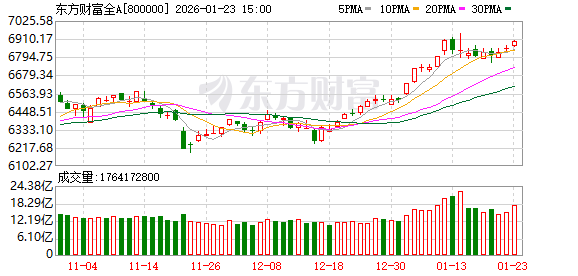
Market Overview - On January 23, A-shares saw a collective rise in the three major indices, with the Shanghai Composite Index up by 0.33% closing at 4136 points, the Shenzhen Component Index up by 0.79%, and the ChiNext Index up by 0.63% [1] High-Performance Stocks - Fenglong Co. achieved an 18-day consecutive rise, Jianghuai Microelectronics had a 5-day consecutive rise, and Jin'an Guoji recorded 4 rises in 7 days [3] Top Net Buy and Sell on Dragon and Tiger List - The top three net buying stocks were Goldwind Technology (9.38 billion), Zhenlei Technology (8.35 billion), and Jiejiacreat (5.38 billion) [4] - The top three net selling stocks were Liou Co. (10.36 billion), China Great Wall (5.96 billion), and Shenzhen South Circuit (6.82 billion) [5] Institutional Activity - Among stocks with institutional special seats, the top net buying stocks were Goldwind Technology (2.66 billion), Weichai Heavy Machinery (1.46 billion), and Hongbaoli (1.33 billion) [5] - The top net selling stocks with institutional special seats were Shenzhen South Circuit (3.69 billion), JinkoSolar (2.41 billion), and Fenglong Co. (1.62 billion) [5] Key Trading Stocks - Youli Intelligent rose by 16.09% with a turnover rate of 32.32% and a total transaction amount of 2.64 billion [9] - Maiwei Co. hit the daily limit with a turnover rate of 4.26% and a total transaction amount of 26.02 billion [9] - Jiugang Hongxing also hit the daily limit with a turnover rate of 3.80% and a total transaction amount of 4.73 billion [9] - Zhewen Interconnect reached the daily limit with a turnover rate of 23.15% and a total transaction amount of 40.44 billion [9] - Shenzhen South Circuit fell by 6.97% with a turnover rate of 2.27% and a total transaction amount of 37.73 billion [9] Strategic Collaborations and Innovations - Goldwind Technology is involved in commercial aerospace, wind power leadership, and green hydrogen ammonia, with market attention on SpaceX's IPO plans and Blue Arrow Aerospace's status change to "under inquiry" [6] - Dongfang Risen is focusing on space photovoltaic technology and has achieved a record in mass production power with its heterojunction components [7]