具身智能

Search documents
中信证券(600030):锚定一流投行建设 巩固市场领先身位
Xin Lang Cai Jing· 2026-03-28 08:22
Core Insights - The company reported its annual performance for 2025, with revenue reaching 74.85 billion yuan, a year-on-year increase of 28.8%, and a net profit attributable to shareholders of 30.08 billion yuan, up 38.6% year-on-year [1] Financial Performance - Q4 revenue was 18.71 billion yuan, a quarter-on-quarter decrease of 18.7%, while net profit attributable to shareholders was 6.69 billion yuan, down 30.4% quarter-on-quarter [1] - The company's return on equity (ROE) for the year was 10.59%, an increase of 2.5 percentage points year-on-year [1] - Management expense ratio was 44.2%, a decrease of 7.5 percentage points year-on-year [1] Wealth Management - The brokerage business generated net income of 14.75 billion yuan, a year-on-year increase of 37.7%, although this was weaker than the market's growth in stock trading volume [1] - By the end of 2025, the company had over 17 million clients, a year-on-year increase of 10% [1] - The scale of entrusted client assets exceeded 15 trillion yuan, a year-on-year increase of 24% [1] - The company’s financial product holdings exceeded 800 billion yuan, generating distribution income of 2.03 billion yuan, up 36.6% year-on-year [1] Proprietary Investment - By the end of 2025, financial investment assets reached 997.9 billion yuan, a quarter-on-quarter increase of 2.8% and a year-to-date increase of 9.6% [2] - The estimated investment income for the year was 37.04 billion yuan, a year-on-year increase of 24.0%, with an estimated investment return rate of 3.88%, up 0.28 percentage points year-on-year [2] Investment Banking - The investment banking business showed recovery, with net income from this segment reaching 6.34 billion yuan, a year-on-year increase of 52.3% [2] - The company’s IPO underwriting amount was 23.766 billion yuan, capturing a market share of 18.17%, regaining the top position [2] Core Subsidiaries - The core subsidiaries are expected to continue contributing profit elasticity in 2026, with equity investments contributing 9.64% to profits, an increase of 2.41 percentage points year-on-year [3] - The international business saw a net profit increase of 72.2%, with overseas income accounting for 20.7% of total revenue [3] - Asset management through Huaxia Fund contributed approximately 4.8% to the company's net profit [3] Investment Outlook - The company has raised its profit forecast for 2026-2027, projecting net profit attributable to shareholders of 34.63 billion yuan and 38.35 billion yuan, representing year-on-year increases of 15.1% and 10.7% respectively [3] - A new profit forecast for 2028 has been introduced, estimating net profit at 42.9 billion yuan, maintaining a "buy" rating [3]

理想宣布10亿美元回购计划,小鹏成立Robotaxi业务部
SINOLINK SECURITIES· 2026-03-28 07:56
Investment Rating - The report suggests a positive outlook on the automotive industry, particularly focusing on companies like BYD, Geely, and Li Auto for their growth potential in the electric vehicle (EV) and intelligent driving sectors [4]. Core Insights - Li Auto plans to repurchase up to $1 billion of its Class A common stock and/or American depositary shares, reflecting confidence in its strategic roadmap and future value creation [1]. - XPeng has established an independent Robotaxi division to accelerate the commercialization of autonomous driving, indicating a shift from technology development to operational services [2]. - The retail sales of passenger vehicles in March 2026 are showing signs of recovery, with a forecasted increase in sales driven by new vehicle launches and government incentives [3]. Summary by Sections Weekly Insights - Li Auto's stock repurchase plan aims to enhance shareholder returns and investor confidence, with a total of 917,600 shares repurchased so far [1][13]. - XPeng's Robotaxi division will focus on product definition and project integration, with plans for L4 level public road testing starting in February 2026 [2][14]. Industry Data Tracking - The retail market for passenger vehicles in March 2026 is expected to reach approximately 1.7 million units, with a year-on-year decline of 12.4% but a month-on-month increase of 64.5% [3][15]. - The penetration rate of new energy vehicles in retail sales is projected to be around 52.9% for March 2026, indicating a strong market presence [3][15]. Industry Dynamics - The report highlights the ongoing trend of vehicle exports, with a year-on-year growth rate of over 20% for the past six months, suggesting that exports will become a long-term theme for the industry [4][16]. - The report emphasizes the importance of intelligent driving and the commercialization of robotics, with favorable policies and technological breakthroughs expected to accelerate growth in these areas [4][16].


6G如何跨越“需求”鸿沟?具身智能被视为“杀手级应用”
证券时报· 2026-03-28 05:30
Core Viewpoint - The article emphasizes that 6G is becoming a crucial part of national strategic planning, with expectations for revolutionary experiences and new industrial opportunities, despite the current unfulfilled promises of 5G [1][2]. Group 1: Consumer Perspective (To C) - 6G will extend beyond just faster internet speeds, offering three major expansions: seamless coverage across air, land, and sea; enhanced AI capabilities integrated into networks; and a more refined digital twin environment [3]. - The core role of smartphones will remain unchanged in the next decade, evolving into "smart bodies" as a central interface for users, amidst competition among internet giants, OS developers, and hardware manufacturers [3]. - New terminal forms will emerge, with AR glasses seen as a potential leading device, although their widespread adoption is hindered by slow advancements in battery technology [4]. Group 2: Industry Perspective (To B) - 6G is identified as a key foundation for the deep integration of the digital economy and the real economy, characterized by the "three integrations": sensing integration, intelligence integration, and air-land-sea integration [4]. - The concept of embodied intelligence is viewed as a "killer application" for 6G, enabling real-time collaboration between cloud-based and edge-based processing, thus overcoming current limitations in robotics [4]. Group 3: Challenges and Development - The primary challenge for 6G development is to clarify real demands, avoiding past mistakes seen in 4G and 5G, and ensuring deep collaboration across various industries to identify genuine needs [6]. - Technical integration and ecosystem collaboration pose significant challenges, requiring active participation from leading equipment manufacturers to innovate within existing network frameworks [6]. - China's proactive role in global standard-setting for 6G is highlighted, with the completion of the first 6G standard report and ongoing work on wireless technology standards [7]. Group 4: Market Outlook - The timeline for 6G implementation is set, with the first international standards expected by 2029 and potential commercial rollout around 2030, marking a critical period for technological breakthroughs and prototype validation [9]. - The competitive landscape for terminal markets is shifting, with AR glasses and humanoid robots representing significant growth potential, while the affordability of 6G services will depend on the new value it provides to users [10].


推理提速 10 倍,成功率暴涨 30%!极佳视界发布全新世界模型GigaWorld-Policy
机器之心· 2026-03-28 04:45
Core Insights - GigaAI has launched a new World-Action Model (WAM) called GigaWorld-Policy, which addresses industry pain points of slow inference and difficult training, achieving a 10x increase in inference speed, a 10x improvement in training efficiency, and a 30% increase in real-world task success rates [2][12][17] Group 1: Model Architecture - GigaWorld-Policy introduces an "Action-Centered" architecture that eliminates high computational delays associated with traditional WAMs by unifying multimodal representations [5] - The model utilizes a lightweight world model, GigaWorld-0.5, and employs a single Transformer backbone for collaborative modeling, significantly reducing structural computational redundancy [5][15] - Compared to current mainstream models like Motus and Cosmos Policy, GigaWorld-Policy achieves a 10x increase in inference speed while maintaining high-quality policy outputs [5][17] Group 2: Training Efficiency - GigaWorld-Policy employs a three-stage efficient training pipeline that maximizes the value of vast video data, achieving a 10x increase in overall training efficiency compared to traditional VLA training methods [8] - The model incorporates a causal mask mechanism during training to unify action tokens with future visual tokens, enhancing the action prediction task with high-density supervisory signals [9] - The training process includes pre-training on general physical laws using extensive internet video data, followed by fine-tuning with minimal real-world action labels [10] Group 3: Real-World Performance - In practical tests, GigaWorld-Policy has achieved an average success rate of nearly 85% in various robotic tasks, outperforming competitors like Cosmos-Policy by over 30% in absolute success rates [12][17] - The model's ability to maintain high success rates while achieving high real-time control frequencies positions it as a leading solution in the field of embodied intelligence [13][17] - GigaWorld-Policy's rapid response capability is crucial for effectively handling dynamic disturbances and execution errors in real-world environments, contributing to its high success rates [17]
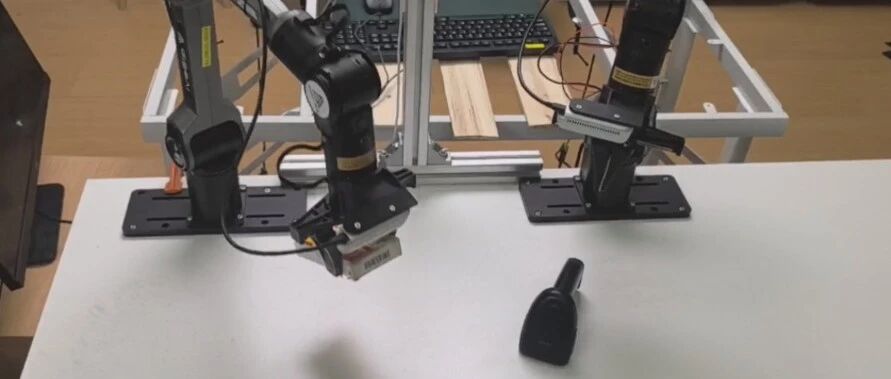
AI三年后取代外科医生?马斯克暴论被证伪
第一财经· 2026-03-28 04:42
Core Viewpoint - The development of surgical robots is currently at a stage comparable to the levels of automotive autonomous driving, primarily between L1 basic assistance and L2 advanced assistance, with only a few standardized procedures exploring L3 conditional autonomy, indicating that surgical robots can assist but not replace the decision-making capabilities of surgeons [3][12]. Group 1: Surgical Robot Development - The "SurgMotion" surgical video model was recently launched by the Chinese Academy of Sciences Hong Kong Innovation Research Institute, aiming to serve as a reliable teaching tool and to enhance the development of intelligent surgical robots [4][11]. - Surgical procedures in China have increased significantly, from 69.3 million in 2019 to 104 million in 2023, highlighting the growing demand for surgical services [4]. - The distribution of surgical physicians in China is uneven, with a severe shortage in grassroots areas, necessitating extensive training for new surgeons [4]. Group 2: AI Integration in Surgery - AI models can integrate vast clinical data and expert experiences, enhancing surgeons' decision-making capabilities and addressing the limitations of traditional training methods [5]. - The "SurgMotion" model is the largest of its kind, trained on a dataset of approximately 15 million frames and over 3,658 hours of real surgical videos, covering 13 anatomical areas and over 100 common clinical procedures [6][11]. - The model aims to improve the visual perception and situational understanding of surgical robots, transitioning surgery from reliance on individual experience to standardized, quantifiable practices [5][6]. Group 3: Levels of Surgical Robot Intelligence - Surgical robots are categorized into five levels of intelligence, with L1 providing basic assistance and L2 offering advanced automated support for specific tasks, while L3 is still in early experimental stages [8][9]. - L1 robots assist surgeons by enhancing precision in operations, while L2 robots automate certain repetitive tasks, improving efficiency without fully taking over decision-making [9]. - L3 robots can perform specific steps autonomously in controlled environments but require human intervention in unexpected situations, indicating the current limitations of AI in complex surgical scenarios [9][10]. Group 4: Challenges and Future Outlook - The transition to fully autonomous surgical robots (L4-L5) remains theoretical due to the complexity and unpredictability of surgical environments, which AI currently cannot fully navigate [10][12]. - The integration of AI in surgery is expected to enhance the role of surgeons, who will increasingly act as conductors of human-machine collaboration rather than being replaced by robots [12][14]. - The medical field's unique challenges, including ethical considerations and regulatory requirements, will slow the adoption of AI technologies in clinical settings, making the complete replacement of human surgeons unlikely in the near future [12][16].

1000亿政府基金,都投给了哪些机器人企业?
机器人大讲堂· 2026-03-28 04:00
Core Insights - Beijing State-owned Capital Operation Management Co., Ltd. has established a new investment model, managing a total of 100 billion yuan across eight municipal government investment funds, focusing on high-tech industries and future sectors [1][2] Investment Focus - The funds are divided into two batches, with the first four funds set to launch by the end of 2023 and the second batch by mid-2024, emphasizing the integration of industrial, innovation, financial, and policy chains [1][2] - Two specific funds are dedicated to robotics and embodied intelligence, each with a scale of 10 billion yuan, targeting AI infrastructure, algorithms, and applications in various sectors [1][2] Investment Strategy - The funds primarily adopt a direct investment model without sub-funds, utilizing a project recommendation system to identify quality enterprises, ensuring a balance between industrial direction and market expertise [2] - The funds have a maximum duration of 15 years and focus on investing in early-stage hard technology companies during market downturns, covering various niches within the robotics sector [2] Key Investments - Beijing Humanoid Robot Innovation Center received over 700 million yuan in its first round of market financing, aiming to create a comprehensive platform for humanoid robots [4] - Yushu Technology, a leader in quadruped robots with a nearly 70% market share, has expanded into humanoid robotics, supported by strategic investments from the Beijing Robotics Fund [6][7] - Galaxy General Robotics, a prominent player in embodied intelligence, has raised nearly 7 billion yuan in funding, developing a groundbreaking end-to-end embodied model [9] - Songyan Power, a pioneer in consumer-grade humanoid robots, completed a 1 billion yuan B-round financing, marking a shift towards commercial viability in the humanoid robotics sector [11] Emerging Companies - Yanshen Technology, a leader in four-legged robots, is transitioning to humanoid robotics, having developed advanced navigation and control systems [13] - Xingdong Era, a fully self-developed enterprise from Tsinghua University, has achieved significant commercial success with its humanoid robots and has received substantial funding [15][16] - Xinhai Technology, focusing on flexible tactile sensors, has seen a tenfold increase in the shipment of its electronic skin products for humanoid robots [30] Market Trends - The Beijing government investment funds are actively supporting the development of humanoid robots and related technologies, indicating a strong commitment to advancing the robotics industry in China [1][2][3] - The investment landscape is characterized by a focus on high-tech, consumer-oriented solutions, with companies like Cloud Whale and Rosenbot leading innovations in household and medical robotics [32][34]
ICRA 2026 | 机器人也会整理衣柜了!北大董豪团队新研究突破杂乱衣物精准抓取难题
机器之心· 2026-03-28 02:30
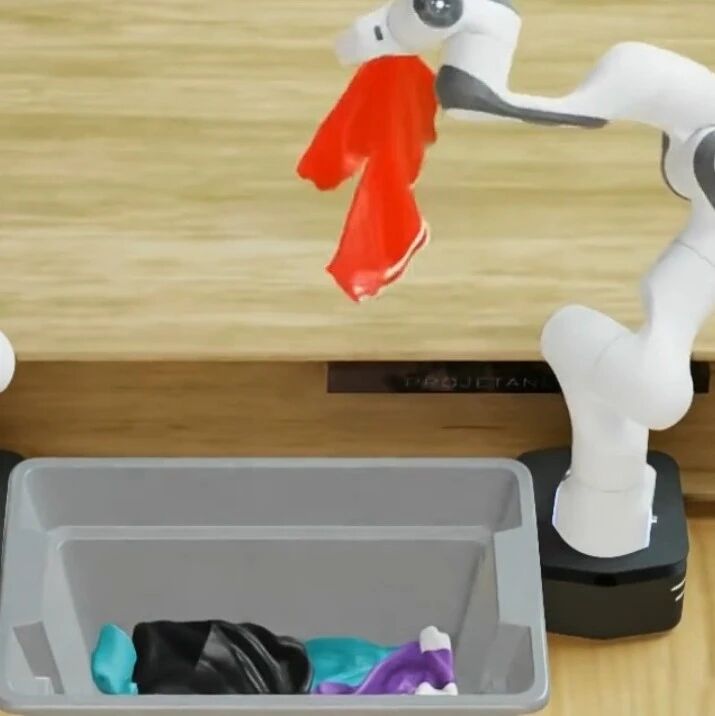
Core Insights - The article introduces GarmentPile++, an advanced system for intelligent garment retrieval from cluttered environments, which has been accepted at ICRA 2026 and awarded in the EAI-100 list [2][3]. Method Overview - GarmentPile++ enhances the previous GarmentPile system by integrating a vision-language model (VLM) for high-level reasoning with a visual affordance model for low-level operations, addressing challenges in garment retrieval [3][8]. - The system consists of three main stages: identifying which garment to retrieve, determining where to grab it, and deciding how to execute the grab [6][9]. Detailed Process - **Visual-Language Guided Segmentation and Selection**: This stage involves using the SAM2 model for scene segmentation and employing a mask fine-tuning strategy to correct segmentation errors, allowing the VLM to identify the correct garment based on user instructions [12][13]. - **Affordance-Based Grasp Point Prediction**: The system utilizes a PointNet++ architecture to assess the suitability of potential grasp points, maximizing success rates while minimizing interference with other garments [16][17]. - **State-Aware Dual Arm Collaboration**: For complex scenarios, the system can trigger dual-arm cooperation based on the visual assessment of the garment's state, ensuring effective handling of larger or entangled items [18][19]. Experimental Results - GarmentPile++ demonstrated superior performance in both open and closed environments, achieving the highest average success rate (ASR) across various tasks while maintaining a low average number of grabs (AMS) [21][22]. - Ablation studies indicated that removing components like dual-arm collaboration or mask fine-tuning significantly decreased performance, highlighting their importance in the system's effectiveness [23][24]. Conclusion - GarmentPile++ represents a significant advancement in the field of robotic garment retrieval, outperforming previous methods in both efficiency and effectiveness in handling cluttered clothing scenarios [28].
具身智能走进半导体,优艾智合全球首发三款新品
半导体行业观察· 2026-03-28 01:12
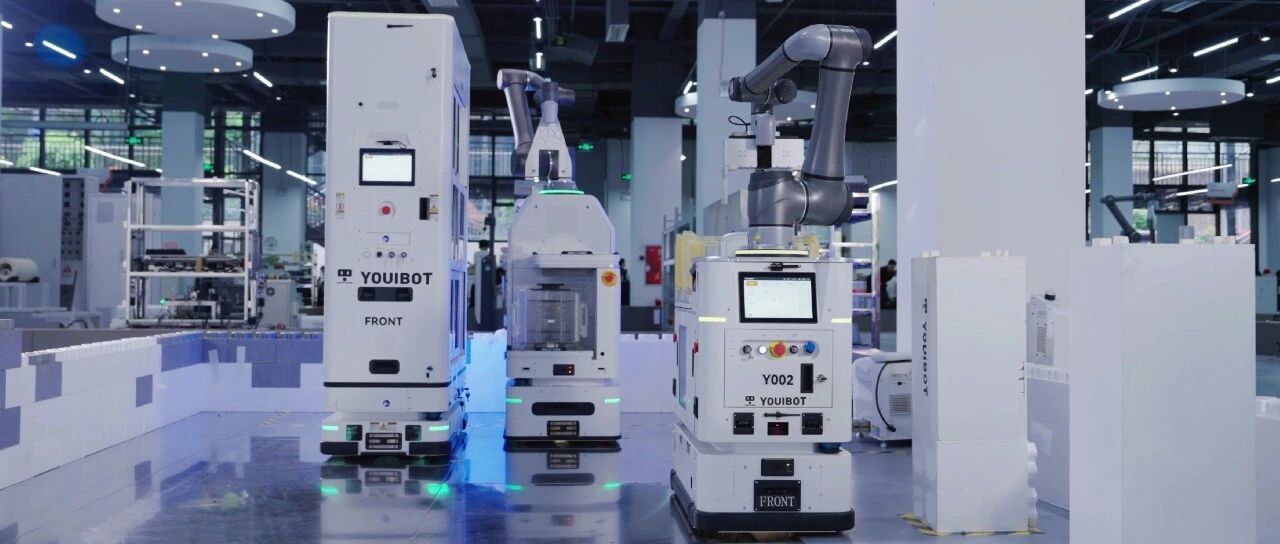
在优艾智合展台,三台移动操作机器人正在模拟的半导体工厂环境中协同作业。从取料到 运输再到对接放料,一整套完整的物料智能化流转闭环跃然眼前。 这是优艾智合在本次展会上全球首发的三款新一代半导体具身智能移动操作机器人OW12- 300、OW8-350、ATS6F。三款产品分别指向12寸晶圆全工艺段、8寸晶圆前道工程、跨 洁净度物料转运三大场景,共同构成了覆盖半导体全工艺链的工业物流解决方案。 效率革命:7×24小时不间断作业 在半导体制造这样一个对精度、洁净度、稳定性要求近乎苛刻的行业里,优艾智合此次新品集中亮 相,从效率、洁净、连续作业三个维度发起一场"效率革命"。 OW12-300可兼容FOUP、FOSB、Metal CST等12寸晶圆制程的载具,实现工艺全覆盖。OW8- 350则应用于半导体前道工艺,可在650mm窄道通行。 OW12-300 现场演示显示,OW12-300和OW8-350均实现了最快25秒以内的空满交换时间,这意味着物料对 接节点上,移动操作机器人已经具备了与天车系统同量级的作业节拍,作为OHT的柔性补充,有 效打通厂内物流瓶颈。 3月25日,SEMICON CHINA 2026在上海拉开 ...
娃哈哈停产了?知情人士回应;九号公司与泡泡玛特达成合作,联名电动车将于4月推出;雷军介绍小米机器人团队在灵巧手领域新进展丨邦早报
创业邦· 2026-03-28 01:10
Group 1 - Apple is offering stock incentives worth $200,000 to $400,000 to iPhone hardware designers to prevent them from leaving for AI startups like OpenAI, with the bonuses vesting over four years [3] - OpenAI has successfully recruited dozens of engineers from Apple in 2023 and plans to expand its workforce from 4,500 to 8,000 by the end of 2026 [3] - The bonuses offered by Apple are significantly lower than those provided by AI companies, which reportedly offer around $1 million annually in stock incentives [3] Group 2 - Wahaha has temporarily halted 70% of its production lines, including those for its popular bottled water, with a planned resumption of operations around April 2 [4] - A source close to Wahaha indicated that the production stoppage is due to scheduling and inventory issues rather than a sign of instability [4] Group 3 - Ninebot announced a collaboration with Pop Mart to create a co-branded electric vehicle aimed at young consumers, set to launch in April [4] Group 4 - Xiaomi's robotics team has made advancements in dexterous hands, completing 150,000 grip cycle reliability tests, and aims for near 100% operational success in long-term deployments [6][7] Group 5 - BYD reported a revenue of 803.96 billion yuan for 2025, a year-on-year increase of 3.46%, with net profit expected to decline by 19% to 32.62 billion yuan [10] - The revenue from automotive and related products was approximately 648.65 billion yuan, up 5.06%, while revenue from mobile components and assembly decreased by 2.74% to about 155.24 billion yuan [10] Group 6 - Li Auto has initiated a stock repurchase plan, allowing up to $1 billion in buybacks by March 31, 2027, with the execution of the plan to be based on market conditions [10] Group 7 - Cha Bai Dao reported a total revenue of 5.395 billion yuan for 2025, a 10% increase, with net profit rising 71% to 820 million yuan [18] - The company expanded its store count to 8,621, with a significant portion in lower-tier cities, and launched 117 new products during the year [18] Group 8 - OpenAI's ChatGPT advertising business achieved an annualized revenue of over $100 million within six weeks of its pilot launch in the U.S., with plans to expand to more countries [19] Group 9 - Zero Run Auto launched its A10 model globally, priced from 65,800 to 86,800 yuan, featuring advanced driving assistance and targeting nearly 40 countries [23][24] - IM Motors has opened pre-sales for its LS8 SUV, with prices ranging from 259,800 to 309,800 yuan, featuring advanced technology and AI capabilities [26]




迪士尼“雪宝”机器人灵动步态的核心动力,是这家公司的关节模组
机器人大讲堂· 2026-03-27 13:07
Core Viewpoint - The article highlights the advancements in physical AI showcased by Disney's robot Olaf at NVIDIA GTC 2026, emphasizing the collaboration with Unitree Technology for the robot's core driving system, marking a significant step towards the era of physical AI. Group 1: Robot Design and Structure - Olaf's robot version maintains the character's animated structure with a large head and slender neck, featuring a unique "floating gait" achieved through an asymmetrical leg design to address movement interference in a compact space [5]. - The robot weighs 14.9 kg and utilizes Unitree's high-performance motors, specifically the Unitree 8010-6 and Unitree 4010-25, to enable its distinctive movement [7]. Group 2: Motor Functionality and Control - Each leg of Olaf's robot is equipped with three degrees of freedom, allowing for hip rotation, knee movement, and foot extension, supported by Unitree motors that provide necessary torque for asymmetric walking [7]. - The neck motor, due to the robot's structural design, requires high torque output and rapid response, with the Unitree 4010-25 motor ensuring real-time expression control [7]. Group 3: Thermal Management and Noise Reduction - The outer fabric covering Olaf limits heat dissipation, prompting the research team to integrate real-time temperature feedback from Unitree motors into a reinforcement learning control strategy to maintain power stability during performances [9]. - The collaboration has led to a significant reduction in walking noise from 82 decibels to 64 decibels through advanced torque control and reinforcement learning algorithms [12]. Group 4: Historical Context and Future Implications - Unitree motors have been consistently featured in Disney's robotics projects, including the BD-X robot showcased in previous NVIDIA GTC events, indicating a long-term partnership in developing advanced robotic solutions [14]. - The evolution of physical AI and embodied intelligence technologies is increasing demands for hardware integration, response speed, and control precision, positioning Unitree as a key player in the global robotics development landscape [17].