智能座舱

Search documents
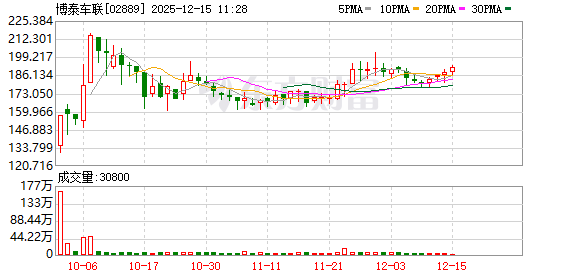
博泰车联(02889) - 自愿性公告 - 业务发展最新情况:收到项目定点通知
2025-12-15 10:15
香港交易及結算所有限公司及香港聯合交易所有限公司對本公告之內容概不負責,對其準確 性或完整性亦不發表任何聲明,並明確表示概不就因本公告全部或任何部份內容而產生或因 倚賴該等內容而引致之任何損失承擔任何責任。 本公司近年來不斷深化產業鏈協同,逐步形成強大的生態整合能力並獲得廣 泛市場認可度。該項目定點通知標誌著本公司在高性能智能座艙領域的技術 整合與量產交付能力進一步獲得市場認可,有助於鞏固本集團在智能汽車供 應鏈中的競爭地位,並對未來經營發展產生積極影響。 本公司將積極推進該項目的量產準備工作。由於智能座艙解決方案之研究、開 發過程中存在技術疊代、市場波動及項目執行等不確定因素,本集團將積極加 強研發管理、供應鏈協同與風險管控,全力保障項目順利推進。 – 1 – 股東及潛在投資者於買賣本公司證券時務請審慎行事。 PATEO CONNECT Technology (Shanghai) Corporation 博 泰 車 聯 網 科 技 ( 上 海 ) 股 份 有 限 公 司 ( 於 中 華 人 民 共 和 國 成 立 的 股 份 有 限 公 司 ) (股份代號:2889) 自願性公告 業務發展最新情況:收到項目 ...
280亿上海座舱新锐,订单汹涌
2 1 Shi Ji Jing Ji Bao Dao· 2025-12-15 03:27
Core Viewpoint - The company, 博泰车联, has secured multiple significant orders from leading electric vehicle manufacturers, indicating strong market demand for its advanced smart cockpit solutions and solidifying its competitive position in the industry [2][6][19]. Group 1: Company Developments - 博泰车联 has received three major orders from top-tier electric vehicle manufacturers, enhancing its reputation and market competitiveness [2][3]. - The company recently completed its IPO in September, raising approximately 900 million HKD, which will support its growth and development initiatives [29]. - 应臻恺, the founder, emphasizes the importance of transforming new orders into revenue to ensure the company's survival in a competitive market [30]. Group 2: Product and Technology - 博泰车联's latest order involves providing cockpit products based on Qualcomm's 8397 platform, which offers advanced AI capabilities and superior computing performance [4][5]. - The company has shifted from basic central control screens to user experience-focused "emotional spaces," positioning smart cockpits as the command center of vehicles [7]. - The average price of high-end domain controllers is 2,951 RMB per unit, three times that of lower-end products, contributing significantly to revenue growth [16]. Group 3: Market Position and Financial Performance - 博泰车联 is the third-largest supplier of smart cockpit domain controller solutions in China, holding a 7.3% market share as of 2024 [19]. - The company's revenue for the first half of 2023 reached 1.086 billion RMB, reflecting a 26.2% year-on-year increase, although it reported a loss of 227.371 million RMB [18][21]. - The revenue from domain controllers is projected to grow from 674 million RMB in 2022 to 1.959 billion RMB in 2024, with a compound annual growth rate of 70.5% [18]. Group 4: Challenges and Strategic Focus - Despite recent successes, 博泰车联 faces challenges, including an expanded loss of 230 million RMB in the first half of 2023 and a slowdown in the growth rate of its core domain controller business [21][28]. - 应臻恺 highlights the necessity of maintaining strong relationships with both major manufacturers and chip suppliers to navigate the complexities of the global market [12]. - The company is increasing its investment in AI and technology development, with 1.1 billion RMB allocated for R&D in the first half of 2023, representing 10% of its revenue [27].

车联天下赴港IPO:研发费用常年居高不下 毛利率仍低于行业平均水平 收入激增同时亏损持续扩大
Xin Lang Cai Jing· 2025-12-11 06:17
Core Viewpoint - The company, Cheliantianxia, has submitted its IPO application to the Hong Kong Stock Exchange, aiming to address funding bottlenecks while facing significant challenges related to its business model sustainability and high losses despite rapid revenue growth [1][7]. Group 1: Revenue Growth and Losses - Cheliantianxia's revenue surged from 369 million to 2.656 billion yuan from 2022 to 2024, marking a growth of over six times, with a notable 523.3% increase in 2023 due to the booming smart cockpit market [2][8]. - Despite high revenue growth, the company reported cumulative net losses of 968 million yuan, with losses in the first half of 2025 reaching 262 million yuan, exceeding the total losses of 2024 [2][8]. - The company's cash flow from operating activities has been negative, with net outflows increasing from 250 million yuan in 2022 to 1.011 billion yuan in 2024, indicating a lack of self-sustaining business capability [2][8]. Group 2: High R&D Costs and Low Profit Margins - The root cause of the losses is attributed to high R&D expenditures and low gross margins, with a gross margin of 16.2% in 2024, which, although improved from 9.5% in 2022, remains below industry averages [2][8]. - R&D expenses have consistently been high, while raw material costs increased by 17.5% in 2024 due to price hikes from suppliers like Bosch, further squeezing profit margins [2][8]. Group 3: Customer and Supply Chain Concentration Risks - The company faces significant risks due to extreme concentration in its customer base, with over 98% of revenue coming from the top five customers, and a single largest customer contributing nearly 60% [3][9]. - In 2024, revenue growth slowed to 15.6% due to weak sales from the largest customer, and revenue in the first half of 2025 declined by 0.7%, highlighting the adverse effects of customer concentration [3][9]. - The company's reliance on Bosch is critical, with 82.9% of purchases in 2023 and 80.3% in 2024 coming from them, which limits Cheliantianxia's bargaining power and supply chain autonomy [3][9]. Group 4: Industry Competition and IPO Challenges - Cheliantianxia operates in a highly competitive market, ranking second in China's smart cockpit domain, but faces challenges from competitors with stronger technological innovations [4][10]. - The IPO proceeds are intended for R&D and capacity enhancement, but the market is focused on whether the company can address three key challenges: profitability, customer structure optimization, and supply chain resilience [4][10]. - The company's debt ratio stands at 198.3%, with cumulative losses of 1.272 billion yuan, raising concerns about maintaining high valuations post-IPO if profitability is not quickly demonstrated [4][10]. Group 5: Conclusion on Value Reassessment - The IPO of Cheliantianxia represents a shift from scale expansion to quality survival in the smart automotive supply chain sector, revealing the real challenges faced by the industry after a period of enthusiasm [5][11].
燃油车入局智能化,传统品牌积极推进“油电同智”
Zheng Quan Shi Bao Wang· 2025-12-11 05:24
Core Insights - The automotive industry is witnessing a shift where traditional fuel vehicles are accelerating their smart technology integration to compete with the rising market share of electric vehicles (EVs) [1][2][9] - Industry experts suggest that the smartification of fuel vehicles is a transitional solution, as the long-term trend favors the replacement by electric vehicles, leading to a restructuring of the automotive supply chain [1][9] Fuel Vehicle Smartification - The launch of the first fuel sedan equipped with Huawei's advanced driving solution, the FAW Audi A5L QianKun, signifies a trend where traditional fuel vehicles are adopting smart technologies [2][3] - Data from the China Passenger Car Association indicates a 17.3% year-on-year decline in fuel vehicle sales in 2024, with their market share dropping to 52.4%, and further down to 49.9% in the first nine months of 2025 [2] - A report highlights that 71.9% of consumers consider smart cockpit features as a primary factor in their purchasing decisions, indicating that smart technology is becoming a critical decision-making factor [2] Technological Challenges - Experts point out several technological bottlenecks in the smartification of fuel vehicles, including limitations in architecture, power supply issues, and challenges in heat dissipation and integration [5][6] - The traditional fuel vehicle's distributed electronic architecture has low bandwidth, making it difficult to support high computing demands, while the 12V battery cannot sustain the power needs of advanced driving hardware [5][6] Industry Trends - The trend of fuel vehicles adopting smart driving solutions is gaining momentum, with various models from brands like Mercedes-Benz and Volkswagen also integrating smart technologies [3][4] - The automotive industry is moving towards an "oil-electric intelligence" strategy, with major players like FAW-Volkswagen and Mercedes-Benz committing to smart upgrades across their fuel vehicle lineups [8][10] Future Outlook - The shift towards smartification in fuel vehicles is expected to have profound impacts on the automotive industry, driving more companies to invest in smart driving technology and potentially altering market competition dynamics [9] - The long-term outlook suggests that electric vehicles will dominate the market, with the smartification of fuel vehicles serving as a defensive innovation strategy to buy time for the transition [9][10]

华为HMS for Car智行论坛落幕,赋能车企智能化转型与出海新征程
Xin Lang Cai Jing· 2025-12-09 05:19
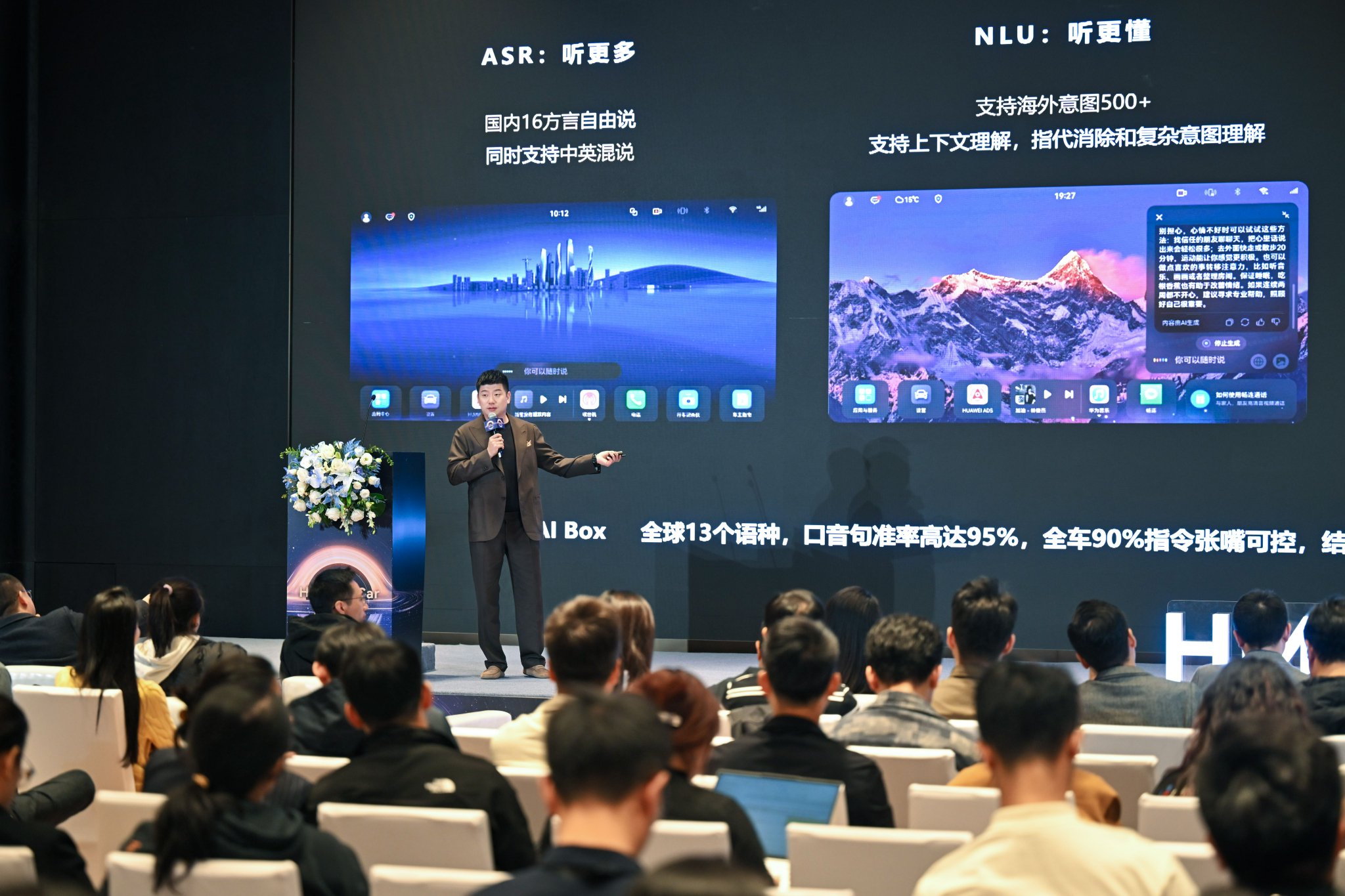
Core Insights - The automotive industry is rapidly transitioning towards digitalization, intelligence, connectivity, and electrification, with a focus on building a globally competitive smart in-car service system [1] - Huawei's HMS for Car aims to enhance the localized experience of smart cockpits to address the diverse user habits and ecosystem applications across different regional markets [2] Group 1: HMS for Car Overview - Huawei has developed the HMS for Car integrated smart in-car solution, which includes four core capabilities: maps, voice, ecosystem, and connectivity services, to help automotive companies establish a differentiated competitive advantage globally [2] - The focus has shifted from merely addressing the "existence" of services to integrating into local ecosystems and enhancing product localization [2][4] Group 2: Core Capabilities - The AI Box upgrade allows for proactive understanding and natural communication, achieving a 90% accuracy rate in recognizing local accents and supporting 16 Chinese dialects and 13 global languages [4] - The Service Box serves as a bridge for localizing in-car ecosystems, adapting top-tier applications based on user habits in different countries [4][5] - The Net Box enhances network stability by leveraging 11 years of technology accumulation and integrating resources from over 150 operators across 100+ countries [5] - The Map Box focuses on real-time updates and local map data accuracy, supported by research centers in Munich and the Netherlands, and integrates over 280 million POI data for precise navigation [5] Group 3: Integration and Collaboration - HMS for Car is evolving into a "personal travel assistant" by integrating multiple business functions and enabling seamless connections between navigation, vehicle control, and services [7] - The system provides compliance and security assurances, having supported over 70 vehicle models globally [8] Group 4: Industry Collaboration and Innovations - The collaboration with automaker Seres has led to the development of a smart automotive ecosystem, enhancing user experience through AI algorithms and multi-scenario intelligent functions [9] - Long-term cooperation with Great Wall Motors has resulted in significant improvements in navigation accuracy and stability, with new capabilities being introduced in upcoming products [11] - Partnerships with content providers like Tencent Music have enabled the creation of an AI music recommendation system that enhances the in-car entertainment experience [13] Group 5: Enhancing User Experience - The collaboration with Shenzhen Shunyi Technology has led to the development of convenient parking services, allowing users to reserve parking spots and pay fees through voice commands [15] - TomTom's integration of dynamic mapping capabilities supports real-time navigation and traffic updates, enhancing the overall driving experience [17] Group 6: Future Outlook - HMS for Car is set to continue its evolution from "going out" to "going in," focusing on systematic capability development and co-creating new smart travel experiences with partners [18]
传言理工男CEO上位!苹果汽车又有戏了?
Sou Hu Cai Jing· 2025-12-08 10:31
Group 1 - The core viewpoint of the article highlights the transition in leadership at Apple from Tim Cook to John Ternus, emphasizing Ternus's technical background and potential to drive innovation [1][5][12] - Under Tim Cook's leadership, Apple achieved record sales and market value, but faced criticism for a lack of technological innovation, with significant updates only appearing in the iPhone 17 [3][7] - John Ternus, the current Senior Vice President of Hardware, is recognized for his role in major product developments, including the transition to self-developed M-series chips and contributions to the iPad and MacBook Pro [5][9] Group 2 - There are strong rumors that Ternus will initiate the development of Apple's electric vehicle (EV) project, which had previously been abandoned due to its similarity to Tesla's offerings [7][9] - Apple is expected to enter the EV supply chain, providing components such as smart cockpit and intelligent driving systems to other EV brands, following Huawei's success in the Chinese market [10][12] - This new approach is anticipated to yield higher profit margins compared to direct vehicle manufacturing, potentially leading Apple into a new era of high-value and high-performance products [12]


华为HMS for Car智行论坛举办,携手全球伙伴探索生态共赢之路
Xin Lang Cai Jing· 2025-12-05 15:14
Core Insights - The automotive industry is rapidly transitioning towards digitalization, intelligence, connectivity, and electrification, with a focus on building a globally competitive intelligent in-car service system [1] - Huawei's HMS for Car aims to enhance the localization experience of smart cockpits to meet diverse regional market needs, moving from merely supporting car companies to integrating into local ecosystems [2] Group 1: HMS for Car Capabilities - HMS for Car integrates four core capabilities: maps, voice, ecosystem, and connectivity services, providing a comprehensive intelligent in-car solution that has already supported multiple car manufacturers [1] - The AI Box upgrade allows for proactive understanding and natural communication, achieving a 90% accuracy rate in recognizing local accents and supporting 16 Chinese dialects and 13 global languages [4] - Service Box acts as a bridge for local ecosystem adaptation, enhancing user familiarity with local applications and supporting diverse interaction methods [4] - Net Box enhances network stability for in-car services, covering over 100 countries and integrating resources from 150 operators [4] Group 2: Navigation and Mapping Enhancements - Map Box focuses on creating a differentiated product experience with real-time updates, supported by local research institutes in Munich and the Netherlands [5] - The collaboration with overseas map providers has resulted in over 280 million Points of Interest (POI) data, improving navigation accuracy and efficiency [5] Group 3: Integration and User Experience - HMS for Car is evolving into a "personal travel assistant," integrating various services such as navigation, vehicle control, and entertainment into a seamless user experience [7] - The system can understand the entire travel cycle, automatically planning routes and recommending services along the way [7] - Over 70 vehicle models globally have successfully integrated HMS for Car solutions [7] Group 4: Collaborative Innovations - The partnership with automaker Seres has led to the development of a smart automotive ecosystem, enhancing user experience through AI algorithms and multi-scenario intelligent functions [8] - Long-term collaboration with Great Wall Motors has resulted in significant improvements in navigation precision and stability, with new capabilities set to debut in December [10] - Collaborations with content partners like Tencent Music have led to the creation of an AI music recommendation system tailored to user travel scenarios [13] Group 5: Parking and Navigation Solutions - The partnership with Shenzhen Shunyi Tong has resulted in a convenient parking experience through features like space reservation and voice-activated payment [15] - TomTom's integration of radar perception and data fusion has enhanced the accuracy and reliability of global map data for the "live map" capabilities [17] Group 6: Future Outlook - The forum highlighted the evolution of HMS for Car from "going out" to "going in," emphasizing ongoing upgrades and partnerships to create new intelligent travel experiences [19]
华安鑫创获北汽福田全球商用车项目定点,切入智能座舱高端供应链
Ju Chao Zi Xun· 2025-12-05 02:30
Core Viewpoint - The announcement by Huazhong Xinchang indicates a significant advancement in its business model, transitioning from providing hardware to delivering integrated "hardware + software" solutions for commercial vehicles, marking a strategic breakthrough in the commercial vehicle sector [2][3] Group 1: Project Details - Huazhong Xinchang has received a project designation notification from Beiqi Foton Motor Co., Ltd., allowing it to develop and supply integrated machine assembly products for a commercial vehicle platform, with a global sales market [2] - The project signifies Huazhong Xinchang's deepened engagement in the high-end supply chain of complete vehicle manufacturers, enhancing product value and expanding business boundaries [2] Group 2: Strategic Implications - The integration of system software services with display assembly is expected to enhance product value and customer collaboration efficiency, establishing a new competitive advantage centered on integration capabilities [2] - This collaboration is seen as a validation of Huazhong Xinchang's comprehensive strength in technological foresight and large-scale delivery within the accelerating global trend of intelligent and connected commercial vehicles [2] Group 3: Future Outlook - The partnership is anticipated to accelerate Huazhong Xinchang's entry into the smart cockpit segment of commercial vehicles, optimizing underlying technology architecture and enhancing supply chain integration [3] - The project is expected to have a positive impact on the company's long-term operational performance, although it is not projected to significantly affect this year's financial results [3]
新势力 | 11月:新能源渗透率提速 新势力销量向上【国联民生汽车 崔琰团队】
汽车琰究· 2025-12-05 02:04
Core Viewpoint - The article highlights the performance of key new energy vehicle companies in November 2025, showcasing their delivery volumes and year-on-year growth rates, while also discussing the overall market trends and the impact of subsidy policies on consumer behavior [2][3][4][5][6][7]. Group 1: Delivery Performance - Leap Motor delivered 70,327 vehicles in November, a year-on-year increase of 75.1% and a slight month-on-month increase of 0.1% [3]. - Xpeng delivered 36,728 vehicles, reflecting an 18.9% year-on-year increase but a 12.6% decrease month-on-month [4]. - NIO delivered 36,275 vehicles, with a year-on-year growth of 76.3% and a month-on-month decline of 10.2% [5]. - Li Auto delivered 33,181 vehicles, showing a significant year-on-year decrease of 31.9% but a month-on-month increase of 4.5% [6]. - Zeekr delivered 28,843 vehicles, marking a 6.8% year-on-year increase and a notable month-on-month increase of 34.6% [7]. - Xiaomi reported deliveries exceeding 40,000 vehicles in November [7]. Group 2: Market Trends - The overall retail market for narrow passenger vehicles in November is estimated at approximately 2.25 million units, a year-on-year decrease of 8.7%, while the new energy vehicle retail is expected to reach 1.35 million units, achieving a penetration rate of 60% for the first time [2]. - The five sample new force car companies (excluding Xiaomi) collectively delivered 205,354 vehicles, representing a year-on-year increase of 22.7% [2]. Group 3: Competitive Landscape - Leap Motor's growth is attributed to strong product offerings like the C10 and B01, which are competitively priced under 200,000 yuan [3]. - Xpeng's new model, the X9 Super Range, launched in November, has set a record for pre-orders, indicating strong market interest [4]. - NIO's ES8 2026 model achieved a record delivery of over 20,000 units within 70 days of its launch, showcasing its market appeal [5]. - Li Auto is enhancing its charging network, which is expected to support its competitiveness as new electric products are introduced [6]. - Zeekr's new models, including the refreshed Zeekr 001 and 7X, are positioned to attract consumers in the mid to high-end market segments [7]. Group 4: Technological Advancements - The article notes that the advancement of intelligent driving technology is accelerating, with companies like Xpeng and Huawei leading the charge in promoting smart driving features [8]. - The article anticipates that advancements in intelligent driving technology will lower hardware barriers, allowing for broader application in the mainstream market [8]. - The emergence of autonomous driving capabilities is seen as a critical competitive factor for car manufacturers, with a focus on companies that are leading in smart technology [9]. Group 5: Component Industry Outlook - The article suggests a positive outlook for the new energy vehicle supply chain and smart electric growth, with low valuations in the component sector indicating potential for mid-term growth [10]. - Recommendations include focusing on intelligent driving components and the new force supply chain, highlighting specific companies within these sectors [11].

1-11月上汽集团新能源车销售149.9万辆 同比大涨38.8%
Yang Shi Wang· 2025-12-04 07:20
Core Insights - SAIC Motor Corporation reported a total vehicle sales of 4.108 million units from January to November, representing a year-on-year increase of 16.4%, surpassing last year's total sales [1] - The company's self-owned brand sales reached 2.666 million units, up 25.7% year-on-year, while new energy vehicle sales hit 1.499 million units, growing by 38.8% [1] - Sales in overseas markets amounted to 969,000 units, reflecting a 3.4% increase year-on-year, indicating strong performance in international markets [1] Self-Owned Brand Performance - In November, SAIC's self-owned brand sales reached 316,000 units, a 9.5% increase year-on-year, contributing to a total of 2.666 million units sold from January to November, which accounted for 64.9% of total sales, an increase of 4.8 percentage points from the previous year [3] - Passenger vehicle sales exceeded 100,000 units in November, marking a significant 36.4% year-on-year growth, with domestic market sales soaring by 97.6% [3] - SAIC Maxus sold 24,000 units, reflecting an 81.3% increase, while SAIC-GM-Wuling maintained its leading position in key market segments with sales of 166,000 units [3] New Energy Vehicle Sales - In November, SAIC sold 209,000 new energy vehicles, achieving a historical high for the third consecutive month, with a year-on-year growth of 19.7% [4] - Cumulatively, 1.499 million new energy vehicles were sold from January to November, representing a 38.8% increase [4] - The sales of the new generation of models, including the intelligent LS6 and LS9, have been strong, with the new MG4 semi-solid battery version set to begin deliveries in December [4] Overseas Market Performance - In November, overseas sales reached 107,000 units, a 13.9% increase year-on-year, with total sales of 969,000 units from January to November, up 3.4% [5] - The MG brand has become a leading Chinese brand in the European market, with cumulative deliveries of 285,000 units this year, reflecting a growth of over 25% [5] - Notable sales growth was observed in Spain (58.48%), France (57.49%), and Poland (138.29%), with MG electric vehicles achieving a historical cumulative sales milestone of over 100,000 units in the UK [5] Future Outlook - SAIC is focusing on building a more flexible and efficient operational mechanism, accelerating its transformation and upgrade processes [5] - The company aims to leverage innovations in solid-state batteries, digital chassis, efficient powertrains, intelligent driving, and smart cabins to enhance user experience and establish itself as a globally competitive automotive group [5]