板块轮动

Search documents
不出意外,信号已明确,A股迎来最后调整
Sou Hu Cai Jing· 2025-10-18 06:45
Core Viewpoint - The recent decline in A-shares is seen as a signal of the market entering its final adjustment phase, with limited downside potential and a shift of funds from crowded sectors to undervalued areas [1][3]. Market Adjustment - Market adjustments are viewed as a healthy mechanism, necessary for releasing pressure and correcting overvalued assets, similar to how the human body requires breathing [3][5]. - Historical examples illustrate that significant adjustments have previously helped to re-anchor values, such as the 2015 and 2021 market corrections [3]. Investor Sentiment - Market adjustments test investor psychology, highlighting the tendency for individuals to panic sell during downturns and chase prices during upswings [5][9]. - The distinction between price and value is crucial; true investment opportunities arise when stock prices fall significantly below their intrinsic value [5]. Sector Rotation - Recent market behavior shows a rotation from high-growth technology stocks to traditional sectors like banking and insurance, reflecting cyclical patterns [7][9]. - Historical trends indicate that no sector remains perpetually bullish, emphasizing the importance of timing and sector awareness in investment strategies [7]. Investment Strategies - Two recommended strategies in volatile markets include left-side trading during low interest and dollar-cost averaging into index funds to mitigate timing risks [9][11]. - Investors should maintain a consistent investment logic, avoiding contradictory strategies that can lead to confusion and missed opportunities [9]. Market Environment Challenges - The A-share market faces challenges such as misinformation and emotional trading among retail investors, which can lead to erratic price movements [11][13]. - The need for a more robust credit system and improved information filtering capabilities for ordinary investors is highlighted, as they are often swayed by market noise [11]. Current Market Position - Indicators suggest that the market is nearing the end of its adjustment phase, with key sectors like finance and consumer goods at historically low valuations, providing a foundation for potential rebounds [13]. - Prepared investors who maintain cash reserves and are willing to act against the prevailing market sentiment are likely to emerge as winners in the next phase [13].


A股指数集体低开:沪指跌0.11%,液态金属、培育钻石等板块跌幅居前
Feng Huang Wang Cai Jing· 2025-10-17 01:38
Market Overview - The three major indices in China opened lower, with the Shanghai Composite Index down 0.11%, the Shenzhen Component down 0.20%, and the ChiNext Index down 0.36% [1][2] - The liquid metal, HBM, and cultivated diamond sectors experienced significant declines [1] External Market - U.S. stock indices closed lower, with the Dow Jones down 301.07 points (0.65%) at 45,952.24 points, the Nasdaq down 107.54 points (0.47%) at 22,562.54 points, and the S&P 500 down 41.99 points (0.63%) at 6,629.07 points [3] - The Nasdaq Golden Dragon China Index fell by 0.91%, with most popular Chinese concept stocks declining, including Century Internet down over 5% and Kingsoft Cloud down over 2% [3] Industry Insights - CITIC Securities highlighted the "Three-Year Doubling" plan for electric vehicle charging infrastructure, aiming to establish 28 million charging facilities by the end of 2027, which will significantly boost demand for high-power fast charging equipment [4] - CITIC Jiantou noted that the capital market may see a rotation of sectors in the short to medium term (2025-2026), focusing on opportunities in elderly care, infrastructure, and new consumption sectors [5] - Huatai Securities indicated that the aviation sector is expected to maintain a positive outlook, with passenger load factors improving and ticket prices showing signs of recovery [6] - China Galaxy Securities suggested that monetary easing in the fourth quarter may exceed expectations, driven by economic data showing signs of weakness and the need for lower interest rates to support growth [7]

中信建投:中短期2025-2026年或将迎来政策落地期的板块轮动
Xin Lang Cai Jing· 2025-10-17 00:01
Core Insights - The article highlights that the capital market may experience a policy implementation period from 2025 to 2026, leading to sector rotation opportunities [1] Group 1: Short to Medium Term Opportunities - Focus on sectors such as elderly care, childcare, and infrastructure value chain adjustments as key areas for investment [1] Group 2: Long Term Trends - Long-term investment themes include the big health and big childcare economy, human capital services, and new consumption and family services [1] - Leading companies in these sectors are expected to undergo value reassessment [1]

成长退潮,风格切换还是倒车接人?
Sou Hu Cai Jing· 2025-10-10 11:15
Core Viewpoint - The A-share and Hong Kong markets are under pressure, exhibiting a structural characteristic of "growth retreat and cyclical defense" with significant declines in technology and new energy sectors, while cyclical sectors show resilience [1] Market Performance - A-share indices experienced a "strong Shanghai, weak Shenzhen" divergence, with the Shanghai Composite Index closing at 3897.03 points, down 0.94%, and the Shenzhen Component Index dropping 2.7% [2] - The ChiNext Index fell 4.55%, and the STAR 50 Index plummeted 5.61%, marking the second-largest single-day decline of the year [2] - In the Hong Kong market, the Hang Seng Index closed at 26290.32 points, down 1.73%, and the Hang Seng Tech Index fell 3.27% to 6259.75 points [2] - There was a significant net outflow of funds, with a single-day net outflow of 929.6 billion yuan in A-shares, primarily from the technology growth sector [2] Industry Highlights and Driving Logic - The cyclical sectors in A-shares demonstrated strong defensive characteristics, with the building materials sector leading gains due to policy support and expectations of increased infrastructure construction in Q4 [3] - Coal, oil, and petrochemical sectors benefited from price fluctuations and stable profitability, showing upward movement [3] - In the Hong Kong market, beverage stocks surged due to peak customer traffic during the holiday season and expectations of consumption recovery [3] Underperforming Sectors and Driving Logic - The technology growth sector faced collective sell-offs, with significant declines in sub-sectors like photolithography machines and lithium batteries, driven by supply chain concerns from export controls and high valuation pressures [4] - The precious metals sector experienced a high-level correction, influenced by a decrease in geopolitical risk aversion, although the long-term upward logic remains intact due to the anticipated easing cycle of the Federal Reserve [4] Investment Strategy Recommendations - The current market is at a critical juncture of "Q3 report verification + policy preheating," suggesting a focus on industry trends and policy benefits for Q4 opportunities [5] - Long-term investments in the technology growth sector should be based on fundamental industry logic, particularly in the AI supply chain and innovative pharmaceuticals [5] - Cyclical and resource sectors should leverage "policy + supply-demand" dual driving opportunities, with precious metals providing a configuration window amid global central bank easing [5] - Focus on opportunities driven by the "14th Five-Year Plan," particularly in new productivity and technology innovation sectors, while monitoring consumer demand recovery [5]
帮主郑重午评: 创业板指跌超3%,热门赛道遇冷,这些板块却逆势冲了!
Sou Hu Cai Jing· 2025-10-10 08:30
打开行情软件,不少朋友估计心里一紧——创业板指半天就跌了3.4%,跟上证指数0.51%的跌幅比,简直是"急刹车";深成指也跌了1.85%,整个早盘的氛 围确实有点沉。更直观的是,沪深京三市半天成交额比昨天少了708亿,才16561亿,能感觉到市场里的钱没那么活跃了,全市场超2300只个股下跌,手里的 票要是踩中调整的,估计早盘得捏把汗。 其实对中长线投资者来说,这种板块轮动很正常,不用盯着短期的涨跌慌神,更该关注手里标的的基本面。后续要是想更细致分析某只票的逻辑,我也能帮 你捋捋重点,评论区喊一嗓子。 作为跑了20年财经、专做中长线的人,我看盘更习惯盯着板块轮动的逻辑。今天最明显的就是"热门赛道歇脚":半导体板块跌得挺狠,东芯股份、华虹公司 这些票直接跌超10%,中芯国际也跟着调整;固态电池、光伏设备这些之前受关注的赛道,也没扛住,利元亨盘中跌超10%,亿纬锂能这些龙头也在回调。 就连昨天大涨的黄金股,今天也多数"熄火",西部黄金、赤峰黄金都领跌,算是短期情绪的一个小回调。 不过不用慌,市场永远有"补位"的板块。今天燃气板块就挺给力,大众公用、洪通燃气直接涨停,握着这类票的朋友应该能缓口气;电网设备也没掉队, ...


3900点过后,股市“爱涨不涨”?
吴晓波频道· 2025-10-10 00:20
Core Viewpoint - The current market rally is driven by valuation recovery and sentiment reversal, characterized as a "expected bull market" [2] Group 1: Market Performance - On the first trading day after the holiday, the A-share market surprised investors by quickly breaking through the 3900-point mark on the Shanghai Composite Index, marking the first time in 10 years that it has reached this level [3][4] - The rise from 3800 to 3900 points has led to mixed emotions among investors, with some considering profit-taking while others believe the bull market is not yet at its peak [4] Group 2: Factors Driving the Market - The immediate reason for the market's rise to 3900 points is attributed to favorable news released during the recent holiday, particularly the significant increase in gold prices, which reached historical highs of over $4000 per ounce [9][10] - The precious metals sector surged by 8.3%, becoming the largest gaining sector, while the controlled nuclear fusion sector also saw a rise of 6.97% due to advancements in related projects [10][11] - The Ministry of Commerce's announcements regarding export controls on rare earth materials have also positively impacted the rare earth sector, which rose by 5.05% [12] Group 3: Market Characteristics - The current bull market is characterized by "structural differentiation" rather than a broad-based rally, with certain sectors like new energy and technology performing well while others, such as tourism and consumer goods, are experiencing declines [18] - The market is primarily driven by valuation rather than earnings, with the recent rise attributed to policy and capital inflows rather than significant improvements in corporate profitability [19][20] - The market's foundation is supported by policy expectations, with investors anticipating strong economic and capital market reforms from the government [22] Group 4: Investor Sentiment and Signals - There are mixed signals regarding market sentiment, with some investors feeling uncertain about whether to enter or exit the market at the current levels [25] - Recent adjustments in margin financing for several A-share companies indicate potential warning signs, as these companies have static P/E ratios exceeding 300, leading to a drop in their stock prices [30][31] - Observations of market behavior suggest that while there is an increase in new investors, the overall trading volume does not reflect a historical peak, indicating a cautious sentiment among many [34] Group 5: Future Outlook - Analysts express optimism about the potential for the A-share market to continue its upward trajectory, with expectations for favorable policies and the upcoming third-quarter earnings reports to drive further growth [40][41] - There is a consensus among several brokerages that the market may shift from technology growth to low-volatility dividend sectors in the fourth quarter, indicating a structural market change [42][43]

凌晨突发,超6亿美元蒸发!16万杠杆客倒在黎明前
Sou Hu Cai Jing· 2025-10-02 21:41
Core Points - The financial market experienced a dramatic surge on October 1, 2025, with Bitcoin reaching $117,000 and over 160,000 accounts liquidated, totaling more than $600 million in losses [1][5][11] - The catalyst for this volatility was the U.S. government shutdown, which marked the first in seven years, leading to significant market reactions [4][5][11] Market Reactions - The ADP employment report for September revealed a decrease of 32,000 jobs, contrary to the expected increase of 51,000, which heightened the probability of a Federal Reserve interest rate cut to nearly 100% [5][11] - Precious metals surged, with silver increasing by 2% to $47.642 per ounce and gold stabilizing above $3,871 [5][10] - Cryptocurrency markets saw Bitcoin rise by 3.62% and Ethereum by over 4%, but leveraged traders faced significant losses due to extreme price volatility [5][10][17] Sector Performance - Traditional financial markets showed mixed results, with major U.S. indices opening lower but recovering slightly, while sectors like solid-state batteries and solar energy stocks performed well [10][11] - Chinese concept stocks gained traction, with the Nasdaq China Golden Dragon Index rising by 0.58%, indicating a shift in investor preference towards markets less affected by the U.S. political deadlock [10][11] Trading Dynamics - The trading environment was characterized by rapid shifts, with significant volatility leading to a high number of liquidations, particularly in the Asian trading hours [6][10][17] - The gold and Bitcoin markets exhibited unusual correlation, both rising simultaneously, which is atypical under normal market conditions [15][16] Information Vacuum - The government shutdown resulted in a lack of critical economic data releases, creating an information void that amplified market volatility and speculation [11][14] - Algorithmic trading dominated the market, with some quantitative funds experiencing trading volumes three times their usual levels [14]
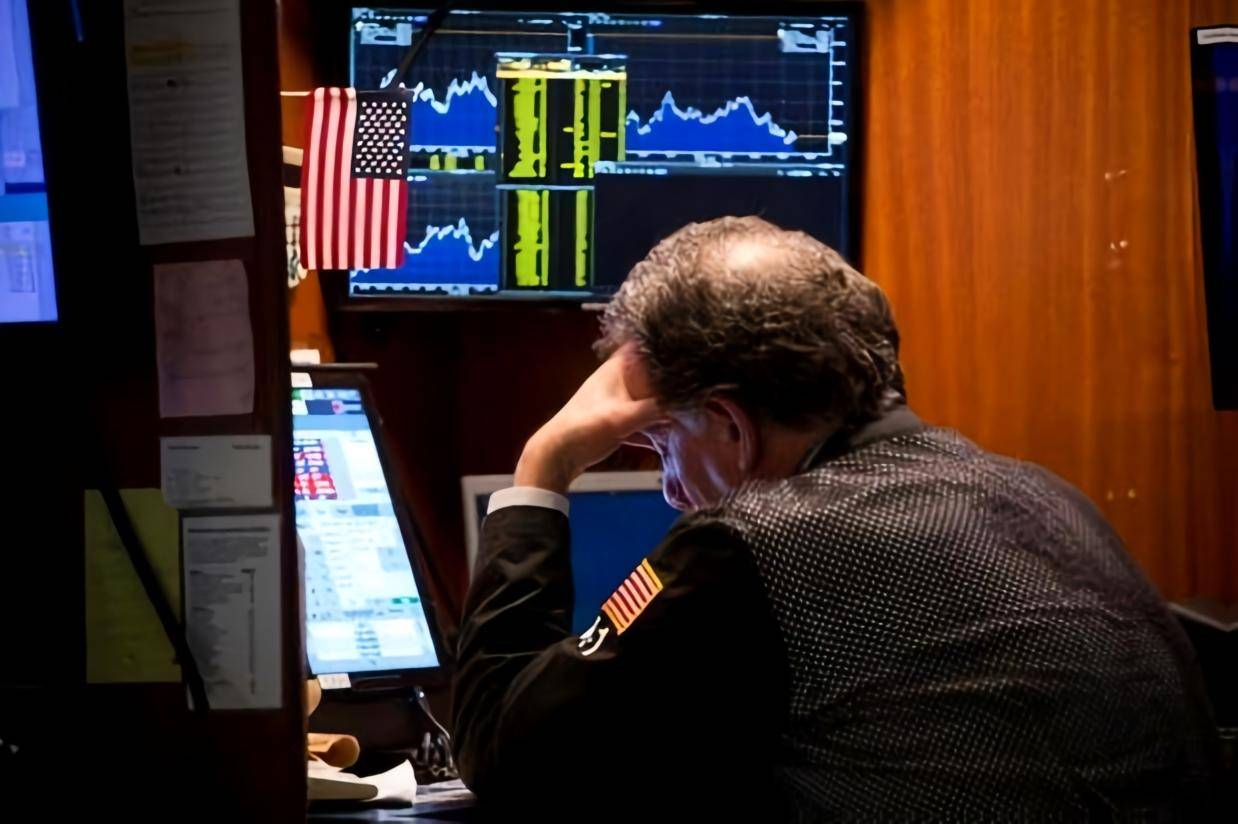
帮主郑重9月30日收评:沪指踮脚摸3900,半导体这波“热”得有点不一样
Sou Hu Cai Jing· 2025-09-30 07:52
Market Overview - The Shanghai Composite Index rose by 0.52%, approaching the 3900-point mark, indicating a steady upward trend rather than erratic movements [1][4] - The overall market sentiment is described as stable, with a gradual increase rather than sudden spikes [4] Sector Performance - The semiconductor sector showed significant strength, with stocks like Huahong and Zhaoxin rising nearly 17%, indicating a collective upward movement rather than isolated gains [3] - Storage chip stocks also performed well, with Jiangbolong hitting the daily limit up and other companies like Baiwei Storage and Tianshan Electronics increasing by nearly 10% [3] - Energy metals also saw positive movement, with stocks like Boguang New Materials hitting the daily limit up and Yongxing Materials rising by nearly 7% [3] Trading Volume and Market Dynamics - The total trading volume reached approximately 2.2 trillion yuan, slightly higher than the previous day, suggesting active market participation [3] - Over 2600 stocks experienced gains, indicating a broad-based market rally rather than a narrow one [3] Investment Strategy - For long-term investors, focusing on trends rather than daily fluctuations is emphasized, with a recommendation to follow the market's steady direction [4] - The importance of patience in investment is highlighted, comparing it to farming where growth takes time [4]
老登何尝不曾是小登,小登也终会成为老登
Sou Hu Cai Jing· 2025-09-28 03:19
Core Viewpoint - The market is experiencing significant sector differentiation, with technology stocks rising over 40% while food and beverage stocks, such as liquor, have declined. This highlights the rapid shifts in market sentiment and the challenges of sector-based investing [4][6]. Group 1: Sector Performance - Technology stocks have surged by over 40% this year, contrasting sharply with the decline in the food and beverage sector, particularly liquor [4]. - The concept of "sector investment" is based on identifying and investing in companies aligned with major trends like artificial intelligence and renewable energy [4][6]. Group 2: Investment Challenges - The volatility of thematic investments is high, with narrow focus leading to increased risk. When a trend emerges, stocks can rise quickly, but they can also fall sharply when the trend reverses [5][6]. - A common issue is the "sector rotation" phenomenon in the A-share market, where today's hot sectors may cool off tomorrow, making it difficult for investors to time their entries and exits effectively [6][7]. - Many investors tend to follow trends after they have already gained momentum, often resulting in buying at inflated valuations and facing losses when the trend reverses [6][7]. Group 3: Investment Strategy - Investors are advised to focus on the intrinsic value of companies rather than being swayed by market labels like "old" or "new" sectors, as these do not reflect true asset value [8][9]. - It is suggested that investors should not attempt to chase every market trend, as this can lead to losses. Instead, a long-term perspective focusing on companies with sustainable growth is recommended [10]. - For those interested in thematic investing, it is crucial to approach it with caution, avoiding overexposure and ensuring a clear understanding of the industry before investing [11][12].

失真的指数 | 谈股论金
水皮More· 2025-09-25 09:56
Market Overview - A-shares showed mixed performance today, with the Shanghai Composite Index down 0.01% at 3853.30 points, while the Shenzhen Component Index rose 0.67% to 13445.90 points, and the ChiNext Index increased by 1.58% to 3235.76 points [3] - The total trading volume in the Shanghai and Shenzhen markets reached 2.371 trillion yuan, an increase of 44.3 billion yuan compared to the previous day [3] Index Discrepancy - The distortion of indices is a longstanding issue, currently more severe, especially in the Shenzhen market. Despite the Shenzhen Component Index rising 0.67% and the ChiNext Index rising 1.58%, the majority of individual stocks performed poorly, with 2091 stocks declining compared to only 779 gaining in the Shenzhen market [4] - The median stock price among over 5000 listed companies fell by 0.85%, indicating a significant divergence between individual stock performance and index movements [4] Capital Flow - There was a net outflow of 37.4 billion yuan from main funds, with northbound funds experiencing a net outflow of 32 billion yuan, contrasting sharply with the previous day [4] - The performance of small and mid-cap stocks was notably weak, with the Shanghai Composite Index's small-cap stocks down approximately 0.4% [4] Sector Performance - The indices are primarily supported by a few heavyweight stocks concentrated in sectors such as chips, robotics, lithium batteries, energy storage, and photovoltaics, with capital rotating among these sectors [5] - Notable stocks like Ningde Times and "Yizhongtian" showed volatile trading patterns, with Ningde Times' market capitalization reaching 1.79 trillion yuan, just 100 billion yuan less than Kweichow Moutai, marking a significant shift towards technology stocks [6] Key Stock Movements - Agricultural Bank and CITIC Securities played crucial roles in supporting the index, with CITIC Securities actively lifting the market during a critical moment [7] - Agricultural Bank's stock price rose from 6.45 yuan to approximately 6.62 yuan, contrasting with the overall decline in the banking sector [7] Market Sentiment - Small-cap stocks, particularly those that had shown strong rebound potential recently, opted to retreat today, indicating a cautious market sentiment [7] - The bond market experienced a rebound after a decline, reflecting a typical inverse relationship with the stock market, which may indicate underlying economic conditions [8]