
高水平开放

Search documents
达成超900项成果!2025年服贸会闭幕,共启服务贸易新征程
Bei Jing Ri Bao Ke Hu Duan· 2025-09-14 13:16
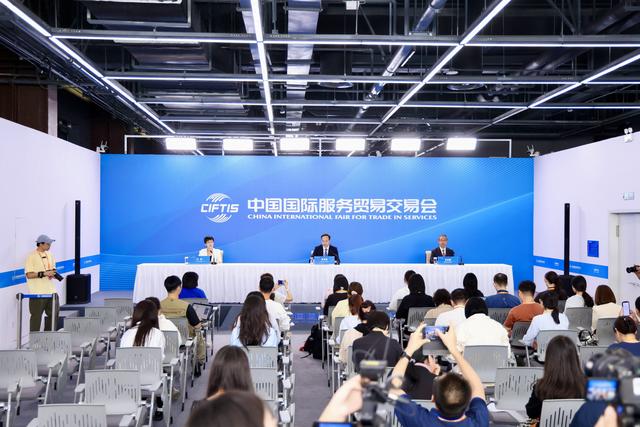
Core Insights - The 2025 China International Service Trade Fair concluded with significant achievements, including nearly 2,000 offline exhibitors, around 5,600 online exhibitors, over 250,000 attendees, and more than 900 agreements reached, showcasing China's commitment to high-level openness and quality development [1][10] Group 1: Event Overview - The fair served as a platform for global service cooperation, featuring nearly 800 international guests from over 30 countries, discussing mutual benefits in service trade [1][3] - Australia had the largest guest country exhibition, achieving 15 cooperation intentions in finance and education, highlighting its commitment to expanding in the Chinese market [3] - The event attracted participation from 85 countries and international organizations, with over 20% of offline exhibitors being international, covering the top 30 service trade nations [3] Group 2: Industry Innovations - The fair showcased numerous new products and services, including the world's first photon counting CT and various smart solutions, emphasizing the vitality of technology in service development [3][6] - A significant focus was placed on AI in education, with a strategic agreement signed for the application of AI education in Beijing's primary and secondary schools [4] - AstraZeneca established a large exhibition space to showcase its achievements in China and signed agreements to enhance the accessibility of innovative drugs and quality medical services [6] Group 3: Engagement and Experience - The event featured 27 promotional activities and 48 industry exchange events, with a 12% increase in professional attendees compared to the previous year, totaling approximately 116,000 [7] - The fair included interactive experiences such as robot demonstrations and digital platforms facilitating over 3,000 project matches, enhancing engagement with attendees [7][8] - A variety of cultural and sports activities were organized, creating an immersive experience for participants and promoting investment opportunities [8]


房地产进入深度调整期,中国城市如何寻找新增长极?
Jing Ji Guan Cha Bao· 2025-09-14 11:55
Core Insights - The article discusses the transition of China's urban development from a reliance on real estate to new growth engines, emphasizing the need for innovation and quality improvement in urban governance [1][2][5]. Group 1: Economic Transition - The real estate market in China is undergoing a deep adjustment, with a shift from "supply shortage" to "oversupply" [2]. - The traditional growth model based on land finance and real estate investment is fundamentally changing, necessitating cities to seek sustainable economic engines [2][6]. - The "14th Five-Year Plan" period is characterized by profound changes in supply-demand relationships within the real estate market [2]. Group 2: Urban Development Strategies - Urbanization is transitioning from a rapid growth phase to a stable development phase, focusing on quality improvement rather than large-scale expansion [3]. - Future urban competition will center on industrial innovation, public service quality, governance precision, and living environment rather than land scale and GDP growth [3][6]. - The report highlights that cities like Changzhou, Yantai, and Guiyang are emerging with unique advantages in sectors such as new energy and big data [3][5]. Group 3: New Growth Opportunities - New growth opportunities are identified in technology innovation, high-level openness, and modern urban governance [5]. - Major cities like Beijing and Shanghai are leading in technological innovation, with significant investments in R&D and a concentration of high-tech enterprises [5]. - Smart governance initiatives, such as Hangzhou's "City Brain" and Chengdu's safety perception network, are enhancing urban resilience [5]. Group 4: Future Urban Competitiveness - The future of urban opportunities will depend on cities' ability to precisely position themselves and break away from homogeneous competition [6]. - The ability to effectively manage "stock updates" in the context of a declining population dividend will be crucial for cities to enhance their competitiveness [6].
在高水平开放中共享机遇、实现共赢
Ren Min Ri Bao· 2025-09-11 08:37
Group 1 - China's commitment to high-level opening and cooperation in global service trade is emphasized, aiming to build an open world economy and contribute to a community with a shared future for mankind [1][3] - The China International Fair for Trade in Services (CIFTIS) serves as a platform for showcasing China's determination to expand service trade, attracting participation from 85 countries and nearly 2000 enterprises, with an internationalization rate exceeding 20% [1][2] - The service sector's contribution to China's GDP reached 59.1% in the first half of the year, with service trade imports and exports totaling 45,781.6 billion yuan, reflecting an 8.2% year-on-year growth [2] Group 2 - China is implementing measures to expand service industry openness, including a negative list for cross-border service trade and pilot programs in free trade zones, which will provide more opportunities for foreign enterprises [3] - Recent international economic and trade events in China have facilitated connections among global enterprises, with significant agreements such as 107.75 billion yuan at the China-Arab States Expo and 298 major projects at the World Intelligent Industry Expo [4] - The importance of open cooperation is highlighted as a response to unilateralism and protectionism, with China advocating for a multilateral trade system centered around the World Trade Organization [4]
联通内外 在服贸会上看到高水平开放
Zheng Quan Ri Bao· 2025-09-10 16:24
Core Points - The 2025 China International Service Trade Fair (CIFTIS) opened on September 10, 2023, with the theme "Digital Intelligence Leading, Service Trade Renewed," aligning with the trends of digitalization, intelligence, and greening in service trade [1] - The fair attracted participation from over 70 countries and international organizations, with nearly 2,000 enterprises, including around 500 Fortune Global 500 companies, showcasing a strong global presence [2] - The event serves as a significant platform for cultural "going out," with companies like 37 Interactive Entertainment demonstrating successful international strategies in the gaming sector [3] - The fair is recognized as a national-level window for technology and cultural integration, facilitating international cooperation and promoting Chinese culture abroad [4] - Innovations such as the "immediate refund" tax service by Bank of China are enhancing inbound consumer potential, reflecting a shift towards digital trade and cross-border financial services [5] Group 1 - The CIFTIS emphasizes the importance of digitalization and intelligence in service trade [1] - Nearly 2,000 enterprises participated, including 500 Fortune Global 500 companies, showcasing a diverse international representation [2] - The fair highlights the trend of cultural "going out," with companies like 37 Interactive Entertainment leading in global gaming distribution [3] Group 2 - The event acts as a bridge for cultural exchange and cooperation, promoting Chinese culture through innovative products [4] - The introduction of "immediate refund" services by Bank of China is stimulating cross-border consumption and enhancing the service trade landscape [5]
坚定不移朝着强国建设、民族复兴的宏伟目标奋勇前进
Ren Min Ri Bao· 2025-09-03 23:32
Core Points - The speech by General Secretary Xi Jinping at the 80th anniversary of the victory in the Chinese People's Anti-Japanese War and the World Anti-Fascist War has resonated strongly among central and state agencies, emphasizing the importance of remembering history and promoting world peace and development [1][2][3] Group 1: Historical Significance - The victory in the Anti-Japanese War is viewed as a pivotal moment that established China's sovereignty and territorial integrity, enhancing its status as a major global power [2][3] - The speech highlights the importance of remembering the sacrifices made during the war and the need to uphold peace and security in the world [4][5] Group 2: National Unity and Development - There is a strong call for unity and collective effort among the Chinese people to achieve national rejuvenation and modernize the country under the leadership of the Communist Party [3][6] - The emphasis is placed on high-quality development and openness to counter global challenges such as unilateralism and protectionism, aiming to create new opportunities for global economic growth [5][7] Group 3: Peaceful Development - The commitment to a peaceful development path is reiterated, with a focus on mutual respect and cooperation among nations to prevent the recurrence of historical tragedies [4][5] - The importance of maintaining a people-centered development approach is stressed, ensuring that the benefits of development are equitably shared among all citizens [7]
以提升产业发展质量维护产业安全
Ren Min Ri Bao· 2025-08-29 04:10
Core Viewpoint - Industrial security is emphasized as a core component of economic security, with a focus on enhancing resilience, technological self-reliance, and high-level openness to improve industrial development quality [1] Group 1: Industrial Scale Expansion - Steady expansion of industrial scale is crucial for maintaining industrial security, serving as a stabilizing factor during the transition from middle-income to high-income status [2] - China's manufacturing sector has maintained the largest global scale for 15 consecutive years, showcasing unique advantages in scale and system [2] - Future efforts should focus on continuing to expand industrial scale while stabilizing the proportion of industrial and manufacturing sectors in the national economy [2] Group 2: Industrial Quality Upgrade - Promoting quality upgrades in industries is essential to avoid low-level repetitive investments that can harm industrial security [3] - Digital transformation is highlighted as a key area, with Shenzhen's manufacturing value added projected to account for about one-third of its GDP in 2024, significantly above national averages [3] - Emphasis on green low-carbon development and the establishment of advanced industrial clusters in fields like artificial intelligence and life sciences to enhance industrial safety [3] Group 3: Enhancing Industrial Resilience - Strengthening industrial resilience is necessary for building a modern industrial system and ensuring industrial security [4] - Despite improvements, there are still weaknesses in the industrial chain that need to be addressed through technological advancements and diversified supply systems [4] - Monitoring and early warning systems for various risks are essential to enhance governance resilience [4] Group 4: Strengthening Technological Innovation - Technological self-reliance is a critical aspect of industrial development quality, with a focus on addressing "bottleneck" issues in technology [4] - Investment in foundational technology and major innovative infrastructure is necessary to improve the supply of original and cutting-edge technologies [4] Group 5: Expanding High-Level Openness - Expanding high-level openness is vital for enhancing industrial development quality, transitioning from passive integration into global supply chains to active participation [5] - China's foreign investment and global capacity layout have accelerated, particularly in relation to countries involved in the Belt and Road Initiative [5] - Future strategies should include aligning with international trade rules and enhancing international industrial cooperation in emerging sectors [5]

以提升产业发展质量维护产业安全(专题深思)
Ren Min Ri Bao· 2025-08-28 22:38
Core Viewpoint - Industrial security is emphasized as a core component of economic security, with a focus on enhancing resilience, technological self-reliance, and high-level openness to improve industrial development quality [1] Group 1: Industrial Scale Expansion - Steady expansion of industrial scale is crucial for industrial security, serving as a stabilizing factor during the transition from middle-income to high-income status [2] - China's manufacturing sector has maintained the largest global scale for 15 consecutive years, showcasing unique advantages in scale and system [2] - Achievements in various sectors, such as high-speed trains and advanced manufacturing, are linked to these scale and system advantages [2] Group 2: Industrial Quality Upgrade - Promoting quality upgrades in industries is essential to avoid low-level repetitive investments that can harm industrial security [3] - Digital transformation is highlighted as a key area, with Shenzhen's manufacturing value added projected to account for about one-third of its GDP in 2024 [3] - The focus on green low-carbon development and advanced industrial clusters is aimed at enhancing industrial safety and creating new growth sectors [3] Group 3: Enhancing Industrial Resilience - Strengthening industrial resilience is necessary for building a modern industrial system and ensuring industrial security [4] - Despite improvements, there are still vulnerabilities in the industrial chain that need to be addressed through technological advancements and diversified supply systems [4] - Monitoring and early warning systems for various risks are essential for enhancing governance resilience [4] Group 4: Expanding High-Level Openness - Expanding high-level openness is vital for improving industrial development quality in the context of deepening economic globalization [5] - China's foreign investment and global capacity layout have accelerated, particularly in relation to the Belt and Road Initiative [5] - Active engagement with international high-standard trade rules and international industrial cooperation is necessary for building a new type of collaborative framework [5]
深度专题 | 服务业开放:新蓝海、新征程——“服务业开放”系列之一(申万宏观·赵伟团队)
赵伟宏观探索· 2025-08-28 16:08
Group 1 - The article emphasizes the importance of service industry openness, noting that the share of services in GDP typically increases with economic development, as seen in countries like France and South Korea [3][10][22] - China's service industry has experienced a slowdown in growth since 2017, with the share of services in GDP not returning to pre-2014 levels by 2024 [3][24][33] - The government has increasingly prioritized "opening up" the service sector, with significant policy changes and a reduction in service trade restrictions, as indicated by the OECD Service Trade Restrictiveness Index dropping from above 0.27 to 0.23 [4][36] Group 2 - China's service industry openness has evolved through three phases: exploration (2001-2012), innovation (2013-2020), and deepening (2021-present), with significant policy measures introduced in each phase [5][51][65] - The exploration phase focused on fulfilling WTO commitments and gradually expanding foreign investment access in key sectors like telecommunications and finance [5][51] - The innovation phase saw the establishment of free trade zones and the introduction of negative lists for foreign investment, significantly improving market access [5][58] Group 3 - Future service industry openness in China is expected to concentrate on telecommunications, healthcare, and finance, aligning with international high-standard trade rules [6][71][84] - The government aims to enhance the openness of the service sector by actively engaging with international agreements like the CPTPP and DEPA, focusing on digital trade and data flow [7][75][81] - Specific measures include relaxing foreign ownership restrictions in telecommunications and healthcare, and expanding the scope of financial institutions [8][84]

“服务业开放”系列之一:服务业开放:新蓝海、新征程
Shenwan Hongyuan Securities· 2025-08-28 11:14
Group 1: Importance of Service Industry Opening - The service industry is expected to play a crucial role in economic development, with its share of GDP typically increasing as economies grow[1] - In major economies, such as France and South Korea, service sector share increased by 17.8 and 8.4 percentage points respectively when per capita GDP rose from $10,000 to $30,000[1] - Service consumption is projected to rise by approximately 0.6 percentage points annually when per capita GDP is between $10,000 and $30,000 and urbanization reaches 70%[1] Group 2: Current State of China's Service Industry - From 2017 to 2024, the growth rate of China's service industry has slowed, with the share of GDP increasing at a reduced pace[2] - The service consumption share of residents is expected to exceed 2019 levels only by 2024, with a gap of 1,923 yuan in per capita service consumption compared to pre-pandemic trends[2] - In 2024, the service trade's share of GDP is projected to remain below the 2014 level[2] Group 3: Phases of Service Industry Opening in China - China's service industry opening has gone through three phases: exploration (2001-2012), innovation (2013-2020), and deepening (2021-present)[3] - During the exploration phase, foreign direct investment (FDI) in the service sector increased significantly, with real estate, wholesale, and rental services seeing increases of 190 billion yuan, 82.9 billion yuan, and 82.1 billion yuan respectively[3] - The innovation phase saw the establishment of free trade zones and the introduction of negative lists for foreign investment, enhancing market access[3] Group 4: Future Focus Areas for Service Industry Opening - Future service industry opening in China is likely to concentrate on telecommunications, healthcare, and finance sectors[4] - The government aims to align with international high-standard trade rules, potentially referencing the CPTPP service opening rules[4] - The OECD Service Trade Restrictiveness Index indicates low openness in accounting, culture, and telecommunications sectors, highlighting areas for improvement[5]
省政府“坚决扛好经济大省挑大梁责任”系列新闻发布会聚焦“勇争先”改革破障激活力,开放拓界显担当
Xin Hua Ri Bao· 2025-08-26 23:21
Economic Performance - Jiangsu's GDP reached 6.7 trillion yuan in the first half of the year, with a year-on-year growth of 5.7%, maintaining the highest economic increment in the country [1] - The province's foreign trade import and export totaled 2.81 trillion yuan, growing by 5.2% year-on-year, with actual foreign investment at 11.54 billion USD, both ranking first in the nation [1] Reform and Support for Private Economy - Jiangsu has established a dedicated bureau for private economic development, implementing 20 policies to support private enterprises, contributing over 64% to economic growth [2] - The province's industrial output value from private enterprises increased by 8.7% year-on-year in the first half of the year [2] Investment and Financing - From January to July, private capital in the water, electricity, gas, and heat sectors increased by 36.8% on top of an 84.9% rise last year [3] - The provincial financing coordination mechanism has provided over 2 trillion yuan in loans to support nearly 10 million small and micro enterprises [3] Innovation and Financial Mechanisms - Suzhou has introduced a "four-loan linkage" mechanism, issuing loans totaling 890.61 billion yuan from October last year to August this year [4] - The digital RMB transaction volume in Suzhou exceeded 9 trillion yuan, accounting for 70% of the national total [4] Open Economy and International Cooperation - Jiangsu is enhancing its high-level openness, combining "bringing in" and "going out" strategies to create a dual open hub [5] - The province has launched over 450 institutional innovation achievements through its free trade zone, with recent approval for a comprehensive development plan for the biopharmaceutical industry [5][6] Urban-Rural Integration and Infrastructure Development - Jiangsu is advancing urban-rural integration, with 460,100 agricultural transfer populations receiving housing support through public rental and guaranteed rental housing [8] - The province is implementing a comprehensive management system for urban infrastructure, enhancing safety and intelligence in urban management [9]