绿色金融

Search documents
2020至2024年天津绿色金融发展指数年均复合增速13.1%
Xin Hua Cai Jing· 2025-11-07 03:35
该指数由天津银行博士后科研工作站、联合赤道环境评价股份有限公司编制。近年来,天津立足金融创 新运营示范区定位,将绿色金融作为服务"双碳"战略、推动产业升级的重要抓手,构建"政策赋能+标准 引领+产品创新"的绿色金融生态体系,取得了一系列进展。 新华财经天津11月7日电(记者李亭)最新发布的天津市绿色金融发展指数显示,2020至2024年,天津 市绿色金融发展指数由100.00增长至163.60,年均复合增速13.1%,呈快速增长态势,体现出较强的发 展潜力与外溢效应。 例如,天津率先出台全国首个定向于化工行业的转型金融标准,获批成为全国首批钢铁行业转型金融标 准试点城市,并全国首创"转型项目+转型主体"融资模式,上线全国首个服务绿色租赁标准化的信息化 平台,出台全国首个绿色融资租赁项目评价团体标准并实现京津冀互认,出台全国首个绿色商业保理团 体标准。截至9月末,天津绿色贷款余额8478亿元,较年初增长19%,显著高于各项贷款增速,为实体 经济绿色转型注入稳定金融"活水"。 据介绍,天津将继续以创新为动力、以标准为支撑,把指数作为监测成效、优化决策的"晴雨表",建立 动态评估监测机制,聚焦落实上合组织天津峰会成 ...
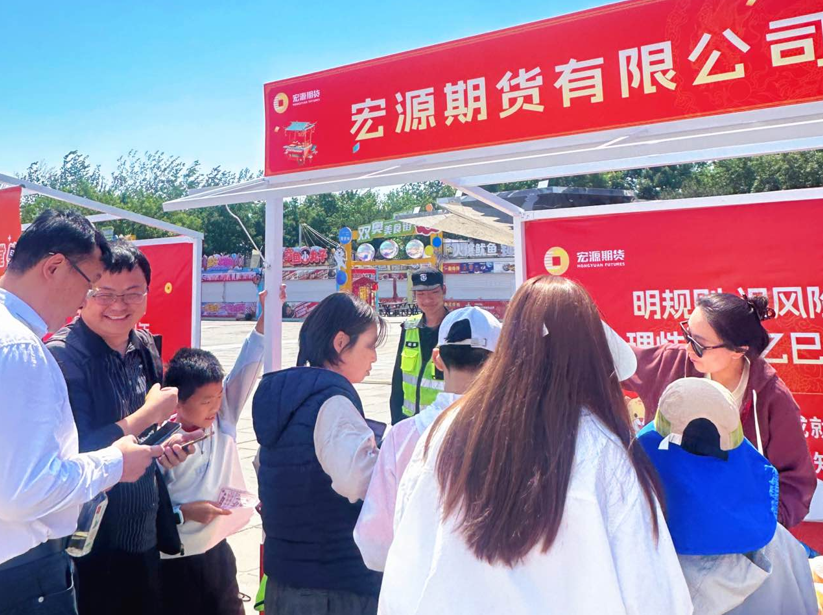
从产业链到生态圈——申万宏源以期货业务打开实体经济转型升级新空间
Qi Huo Ri Bao· 2025-11-07 03:32
Core Viewpoint - The company is committed to supporting the national strategy and building a strong financial nation by providing in-depth and warm financial services, focusing on the transformation and upgrading of the economy [1] Group 1: Financial Services and Support - Hongyuan Futures, a subsidiary of Shenwan Hongyuan Group, aims to empower the real economy with high-quality futures products and services, contributing to high-quality economic development and the construction of a financial powerhouse [1] - In the field of green finance, Hongyuan Futures acts as a "risk protection shield" for new energy enterprises, utilizing tools like hedging and basis trading to help companies withstand price fluctuations [1] - The company has reduced costs for nearly 100 small and micro enterprises by 1.1791 million yuan and injected 149 million yuan into the spot trade of small enterprises in sectors like cotton and industrial silicon [1] Group 2: Elderly Financial Services - In the pension finance sector, Hongyuan Futures serves as a "caring steward" for elderly investors, focusing on product suitability management and enhancing investment education to protect and grow retirement funds [2] Group 3: Technology and Digital Finance - Hongyuan Futures has established a robust technological foundation by deploying comprehensive trading platforms and accelerating AI development to enhance customer service experiences [4] - The company has been recognized in the industry for its effective services to small and micro enterprises, ranking in the top 10 for two consecutive years in evaluations by the China Futures Association [4] Group 4: Future Directions - The company plans to continue focusing on serving the real economy, integrating resources to create a comprehensive financial service system that meets diverse risk management needs for enterprises [5]


国泰君安期货商品研究晨报:绿色金融与新能源-20251107
Guo Tai Jun An Qi Huo· 2025-11-07 02:41
Report Overview - The report is a commodity research morning report on green finance and new energy by Guotai Junan Futures on November 7, 2025, covering nickel, stainless steel, lithium carbonate, industrial silicon, and polysilicon [1][2] Report Industry Investment Ratings - No industry investment ratings are provided in the report Core Views - Nickel is suppressed by inventory accumulation at the smelting end and supported by uncertainties at the ore end; stainless steel prices are oscillating narrowly at a low level [2][4] - Lithium carbonate prices are expected to decline as the transfer income is lower than market expectations [2][7] - For industrial silicon, attention should be paid to the bottom support [2][10] - Polysilicon may experience a significant decline in the futures market as the news - based expectations have failed to materialize [2][11] Summary by Commodity Nickel and Stainless Steel - **Fundamental Data**: The closing price of Shanghai Nickel's main contract was 119,750 yuan, down 280 yuan from the previous day; the stainless - steel main contract closed at 12,590 yuan, up 55 yuan. The trading volume of Shanghai Nickel's main contract was 110,740 lots, a decrease of 12,708 lots, while the stainless - steel main contract had a trading volume of 191,761 lots, an increase of 32,752 lots [4] - **Macro and Industry News**: Indonesian forestry workgroups took over a nickel mine due to violations; China suspended an unofficial subsidy for copper and nickel imports from Russia; Indonesia imposed sanctions on 190 mining companies; a new regulation on mine RKAB approval was issued; Trump threatened to impose 100% tariffs on China [4][5][6] - **Trend Intensity**: Both nickel and stainless steel have a trend intensity of 0, indicating a neutral outlook [6] Lithium Carbonate - **Fundamental Data**: The closing price of the 2511 contract was 77,880 yuan, up 80 yuan; the 2601 contract closed at 80,500 yuan, up 1,360 yuan. The trading volume of the 2511 contract was 186 lots, a decrease of 99 lots, and the 2601 contract had a trading volume of 582,033 lots, an increase of 66,302 lots [7] - **Macro and Industry News**: SMM's battery - grade lithium carbonate index price decreased; weekly production increased and inventory decreased; Chile's lithium carbonate and lithium sulfate exports showed different trends in October and from January - October [8][9] - **Trend Intensity**: Lithium carbonate has a trend intensity of - 1, indicating a bearish outlook [9] Industrial Silicon and Polysilicon - **Fundamental Data**: The Si2601 contract of industrial silicon closed at 9,065 yuan/ton, up 45 yuan; the PS2601 contract of polysilicon closed at 53,395 yuan/ton, up 40 yuan. Industrial silicon's social inventory was 55.2 million tons, and polysilicon's manufacturer inventory was 25.9 million tons [11] - **Macro and Industry News**: A 6.2GW TOPCon high - efficiency solar cell sheet technical transformation project's environmental impact report was publicly announced [11] - **Trend Intensity**: Industrial silicon has a trend intensity of 0 (neutral), while polysilicon has a trend intensity of - 2 (most bearish) [13]
锚定战新赛道!五矿证券重塑产业投行新范式
券商中国· 2025-11-07 02:04
Core Viewpoint - The article emphasizes the integration of the securities industry with the real economy, highlighting the role of Wukuang Securities in reshaping investment banking through "technology finance + green finance" as dual engines for development [2][3]. Group 1: Industry Integration and Strategy - Wukuang Securities leverages the unique advantages of the China Minmetals industry chain to create a comprehensive service matrix that aligns with national strategic needs [2]. - The company focuses on strategic metal materials and hard technology sectors, moving from downstream operations to upstream mining and smelting, thereby establishing a complete industry chain [3]. Group 2: Financial Performance and Rankings - In 2024, Wukuang Securities ranked sixth in the industry for major asset restructuring transactions involving technology companies and first in underwriting small and micro-enterprise bonds in the first half of 2025 [4]. Group 3: Mergers and Acquisitions - Wukuang Securities played a significant role as a financial advisor in the acquisition of Salt Lake Co. by China Minmetals, marking a successful case of regional industrial upgrading [6]. - The company has established a market brand for mining mergers and acquisitions, with three cross-border mining projects completed in the first half of 2025 [6]. Group 4: Green Finance Initiatives - The company addresses challenges in green finance, such as inconsistent standards and insufficient disclosures, by developing a comprehensive green finance service system [8]. - Wukuang Securities aims to channel more financial resources into green sectors, promoting high-quality development of low-carbon industries [8][9]. Group 5: Research and Development Focus - The research department of Wukuang Securities has shifted to support real enterprises, providing decision-making support for industries like metal mining, new materials, and renewable energy [6]. - The company emphasizes the importance of collaboration with government and industry stakeholders to enhance its research capabilities and service offerings [6].
风电REITs:工银瑞信基金的绿色新样本
Di Yi Cai Jing Zi Xun· 2025-11-07 01:16
Core Viewpoint - Green ecological development is a crucial area for economic growth in China, with public REITs emerging as significant financial tools to activate existing assets and support the real economy [1] Group 1: Public REITs and Green Finance - The "ICBC Mengneng Clean Energy REIT," managed by ICBC Credit Suisse Asset Management and initiated by Inner Mongolia Energy Group, is set to be listed on the Shenzhen Stock Exchange on December 10, 2024 [1] - Public REITs are becoming important carriers for green finance practices, highlighting their role in promoting sustainable economic development [1] Group 2: Regional Focus - The article explores Ulanqab, known as the "Air Three Gorges" and "Wind Power Capital," to uncover the underlying green significance and value of the region [1]
中金公司:围绕核心业务主责 构建全链条绿色金融服务体系
Jin Rong Shi Bao· 2025-11-07 01:05
Core Viewpoint - China announced a new round of national contributions to reduce greenhouse gas emissions by 7%-10% from peak levels by 2035, emphasizing the need for significant financial investment to achieve these deep decarbonization goals [2] Green Finance Development - The green finance market in China has rapidly expanded during the 14th Five-Year Plan, with green loans increasing from 20 trillion yuan to 36.6 trillion yuan from 2021 to 2024, and green bond issuance exceeding 4.1 trillion yuan, positioning China at the forefront globally [2][3] - CICC has played a pivotal role in supporting the national "dual carbon" goals, leveraging its capital market advantages to channel hundreds of billions into renewable energy, low-carbon transitions, and ecological protection [2] Green Financing Tools Innovation - CICC has been a leader in the innovation of green financing tools, successfully underwriting China's first carbon-neutral themed green financial bond aimed at global investors [3][4] - The establishment of unified standards for green finance products has been facilitated, with CICC assisting in the issuance of the first green financial bond aligned with the EU's sustainable finance taxonomy [4] Green Investment Initiatives - CICC has initiated multiple green-themed funds focusing on new energy, new materials, and new technologies, investing in over 70 projects to promote low-carbon economic development [5][6] - The Shandong Green Development Fund, established with international financing, targets energy structure transformation and green infrastructure, with a total subscription scale reaching 8 billion yuan [6] ESG Integration in Investment Decisions - CICC incorporates ESG factors into its investment decision-making process, developing a comprehensive ESG evaluation system to assess over 4,000 bond issuers [7] Future Outlook on Green Investment - The green finance market is expected to continue expanding, with a projected investment demand of 17.5 trillion yuan in key areas by 2030, which could lead to a reduction of 1.2 billion tons of emissions and a GDP growth of 1.2% annually [8][9] - To bridge the investment gap for carbon peak targets, CICC emphasizes the need for increased efforts on both the demand and supply sides, including expanding carbon markets and reducing the costs of clean energy technologies [9]

锚定战新赛道 五矿证券重塑产业投行新范式
Zheng Quan Shi Bao· 2025-11-06 17:53
Core Insights - Wenkang Securities is leveraging the unique industrial chain advantages of China Minmetals to reshape the investment banking paradigm with a dual focus on "technology finance + green finance" [1] - The company aims to create a differentiated development path through industrial-financial collaboration, aligning its performance assessment with national strategic needs [1] Group 1: Strategic Initiatives - Wenkang Securities is actively involved in the acquisition of strategic metal resources, exemplified by the successful 5.1 billion yuan acquisition project by China Tungsten High-tech, which expands its operations from downstream to upstream in the tungsten industry [2] - The company is focusing on key areas such as strategic metal materials, hard materials, and new energy materials, moving away from a balanced layout to a more targeted approach [2] - Wenkang Securities is establishing a technology enterprise database to enhance its service capabilities for technology-driven companies, particularly those that are high-quality but not yet profitable [2] Group 2: Market Position and Performance - According to data from the China Securities Association, Wenkang Securities ranked sixth in the industry for major asset restructuring transactions involving technology companies in 2024, and first in underwriting small and micro-enterprise bonds in the first half of 2025 [3] - The company has established a market brand for mining mergers and acquisitions, having participated in multiple overseas mineral resource projects and completed three cross-border mining M&A projects in the first half of 2025 [4] Group 3: Green Finance Strategy - Wenkang Securities is addressing the challenges in green finance, which include non-unified standards, insufficient disclosure, and mismatched products and cash flows, by building a comprehensive green finance service system [6] - The company is focusing on key minerals and battery materials, establishing direct communication channels with green financial institutions and projects to promote high-quality development in green low-carbon industries [7] - The strategic shift towards a comprehensive industrial-financial service model includes enhancing capabilities in green finance project identification, valuation, and pricing research [7]

年均复合增速13.1% 天津绿色金融发展指数发布
Zhong Guo Xin Wen Wang· 2025-11-06 16:54
Core Insights - The Tianjin Green Finance Development Index has shown significant growth from 100.00 in 2020 to 163.60 in 2024, with a compound annual growth rate of 13.1%, indicating rapid development and potential in green finance in Tianjin [1][2] Group 1: Green Finance Development - The release of the green finance index marks a new phase of standardization and precision in Tianjin's green finance development [1] - Tianjin has established a green finance ecosystem characterized by "policy empowerment + standard guidance + product innovation" to support the "dual carbon" strategy and promote industrial upgrading [1][2] Group 2: Financial Standards and Innovations - Tianjin has introduced the first targeted financial standards for the chemical industry in the country and has been approved as a pilot city for steel industry transformation financial standards [2] - The city has launched the first information platform for standardized green leasing and has introduced various group standards for green financing and commercial factoring [2] Group 3: Financial Metrics - As of September this year, the balance of green loans in Tianjin reached 847.8 billion yuan, reflecting a 19% increase since the beginning of the year, significantly surpassing the average growth rate of other loans [2] - The local financial management bureau aims to enhance the quality and efficiency of green finance development by focusing on innovation, standard support, and collaborative efforts [2]
绿水青山就是金山银山理念提出二十周年 以金融服务推动绿色转型——兴业银行服务地方经济剪影
Zheng Quan Ri Bao· 2025-11-06 15:50
Core Insights - The article highlights the integration of green finance into urban development and industrial transformation, emphasizing the role of financial institutions in supporting sustainable projects and the transition from traditional industries to eco-friendly alternatives [1][2][3] Group 1: Green Finance Initiatives - The Longjiang North Bank project in Fuzhou, which aims to improve the ecological environment, has received a total investment of 1.1 billion yuan, with 80% financed through bank loans [2] - The project includes multiple sub-projects focused on flood control, water quality improvement, and ecological restoration, requiring long-term financial support from banks [2] - The bank has customized financial service solutions for the project, approving loans of 3.2 billion yuan with a repayment period extended to 17 years and offering preferential interest rates for green loans [2][3] Group 2: Transformation of Local Economies - The Yucun Group in Zhejiang has transitioned from a resource-dependent model to a green tourism model, supported by a 1 billion yuan syndicated loan, with 500 million yuan from the bank, to enhance local tourism [3] - The village's per capita income has reached 80,000 yuan, with total economic income exceeding 10 million yuan, demonstrating the economic benefits of ecological transformation [3] Group 3: Innovative Loan Mechanisms - Banks are innovating loan pricing mechanisms linked to sustainability performance, allowing for interest rate adjustments based on the achievement of environmental goals [5][6] - The bank has implemented a mechanism where loan rates are adjusted based on carbon emission reduction targets, incentivizing companies to pursue green transformations [6][7] - As of now, projects linked to climate ecological evaluation indicators have a total credit limit of 688 million yuan, with an average interest rate discount of 23 basis points [7] Group 4: Future Directions for Financial Institutions - Financial institutions are encouraged to integrate green finance into their development strategies and link it to business growth metrics and performance evaluations [8] - Recommendations include enhancing the green finance product system, developing risk management frameworks for green projects, and fostering collaboration with third-party organizations for data sharing [8]

广东华兴银行:多元金融赋能全运保障,实干担当聚力湾区建设
Nan Fang Du Shi Bao· 2025-11-06 12:26
多元协同发力,赋能全运生态全链条 广东华兴银行自成立以来,始终坚守"服务实体经济"的初心,十四年间深耕民营经济、产业升级、区域 协调发展等核心领域,为全运保障筑牢了坚实的金融基础。 作为民营实体经济的坚定同行者,广东华兴银行以《民营经济促进法》为指引,持续优化服务体系,截 至2024年,合作民营实体企业贷款规模超1400亿元,占对公贷款余额的70%。为企业提供灵活的资金调 度支持,帮助企业释放资产价值,提升再投资能力,为企业发展与项目建设等注入持续资金动力。 镇街经济作为粤港澳大湾区经济的"毛细血管",其产业与商业集群已成为全运会消费拉动和服务保障的 重要基层支撑之一。广东华兴银行创新打造"镇街金融2.0"策略,围绕"产业赋能、场景融合、生态共 建",探索出一条以"区域图谱+专属服务+创新模式"相结合的区域化金融新路径,为广东省镇街经济体 量身定制金融服务。以佛山为例,广东华兴银行佛山分行深研镇街经济特点,推出"长期授信+国资增 信"综合金融服务模式。该模式通过中长期限的专项融资与镇街国企强力担保结合,为佛山三水区白坭 镇核心项目注入稳定资金流,有力激活区域发展潜力。通过"一镇一策"精准服务体系,该行深入对接 ...