
产业升级

Search documents
力星股份牵手浙江荣泰在产业机器人部件领域战略合作
Zheng Quan Shi Bao· 2025-11-06 17:55
Core Viewpoint - The strategic cooperation agreement between Lixing Co., Ltd. and Zhejiang Rongtai Electric Equipment Co., Ltd. aims to enhance operational efficiency, reduce costs, and expand market share in the field of industrial robot screw rod components [2][3]. Group 1: Strategic Cooperation - Lixing Co., Ltd. and Zhejiang Rongtai have signed a strategic cooperation agreement to collaborate in the application of rolling body components for industrial robots [2]. - The partnership is expected to create a win-win situation and a sustainable development relationship between the two companies [2]. - Both companies possess complementary advantages in the field of screw rod components, with Zhejiang Rongtai focusing on high-temperature insulation mica products and precision screw rod components, while Lixing is a leading global manufacturer of rolling bodies [2][3]. Group 2: Operational Commitments - Zhejiang Rongtai views Lixing as a strategic supplier for rolling bodies and is actively promoting new projects to expand cooperation [3]. - Lixing commits to providing the best cost-performance products to Zhejiang Rongtai under similar conditions and will prepare sufficient inventory based on demand forecasts [3]. - In the event of rising market demand and capacity constraints, Lixing promises to allocate optimal resources to ensure supply for Zhejiang Rongtai [3]. Group 3: Technical Advancements - The cooperation is expected to leverage Lixing's deep technical expertise in precision rolling body manufacturing to provide comprehensive solutions, including lightweight, low noise, wear-resistant, and high-temperature resistant products [3]. - This partnership aligns with the development strategy of both companies and is expected to promote technological advancement and industrial upgrading [3].


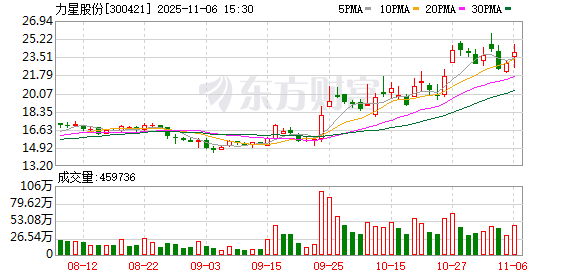
力星股份牵手浙江荣泰 在产业机器人部件领域战略合作
Zheng Quan Shi Bao· 2025-11-06 17:47
Core Viewpoint - The strategic cooperation agreement between Lixing Co., Ltd. and Zhejiang Rongtai aims to enhance operational efficiency, reduce costs, and expand market share in the field of industrial robot screw rod components [1][2]. Group 1: Strategic Cooperation - Lixing Co., Ltd. and Zhejiang Rongtai have signed a strategic cooperation agreement to collaborate in the application of rolling body components in industrial robots [1]. - The partnership is expected to create a win-win situation and sustainable development for both companies [1][2]. - The cooperation will leverage the complementary strengths of both companies, with Zhejiang Rongtai focusing on high-temperature insulation mica products and precision screw rod components, while Lixing is a leading global manufacturer of rolling bodies [1][2]. Group 2: Operational Commitments - Lixing Co., Ltd. will provide Zhejiang Rongtai with the best cost-performance products under similar conditions, ensuring sufficient inventory based on forecasted demand [2]. - The inventory risk will be borne by Lixing Co., Ltd., which will ensure timely responses to Zhejiang Rongtai's needs [2]. - In the context of rising market demand and capacity constraints, Lixing Co., Ltd. commits to supplying optimal resources to meet Zhejiang Rongtai's requirements [2]. Group 3: Technical Advancements - The collaboration aims to promote deep cooperation in rolling body applications for industrial robot screw rod components, focusing on lightweight, low noise, wear-resistant, and high-temperature solutions [2]. - This agreement aligns with the development strategy of Lixing Co., Ltd. and the long-term interests of its shareholders, without significantly impacting the company's financial status or operating performance for the current year [2].
凯斯帕上海总裁:扎根上海浦东,持续投资中国市场 | 瞰浦东
2 1 Shi Ji Jing Ji Bao Dao· 2025-11-06 14:16
Core Insights - Casappa Shanghai, established in 2007, has become the East Asia headquarters for Casappa, highlighting its significant growth in alignment with China's overall development trajectory [2] - The company views China's industrial upgrade as a critical opportunity to enhance supply chain efficiency and technology, positioning itself as a partner for outstanding Chinese enterprises in their internationalization journey [2] - The local talent pool is deemed essential for success in the Chinese market, with the company emphasizing the importance of capturing customer needs and deepening localization strategies [2] Company Strategy - The general manager of Casappa Shanghai, Davide Bruschi, emphasizes the importance of the local business environment, culture, and talent in driving the company's success [2] - The rapid pace of development in China and intense market competition necessitate precise customer demand capture and continuous localization efforts [2] - Casappa expresses a commitment to continue investing in the Chinese market, particularly in the Pudong area, which is seen as a vital foundation for its success [2]
进博盛会,盐聚未来!盐城拥抱全球发展新机遇
Yang Zi Wan Bao Wang· 2025-11-06 14:04
Group 1 - The eighth China International Import Expo (CIIE) is held from November 5 to 10, with a theme of "New Era, Shared Future," showcasing a record scale with participation from 155 countries and regions and 4,108 foreign enterprises [1] - The event covers an exhibition area of 43,000 square meters, highlighting global wisdom and innovation [1] - Yancheng's delegation focuses on "precise docking and deepening cooperation," aiming to connect with international high-end resources and promote industrial collaboration [1] Group 2 - Traditional crafts from Yancheng, such as hair embroidery and porcelain carving, are showcased at the Jiangsu Pavilion, emphasizing the city's cultural heritage and artistic charm [2] - Local enterprises, including Dafeng Shanghai Farm, are promoting Yancheng's specialty agricultural products and signing strategic cooperation agreements to enhance production and sales connections [2] - A memorandum of cooperation will be signed between the Yancheng Commerce Bureau and the AIM Global Foundation to support local oil equipment enterprises in expanding into the Middle East and global markets [2] Group 3 - Yancheng has actively integrated into the global industrial chain, optimizing the business environment and attracting foreign investment, particularly in the manufacturing sector [3] - The CIIE serves as a platform for Yancheng to link with global resources and drive industrial upgrades [3] - The city aims to continue embracing global economic development opportunities and share in the benefits of openness [3]
前三季度长三角外贸总额超12万亿元
Guo Ji Jin Rong Bao· 2025-11-06 09:19
Core Insights - The Yangtze River Delta region has achieved a remarkable foreign trade performance in the first three quarters of this year, with a total import and export value of 12.62 trillion yuan, a year-on-year increase of 6.6%, marking a historical high for the same period [1] Group 1: Shanghai's Foreign Trade Performance - Shanghai's foreign trade continues to show positive momentum, with a total import and export value of 3.34 trillion yuan in the first three quarters, up 5.4% year-on-year [2] - Exports from Shanghai reached 1.48 trillion yuan, growing by 11.3%, while imports were 1.86 trillion yuan, increasing by 1.1% [2] - The trade performance with ASEAN, the Middle East, and Africa has been particularly strong, with respective growth rates of 12.5%, 22.9%, and 32.5% [2] - The export of leading industries such as integrated circuits, biomedicine, and artificial intelligence reached 193.67 billion yuan, growing by 10.3% [2] Group 2: Jiangsu's Foreign Trade Growth - Jiangsu's total import and export value reached 4.38 trillion yuan, setting a historical record [4] - Mechanical and electrical products accounted for nearly 70% of the province's exports, driving an 8.7 percentage point increase in export growth [5] - Jiangsu's trade with Belt and Road countries accounted for over half of its total trade, achieving double-digit growth [5] Group 3: Zhejiang's Market Diversification - Zhejiang's total import and export value reached 4.17 trillion yuan, with exports of 3.16 trillion yuan and imports of 1.01 trillion yuan, all setting historical highs [5] - The province has accelerated its market diversification, with exports to ASEAN growing by 16.8%, surpassing the U.S. to become Zhejiang's second-largest export market [5] - The number of private foreign trade enterprises in Zhejiang has continued to increase, with over 120,000 enterprises, of which 112,000 are private, contributing to 82% of the province's total import and export value [6] Group 4: Anhui's Strong Growth - Anhui's total import and export value reached 726.25 billion yuan, with a year-on-year growth of 15.7%, the highest in the Yangtze River Delta region [6] - The province's exports of mechanical and electrical products have increased significantly, with the share rising from 59% at the end of the 13th Five-Year Plan to over 70% [6] - Anhui's trade with Belt and Road countries reached 391.94 billion yuan, accounting for 54% of its total trade, with double-digit growth in emerging markets [6] Group 5: Collaborative Development in the Yangtze River Delta - The impressive foreign trade performance in the Yangtze River Delta is attributed to the provinces' ability to leverage their strengths and respond to challenges [7] - There is a close cooperation network among the provinces, facilitating resource sharing and complementary advantages, such as Shanghai's high-end industries supporting Jiangsu's manufacturing base [7] - The region needs to maintain strategic determination, deepen industrial upgrades, and expand diversified markets to address uncertainties in foreign trade [7]

华泰证券2026年度投资峰会在京举办
Zheng Quan Ri Bao Wang· 2025-11-06 08:54
Group 1 - The 2026 Investment Summit held by Huatai Securities focused on macroeconomic patterns and market opportunities in the context of the "14th Five-Year Plan" [1] - The summit featured over 460 listed companies and attracted nearly 3,000 professional investors and institutional clients [1] - Huatai Securities' Chairman of Institutional Business, Liang Hong, indicated a shift in equity investors' focus towards cyclical sectors such as energy, consumption, and real estate as the economic fundamentals improve [1] Group 2 - Huatai Securities' Chief Macro Economist, Yi Han, predicted strong resilience in China's exports for 2025 and 2026, with industrial upgrades being a key narrative [2] - Fiscal policy is expected to maintain a moderately expansionary stance, supporting the conclusion of the deleveraging cycle [2] - The core themes for the market in 2026 will likely shift from sentiment-driven to performance verification, with a focus on nominal GDP, financing needs, and the stock-bond valuation ratio [2] Group 3 - From a quantitative model perspective, Huatai Securities' Chief of Financial Engineering, Lin Xiaoming, suggested an "all-weather" asset allocation strategy to mitigate risks in a high-uncertainty global macro environment [3] - The firm remains optimistic about the revaluation of Chinese assets, with expectations for a shift from growth to cyclical and value investments in the market [3] - The first half of 2026 may still see growth styles perform well due to expectations of loose overseas liquidity, but a transition to fundamental recovery logic is anticipated as global economic recovery progresses [3]

力星股份(300421.SZ):拟与浙江荣泰在产业机器人用丝杆部件等重要领域的滚动体应用开展战略合作
Ge Long Hui A P P· 2025-11-06 08:03
Core Viewpoint - The signing of the strategic cooperation agreement between Lixing Co., Ltd. and Zhejiang Rongtai Electric Equipment Co., Ltd. marks the establishment of a partnership aimed at collaborative development in the field of rolling body applications for industrial robot screw rod components [1] Group 1: Strategic Cooperation - The agreement signifies a formal strategic partnership between the two companies [1] - The collaboration aims to create a win-win and sustainable development relationship [1] - Both companies will leverage their strengths and share resources for synergistic development [1] Group 2: Technological Advancements - Lixing Co., Ltd. will utilize its deep technical expertise in precision rolling body manufacturing to provide comprehensive solutions [1] - The solutions will focus on lightweight, low noise, wear resistance, and high-temperature resistance for core applications in industrial robot screw rod components [1] - This partnership is expected to contribute to industrial upgrades and technological advancements [1]
力星股份与浙江荣泰签订战略合作协议
Zhi Tong Cai Jing· 2025-11-06 07:56
Core Viewpoint - Lixing Co., Ltd. (300421.SZ) has signed a strategic cooperation agreement with Zhejiang Rongtai Electric Equipment Co., Ltd. to collaborate in the field of rolling body applications for industrial robot screw components, aiming for a win-win and sustainable partnership [1] Group 1 - The strategic cooperation agreement was signed on November 6, 2025, marking the official establishment of a partnership between the two companies [1] - The collaboration will focus on complementary advantages and resource sharing, promoting deep cooperation in key areas such as rolling body applications for industrial robot screw components [1] - Lixing Co., Ltd. will leverage its expertise in precision rolling body manufacturing to provide comprehensive solutions that are lightweight, low-noise, wear-resistant, and high-temperature resistant, contributing to industrial upgrades and technological advancements [1]
力星股份(300421.SZ)与浙江荣泰签订战略合作协议
智通财经网· 2025-11-06 07:55
Core Viewpoint - The signing of the strategic cooperation agreement between Lixing Co., Ltd. and Zhejiang Rongtai Electric Equipment Co., Ltd. marks the establishment of a partnership aimed at collaborative development in the field of rolling body applications for industrial robot screw rod components [1] Group 1: Strategic Cooperation - The agreement was signed on November 6, 2025, indicating a formal partnership between the two companies [1] - The collaboration focuses on key areas such as rolling body applications for industrial robot screw rod components, aiming for a win-win and sustainable development relationship [1] Group 2: Advantages and Solutions - The partnership is expected to create a synergistic development model through complementary advantages and resource sharing [1] - Lixing Co., Ltd. will leverage its deep technical expertise in precision rolling body manufacturing to provide comprehensive solutions that are lightweight, low-noise, wear-resistant, and high-temperature resistant for core applications in industrial robots [1]
20cm速递|科技成长板块行情向好,创业板50ETF国泰(159375)涨超2%,连续5日资金净流入
Mei Ri Jing Ji Xin Wen· 2025-11-06 06:50
Group 1 - The core viewpoint of the article emphasizes that the 20th Central Committee's Fourth Plenary Session highlights the main theme of technological innovation and industrial upgrading, with policies supporting areas like artificial intelligence, providing medium to long-term support for the technology growth sector [1] - The fundamental analysis indicates that the profit recovery of companies continued in the third quarter, and after digesting valuation pressures, leading technology firms still possess significant investment value [1] - With policy catalysts and profit improvements, the market outlook for the technology growth sector is positive [1] Group 2 - The Guotai ETF (159375) tracking the ChiNext 50 Index (399673) experienced a daily fluctuation of 20%, which selects 50 securities from the ChiNext market based on larger market capitalization and good liquidity [1] - The index primarily covers high-growth technology and emerging industries such as power equipment and biomedicine, reflecting the overall performance of core quality enterprises in the ChiNext market [1] - The constituent stocks of the index exhibit characteristics of large and mid-cap stocks, demonstrating strong profitability and sustained growth potential [1]
