低利率时代

Search documents
2025年,房贷利率一旦破3%大关,全国45%的家庭或面临3大问题
Sou Hu Cai Jing· 2025-07-22 07:09
Group 1: Core Insights - The decline of mortgage rates below 3% in China signals a significant shift in market dynamics, leading to a threefold crisis of asset depreciation, debt imbalance, and potential financial turmoil [1][4][5] - Over 45% of households with mortgages are experiencing financial strain, with many facing a situation where their mortgage payments exceed their income [4][6] - The current financial landscape mirrors pre-2008 U.S. subprime mortgage crisis conditions, with rising non-performing loan rates and a concerning number of borrowers exceeding recommended debt-to-income ratios [3][4] Group 2: Asset Depreciation - The drop in mortgage rates has resulted in a substantial increase in unsold housing inventory, with 760 million square meters of new homes available, a nearly 10% increase from the previous year [6] - Major cities like Shenzhen and Guangzhou have seen property values decline by 20% from peak levels, creating a vicious cycle of falling prices and further rate cuts [6][7] - Many homeowners are now facing significant losses, with some properties losing up to 40% of their value, leading to a rise in foreclosures, particularly in third and fourth-tier cities [6][7] Group 3: Debt Imbalance - The household leverage ratio has climbed to 72% in 2025, with 37% of families in major cities spending over 60% of their income on mortgage payments [4][5] - The International Monetary Fund (IMF) reports that the debt-to-income ratio for Chinese households has reached 140%, significantly exceeding the 90% international warning threshold [4][5] - The financial burden of seemingly lower monthly payments may ultimately lead to unsustainable debt levels for many families [4][5] Group 4: Financial Turmoil - The banking sector is showing signs of strain, with non-performing loan rates for mortgages below 3% being double the market average [3][4] - A significant portion of borrowers are at risk of default, with some banks reporting that 23% of borrowers have monthly payments exceeding 55% of their income, far above the risk control threshold [3][4] - The potential for a large-scale default could trigger a downward spiral in asset prices, reminiscent of past financial crises [3][4] Group 5: Strategies for Households - Households are advised to diversify their asset allocation to mitigate risks associated with over-reliance on real estate [7][8] - It is recommended that families maintain a debt-to-income ratio where monthly payments do not exceed 40% of their income to avoid excessive leverage [8] - Establishing an emergency fund covering 6-12 months of expenses is crucial for managing unexpected financial disruptions [8][9]

券商资管公募二季报出炉!上半年最高涨近45%,姜诚、江琦最新发声
券商中国· 2025-07-22 06:33
Core Viewpoint - The article highlights the strong performance of public equity funds managed by various asset management firms in the first half of the year, particularly in sectors like AI, robotics, and innovative pharmaceuticals, with several fund managers achieving record net asset values [2][4]. Group 1: Fund Performance - In the first half of the year, the A-share market was active, with significant performances in sectors such as AI, robotics, and innovative pharmaceuticals [2]. - The net asset value of the "Oriental Red Medical Upgrade Stock Initiation A" fund managed by Jiang Qi increased by 44.55%, reaching a new high since its inception [2][4]. - Jiang Qi's fund maintained a high stock position of 90.37% as of June 30, with top holdings including Bai Li Tianheng and Kanghong Pharmaceutical [4]. Group 2: Manager Insights - Jiang Qi believes that the innovative pharmaceutical sector is entering a harvest phase, with expectations for a prolonged period of growth [5]. - Jiang Qi emphasizes the importance of technological advancements and clinical resources in accelerating the development of innovative pharmaceutical companies [5][6]. - Zhou Yun from Oriental Red Asset Management notes that the low interest rate environment and the "anti-involution" trend support a long-term bullish outlook for Chinese assets [7]. Group 3: Market Outlook - Jiang Cheng from Zhongtai Asset Management expresses a cautious optimism regarding macroeconomic conditions while advising caution at the micro level [8]. - Tian Yu from Zhongtai Asset Management remains optimistic about high-end liquor, citing business demand as a key driver despite recent market concerns [9].

光大保德信基金江磊:回撤控制是生命线 债券投资亟需锻造交易能力
Zheng Quan Shi Bao· 2025-07-20 18:52
Group 1 - The core viewpoint is that in a low-interest-rate environment, short-term bond funds are emerging as a new investment option for wealth management, despite challenges in generating stable returns in a "micro-profit" bond market [1][2] - Short-term bond funds are becoming increasingly popular as bank one-year fixed deposit rates fall below 1%, and money market fund yields have also entered the "1 era" [2] - The historical opportunity for short-term bond funds is highlighted by the observation of the Japanese market, where a drop in 10-year government bond yields led to significant growth in short-term bond funds [2] Group 2 - The core advantages of short-term bonds are identified as "three lows": low duration, low volatility, and low credit risk, making them suitable for risk-averse investors [2] - The importance of controlling drawdowns is emphasized as a critical factor for bond funds, particularly short-term products [3][5] - The risk control strategy of the fixed income team includes duration management, holding structure, and portfolio diversification to mitigate market volatility [4] Group 3 - The focus is shifting from single yield assessments to risk-reward ratios, Sharpe ratios, and the sustainability of monthly positive returns, reflecting a balanced approach to risk and return [5] - The trading ability in bond investments is becoming increasingly important in a low-interest-rate and credit expansion environment, with strategies such as reverse trading and interest rate arbitrage being employed [6] - Future market outlook suggests a moderate economic recovery with continued monetary policy easing, while certain industry bonds are expected to have improved safety due to changes in supply and demand dynamics [6]
低利率时代资管机构之美国公募篇:与周期和创新共舞
GOLDEN SUN SECURITIES· 2025-07-18 13:22
Report Industry Investment Rating No relevant content provided. Core Viewpoints of the Report - The report focuses on the strategies of various US funds in response to interest rate declines and low - interest periods. US asset management institutions adapt to cycles and innovate to deal with changes. In the post - financial crisis interest rate decline period, they developed bond ETFs, increased overseas investment, and reduced management fees. In the interest rate increase period after 2021, they increased inflation - linked bond investments [3][87]. - The US has experienced two low - interest periods in the 21st century. The first was from the end of 2008 to the end of 2015, and the second was from March 2020 to March 2022. Different types of funds showed different performance and asset allocation changes during these periods [11]. Summary by Directory 1. US Low - Interest Period Review - 21st - century US low - interest periods: There were two periods when the policy rate was maintained in the 0 - 0.25% range. The first was from the end of 2008 to the end of 2015 due to the 2008 global financial crisis, and the second was from March 2020 to March 2022 because of the global public health event [11]. - 2008 - 2016 interest rate situation: After the sub - prime mortgage crisis, the Fed took measures such as conventional interest rate cuts and quantitative easing. The interest rate showed a "step - by - step decline + periodic shock" feature. The 10Y US Treasury yield dropped sharply in 2008 and then fluctuated [12][21]. - 2020 - 2022 interest rate situation: The global public health event led to a sharp economic downturn. The Fed took aggressive measures. The interest rate cycle turned earlier, and the low - interest period was shorter. The 10 - year US Treasury yield started to rise in September 2020 [25][26]. 2. Evolution of US Mutual Fund Asset Allocation 2.1 Structure Evolution of Mutual Funds - Fund types and scale relationship: US mutual funds include stock, hybrid, bond, and money market funds. Stock funds dominate, so the total scale is highly correlated with the stock market. There is a rotation relationship between bond and money market funds [31]. - 2008 - 2016 asset rotation: In 2008, the financial crisis made money market funds grow. From 2009 - 2012, funds flowed from money market funds to bond funds. After 2012, funds returned from low - risk assets to equity assets [32][37]. - 2020 - 2022 situation: Interest rate trends had no significant impact on the portfolio structure. Investors increased inflation - linked bonds to hedge inflation risks [41]. 2.2 Asset Allocation Changes of Bond Funds - Types of bond funds: Include investment - grade corporate bond funds, high - yield bond funds, global bond funds, government bond funds, etc. [42]. - Asset allocation in different periods: In the interest rate decline and early low - interest periods, low - risk bond funds increased. In the later low - interest period (2013 - 2016), bond funds increased returns through credit downgrading. They also increased overseas bond investments and the proportion of multi - allocation and alternative strategy bond funds [45][52][56]. 2.3 Asset Allocation Changes of Money Market Funds - Types of money market funds: Divided into taxable and tax - exempt. Taxable funds include government and non - government money market funds. - Low - interest period performance: In low - interest periods, the proportion of government money market funds increased, and money market funds increased returns by extending duration [60][64]. 2.4 ETF Structure Changes - ETF composition: Composed of stock, hybrid, bond, and commodity ETFs, with stock ETFs dominant. - Low - interest period performance: In the first low - interest period, the proportion of bond and commodity ETFs increased. Active - management ETFs emerged, and increasing overseas assets became a strategy to increase returns [72][74][75]. 3. Fee Optimization and Operational Innovation of US Mutual Funds - Fee structure: Consists of one - time fees (front - end and back - end sales fees) and continuous fees (management fees, 12b - 1 fees, etc.). - Fee reduction trend: Over the past 20 years, management fees have decreased. Index funds' proportion increased due to their fee advantages. Low - interest rates promoted fee reduction through multiple paths [77]. - Fee - related innovation: Low - interest rates promoted the popularity of no - load shares and zero - commission platforms, and the independence of consulting fees, which reduced the overall industry fee level [84]. 4. Implications of US Fund Asset Allocation in Low - Interest Periods - Interest rate decline strategy: Increase low - risk government and investment - grade bonds during rapid interest rate declines and use credit downgrading after a long - term low - interest period [87]. - Overseas investment: Increase overseas bond investments to balance risks and increase returns [88]. - Fee strategy: With the trend of fee reduction, the proportion of index funds continues to expand [88]. - Financial innovation: Use financial innovation such as multi - allocation and alternative strategies to resist cycle fluctuations and buy inflation - protection bonds to hedge inflation risks [89].
听说现在年轻人开始存钱了?
Xin Lang Ji Jin· 2025-07-17 03:25
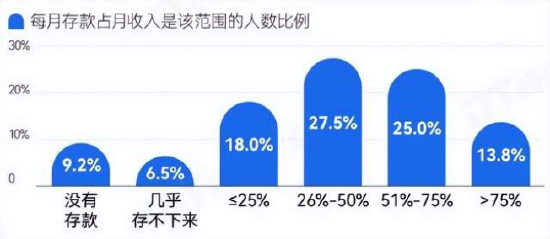
Group 1 - In the first half of 2025, household deposits in China increased by 10.77 trillion yuan, reaching a historical high of 162.02 trillion yuan, indicating a growing trend towards saving among individuals [1] - A survey revealed that 38.8% of respondents plan to save more than half of their monthly salary, while only 5% intend to decrease their savings, reflecting an increasing awareness of savings [1][3] - The primary reason for saving is the desire for security, highlighting a shift in financial behavior among the population [3] Group 2 - Despite the rising savings awareness, bank deposit rates have been declining, with major banks offering rates below 1% for one-year fixed deposits as of July 2025, suggesting a challenging environment for traditional savings [5] - The article recommends a specific short-term bond fund, Guotai Liying, which has shown strong historical performance with a return of 8.11% since its inception and an annualized return of 3.03%, outperforming benchmarks and peers [5][6] - Guotai Liying A has demonstrated excellent risk control, with a maximum drawdown of only -0.08% this year, significantly lower than the industry average [6][7] Group 3 - The Guotai Liying fund has a year-to-date return of 1.07%, compared to the industry average of 0.78%, making it an attractive option in a volatile market [6][7] - The fund's Sharpe ratio and Calmar ratio are also significantly better than its peers, indicating a favorable risk-adjusted return for investors [7][9] - Guotai Fund has been actively managing short-term bond strategies since 2018, leading to a rapid growth in the scale of its "Li" series funds, which reached 29.5 billion yuan by the end of Q1 2025, a 60% increase from the end of 2022 [8][9]
债券需要想象力
远川投资评论· 2025-07-16 07:01
Core Viewpoint - The article emphasizes the significant role of technology in the recent performance of the Hong Kong stock market and the emergence of innovative financial products like the Sci-Tech Bond ETF, which provides investors with new opportunities in a low-interest-rate environment [2][5][28]. Group 1: Hong Kong Stock Market Performance - The Hong Kong stock market has shown remarkable performance this year, highlighted by the rapid listing of companies like CATL and the surge in Xiaomi's stock price due to strong orders [2]. - The atmosphere in the stock market has also positively influenced the bond market, with the China Securities Regulatory Commission advocating for the development of Sci-Tech bonds and related products [3][4]. Group 2: Introduction of Sci-Tech Bond ETF - The Sci-Tech Bond ETF has gained attention as an innovative financial tool, quickly approved and sold out, raising 30 billion in a single day [4]. - This ETF fills a gap in the market for technology-related bond funds and offers investors a way to benefit from technological advancements in a low-interest-rate environment [5][10]. Group 3: Evolution of the Bond Market - The bond market in China has shifted from a focus on local government financing and real estate to supporting technology innovation, leading to the emergence of the "Sci-Tech Board" in the bond market [7][9]. - The issuance of Sci-Tech bonds has expanded significantly, with a total issuance exceeding 1 trillion last year and a current outstanding scale of 1.13 trillion, reflecting a growing interest from private enterprises [11]. Group 4: Investment Performance and Risk Management - Investing in Sci-Tech bonds has provided returns that align with the performance of technology stocks while avoiding their volatility, with the AAA Sci-Tech bond index rising 14.35% since June 2022 [13][14]. - The Sci-Tech Bond ETF is designed to manage risks effectively, utilizing various credit derivatives to mitigate potential defaults [26]. Group 5: Accessibility and Cost Efficiency - The Sci-Tech Bond ETF has a low management fee of 0.2%, making it an attractive option for both retail and institutional investors looking for efficient investment vehicles in the bond market [27]. - This ETF lowers the entry barrier for individual investors to participate in the "Sci-Tech Board" and provides institutional investors with a diversified investment without the need for extensive credit research [27].

低利率时代的配置选择,景顺长城安悦180天持有期债基正在发行
Xin Lang Ji Jin· 2025-07-16 01:25
Core Viewpoint - The recent decline in interest rates has led to increased interest in convertible bond strategies, particularly through the launch of new bond funds like the 景顺长城安悦180天持有期债基, which aims to enhance returns for investors [1][2]. Group 1: Market Context - As of July 14, 2025, the 10-year government bond yield stands at 1.68%, reflecting a downward trend in interest rates [1]. - The total scale of primary bond funds reached approximately 800 billion yuan by the end of Q1, marking an increase of over 100 billion yuan compared to the same period last year [1]. Group 2: Product Features - The 景顺长城安悦180天持有期债基 employs a strategy combining bond investments with flexible allocation to convertible bonds, targeting stable returns for conservative investors [1][2]. - This fund utilizes a "barbell" approach in its convertible bond allocation, balancing between stable large-cap convertible bonds and high-yielding convertible bonds, while also including growth-oriented convertible bonds for added flexibility [2]. Group 3: Risk Management and Fees - The fund incorporates a risk budgeting mechanism to assess daily risks and adjust fund allocation accordingly, thereby reducing portfolio volatility [2]. - Investors can avoid redemption fees if they hold the fund for at least 180 days, and the management fee is set at 0.20% per year, significantly lower than the average for similar funds [2]. Group 4: Manager Profile - The fund manager, 米良, has 11 years of experience in securities and fund management, with a strong track record in managing various types of funds, including money market and actively managed bond funds [3]. - Since its inception on April 27, 2022, the 景顺长城30天滚动持有 fund managed by 米良 has achieved a net value growth rate of 9.06%, outperforming its benchmark [3]. Group 5: Future Outlook - The manager maintains an optimistic outlook for the bond market, anticipating continued monetary easing and a significant probability of interest rate cuts by the Federal Reserve [3]. - Attention will be given to the pace of interest rate declines and the potential impact of equity market recovery on the bond market, with a focus on high elasticity and liquidity in the portfolio [3].
人形机器人产业链重构、告别债券“躺赢时代”、投资需摒弃赚快钱理念!三大基金经理最新研判
券商中国· 2025-07-15 11:19
Core Viewpoints - The article emphasizes the transformative changes in the capital market and the shift of the Chinese public fund industry from scale expansion to high-quality development, highlighting the importance of professional investment research in optimizing asset allocation [1] Group 1: Human-shaped Robots - The human-shaped robot industry is in a critical transition phase, moving from concept to reality, with significant opportunities expected in various sectors such as industrial manufacturing, healthcare, logistics, and consumer services [5][12] - The global market for human-shaped robots is projected to reach approximately $10.17 billion in 2024, with an expected growth to $15 billion by 2030, reflecting a compound annual growth rate (CAGR) of over 56% [9] - China is anticipated to capture a significant share of the global market, with projections indicating a market size of 38 billion yuan by 2030, accounting for 44.77% of the global market [9] Group 2: Investment Strategies - The investment strategy focuses on identifying high-quality companies with long-term growth potential and strong business models, emphasizing the importance of industry growth stages and market size [6][7] - Key indicators for assessing investment viability include the industry’s compound growth rate over the next 3 to 5 years, as well as the company's core competitiveness and technological barriers [7][8] - Financial sustainability metrics such as gross margin, net margin, and research and development investment are critical for evaluating the health of a business model [8] Group 3: Bond Market Insights - The bond market is experiencing a shift away from the "lying win" era, with the ten-year government bond yield dropping to around 1.65%, necessitating a more refined approach to bond investment [20][21] - In the current low-interest-rate environment, bond investment strategies must adapt to focus on liquidity management and risk control, ensuring the ability to capitalize on market opportunities [21][23] - The outlook for the bond market remains positive, supported by a favorable macroeconomic environment and ongoing monetary easing, with various pure bond investment opportunities expected to arise [25][26] Group 4: Long-term Investment Philosophy - The investment philosophy stresses the importance of patience and a long-term perspective, advocating for a focus on fundamental analysis and value investing rather than chasing short-term gains [26][28] - The approach includes a careful assessment of market cycles and the need to realize profits during high valuation periods to mitigate risks [29][30] - The strategy also involves a diversified selection across various sectors, with an emphasis on capturing industry trends and macroeconomic signals [31][32]

德邦基金固收投资总监邹舟:告别债券“躺赢时代” 精细化耕作穿越低利率周期
Zheng Quan Shi Bao· 2025-07-13 17:38
Core Viewpoint - The low interest rate environment has made it increasingly difficult for fixed income products to achieve excellent performance, necessitating a shift in investment strategies to adapt to new market conditions [1][2]. Group 1: Market Environment - The ten-year government bond yield has dropped to approximately 1.65%, indicating the end of the "easy win" era for bonds [1]. - The dual pressures of low interest rates and "asset scarcity" have reduced the margin for error in bond investments, requiring a more refined approach [2]. Group 2: Investment Strategy - A shift from a strategy of making a few large trades to capturing smaller, more frequent opportunities is necessary due to changing market dynamics [2]. - The management of bond portfolios should involve a dual-dimensional control of credit duration and volatility duration, with a focus on liquidity management to handle extreme market fluctuations [2][3]. Group 3: Product Management - Different products require tailored strategies based on their positioning and liability characteristics, with a focus on safety for short-duration bonds and a more aggressive approach for longer-duration products [3]. - The adjustment of positions and metrics should be flexible, taking into account market phases, fundamental trends, and technical indicators [3]. Group 4: Market Outlook - The bond market is expected to maintain a stable upward trend, supported by a loose monetary policy and favorable fundamentals, despite potential external pressures such as trade policies [6]. - Investment opportunities in the second half of the year include credit bonds, interest rate bonds, and local government bonds, with a particular interest in convertible bonds due to their dual nature of fixed income and potential equity appreciation [6].
“1时代”债市:交易员追逐0.25BP的波段收益
经济观察报· 2025-07-11 08:59
Core Viewpoint - The importance of swing trading in the bond market has increased due to continuously declining interest rates, leading to a need for traders to be more sensitive to short-term market fluctuations to capture profit opportunities [1][5][10]. Bond Market Trends - The yield on "AAA" rated credit bonds has reached historical lows, with significant declines observed; for instance, yields for AAA city investment bonds have dropped by 50-100 basis points compared to the same period in 2024 [4][9]. - As of July 2025, the yield on 10-year Chinese government bonds was recorded at 1.6570%, while 30-year bonds remained below 2% [4][9]. - The average yield for one-year bank wealth management products is around 1.20%, and three-year products are approximately 1.55% [5]. Investment Strategies - Institutions are increasingly engaging in high-frequency trading to adapt to the low-yield environment, with public funds, insurance asset management, and bank wealth management subsidiaries participating more actively [12]. - Investors are advised to maintain a primary position in city investment bonds for stable cash flow while exploring other higher-yielding assets [21][24]. Challenges in the Market - The low yield environment presents challenges for profitability, as institutions face pressure to meet rigid liability assessments while dealing with shrinking profit margins [15][16]. - The supply of high-yield assets is diminishing, and the overall bond supply remains tight despite some improvements compared to the previous year [16][18]. Future Outlook - Analysts predict that the downward trend in bond yields will continue due to factors such as the real estate cycle downturn and the delayed effects of tariffs, suggesting that there is still room for interest rate cuts [7]. - The current low yield environment is prompting institutions to shift from a debt-driven investment approach to an equity-driven strategy, emphasizing the need for innovation in investment practices [24].